LisbonOutdoor Escape Game & Treasure Hunt
From Belém to Alfama — 8 escape games across the city of Discoveries
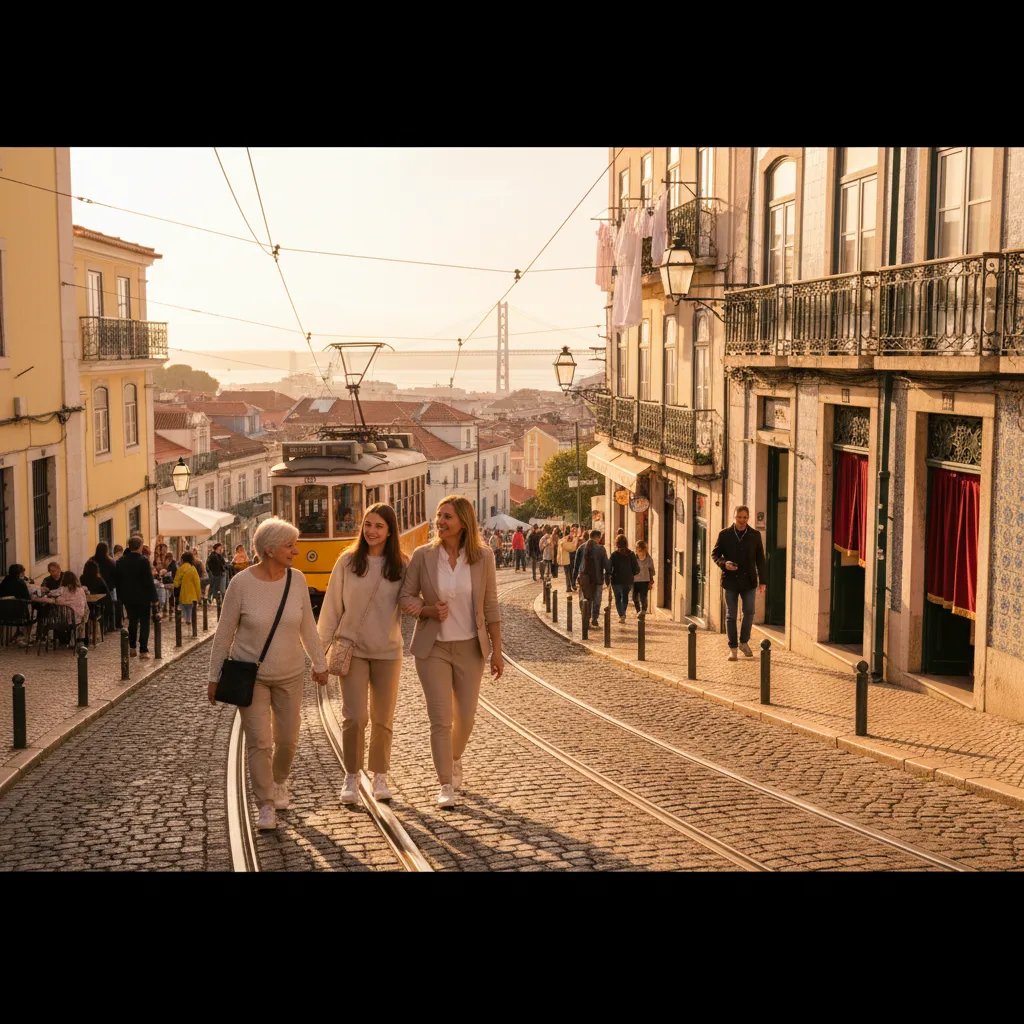
What to do in Lisbon? Dive into the heart of the Portuguese capital, a city of seven hills where history meets modernity. Stroll through the winding alleys of Alfama, admire the majestic Belém Tower and Jerónimos Monastery, or let yourself be charmed by the panoramic views from São Jorge Castle. For a truly unique discovery, embark on an OddballTrip outdoor escape game. Transform the city into a huge playground with our interactive treasure hunts and scavenger games. It's the perfect unusual activity to explore its iconic neighborhoods, solve puzzles, and experience a memorable outdoor adventure. Whether you're with family, friends, or as a couple, Lisbon promises unforgettable memories and a deep cultural immersion.
Departure from Belém
Vasco da Gama opens the route to India
Lisbon 1755 — Six Minutes and a City
The day All Saints' Day shook modern Europe
Albuquerque — Three Oceans
Goa, Malacca, Hormuz — the empire built by 20,000 men
The Moors of Alfama
Lisbon's last Arab quarter
Pessoa and His Heteronyms
One man, four poets, one city
Pombal, Enlightened Despot
The minister who bent Portugal by reason
Egas Moniz — The First Nobel
The neurologist who opened skulls and angiographies
The Legacy of Sagres
The school of the Discoveries moves up to Lisbon
Lisbon-Cascais-Sintra arc (peripheral version)
2–3-day roadtrip · Lisboa
Unusual things to do in Lisbon
Looking for an unusual activity in Lisbon? Forget classic tours and opt for an original outing with our outdoor escape games. Explore historic districts like Alfama or Bairro Alto by solving puzzles that will lead you to hidden places and fascinating anecdotes. It's a fun and interactive way to discover the city, off the beaten path, while stimulating your team spirit. A memorable experience guaranteed for those seeking adventure and the unexpected.
Things to do in Lisbon with kids
What to do with family in Lisbon? Our outdoor escape games are the ideal activity for all ages, from 8 years old. Transform the city discovery into a giant treasure hunt where everyone, from the youngest to the parents, will have a role to play. The playful aspect of solving puzzles, combined with exploring iconic locations, makes the visit captivating. It's a fun way to create memories together, learn about Lisbon's history, and enjoy the outdoors.
Lisbon for couples
Lisbon as a couple, a romantic getaway? Let yourself be seduced by the charm of its alleys and its panoramas. Our escape games offer a unique experience for lovers, blending cultural discovery and complicity. It's the perfect opportunity to share a special moment, solve puzzles together, and create original memories. Imagine yourselves hand in hand, exploring secret corners of the city, before enjoying a romantic dinner with a view of the Tagus.
What to do in Lisbon when it rains
What to do in Lisbon when it rains? Our outdoor escape games remain a fun option. Although primarily outdoors, some routes pass through areas where temporary shelter can be found under traditional balconies or in covered passages like those in Baixa. A good part of the experience takes place in narrow streets that offer some protection. Bring an umbrella and let yourself be surprised by the mysterious charm of Lisbon in the rain.
Where is Lisbon, and where do the routes start?
Starting points of our routes and the places they pass through.
Route starting points
- 1Padrão dos Descobrimentos, Avenida Brasília, Belém
- 2Praça do Comércio (Terreiro do Paço), triumphal arch on Rua Augusta side
- 3Largo das Portas do Sol, Alfama
- 4Largo do Chafariz de Dentro, opposite the Fado Museum
- 5A Brasileira terrace, Rua Garrett, Chiado
- 6Marquês de Pombal roundabout, base of the statue
- 7Basílica da Estrela, main forecourt
- 8Sociedade de Geografia de Lisboa, Rua das Portas de Santo Antão 100
- 9Praça do Império, Jerónimos Monastery, 1400-206 Lisboa, Portugal
Places in Lisbon
- Basílica da Estrela forecourt
- Central kiosk of the Jardim da Estrela
- Cemitério dos Prazeres entrance
- São Bento outer railings
- Palácio das Necessidades façade and fountain
- Number 100
- Former institute façade
- Faculdade de Medicina forecourt
- Miradouro das Portas do Sol
- Santa Luzia azulejos
- Sé forecourt
- Small fountain
- Mourisca walls
- Porta do Sol
- Santo Estêvão forecourt
- Beco do Carneiro alley
- Triumphal arch
- Centre of Praça do Comércio
The history of Lisbon
From Phoenician Port to Roman City
Lisbon's origins date back to prehistoric times, with evidence of Paleolithic and Mesolithic cultures. Its recorded history begins around 1200 BCE, when the Phoenicians established a trading post named Alis Ubbo on the hill where São Jorge Castle now stands. This location at the mouth of the Tagus River made it a valuable port. Over the centuries, it was conquered by Greeks and Carthaginians.
In 205 AD, the Romans took control, recognizing its strategic importance and elevating it to a Roman municipality named Felicitas Julia, later known as Olissipo. The city developed under Roman rule, with archaeological findings revealing a theater, baths, and reservoirs connected to a fish-preserving plant near the Casa dos Bicos.
Moorish Rule and the 1755 Earthquake
Following the fall of the Roman Empire, Lisbon experienced instability, passing through the hands of various Germanic tribes like the Vandals, Alans, and Visigoths. In 714, the Moors conquered Lisbon, renaming it al-Ushbuna and introducing irrigation techniques. Their rule lasted for over four centuries until 1147, when King Afonso Henriques, with the aid of the Second Crusade, reconquered the city for Christianity. This victory marked the beginning of Lisbon's role in Portuguese maritime expansion, and by the reign of Afonso III, it officially became the capital, moving from Coimbra.
The 18th century brought prosperity to Lisbon, fueled by gold and diamonds from Brazil. This wealth was interrupted on November 1, 1755, when an earthquake, estimated at a magnitude of 8.0 to 8.5, struck the city. The quake, followed by a tsunami and fires, destroyed approximately 85% of Lisbon's buildings, including palaces and libraries, and claimed between 30,000 and 60,000 lives. The city was rebuilt under the direction of the Marquês de Pombal, who implemented one of the first uses of prefabricated buildings and replaced narrow streets with broad avenues, particularly in the Baixa district.
What to see in Lisbon
- Basílica da Estrela — This basilica, completed in 1790, was commissioned by Queen Maria I. Its dome and neoclassical and late Baroque architecture are visible in the Estrela neighborhood. Inside, there are geometric patterns of grey, pink, and yellow marble on the floors and walls, and the tomb of Queen Maria I.
- São Bento Palace — Originally a Benedictine monastery built in 1598, this building became the seat of the Portuguese Parliament in 1834. Much of the original monastery was damaged in the 1755 earthquake and subsequent fires; it was rebuilt in a neoclassical style, featuring a staircase added in the 1940s.
- Miradouro das Portas do Sol — This viewpoint in Alfama offers views over the Tagus River and the roofs of the Alfama district, including the dome of the National Pantheon and the São Vicente de Fora Monastery.
- Santa Luzia Azulejos — Adjacent to the Miradouro das Portas do Sol, this church and viewpoint are known for their blue and white azulejo (tiled) panels. These tiles depict scenes of Lisbon before the 1755 earthquake and the Christian conquest of São Jorge Castle.
- Lisbon Cathedral (Sé de Lisboa) — Lisbon's oldest church, its construction began in 1147 after King Afonso Henriques reconquered the city from the Moors. Built on the site of a former mosque, its Romanesque fortress-like appearance has been modified over centuries due to earthquakes and renovations.
- Largo de Santo António da Sé — This square holds the Church of Santo António, built on the supposed birthplace of Saint Anthony of Lisbon. The current church dates from the 18th century, rebuilt after the 1755 earthquake.
When to visit Lisbon
The best times to visit Lisbon are during spring (March to May) and early autumn (September to October). During these seasons, temperatures are mild, averaging 17°C to 22°C (63°F to 72°F) in spring and around 26°C (79°F) in September. Crowds are smaller than in summer, and hotel prices are generally lower. Spring shows the city in bloom, while early autumn offers warm, sunny days.
Summer (June to August) is peak season, with average temperatures from 26°C to 29°C (79°F to 84°F), often higher during heatwaves. While active with festivals like the Feast of Saint Anthony in June, it can be crowded and more expensive. Winter (November to February) is mild, with average highs of 15°C (59°F) and lows of 8°C (46°F), but it is also the rainiest period. Some attractions might have reduced hours.
Getting around Lisbon
Lisbon's Humberto Delgado Airport (LIS) is approximately 7 kilometers from the city center. Reach the city center by metro (Red Line, 25-35 minutes, €1.90-€2.40), Aerobus (25-30 minutes, €4), or taxi/rideshare (15-25 minutes, €15-€30). The metro is generally the fastest way to get around, with four lines.
Public transport includes buses, trams, and funiculars, all managed by Carris. A rechargeable Viva Viagem card, costing €0.50, is needed for public transport and can be loaded with single journeys, day passes, or a 'zapping' balance. Many central areas are walkable, but Lisbon's hills require comfortable shoes. Parking in Lisbon can be difficult and expensive. It is often recommended to use public transport or park on the outskirts and take the metro. Most shops and attractions are open daily, though some traditional businesses may close on Sundays or for a mid-day siesta.
Things you probably do not know about Lisbon
Verified details most visitors walk straight past.
- Basílica da Estrela
- What unusual astronomical detail is incorporated into the design of the Basílica da Estrela? The central nave of the Basílica da Estrela was designed to align with the rising sun on its dedication day, August 31st, a detail influenced by astronomical calculations.
- São Bento Palace
- Before becoming the seat of Portugal's parliament, what was the original purpose of the São Bento Palace? The São Bento Palace was originally constructed as a Benedictine monastery in 1598, known as São Bento da Saúde, before being nationalized in 1834 and repurposed for the parliament.
- Lisbon Cathedral (Sé de Lisboa)
- What layers of history lie beneath Lisbon's oldest church, the Sé de Lisboa? Archaeological excavations beneath the Lisbon Cathedral have revealed not only the foundations of a mosque but also remnants of a Visigothic Christian temple and even a Roman road with shops, indicating over 2,000 years of continuous sacred use.
- Baixa District
- How did the devastating 1755 earthquake lead to a pioneering urban planning effort in Lisbon? After the 1755 earthquake, the Marquês de Pombal oversaw the reconstruction of the Baixa district, implementing one of the first grid-plan layouts and using innovative anti-seismic building techniques with prefabricated wooden structures hidden within the walls.
Questions about visiting Lisbon
What is the best way to get around Lisbon?
Lisbon has a public transport network including the metro, buses, trams, and funiculars. The metro is often the fastest for longer distances, while trams (like the Tram 28) offer routes through historic neighborhoods. Walking is suitable for exploring specific districts, but be prepared for hills. Consider a Viva Viagem card for all transport.
How many days should I spend in Lisbon?
To see Lisbon's main attractions and experience its atmosphere, a minimum of 3 to 4 days is recommended. This allows time to explore neighborhoods like Alfama, Baixa, and Belém, enjoy viewpoints, and possibly take a day trip to Sintra or Cascais. For a more relaxed pace, 5 to 7 days would be suitable.
Which neighborhoods are best to explore in Lisbon?
For first-time visitors, Baixa offers plazas and easy access to sights. Alfama provides historic character with narrow alleys and Fado music. Chiado is known for shopping and culture, while Bairro Alto is active with nightlife. Belém is for riverside landmarks, and Príncipe Real offers shops and restaurants.
What is the average budget for a trip to Lisbon?
A mid-range budget for Lisbon could be around €80-€120 per person per day. This covers accommodation in a decent hotel or guesthouse, meals at local restaurants, public transport, and entry to a few attractions. You can save money by using public transport, eating at 'tascas' (traditional eateries), and enjoying free viewpoints.
Is Lisbon a good city to visit with children?
Yes, Lisbon is family-friendly. Children will enjoy riding the historic trams, exploring São Jorge Castle, and visiting the Lisbon Oceanário, one of Europe's largest aquariums. There are also parks and gardens, such as the Jardim da Estrela, and beaches a short train ride away.
What are the typical opening hours for shops and attractions?
Most shops in Lisbon typically open from 9:00 or 10:00 AM to 7:00 or 8:00 PM, with some closing for lunch. Shopping centers usually have longer hours, often until midnight. Museums and attractions generally open around 10:00 AM and close between 5:00 PM and 6:00 PM, with many closed on Mondays. Restaurants often serve lunch from 12:00 PM to 3:00 PM and dinner from 7:00 PM to 11:00 PM or later.
Frequently asked questions
How much does an outdoor escape game cost in Lisbon?
An OddballTrip outdoor escape game in Lisbon typically costs €12 per team, not per person. This single rate allows you to enjoy the adventure with your friends or family, regardless of the number of participants (usually 2 to 6 players). It's a very economical option for an original and immersive group activity in the heart of the city.
Is it suitable for children / families?
Yes, absolutely! Our escape games are designed to be accessible and fun for the whole family, with a recommended minimum age of 8 years. Children love the treasure hunt aspect and solving puzzles. The use of a GPS application guides the team, making the experience playful and interactive for all ages.
How long does an escape game last in Lisbon?
The duration of an outdoor escape game in Lisbon generally ranges from 1h30 to 2h30. This depends on the chosen route, your pace of play, and the time you spend exploring the locations. You are free to take breaks to admire the scenery or have a coffee; the adventure adapts to your desires.
Do I need to book in advance?
It is generally not mandatory to book in advance for our outdoor escape games, as the games are available via a mobile application. However, it is highly recommended to plan your activity, especially if you are visiting Lisbon during high season, to ensure better organization and avoid any waiting or unforeseen circumstances.
What to visit in Lisbon beyond escape games?
Beyond our games, Lisbon is full of treasures. Don't miss the historic Alfama district with its narrow streets and fado, the trendy Bairro Alto for nightlife, and of course iconic monuments like the Belém Tower, Jerónimos Monastery, and São Jorge Castle. Tram 28 is also a must-do experience.
What is the best season to visit Lisbon?
The best season to visit Lisbon is spring (April-May) or autumn (September-October). The weather is pleasant, sunny but not too hot, ideal for exploring the city on foot. Summer (June-August) is very popular but can be very hot and crowded. Winter is mild but rainier.
More cities in Portugal
Óbidos
The fortress-town given as a dowry — white ramparts and ginjinha
Alentejo
Lands of cork oaks, flavors and ancient history
Évora
Roman temple, bone chapel and Jesuit university in the heart of the Alentejo
Tomar
City of the Templars — Charola and Convento de Cristo
Monsaraz
The sentinel village above Lake Alqueva — menhirs and stars
Activities to discover nearby
Guided tours, skip-the-line tickets and local experiences to book in advance.
💡 Optional booking — you can also buy on-site. All links open in a new window, your OddballTrip visit stays preserved.