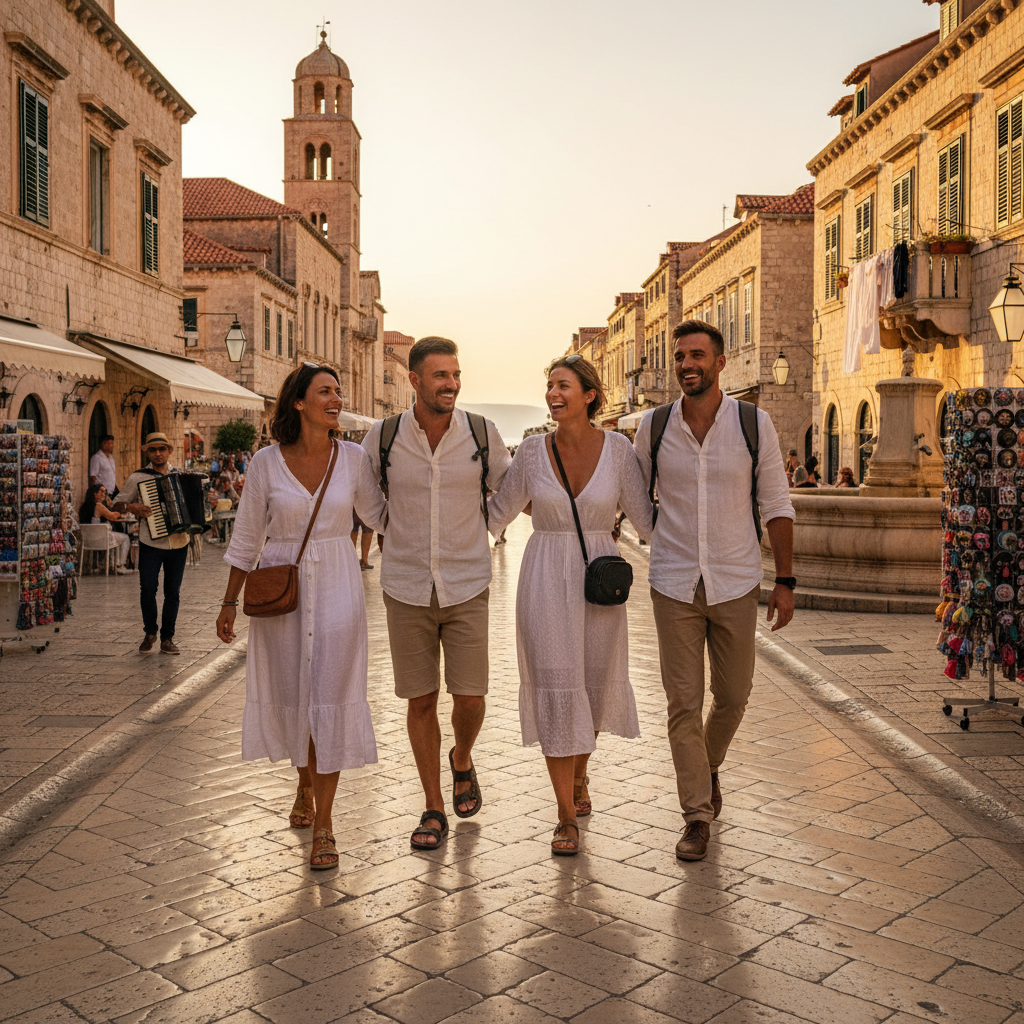
DubrovnikOutdoor Escape Game & Treasure Hunt
The Pearl of the Adriatic, where history meets turquoise sea.
Wondering what to do in Dubrovnik, the magnificent Pearl of the Adriatic? Beyond its majestic city walls and the timeless charm of its Old Town (Stari Grad), Dubrovnik is an invitation to explore. Stroll along the Stradun, the main street paved with polished limestone, admire the architecture of the Rector's Palace, or get lost in the winding alleys leading to breathtaking panoramic views of the turquoise sea. For a truly memorable experience and an unusual activity, why not turn your visit into a life-sized adventure? An OddballTrip outdoor escape game offers a captivating scavenger hunt, a real treasure hunt that will lead you to discover the city's hidden secrets while solving riddles. It's a fun and immersive way to explore Dubrovnik, off the beaten path, and create unforgettable memories.
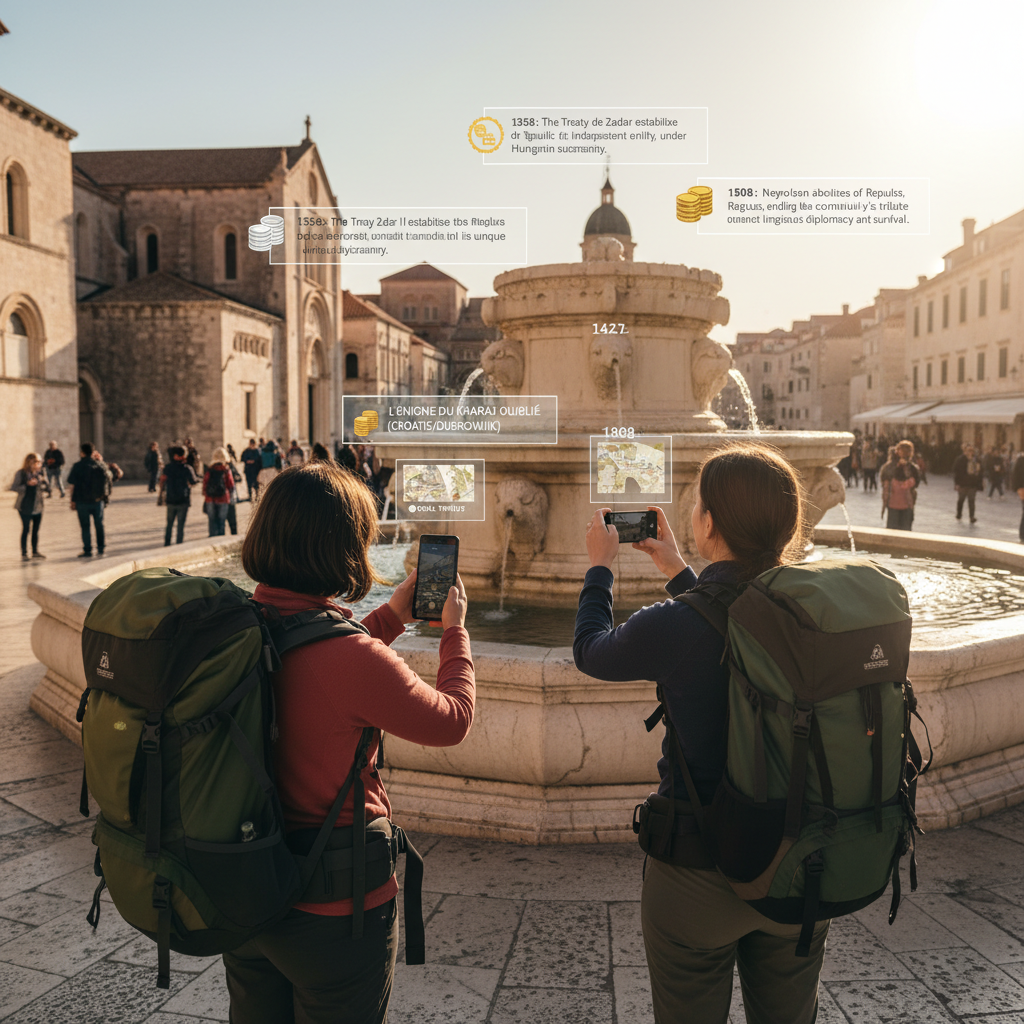
Dubrovnik — Enigma of the Forgotten Kharaj
Uncover the betrayal behind a vanished Ottoman tribute that plunged Dubrovnik into conspiracy. Decipher hidden codes at ancient landmarks to expose the traitors and reclaim the lost Kharaj before the curse claims you.
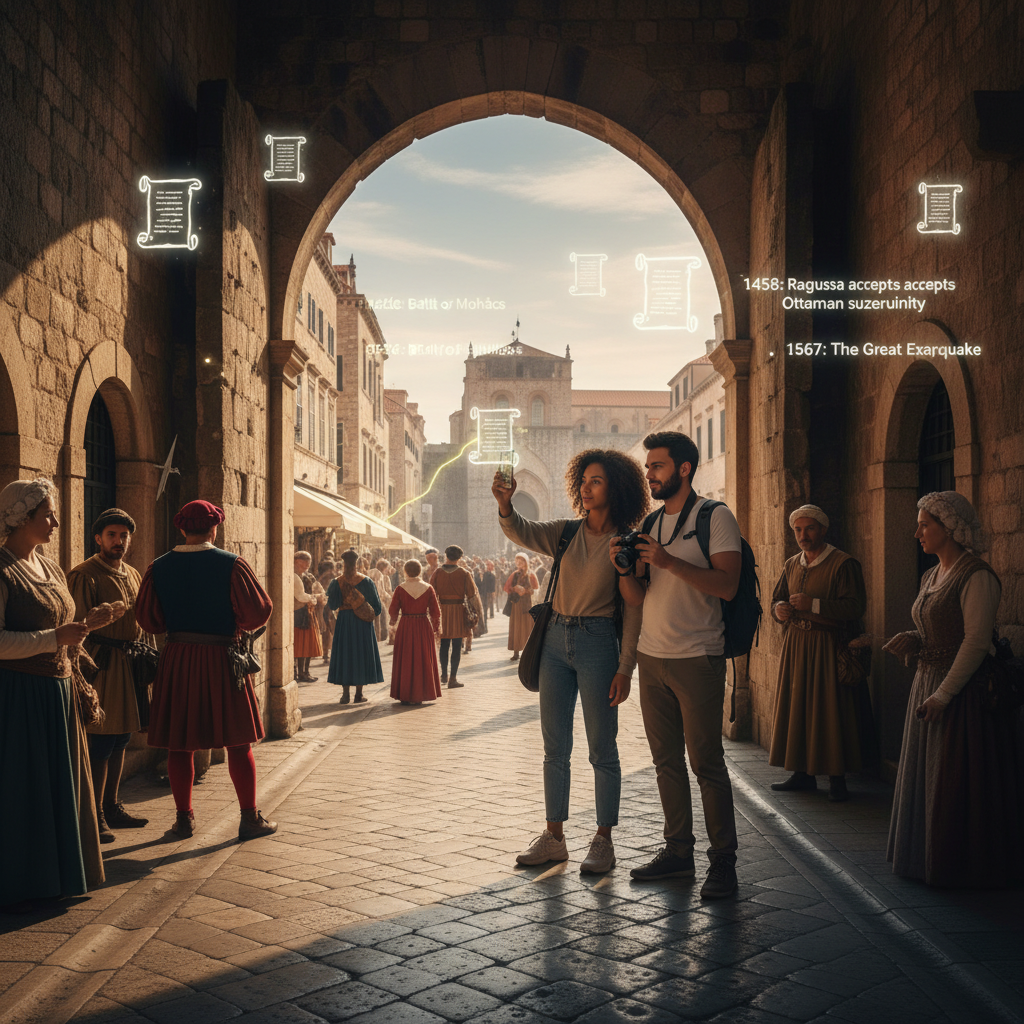
Dubrovnik — Ragusan Senate Cipher
Decipher the secret cipher hidden by the Ragusan Senate to expose an Ottoman conspiracy threatening the Republic's survival. Uncover coded messages in ancient walls before it's too late.
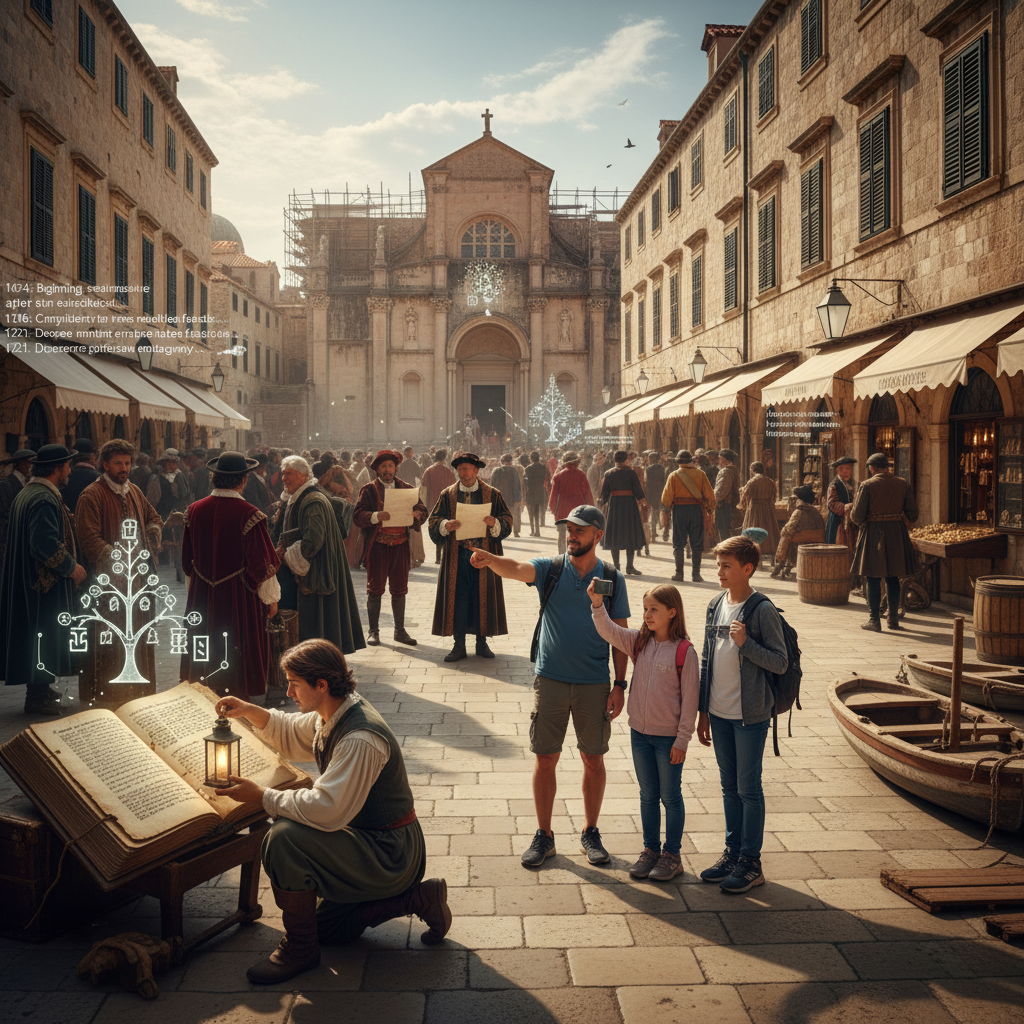
Dubrovnik — The Forgotten Seal of Ragusa
Uncover the conspiracy behind the Forgotten Seal of Ragusa. Decipher hidden codes in the medieval walls and palaces to expose a treasonous plot that nearly toppled the Republic in the 16th century.
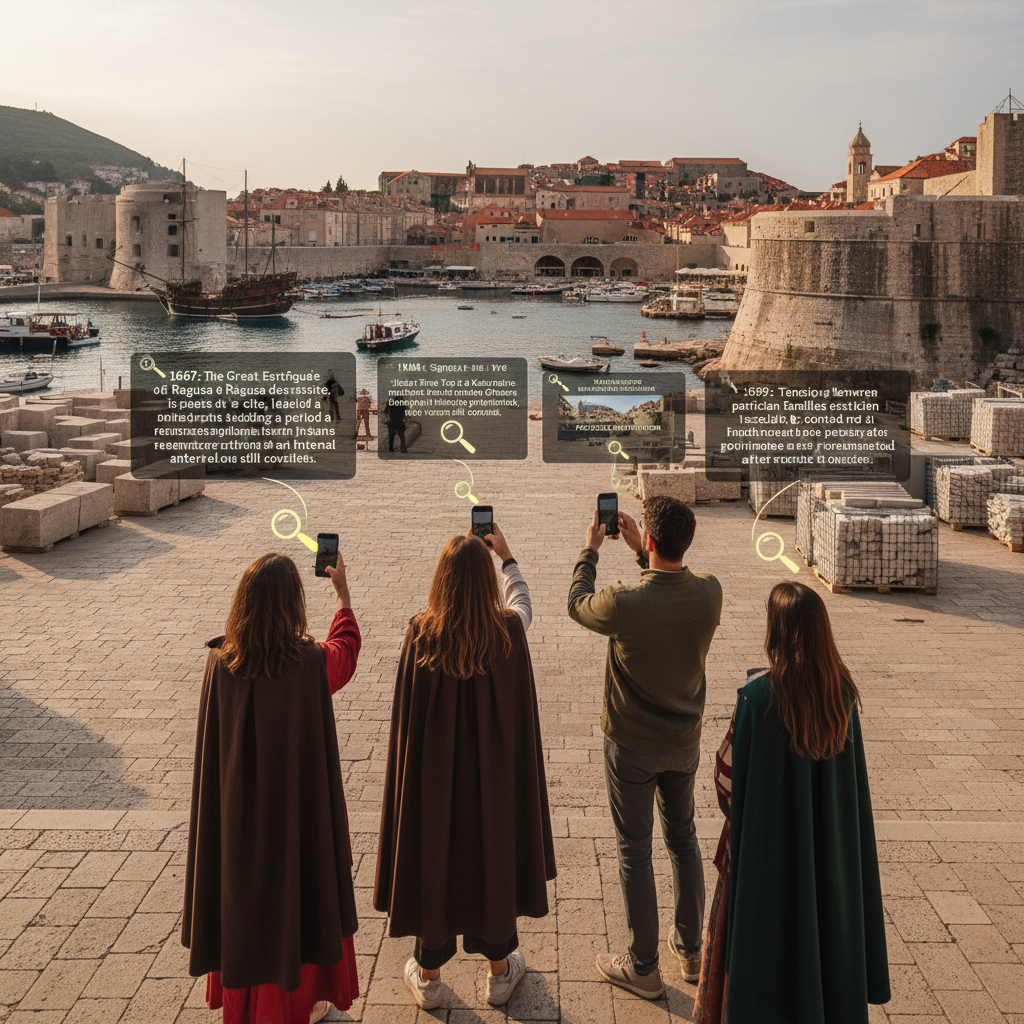
Dubrovnik — Shadow of the Grand Council
Uncover the deadly conspiracy that toppled the Grand Council of Ragusa. Decode shadows of betrayal hidden in palaces and walls to expose the traitors before their curse claims you.
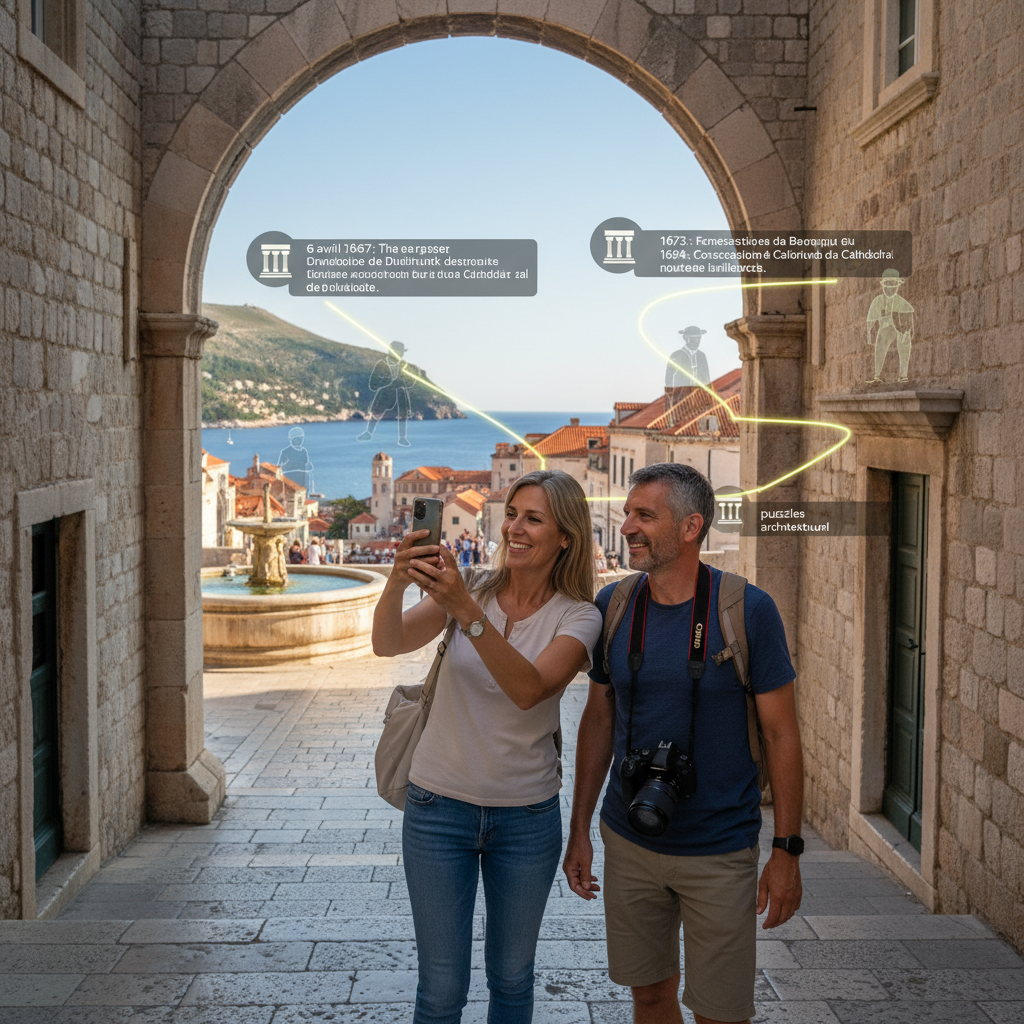
Dubrovnik Old Town — Forgotten Ledger Quest
Decipher architect Bernardo Bobić's hidden clues and secret messages carved into Old Town's stones after the 1667 earthquake to uncover the Forgotten Ledger and expose its guarded secrets before they vanish forever.
Unusual things to do in Dubrovnik
For an unusual activity in Dubrovnik, step off the beaten path! Beyond classic tours, the city is full of hidden gems. Imagine wandering through real Game of Thrones sets, or even embarking on an outdoor escape game that will show you the city from a new perspective. It's an original outing that combines historical discovery with intellectual challenge. You'll solve riddles while exploring secret passages, unknown viewpoints, and fascinating anecdotes. A unique way to soak up Dubrovnik's atmosphere, away from the crowds, and live a personalized adventure.
Things to do in Dubrovnik with kids
What to do in Dubrovnik with family so that both young and old have fun? The city is a fantastic playground! An outdoor escape game is a perfect option for families with children and teens, generally accessible from 6-8 years old, accompanied by an adult. It's a life-sized treasure hunt where everyone can contribute to solving the puzzles. In addition, Dubrovnik's city walls offer a spectacular walk that will amaze everyone. Don't forget an ice cream break or a refreshing swim in the coves after the adventure to complete this family day out.
Dubrovnik for couples
Dubrovnik for couples promises an unforgettable romantic getaway. Get lost hand-in-hand in the cobbled streets of the Old Town, discover secret squares and breathtaking views of the Adriatic. Imagine a candlelit dinner on a terrace overlooking the harbor, or a sunset stroll along the city walls. The city's millennia-old architecture and rich heritage create an intimate and majestic setting. An OddballTrip scavenger hunt can even add a touch of adventure to your romance, making you collaborate to solve mysteries while exploring Dubrovnik's hidden charms.
What to do in Dubrovnik when it rains
What to do in Dubrovnik on a rainy day? Don't panic, the Pearl of the Adriatic has more than one trick up its sleeve. Although our outdoor escape games are designed for outdoors, a large part of the route (about 80%) takes place under arcades or covered passages in the Old Town, allowing you to continue the adventure sheltered from the showers. You can also enjoy museums like the Rector's Palace or simply take refuge in a cozy cafe to watch the rain fall on the red-tiled roofs.
Where is Dubrovnik, and where do the routes start?
Starting points of our routes and the places they pass through.
Route starting points
Places in Dubrovnik
- Onofrio's Great Fountain
- Franciscan Monastery (exterior)
- Cathedral of the Assumption (exterior)
- Gundulić Square
- Jesuit Staircase
- Church of St. Blaise (exterior)
- Peskarija area (Old Port)
- Dubrovnik Lazareti
- Pile Gate
- Stradun
- Orlando's Column
- Sponza Palace
- Rector's Palace
- Dubrovnik Old Port
- Dominican Monastery (exterior)
- Ploče Gate
- Assumption Cathedral (facade)
- Kaše Pier (Old Port)
The history of Dubrovnik
From Roman Refugees to a Maritime Republic
Dubrovnik's origins date to the 7th century, when Roman refugees from the city of Epidaurum (modern-day Cavtat) established a settlement on a rocky island called Laus. Simultaneously, Slavic communities settled on the mainland, giving rise to the name Dubrovnik, derived from 'dubrava' meaning oak grove. For centuries, a narrow sea channel separated these two communities. In the 12th century, this channel was filled in, creating the Stradun, the main street, and uniting the settlements into a single fortified city.
By the 13th century, Dubrovnik, then known as the Republic of Ragusa, had become a maritime power, rivaling Venice in trade and diplomacy. Its prosperity was built on maritime trade and shipbuilding, positioned between Eastern and Western Europe. The Republic was known for its independent government, advanced legal codes, and a policy of peace and neutrality. The city's wealth allowed for continuous fortification, with the city walls largely constructed between the 13th and 17th centuries, reaching their present form around the 14th century.
The 1667 Earthquake and Reconstruction
On April 6, 1667, an earthquake struck Dubrovnik, destroying much of the city and killing thousands of its inhabitants. The earthquake, followed by fires and a tsunami, leveled approximately 75% of the buildings within the city walls, including most public structures. Only a few buildings, such as the Sponza Palace and parts of the Rector's Palace, survived the initial devastation. This catastrophe marked the beginning of the end for the Republic of Ragusa, which had already been in decline.
The reconstruction efforts that followed transformed the city's architecture. The Great Council of the Republic mandated strict building codes, shifting from individual architectural expression to a uniform Roman Baroque style. The Stradun was widened and lined with identical stone buildings, all required to have the same height and window layout, with wooden construction forbidden to prevent future fires. This urban planning created the consistent cityscape visible today, a testament to the city's resilience and commitment to stability.
What to see in Dubrovnik
- Stradun — This main thoroughfare, paved with polished limestone, runs through the Old Town. It connects the Pile Gate to the Old Port. The uniform Baroque buildings lining the street are a direct result of the city's reconstruction after the 1667 earthquake.
- Dubrovnik City Walls — These stone fortifications, dating primarily from the 13th to 17th centuries, encircle the Old Town, stretching for approximately 1,940 meters and reaching heights of up to 25 meters. Walking along them offers views of the city's red-tiled roofs, the Adriatic Sea, and fortresses like Minčeta Fortress and St. John Fortress.
- Rector's Palace — This Gothic-Renaissance palace served as the seat of the Rector of the Republic of Ragusa. Damaged in the 1667 earthquake, it was rebuilt and showcases a blend of architectural styles. Today, it houses the Cultural History Museum, displaying artifacts from Dubrovnik's past.
- Sponza Palace — One of the few buildings to largely survive the 1667 earthquake, this Gothic-Renaissance palace was built in the early 16th century. It originally served as a customs house, mint, and state treasury. Its courtyard and arcades are preserved, and it now houses the State Archives.
- Dubrovnik Lazareti — Located outside the city walls near Ploče Gate, this complex of ten interconnected buildings was built in the 17th century. It served as a quarantine station, where arriving travelers and goods were isolated to prevent the spread of diseases, a public health measure implemented by the Republic of Ragusa.
- Gundulić Square — This Baroque square hosts a daily morning market where local produce, souvenirs, and traditional crafts are sold. In the center stands a statue of 17th-century poet Ivan Gundulić.
When to visit Dubrovnik
The shoulder seasons, April-May and September-October, are the best times to visit Dubrovnik. The weather is mild, with fewer crowds compared to peak summer. The light is suitable for photography, and most attractions are open. June and July offer warm, sunny weather for swimming, but the city can be crowded with tourists, especially from cruise ships, and prices for accommodation are at their highest. August is also hot and crowded. Winters (November to March) are quiet, with cooler temperatures and some businesses may have reduced hours or be closed.
Getting around Dubrovnik
Dubrovnik Airport (DBV) is about 20 kilometers (12 miles) from the city center. An airport bus shuttle provides transport to the main bus station in Gruž and the Pile Gate bus stop. Within Dubrovnik, the Old Town is pedestrianized, making walking the primary way to explore its streets. For longer distances or to reach areas outside the Old Town, the local bus network, operated by Libertas, is reliable. Tickets can be purchased at kiosks or from the driver. Taxis and ride-sharing services (Uber, Bolt) are also available. If you rent a car, parking near the Old Town is limited and expensive. Public garages, such as the one in Ilijina Glavica, offer longer-term options, typically a 10-15 minute walk from the Old Town.
Things you probably do not know about Dubrovnik
Verified details most visitors walk straight past.
- Franciscan Monastery
- What hidden treasure lies within the Franciscan Monastery, continuously operating for centuries? The Franciscan Monastery houses one of the oldest continuously operating pharmacies in Europe, established in 1317. It still sells cosmetics and herbal teas prepared according to ancient recipes.
- Dubrovnik City Walls
- The formidable city walls have a secret past that reveals how the city protected its shipbuilding innovations. During the medieval period, particularly from the 14th to 17th centuries, Dubrovnik's innovative shipbuilding techniques were so carefully guarded that ships were built in secret under large archways near the ports, with doors sealed to prevent spying.
- Dubrovnik Lazareti
- Before the word 'quarantine' was even coined, Dubrovnik had a system in place that inspired it. Where did this practice originate? In 1377, Dubrovnik introduced a 30-day (later extended to 40 days, 'quaranta' in Italian) isolation period for incoming ships and travelers from plague-stricken areas, making it the first place in the world to legally implement quarantine measures.
- Old Town (general)
- How did Dubrovnik manage to stay remarkably clean in the Middle Ages, long before modern sanitation was common? Dubrovnik had a functioning underground sewer and drainage system built in the 13th century that is still in use today, a remarkable feat for its time, ensuring a much cleaner city than most European counterparts.
- Rector's Palace
- The Rector of the Republic of Ragusa held significant power, but there was a peculiar rule about his term in office. What was it? The Rector, the symbolic head of state, served a term of only one month. This short tenure was designed to limit individual power and prevent any single person from accumulating too much influence.
- Stradun
- Why do many of the buildings along the Stradun look so remarkably similar, unlike the varied architecture found in many other historic cities? After the devastating 1667 earthquake, strict reconstruction laws were enacted, mandating that all new buildings along the Stradun have identical facades, heights, and window layouts, and forbidding wooden construction to prevent future fires.
Questions about visiting Dubrovnik
How many days should I spend in Dubrovnik?
Most first-time visitors find that 2 to 3 days is an ideal amount of time to experience Dubrovnik without feeling rushed. This allows for exploration of the Old Town, walking the city walls, and a day trip to a nearby island like Lokrum.
What is the best way to get around Dubrovnik?
The Old Town is entirely pedestrianized, so walking is the best way to explore its historic streets. For areas outside the walls, Dubrovnik has an extensive public bus network. Taxis and ride-sharing apps like Uber and Bolt are also available.
What are the main neighborhoods in Dubrovnik?
The main areas of interest are the Old Town (Stari Grad), which is the historic core within the city walls; Gruž, the main port area; and Lapad and Babin Kuk, which are popular for beaches and resorts. Each offers a different atmosphere and amenities.
What is the typical budget for a trip to Dubrovnik?
Dubrovnik can be a moderately expensive city, especially during peak season. Accommodation and dining within the Old Town tend to be pricier. Budget travelers can save by staying outside the Old Town, using public transport, and seeking out local eateries. Parking is also a significant cost if you have a car.
Is Dubrovnik a good destination for families with children?
Yes, Dubrovnik can be great for families. Beyond the historical exploration, children often enjoy walking the city walls, taking boat trips to nearby islands like Lokrum with its peacocks and small saltwater lake, and spending time at the beaches.
What are the local transportation options from Dubrovnik Airport?
From Dubrovnik Airport (DBV), you can take an airport bus shuttle which connects to the main bus station in Gruž and the Pile Gate bus stop near the Old Town. Taxis and ride-sharing services are also available, and pre-booked private transfers are an option.
Frequently asked questions
How much does an outdoor escape game cost in Dubrovnik?
The price of an OddballTrip outdoor escape game in Dubrovnik is very affordable and designed to be accessible to everyone. It is set at €12 per team, regardless of the number of participants (within the recommended limit of 2 to 6 players for an optimal experience). This unique price per team allows you to enjoy a fun and immersive activity without worrying about the cost per person. It's excellent value for money for an adventure that will make you explore the city in an original way and create unforgettable memories with your friends or family.
Is it suitable for children / families?
Absolutely! Our outdoor escape games are designed to be a fantastic activity for the whole family. The puzzles are varied, ranging from observation to logic, and can be solved with the help of younger participants. We generally recommend a minimum age of 6-8 years old, always accompanied by an adult, so that children can fully participate and enjoy the experience. It's a great way to stimulate their curiosity, work as a team, and discover Dubrovnik in a fun and interactive way, transforming the city into a huge playground.
How long does an escape game in Dubrovnik last?
The duration of an OddballTrip outdoor escape game in Dubrovnik is flexible and depends on your pace and your ability to solve the puzzles. On average, allow between 1h30 and 2h30 to complete the route and discover all the city's secrets. However, there is no imposed time limit, so you can take your time, pause to admire the scenery, grab a coffee, or visit a monument along the way. The goal is to enjoy the experience at your leisure, stress-free, and fully immerse yourself in the adventure.
Do I need to book in advance?
No, one of the great advantages of our outdoor escape games is their flexibility. There's no need to book in advance! You can purchase your game online whenever you want, even a few minutes before starting your adventure. Once purchased, you will instantly receive instructions to start the game on your smartphone. This allows you to spontaneously decide on your activity, depending on the weather, your mood, or your schedule. It's total freedom to explore Dubrovnik at your own pace.
What to visit in Dubrovnik beyond the escape games?
Dubrovnik is full of treasures to discover! After your escape game, don't miss a walk on the famous city walls for breathtaking views of the Old Town and the Adriatic. Explore the main street, the Stradun, visit the Rector's Palace and the Franciscan Monastery. For Game of Thrones fans, many filming locations are waiting to be explored. Don't hesitate to take the cable car up Mount Srđ for a stunning panoramic view at sunset. And of course, enjoy the beaches and coves for a refreshing swim.
What is the best season to visit Dubrovnik?
The best season to visit Dubrovnik depends on your preferences. Spring (April-May) and autumn (September-October) are ideal: the weather is pleasant, temperatures are mild, and the crowds are thinner. It's perfect for exploring the city and enjoying our escape games without the summer heat. Summer (June-August) is very popular, but it's hot and the city is very lively. If you enjoy the festival atmosphere and swimming, it's a great time. Winter is quieter, offering a different and more intimate atmosphere.
Other destinations in Dalmatia
Hvar
Adriatic gem, between history and secret coves.
Knin
Royal fortress, historical heart of Croatia
Korcula
Marco Polo's island, between history and the Adriatic Sea
Nin
Ancient royal capital, between salt and sea
Omis
Pirate city, between sea and canyon
Sibenik
Between medieval fortresses and the Adriatic Sea
Split
Diocletian's Palace, the beating heart of a millennial city
Trogir
UNESCO medieval city, jewel of the Adriatic.
Zadar
Between sea organ and ancient ruins, the pearl of the Adriatic
Activities to discover nearby
Guided tours, skip-the-line tickets and local experiences to book in advance.
💡 Optional booking — you can also buy on-site. All links open in a new window, your OddballTrip visit stays preserved.