KorculaOutdoor Escape Game & Treasure Hunt
Marco Polo's island, between history and the Adriatic Sea
If you're wondering what to do in Korcula, this Dalmatian island, the presumed birthplace of Marco Polo, is a true gem. Wander through the cobbled streets of the fortified Old Town, admire the majestic St. Mark's Cathedral with its detailed sculptures, or explore the alleged birthplace of the famous explorer. But for an experience that's out of the ordinary, the island offers plenty of activities. Why not embark on an outdoor escape game? It's a fun and immersive way to discover Korcula's secrets. Participate in a captivating treasure hunt that will lead you through historical sites and breathtaking viewpoints. Every corner of the town can become a clue in this life-sized scavenger hunt, offering an unusual activity and memorable experience for all ages. Get ready to explore, solve puzzles, and soak in Korcula's unique atmosphere.

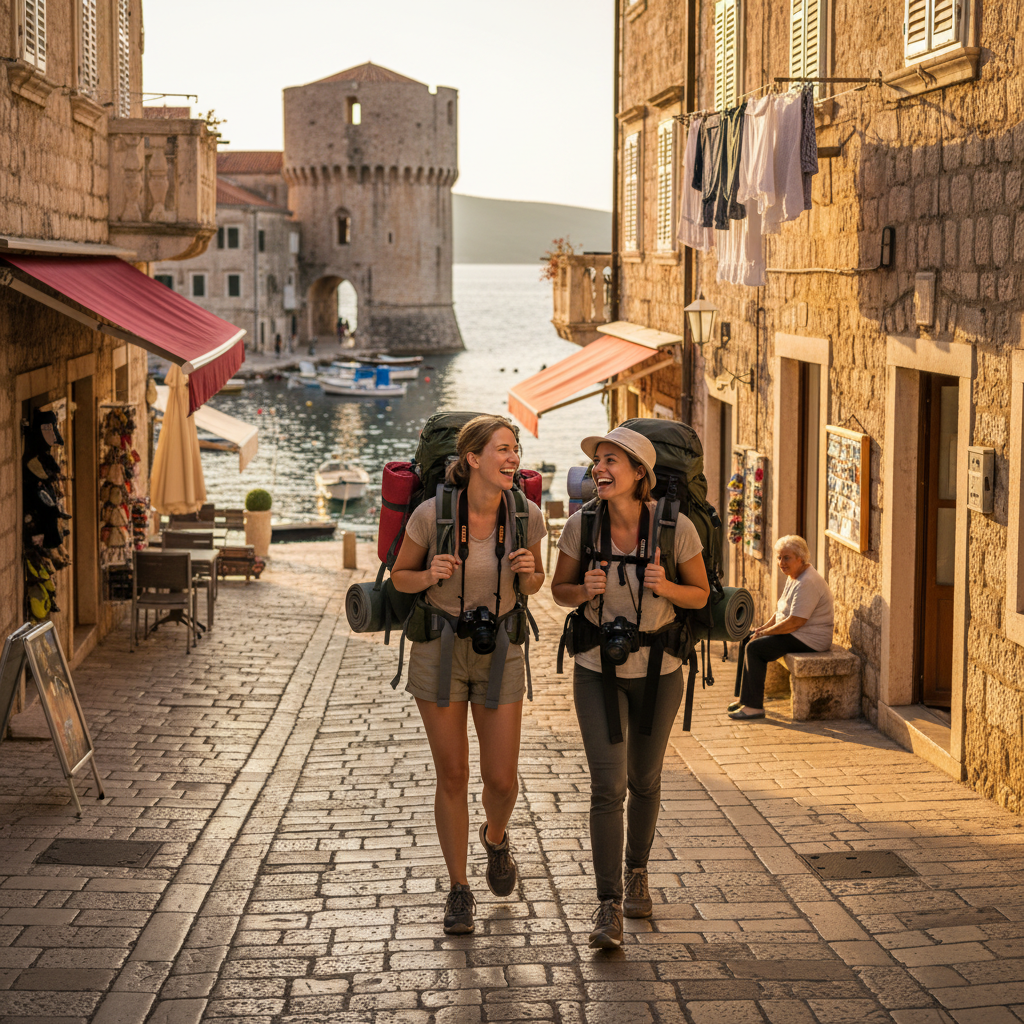
Korčula — Marco Polo's Hidden Legacy
Uncover the forgotten secrets of Marco Polo's Korčula origins and decipher the clues hidden in his alleged birthplace before a shadowy cabal erases his true legacy forever.
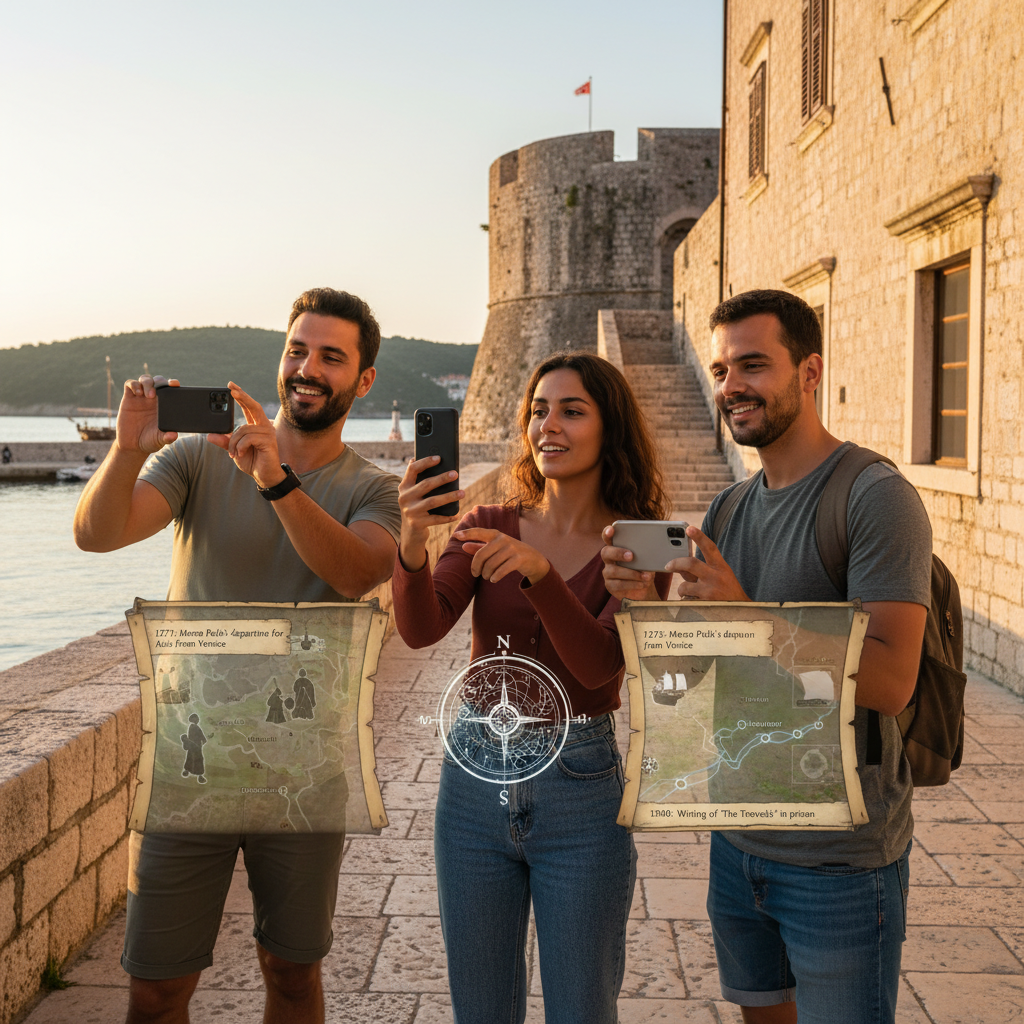
Korčula — Emissaries' Silk Road Secret
Uncover the hidden network of Silk Road emissaries who smuggled forbidden silk secrets through Korčula's ports. Decode their coded messages and solve the conspiracy before the Venetian spies seize the final cache.
Unusual things to do in Korcula
For an unusual activity in Korcula, beyond the beaches, delve into the history of the Moreska sword dance, a fascinating local tradition. Imagine yourself wandering through medieval alleys, not just as a tourist, but as a detective. An OddballTrip treasure hunt transforms the city into a huge playground where every architectural detail can hold a secret. It's an original outing that combines cultural discovery with the joy of solving puzzles, offering you a unique perspective on the legends and heritage of Marco Polo. Let yourself be surprised by the challenges awaiting you in the heart of this charming island.
Things to do in Korcula with kids
Korcula is a fantastic destination for families! If you're looking for what to do with your family in Korcula, our treasure hunts are perfect for keeping children and teens engaged from 8 years old. It's a fun and interactive way to discover the city, turning the visit into a grand adventure. Far from traditional guided tours, the puzzles and challenges stimulate everyone's curiosity, strengthening team spirit. It's an activity that appeals to all ages, allowing parents to share a moment of bonding with their children while exploring the island's heritage. A memorable experience guaranteed for young and old alike.
Korcula for couples
For a romantic getaway, Korcula for couples offers an idyllic setting. Imagine yourselves hand in hand, deliberately getting lost in the labyrinth of narrow streets of the Old Town, where every corner reveals a new surprise. The breathtaking views of the Adriatic Sea from the ramparts at sunset are simply magical, creating unforgettable memories. Our treasure hunts can add a touch of intimate adventure to your stay, allowing you to discover hidden corners and fascinating stories of the island's heritage together, strengthening your bond with each puzzle solved. A unique experience for lovers.
What to do in Korcula when it rains
Even in rainy weather, Korcula retains its charm. If you're wondering what to do in Korcula on a rainy day, know that the heart of the Old Town offers covered passages and arcades that protect a good part of our routes. Approximately 80% of the adventure can be completed under shelter, allowing you to continue your exploration without getting too wet. Take the opportunity to admire the architectural details of the buildings or take refuge in a cozy cafe for a gourmet break between puzzles. The magic works even under grey skies!
Where is Korcula, and where do the routes start?
Starting points of our routes and the places they pass through.
Route starting points
Places in Korcula
- Revelin Tower Gate
- Marco Polo House
- St. Mark's Cathedral
- Former Bishop's Palace (Korčula Town Museum)
- Sea Tower (Zakerjan Tower)
- Gabrieli Palace
- Governor's House (above the Land Gate)
- Western Ramparts of the Old Town
- West Port Quay (Mandrac)
- Old Merchants' Loggia (near Central Square)
- Governor's Tower (Great City Tower)
- Small Pescadori Harbor (East)
- Eastern Bastion (next to the tower)
- Facade of St. Michael's Church
- Arms Square (Wheat Square)
- Panoramic View from North Ramparts
The history of Korcula
From Ancient Roots to Venetian Control
Korčula island has settlements dating to the Neolithic period, with evidence at Vela Spila near Vela Luka. Legend attributes the founding of the main settlement to the Trojan warrior Antenor in the 12th century BC. Greek colonists arrived in the 4th century BC, naming the island Korkyra Melaina, or 'Black Korčula,' for its pine forests. The Romans took control in the 3rd century BC, calling it Korkyra Nigra.
Korčula's position in the Adriatic made it a desired territory. After periods under Byzantine and Slavic influence, the Republic of Venice gained control, ruling the island intermittently from the 10th century. In 1420, Venice secured its domination for 370 years, until the fall of the Venetian Republic in 1797. This Venetian rule shaped the town's architecture and urban planning. The Old Town acquired its present form between the 13th and 15th centuries. During this era, the town's defensive walls were strengthened, with the system largely defined by the 16th century to protect against attacks.
Shifting Powers and Enduring Structures
After the collapse of the Venetian Republic in 1797, Korčula experienced a period of shifting allegiances. It was briefly under Austrian rule, then Napoleon's French army in 1806. The island's strategic importance was demonstrated in April 1806 when the Russian fleet bombarded Korčula, forcing the French to retreat. The British also held control between 1813 and 1815, undertaking building projects, including a large fortress above Korčula Town. The island became part of the Austro-Hungarian Empire from 1815 until 1918, before Italian occupation and later incorporation into Yugoslavia. Despite these changes, the medieval core of Korčula Town, with its Venetian-influenced architecture and 'fishbone' street pattern designed for climate control, remains preserved, offering a link to its past.
What to see in Korcula
- Revelin Tower Gate — This square tower is the main land entrance to the Old Town from the south. It was part of the fortifications developed from the 13th to the 16th centuries.
- Marco Polo House — This house is believed to be the family home of Marco Polo. It provides a view into the town's connection to the explorer.
- St. Mark's Cathedral — This Gothic-Renaissance cathedral was built between the early 15th and mid-16th centuries using local limestone. Its facade features sculptural details, including figures of Adam and Eve, and a two-tailed mermaid.
- Former Bishop's Palace (Korčula Town Museum) — This palace now houses the Korčula Town Museum, which presents the island's history, culture, and traditions through artifacts.
- Sea Tower (Zakerjan Tower) — This is one of the round and semi-round towers built during the 15th and 16th centuries as part of the Venetian fortification efforts. It is on the eastern ramparts and overlooks the channel.
- Gabrieli Palace — On St. Mark's Square, this 16th-century palace is an example of Venetian Gothic architecture, reflecting the influence of noble families during that period.
- Governor's House (above the Land Gate) — This building, near the main entrance to the Old Town, was the residence for Venetian governors, marking the administrative center during Venetian rule.
- Western Ramparts of the Old Town — These defensive walls, from the 13th and 14th centuries, protected the town from land and sea. Portions remain, showing medieval European war architecture.
- West Port Quay (Mandrac) — This historic harbor on the western side of the Old Town was used by fishing boats and offers a view of the fortified town from the sea.
- Old Merchants' Loggia (near Central Square) — This open-sided building was a hub for trade and commerce in medieval Korčula, reflecting the town's importance as a mercantile center.
When to visit Korcula
The best time to visit Korčula is during May, June, and September. Temperatures range from 17°C to 25°C, suitable for exploring, and the sea is warm enough for swimming from June through September. Restaurants and tours are open, but without the crowds and higher prices of peak summer. September also includes the grape harvest season, with winery visits available.
Avoid July and August if you prefer fewer crowds and lower prices, as these are the busiest and hottest months, with temperatures reaching 33°C. From November to March, many establishments are closed and ferry schedules are reduced.
Getting around Korcula
Korčula is an island, accessible only by ferry. Passenger catamarans connect directly to Korčula Town from Split, Dubrovnik, Hvar, and Mljet. Car ferries depart from Split or Orebić on the Pelješac peninsula, docking at Vela Luka (an hour's drive from Korčula Town) or Dominče (a 30-minute walk or short bus ride from the Old Town).
The Old Town of Korčula is a pedestrian-only zone with narrow, stepped streets, suitable for walking. For travel around the island, local buses connect Korčula Town to other villages like Vela Luka and Lumbarda. Taxis and water taxis are also available.
Parking in Korčula Town is outside the Old Town walls. Paid parking is available on Obala Vinka Paletina (East pier) or Obala korčulanskih brodograditelja (West pier) at €4 per hour, or a garage and rooftop parking at the Spot-Tommy shopping center for €2 per hour, about a 10-minute walk away. In summer, parking fills quickly and prices are higher.
Things you probably do not know about Korcula
Verified details most visitors walk straight past.
- Korčula Old Town
- Why are the streets of Korčula Old Town laid out like a fishbone? This urban plan, with a main street running east-west and angled side streets, was designed to protect residents from strong 'bura' winds from the northeast while allowing the refreshing 'maestral' from the west to circulate.
- Entrance to Korčula Old Town
- What ancient legend is commemorated at the entrance to Korčula's Old Town? A 16th-century Latin inscription on a stone board at the Old Town entrance states: 'After the burning of Troy these walls were built by Antenor,' referring to the Trojan warrior believed to have founded Korčula in the 11th century BC.
- St. Mark's Cathedral
- What unusual creatures can you spot carved into the facade of St. Mark's Cathedral? The sculptural details on the Gothic-Renaissance facade include figures of Adam and Eve, alongside a two-tailed mermaid and an elephant, showcasing the diverse influences and craftsmanship of its builders.
- Chapel of St. Roch (next to St. Mark's Cathedral)
- Why was the Chapel of St. Roch built next to the Cathedral in 1525? The Chapel of St. Roch was constructed as a votive offering by the residents of Korčula in honor of St. Roch, the patron saint against plague, following a severe outbreak that frequently affected the city at that time.
- Korčula Town Walls
- What happened to parts of Korčula's defensive walls in the 19th century? As threats of war diminished, and during a visit by Emperor Franz Joseph I, some sections, including parts of the eastern and western walls, were demolished in the early 19th century due to neglect and changing times.
- Philosopher's Street (Ulica Mudraca)
- Which street in Korčula Old Town is unique for lacking a common architectural feature? Philosopher's Street is the only street in Korčula Town without steps, a rare exception in the otherwise steeply inclined and stepped alleyways of the medieval settlement.
Questions about visiting Korcula
How many days should I spend in Korčula?
Three days is suitable to explore Korčula Town, visit local wineries, and relax on beaches like those in Lumbarda. One full day allows you to see the Old Town and nearby attractions. For a more thorough exploration of the island, including bays and villages, consider five or more days.
What is the best way to get around Korčula?
Korčula Town is best explored on foot due to its pedestrian-only Old Town. For traveling around the island, local buses connect major towns and villages. Taxis, water taxis to nearby islands, and rental bikes are also options. While a car offers flexibility, parking in Korčula Town can be difficult in summer.
Which neighborhoods should I explore in Korčula?
The Old Town is the main attraction with its medieval architecture and historical sites. Beyond the walls, consider visiting Lumbarda for its sandy beaches and Grk wine vineyards, or Vela Luka on the western end of the island for a seaside town experience.
What is the typical budget for a trip to Korčula?
Korčula can accommodate various budgets. Accommodation prices vary between peak season (July/August) and shoulder seasons (May/June/September/October), with shoulder season prices being 40-50% lower. Dining can range from local konobas to upscale restaurants. Consider ferry costs and activity prices when planning.
Is Korčula a good destination for families with children?
Yes, Korčula is family-friendly. The island offers sandy beaches in Lumbarda, such as Vela Pržina and Bilin Žal, which are suitable for children. There are also opportunities for outdoor activities like cycling, kayaking, and exploring the Old Town.
What local events or festivals take place in Korčula?
Korčula hosts several food, wine, and music festivals during the summer months. The Moreška sword dance is performed regularly in the Old Town, typically on Tuesdays and Thursdays during the season, offering a cultural experience.
Frequently asked questions
How much does an outdoor escape game cost in Korcula?
Our outdoor escape games in Korcula are designed to be accessible and fun for everyone. The price is €12 per team, not per person! This means that if you come with several people (up to 6 players per team is ideal), the cost per participant becomes very affordable. It's excellent value for money for an activity lasting approximately 1.5 to 2 hours, allowing you to discover the city in a unique and interactive way. Get ready for a memorable adventure without breaking the bank!
Is it suitable for children / families?
Absolutely! Our treasure hunts are perfectly suited for families and groups with children or teenagers. We recommend active participation from 8 years old, but younger children can certainly follow along and help search for clues. The playful aspect of the puzzles and the discovery of the city make it a very popular activity for families. It's an excellent opportunity to spend quality time together, strengthen bonds, and create unforgettable memories while exploring Korcula interactively.
How long does an escape game in Korcula last?
The duration of our outdoor escape games in Korcula generally ranges between 1.5 and 2 hours. This, of course, depends on your pace, how quickly you solve the puzzles, and the time you take to admire the scenery or take breaks. The goal is not speed, but to fully enjoy the experience and the discovery of the city. You are free to take your time, stop for an ice cream or a photo, and fully immerse yourself in the adventure at your leisure.
Do I need to book in advance?
No, not at all! One of the great advantages of our outdoor escape games is their flexibility. You don't need to book in advance. You can purchase the game whenever you want and start the adventure at the time that suits you best, directly from your smartphone. This is perfect for spontaneous travelers or those who prefer to organize their day as they go. All you need is your charged phone and an internet connection to launch the game when the mood strikes you.
What to visit in Korcula beyond the escape games?
Beyond our games, Korcula is full of treasures to explore. Don't miss the magnificent fortified Old Town, St. Mark's Cathedral, and the presumed birthplace of Marco Polo. Enjoy the idyllic beaches for swimming or snorkeling. Explore local vineyards and taste regional wines, like Grk. Attend a performance of the Moreska sword dance, a unique tradition. Rent a scooter to explore the island or take a boat trip to nearby islands like Badija. There is so much to see and do!
What is the best season to visit Korcula?
The best season to visit Korcula is undoubtedly spring (May-June) or early autumn (September-early October). During these periods, the climate is ideal, with pleasant temperatures, perfect for exploration and outdoor activities. The crowds are less dense than in mid-summer, allowing you to enjoy the island's charms more peacefully. The water is warm enough for swimming, and the landscapes are magnificent, offering an optimal travel experience.
Other destinations in Dalmatia
Dubrovnik
The Pearl of the Adriatic, where history meets turquoise sea.
Hvar
Adriatic gem, between history and secret coves.
Knin
Royal fortress, historical heart of Croatia
Nin
Ancient royal capital, between salt and sea
Omis
Pirate city, between sea and canyon
Sibenik
Between medieval fortresses and the Adriatic Sea
Split
Diocletian's Palace, the beating heart of a millennial city
Trogir
UNESCO medieval city, jewel of the Adriatic.
Zadar
Between sea organ and ancient ruins, the pearl of the Adriatic
Activities to discover nearby
Guided tours, skip-the-line tickets and local experiences to book in advance.
💡 Optional booking — you can also buy on-site. All links open in a new window, your OddballTrip visit stays preserved.