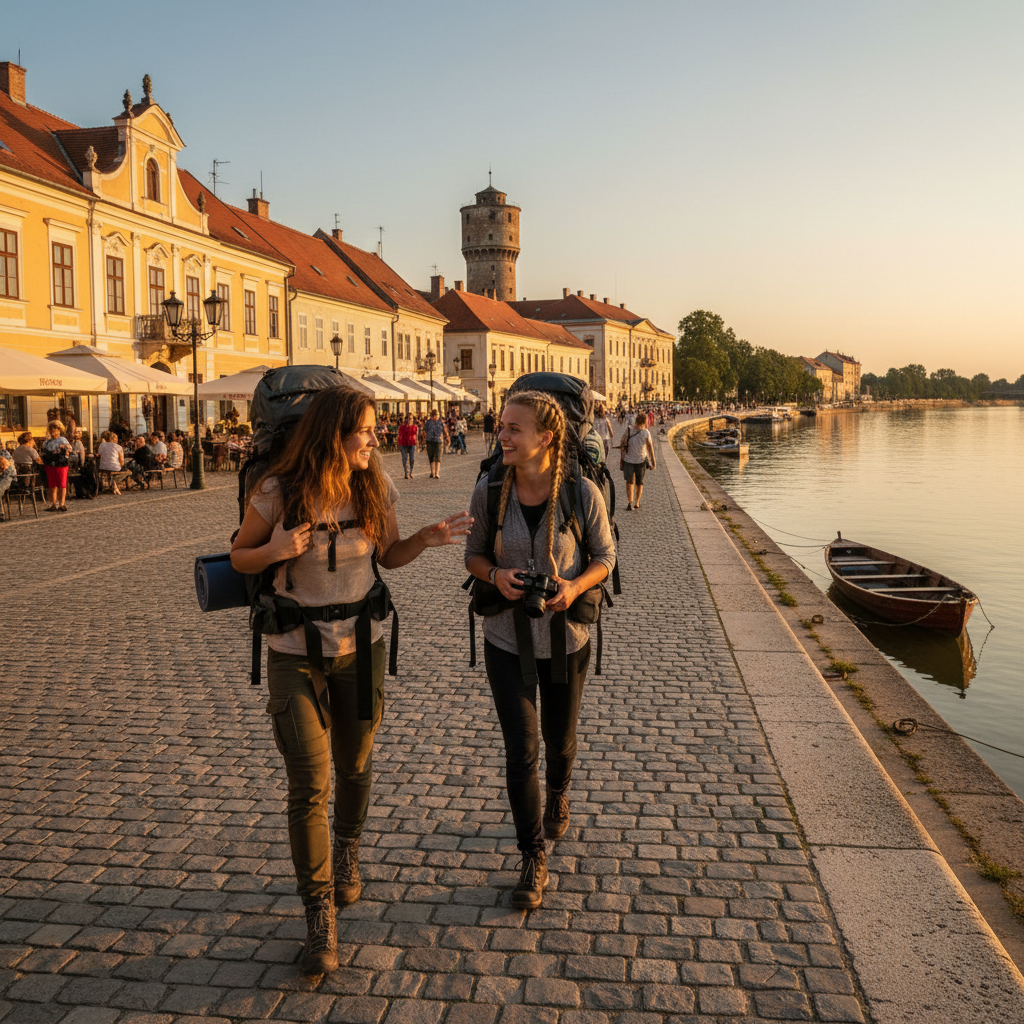
VukovarOutdoor Escape Game & Treasure Hunt
On the Danube's banks, a city of resilient history.
Vukovar, an iconic city nestled on the majestic banks of the Danube, is a destination that invites exploration and discovery. Far from the usual crowds, it offers a unique experience, blending poignant history with cultural renewal. If you're wondering 'what to do in Vukovar', the answer is diverse and surprising. Start by strolling through the Baroque center, admire the elegance of the Eltz Manor, which houses the city museum, or contemplate the resilience embodied by the famous Vukovar Water Tower, a symbol of the city. For an unusual activity, why not embark on an OddballTrip outdoor escape game? It's an original and fun way to uncover the city's secrets. Imagine yourself on an urban treasure hunt, solving puzzles while exploring the streets and riverbanks. A true scavenger hunt that transforms sightseeing into an interactive adventure. Vukovar is an invitation to experience authentic moments, both moving and entertaining, where every street corner tells a story.
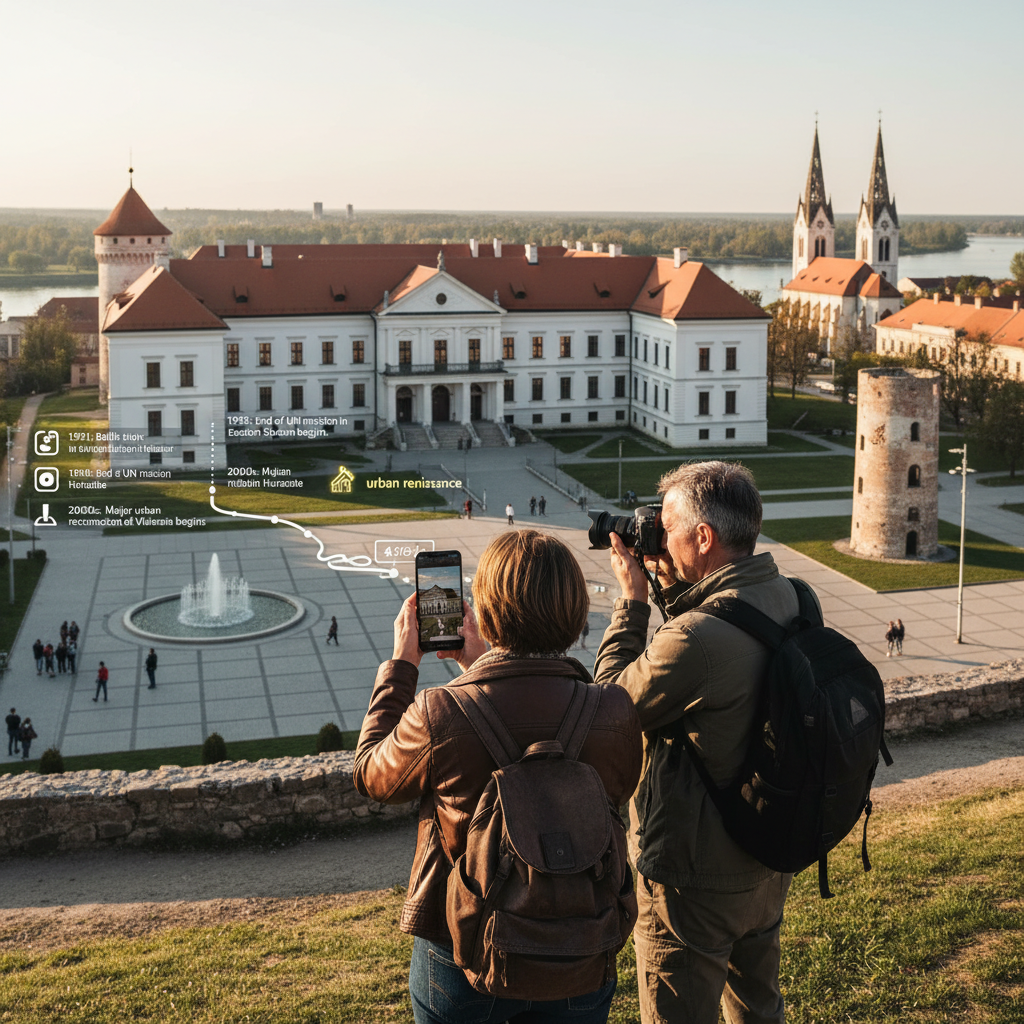
Vukovar — The Architect's Secret Plan
In the ashes of war, a visionary architect hid a secret blueprint to resurrect Vukovar's soul. Uncover his coded symbols across baroque ruins and memorials to decode the defiant plan before it's lost forever.
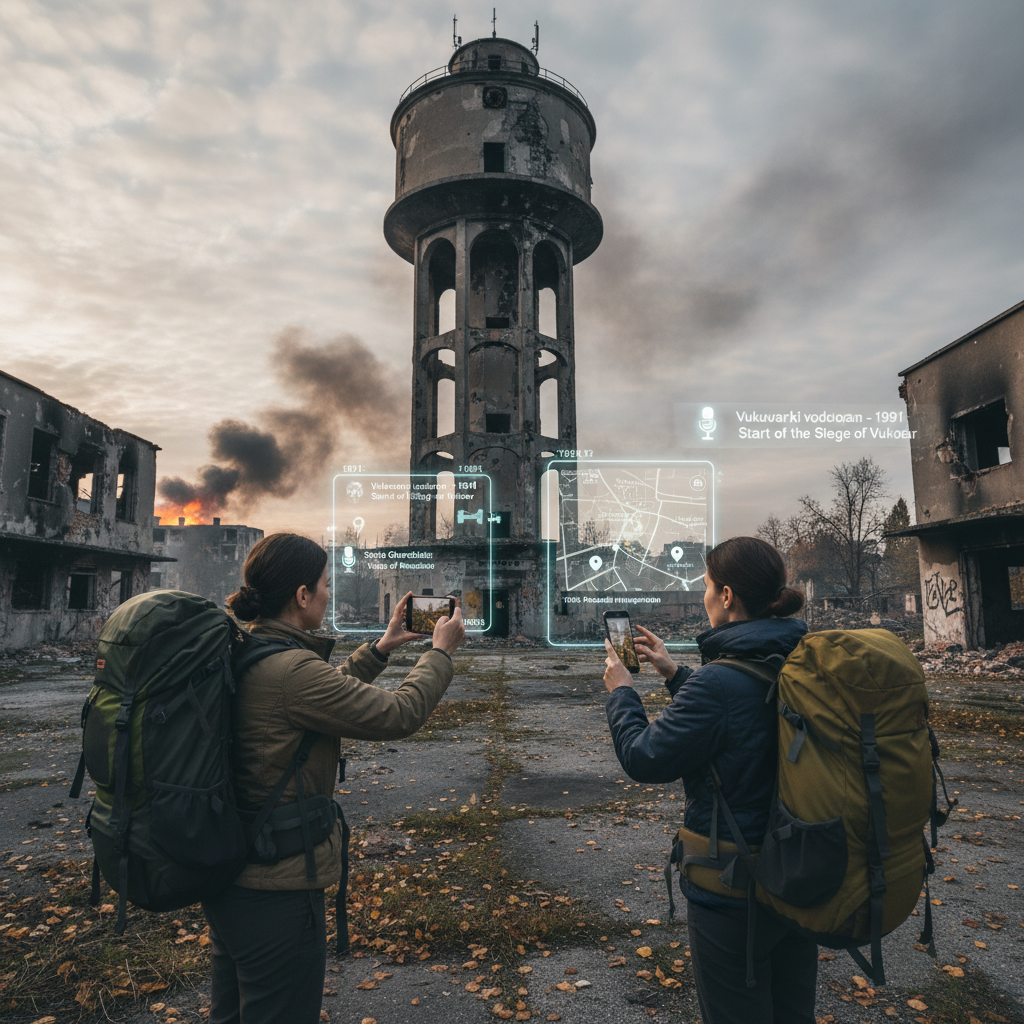
Vukovar's Last Stand — Decode the Final Message
Decipher the hidden testimony of Vukovar's 1991 siege. Uncover the final messages left by defenders in the rubble, monuments, and memorials of a city under fire.
Unusual things to do in Vukovar
For an unusual activity in Vukovar, dive into the city's history in a completely unique way. Beyond traditional museums, OddballTrip offers an original outing: an outdoor escape game. Imagine deciphering puzzles hidden in the nooks of the Baroque center or along the Danube, transforming the city into a giant playground. It's an opportunity to discover architectural details or historical anecdotes you might have missed otherwise, all while tackling stimulating challenges. An immersive experience that combines culture, adventure, and reflection, perfect for those looking to escape conventional tourism.
Things to do in Vukovar with kids
Vukovar is a surprising destination for families seeking adventure. If you're looking for 'what to do with family in Vukovar', our outdoor escape games are an excellent option. Designed to be accessible, they allow children (from 7-8 years old with an adult) and teens to have fun while discovering the city. It's a playful way to learn local history and geography, stimulate curiosity, and foster teamwork. Solving outdoor puzzles transforms the visit into a big collective treasure hunt, where everyone, from the youngest to the oldest, finds their place and contributes to the adventure.
Vukovar for couples
Vukovar offers an intimate and historically rich setting for a couple's getaway. Away from the hustle and bustle of big cities, you can stroll hand in hand along the peaceful banks of the Danube, admire picturesque views, and get lost in the charming narrow streets of the Baroque center. The city, with its architectural heritage and poignant resilience, invites moments of reflection and sharing. An OddballTrip outdoor escape game can add a touch of adventure and complicity to your stay, allowing you to discover Vukovar's secrets together in a fun and memorable way. An experience for two, between history and nature.
What to do in Vukovar when it rains
Even in rainy weather, Vukovar retains its charm and offers options. If you're wondering 'what to do in Vukovar on a rainy day', know that our outdoor escape game routes are surprisingly suitable. Approximately 80% of our itineraries take place under arcades, covered passages, or near shelters, allowing you to continue the adventure without being too bothered by the bad weather. It's an excellent opportunity to discover the city from another angle, enjoying the special atmosphere that rain creates on old stones, while staying relatively dry.
Where is Vukovar, and where do the routes start?
Starting points of our routes and the places they pass through.
Route starting points
Places in Vukovar
- Dvorac Eltz (Eltz Castle - Vukovar City Museum)
- Trg Republike Hrvatske (Republic of Croatia Square)
- Vukovarski vodotoranj (Vukovar Water Tower)
- Crkva sv. Filipa i Jakova (Church of Saints Philip and James)
- Šetalište na Dunavu (Danube Riverfront Promenade)
- Spomen dom Ovčara (Ovčara Memorial Home, exterior)
- Muzej vučedolske kulture (Museum of Vučedol Culture)
- Adica Park
- Opća bolnica Vukovar (Vukovar General Hospital)
- Križ na Dunavu (Cross on the Danube)
- Memorijalni centar Domovinskog rata Vukovar (Homeland War Memorial Centre)
- Siniša Glavašević Memorial (near former Radio Vukovar)
- Ovčara Memorial Site (exterior)
The history of Vukovar
Early Settlements and Roman Influence
Vukovar's history spans five millennia, with continuous settlement shown by archaeological sites. The Vučedol culture, from the Chalcolithic period (around 3000-2200 BC), is located 5 kilometers downstream on the Danube. This culture is known for its pottery, including the Vučedol Dove, a ritual vessel found in 1938 that is a city symbol. The Vučedol Orion, considered an early Indo-European calendar, was also discovered here.
Romans arrived in the Danube region in the last decades BC, establishing fortifications as part of their limes (border) against barbarian tribes. They introduced agricultural improvements, including draining marshes and planting the first vineyards.
Medieval Development and Ottoman Rule
Vukovar was first mentioned in the early 13th century as "Volko" and "Vukovo." In 1231, it was granted royal free city status by Duke Koloman, which supported its development as a trade and craft center. By the end of the 14th century, Vukovar was a medieval Slavonic town with an estimated 2,000 to 2,500 inhabitants.
Ottoman rule began in 1526 when Sultan Suleiman the Magnificent's armies occupied Vukovar. The city remained under Ottoman control for 161 years, until 1687. During this period, Vukovar continued as a trade and craft center along a major route. After the Ottoman withdrawal, the area was repopulated by returning Croats and new settlers, including Serbs, Germans, and Hungarians, contributing to Vukovar's multinational character.
Baroque Period and Modern Conflicts
In 1736, Philipp Karl von Eltz-Kempenich, Archchancellor of the Holy Roman Empire and Prince-Archbishop of Mainz, purchased the Vukovar manor. His descendants built the Eltz Manor between 1749 and 1751, which was expanded and now houses the Vukovar City Museum. The 18th and 19th centuries saw Vukovar develop under the Habsburg Monarchy, becoming the seat of Syrmia County in 1745. The city developed a Baroque architectural style, visible in its historic center.
After World War II, Vukovar became an industrial center within Yugoslavia, with textile and food industries. The city experienced significant destruction during the Croatian War of Independence. The Battle of Vukovar, an 87-day siege from August to November 1991, resulted in the destruction of approximately 90% of its housing stock, and thousands were killed or displaced. The city has since undergone reconstruction.
What to see in Vukovar
- Dvorac Eltz (Eltz Castle) — This Baroque palace, built by the German noble House of Eltz between 1749 and 1751, now houses the Vukovar City Museum. Its permanent exhibition across 17 rooms on the first floor displays the region's history and cultural heritage.
- Vukovarski vodotoranj (Vukovar Water Tower) — This 50-meter-tall tower, built in 1968, became a symbol during the 1991 siege, enduring over 600 direct hits. It is preserved as a memorial site, offering views of Vukovar and the Danube from its observation deck.
- Crkva sv. Filipa i Jakova (Church of Saints Philip and James) — This Roman Catholic church, built by Franciscan monks between 1723 and 1732, is one of the oldest Baroque monuments in Vukovar. It was damaged in 1991 but has been restored, and is the third-longest church in Croatia.
- Muzej vučedolske kulture (Museum of Vučedol Culture) — Located 5 kilometers downstream on the Danube, this museum, partially built into a hillside, displays artifacts from the prehistoric Vučedol culture, including the Vučedol Dove and the Vučedol Orion, considered an early Indo-European calendar.
- Šetalište na Dunavu (Danube Riverfront Promenade) — This promenade offers views of the river, parks, and outdoor cafes. It is a place to observe the wide Danube, which forms the border with Serbia here.
- Memorijalni centar Domovinskog rata Vukovar (Homeland War Memorial Centre Vukovar) — This center provides information on the Croatian War of Independence and the Battle of Vukovar, explaining the city's recent history.
When to visit Vukovar
The best time to visit Vukovar for outdoor activities and comfortable weather is from late May to late September. Temperatures are warm, between 25°C and 30°C (77°F and 86°F), suitable for exploring city attractions and the Danube riverfront. July is the hottest month, with an average high of 28°C (83°F) and clear skies.
Spring (April-June) and early autumn (September-October) have mild temperatures and fewer crowds. June can be the wettest month, with an average of 2.5 inches of precipitation. Winters (November-March) are cold, with average lows around -2°C (28°F) in January, and are less suitable for outdoor activities.
Getting around Vukovar
Vukovar is accessible by train, with two active railway stations: Vukovar–Borovo Naselje, the primary station connected to Vinkovci, and Novi Vukovar railway station, near the Port of Vukovar. The nearest major airport is Osijek Airport (OSI), approximately 20 kilometers (12 miles) from Vukovar.
Within the city, walking is suitable for exploring the historic Baroque center and the Danube promenade. Many key sites are within walking distance. For longer distances, local buses are available, and taxis can be found. Parking is generally available in designated areas. Local markets often operate in the mornings. There are no specific siesta customs, but some smaller shops might close during lunchtime.
Things you probably do not know about Vukovar
Verified details most visitors walk straight past.
- Vukovarski vodotoranj (Vukovar Water Tower)
- What makes the Vukovar Water Tower a unique symbol of resilience, beyond just its battle scars? During the 1991 siege, despite being hit over 600 times, Croatian defenders repeatedly replaced the Croatian flag on top of the tower each night, offering hope to the besieged city.
- Dvorac Eltz (Eltz Castle)
- The Eltz Manor, now a museum, has a connection to Croatian currency that many might not realize. The manor, in its pre-war appearance, was depicted on the reverse side of the Croatian 20 kuna banknote, issued in 1993 and 2001.
- Muzej vučedolske kulture (Museum of Vučedol Culture)
- This museum holds an artifact that challenges our understanding of ancient timekeeping. The Vučedol Orion, found at the Vučedol site, is believed to be the oldest Indo-European calendar, predating many other known ancient calendars.
- Crkva sv. Filipa i Jakova (Church of Saints Philip and James)
- Beyond its Baroque architecture, this church has a surprising distinction among Croatian churches. With a length of 58 meters, the Church of Saints Philip and James is the third-longest church in Croatia, after the cathedrals in Zagreb and Đakovo.
- Novi Vukovar railway station
- The Novi Vukovar railway station tells a silent story of the city's past conflicts. Built in 1891, the station building is one of the remaining war-damaged structures in Vukovar, with renovation plans still pending.
Questions about visiting Vukovar
How long should I plan to stay in Vukovar?
A good itinerary for Vukovar is one to two days to visit key sites like the Vukovar Water Tower and the Museum of Vučedol Culture. An extended stay of three to four days allows for more activities, such as exploring the city's Baroque center, the Danube promenade, and nearby wine regions.
What is the best way to get around Vukovar?
Vukovar is a walkable city, especially its historic center and the Danube riverfront. For longer distances, local buses are available. Taxis can also be found. If you're arriving by train, there are two active stations, Vukovar–Borovo Naselje and Novi Vukovar, connecting to the wider Croatian railway network.
What are the local transportation options in Vukovar?
Within Vukovar, you can primarily get around on foot, especially in the central areas. For reaching sites further afield, local bus services operate. Taxis are also available. For regional travel, the train stations connect Vukovar to other parts of Croatia.
Is Vukovar suitable for families with children?
Vukovar offers several attractions suitable for families, including the Museum of Vučedol Culture with its engaging prehistoric exhibits, and the Adica Park, which provides green spaces for recreation. The Danube riverfront promenade is also pleasant for family strolls. The city's focus on history provides educational opportunities.
What kind of budget should I expect for a trip to Vukovar?
Vukovar generally offers a more affordable travel experience compared to major tourist hubs in Croatia. Accommodation, dining, and entrance fees to museums are typically reasonably priced. A mid-range budget would allow for comfortable stays, meals, and sightseeing, with options for both more economical and slightly more upscale experiences.
Are there any specific cultural events or festivals in Vukovar?
Vukovar hosts various cultural events, particularly during the warmer months. The Vukovar Days of Danube and a local film festival bring life to the town in summer. These events often feature music, food, and entertainment, offering a glimpse into local traditions and contemporary culture.
Frequently asked questions
How much does an outdoor escape game cost in Vukovar?
An OddballTrip outdoor escape game in Vukovar costs €12 per team. This price is fixed, regardless of your group size (within the recommended limit of 2 to 6 players for a better experience). It's a very affordable rate that allows you to enjoy a unique and immersive activity. No hidden fees, just one payment for your team's adventure. It's an excellent option for friends, families, or couples looking for a fun and economical activity to discover the city from a new and stimulating perspective.
Is it suitable for children / families?
Absolutely! Our outdoor escape games in Vukovar are designed to be accessible and fun for the whole family. Children from 7-8 years old can actively participate and enjoy the experience, especially if accompanied by adults to help them solve the puzzles. It's a fantastic activity to stimulate teamwork, logic, and observation in younger ones. Teenagers love the scavenger hunt aspect and the freedom to explore the city at their own pace. It's a playful and interactive way to discover Vukovar together.
How long does an escape game in Vukovar last?
The duration of an OddballTrip outdoor escape game in Vukovar generally ranges between 1 hour 30 minutes and 2 hours 30 minutes. This primarily depends on your pace of play, how quickly you solve the puzzles, and how much time you want to take to admire the sites you pass through. There is no strict time limit; you are free to take breaks, grab a coffee, or visit a monument in more detail. The goal is to enjoy the experience and discover the city at your leisure.
Do I need to book in advance?
No, one of the great advantages of our outdoor escape games is that no prior booking is necessary! You can purchase your game online at any time and start it whenever you wish. Whether it's a spontaneous decision that morning or an activity planned in advance, flexibility is total. All you need is a smartphone with an internet connection. It's ideal for travelers who love freedom and don't want to be constrained by fixed schedules. Start your OddballTrip adventure whenever the mood strikes!
What to visit in Vukovar besides escape games?
Vukovar is full of interesting places beyond our games. Don't miss the Vukovar Water Tower, a poignant symbol of the city's resilience, offering panoramic views. Visit the elegant Eltz Manor, which houses the Vukovar City Museum, for an immersion into local history and culture. Stroll along the banks of the Danube, explore the Baroque center with its charming churches and historic buildings. The Vukovar Hospital Memorial is also an important place of remembrance. The city offers a unique blend of history, nature, and culture.
What is the best season to visit Vukovar?
The best season to visit Vukovar and fully enjoy our outdoor escape games is spring (April-June) or early autumn (September-October). During these periods, the weather is generally mild and pleasant, ideal for walking and exploring the city on foot. Summer can be hot, but mornings and evenings remain suitable for activities. Winter, although colder, offers a different atmosphere, and since part of our routes are covered, the adventure is still possible. Each season has its charm for discovering Vukovar.
More cities in Croatia
Čakovec
Where Croatian history unfolds along the Drava
Zagreb
Where Austro-Hungarian grandeur meets Balkan spirit
Krapina
On the trail of Neanderthal man
Omis
Pirate city, between sea and canyon
Split
Diocletian's Palace, the beating heart of a millennial city
Korcula
Marco Polo's island, between history and the Adriatic Sea
Sibenik
Between medieval fortresses and the Adriatic Sea
Activities to discover nearby
Guided tours, skip-the-line tickets and local experiences to book in advance.
💡 Optional booking — you can also buy on-site. All links open in a new window, your OddballTrip visit stays preserved.