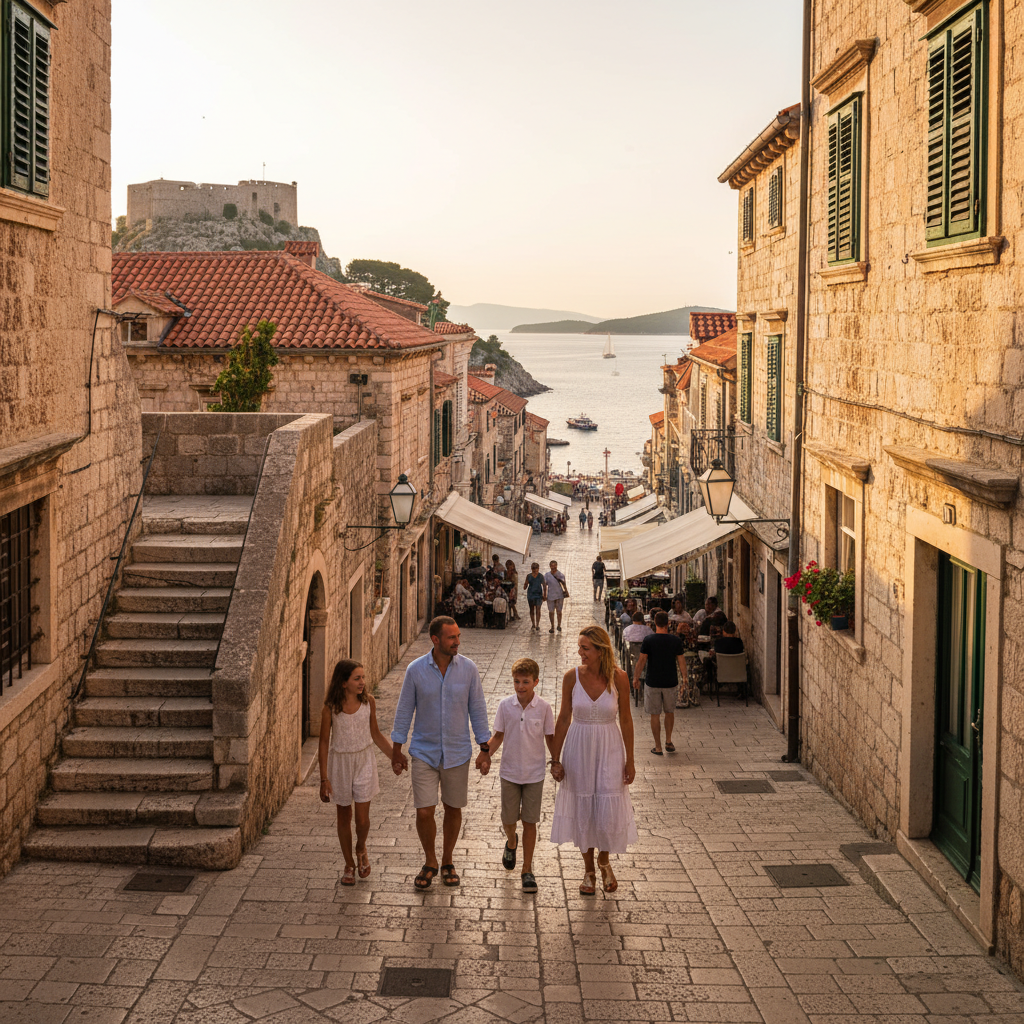
SibenikOutdoor Escape Game & Treasure Hunt
Between medieval fortresses and the Adriatic Sea
If you're wondering what to do in Sibenik, prepare to be enchanted by this gem of the Dalmatian coast. More than just a stopover, Sibenik is an invitation to adventure and discovery. Wander through the labyrinthine streets of the UNESCO-listed Old Town and marvel at the unique architecture of St. James Cathedral. Climb up to St. Michael's Fortress for breathtaking panoramic views of the Adriatic and surrounding islands. For a truly memorable experience, dive into an outdoor escape game, a real-life treasure hunt that will have you exploring the city in a fun way. It's the perfect unusual activity to uncover Sibenik's hidden secrets, transforming every street corner into a clue, every monument into a stage of a captivating scavenger hunt. A warm and immersive way to embrace the history and beauty of this extraordinary city.

Šibenik — Juraj Dalmatinac's Lost Cipher
Uncover the hidden cipher left by Renaissance architect Juraj Dalmatinac in Šibenik’s cathedral quarter and solve the mystery that shaped a UNESCO masterpiece.
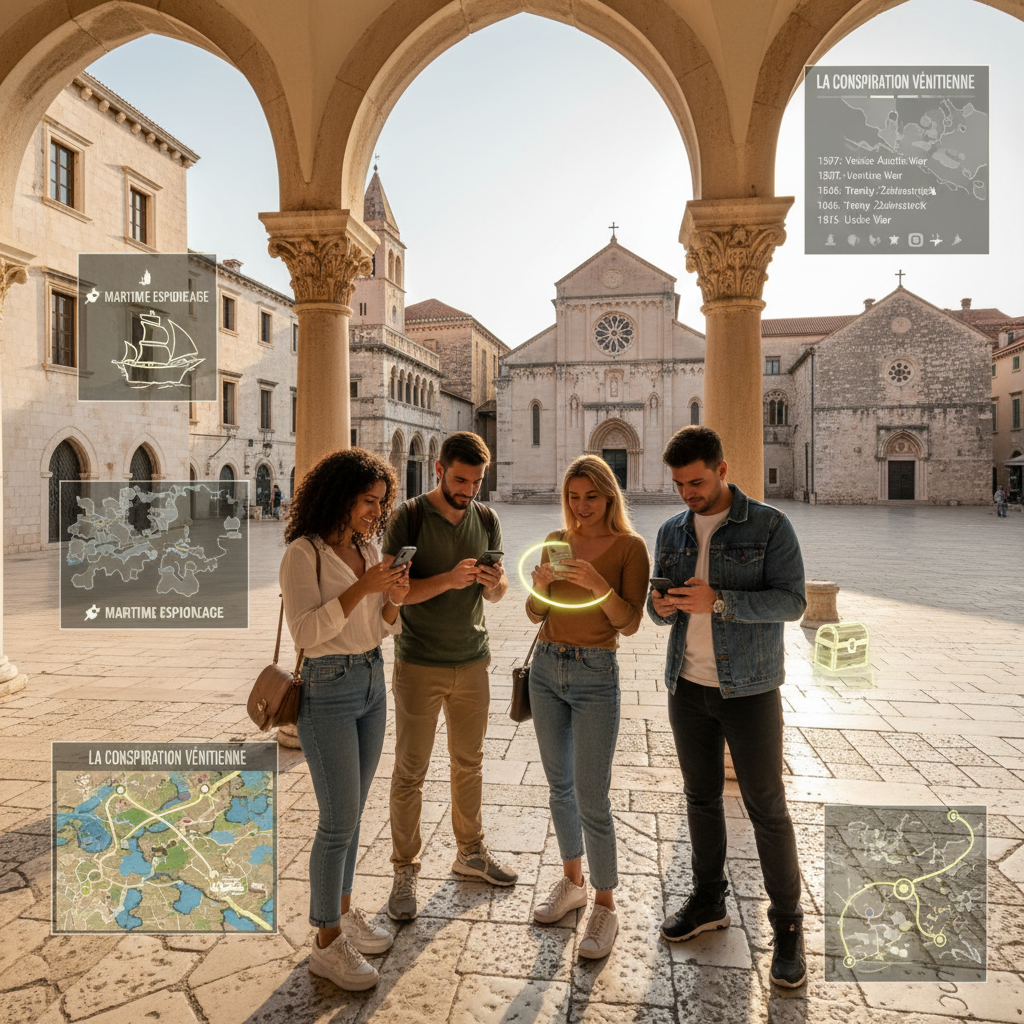
Šibenik — The Venetian Conspiracy
Uncover a secret plot by Venice to crush the Uskoks and seize control of the Adriatic from within Šibenik’s stone walls.
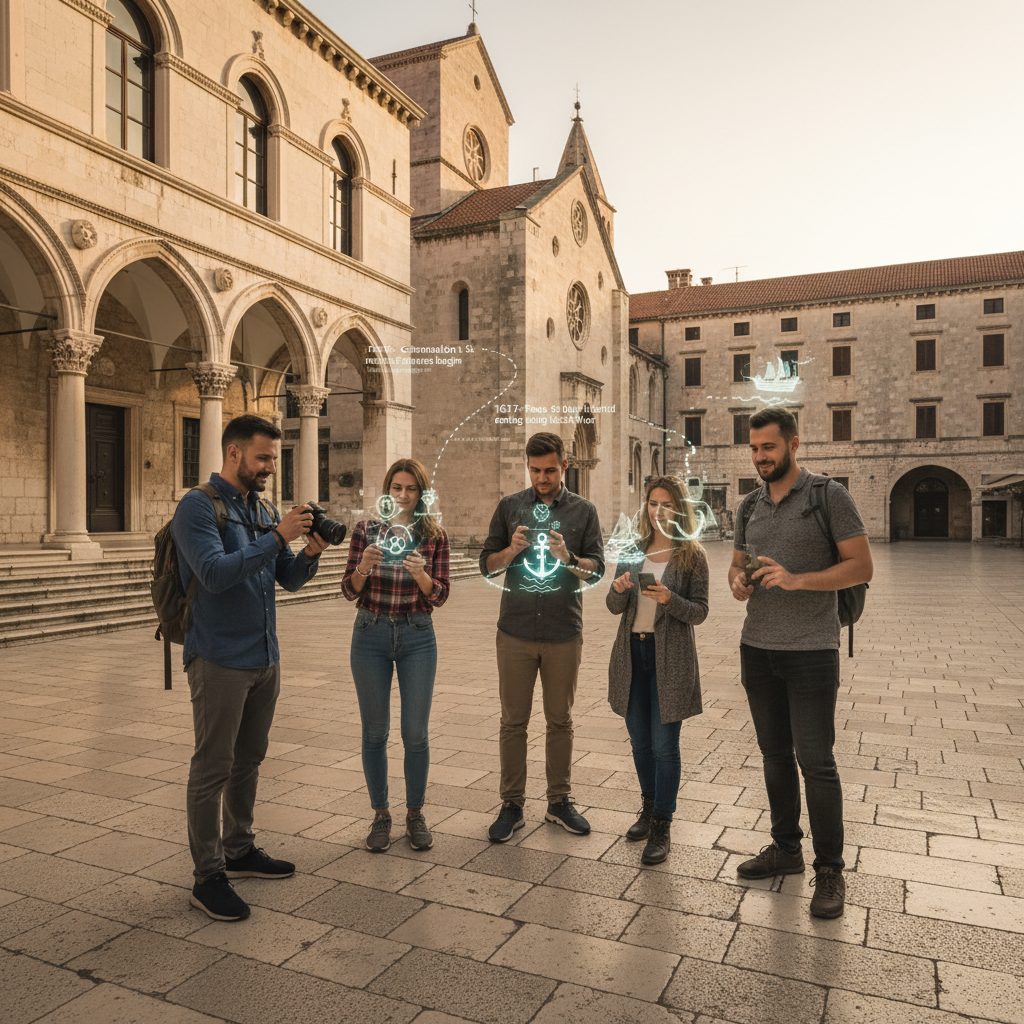
Šibenik — Uskok Captain's Secret
Uncover the Uskok captain's hidden cargo from a Venetian shipwreck. Decode clues across Šibenik's fortresses and solve the corsair conspiracy before the treasure vanishes forever.
Unusual things to do in Sibenik
For an unusual activity in Sibenik, off the beaten path, imagine solving puzzles in the heart of its millennial heritage. Our outdoor escape games transform the city itself into a giant playground, inviting you to an original outing where history meets modern adventure. How about deciphering hidden codes in the stones of the Old Town or following clues that lead you to secret panoramic views? It's a unique way to immerse yourself in local culture while stimulating your mind, an experience that will remain etched in your memories.
Things to do in Sibenik with kids
Sibenik is a fantastic destination for family activities. Our outdoor escape games are designed to offer a fun and educational adventure, perfect for children and teens aged 8-10 and up. Imagine your kids and teenagers collaborating to solve mysteries, explore historic alleys, and discover the city from a new and stimulating angle. It's a great way to create memories together, away from screens, by turning cultural discovery into a captivating scavenger hunt. An activity that brings the whole family together around a common goal and guaranteed good times.
Sibenik for couples
Sibenik for couples offers an idyllic setting for romantic moments and shared discoveries. Stroll hand-in-hand through the cobbled streets of the Old Town, discover secret squares, and admire breathtaking views of the Adriatic Sea from the fortresses. Our scavenger hunts are a charming and complicit way to explore the city's rich heritage, transforming your walk into an intimate adventure. Imagine solving puzzles together, deciphering clues hidden in the architecture, and sharing laughter while immersing yourselves in Sibenik's unique atmosphere. A memorable experience to strengthen your bond.
What to do in Sibenik when it rains
If rain decides to join your visit to Sibenik, don't panic! Our outdoor escape games are surprisingly suitable. Approximately 80% of the route takes place under covered passages, arcades, or roofs protecting the narrow streets of the Old Town. This means you can continue your scavenger hunt without getting too wet, enjoying the special atmosphere that rain lends to the old stones. It's an excellent option for an activity despite bad weather, allowing you to stay active and discover the city in a different light.
Where is Sibenik, and where do the routes start?
Starting points of our routes and the places they pass through.
Route starting points
Places in Sibenik
- West Facade of St. James Cathedral
- North Apses of the Cathedral
- Exterior of the Baptistery
- Loggia on Republic Square
- Facade of the Rector's Palace (Šibenik City Museum)
- Četiri bunara (Four Wells)
- Gradska Vrata (City Gate)
- St. Barbara Church and Clock Tower
- Town Hall (Gradska vijećnica)
- St. James Cathedral (Katedrala sv. Jakova)
- St. Barbara Church (Crkva sv. Barbare)
- St. Michael's Fortress (Tvrđava sv. Mihovila)
- Šibenik Waterfront (Riva)
- City Fountain (Gradska fontana)
- Don Krste Stošića Street
- Viewpoint over St. Anthony Channel
- Republic Square (Trg Republike Hrvatske)
- Town Loggia (Gradska loža)
The history of Sibenik
Croatian Foundation
Šibenik was founded by Croats, unlike many other Dalmatian cities established by Greeks, Illyrians, or Romans. Its first mention dates to Christmas Day in 1066, in a charter from King Petar Krešimir IV. During his reign (1058–1074), the king aimed to establish a Croatian maritime center, strengthening the town. The city developed from a settlement beneath St. Michael's Fortress, which was likely built as early as the 9th century during the first wave of Christianization in Croatia.
Venetian Rule and Fortifications
Šibenik gained city status in 1167 and became an episcopal seat in 1298. Its strategic location meant it was frequently contested. After a three-year war, Šibenik fell under Venetian rule in 1412, remaining so until 1797. Despite losing political autonomy, the city experienced economic growth in the second half of the 15th century, driven by the salt trade. This period also saw the construction of many buildings in the historic core. The threat of the Ottoman Empire in the late 15th and 17th centuries led to the development of Šibenik's fortification system. St. Nicholas Fortress was built in the 16th century, and St. John (Tanaja) and Barone Fortresses were improved by the 17th century. The largest Ottoman attack on the city occurred in 1647, which Šibenik repelled.
From Plague to Modernity
The mid-17th century brought a plague epidemic in 1649, reducing the city's population from thousands to around 1,500 survivors. Recovery was slow. After the fall of Venice, Šibenik briefly came under French rule from 1806 to 1813 as part of Napoleon's Illyrian Provinces, before being absorbed into the Austro-Hungarian Empire until 1918. During the Austro-Hungarian period, Šibenik was recognized as the empire's third most important port after Trieste and Rijeka. In 1895, Šibenik became the first city in the world to have alternating current-powered streetlights, thanks to the Jaruga Hydroelectric Power Plant on the Krka River. After World War I, Šibenik was occupied by Italian forces until 1921, when it became part of the Kingdom of Serbs, Croats and Slovenes (later Yugoslavia). The city faced shelling during the Croatian War of Independence in the early 1990s, with many historic buildings subsequently repaired.
What to see in Sibenik
- St. James Cathedral (Katedrala sv. Jakova) — This UNESCO World Heritage site, built entirely of stone between 1431 and 1536, shows Gothic and Renaissance styles. The exterior frieze has 71 sculpted human heads and 3 lion heads. The construction used no binding material, with stone blocks fitted together.
- St. Michael's Fortress (Tvrđava sv. Mihovila) — This fortress is on a steep hill 70 meters above the sea. It is the oldest of Šibenik's fortresses, dating to at least the 11th century, and was the initial point of defense for the city. It hosts an open-air stage for cultural events.
- Loggia on Republic Square (Trg Republike Hrvatske) — This Renaissance building stands on the main square. It was destroyed during World War II bombings but was rebuilt to its original appearance.
- Rector's Palace (Kneževa palača) — This 13th-century palace now houses the Šibenik City Museum. It was once the seat of the Venetian rector and contains archaeological and cultural exhibits.
- Četiri bunara (Four Wells) — These historic wells, dating from the 15th century, were part of Šibenik's medieval water supply system. They are in a square and represent a piece of the city's past infrastructure.
- St. Barbara Church (Crkva sv. Barbare) — This small, Gothic church, from around 1400, features a Gothic niche above its main entrance with a sculpture of St. Nicholas, attributed to Bonino da Milano. Its clock tower is a feature of the old town.
When to visit Sibenik
Visit Šibenik during May, June, September, and early October. Temperatures are pleasant, typically 20-25°C, and crowds are smaller than in peak summer. Most attractions, restaurants, and tours are open. July and August are hot, often above 30°C, and the city is crowded, especially around UNESCO sites. The International Children's Festival takes place in late June and early July. Winter (November to April) is quiet, with cooler temperatures and some tourist businesses closed.
Getting around Sibenik
Split Airport (SPU) is the closest major international airport, 50-60 km away. Zadar Airport (ZAD) is about 70-80 km to the north. Regular bus services connect both airports to Šibenik. The city's bus station is central, near the old town. Buses are frequent for intercity travel. The historic center of Šibenik is a pedestrian zone, with narrow, stone streets. Parking is available outside the old town walls in designated paid lots. A local market, offering fresh produce, operates daily near the waterfront. During peak summer, the old town is busy, and parking can be challenging.
Things you probably do not know about Sibenik
Verified details most visitors walk straight past.
- St. James Cathedral
- What's unique about the dome and vaulting of St. James Cathedral? The entire structure, including its monumental dome and vaulting, was built exclusively from interlocking stone slabs, without the use of any binding mortar or wooden supports, a revolutionary architectural feat for the 15th and 16th centuries.
- St. Michael's Fortress
- Why might this fortress be referred to by another name, St. Anne's Fortress? After a lightning strike in 1663 caused a gunpowder explosion that damaged the fortress and destroyed the church within, a statue of St. Anne, protector of storms, was brought to a church below its walls, leading locals to adopt the new name.
- Frieze of Heads on St. James Cathedral
- Who are the 71 faces carved around the exterior of St. James Cathedral's apses? These are believed to be realistic portraits of ordinary citizens, merchants, and even children from Šibenik in the 15th century, carved by Juraj Dalmatinac to represent the diverse society of his time, a humanist touch placing everyday people on a sacred building.
- Četiri bunara (Four Wells)
- These wells were crucial for Šibenik's survival, but what unusual method ensured their water supply during sieges? During Venetian rule, in the 15th century, a sophisticated underground aqueduct system was constructed, bringing fresh water from the Krka River to these wells within the city walls, ensuring a supply even when under siege by the Ottomans.
- St. Lawrence Monastery Mediterranean Garden
- What's special about the plants in this medieval garden, rediscovered after a century of neglect? The garden, laid out in a medieval cross-shaped design, is filled with aromatic and medicinal herbs, some of which, like capers, are said by legend to have been brought to Šibenik by the master builder Juraj Dalmatinac himself.
- Šibenik's Public Lighting
- Šibenik holds a unique distinction in the history of urban illumination. What is it? In 1895, Šibenik became the first city in the world to have its streetlights powered by alternating current, thanks to the Jaruga Hydroelectric Power Plant on the Krka River.
Questions about visiting Sibenik
How long should I plan to stay in Šibenik?
To experience Šibenik's main attractions, including the Cathedral, fortresses, and old town, a stay of 1 to 2 full days is recommended. This allows for exploration and time to enjoy the local atmosphere. If you plan to visit nearby national parks like Krka or Kornati, add an extra day or two.
What's the best way to get around Šibenik?
The historic core of Šibenik is a pedestrian-only zone, so walking is the primary way to explore. For areas outside the old town, local buses are available. Taxis are also an option for longer distances. If you arrive by car, plan to park outside the old town walls.
Is Šibenik suitable for families with children?
Yes. Šibenik offers a family-friendly atmosphere with its car-free old town, fortresses, and nearby beaches. The International Children's Festival, held annually in late June and early July, transforms the city into a hub of child-focused entertainment, including theatre and puppetry.
What's the typical budget for a day in Šibenik?
A moderate daily budget for Šibenik, excluding accommodation, could range from €50-€100 per person. This would cover entrance fees to attractions, a casual lunch, a dinner, and public transport or a few coffees. Dining at upscale restaurants or frequent souvenir shopping would increase this.
Are there any specific local customs or etiquette to be aware of?
Croatians are generally hospitable. A simple 'Dobar dan' (Good day) or 'Hvala' (Thank you) is appreciated. Tipping in restaurants and cafes is customary, usually around 10%. Dress modestly when visiting churches. During siesta hours in the early afternoon, some smaller shops might close, especially outside the main tourist season.
Which neighborhoods are best to explore in Šibenik?
The Old Town is the center of Šibenik, with its medieval streets, squares, and historical sites. Dolac, an area below St. Michael's Fortress, offers a view of traditional Šibenik life with its narrow alleys and stone houses. For views and historical context, the areas around St. Michael's Fortress and Barone Fortress are essential to explore.
Frequently asked questions
How much does an outdoor escape game cost in Sibenik?
Our outdoor escape games in Sibenik are offered at the very affordable price of €12 per team. This unique rate covers access to the game for your entire group, whether you are 2, 3, or 4 players. It's an economical and fun solution to discover the city, much more advantageous than many other individual activities. This price includes access to all puzzles, maps, and clues needed for an unforgettable adventure in the heart of Sibenik, offering you hours of entertainment and discovery.
Is it suitable for children / families?
Absolutely! Our scavenger hunts are perfectly suited for families with children aged 8-10 and up. The puzzles are designed to be stimulating without being overly complex, encouraging collaboration between generations. It's a fantastic activity for children and teens, allowing them to explore Sibenik interactively and educationally. They love the treasure hunt aspect, and parents appreciate sharing a fun and cultural moment outdoors. An excellent way to create memorable family memories.
How long does an escape game in Sibenik last?
An outdoor escape game in Sibenik typically lasts between 1h30 and 2h30, depending on the chosen route and your pace. Some groups like to take their time to admire the monuments and the city's atmosphere, while others prefer to tackle the puzzle challenge more quickly. There's no fixed time pressure; you are free to progress at your own leisure. It's an ideal duration for a discovery activity that doesn't monopolize your entire day, leaving you time for other explorations.
Do I need to book in advance?
It is highly recommended to book your outdoor escape game in Sibenik in advance, especially during the high tourist season. This ensures the availability of your preferred route and guarantees a prompt start without waiting. Online booking is simple and quick, and you will receive all necessary instructions by email. While it is sometimes possible to play without a reservation, booking ahead allows you to plan your day calmly and start your adventure whenever you wish, without any unpleasant surprises.
What to visit in Sibenik beyond the escape games?
Sibenik is full of treasures to explore after or before your escape game. Don't miss the magnificent St. James Cathedral, a UNESCO-listed architectural masterpiece. Climb up to St. Michael's Fortress for incredible panoramic views of the city and the archipelago. The historic center is a labyrinth of charming alleys, squares, and cafes. You can also visit St. Lawrence Monastery and its medieval garden, or simply get lost in the authentic atmosphere of this unique Dalmatian city.
What is the best season to visit Sibenik?
The best season to visit Sibenik is generally spring (April-May) or early autumn (September-October). During these periods, the weather is pleasantly mild and sunny, ideal for outdoor activities like our escape games, and tourist crowds are less dense than in mid-summer. Summer (June-August) is also very pleasant with warm temperatures and the possibility of swimming, but the city can be more lively. Winter is quieter, but some establishments may be closed.
Other destinations in Dalmatia
Dubrovnik
The Pearl of the Adriatic, where history meets turquoise sea.
Hvar
Adriatic gem, between history and secret coves.
Knin
Royal fortress, historical heart of Croatia
Korcula
Marco Polo's island, between history and the Adriatic Sea
Nin
Ancient royal capital, between salt and sea
Omis
Pirate city, between sea and canyon
Split
Diocletian's Palace, the beating heart of a millennial city
Trogir
UNESCO medieval city, jewel of the Adriatic.
Zadar
Between sea organ and ancient ruins, the pearl of the Adriatic