
VeniceOutdoor Escape Game & Treasure Hunt
Alchemy, Kabbalah and Arsenal of the Serenissima's spies
What to do in Venice? The Doge's city, an enchanted labyrinth of canals, bridges, and secret alleys, invites you to an extraordinary exploration. Far from the crowds of St. Mark's Square or the Rialto Bridge, our trails immerse you in the authentic soul of the Serene Republic. An outdoor escape game in Venice is a unique opportunity to transform a simple stroll into a real urban treasure hunt. Every calle, every campo, every bridge becomes a clue to solve puzzles inspired by Venetian history and legends. It's an unusual activity that allows you to discover hidden corners, admire lesser-known palaces, and soak in the magical atmosphere of the city. Whether you're with family, friends, or as a couple, this fun and cultural experience is an original way to unravel the mysteries of Venice. Discover our scavenger hunt through Venice below...
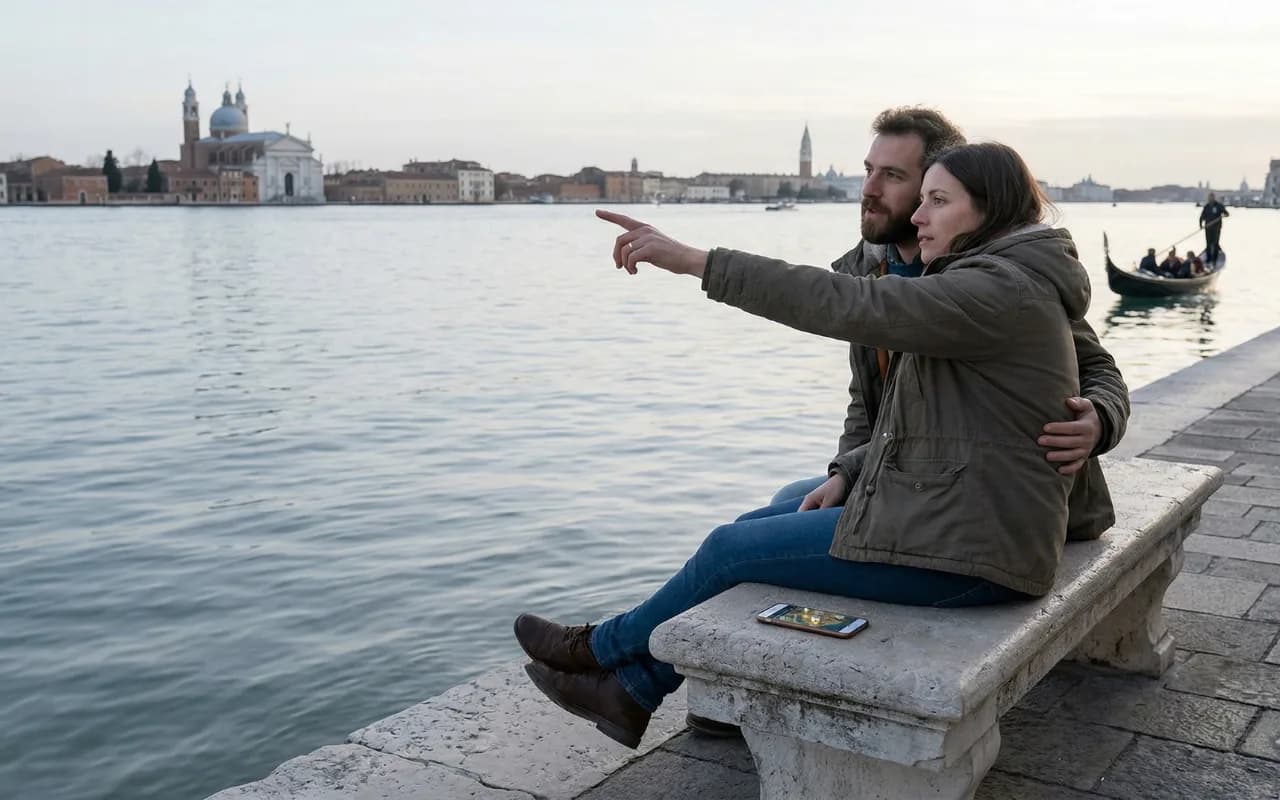
The Alchemist of Dorsoduro
Purifying the lagoon waters
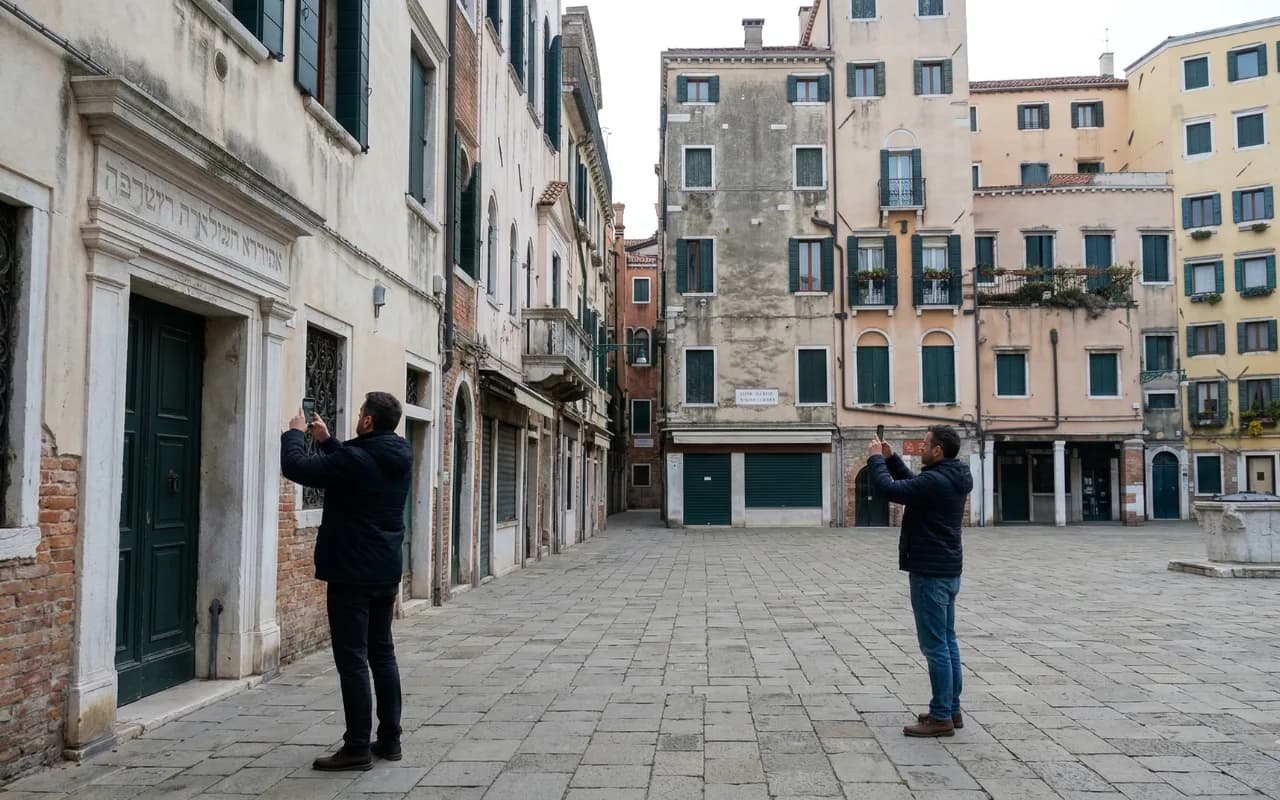
The Ghetto and the Kabbalah
The first ghetto in the world
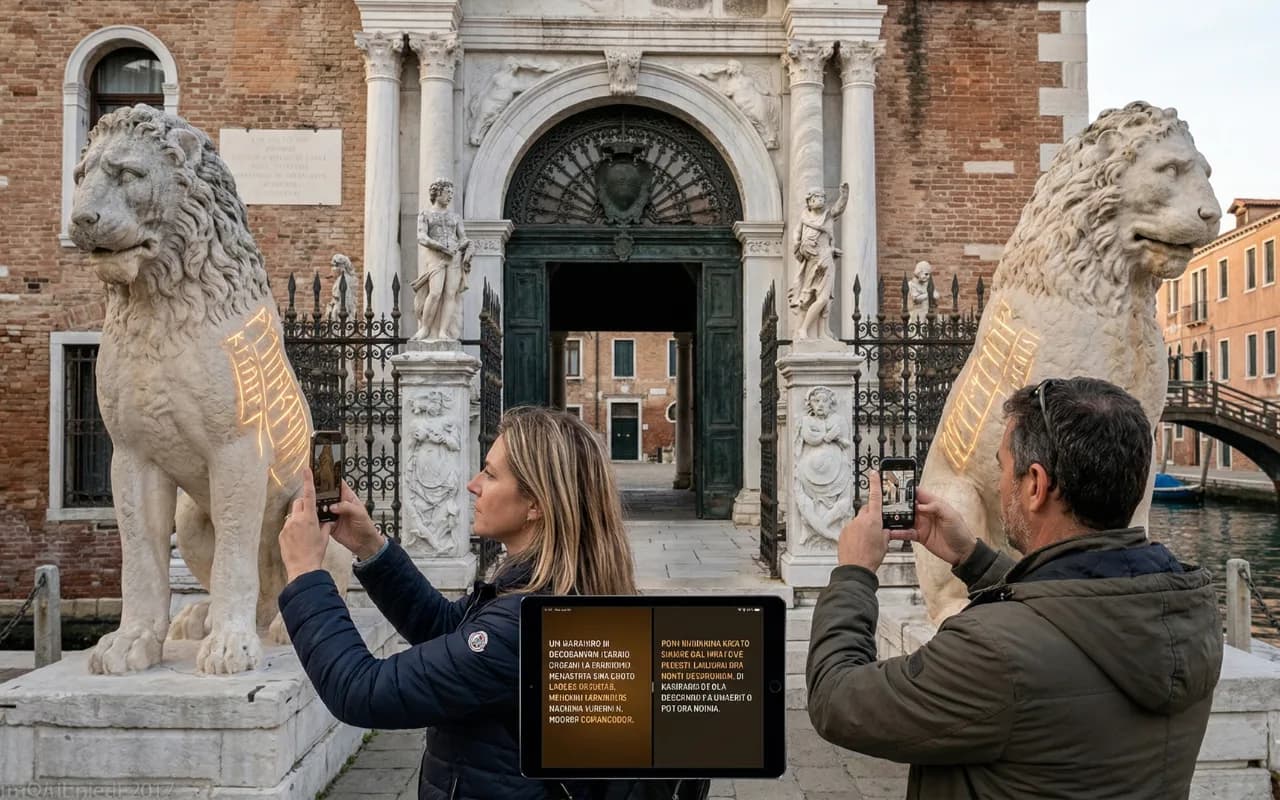
The Arsenal of Spies
One galley a day, one secret a century

San Marco's Secret — Decode the Bocolo's True Origin
Decipher the hidden legend of the Bocolo rosebud by uncovering clues scattered across Venice's most sacred quarter. Solve the mystery of Tancredi and Vulcana's forbidden love before the truth is lost to time.
Landmarks of Venise
Monuments and sites covered by our escape games across the city.
Unusual things to do in Venice
For an unusual activity in Venice, our escape games offer a perfect immersion. Far from tourist clichés, they guide you through lesser-known sestieri, revealing architectural details or legends known only to locals. Wander through the Cannaregio district, discover unsuspected sotoportegi (covered passages), or admire the colorful facades of Castello without the crowds. It's an original outing that transforms the city into a life-sized playground, where each puzzle brings you closer to Venice's secret soul. A memorable experience for those looking to experience the city differently.
Things to do in Venice with kids
What to do with the family in Venice? Our escape games are an ideal activity for children and teenagers, accessible from age 8. The trail transforms the discovery of alleys and bridges into a real adventure. Younger children will have fun searching for clues hidden in the Venetian scenery, while older ones will rack their brains over the puzzles. The GPS guidance system makes the walk safe, allowing parents to enjoy the heritage without stress. A teen-friendly outing that differs from traditional tours and offers an unforgettable memory of the Serene Republic, combining play, culture, and exploration.
Venice for couples
Venice is par excellence the city for lovers. For a couple's outing or a romantic getaway, our trails offer an intimate and original way to discover the city. Far from beaten paths, you'll share intimate moments solving puzzles around a secret canal or on a discreet bridge. It's an unexpected romantic activity that adds a touch of adventure to your stay. Imagine yourselves hand in hand, unraveling the mysteries of a Venetian palace, before stopping for a spritz in a small sunny square. A unique way to create memorable moments together.
What to do in Venice when it rains
What to do in Venice when it rains? The city then reveals a special charm, and our outdoor escape games can still be an option. Although our games are outdoors, Venice is full of sotoportegi (covered passages), arcades, and sheltered bridges that allow you to progress protected from a shower. The trail will lead you through areas where roofs and awnings offer some respite, transforming the rain into a mysterious atmosphere. It's a wet-weather activity that invites you to explore secret Venice, that of hidden passages and historic nooks, when the city is calmer.
Where is Venice, and where do the routes start?
Starting points of our routes and the places they pass through.
Route starting points
Places in Venice
- Campo Santa Margherita & Ca' Rezzonico
- Squero San Trovaso & Zattere
- Punta della Dogana & Accademia Bridge
- Campo San Barnaba
- Ponte dei Pugni
- Gallerie dell'Accademia
- Santa Maria della Salute basilica
- Campo Santo Stefano
- St. Mark's Square
- Piazzetta dei Leoncini
- Riva degli Schiavoni
- Rialto Bridge
- Campo San Bartolomeo
- Punta della Dogana
- Fondamenta Priuli
- Giardini Reali
- Porta Magna dell'Arsenale
- Campo San Biagio & Riva degli Schiavoni
The history of Venice
From Lagoon Refuge to Maritime Powerhouse
Venice's origins are rooted in necessity and survival. As the Western Roman Empire crumbled in the 5th century AD, successive waves of Germanic and Hun invaders, including Attila's Huns in 452 AD, drove mainland inhabitants from cities like Padua and Aquileia to seek refuge among the marshy islands of the Venetian lagoon. These isolated fishing communities, initially under Byzantine influence, gradually asserted their independence. By the 8th century, a doge (duke) was elected, marking the beginning of the Venetian Republic, which would endure for a thousand years.
The city's location fostered a maritime trading empire. Venice became a hub at the end of the Silk Route, facilitating trade between Europe and the East. Its prosperity was built on commodities like salt, which Venetians themselves called "il vero fondamento del nostro stato" (the true foundation of our state). The Venetian Arsenal, considered by some historians to be the first factory in history, was the basis of its naval might, allowing Venice to control Mediterranean trade routes for centuries.
Decline and Transformation
Around 1500, a slow political and economic decline began for Venice, exacerbated by the discovery of new trade routes that bypassed its traditional Mediterranean dominance. The 18th century saw the city increasingly reliant on tourism, a trend that continues today. The Republic's sovereignty ended in 1797 with Napoleon's invasion. After a period under Austrian rule, Venice became part of the newly formed Kingdom of Italy in 1866.
What to see in Venice
- Campo Santa Margherita — A public square in the Dorsoduro sestiere. It functions as a neighborhood hub with daily market stalls in the morning and a student and local scene in the evenings.
- Ca' Rezzonico — A Baroque palace on the Grand Canal, now housing the Museum of 18th-Century Venice. It displays the lifestyle of the Venetian aristocracy, with frescoes by Tiepolo, period furniture, and decorative arts.
- Squero San Trovaso — One of the remaining traditional gondola boatyards in Venice, located in Dorsoduro. Artisans maintain and build Venetian gondolas using traditional techniques.
- Punta della Dogana — This triangular area at the confluence of the Grand Canal and the Giudecca Canal served as Venice's customs house (Dogana da Mar) from the 15th century. Today, it is a contemporary art museum. Its tower, topped with a golden sphere and a statue of Fortuna, remains a landmark.
- Basilica di Santa Maria della Salute — An octagonal Baroque church, consecrated in 1687, built as a votive offering after the plague of 1630-1631. Its dome stands at the entrance to the Grand Canal, and its interior holds artworks, including pieces by Titian.
- Ponte dei Pugni — Meaning "Bridge of Fists," this bridge in Dorsoduro was historically a site for bare-knuckle brawls between rival Venetian factions. Four marble footprints on the bridge mark where combatants would stand.
When to visit Venice
The best times to visit Venice are spring (April-May) and autumn (September-October). Temperatures range from 15-25°C, and crowds are manageable. These seasons offer light for photography and a full calendar of cultural events.
Avoid visiting in July and August. Summer temperatures regularly reach 32-35°C with high humidity, making sightseeing difficult. The city is also at its most crowded and expensive, with narrow streets becoming congested. Winter (November-March) can be cold and foggy, with a higher chance of acqua alta (high water), though it offers a quieter experience.
Getting around Venice
Venice's historic center is car-free. If arriving by car, park on the mainland at Piazzale Roma or Tronchetto, which are the last points accessible to vehicles. From there, continue into Venice on foot, by vaporetto (water bus), or by the People Mover. Parking at Piazzale Roma is generally more expensive but closer to the center, while Tronchetto offers a flat daily rate. Cheaper options exist in Mestre or Marghera, with bus or train connections to Venice Santa Lucia station.
Within Venice, the primary mode of transport is walking. The city consists of narrow calli (alleys), bridges, and campi (squares). Vaporettos are for longer distances, crossing the Grand Canal, or reaching the outer islands. Single tickets are expensive, so multi-day passes are recommended for frequent use. Many shops observe a midday closure, especially outside the main tourist areas.
Things you probably do not know about Venice
Verified details most visitors walk straight past.
- Bridge of Sighs (Ponte dei Sospiri)
- Many believe the Bridge of Sighs got its name from lovers sighing as they passed beneath it. But what's the true, darker origin? The bridge, built around 1600 by Antonio Contino, connected the Doge's Palace interrogation rooms to the New Prisons. Its name, popularized by Lord Byron in the 19th century, actually refers to the sighs of prisoners catching their last glimpse of Venice before imprisonment.
- Rialto Bridge (Ponte di Rialto)
- The stone Rialto Bridge looks incredibly stable, but did you know it wasn't the first bridge at this crucial crossing? The first bridge at this site, dating back to 1181, was a simple wooden pontoon. It was rebuilt several times in wood, even collapsing in 1444 under the weight of a crowd. The current stone bridge, designed by Antonio da Ponte, was finally completed between 1588 and 1591, after he beat out contenders like Michelangelo.
- Campo Santa Margherita
- This square in Dorsoduro once had a church that mysteriously lost half its height. What happened to its bell tower? The Church of Santa Margherita, consecrated in 853 AD, gave the campo its name. In the early 19th century, during Napoleon's occupation, the church was suppressed and largely demolished. Its bell tower, however, survived but was literally halved in height and later repurposed as an auditorium for Ca' Foscari University.
- Punta della Dogana
- The golden sphere atop the Punta della Dogana tower features a figure that constantly changes direction. What does it represent? The sculptural group on the tower of Punta della Dogana depicts two Atlases supporting a gilded bronze sphere. On top of this sphere stands a statue of Fortuna (Fortune), which turns with the wind, indicating its direction and symbolizing the unpredictable nature of maritime trade and fate.
- Basilica di Santa Maria della Salute
- This basilica was built in thanks for deliverance from a terrible event. What was it, and how quickly was the promise fulfilled? In 1630, a devastating plague killed nearly a third of Venice's population. The Senate vowed to build a church to the Virgin Mary if the contagion stopped. The plague ended in 1631, and construction of the Basilica di Santa Maria della Salute, designed by Baldassare Longhena, began that same year, though it wasn't consecrated until 1687.
- Ca' Rezzonico
- This palace on the Grand Canal, now a museum, was once home to an individual who would achieve one of the highest offices in the Catholic Church. Who was he? Ca' Rezzonico was originally commissioned by the Bon family in 1649 but was completed by the wealthy Rezzonico family in 1756. It was in this very palace that Carlo Rezzonico, who would later be elected Pope Clement XIII in 1758, grew up.
Questions about visiting Venice
How many days should I spend in Venice?
To experience Venice beyond its main tourist hubs and truly soak in its atmosphere, a minimum of 3 to 4 days is recommended. This allows time to explore different sestieri (districts), visit museums, and enjoy a more relaxed pace without feeling rushed.
What are the best neighborhoods to explore in Venice?
Beyond the well-known San Marco, consider exploring Dorsoduro for its artistic vibe and student areas like Campo Santa Margherita, or Cannaregio for a more local feel with its historic Jewish Ghetto and quieter canals. Castello offers a mix of grand institutions and residential charm.
What is the typical budget for a trip to Venice?
Venice can be expensive, but a mid-range budget of €100-€150 per person per day is a good estimate. This would cover accommodation in a mid-tier hotel, vaporetto passes, museum entries, and meals at local trattorias. Budget travelers can reduce costs by opting for hostels, self-catering, and picnics.
Is Venice a good destination for families with children?
Yes, Venice can be engaging for children. The lack of cars makes it safe for walking, and the novelty of boats and bridges is often a hit. Activities like gondola rides, exploring hidden alleys, and visiting the Peggy Guggenheim Collection can make for a memorable family trip.
How do I get around Venice?
The primary way to get around Venice's historic center is on foot. For longer distances or to cross the Grand Canal, the *vaporetto* (public water bus) system is efficient. Single tickets are costly, so consider a multi-day pass if you plan to use them frequently. Gondolas are for leisure, and water taxis offer a faster, more private, but expensive option.
What local events or festivals should I be aware of?
Venice hosts several unique events. The Carnival of Venice (usually in February or March) is known for its masks and elaborate costumes. The Feast of the Redeemer (Festa del Redentore) in July celebrates the end of the 1576 plague with fireworks and a temporary pontoon bridge. The Venice Film Festival takes place annually in late August/early September on the Lido.
Frequently asked questions
How much does an outdoor escape game in Venice cost?
Our outdoor escape games in Venice start at €12 per team (1 phone). For multiple players on the same trail, it's €19 for 2 phones and €25 for 3. As Venice currently offers only one trail, there is no City Pass available, but each game provides a complete and immersive experience.
Are the Venice escape games suitable for children?
Yes, our trail in Venice is suitable from age 8 and is designed to be a family activity. The puzzles are varied: some require observation for younger children, others logic for teenagers and adults. The step-by-step GPS guidance ensures a safe and stress-free progression through Venice's alleys, allowing everyone to fully enjoy the adventure without getting lost.
How long does an outdoor escape game in Venice last?
Expect between 1h30 and 2h30 to complete our outdoor escape game in Venice, depending on your pace and puzzle-solving skills. The game is self-guided, meaning you can start whenever you want and take your time. It's ideal for fitting into your schedule and enjoying a break between two monument visits.
Do I need to book in advance?
Online booking is not mandatory as you can purchase the game at any time. However, we recommend it to ensure you have the activation code ready before starting your adventure. You receive this code instantly by email after purchase, and it's usable whenever you want, with no expiry date, offering you total flexibility.
What is Venice famous for? / What to visit in Venice?
Venice is world-famous for its canals, gondolas, and unique artistic and architectural heritage. Beyond our escape game, don't miss the majestic St. Mark's Square, with the Basilica and the Doge's Palace, as well as the famous Rialto Bridge. The city also abounds with museums, churches, and quieter districts like Dorsoduro or Cannaregio, which our trails will help you explore from a new angle.
When is the best time to visit Venice?
Spring (April-June) and autumn (September-October) are often considered the best times to visit Venice, with pleasant temperatures and fewer crowds. Summer can be hot and very busy, but evenings are beautiful. Winter offers a more intimate Venice, sometimes under fog or even snow, with the advantage of covered passages for our games, providing a mysterious and unique atmosphere.
More cities in Italy
Bologna
Hidden canals, leaning towers and the world's oldest university
Florence
Medici, Templars and Palazzo Vecchio alchemists
Siena
The Contrade war and the world's oldest bank
Civita di Bagnoregio
The dying city perched on a tuff bridge
Turin
Alchemy, Templars and witches in the esoteric capital
Rome
Porta Magica, catacombs and the Popes' Passetto
Naples
Napoli Sotterranea, Dracula and the skull cult
Paestum
The world's best-preserved Greek temples
Activities to discover nearby
Guided tours, skip-the-line tickets and local experiences to book in advance.
💡 Optional booking — you can also buy on-site. All links open in a new window, your OddballTrip visit stays preserved.