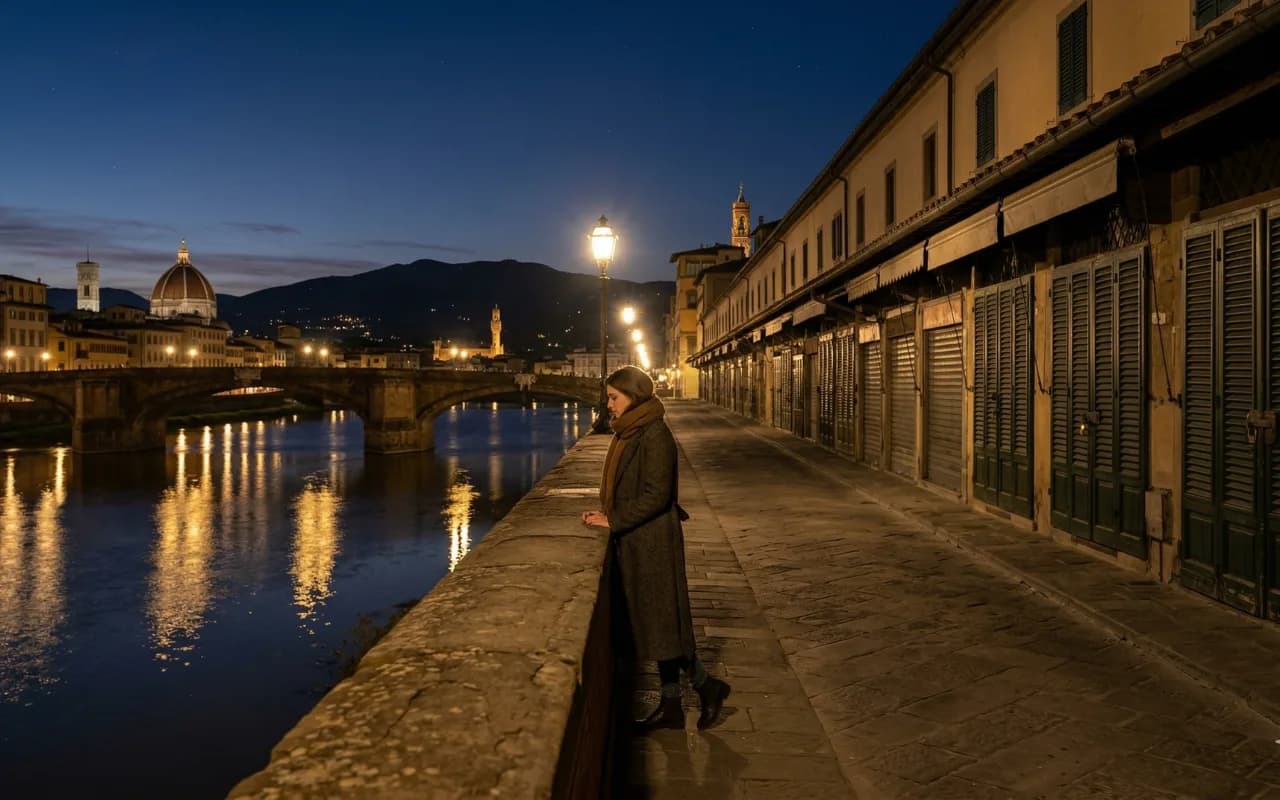
FlorenceOutdoor Escape Game & Treasure Hunt
Medici, Templars and Palazzo Vecchio alchemists
Florence, the cradle of the Renaissance, is a city to be savored at every turn. Between Brunelleschi's imposing Duomo, the majesty of the Ponte Vecchio, and the artistic treasures of the Oltrarno district, there's so much to explore. But beyond classic sightseeing, why not spice up your stay with an unusual activity? Imagine yourself immersed in the heart of Florentine history, not as a mere spectator, but as a true participant. Our outdoor escape games transform you into explorers, solving riddles through cobblestone streets and in front of iconic monuments. It's more than just a visit; it's a life-sized treasure hunt, a captivating scavenger hunt that reveals the city's secrets in a fun and interactive way. Get ready to experience Florence like never before with our unique routes!
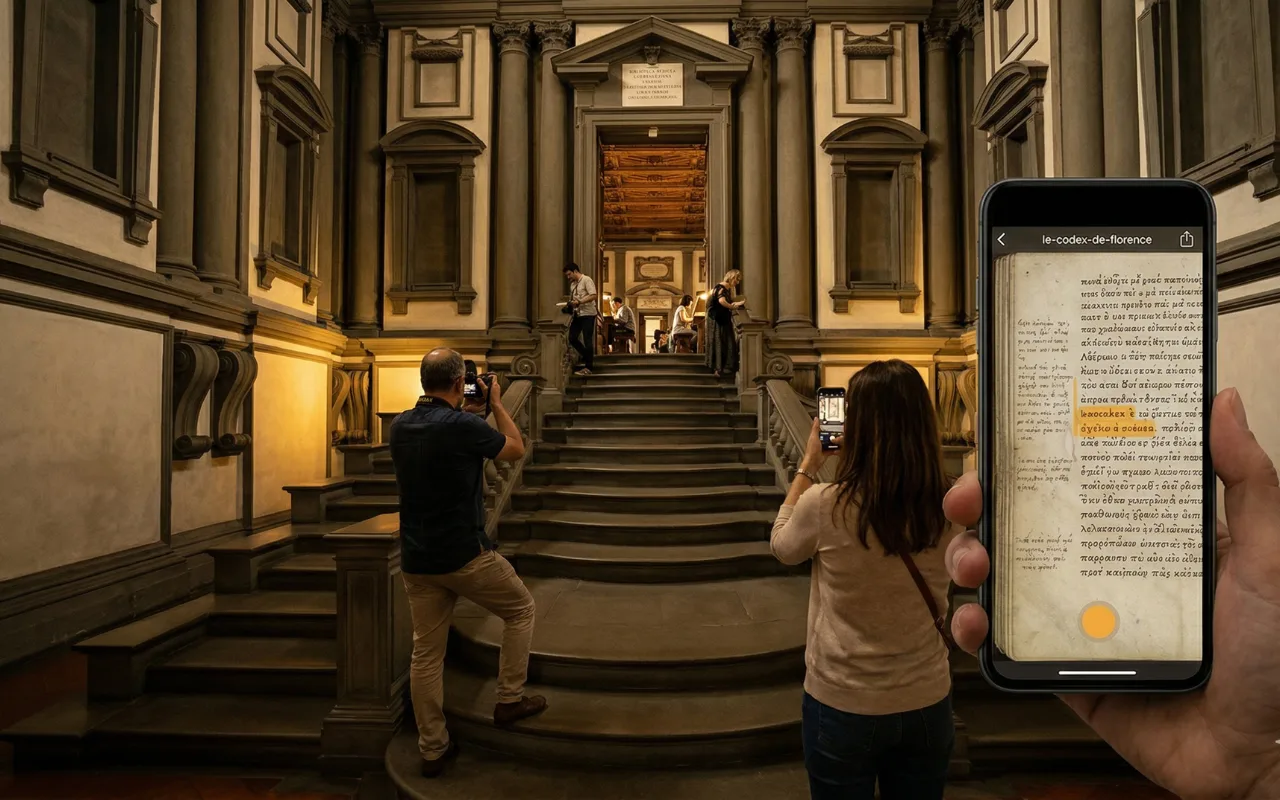
The Florence Codex
On the trail of the Medici and their secret manuscripts
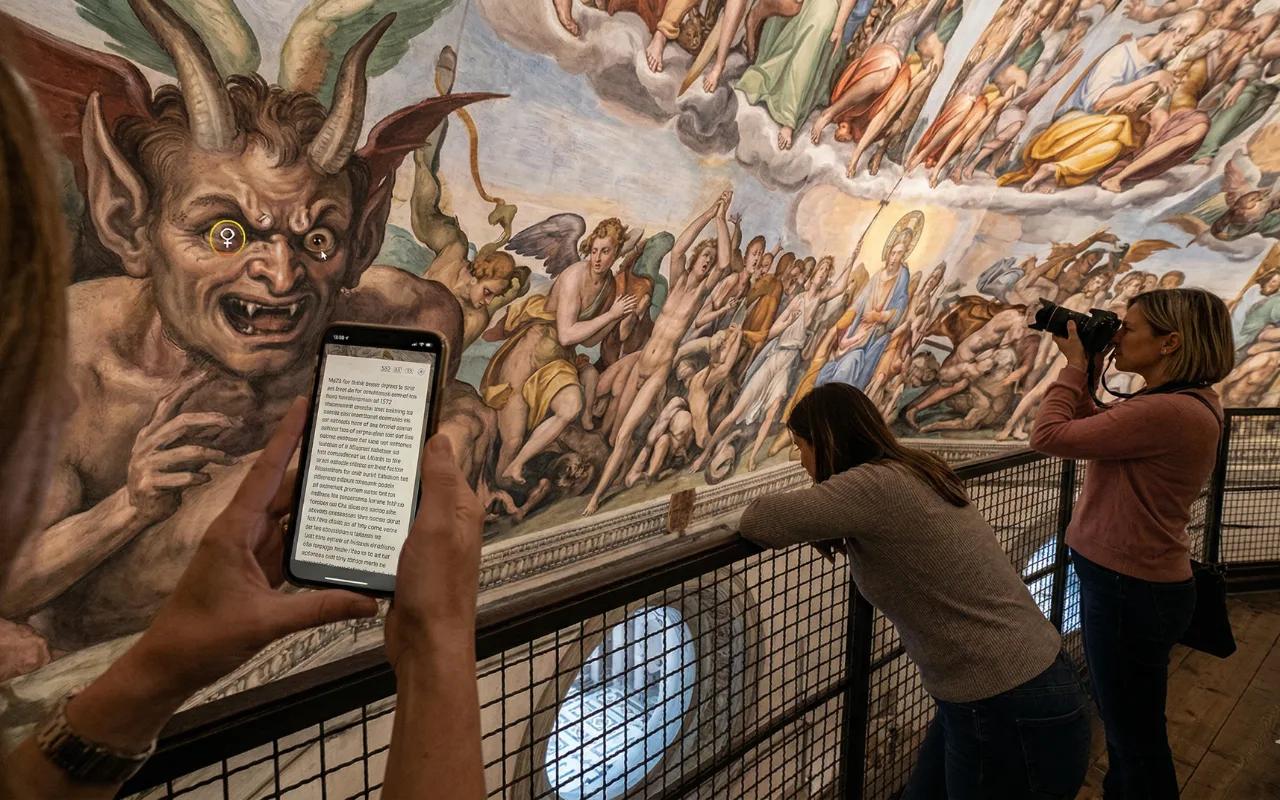
The Hidden Frescoes of the Duomo
In the shadow of Brunelleschi and Vasari
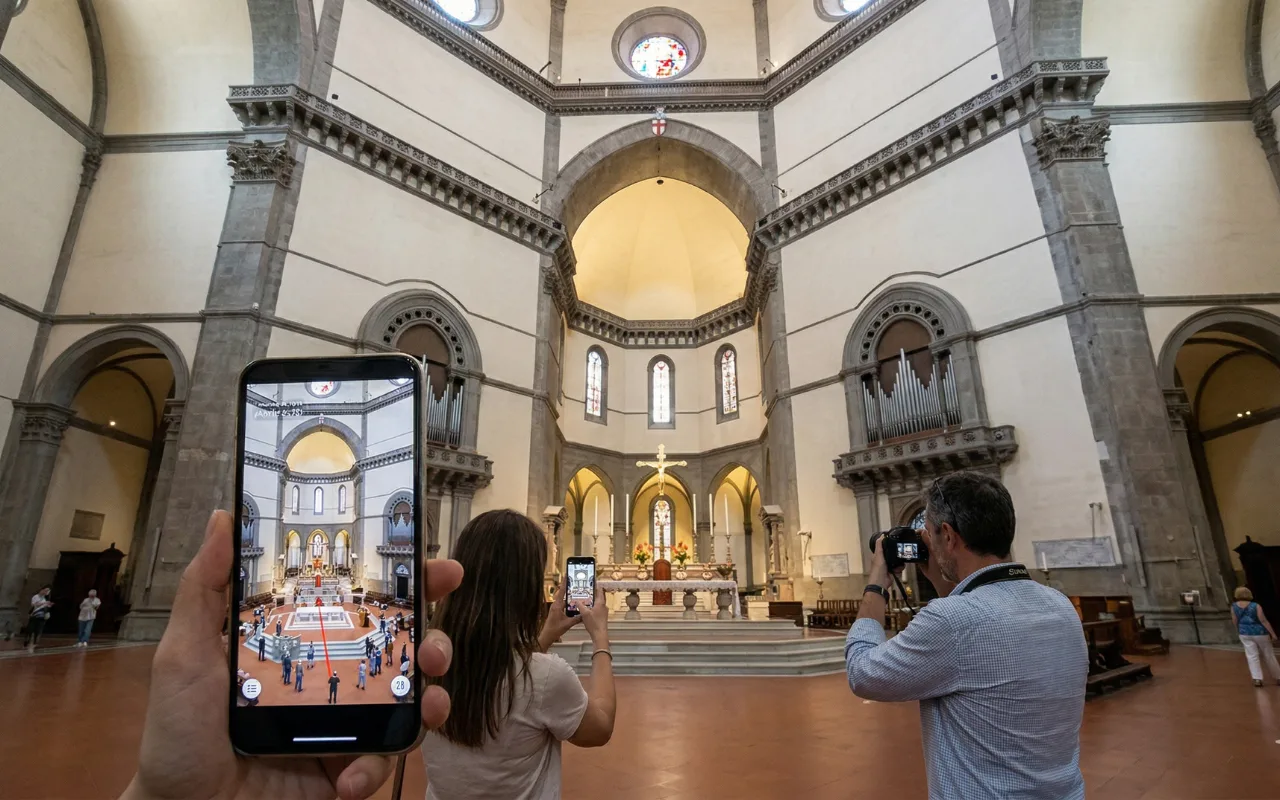
The Pazzi Conspiracy
26 April 1478: a plot during mass
Unusual things to do in Florence
Looking to step off the beaten path during your visit to Florence? Our outdoor escape games are the ultimate unusual activity to explore the city from a new perspective. Forget traditional guided tours and dive into an urban adventure where every monument becomes a clue, every alley a chapter in your story. It's a creative and original way to uncover Florence's secrets, combining puzzle-solving with the discovery of iconic locations. Whether you're a history enthusiast or simply seeking a memorable experience, our routes guarantee a unique moment, far from tourist clichés.
Things to do in Florence with kids
Florence is a wonderful destination for families, and our outdoor escape games are an excellent way to engage both young and old in exploring the city. No more boring classic tours! With our interactive scavenger hunts, children become true adventurers, helping their parents solve puzzles and unearth hidden clues. It's a fun and educational activity that stimulates curiosity and teamwork, all while discovering the wonders of Florence as a family. A perfect way to create unforgettable memories while learning about the history and culture of this incredible city.
Florence for couples
Dreaming of a romantic getaway in Florence, but with an original twist? Our outdoor escape games are the ideal opportunity to share an unusual activity as a couple. Imagine yourselves hand-in-hand, strolling through charming Florentine streets, solving mysteries, and uncovering hidden anecdotes. It's a unique way to strengthen your bond, laugh together, and tackle challenges as a team, far from conventional candlelit dinners. Our routes offer an intimate and memorable experience, transforming every street corner into a shared memory. A romantic and stimulating adventure to explore Florence differently.
What to do in Florence when it rains
What to do in Florence when it rains? It's important to note that our escape games are primarily outdoor activities. While a light drizzle can add a special ambiance, cold and heavy rain makes the experience less enjoyable. For heavy rainy days, we recommend sheltering in one of Florence's many museums, like the Uffizi Gallery, or enjoying a warm coffee. Our games remain an option if the weather is mild, but always have a plan B in case of a downpour!
Where is Florence, and where do the routes start?
Starting points of our routes and the places they pass through.
Route starting points
Places in Florence
- Duomo
- Palazzo Pazzi
- Palazzo Vecchio
- Palazzo del Bargello
- Santa Croce basilica
- Orsanmichele church
- Piazza della Signoria
- San Marco convent
- San Lorenzo
- Laurentian Library
- Palazzo Medici Riccardi
- Medici Chapels
- San Marco Museum
- François I's Studiolo
- Ponte Vecchio
- Gates of Paradise
- Santa Maria del Fiore
- Vasari fresco
The history of Florence
From Roman Colony to Medieval Powerhouse
Florence was founded in 59 BC as a Roman military colony named Florentia, meaning "the flourishing one." Julius Caesar established it as a settlement for veteran soldiers, located along the Via Cassia, a route between Rome and the north. The original Roman layout, a quadrangular castrum with two main intersecting streets (the cardo and decumanus), can still be traced in the city's historic center, particularly around Piazza della Repubblica, which was once the Roman forum.
After the fall of the Western Roman Empire, Florence experienced a period of decline, with its population shrinking. However, it began to expand again in the Middle Ages. By the 11th century, the city grew, and new defensive walls were built, eventually encompassing the Oltrarno district across the Arno River by the 12th century. Florence's position between Venice and Rome, combined with its wool trade and banking industry, led to its becoming a wealthy city. The Florentine florin, introduced in 1252, became an accepted international currency, reflecting the city's economic power.
The Medici and the Renaissance
The 14th to 16th centuries marked Florence's importance in commerce, finance, and the arts, becoming the cradle of the Renaissance. This period was influenced by the Medici family, a banking dynasty that rose to prominence in the 14th century. Starting with the Medici Bank in 1397, their wealth translated into political and cultural dominance, shaping Florence for nearly 300 years. The Medici supported artists like Michelangelo, Leonardo da Vinci, and Botticelli, transforming Florence into a center of intellectual and artistic activity. Their support extended to libraries and academies, fostering the exchange of ideas that defined the Renaissance.
Even after their decline in the 18th century, the Medici's legacy endures in Florence's art collections and architectural structures. The city also served as the capital of Italy from 1865 to 1870, a period during which some of its medieval walls were demolished to make way for ring roads, though portions remain in the Oltrarno.
What to see in Florence
- Duomo (Cattedrale di Santa Maria del Fiore) — Climb Brunelleschi's Dome for views of the city and see the frescoes by Giorgio Vasari inside. The Baptistery of San Giovanni, with its bronze doors by Ghiberti, is directly opposite.
- Palazzo Vecchio — Explore the former seat of Florentine government, with its Salone dei Cinquecento and decorated apartments, showing the city's political past.
- Palazzo del Bargello — This former prison and barracks now houses the National Museum, featuring a collection of Renaissance sculpture, including Donatello's David and works by Michelangelo.
- Santa Croce Basilica — This Franciscan church is the burial place of many Italians, including Michelangelo, Galileo Galilei, Machiavelli, and Rossini.
- Orsanmichele Church — Originally a grain market, this building became a church with exterior niches filled with statues by various guilds, showing Florence's artistic and economic power in the 14th and 15th centuries.
- Piazza della Signoria — This square is the political center of Florence, featuring the Palazzo Vecchio, the Loggia dei Lanzi with sculptures like Cellini's Perseus, and a replica of Michelangelo's David.
- San Marco Convent — Visit the former Dominican convent, now a museum, to see the frescoes by Fra Angelico in the monks' cells and communal spaces.
- Laurentian Library — Designed by Michelangelo, this library within the Basilica di San Lorenzo complex is an example of Mannerist architecture, housing a collection of ancient manuscripts.
- Palazzo Medici Riccardi — The first Medici palace, this Renaissance building shows the family's early wealth and influence, with its Magi Chapel frescoed by Benozzo Gozzoli.
When to visit Florence
The best times to visit Florence are during spring (April to May) and autumn (September to October). During these months, temperatures are mild, typically ranging from 15°C to 25°C (59°F to 77°F). Crowds are lighter than in summer, and the autumn light is clear.
Avoid mid-June through August if possible, as Florence experiences heat, with average daytime highs around 35°C (95°F), and the city is crowded with tourists, leading to longer queues and higher prices. Winters (November to March) are cooler and wetter, with temperatures averaging around 4°C to 15°C (39°F to 59°F), and more frequent rain, especially in November. Winter offers fewer crowds and potentially lower accommodation prices.
Getting around Florence
Florence is served by Florence-Peretola Airport (FLR), about 6 kilometers from the city center. Reach downtown Florence from the airport by tram (T2 line), which takes about 20 minutes and costs around €1.70. Taxis are also available, taking 20-25 minutes and costing approximately €25-32.
Florence's historic center is a pedestrian zone, making walking the primary way to explore. Many major attractions are within walking distance. Public transportation within the city mainly consists of buses. Parking in the city center is limited and expensive, so park outside and use public transport if arriving by car.
Many state museums, including the Uffizi Gallery, Accademia Gallery, and Palazzo Pitti, are closed on Mondays. Civic museums like Palazzo Vecchio and the Duomo complex generally remain open. Check official websites for specific opening hours, especially around holidays.
Florence has several markets. The Mercato Centrale (San Lorenzo) and Sant'Ambrogio Market are food markets offering fresh produce. The Mercato delle Cascine, held every Tuesday in Cascine Park, is the city's largest open-air market.
Things you probably do not know about Florence
Verified details most visitors walk straight past.
- Duomo
- How did Brunelleschi manage to build the massive dome of Florence Cathedral without external scaffolding, a feat considered impossible at the time? Filippo Brunelleschi devised an ingenious system of concentric rings and herringbone brickwork, gradually narrowing the dome as it rose, allowing it to support itself during construction without the need for traditional scaffolding from the ground up.
- Palazzo Vecchio
- Why does the Palazzo Vecchio have an off-center tower, and what secret passage connects it to another famous palace? The Arnolfo Tower is off-center because it incorporates an older defensive tower from a pre-existing building. The Palazzo Vecchio is connected to the Palazzo Pitti across the Arno River by the Vasari Corridor, a secret elevated passageway built by Giorgio Vasari in 1565 for Cosimo I de' Medici to move freely and safely.
- Ponte Vecchio
- What kind of shops originally lined the Ponte Vecchio, and why were they replaced by goldsmiths? The Ponte Vecchio was originally home to butchers, tanners, and farmers. In 1593, Ferdinand I de' Medici ordered these shops replaced with goldsmiths and jewelers, deeming the previous trades too smelly and undignified for the bridge, especially after the construction of the Vasari Corridor above.
- Orsanmichele Church
- This unique building served two very different purposes simultaneously for centuries. What were they? Orsanmichele was originally built in the 13th century as a grain market on the ground floor, while the upper floors were used as a granary for the city's food reserves. Over time, it also became a church and a center for Florence's powerful guilds, who commissioned statues for its exterior niches.
- Palazzo Medici Riccardi
- Before the grand courtyards and public displays, what subtle architectural detail revealed the Medici's initial rise to power? The Palazzo Medici Riccardi, built by Michelozzo for Cosimo de' Medici, initially had a more austere, rusticated exterior on the ground floor, gradually becoming smoother on the upper levels. This design, while grand, was a subtle nod to republican modesty, avoiding overt ostentation that might provoke political rivals in the early 15th century.
- Piazza della Signoria
- Why is there a specific marble disc embedded in the paving of Piazza della Signoria, near the Palazzo Vecchio? The circular marble disc marks the exact spot where Girolamo Savonarola, a Dominican friar who preached against the perceived corruption of Florence, was publicly hanged and burned with two of his followers on May 23, 1498, after being excommunicated and condemned as a heretic.
Questions about visiting Florence
How many days should I spend in Florence?
To experience Florence without rushing, aim for at least 3 to 4 days. This allows enough time to visit major museums, explore key neighborhoods like Oltrarno, enjoy the local cuisine, and see the city's atmosphere, without feeling constantly pressed for time.
What are the best ways to get around Florence?
Florence's historic center is best explored on foot, as many areas are pedestrianized and attractions are close together. For longer distances, the city has an efficient bus network. Trams connect the airport to the city center and are useful for reaching areas slightly outside the core.
Which neighborhood is best to stay in Florence?
For first-time visitors, staying near the Duomo or Piazza della Signoria puts you in the center of the action. The Oltrarno district offers a more local feel with artisan workshops and eateries. Santa Croce is good for a mix of history and nightlife, while San Lorenzo is convenient for the market and train station.
What is the typical budget for a trip to Florence?
A mid-range budget for Florence could be around €100-€150 per person per day, covering accommodation, food, museum entries, and transport. This can vary; budget travelers might spend less, while luxury experiences will be more. Eating at local markets and trattorias can help save on food costs.
Is Florence suitable for visiting with children?
Yes, Florence can be a family destination. Many museums offer engaging activities, and outdoor spaces like the Boboli Gardens provide room to run around. Consider interactive tours or scavenger hunts to keep younger visitors entertained, and don't miss the gelato!
What are the main events or festivals in Florence?
Florence hosts several notable events. Easter brings the *Scoppio del Carro* (Explosion of the Cart), a centuries-old tradition. June features *Calcio Storico Fiorentino*, a historic football match. Various food festivals (*sagre*) and art exhibitions occur throughout the year, especially during spring and autumn.
Frequently asked questions
How much does an outdoor escape game cost in Florence?
Our escape games in Florence are designed to be accessible and fun for everyone. The price is just €12 per team, not per person! This means that if you come with several people, the cost per participant becomes very advantageous. This single rate gives you access to a complete adventure, with no hidden fees. It's an economical and original way to discover the city, have fun, and create unforgettable memories with your friends or family. Get ready for adventure without breaking the bank!
Is it suitable for children / families?
Absolutely! Our escape games are perfectly suited for families and children from a certain age (generally 8-10 years old, accompanied by an adult). The puzzles are designed to be stimulating without being overly complex, encouraging collaboration and teamwork. It's an excellent way to transform a cultural visit into a fun and interactive adventure. Children love searching for clues and solving mysteries, while adults appreciate rediscovering Florence from a new and entertaining perspective. An activity that is sure to please the whole family!
How long does an escape game in Florence last?
The duration of our escape games in Florence generally varies between 1.5 and 2.5 hours, depending on the chosen route and your pace of play. We advise you to allow approximately 2 to 3 hours to fully enjoy the experience, including preparation time and a few breaks if you wish. The advantage is that you play at your own pace, without a fixed time constraint. You can take breaks to admire a monument, grab a coffee, or simply soak in the Florentine atmosphere. The adventure is in your hands!
Do I need to book in advance?
No, advance booking is not strictly necessary with OddballTrip! Our escape games are designed to be playable at any time, without a physical guide or imposed time slot. You can purchase your game online and start the adventure whenever you want, even at the last minute. It's total flexibility! However, if you prefer to plan, buying your game a few days in advance can give you peace of mind. The important thing is to have your smartphone charged and the app ready for exploration!
What to visit in Florence beyond the escape games?
Florence is full of treasures beyond our exciting escape games! Don't miss visiting the Santa Maria del Fiore Cathedral and its Duomo, crossing the famous Ponte Vecchio, or admiring the artworks at the Uffizi Gallery and the Accademia Gallery (where Michelangelo's David is located). Stroll through the Oltrarno district for its craftsmanship, or climb to Piazzale Michelangelo for breathtaking panoramic views of the city. Our games will introduce you to some of these places, but the city offers an infinity of wonders to explore at your leisure.
What is the best season to visit Florence?
The best season to visit Florence and fully enjoy our outdoor escape games is undoubtedly spring (April-May) or autumn (September-October). Temperatures are mild and pleasant, ideal for walking and exploring the city on foot. Summer (June-August) can be very hot and very crowded with tourists, which can make the experience less comfortable. Winter (November-March) is cooler and potentially rainy, but the city is less crowded and retains a unique charm. Each season has its advantages, but spring and autumn are favorites for outdoor exploration.
Other destinations in Tuscany
Siena
The Contrade war and the world's oldest bank
San Gimignano
The medieval Manhattan and its 14 rival towers
Volterra
City of winds and Etruscan haruspices
Abbadia San Salvatore
At the foot of Mount Amiata, between ancient abbey and wild nature
Pitigliano
The tuff town, suspended between Etruscan and medieval history
Populonia
Where Etruscan ruins meet the Tyrrhenian Sea
More cities in Italy
Bologna
Hidden canals, leaning towers and the world's oldest university
Civita di Bagnoregio
The dying city perched on a tuff bridge
Venice
Alchemy, Kabbalah and Arsenal of the Serenissima's spies
Rome
Porta Magica, catacombs and the Popes' Passetto
Turin
Alchemy, Templars and witches in the esoteric capital
Naples
Napoli Sotterranea, Dracula and the skull cult
Paestum
The world's best-preserved Greek temples
Activities to discover nearby
Guided tours, skip-the-line tickets and local experiences to book in advance.
💡 Optional booking — you can also buy on-site. All links open in a new window, your OddballTrip visit stays preserved.