BaruminiOutdoor Escape Game & Treasure Hunt
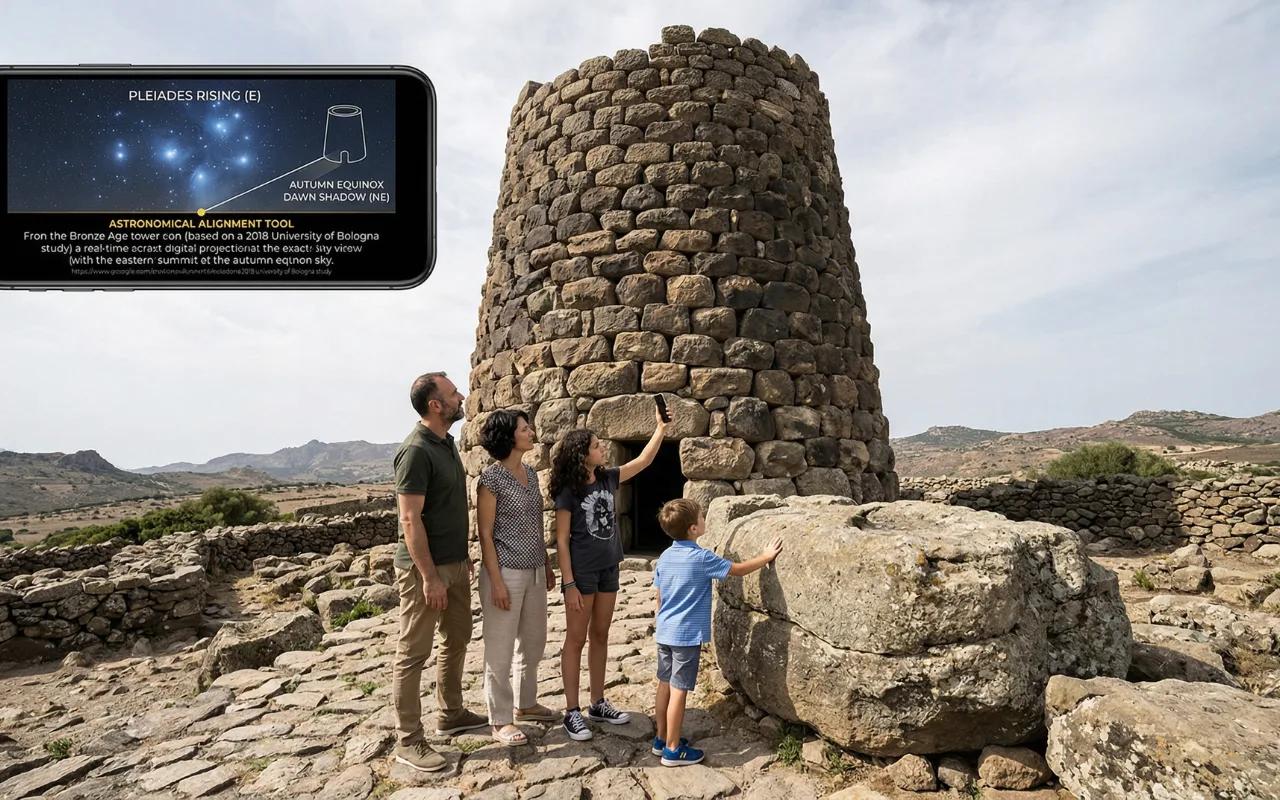
Su Nuraxi, prehistoric astronomical observatory
Barumini, nestled in the heart of Sardinia, is a captivating destination for history enthusiasts and explorers. Wondering what to do in this Sardinian village? Don't miss the UNESCO World Heritage site of Su Nuraxi, a prehistoric astronomical observatory and a monumental testament to an ancient civilization. Also, take a stroll around Casa Zapata, an archaeological museum built over the remains of another nuraghe, offering a unique immersion into the past. For an unusual activity in Barumini, our outdoor escape game courses invite you to explore the town in a playful way. Transform your visit into a true treasure hunt or a life-sized scavenger hunt, where every street corner and monument become clues. It's an original way to discover Barumini's secrets while having fun. Here are the courses we offer in Barumini:
Unusual things to do in Barumini
Looking for an unusual activity in Barumini? Off the beaten path, this small Sardinian town offers a unique immersion into Nuragic history. Our escape games, displayed above, allow you to experience an original outing by exploring the heritage interactively. Imagine solving puzzles at the foot of Su Nuraxi or deciphering mysteries while strolling through the village streets. It's a fun and memorable way to discover Barumini's hidden secrets, combining culture and adventure for a truly extraordinary experience.
Things to do in Barumini with kids
What to do with the family in Barumini to captivate both young and old? Our games above are an excellent option for a fun day with children and teens. Suitable from a minimum age (usually 8 years old), they transform the discovery of the city into a true adventure. Your children will love searching for clues and solving puzzles in a unique historical setting like Su Nuraxi. It's an activity that stimulates teamwork and curiosity, guaranteeing laughter and memorable moments for the whole family.
Barumini for couples
Looking for a romantic and original getaway? Barumini for couples offers an intimate setting for discoveries together. Away from the hustle and bustle, stroll hand in hand through the peaceful streets of the village, soak up the ancient atmosphere of Su Nuraxi, and enjoy breathtaking views of the Sardinian countryside. Our courses above add a touch of adventure to your stay, allowing you to share intimate moments by solving puzzles together. It's a unique way to create precious memories, combining rich heritage with the excitement of a romantic treasure hunt.
What to do in Barumini when it rains
What to do in Barumini on a rainy day? Our outdoor escape games are designed to be played outdoors. While the experience is optimal in good weather, a light drizzle won't spoil your fun if you're well-equipped. However, in case of heavy rain, we recommend postponing the activity or exploring indoor options such as the Casa Zapata museum. Remember that most of the exploration of Su Nuraxi takes place outdoors.
Where is Barumini, and where do the routes start?
Starting points of our routes and the places they pass through.
Route starting points
Places in Barumini
- Su Nuraxi
- Nuraghic huts around
- Marmilla panorama
- Casa Zapata
- Casa Zapata Museum
- Immacolata Concezione church
- Marmilla belvedere
- Su Nuraxi secret vaulted gallery
The history of Barumini
The Bronze Age Heart of Sardinia
Barumini's history is rooted in the Nuragic civilization, which existed on Sardinia from the Middle Bronze Age (around 1600-1200 BCE) until the 3rd century CE. The nuraghe, megalithic defensive structures unique to the island, are evidence of this ancient culture. Barumini contains Su Nuraxi, a complete and preserved Nuragic complex, designated a UNESCO World Heritage site in 1997.
Construction of the central tower of Su Nuraxi began between the 17th and 13th centuries BCE. This structure, originally over 18.5 meters high, was built from basalt blocks and featured three superimposed chambers. During the Late Bronze Age, four additional towers were added, connected by a curtain wall, forming a bastion around the central tower. A village of circular stone huts grew around the nuraghe, becoming a settlement inhabited for over two millennia. The site saw various modifications, including the addition of a sewerage system and paved streets during the 9th-8th century BCE. Attacked by the Carthaginians in the 7th century BCE and later abandoned, the site saw intermittent occupation, with people living there until the 3rd century CE, even after the Roman conquest of Sardinia.
From Feudal Lords to Archaeological Discovery
Centuries later, Barumini entered a new era under Aragonese rule. In the late 16th century, the Spanish Zapata family commissioned Casa Zapata, a palace that served as their residence and a symbol of their power in the region for nearly five centuries. The Zapatas were among the first Aragonese families to settle on the island, acquiring the fiefdoms of Barumini, Las Plassas, and Villanovafranca. The palace, with its classical architectural lines and the Zapata coat of arms carved into its facade, stands as an example of Hispanic civil architecture in Sardinia.
However, the historical significance of Casa Zapata remained unknown until the 1990s. During restoration work, it was discovered that the palace had been built directly over the remains of another nuraghe, known as Nuraxi 'e Cresia. This archaeological find transformed the noble residence into a museum complex, where visitors walk on suspended walkways and glass floors to view the ancient Nuragic structures beneath the 17th-century building. The excavations, led by Sardinian archaeologist Giovanni Lilliu in the 1950s, brought to light tools, weapons, pottery, and ornaments, adding to the understanding of the Nuragic civilization.
What to see in Barumini
- Su Nuraxi — This UNESCO World Heritage site is the most significant Nuragic complex in Sardinia. Explore the central tower, a structure built of basalt blocks, and the surrounding four smaller towers connected by a defensive wall. Walk through the excavated remains of the ancient village, where you can see circular huts, public spaces, and a sewerage system dating back to the Iron Age.
- Casa Zapata Museum — This 17th-century Aragonese palace offers a unique experience. During restoration in the 1990s, another nuraghe, Nuraxi 'e Cresia, was discovered beneath its foundations. You can walk on glass floors and suspended platforms to view the ancient structures directly below the residence. The museum also houses archaeological artifacts from Su Nuraxi, historical documents of the Zapata family, and an ethnographic section with traditional Sardinian objects.
- Immacolata Concezione Church — Dating back to the 16th century, this parish church displays late Gothic architecture. Inside, observe the pointed arches and ribbed vaults in the presbytery and some chapels. The church features a polychrome marble altar and houses a 16th-century painted altarpiece depicting scenes from the life of Jesus.
- Marmilla Panorama — From various points around Barumini, you can see the Marmilla region. This area is characterized by rolling hills, ancient agricultural landscapes, and the basalt plateaus of the Giara.
- Nuragic Huts around Su Nuraxi — Beyond the central bastion of Su Nuraxi, explore the remains of the Nuragic village. These circular stone huts, some with quadrangular rooms inside, provide insight into the daily life of the ancient inhabitants, with evidence of workshops, kitchens, and agricultural processing centers.
When to visit Barumini
The ideal time to visit Barumini is during spring (April-May) and early autumn (September-October). Temperatures are between 18°C and 25°C, suitable for exploring outdoor archaeological sites. The light is good for photography, and crowds are smaller than in peak summer.
Summer (July-August) can be hot, with temperatures often above 30°C, which may make outdoor exploration less enjoyable. All sites remain open, but the high season sees more visitors. Winters (November-March) are cooler and quieter, with average temperatures around 13°C. There are fewer crowds, but some attractions might have reduced hours, and there is a higher chance of rain, particularly in November.
Getting around Barumini
Barumini is in the south-central Marmilla region, approximately 60-65 kilometers (37-40 miles) north of Cagliari. The most efficient way to reach Barumini is by car, taking the SS 131 north from Cagliari to the Sanluri exit, then the SS 197 northeast towards Villamar. Parking is available near the entrance to Su Nuraxi.
Public transport options are limited. ARST regional buses from Cagliari to Barumini (Linea 436) run twice daily, making a same-day round trip impractical. The bus stops in the center of Barumini (Via Roma or Viale Umberto I), about a 1-mile walk to the archaeological site. The "Barumini Link" service, an integrated train+bus option, operates seasonally (July to September), connecting San Gavino Monreale railway station to the archaeological sites. Tickets for this combined service must be purchased in advance via Trenitalia. Once in Barumini, the main sites are walkable; comfortable shoes are recommended for the archaeological areas.
Things you probably do not know about Barumini
Verified details most visitors walk straight past.
- Su Nuraxi
- What's in a name? The most famous Nuragic site in Sardinia has a very straightforward meaning in the local language. The name "Su Nuraxi" simply means "The Nuraghe" in Campidanese, the southern variant of the Sardinian language, highlighting its prominence among the thousands of similar structures across the island.
- Casa Zapata
- Imagine moving into a historic palace, only to discover a secret hidden beneath your feet for centuries. When the municipality of Barumini acquired Casa Zapata in 1987 and began renovations in the 1990s, they uncovered the perfectly preserved Nuraxi 'e Cresia, a Nuragic complex that had been completely unknown until then.
- Immacolata Concezione Church
- Look closely at the architecture of the Immacolata Concezione Church, and you'll spot a blend of styles from different eras. While the church dates back to the 16th century with late Gothic elements, the presbytery was rebuilt in 1661, and the quadrangular apse behind it dates to 1683, showcasing how the building evolved over time.
- Marmilla region
- The name of the Marmilla region, where Barumini is located, hints at a unique geographical feature. The name "Marmilla" is thought to come from the Latin word "Mamilla," meaning "breast," referring to the region's characteristic rounded hills.
- Su Nuraxi's main tower
- The ancient builders of Su Nuraxi used an ingenious technique to create its towering structures without modern mortar. The central tower of Su Nuraxi, and Nuraghi in general, were constructed using dry-stone masonry, meaning large blocks of basalt were precisely fitted together without the use of bonding materials like mortar, demonstrating a sophisticated level of engineering.
Questions about visiting Barumini
How much time should I allocate for visiting Barumini?
A good itinerary length for Barumini is one to two days. This allows sufficient time to explore key sites like Su Nuraxi and the Casa Zapata Museum thoroughly, potentially with a guided tour, and to appreciate the local culture.
What are the transportation options within Barumini?
Barumini is a small town. Its main attractions, such as Su Nuraxi and Casa Zapata, are within walking distance of each other or a short drive. The archaeological site itself requires walking, so comfortable shoes are recommended.
Is Barumini suitable for families with children?
Yes, Barumini can be an engaging destination for families. The ancient Nuragic complex of Su Nuraxi offers a glimpse into history, and the surrounding areas, like the Giara di Gesturi, are home to wild horses, which can be an experience for children.
What is the typical budget for a day in Barumini?
A day in Barumini can be modest. Admission fees for Su Nuraxi and Casa Zapata are combined into one ticket. Transportation costs depend on whether you rent a car or use the limited public transport. Food options include local restaurants and cafes.
Are there any local markets or special events in Barumini?
While specific market days for Barumini are not widely advertised, the town often hosts cultural initiatives and events promoted by the Fondazione Barumini Sistema Cultura, especially during peak tourist seasons, to popularize its history.
What are the best areas to stay in Barumini?
Barumini is a small village, so staying within the town itself provides easy access to the main historical sites. There are a few local accommodations, and visitors can also consider staying in nearby towns in the Marmilla region for a more rural experience.
Frequently asked questions
How much does an outdoor escape game cost in Barumini?
Our escape games in Barumini are designed to be accessible and offer excellent value. The price is €12 per team, not per person. This means the total cost is fixed, whether you are 2, 3, or 4 players, making the activity very economical for groups. This single rate includes access to the game, puzzles, and adventure, allowing you to discover the city in a fun way without breaking the bank.
Is it suitable for children / families?
Absolutely! Our escape games in Barumini are a fantastic activity for families with children and teens. The courses are designed to be interactive and stimulating, with varied puzzles that appeal to all ages. We generally recommend a minimum age of 8 for children to fully participate in solving the mysteries, but younger ones can also have fun helping to find clues. It's a great way to spend quality time together and create lasting memories.
How long does an escape game in Barumini last?
The duration of an escape game in Barumini generally varies between 1h30 and 2h30. This depends on your pace, the size of your team, and your ability to solve the puzzles. Some groups like to take their time to admire the monuments and the surroundings, while others prefer to focus on the challenge. Either way, you'll have plenty of time to enjoy the adventure and discover the charms of Barumini at your leisure.
Do I need to book in advance?
No, booking is not mandatory for our outdoor escape games in Barumini. Our games are designed to be played at your convenience. You can purchase the game whenever you want and start the adventure immediately or later. This is ideal for maximum spontaneity during your visit. However, if you prefer to plan, you can certainly purchase the game in advance and launch it on the day of your choice.
What to visit in Barumini beyond the escape games?
Beyond our exciting escape games, Barumini is full of treasures to explore. The Nuragic site of Su Nuraxi is an absolute must-see, offering a fascinating dive into the Sardinian Bronze Age. Also, don't miss Casa Zapata, a unique archaeological museum built over another nuraghe, allowing you to view the remains through a glass floor. The historic village center is also charming for a stroll, with its churches and authentic atmosphere.
What is the best season to visit Barumini?
The best season to visit Barumini and fully enjoy our outdoor escape games is spring (April-June) or autumn (September-October). During these periods, the climate is mild and pleasant, ideal for exploring archaeological sites and the village streets without suffering from intense summer heat. Summer (July-August) can be very hot, making outdoor activities more tiring, while winter is cooler and potentially rainy.
Other destinations in Sardinia
More cities in Italy
Rome
Porta Magica, catacombs and the Popes' Passetto
Palermo
Normans, Arabs, Byzantines — the city of three crowns
Civita di Bagnoregio
The dying city perched on a tuff bridge
Siena
The Contrade war and the world's oldest bank
Naples
Napoli Sotterranea, Dracula and the skull cult
Florence
Medici, Templars and Palazzo Vecchio alchemists
Paestum
The world's best-preserved Greek temples
Bologna
Hidden canals, leaning towers and the world's oldest university
Activities to discover nearby
Guided tours, skip-the-line tickets and local experiences to book in advance.
💡 Optional booking — you can also buy on-site. All links open in a new window, your OddballTrip visit stays preserved.