PalermoOutdoor Escape Game & Treasure Hunt
Normans, Arabs, Byzantines — the city of three crowns
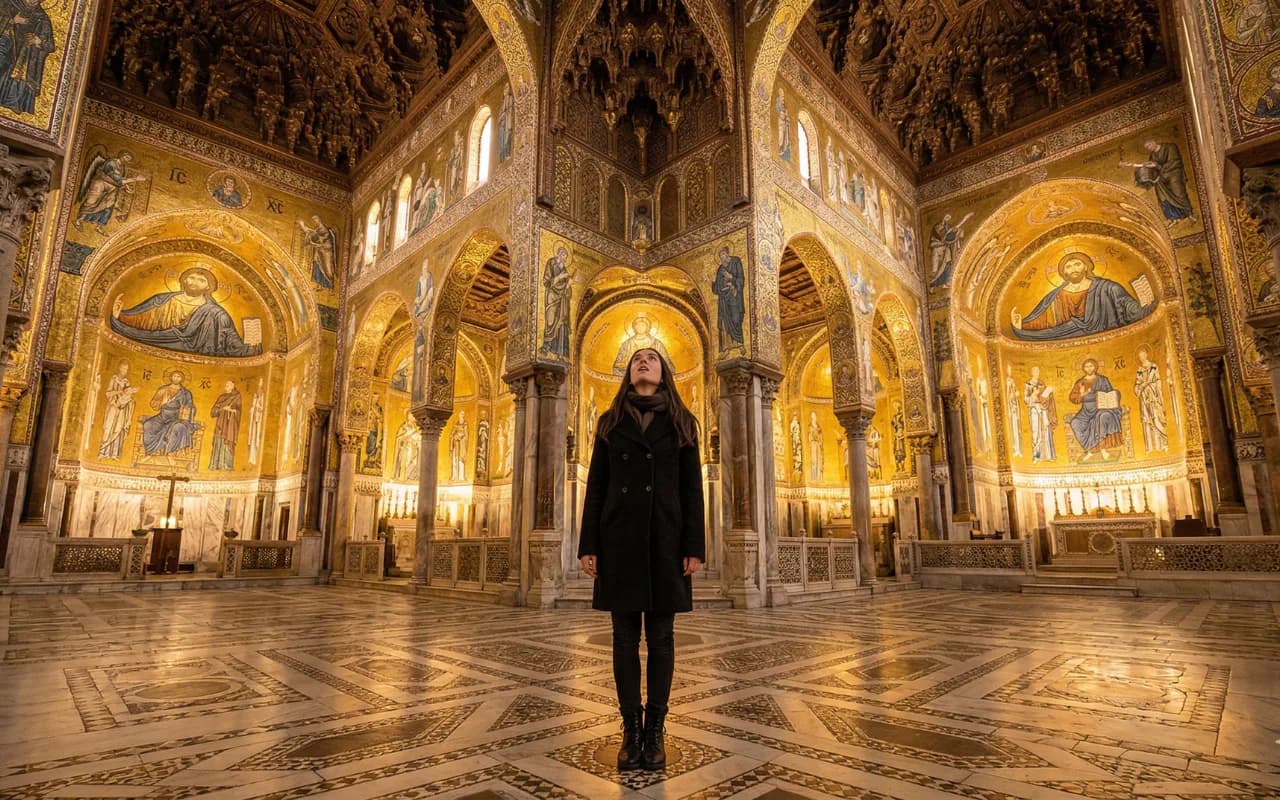
Palermo, the capital of Sicily, is a city where history unfolds on every street corner, a true crossroads of civilizations. Nicknamed "the city of three crowns," it bears witness to the passage of Normans, Arabs, and Byzantines, whose legacies intertwine to create a unique atmosphere. Wander through the lively alleys of the Vucciria district, marvel at the grandeur of the Norman Palace and its Palatine Chapel, or admire the majestic Cathedral. For a more interactive discovery and an unusual activity, our outdoor escape games offer a captivating scavenger hunt. Transform your exploration into a real treasure hunt, solving riddles while uncovering Palermo's secrets. Ready to take on the challenge and dive into adventure? Discover our unique routes to explore the city in a different way.
The Sicily of Three Crowns
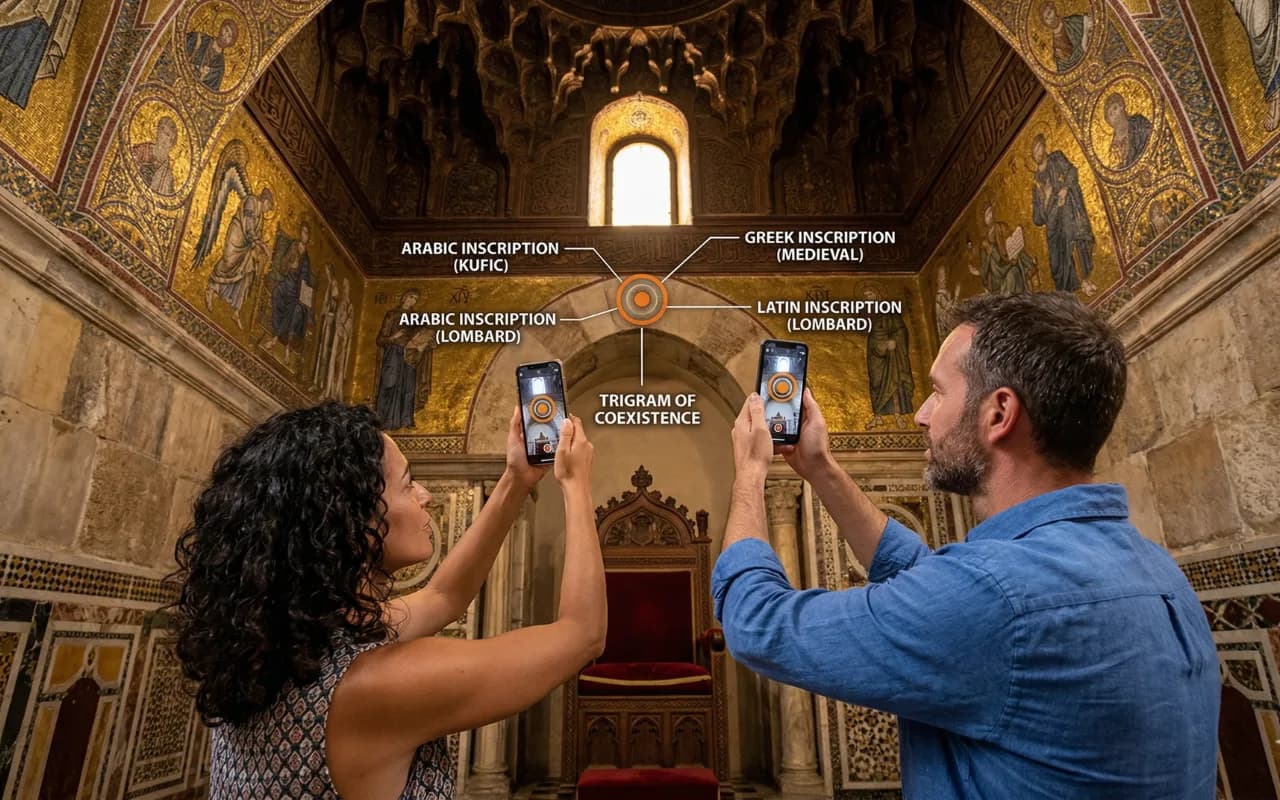
Arabs, Normans and Byzantines
The Capuchin Catacombs
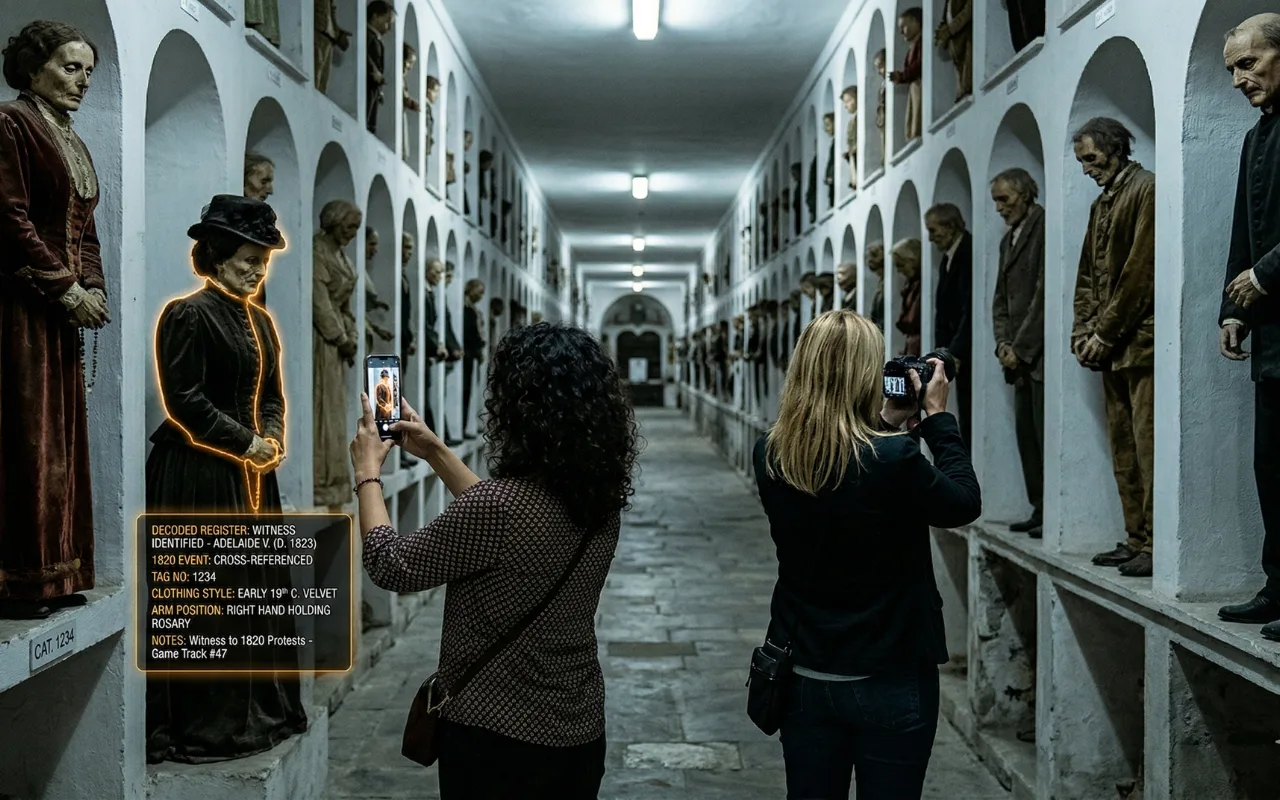
Oracle of 8000 mummies
Unusual things to do in Palermo
Palermo is a city full of surprises and unusual activities, far from the beaten path. Beyond classic tours, imagine deciphering mysteries in the colorful markets of Ballarò or under the imposing shadow of the Norman Palace. Our outdoor escape games are designed to transform your exploration into a unique adventure, inviting you to see the city from a new perspective. It's an original and fun way to discover Palermo's history and legends, all while having a great time with your loved ones. Forget traditional guidebooks and let the intrigue of our routes lead you.
Things to do in Palermo with kids
Visiting Palermo with family is a rewarding experience, and our escape games are the perfect activity to captivate both young and old. Imagine your children transformed into young explorers, solving riddles in the heart of the historic center or in lush gardens. Our routes above are designed to be accessible and fun for all ages (from 6-8 years old accompanied), blending cultural discovery with a scavenger hunt. It's an excellent way to create memorable moments, stimulate children's curiosity, and share joyful times while exploring Palermo's treasures.
Palermo for couples
Palermo offers an idyllic setting for a romantic getaway, and our escape games can add a touch of adventure to your couple's trip. Far from classic dinners, imagine yourselves hand in hand, solving riddles together, exploring hidden corners of the city you would never have discovered otherwise. Our routes are an original and complicit way to share a fun activity, laugh, and create unforgettable memories. It's the perfect opportunity to strengthen your bond while immersing yourselves in Palermo's beauty and history.
What to do in Palermo when it rains
If the Palermo sky decides to turn gray, don't worry! Although our escape games are mostly designed to be played outdoors and enjoy the Sicilian sun, the city is full of alternatives. You can always take refuge in one of Palermo's magnificent museums, like the Museo Archeologico Regionale, or explore the Capuchin Catacombs for a unique experience. Sicily is renowned for its sunny climate, but if rain comes, it's an opportunity to discover other facets of its heritage.
Where is Palermo, and where do the routes start?
Starting points of our routes and the places they pass through.
Route starting points
Places in Palermo
- Palazzo dei Normanni & Cappella Palatina
- Quattro Canti
- Mercato di Ballarò & Via Maqueda
- Palermo cathedral
- La Martorana church
- San Giovanni degli Eremiti
- Palermo Botanical Garden
- Chiaramonte-Steri palace
- Palazzo Reale & Via Cappuccini
- Catacombe dei Cappuccini
- Villa Malfitano
- Zisa Palace
- Cuba Regia
- Capuchin convent
- Villa Whitaker
- Parco della Favorita
The history of Palermo
Foundation and Early Development
Palermo was founded by Phoenician traders in the 8th century BCE, initially named Mabbonath and later Zyz, meaning "flower." Its location in the Mediterranean made it a strategic port. The city fell to the Romans in 254 BCE, entering a period of decline. It saw renewed activity under Byzantine rule from 535 CE.
The Arab conquest in 831 CE marked a golden age. Palermo became a center of trade, science, and culture. Arab influence is visible in its mosaics and the layout of its historic quarters. The Normans seized Palermo in 1072, establishing it as the capital of the Kingdom of Sicily in 1130. This era saw a cultural fusion where Greek, Arab, Jewish, and Norman communities coexisted. The Islamic-Norman architectural style, blending Arab craftsmanship and Norman strength, is present in structures like the Royal Palace and the Palatine Chapel.
Shifting Powers and Enduring Legacy
After the Normans, Palermo came under the German Hohenstaufen dynasty in 1194. Emperor Frederick II's court became a center of learning and art. The city's capital status was briefly lost when the French Angevin dynasty moved it to Naples, leading to the Sicilian Vespers insurrection in 1282, which began in Palermo. Subsequent centuries saw the city under Aragonese and Spanish rule, leaving architectural and cultural imprints, particularly in Baroque churches and palaces.
In 1816, the Kingdom of Sicily was abolished, and Palermo lost its status as a state capital with the establishment of the Kingdom of the Two Sicilies, with Naples as its capital. The city played a role in the upheavals of the 19th century, culminating in Giuseppe Garibaldi's entry in 1860. Palermo and Sicily became part of the newly formed Kingdom of Italy in 1861.
What to see in Palermo
- Palazzo dei Normanni & Cappella Palatina — This former royal palace, now home to the Sicilian regional assembly, displays Arab-Norman-Byzantine architectural style. The Palatine Chapel inside contains Byzantine mosaics depicting biblical scenes and Islamic patterns.
- Quattro Canti — This Baroque square, Piazza Vigliena, marks the intersection of Palermo's two main streets, Via Maqueda and Corso Vittorio Emanuele. The four corners have facades with fountains, statues of the four seasons, the four Spanish kings of Sicily, and the patronesses of Palermo's ancient quarters.
- La Martorana & San Cataldo — These two churches in Piazza Bellini offer contrasting styles. La Martorana (Santa Maria dell'Ammiraglio) is known for its Byzantine mosaics and a bell tower. San Cataldo has three red domes, an example of Arab-Norman architecture.
- Mercato di Ballarò — One of Palermo's oldest street markets, dating back to the Arab period. Vendors announce their wares, selling fresh produce, seafood, and local street food like panelle (chickpea fritters) and arancine (fried rice balls).
- Palermo Cathedral — An architectural complex with elements of Norman, Gothic, Renaissance, and Baroque styles. Inside are the tombs of Norman kings and Holy Roman Emperors, including Frederick II.
- San Giovanni degli Eremiti — This 12th-century church has five red domes, a feature of Arab-Norman architecture. The adjoining cloister with its garden offers a quiet space.
- Catacombe dei Cappuccini — A site where thousands of mummified bodies, from the 16th to the early 20th century, are preserved and displayed.
When to visit Palermo
The best times to visit Palermo are April to June and September to October. During these months, temperatures are 20-28°C (68-82°F), suitable for walking. Crowds are smaller, and accommodation prices are more reasonable than in summer. May is recommended for warm weather, good for city sightseeing and beach visits to Mondello.
Avoid July and August. These are the hottest months, with temperatures often over 32°C (90°F). The city has peak tourist crowds and higher prices. Many local businesses may close around Ferragosto (August 15th). Winter (December-February) is mild, with average temperatures around 14-15°C, occasional rain, and fewer tourists.
Getting around Palermo
Palermo's Falcone Borsellino Airport (PMO) is 35 kilometers (21.7 miles) from the city center. A shuttle bus (Prestia e Comandè) costs about €6 and takes 50 minutes to Palermo Centrale. The Trinacria Express train also connects the airport to Palermo Centrale in 50 minutes for €6.80.
The historic center is best explored on foot. For longer distances, Palermo has an AMAT public bus network; single tickets cost €1.40 for 90 minutes. A free shuttle bus, the "Free Centro Storico," loops through the main streets of the historic center daily. Palermo Centrale, the main railway station, is in Piazza Giulio Cesare.
Palermo's street markets, such as Ballarò and Il Capo, are generally open Monday to Saturday, from morning until early afternoon (around 2-3 PM). Vucciria market often stays open later for street food. Many shops and some sights observe a siesta, closing in the early afternoon, especially during summer.
Things you probably do not know about Palermo
Verified details most visitors walk straight past.
- Teatro Massimo
- What secret lies beneath the grand stage of Italy's largest opera house? When the Teatro Massimo was built in the late 19th century, it was constructed over the remains of three churches and several monasteries. Legend has it that the ghost of a nun, whose tomb was disturbed during construction, still roams the theater.
- Capuchin Catacombs
- Why do some of the mummies in Palermo's catacombs appear to be sleeping? Among the thousands of mummified bodies, one of the most famous is Rosalia Lombardo, a two-year-old who died in 1920. Her remarkably preserved body, often called "Sleeping Beauty," is a testament to the embalming techniques of the time, making her appear as if she is merely asleep.
- Monte Pellegrino
- What geographical transformation did Mount Pellegrino undergo, and how does it relate to Palermo's patron saint? Monte Pellegrino, where the Sanctuary of Santa Rosalia (Palermo's patron saint) is located in a cave, was once an island. Over millennia, sediment accumulated, connecting it to the mainland, meaning that when you're on Mondello Beach, you're at the foot of what was once an ancient island.
- Palazzo dei Normanni
- How did a Norman palace come to feature such exquisite Islamic and Byzantine artistry? The Norman kings, particularly Roger II, employed Arab and Byzantine craftsmen to decorate the Palatine Chapel and other parts of the palace in the 12th century. This deliberate fusion of styles created the unique Arab-Norman architecture, showcasing a remarkable period of cultural tolerance and artistic collaboration.
- Quattro Canti
- Beyond its decorative fountains and statues, what historical figures are subtly represented at Quattro Canti? The four corners of Quattro Canti feature statues not only of the four seasons and patronesses of Palermo's ancient quarters but also of the four Spanish kings of Sicily, reflecting a period of Spanish rule that significantly influenced the city's urban development and artistic expression.
Questions about visiting Palermo
How many days should I spend in Palermo?
For a comprehensive experience, including major attractions and a day trip to nearby towns like Monreale or Cefalù, plan for three to four days. If you wish to explore at a more leisurely pace or include multiple day trips, five days or more would be ideal.
What is the best way to get around Palermo?
The historic center of Palermo is best explored on foot. For longer distances, the AMAT public bus system is available, and there's a free shuttle bus, "Free Centro Storico," that circulates within the historic area. Trams and a regional train line (often referred to as the metro) also serve parts of the city and its outskirts.
Which neighborhoods are best for staying in Palermo?
For first-time visitors, the Centro Storico, particularly the Kalsa or Il Capo districts, offers a blend of history, atmosphere, and proximity to attractions. If you prefer a more modern feel with better parking and a quieter ambiance, the Politeama/Via Libertà area is a good choice.
What is the typical cost of transportation from Palermo Airport to the city center?
A shuttle bus or train from Palermo Airport to Palermo Centrale typically costs around €6-7. Taxis are more expensive, ranging from €35-€60 depending on the destination within the city and time of day.
Are there any specific local customs or closing times to be aware of in Palermo?
Many shops and some attractions in Palermo, especially during the warmer months, observe a siesta, closing in the early afternoon (roughly 1 PM to 4 PM). Street markets generally close by early afternoon on most days, with some exceptions for evening street food.
Is Palermo a good city to visit with children?
Palermo offers a rich cultural experience that can be engaging for children, with its lively markets, historical sites, and delicious street food. The Botanical Garden provides open space, and a trip to Mondello Beach offers a relaxing seaside day. Consider the heat during summer months and plan activities accordingly.
Frequently asked questions
How much does an outdoor escape game cost in Palermo?
Our outdoor escape games in Palermo have a single price of €12 per team, not per person! This means the price remains the same whether you are 2, 3, 4, or even more players in your group. It's an economical and friendly solution to enjoy a fun and original activity. This price includes access to the game and all puzzles. Get your team ready and embark on the adventure without breaking the bank!
Is it suitable for children / families?
Absolutely! Our outdoor escape games in Palermo are perfectly suited for families and groups with children. The puzzles are designed to be challenging yet accessible, and the outdoor exploration aspect makes the experience very engaging for younger participants. We generally recommend active participation for children from 6-8 years old, always accompanied by adults who can guide them. It's an excellent way to discover the city together, stimulate their curiosity, and create memorable memories.
How long does an escape game last in Palermo?
The duration of our escape games in Palermo is flexible and depends on your pace of play and your desire to explore. On average, allow between 1h30 and 2h30 to complete one of our routes. However, you are completely free to take breaks, wander, grab a coffee, or visit a monument along the way. There is no imposed time limit, allowing you to fully enjoy the experience and the city at your leisure.
Do I need to book in advance?
No, one of the great advantages of our scavenger hunts in Palermo is flexibility. You don't need to book in advance! Simply purchase the game online whenever you want, and you can start your adventure immediately or at any time that suits you. This is ideal for last-minute decisions or to adapt to an unforeseen travel schedule. Play whenever you want, with whoever you want, without time constraints.
What to visit in Palermo beyond the escape games?
Palermo is full of treasures beyond our fun games! Don't miss the impressive Palermo Cathedral, the sumptuous Norman Palace with its Palatine Chapel, a true jewel of Arab-Norman art. Stroll through historical markets like Ballarò or Vucciria for a unique sensory immersion. The Teatro Massimo, the Quattro Canti, and the Capuchin Catacombs also offer memorable experiences. Each neighborhood has its charm, inviting you to discover Sicilian history and culture.
What is the best season to visit Palermo?
The best season to visit Palermo and fully enjoy our outdoor escape games is spring (April-May) or autumn (September-October). During these periods, the climate is pleasantly mild and sunny, ideal for walking and exploring the city on foot without the intense summer heat. Summer (July-August) can be very hot, making exploration less comfortable. Winter is cooler and potentially wetter, but also offers a different atmosphere and fewer crowds.
Other destinations in Sicily
Syracuse
Archimedes' city and the Ear of Dionysius
Agrigento
The Valley of the Temples, seven Greek sanctuaries
Taormina
The Greek theatre facing the smoking Etna
Savoca
The Godfather's village and its standing mummies
Erice
The Phoenician temple of Venus in the mists
Corleone
In the heart of Sicily, between myth and reality
Gibellina
Art's resurrection in Sicily's heart, born from ruins
Morgantina
Dive into the Greek soul of ancient Sicily
Selinunte
Where Greek temples defy time
More cities in Italy
Paestum
The world's best-preserved Greek temples
Naples
Napoli Sotterranea, Dracula and the skull cult
Rome
Porta Magica, catacombs and the Popes' Passetto
Civita di Bagnoregio
The dying city perched on a tuff bridge
Siena
The Contrade war and the world's oldest bank
Florence
Medici, Templars and Palazzo Vecchio alchemists
Bologna
Hidden canals, leaning towers and the world's oldest university
Activities to discover nearby
Guided tours, skip-the-line tickets and local experiences to book in advance.
💡 Optional booking — you can also buy on-site. All links open in a new window, your OddballTrip visit stays preserved.