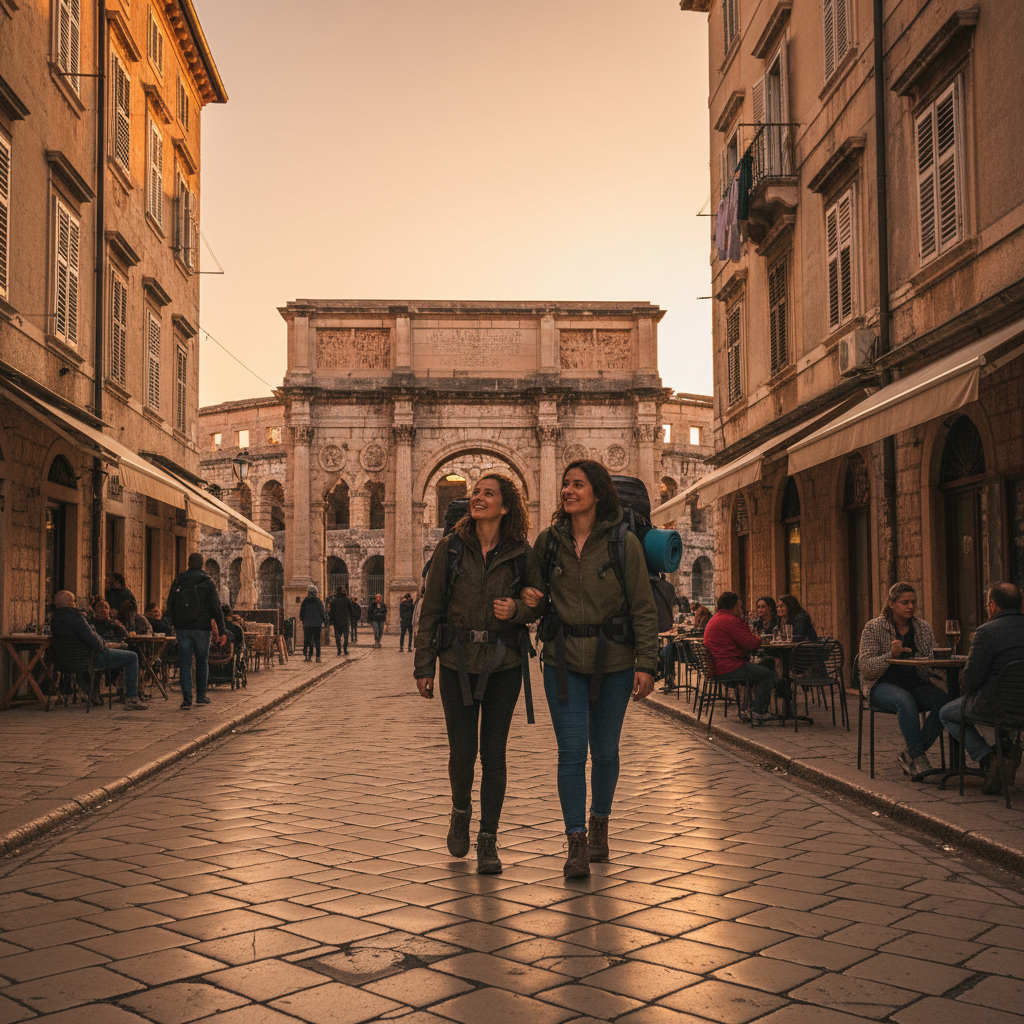
PulaOutdoor Escape Game & Treasure Hunt
Pula: Tracing the Roman Empire's legacy in Istria
Pula, this pearl of Croatian Istria, is a city where Roman history unfolds around every corner. If you're wondering what to do in Pula, get ready for a journey through time. The imposing Amphitheater, often compared to the Colosseum, is a must-see, but the city is full of other treasures like the majestic Temple of Augustus in the Forum, or the Arch of the Sergii. Beyond classic visits, Pula is the ideal place for an unusual activity: our outdoor escape games. Imagine transforming the old town into a huge playground, where every monument becomes a clue. Our scavenger hunts and treasure hunts invite you to explore Pula in a fun and interactive way, solving puzzles while soaking up its unique atmosphere. It's an original way to discover the secrets of this millennial city.
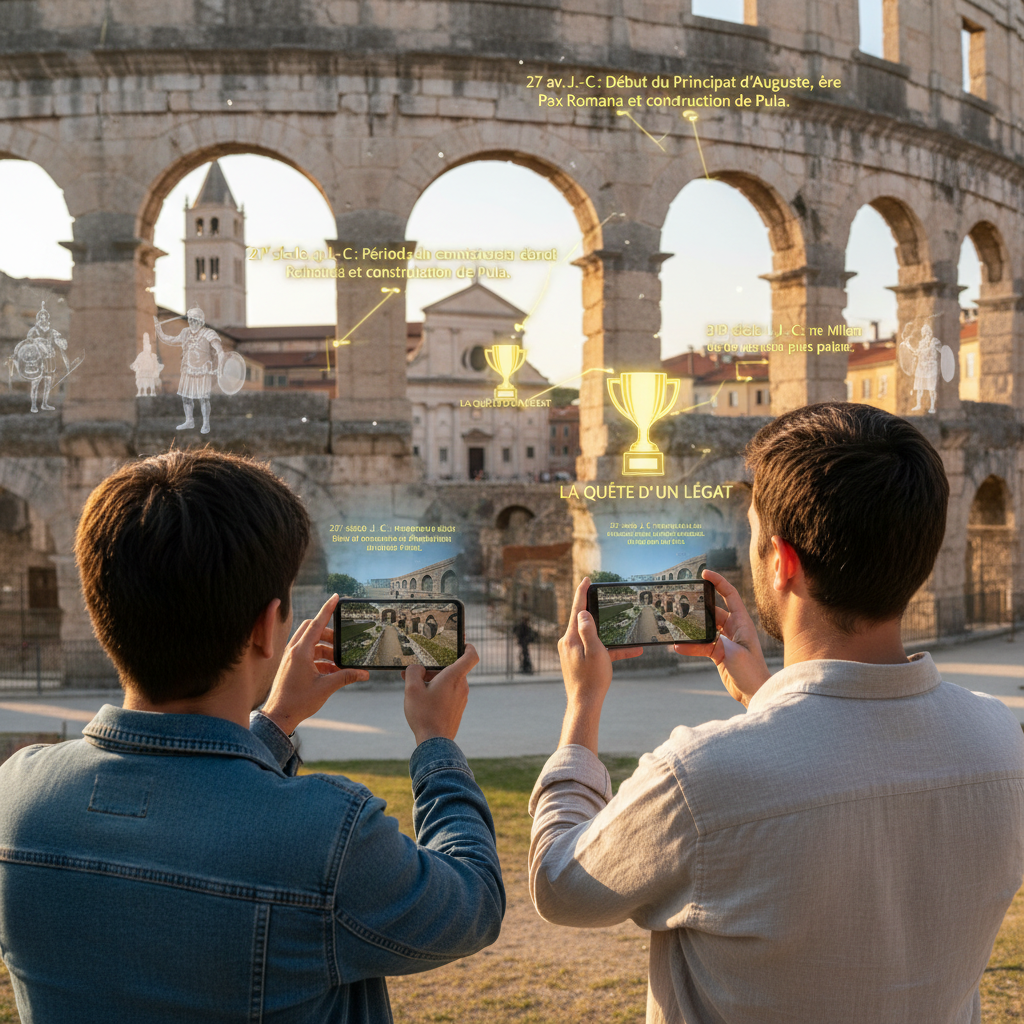
Pula — Primus Pilus Legacy
Uncover the hidden legacy of the Primus Pilus, Pula's arena champion turned citizen. Decipher his final testament amid Roman ruins to reveal a betrayed fortune before it vanishes forever.
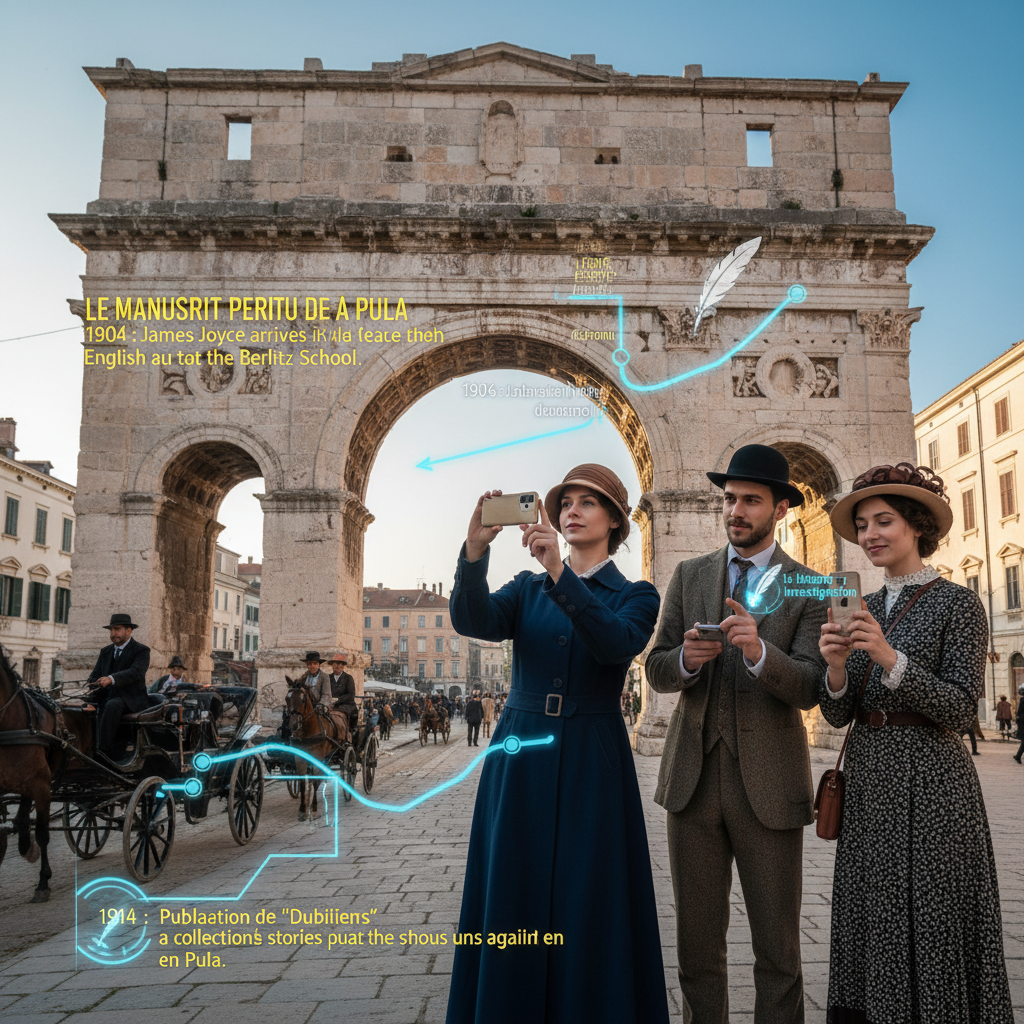
Joyce's Hidden Manuscript — Uncover the Exile's Secret
Decipher James Joyce's lost 1904 manuscript hidden across Austro-Hungarian Pula. Uncover the coded letters, cryptic notes, and forbidden passages the exiled writer concealed before fleeing.
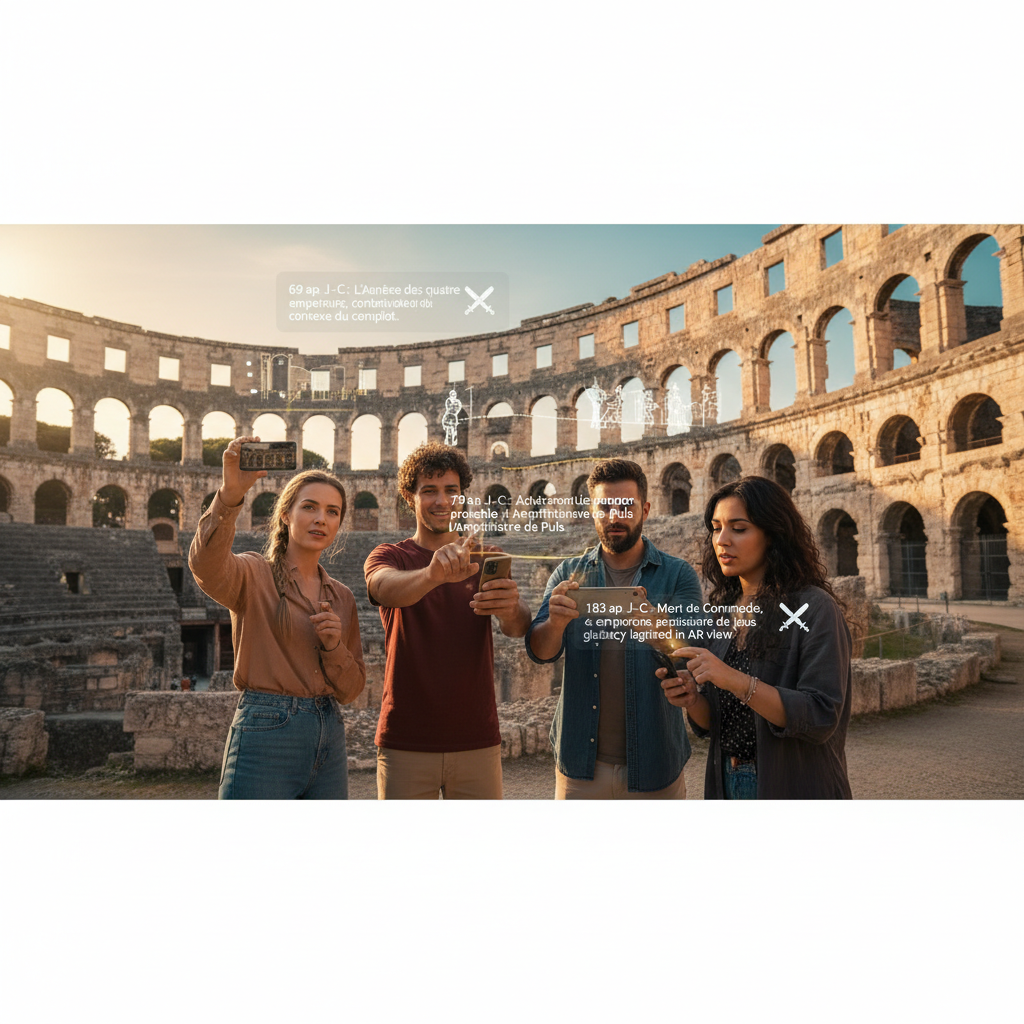
The Oath of the Arena — Uncover the Gladiator Conspiracy
Decipher the secret rebellion of enslaved gladiators in Pula's Roman amphitheatre. Uncover coded messages, hidden tombs, and the truth behind a legendary oath sworn in blood.
Unusual things to do in Pula
For an unusual activity in Pula, our outdoor escape games are a guaranteed original outing. Imagine strolling through the cobbled streets, along the Roman ramparts, while solving puzzles that immerse you in the city's history. It's a unique way to see Pula, off the beaten path, by transforming each monument into an element of your adventure. Whether you are a history enthusiast or simply looking for a different experience, this life-sized treasure hunt promises unforgettable memories and a new perspective on the Istrian city.
Things to do in Pula with kids
Pula is a fantastic destination for families, and our outdoor escape games are perfect for keeping children and teens entertained. From the age of 8, younger participants can actively take part, helping to decipher codes and find hidden clues. It's a fun activity that stimulates curiosity and teamwork, while allowing them to discover the city's Roman heritage in an interactive and engaging way. An excellent way to combine entertainment and culture, creating precious memories for the whole family.
Pula for couples
For a romantic getaway in Pula as a couple, our scavenger hunts offer a unique opportunity to share a memorable experience. Imagine walking hand in hand, exploring the winding alleys of the old town, discovering breathtaking views of the Adriatic from the heights of the Amphitheater, or deciphering together the secrets of ancient monuments. It's an intimate and interactive way to immerse yourselves in Pula's rich heritage, laugh together at a puzzle, and create memories that go beyond a simple tourist visit. An adventure for two, in the heart of history.
What to do in Pula when it rains
Even in rainy weather, Pula has its charms, and our outdoor escape games are surprisingly suitable. Approximately 80% of the route takes place under arcades, covered passages, or near natural shelters like the Amphitheater or the Forum. This means you can continue your treasure hunt without getting too wet, enjoying the special atmosphere of an ancient city in the rain. Just bring an umbrella for short transitions and let yourself be carried away by the adventure.
Where is Pula, and where do the routes start?
Starting points of our routes and the places they pass through.
Route starting points
Places in Pula
- Pula Amphitheater (South Exterior)
- Hercules' Gate (Facade)
- Pula City Walls (Remains near Hercules' Gate)
- Cathedral of the Assumption of the B.V.M. (East Facade)
- Via Sergia (Main Street)
- Proximity of the Small Roman Theater
- Mosaic 'The Punishment of Dirce' (Exterior)
- Port of Pula (Fishermen's Wharf)
- Arch of the Sergii
- Temple of Augustus
- Forum (Trg Forum)
- Near Giardini Square
- Pula Amphitheater (exterior)
- Riva (Kaiser Franz Joseph Quay)
- Pula City Library
- Sergijevaca Street
- Pula Amphitheater (North Exterior)
- Amphitheater Enclosure Wall (East Side)
The history of Pula
From Illyrian Settlement to Roman Colony
Pula's origins date back over three millennia. The area was first settled by the Histri, an ancient Illyrian tribe, around 1000 BC. They established hillfort settlements, using the protected natural harbor.
The city's transformation began with the arrival of the Romans. The Istrian peninsula was conquered by the Romans in 177 BC. Pula was elevated to colonial rank between 46 and 45 BC under Julius Caesar, becoming known as Pietas Julia. During this Roman Imperial period, from the 1st to 3rd centuries AD, Pula developed, reaching an estimated population of 30,000. It became a Roman port, with water and sewage systems, a Forum, and two theaters. The city was fortified with walls and ten gates. Some, like the Arch of the Sergii and the Gate of Hercules, remain today.
Venetian Decline and Austro-Hungarian Revival
After the fall of the Western Roman Empire, Pula entered a turbulent period. It was attacked by the Ostrogoths in 476 AD and later came under Byzantine rule, becoming a naval port in the 6th century. From 788 AD, Pula was ruled by the Frankish Empire, which introduced the feudal system. In 1150, Pula swore allegiance to the Republic of Venice, beginning centuries of Venetian influence. However, the 14th, 15th, and 16th centuries saw Pula repeatedly attacked by Genoese, Croatian-Hungarian, and Habsburg armies. This period also brought epidemics of plague, malaria, and typhoid. The population declined significantly by the 1750s.
The city's situation changed in the 19th century under the Austro-Hungarian Empire. The Austro-Hungarians developed a naval port and shipyard. This led to population growth, from just over a thousand people to around 40,000 within 50 years. It also brought a period of construction and cultural exchange. After World War I, Pula became part of the Kingdom of Italy. After World War II, it was administered by the Allied Military Government until 1947, when it joined Yugoslavia. It became part of the independent Republic of Croatia in 1991.
What to see in Pula
- Pula Amphitheater (Arena) — This 1st-century AD Roman amphitheater, built during Emperor Vespasian's reign, is one of the best-preserved in the world. Walk through its elliptical structure, which once held up to 23,000 spectators for gladiatorial fights, and explore the underground passages where gladiators and animals were kept. Today, it hosts concerts, film festivals, and other events.
- Temple of Augustus — Located in the Forum, this Roman temple was built between 2 BC and AD 14, dedicated to the goddess Roma and Emperor Augustus. Its Corinthian columns and facade show Roman architectural design. It has served as a church and a granary, and now houses a small museum of ancient sculpture.
- Arch of the Sergii — This triumphal arch, also known as the Golden Gate (Porta Aurea), was erected between 29 and 27 BC by the Sergii family to commemorate their victory at Actium. It stands at the entrance to the old town.
- Forum (Trg Forum) — The central city square of ancient and medieval Pula, the Forum was the administrative, commercial, and religious center of the Roman colony. Today, it remains a public space, bordered by the Temple of Augustus and the Communal Palace, which incorporates the rear wall of the ancient Temple of Diana.
- Gate of Hercules — The oldest surviving city gate in Pula, dating from the 1st century BC, features a relief of Hercules' head and his club. An inscription on the gate names the city's founders, Lucius Calpurnius Piso and Gaius Cassius Longinus, Roman senators entrusted with establishing the Roman colony.
- Small Roman Theater — The remains of the Small Roman Theater, with its scene, semi-circular orchestra, and tiered seating, offer a view into Pula's ancient entertainment venues. It is located on the eastern slopes of the central hill, near the Archaeological Museum of Istria.
When to visit Pula
The best times to visit Pula are late spring (May-June) and early autumn (September-October). During these months, temperatures are mild, ranging from 15°C to 25°C, suitable for exploring historical sites and outdoor activities. The sea is warm enough for swimming, and tourist crowds are smaller than in peak summer.
Summer (July-August) brings average highs of 28-30°C and sea temperatures for swimming. This is peak season, with higher prices and crowded beaches, especially during the Pula Film Festival and Arena concerts.
Winter (November-March) is the off-season, with cooler temperatures averaging 9-15°C and increased rainfall. Some tourist services may be reduced.
Getting around Pula
Pula Airport (PUY) is about 7 kilometers northeast of the city center. Taxis and local buses connect the airport to Pula. The city’s main bus station connects to other Croatian cities and international destinations. Pula is a walkable city, especially the historic core where most Roman monuments are located.
Parking is available in designated lots around the city, but can be difficult during peak season. Consider parking outside the immediate city center and walking. Some smaller shops may close during the early afternoon. Public transport within Pula consists mainly of local buses. Tickets can usually be purchased on the bus. Fresh produce and local goods are available at the city market, which operates daily.
Things you probably do not know about Pula
Verified details most visitors walk straight past.
- Pula Amphitheater
- What did the Pula Amphitheater have that even the Colosseum in Rome didn't boast? The Pula Amphitheater is one of only six surviving Roman amphitheaters in the world to retain its complete circuit of outer walls, including all four side towers.
- Temple of Augustus
- How did a Roman temple survive centuries of changing beliefs and even a direct hit during World War II? The Temple of Augustus was converted into a Christian church in late antiquity, then used as a granary in the Middle Ages, and later became a museum. It was almost completely destroyed by a bomb in 1945 but was meticulously reconstructed to its original form.
- Gate of Hercules
- What hidden detail on Pula's oldest city gate reveals a practical Roman defense strategy? The Hercules' Gate is angled in relation to the city wall. This deliberate alignment was a defensive tactic, forcing attackers to expose their unprotected side to defenders.
- Forum (Trg Forum)
- What surprising discovery was made beneath the modern bank building on the Forum? During the construction of new buildings on the Forum, ancient remains, including those related to 'Agrippina and her time' (1st century AD), were discovered and are now partly restored and exhibited within the bank.
- Pula City Walls
- Why are only fragments of Pula's extensive Roman city walls visible today, despite their original grandeur? The greater part of Pula's Roman city walls, which originally included ten gates, was destroyed in the early 19th century. Only some of the gates and scattered remains have been preserved.
- Mosaic 'The Punishment of Dirce'
- How was a remarkable Roman floor mosaic accidentally brought to light in Pula? The Roman floor mosaic known as 'The Punishment of Dirce' was accidentally discovered after being buried over six feet underground, following a World War II bombing.
Questions about visiting Pula
How long should I stay in Pula?
To appreciate Pula's Roman heritage and coastal features, a stay of 2-3 days is suitable. This allows time to explore the Amphitheater, Forum, and other historical sites, as well as relax by the sea or take a day trip to nearby attractions like the Brijuni Islands.
What are the best ways to get around Pula?
Pula's city center is pedestrian-friendly, making walking the best way to explore its ancient monuments. For longer distances or to reach beaches outside the core, a local bus system is available. Taxis are also accessible throughout the city.
Which neighborhoods are best to explore in Pula?
The Old Town, centered around the Forum and the Amphitheater, is important for its Roman ruins. Giardini Square is a central area with shops and cafes. For a more relaxed atmosphere and access to beaches, consider areas like Verudela, a peninsula south of the city.
What is the typical budget for a trip to Pula?
A mid-range budget for Pula might include around €50-€100 per person per day, covering accommodation, food, and entrance fees. Prices for accommodation and activities tend to be higher during the peak summer months (July-August) and lower in the shoulder seasons.
Is Pula a good destination for families with children?
Yes, Pula is a family destination. Children often enjoy the Roman Amphitheater and exploring the ancient ruins. Many beaches, like those in Uvala and Verudela, offer clear waters and activities suitable for families.
What local specialties should I try in Pula?
Pula's cuisine is influenced by its coastal location and Istrian heritage. Try fresh seafood dishes, such as grilled fish or squid. Istria is also known for its truffles, so look for dishes featuring this ingredient, along with local olive oils and wines.
Frequently asked questions
How much does an outdoor escape game cost in Pula?
The price of an outdoor escape game in Pula is very affordable, only €12 per team. This rate is fixed, regardless of the number of players in your group (usually 2 to 6 people for an optimal experience). It's an excellent option for an economical and entertaining group activity. This unique price per team makes the adventure accessible to everyone, whether you're with family, friends, or as a couple, offering you total immersion in the city without breaking the bank.
Is it suitable for children / families?
Absolutely! Our outdoor escape games in Pula are perfectly suited for families and children aged 8 and up. The puzzles are designed to be stimulating without being too difficult, encouraging collaboration and critical thinking from everyone. It's a fun and educational activity that allows younger participants to discover Pula's history and monuments in an interactive way. Parents appreciate seeing their children engaged and having fun while exploring the city. A real treasure hunt for all ages!
How long does an escape game in Pula last?
An outdoor escape game in Pula usually lasts between 1 hour 30 minutes and 2 hours 30 minutes. The exact duration depends on your pace, your ability to solve puzzles, and how much time you want to take to admire the sites you pass through. There is no strict time limit; you are free to progress at your own leisure. This is the advantage of our games: you can take breaks, take photos, or even stop for an ice cream, then resume the adventure whenever you wish.
Do I need to book in advance?
No, advance booking is not necessary for our outdoor escape games in Pula, and that's one of our great advantages! You can start the game whenever you want; simply purchase your game online and launch the adventure immediately from your smartphone. This flexibility allows you to organize your day without constraints and spontaneously decide to embark on an exploration of Pula. It's ideal for travelers who love spontaneity and freedom of movement.
What to visit in Pula beyond the escape games?
Pula is full of treasures to discover! Besides the unmissable Roman Amphitheater, you can explore the Forum with the Temple of Augustus, stroll under the Arch of the Sergii, or visit the small but charming archaeological museum. Don't miss the Cathedral of the Assumption of the Blessed Virgin Mary and Pula Castle for panoramic views. The surrounding beaches, like those of Verudela, also offer great opportunities for relaxation. Pula is a city rich in history and natural beauty, perfect for in-depth exploration.
What is the best season to visit Pula?
The best season to visit Pula is undoubtedly spring (April-May) or early autumn (September-October). During these periods, the climate is mild and sunny, ideal for exploring the city on foot and enjoying our outdoor escape games without the summer crowds. Summer (June-August) is also very pleasant with warm temperatures and the possibility of swimming, but the city is more lively. Winter is quieter, but some sites may have reduced hours.
Other destinations in Istria
More cities in Croatia
Krk
Adriatic gem, where ancient history meets turquoise waters.
Rijeka
Vibrant Adriatic port, where history meets culture
Senj
City of Uskoks and Adriatic fortress
Zadar
Between sea organ and ancient ruins, the pearl of the Adriatic
Zagreb
Where Austro-Hungarian grandeur meets Balkan spirit
Sibenik
Between medieval fortresses and the Adriatic Sea
Krapina
On the trail of Neanderthal man
Activities to discover nearby
Guided tours, skip-the-line tickets and local experiences to book in advance.
💡 Optional booking — you can also buy on-site. All links open in a new window, your OddballTrip visit stays preserved.