TrioraOutdoor Escape Game & Treasure Hunt
Italy's Salem and its 300 accused witches
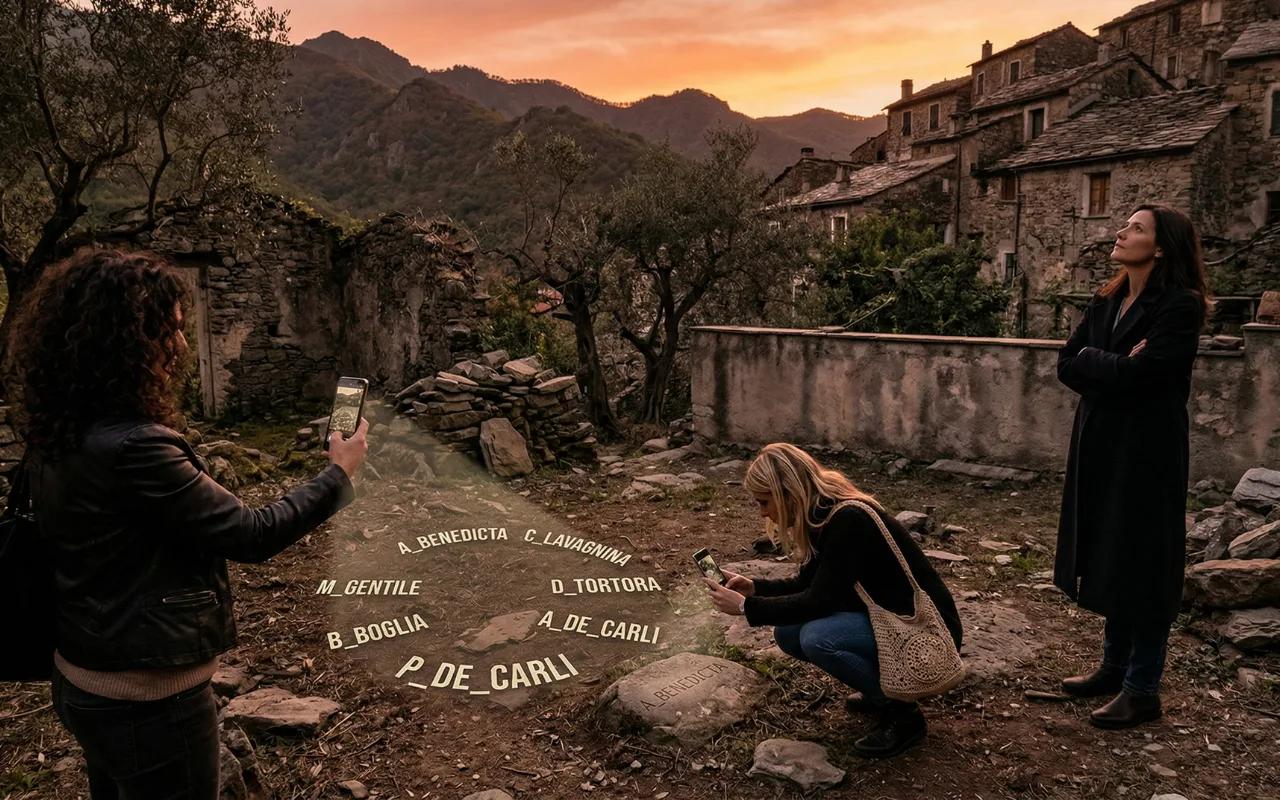
Welcome to Triora, the captivating "Italian Salem" nestled in the heart of Liguria! This medieval village, famous for its dark history of witchcraft, is a unique destination for history buffs, mystery lovers, and those seeking unusual activities. Stroll through the cobbled streets of the historic center, explore the ruins of the Fortezza overlooking the valley, and delve into the past at the Museo Etnografico e della Stregoneria, where tales of witch trials come to life. Every corner of Triora whispers legends, offering a perfect setting for a memorable adventure. But Triora is not just an open-air museum; it's also an ideal playground for an immersive experience. To uncover its secrets in a fun and original way, why not embark on an outdoor escape game, a captivating treasure hunt, or a clue-solving adventure that will make you explore the town differently? Get ready to decipher puzzles and unravel the mysteries of this enchanting place with our courses designed to give you an unforgettable adventure.
Unusual things to do in Triora
For a truly unusual activity in Triora, our outdoor escape games are a perfect choice. Far from the beaten path, these treasure hunts immerse you in the heart of the village's legends and mysteries, turning every alley and monument into a potential clue. It's an original way to discover the "Italian Salem" while stimulating your team spirit and observation skills. Forget classic guided tours and opt for an adventure that combines history, puzzles, and exploration, making your stay in Triora a unique and memorable experience.
Things to do in Triora with kids
Triora offers a fascinating setting for a family outing, and our outdoor escape games are designed to appeal to all ages. Children will love the treasure hunt aspect and puzzle-solving, while adults will appreciate the fun discovery of the village's history and legends. It's an excellent opportunity to collaborate, communicate, and create memories together. The course is safe and adapted to allow everyone to participate actively, transforming a simple visit into an exciting family adventure in the heart of the "Italian Salem."
Triora for couples
For a romantic and original getaway in Triora, our outdoor escape games offer a unique way to share an experience. Far from clichés, you can explore the mysterious alleys and breathtaking panoramas of the village together, while solving puzzles as a duo. It's an activity that strengthens bonds, stimulates the intellect, and provides unforgettable moments of complicity. Dive into Triora's enchanting history hand in hand, and create precious memories by uncovering the secrets of this magical place.
What to do in Triora when it rains
If rain joins your visit to Triora, please note that our escape games are primarily outdoor activities. However, the mysterious atmosphere of the village in the rain can add a unique dramatic touch to your exploration. Bring appropriate clothing and an umbrella to enjoy the experience, as the puzzles still await you. You can also use these moments to visit the Museo Etnografico e della Stregoneria, an excellent indoor refuge to delve into local history.
Where is Triora, and where do the routes start?
Starting points of our routes and the places they pass through.
Route starting points
Places in Triora
- Ethnographic & Witchcraft Museum
- Cabotina ruins
- Witches’ washhouse
- Collegiata Nostra Signora Assunta
- Via Dietro la Colla alley
- Upper fountain of Triora
- Porta Sambughea
The history of Triora
A Granary for Genoa
Triora, a medieval village at 780 meters above sea level in the Argentina Valley, has a history extending to the mid-Neolithic age, between 3800 and 3000 BC. The village as it appears today began to take shape around the 12th century. Its location, overlooking the valley and near the border with what is now France, made it a valuable asset. In 1261, Triora came under the control of the Republic of Genoa, which recognized its importance as a stronghold. Genoa established Triora as the 9th Podesteria, granting it significant self-governance. During this period, Triora supplied Genoa with wheat and wine, earning it the nickname "City of Bread" due to its grain production.
The Shadow of the Witch Trials
Despite a period of peace in the 15th and 16th centuries, Triora's history took a turn between 1587 and 1589. A famine, caused by poor harvests and difficult climatic conditions, affected the village. Villagers sought scapegoats, and accusations of witchcraft spread, primarily targeting poor women, single mothers, and healers skilled in herbalism and folk medicine. The local parliament requested intervention from civil and religious authorities in October 1587. The Genoese inquisitor's vicar and a commissioner from the Republic of Genoa, Giulio Scribani, led interrogations, often involving torture, which resulted in confessions from some of the accused women. Some women died in prison or from torture. The Senate of Genoa halted the trials in April 1589, preventing death sentences by burning at the stake. This episode shaped Triora's identity, leading to its nickname, the "Village of Witches."
What to see in Triora
- Centro Storico (Historic Center) — This area contains narrow, arched alleyways known as carruggi, stone staircases, and vaulted passageways that define the medieval village.
- Museo Etnografico e della Stregoneria (Ethnographic and Witchcraft Museum) — Housed in the old town hall, this museum explores Triora's rural traditions across three floors and fifteen rooms. The basement, formerly the town's prisons, recreates the interrogations of the witch trials with reproductions of historical documents and instruments of torture.
- Collegiata Nostra Signora Assunta — This main parish church features Gothic and Baroque architectural elements. Inside, it holds artworks, including a 14th-century painting, "The Baptism of Christ," by Sienese artist Taddeo di Bartolo, and 16th-century panel paintings.
- La Cabotina — Outside the village walls, near the Fontana Soprana, this ruined farmhouse is a place where, according to local legend, witches (known as "bagiue" in the local dialect) would gather.
- Ruins of Triora Castle — At the highest point of the village, the remains of the 13th-century castle, known as "castrum vetus," are visible. From here, one can see Triora's position overlooking the valley. Nearby are traces of the 13th-century church of San Dalmazzo and a fort, which served as a customs point with Piedmont until 1850.
- Chiesa di San Bernardino — Outside the historic center, this 15th-century country church has a stone portico and well-preserved 15th-century frescoes, attributed to Giovanni Canavesio, depicting the Passion and Death of Christ and the Last Judgment.
When to visit Triora
The period from mid-June to early September is suitable for warm-weather activities, with July being the hottest month averaging 25°C. Skies are clearest in July, and the chance of rain is lowest. Spring (April-June) and early autumn (September-October) offer comfortable weather and fewer crowds. Triora hosts its Strigora witches' festival in August and a Halloween celebration on October 31st, both of which attract visitors. Avoid visiting in November, the cloudiest month with the highest precipitation, or January, the coldest month with an average low of 0.5°C.
Getting around Triora
Triora is reached by car. Take the A10 Genoa–Ventimiglia motorway to the Arma di Taggia exit, then follow the SP 548 provincial road up the Argentina Valley. The drive from Arma di Taggia takes about 40-50 minutes on mountain roads. The village center is pedestrianized; parking is available on the outskirts. During festivals like Strigora and Halloween, parking spaces fill quickly. Triora does not have its own train station; the nearest are Taggia-Arma or Sanremo, about 30-38 km away. Local Riviera Trasporti buses connect Taggia station with Triora, but services are infrequent and the journey can take about an hour. Within the village, exploration is done on foot through its narrow streets and alleys.
Things you probably do not know about Triora
Verified details most visitors walk straight past.
- Ruins of Triora Castle
- What did the villagers of Triora do when they were unhappy with Genoese rule? The Republic of Genoa built the castle on solid rock to defend its borders, but the people of Triora, in protest against high taxes, repeatedly damaged the fortress. Genoa had to rebuild it every time.
- Collegiata Nostra Signora Assunta
- Beyond its grand architecture, what hidden artistic treasure lies within Triora's main church? The Collegiata houses a significant painting, "The Baptism of Christ," created in 1397 by Taddeo di Bartolo, a Sienese artist active in Liguria.
- Porta Sambughea, ramparts
- The name Triora is said to have a very practical origin, reflecting the region's historical economy. According to tradition, the name "Triora" comes from "Tria ora," meaning "three mouths," referring to the three main agricultural products that sustained the valley for centuries: wheat, grapes, and chestnuts.
- Via Dietro la Colla alley, Triora
- As you walk through the narrow *carruggi*, you might notice a particular architectural detail on some doorways. Triora's historic center features slate portals and houses huddled together under dark slate roofs, showcasing traditional Ligurian mountain architecture.
- Ethnographic & Witchcraft Museum
- The museum's witchcraft section is well-known, but what other aspects of local life does it preserve? Beyond the witch trials, the Ethnographic and Witchcraft Museum also dedicates sections to the daily lives of farmers, showcasing agricultural tools and the art of craftsmanship prevalent in the region.
- Cabotina ruins
- The Cabotina is famously linked to local legends, but what does it overlook? The ruined farmhouse of La Cabotina, where witches were supposedly said to meet, offers views over the Argentina Valley, with mountains that are often snow-capped in winter.
Questions about visiting Triora
How long should I plan to stay in Triora?
You can explore the historic center of Triora, including its museum, in a couple of hours. However, if you wish to delve deeper into its history, explore nearby hiking trails in the Ligurian Alps Park, or visit surrounding hamlets, a full day or even an overnight stay is recommended.
Is Triora suitable for families with children?
Yes, Triora can be an interesting destination for families. The village offers a yellow-marked walking route specifically designed for children, which introduces the witch sites with a narrative suitable for younger visitors. There are also artistic installations of witches throughout the village that often intrigue children.
What kind of local food can I expect in Triora?
Triora is known for its traditional bread, *pane di Triora*. You can also expect mountain dishes, often featuring local products like chestnuts and mushrooms, especially in autumn.
What is the best way to get around Triora?
Triora is a small village with narrow, steep, and partly stepped streets. The best way to get around and explore the historic center is entirely on foot. Comfortable shoes are highly recommended.
Are there any specific events or festivals in Triora?
Triora embraces its unique history with annual events. The Strigora festival, a witches' festival, typically takes place in August, and the village comes alive with Halloween celebrations on October 31st, featuring historical reenactments and guided tours.
What is the typical budget for a visit to Triora?
Walking the public village streets of Triora is free. The Ethnographic and Witchcraft Museum has an entrance fee, which in 2026 was 3 euros for a full-price ticket. Accommodation within Triora primarily consists of small B&Bs and rural apartments, with more established hotels available in nearby coastal towns.
Frequently asked questions
How much does an outdoor escape game cost in Triora?
Our outdoor escape games in Triora are designed to be accessible. The price is €12 per team, which includes access to the game and all puzzles. This unique price per team makes the activity very affordable, especially if you come with a group of friends or family. It's excellent value for money for an immersive and fun activity that allows you to discover the city in an original and interactive way. Get ready for an exciting adventure without breaking the bank!
Is it suitable for children / families?
Absolutely! Our outdoor escape games in Triora are perfectly suited for families and children. The puzzles are designed to be challenging but accessible, encouraging collaboration between generations. It's an excellent opportunity for youngsters to explore Triora's fascinating history in a fun way, while developing their observation and logic skills. We recommend the presence of at least one adult per team to guide the younger ones and ensure a fun experience for everyone.
How long does an escape game last in Triora?
An outdoor escape game in Triora typically lasts between 1h30 and 2h00. This duration may vary slightly depending on your pace, the size of your team, and your ability to solve the puzzles. The goal is to offer you a complete and immersive experience without being too long. You'll have plenty of time to enjoy the course, admire the scenery, and soak in Triora's mysterious atmosphere while progressing through your adventure.
Do I need to book in advance?
It is highly recommended to book your outdoor escape game in Triora in advance, especially if you are visiting during peak periods (weekends, school holidays, high summer season). Although our games are flexible, prior booking guarantees the availability of your chosen course and allows you to plan your day calmly. It also helps us better manage flows and offer you the best possible experience. A simple and quick booking via our website is the best option.
What to visit in Triora beyond the escape games?
Beyond our exciting escape games, Triora is full of treasures to explore. Don't miss the Museo Etnografico e della Stregoneria, which will immerse you in the history of the witch trials. Stroll through the historic center with its narrow alleys and typical stone houses. Visit the Collegiata dell'Assunta and its artworks, and climb up to the ruins of the Fortezza for breathtaking panoramic views of the valley. Triora is a total immersion in a past rich in legends and beauty.
What is the best season to visit Triora?
The best season to visit Triora and fully enjoy our outdoor escape games is spring (April to June) or early autumn (September to October). During these periods, the climate is generally mild and pleasant, ideal for walking the village streets and solving outdoor puzzles. Summer can be hot, but evenings are often cooler. Winter, though charming with a more mystical atmosphere, can be cold and rainy, making some activities less comfortable.
More cities in Italy
Turin
Alchemy, Templars and witches in the esoteric capital
Florence
Medici, Templars and Palazzo Vecchio alchemists
Bologna
Hidden canals, leaning towers and the world's oldest university
Siena
The Contrade war and the world's oldest bank
Civita di Bagnoregio
The dying city perched on a tuff bridge
Venice
Alchemy, Kabbalah and Arsenal of the Serenissima's spies
Rome
Porta Magica, catacombs and the Popes' Passetto
Naples
Napoli Sotterranea, Dracula and the skull cult