GenoaOutdoor Escape Game & Treasure Hunt
Europe's largest medieval centre and Columbus's homeland
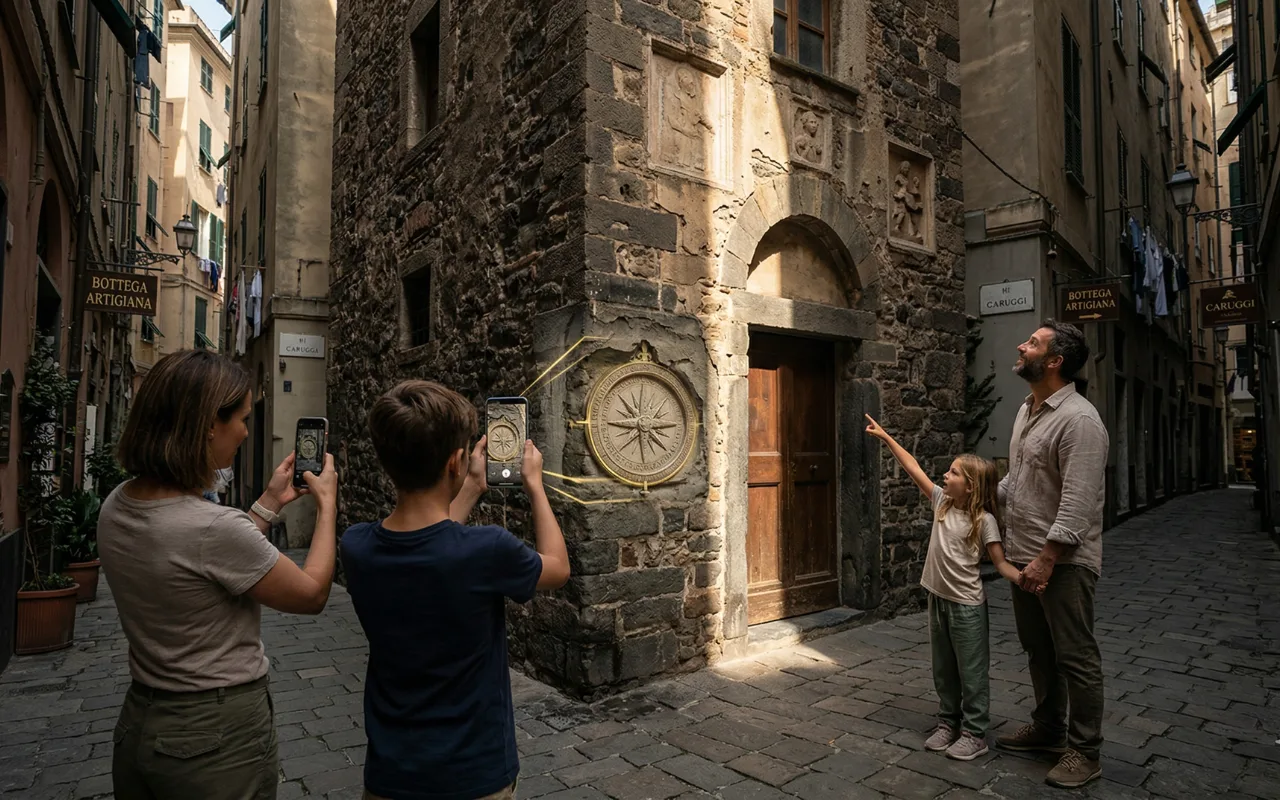
Welcome to Genoa, a fascinating port city where history and modernity meet with panache! Nicknamed "La Superba," Genoa is famous for its medieval center, the largest in Europe, and its narrow alleys, the "carrugi," which are full of hidden treasures. Stroll along the revitalized Porto Antico, admire the sumptuous Palazzi dei Rolli on Via Garibaldi, or get lost in the authentic atmosphere of the Boccadasse district. For an unusual and memorable activity, why not explore Genoa in a completely new way? Our outdoor escape game transforms the city into a giant playground. Embark on a life-sized treasure hunt or solve a captivating enigma during a unique scavenger hunt. Get ready to discover Genoa's secrets while having fun! Discover our game right here.
Unusual things to do in Genoa
Looking to spice up your visit to Genoa with a touch of originality? Our outdoor escape game is the ultimate unusual activity to get off the beaten path. Far from classic guided tours, you'll explore the city interactively, solving puzzles and uncovering surprising anecdotes. It's a unique way to immerse yourself in Genoese history, from its medieval alleys to the splendors of the Porto Antico, turning every street corner into a clue. An adventure that combines cultural discovery with the thrill of investigation, perfect for curious minds seeking memorable experiences.
Things to do in Genoa with kids
Genoa is a fantastic destination for families, and our outdoor escape game adds a playful dimension to your stay. Suitable for both young and old, our game is designed to stimulate teamwork and curiosity in everyone. It's the perfect opportunity to share a bonding moment by solving puzzles together, while actively discovering the city. Your children will love feeling like real explorers or detectives. An activity that guarantees laughter and memories, transforming a simple stroll into an exciting adventure for the whole family!
Genoa for couples
For a romantic getaway in Genoa, our outdoor escape game offers an original alternative to classic dates. Imagine yourselves hand in hand, exploring historic alleys and picturesque squares, all while collaborating to solve mysteries. It's a unique way to strengthen your bond, share laughs, and create unforgettable memories away from the usual hustle and bustle. Whether it's for a first date or to rekindle the flame, our game promises an intimate and stimulating adventure, transforming Genoa into the backdrop for your own love and mystery story.
What to do in Genoa when it rains
What to do in Genoa if rain invites itself? Let's be honest: our escape game is mostly an outdoor activity, so it's more enjoyable in good weather. However, a little rain doesn't stop the most adventurous! With a good umbrella and a raincoat, the adventure can continue, offering a mysterious atmosphere to Genoa's alleys. Otherwise, Genoa is full of fascinating museums like the Palazzo Ducale or the Aquarium, perfect for shelter. But if the desire for adventure persists, our game awaits you!
Where is Genoa, and where do the routes start?
Starting points of our routes and the places they pass through.
Route starting points
Places in Genoa
- San Lorenzo Cathedral
- Columbus’ birthplace
- Rolli palaces
- Palazzo Ducale
- Chiesa del Gesù
- Via del Campo
- Porto Antico
- Spianata dell'Acquasola viewpoint
The history of Genoa
From Ancient Port to Maritime Republic
Genoa's history begins in antiquity, with evidence of settlements dating back to the 5th and 4th centuries BC. The Ligurian Genuati, the area's first known inhabitants, traded with Greeks, Etruscans, and Carthaginians. During the Second Punic War (218-201 BC), Genoa allied with Rome, leading to its destruction by the Carthaginians in 209 BC. The city was rebuilt and granted municipal rights after the Punic Wars ended in 146 BC.
Following the fall of the Western Roman Empire, Genoa was influenced by various powers, including the Ostrogoths, Byzantines, Lombards, and Franks. By the 11th century, as central authority weakened, Genoa emerged as an independent urban commune and became a naval force in the Western Mediterranean. It functioned as one of the major maritime republics, alongside Venice, Pisa, and Amalfi, controlling the Ligurian Sea and expanding its influence through strategic alliances and commercial activity. The city played a role in the Crusades, providing ships and logistical support, which earned it trading privileges and territories in the Levant.
The Golden Age and Gradual Decline
The 13th and 14th centuries marked Genoa's peak as a commercial power in both the Mediterranean and Black Sea. However, rivalry with Venice, culminating in Genoa's defeat at the Battle of Chioggia in 1381, impacted its power and finances. Despite this, the city experienced a period between the 16th and early 17th centuries, becoming a financial center in Europe, largely due to its banks like the Bank of Saint George, founded in 1407. During this period, aristocratic families constructed palaces along the Strade Nuove, now a UNESCO World Heritage site.
A shift in world economy and trade routes towards the New World, away from the Mediterranean, led to a decline in Genoa's political and economic power. The 17th century brought further crises, including a plague in 1656-57 that killed half the population, and a French naval bombardment in 1684 as punishment for Genoese support for Spain. The Republic of Genoa was abolished in 1797 under pressure from Napoleon, becoming the French protectorate known as the Ligurian Republic, which was then annexed by France in 1805. After a brief restoration in 1814, it was incorporated into the Kingdom of Sardinia in 1815.
What to see in Genoa
- San Lorenzo Cathedral — This cathedral, with its black and white striped facade, houses the Sacro Catino, a dish believed by some to be the Holy Grail. Its construction spanned centuries, resulting in a mix of Romanesque, Gothic, and Renaissance styles.
- Palazzi dei Rolli (Via Garibaldi) — A UNESCO World Heritage site, these palaces were once residences for Genoa's aristocratic families. Visitors can see their architecture and often visit their interiors; some now house museums like Palazzo Rosso, Palazzo Bianco, and Palazzo Doria Tursi.
- Porto Antico — The Old Port area, redesigned by Renzo Piano, is a central point. Here visitors find the Aquarium of Genoa, one of Europe's largest, and the Bigo panoramic lift, offering 360-degree views of the city and harbor.
- Via del Campo — This street in the old town has traditional shops and artisan workshops. It offers an experience of Genoa's medieval alleys, known as carrugi.
- Spianata dell'Acquasola — This viewpoint offers a space with views over the city, providing a different perspective on Genoa's urban landscape and the Ligurian Sea.
When to visit Genoa
The best times to visit Genoa are spring (late April to mid-June) and early autumn (September to October). During these shoulder seasons, the weather is mild, with average temperatures in July and August topping out around 28°C (82°F), and there are fewer crowds than in summer. May offers long daylight hours. September combines comfortable weather with events like the Genoa Boat Show. October features the less-publicized Rolli Days, when many UNESCO-listed palaces offer free access.
Avoid peak summer (July and August) if you dislike crowds and higher accommodation prices, though coastal breezes make Genoa slightly more temperate than inland cities. Late autumn, especially November, can be rainy. Winter months, like February, offer a quieter experience with lower prices, but temperatures are cooler, around 5-10°C.
Getting around Genoa
Genoa is connected by train, with two main stations: Stazione Principe, near the Old Town and port, and Stazione Brignole, in the modern city. Genoa Cristoforo Colombo Airport (GOA) is 8 km from the city center. The Volabus connects the airport to Principe and Brignole stations in about 30 minutes for €6 return. Alternatively, the Airlink shuttle and a regional train from Sestri Ponente station is a cheaper option.
Getting around Genoa's hilly terrain is possible with an extensive public transport network operated by AMT, which includes buses, a metro, funiculars, and lifts. A single ticket costs €2.00 and is valid for 110 minutes across the urban network, including transfers. A 24-hour pass costs €4.50. Tickets can be purchased at AMT ticket offices, newsstands, tobacconists, and via the 'AMT Genova' mobile app. The 'Tap & Go' contactless payment system is also available on buses and metro turnstiles.
The historic center is best explored on foot. Parking can be challenging, so consider using public transport or booking accommodation with parking. The Navebus links Pegli to the Old Port by sea.
Things you probably do not know about Genoa
Verified details most visitors walk straight past.
- Palazzo San Giorgio
- Why does the facade of Palazzo San Giorgio feature a lively, almost cartoonish fresco? The colorful frescoes on Palazzo San Giorgio depict the city's history and its famous citizens, including Christopher Columbus and Marco Polo, despite the building originally serving as a customs house and later the seat of the powerful Bank of Saint George, founded in 1407.
- Genoese *carrugi*
- The narrow, winding alleys of Genoa, known as *carrugi*, weren't just for charm. What was their original, practical purpose? These labyrinthine alleys were deliberately designed to protect the city from invaders. Their confusing layout and limited visibility made it difficult for outsiders to navigate and launch effective attacks, serving as a natural defense system.
- Porta Soprana
- The Porta Soprana, a medieval city gate, stands today with two imposing towers. What historical figure prompted its significant reinforcement? The city walls, including Porta Soprana, were rapidly strengthened in 1162 due to rising tensions with the Holy Roman Emperor Frederick I Barbarossa. The gate, flanked by its massive circular towers, symbolizes Genoa's independent spirit in the face of imperial threats.
- San Lorenzo Cathedral
- Look closely at the facade of San Lorenzo Cathedral. You might spot a peculiar detail: a small dog carved into the stone. What's the story behind it? Legend has it that during the construction of the cathedral, a dog belonging to one of the stonemasons would always accompany him to work. When the dog died, the stonemason carved its likeness into the facade as a tribute, a small, touching detail often missed by visitors.
- Via Garibaldi (Strade Nuove)
- The grand palaces of Via Garibaldi, part of the Strade Nuove, were once part of an innovative public housing system. How did it work? These aristocratic residences were part of the 'Rolli' system, where noble families were obligated to host distinguished guests of the Republic, such as kings and ambassadors, in their sumptuous homes. A public lottery would determine which palace would host visitors, showcasing Genoa's wealth and hospitality.
Questions about visiting Genoa
How many days should I spend in Genoa?
To appreciate Genoa's historic center, including its museums and winding *carrugi*, allow at least two days. If you wish to explore nearby coastal villages like Camogli or Portofino, plan for three to five days to allow for a relaxed pace.
What are the best neighborhoods to stay in Genoa?
For first-time visitors, the Old Town (Centro Storico) and Porto Antico are suitable, offering walking access to major sights. Castelletto provides views and a quieter atmosphere. For a seaside experience, consider Albaro or Boccadasse, fishing villages connected to the city center.
What is the best way to get around Genoa?
Genoa has a public transport system, including buses, a metro, funiculars, and lifts, useful for navigating its hilly terrain. The historic center is best explored on foot. For trips along the coast, regional trains are a fast option.
What is the typical budget for a trip to Genoa?
Genoa can be explored on a moderate budget. A single public transport ticket costs €2.00, and a 24-hour pass is €4.50. Food costs vary, with local focaccia and street food being inexpensive, while a meal in a restaurant might cost around €37 including drinks.
Is Genoa a good city to visit with children?
Yes, Genoa offers several family-friendly attractions. The Aquarium of Genoa is one of Europe's largest, and the Galata Maritime Museum features the Nazario Sauro submarine. The Città dei Bambini e dei Ragazzi (Children's City) provides interactive learning experiences.
What local customs or practicalities should I be aware of in Genoa?
Many authentic festival food vendors and artisan stalls might only accept cash, so it's wise to carry some. Public transport tickets can be bought at tobacconists and newsstands. While not as prevalent as in southern Italy, some smaller shops may close for a midday break.
Frequently asked questions
How much does an outdoor escape game cost in Genoa?
Our outdoor escape game in Genoa is designed to be accessible and offer excellent value. The price is €12 per team, which is very advantageous if you play with several people! This unique price per team, and not per person, makes the experience affordable and ideal for groups of friends, families, or couples. It includes access to our unique game, which will guide you through Genoa's most beautiful districts, all while solving puzzles. Get ready for a memorable adventure without breaking the bank!
Is it suitable for children / families?
Absolutely! Our outdoor escape game in Genoa is perfectly suited for families and children. The puzzles are designed to be stimulating yet accessible, encouraging collaboration between generations. It's an excellent way to introduce the city to younger ones in a fun and interactive way, far from classic tours that can sometimes be boring for them. Children love feeling like real detectives! We recommend the presence of at least one adult per team to guide the younger ones and ensure a smooth and enjoyable experience for everyone.
How long does an escape game last in Genoa?
The duration of our outdoor escape game in Genoa generally ranges between 1h30 and 2h. This, of course, depends on your pace, how quickly your team solves the puzzles, and the time you take to admire the magnificent sites you'll pass through. The advantage of our games is that you are free to take breaks whenever you wish to grab a coffee, visit a monument in more detail, or simply soak in the Genoese atmosphere. It's a flexible adventure, designed to adapt to your city exploration!
Do I need to book in advance?
Although our outdoor escape game in Genoa can be started at any time, we always recommend booking in advance, especially if you have a specific date or time in mind. Booking ensures your spot and allows you to plan your adventure with peace of mind. This is particularly useful during peak tourist seasons. Furthermore, it helps us anticipate and offer you the best possible experience. Our booking platform is simple and quick, allowing you to prepare your game in just a few clicks.
What to visit in Genoa beyond the escape games?
Genoa is full of treasures to explore! After our escape game, don't miss the Porto Antico, with its famous Aquarium, one of Europe's largest. Wander through the "carrugi," these narrow medieval alleys that lead to hidden squares and artisan shops. Admire the splendor of the Palazzi dei Rolli on Via Garibaldi, a UNESCO World Heritage site. Climb to Spianata Castelletto for breathtaking panoramic views of the city and port, or visit the charming fishing village of Boccadasse. Genoa offers unparalleled cultural and historical richness!
What is the best season to visit Genoa?
The best season to visit Genoa and fully enjoy our outdoor escape game is spring (April-June) or autumn (September-October). During these periods, the weather is generally mild and sunny, ideal for walking and exploring the city on foot without suffering from summer heat or winter cold. Summer (July-August) is also an option, but it can be very hot and the city is busier. Winter (November-March) is quieter, but the weather is cooler and days are shorter. Each season has its charm, but spring and autumn offer optimal conditions for adventure!
More cities in Italy
Turin
Alchemy, Templars and witches in the esoteric capital
Bologna
Hidden canals, leaning towers and the world's oldest university
Florence
Medici, Templars and Palazzo Vecchio alchemists
Siena
The Contrade war and the world's oldest bank
Venice
Alchemy, Kabbalah and Arsenal of the Serenissima's spies
Civita di Bagnoregio
The dying city perched on a tuff bridge
Rome
Porta Magica, catacombs and the Popes' Passetto
Naples
Napoli Sotterranea, Dracula and the skull cult
Activities to discover nearby
Guided tours, skip-the-line tickets and local experiences to book in advance.
💡 Optional booking — you can also buy on-site. All links open in a new window, your OddballTrip visit stays preserved.