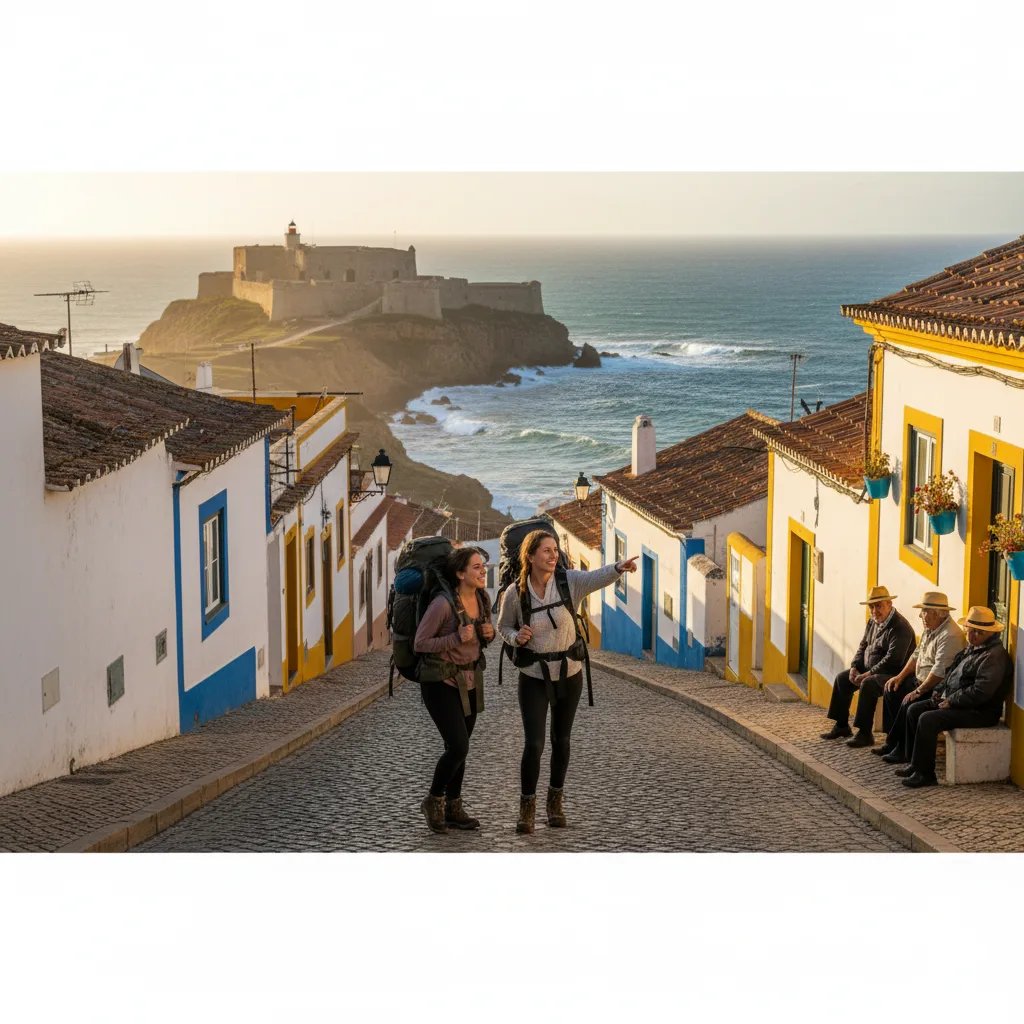
SagresOutdoor Escape Game & Treasure Hunt
The end of the ancient world — Henry the Navigator's fortress on Cape Saint Vincent
Sagres, this small fishing port perched at the extreme southwest of Europe, was the stage for the great Portuguese discoveries of the 15th century. What to do in Sagres? Explore this legendary land where Henry the Navigator established his navigation school, facing the dizzying cliffs of Cape Saint Vincent and the fortress of Sagres overlooking the Atlantic Ocean. This unusual activity that is the outdoor escape game transforms your village discovery into a real historical treasure hunt. Between the typical white streets of the Algarve and the breathtaking ocean panoramas, this urban scavenger hunt reveals the secrets of the navigators who set sail from here to conquer unknown seas. Here is the trail we offer to discover Sagres differently:
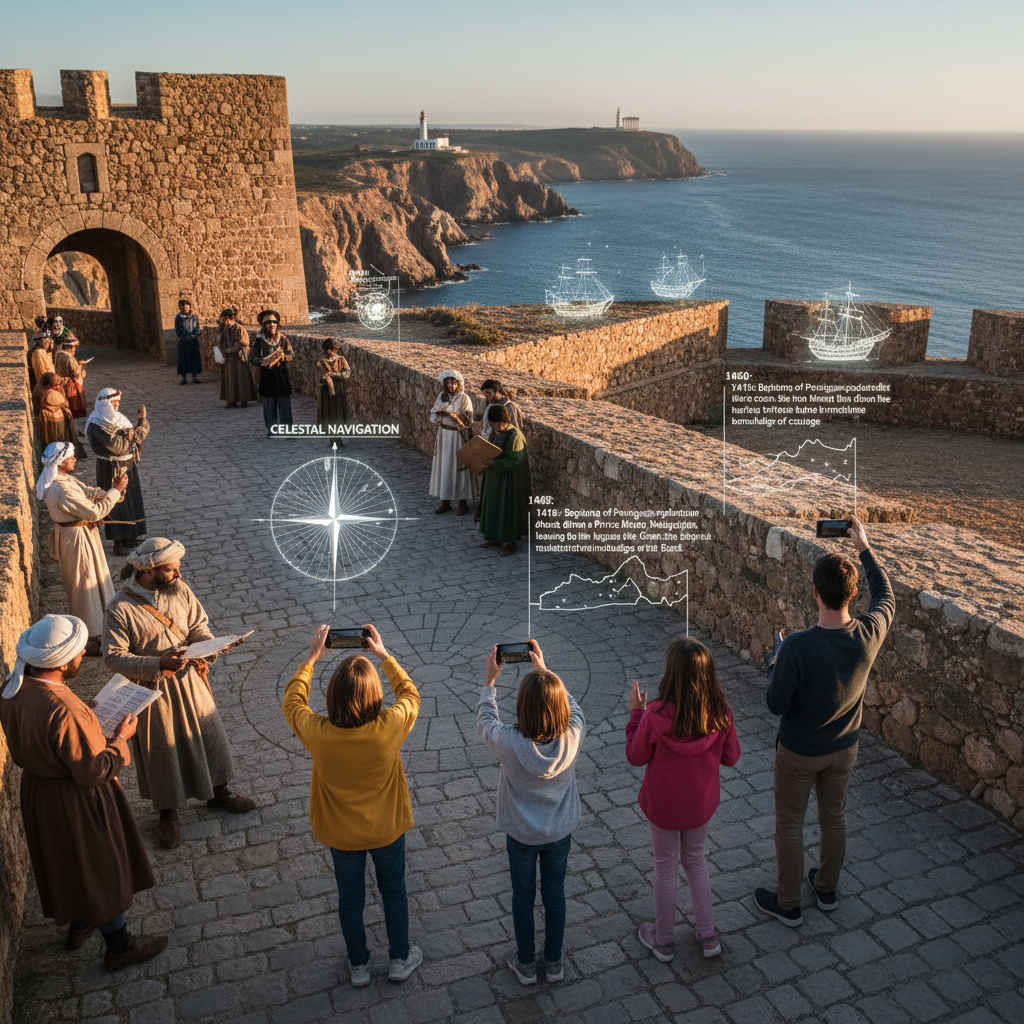
Sagres — The Forgotten Astronomical Chart
Uncover the lost astronomical chart hidden by Prince Henry's navigators. Decode celestial clues across ancient forts and megaliths to reveal the secret that launched the Age of Discovery.
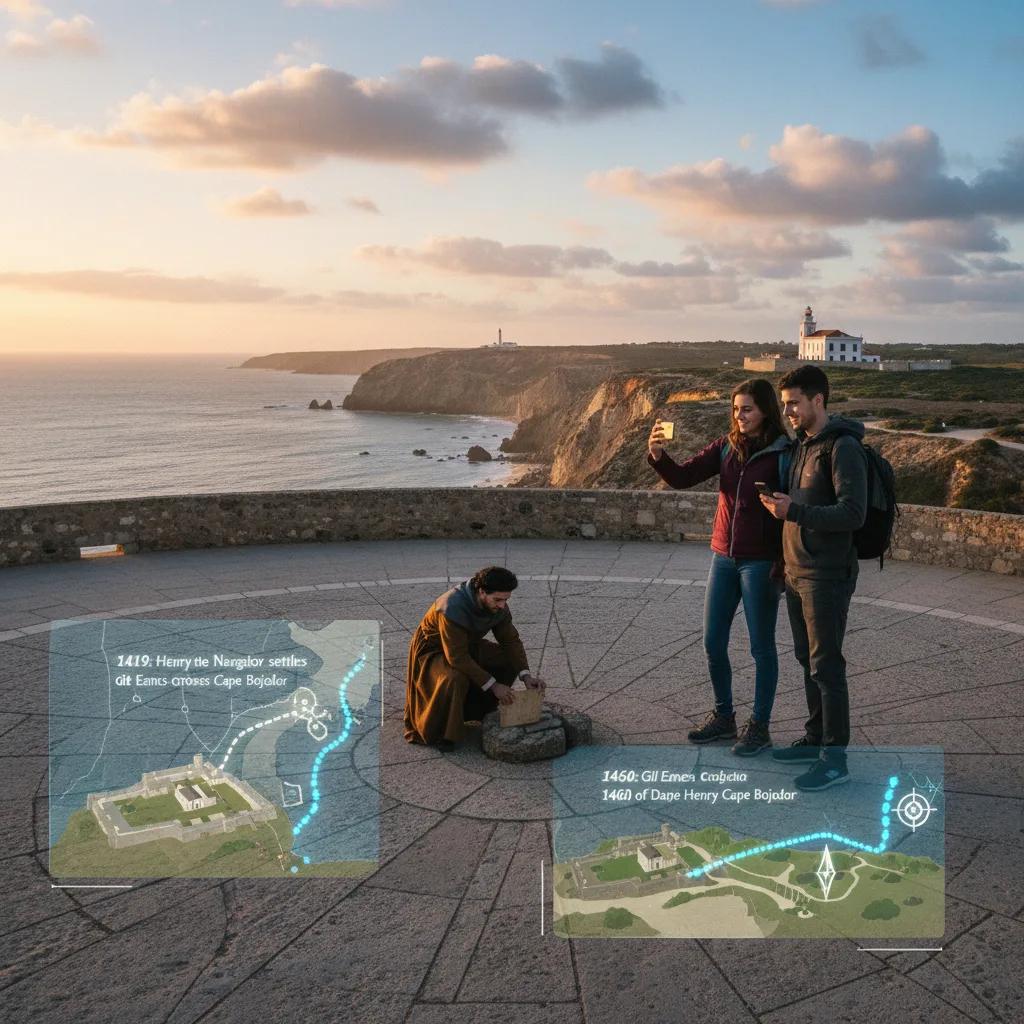
The Astrolabe's Final Bearing — Uncover the Navigation School's Lost Cipher
Decipher the encrypted coordinates hidden within Prince Henry's Navigation School before the tide erases the last clue. A 15th-century maritime mystery awaits.
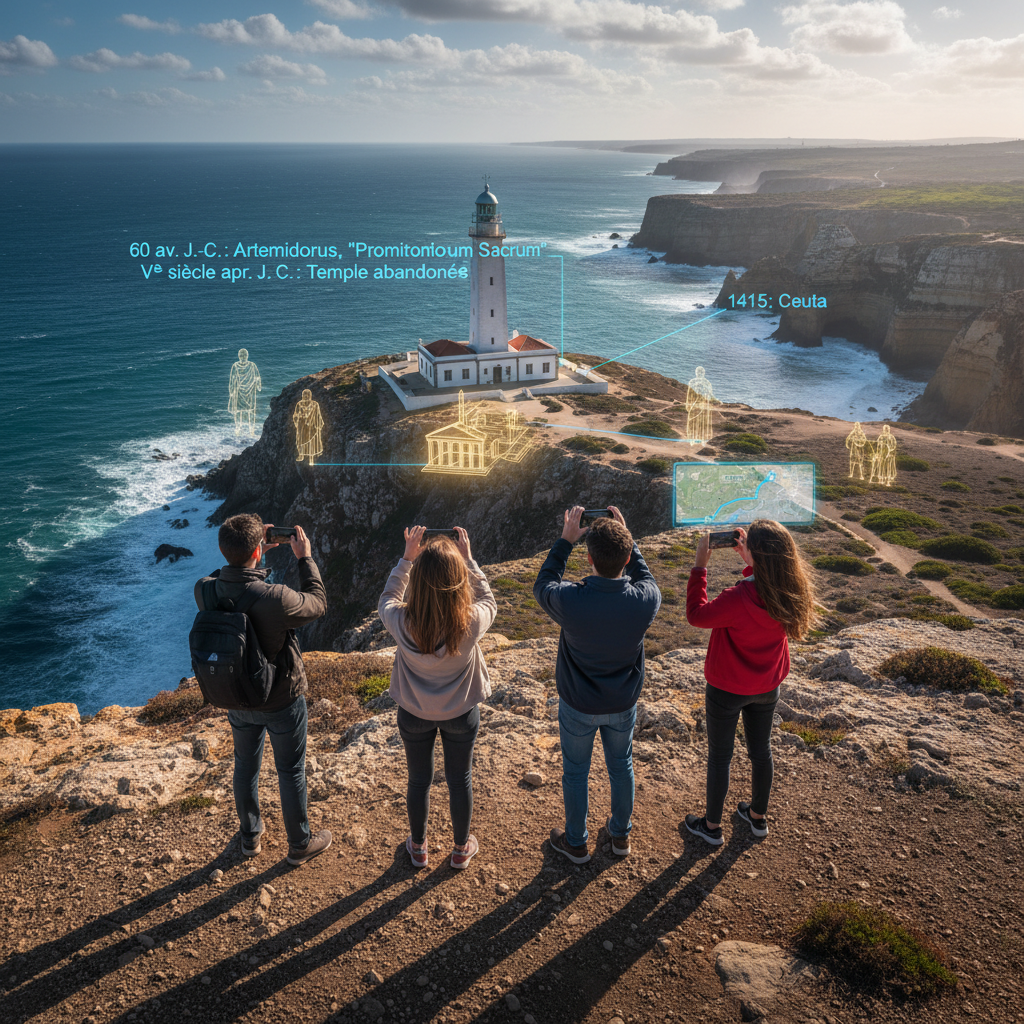
Sagres — The Promontory's Prophecy
Uncover the cryptic prophecy etched by Prince Henry the Navigator on Sagres Promontory. Decode clues hidden at 8 landmarks to reveal a secret that foretold Portugal's maritime empire or its downfall.
Landmarks of Sagres
Monuments and sites covered by our escape games across the city.
Unusual things to do in Sagres
Among the unusual things to do in Sagres, our outdoor puzzle trail takes you in the footsteps of 15th-century navigators in this mythical edge of the world. Discover the rosa-dos-ventos, this mysterious giant wind rose carved in the fortress stone, explore the ramparts facing the Atlantic immensity where sailors scanned the horizon before the great departure. The riddles reveal the secrets of Henry the Navigator's navigation school and the legends surrounding this Cape Saint Vincent, considered by the Ancients as the end of the world. An original outing to understand why Sagres was the starting point of History's greatest maritime expeditions.
Things to do in Sagres with kids
What to do with the family in Sagres? Our outdoor escape game is suitable from age 8 and turns the discovery of this historic village into a maritime adventure for the whole family. Kids love hunting for clues hidden in the white streets and on the fortress ramparts, while teens get excited about puzzles linked to the great discoveries. Parents enjoy the exceptional ocean panoramas and the fascinating history of Portuguese navigators. A perfect kids' activity that combines fresh air, culture and play, ideal for a teen-friendly outing that's different from the traditional Algarve beaches.
Sagres for couples
Sagres for couples is intensely experienced facing the legendary sunsets of Cape Saint Vincent, considered among the most beautiful in Europe. Our outdoor trail, perfect for a couples outing or romantic getaway, guides you through the intimate village streets to the spectacular cliffs where the ocean stretches to infinity. The ideal romantic activity: solving together the mysteries of the fortress, sharing the emotion of great navigators facing the unknown, then watching the sun disappear into the Atlantic from the ramparts. A unique way to discover this edge of the world charged with history and poetry.
What to do in Sagres when it rains
What to do in Sagres when it rains? Fortunately, our outdoor escape game stays playable in light rain: a large part of the trail takes place under the vaults and covered passages of Sagres fortress, as well as in the sheltered streets of the historic center. When clouds gather above the ocean, Sagres reveals its mysterious and dramatic side — the perfect atmosphere for a wet-weather activity that evokes the mood of heroic departures into the unknown.
Where is Sagres, and where do the routes start?
Starting points of our routes and the places they pass through.
Route starting points
Places in Sagres
- Entrance to Fortaleza de Sagres
- Rose dos Ventos (inside the fortress, visible from the ramparts)
- North-western point of Fortaleza de Sagres (view of Cape Saint-Vincent)
- Cape Saint-Vincent (near the lighthouse, Roman temple ruins)
- Cape Saint-Vincent Lighthouse (facade and surroundings)
- Ponta da Atalaia (rocky area between Sagres and the Cape)
- Praia da Baleeira (Sagres fishing port beach)
- Gate of Fortaleza de Sagres (Return to starting point)
- Wind Rose
- Igreja de Santa Catarina
- Cabo de São Vicente Lighthouse
- Praia da Beliche
- Porto da Baleeira
- Fortress Walls
- Monument to Discoveries
- Ponta da Atalaia
- Surroundings of Cape Saint-Vincent Lighthouse
- Remains of the Roman temple of Saturn (near the lighthouse)
The history of Sagres
From Sacred Promontory to Age of Discovery Hub
Sagres, whose name derives from Sagrado (holy), was considered a sacred promontory by various Mediterranean peoples, including Phoenicians, Greeks, Carthaginians, and Romans. They worshipped deities here, believing this remote, uninhabited place was a gathering point for their gods. Roman remains have been found near Praia do Beliche, Ilhéus da Baleeira, and Praia da Baleeira, suggesting ancient worship sites. The area also gained spiritual significance as the alleged burial place of Saint Vincent after his martyrdom in the 8th century.
Sagres' historical importance developed in the 15th century with Prince Henry the Navigator. Around 1419, Henry, a prince, politician, warrior, and Grand Master of the Order of Christ, settled in the Algarve as Governor. He established his headquarters in Sagres, creating a settlement known as Vila do Infante (Prince's town), where he focused on maritime exploration. While the exact location of his School of Navigation is debated, Sagres was his base for planning voyages and studying seafaring. The Fortaleza de Sagres was constructed in the 15th century, around 1443, under his orders. It served as a defensive structure against pirate raids and a strategic stronghold for maritime exploration. Henry lived in the vicinity of Sagres for most of his life and died there on November 13, 1460, at the age of 66.
Resilience Through Raids and Earthquakes
The fortress and the town of Sagres faced challenges over the centuries. In May 1587, the English privateer Francis Drake attacked Sagres, sacking the village and largely destroying the fortress. The original walls were severely damaged again by the 1755 Lisbon earthquake. Reconstruction efforts began in 1793, resulting in significant remodeling of the fortress. Much of what stands today is 18th-century architecture, although it incorporates surviving 16th-century elements like the Igreja de Nossa Senhora da Graça.
What to see in Sagres
- Fortaleza de Sagres — This 15th-century fortress, largely rebuilt in the 18th century, stands on a promontory. It has one wall facing inland, with the other three sides protected by cliffs. Inside, visitors find the Rosa dos Ventos, a large stone compass, and the Igreja de Nossa Senhora da Graça.
- Rosa dos Ventos (Wind Rose) — Inside the Fortaleza de Sagres, this 43-meter diameter stone compass rose was discovered in 1919. Its exact purpose—whether a navigational tool, sundial, or ceremonial design—remains debated, but it is a prominent feature of the fortress.
- Igreja de Nossa Senhora da Graça — A whitewashed chapel within the Sagres Fortress, dating from 1570. It was built on the foundations of an earlier chapel established by Prince Henry. It features a gilded 17th-century altarpiece.
- Cape Saint-Vincent (Cabo de São Vicente) — This cape is the southwesternmost point of mainland Europe. It features a lighthouse and offers views over the Atlantic.
- Cape Saint-Vincent Lighthouse — This lighthouse stands at the edge of the cape. The area was considered the edge of the known world before the Age of Discovery.
- Praia da Baleeira — This beach is next to the working fishing harbor of Sagres. It shows local maritime life, with fishing boats coming and going, and provides views of the Martinhal Islets. Its name, "Whale Beach," refers to a past when whales were sighted here.
- Ponta da Atalaia — This rocky area between Sagres and Cape Saint-Vincent offers clifftop walks and coastal scenery.
When to visit Sagres
The best time to visit Sagres is during spring (April–June) and autumn (September–October) for pleasant weather and fewer crowds. Spring offers warm, bright weather without intense summer heat, and wildflowers bloom across the cliffs. Autumn, particularly September, still feels like summer with highs around 25°C, and the wind eases slightly, making it suitable for hiking. July and August are peak season, bringing the warmest temperatures (around 27°C) but also strong winds, larger crowds, and higher accommodation prices. Winter (December–February) is mild but windy and quiet, with average daytime temperatures around 14°C. It is suitable for those who appreciate cliff scenery and storm-watching, but not for beach activities.
Getting around Sagres
Sagres is reached by car. It is about a 1.5-hour drive from Faro Airport (FAO) via the A22 toll motorway. There is no train station in Sagres; the nearest one is in Lagos, approximately 30 minutes away by car. From Lagos, take the Vamus bus route 47 to Sagres, which takes about 55 minutes.
Within Sagres village, most attractions like the fortress, beaches, and town square are within a 1km radius, making it walkable. For exploring Cape Saint-Vincent (6 km west) or northern beaches, renting a bike or scooter is an option, though coastal winds can make cycling challenging. Parking is generally free in most places, including the main beaches and the town center, as well as at Sagres Fortress and Cape Saint-Vincent, but it can fill up during peak season. Sagres is quieter than other Algarve resorts.
Things you probably do not know about Sagres
Verified details most visitors walk straight past.
- Cape Saint-Vincent
- Before the Age of Discovery, how did ancient civilizations view Cape Saint-Vincent? Romans considered Cape Saint-Vincent the edge of the world, calling it *Promontorium Sacrum* (Sacred Promontory), and prohibited people from spending the night there, believing it was a place reserved for the gods.
- Fortaleza de Sagres
- What unusual defensive feature sets the Sagres Fortress apart from typical castles? Unlike traditional castles, the Fortaleza de Sagres has only one man-made defensive wall facing inland. The other three sides are naturally protected by sheer cliffs plunging 60 meters into the Atlantic, a natural barrier no army could breach.
- Igreja de Nossa Senhora da Graça
- What surprising artistic details can be found on the altarpiece of the church within Sagres Fortress? The gilded 17th-century altarpiece inside the Igreja de Nossa Senhora da Graça features tiled altar panels depicting elephants and antelopes, which are unusual motifs for a Portuguese church and likely reference the overseas discoveries.
- Praia da Baleeira
- What historical activity is hinted at by the name of Praia da Baleeira? Praia da Baleeira translates to "Whale Beach," a name that reflects a past when this area was a popular spot for whale watching, showcasing the region's maritime history, though whale sightings are rare today.
- Rosa dos Ventos (Wind Rose) in Fortaleza de Sagres
- Despite its common association with Prince Henry the Navigator, what mystery surrounds the large stone compass inside Sagres Fortress? The 43-meter diameter *Rosa dos Ventos* was only discovered in 1919 and has 40 segments, rather than the standard 32 found on compass roses, leading to debate among historians about its exact purpose and true origin date.
Questions about visiting Sagres
How long should I spend in Sagres?
You can explore the main sights of Sagres, such as the Fortaleza and Cape Saint-Vincent, in a half to full day. To appreciate the coastline, enjoy the beaches, and experience the atmosphere, consider staying for two to three days.
What are the best ways to get around Sagres?
Sagres village is small enough to explore on foot. For destinations further afield like Cape Saint-Vincent, a car is recommended. You can also rent bikes or scooters, but be prepared for strong winds, especially along the coast.
Is Sagres suitable for families with children?
Sagres offers a natural environment with outdoor activities. Families can enjoy the beaches, explore the fortress, and take walks along the cliffs. The atmosphere is generally laid-back and quieter than other Algarve resorts.
What is the typical budget for a trip to Sagres?
Sagres can be more budget-friendly than other popular Algarve towns, especially for food and drink, as many establishments cater to surfers and locals. Accommodation prices vary, with options ranging from hostels to boutique hotels.
Are there any local markets in Sagres?
Information on specific local markets in Sagres is not widely available. However, the fishing port at Praia da Baleeira provides a lively atmosphere where you can observe the daily catch and local fishing activities.
Why is Sagres often windy, and how does it affect a visit?
Sagres is known for its strong Atlantic winds due to its location at the convergence of two Atlantic weather systems. This makes it a popular spot for surfers but can make clifftop walks feel colder, even on sunny days. It is advisable to bring a jacket.
Frequently asked questions
How much does an outdoor escape game in Sagres cost?
Our outdoor escape game in Sagres costs €12 per team (1 phone). For larger groups on the same trail, budget €19 for 2 phones and €25 for 3. With only one game available in Sagres, pricing stays simple and accessible for discovering this historic edge of the world in a fun way.
Is the Sagres escape game suitable for children?
Yes, our Sagres trail is suitable from age 8. The puzzles blend maritime history with observation: kids love hunting for clues on the fortress ramparts and in the village's white streets. GPS guides step by step — perfect for family exploration of this exceptional historic site without risk of getting lost.
How long does the outdoor escape game in Sagres last?
Budget around 2 hours for our Sagres trail, depending on your pace and time spent enjoying the ocean panoramas. Being self-guided, you can pause to admire the legendary Cape Saint Vincent sunsets or explore the fortress more thoroughly.
Do I need to book in advance for Sagres?
Booking isn't mandatory but recommended in high season (June-September) when Sagres attracts many visitors coming for the sunsets. You receive your activation code by email instantly — use it whenever you want, no time constraints.
What else to see in Sagres beyond the escape game?
Sagres offers three must-sees: the Sagres fortress with its mysterious rosa-dos-ventos (giant wind rose), Cape Saint Vincent and its lighthouse at Europe's edge, and the small fishing port with its fresh seafood restaurants. Our trail naturally incorporates these emblematic sites of Portuguese maritime history.
When is the best time to visit Sagres?
Spring (April-June) and autumn (September-October) are ideal: mild temperatures, fewer crowds and exceptional golden light for sunsets. Summer remains magnificent but busier. Winter offers a dramatic atmosphere facing the wild ocean — perfect for understanding the audacity of navigators who set sail from here into the unknown.
Other destinations in Algarve
More cities in Portugal
Activities to discover nearby
Guided tours, skip-the-line tickets and local experiences to book in advance.
💡 Optional booking — you can also buy on-site. All links open in a new window, your OddballTrip visit stays preserved.