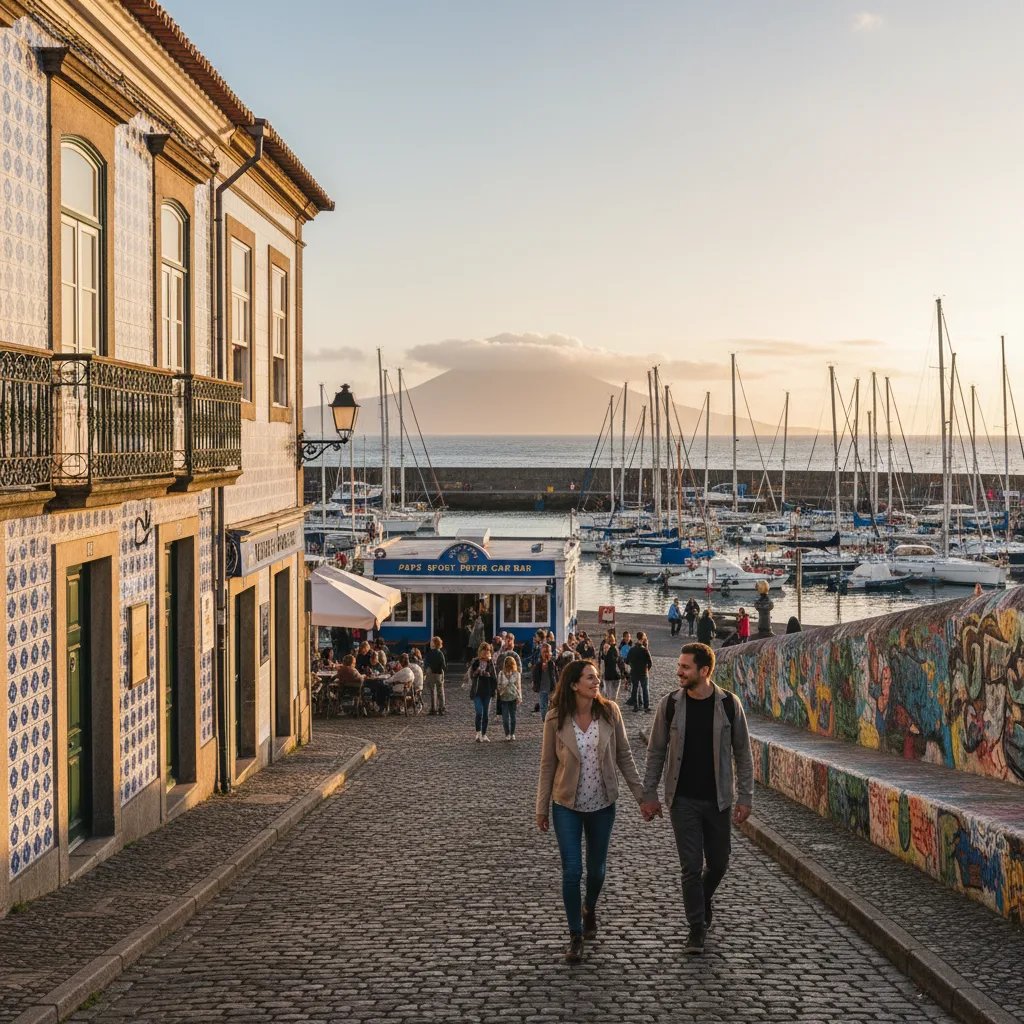
HortaOutdoor Escape Game & Treasure Hunt
The painted marina of navigators — mythical Atlantic stopover at the foot of Pico
Horta, the legendary port of Faial Island in the Azores, stretches between its colorful marina and volcanic caldera in a unique Atlantic setting. What to do in Horta? This mythical stopover for transatlantic sailors reveals its secrets through the Santa Cruz fortress, the Scrimshaw museum and the marina's wall murals where every yacht leaves its mark. Our outdoor escape game transforms this discovery into a captivating treasure hunt: an urban scavenger hunt winding through the cobbled streets of the historic center and the wind-swept quays. This unusual activity unveils Horta's maritime soul, its whaling legends and exceptional volcanic heritage. Discover below our trail through this Azorean gem.
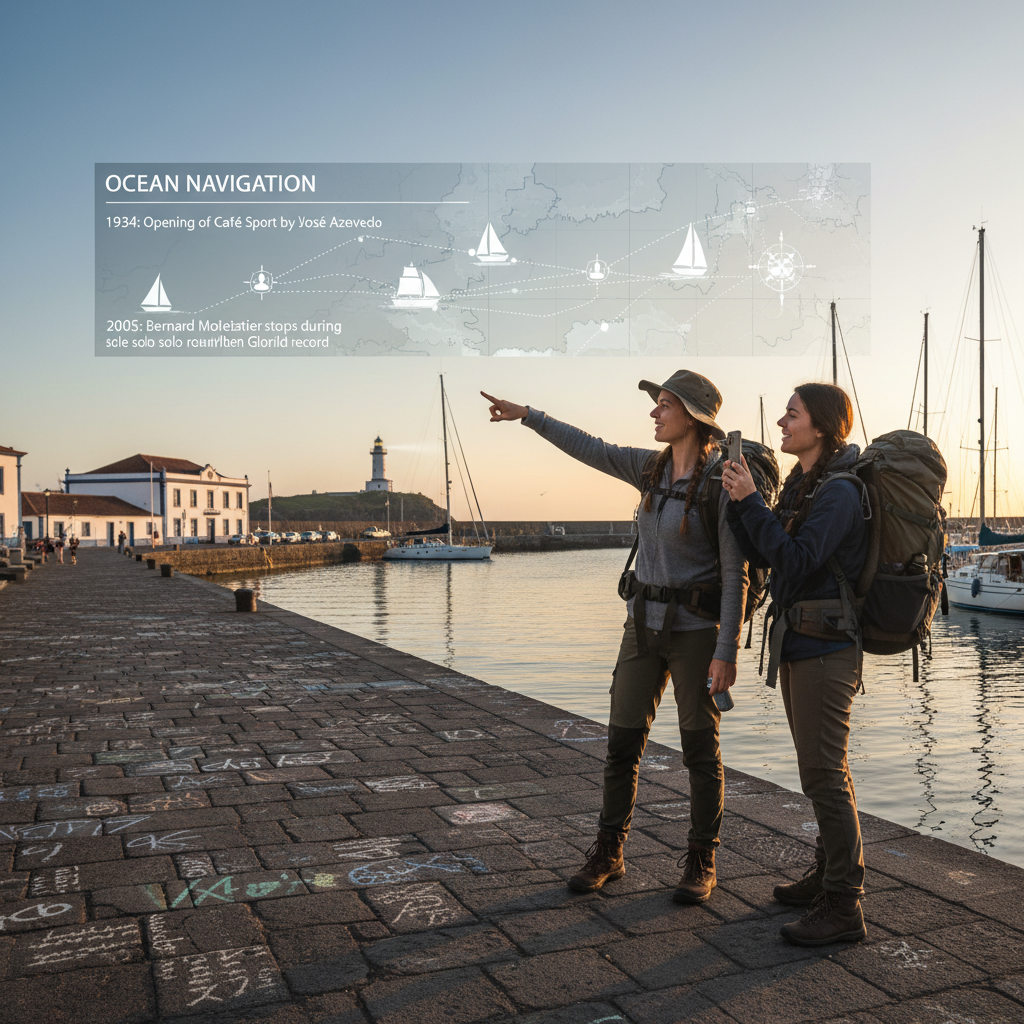
Horta Marina — Decipher the Sailors' Secret Code
Crack the hidden cipher left by Atlantic circumnavigators in Horta's legendary marina. Uncover the mystery of the painted signatures that mark the world's most dangerous passage.
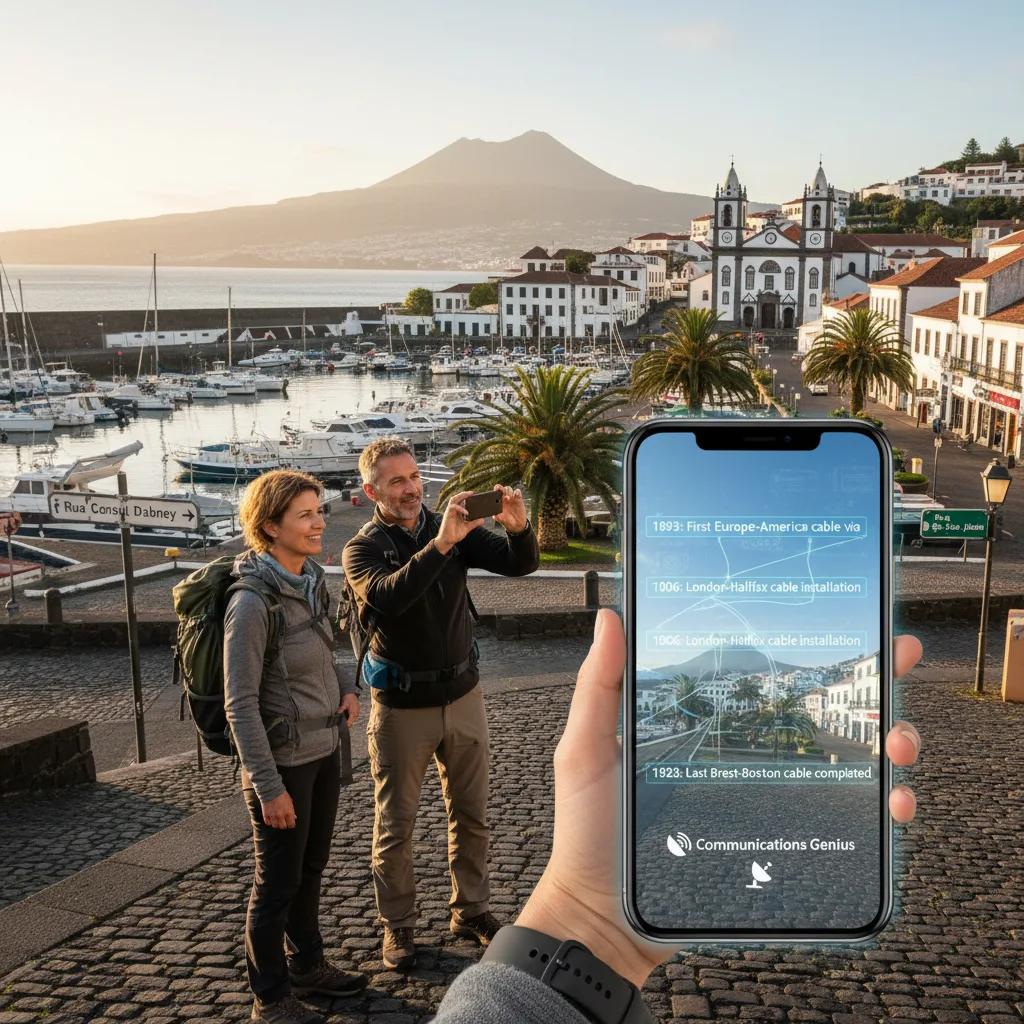
Horta — Telegraph Cable Conspiracy
Decipher the conspiracy behind Horta's submarine telegraph cables. Uncover sabotage plots, rival spies, and lost codes that threatened global communications from this Atlantic hub.
Landmarks of Horta
Monuments and sites covered by our escape games across the city.
Unusual things to do in Horta
Among the unusual things to do in Horta, our outdoor puzzle trail reveals the hidden secrets of this legendary Atlantic port. Explore the cooled lava tunnels beneath Santa Cruz fortress, decipher the mysterious inscriptions left by sailors on the walls of Café Sport, or follow the traces of ancient whale hunters through the narrow streets climbing towards Monte da Guia. An original outing in Horta that unveils the island's volcanic soul and maritime legends, far from standard tourist circuits.
Things to do in Horta with kids
What to do with the family in Horta? Our outdoor escape game is suitable from age 10 and turns the discovery of this mythical Azorean port into a maritime adventure for the whole family. Kids hunt for clues hidden in the marina's colorful frescoes, teens decipher navigators' messages, parents discover the island's whaling history. A perfect kids' activity combining Atlantic fresh air and volcanic heritage. This fun teen outing reveals Horta's secrets while enjoying exceptional ocean panoramas.
Horta for couples
Horta for couples is savored through its Atlantic sunsets, its terraces facing Pico and its romantic alleys climbing towards the caldera. Our outdoor trail, perfect for a couples outing in the Azores, turns a romantic getaway into a shared investigation through this mythical port. The perfect romantic activity: decoding navigators' messages together on the marina walls, getting lost in whaling legends, then ending with a drink facing the oceanic immensity. An original way to discover Horta off the beaten path.
What to do in Horta when it rains
What to do in Horta when it rains? Our outdoor escape games remain playable in light rain: 70% of the trail winds under the historic center's arcades, the covered galleries of the Scrimshaw museum and the sheltered port passages. A wet-weather activity that reveals Horta's Atlantic charm in the mist, when colorful facades shine under the spray and the maritime atmosphere becomes even more authentic.
Where is Horta, and where do the routes start?
Starting points of our routes and the places they pass through.
Route starting points
Places in Horta
- Horta Marina
- Café Sport
- Peter Café Sport
- Ponta da Espalamaca Lighthouse
- Caldera Viewpoint
- Carmo Church
- Faial Botanical Garden
- Horta Museum
- Marina da Horta
- Rua Consul Dabney
- Rua de São João
- Igreja do Espírito Santo
- Ponta da Espalamaca
- Cais da Sardinha
- Miradouro da Caldeira
- Forte de Santa Cruz
The history of Horta
From Flemish Settlement to Strategic Port
Horta's origins trace to 1467 when the Flemish nobleman Josse van Huerter, with permission from the Portuguese Crown, established the first permanent settlement along Horta Bay. The city's name, "Horta," is a Portuguese adaptation of his surname. By 1498, King Manuel I granted Horta the status of a "vila" (town), recognizing its growing importance. The island prospered through the export of wheat and woad-derived dyes. During the 16th and 17th centuries, Horta's location in the mid-Atlantic made it a stopover for ships on commercial routes between Europe, South America, and Africa. This also made it a target for pirate attacks, leading to the construction of fortifications like the Forte de Santa Cruz in the 16th century, built to protect the bay from privateers.
A Hub of Transatlantic Communication
The 18th and 19th centuries saw Horta develop as a center for commerce and travel. It became a gateway for Azorean orange exports, Pico Island wine, and a stop for North American whalers. The city's role in transatlantic communication began in 1893 with the installation of the first submarine telegraph cable connecting Horta to Carcavelos, Portugal. By 1928, Horta was a global hub, with fifteen submarine telegraph cables linking it to England, the USA, Canada, Ireland, France, Cape Verde, Italy, and Germany. This advancement allowed Horta to become a world center for telegraphic communication between continents.
Modern Maritime Legacy
The 20th century brought new forms of transatlantic traffic. After World War II, Horta served as a scheduled waypoint for Pan Am Clipper flying boat routes between North America and Europe. In the 1960s, yachts began using Horta's sheltered port during their transatlantic voyages. To accommodate this growing number of smaller vessels, the Horta Marina, with 300 slips, was inaugurated on June 3, 1986. The marina became one of the busiest in the world and is known for the tradition of sailors painting murals on its walls, leaving a record of their journeys. Horta has also faced natural disasters, notably the earthquake on August 31, 1926, which caused widespread damage and resulted in nine deaths and the destruction of over 4,000 buildings.
What to see in Horta
- Horta Marina — This marina is an open-air art gallery, where thousands of transatlantic sailors have left their mark by painting murals on the walls and pontoons. It records Horta's role as a stopover.
- Peter Café Sport — A bar that has served as a community hub for sailors for over a century. Inside, walls display flags from ships worldwide.
- Forte de Santa Cruz — The ruins of this 16th-century fort, built by an Italian engineer to protect Horta Bay from pirate and privateer attacks. Only the outer walls and a 17th-century chapel dedicated to Santo António remain.
- Horta Museum — Located in the former Jesuit College, this museum houses local historical collections, including artifacts related to the island's maritime and whaling heritage. The former Jesuit College building dates to 1719, with the church from the late 17th century.
- Faial Botanical Garden — This garden, established in 1886, is dedicated to the conservation and study of Azorean flora. It features collections of Macaronesian plants, an orchidarium, medicinal plants, and traditional agricultural crops.
- Igreja do Espírito Santo (formerly Igreja do Colégio) — This church, initially known as Igreja do Colégio and dedicated to Nossa Senhora dos Prazeres, became the Igreja Matriz do Santíssimo Salvador in 1825. It is part of the former Jesuit College complex.
- Carmo Church (Igreja e Convento do Carmo) — Built on the site of an older chapel, construction of the current church began in 1698 and was completed in 1751, with the façade finished in 1797. Its Baroque-inspired façade stands out.
- Ponta da Espalamaca Lighthouse — This viewpoint offers views over Horta Bay and towards Pico Mountain.
When to visit Horta
The period from mid-July to early September offers pleasant weather for outdoor activities. Temperatures average around 24°C (75°F) in August, and rainfall is at its lowest, creating a dry season. Skies are clearest in July. The "Sea Week" nautical festival takes place in August. Water temperatures are warmest from mid-July to early October, with an average of 23°C (73°F) in August.
Avoid visiting from January to April and December. These months have cooler temperatures, more rainfall, and cloudier skies. February is the coldest month, with average lows of 13°C (55°F).
Getting around Horta
Horta Airport (HOR) is 7.7 km (4.8 miles) from the city center, a 9-minute drive. The city is compact enough to explore on foot, with most points of interest near the harbor. The waterfront is the center of activity, encompassing the marina, Peter Café Sport, and the promenade towards Porto Pim. From there, the city ascends inland past churches and the old Jesuit college.
Public transportation within Horta is limited; walking is the primary way to get around the historic center. Taxis are available for longer distances or trips to other parts of the island. Parking is generally available, with some hotels offering private parking. Ferries connect Horta to other islands in the Azores, with the marina serving as a fleet center for Transmaçor and Atlanticoline.
Things you probably do not know about Horta
Verified details most visitors walk straight past.
- Horta Marina
- Why do so many boats leave their mark on the marina walls? It's a long-standing tradition among transatlantic sailors to paint their boat's name, flag, and voyage details on the marina walls before departing. Legend has it that doing so ensures a safe journey to their next destination.
- Peter Café Sport
- How did a simple café become a vital lifeline for sailors crossing the Atlantic? Beyond serving drinks, Peter Café Sport became a de facto post office, information point, and even a house of mercy for yachtsmen, holding letters and packages for them and offering assistance for over a century.
- Horta Museum (Former Jesuit College)
- What secret did the white glazed bricks of the dining room hold for the architect Victor Horta? The Horta Museum in Brussels, designed by Victor Horta, features a dining room where he boldly used white glazed bricks originally intended for the rear façade, embracing a rational design while still incorporating precious woods and marbles.
- Faial Botanical Garden
- What unique role does this garden play in preserving the Azores' natural heritage? The Faial Botanical Garden is home to the Azores Seed Bank, established in 2003, which collects and stores samples of all plant species found in the archipelago, playing a crucial role in conserving rare and endemic flora.
- Largo Duque de Ávila e Bolama
- What hidden details can you spot on the cobblestones of this historic square? The cobblestone pavement of Largo Duque de Ávila e Bolama features intricate Portuguese pavement motifs, with themes alluding to Faial, such as windmills and the well-known 'senhoras de Capote' (women wearing traditional capes).
Questions about visiting Horta
How long should I stay in Horta?
Half a day is sufficient to see the essential waterfront attractions like the marina murals and Peter Café Sport. A full day allows for exploring the Horta Museum, the Porto Pim area with Monte da Guia, and enjoying a waterfront dinner. Most visitors base themselves in Horta for day trips around Faial Island.
What are the best ways to get around Horta?
Horta's historic center is small and best explored on foot. Most major attractions are within easy walking distance of the harbor. For longer distances or exploring other parts of Faial Island, taxis are available. Ferries connect Horta to other islands in the Azores.
What are the main neighborhoods or areas to explore in Horta?
The central area of Horta revolves around the waterfront, including the Horta Marina, Peter Café Sport, and the promenade leading to Porto Pim. Inland, you'll find the historic center with its churches and the former Jesuit College. The area around Monte da Guia and Porto Pim offers scenic views and a beach.
What is the typical budget for a trip to Horta?
Accommodation prices in Horta can vary. For example, a double room at Hotel Horta might cost around $78-$93 nightly. Dining options range from casual cafés to restaurants focusing on Azorean seafood. Activities like whale watching tours depart from the marina.
Is Horta a good destination for families with children?
Horta offers several family-friendly activities. Children might enjoy seeing the colorful boat murals at the marina, exploring the Faial Botanical Garden, and spending time at Porto Pim Beach. Some hotels, like Hotel Horta, offer interconnecting rooms suitable for families.
What is Horta known for?
Horta is primarily known for its marina, a major sailing hub in the Atlantic famous for the painted murals left by yacht crews. It's also recognized for Peter Café Sport, a legendary sailor's bar, and its historical ties to transatlantic telegraph cables and whaling.
Frequently asked questions
How much does an outdoor escape game in Horta cost?
Our outdoor escape game in Horta costs €12 per team (1 phone). For larger groups, budget €19 for 2 phones and €25 for 3. A single price to discover this mythical Azorean port in a fun and original way, accessible to all budgets.
Is it suitable for children and families?
Yes, our Horta trail is suitable from age 10. The puzzles blend maritime history, volcanic heritage and Azorean legends, perfect to captivate the whole family. GPS guides step-by-step through the historic center's alleys and along the colorful marina, safely. Kids love hunting for clues in the navigators' frescoes.
How long does an escape game in Horta last?
Allow around 2 hours to discover Horta at your pace. The trail is self-guided: start whenever you want, pause to admire Atlantic panoramas or grab a coffee facing Pico. Perfect for a morning or afternoon exploring this legendary port.
Do I need to book in advance?
Booking isn't mandatory but recommended, especially in summer when cruise ships dock in Horta. You receive your activation code instantly by email, usable whenever you want. Perfect to adapt to sometimes changing Atlantic weather conditions.
What is Horta famous for?
Horta is famous as the mythical stopover for transatlantic navigators since the 16th century. The port houses the legendary Café Sport, meeting point for sailors worldwide, and its colorful marina where every yacht leaves a fresco. The town also offers spectacular views of Pico volcano and Faial's caldera. Our trails naturally integrate these iconic places.
When is the best time to visit Horta?
Spring (April-June) and autumn (September-October) offer ideal Azorean climate: mild temperatures, less wind, golden light on the ocean. Summer remains perfect to enjoy the maritime atmosphere, with more port activity. Winter reveals the Atlantic's wild character — our trails stay playable thanks to the historic center's many covered passages.
More cities in Portugal
Funchal
The fennel city — Columbus, Churchill and the Atlantic levadas
Cascais
The fishing village where the Portuguese monarchy ended
Sintra
Byron's "glorious Eden" — romantic palace and Moorish castle
Óbidos
The fortress-town given as a dowry — white ramparts and ginjinha
Lisbon
From Belém to Alfama — 8 escape games across the city of Discoveries
Setúbal
Port of Fernão Mendes Pinto — first European in Japan