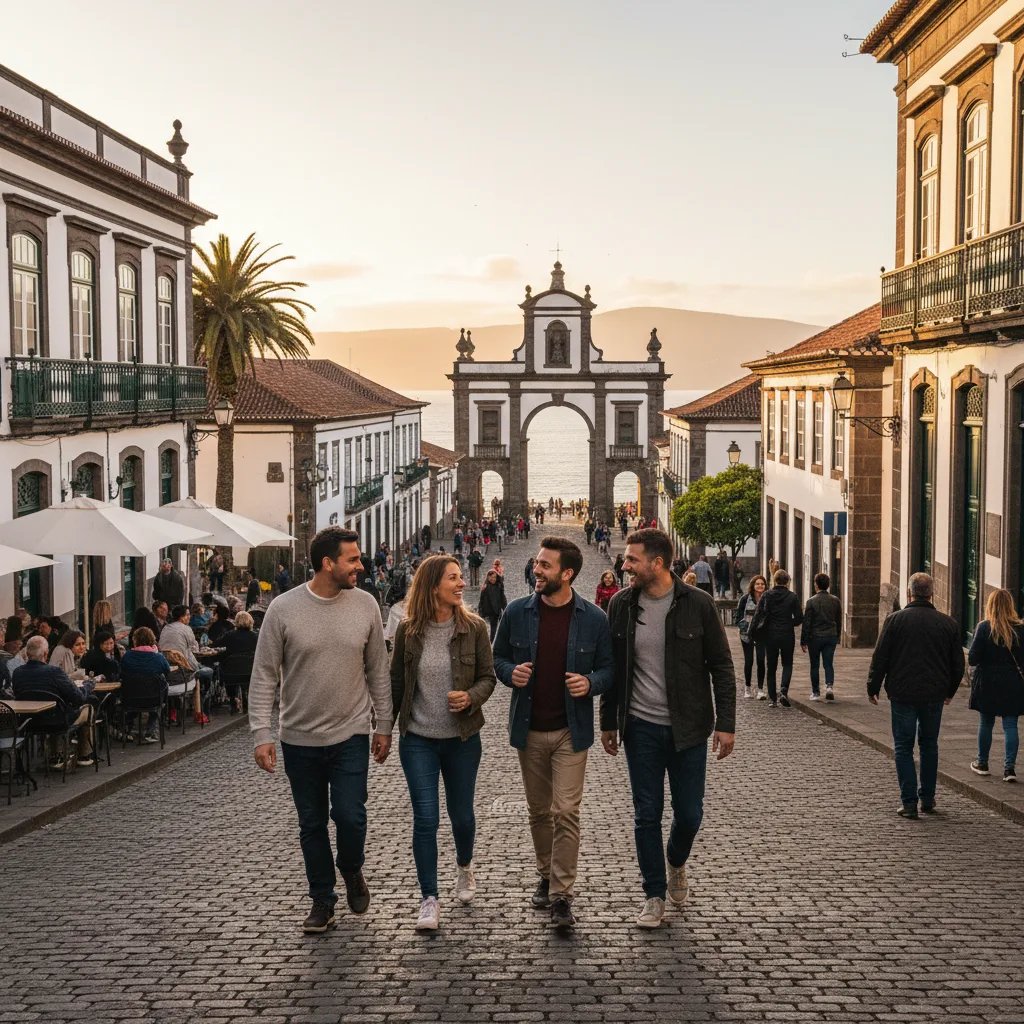
Ponta DelgadaOutdoor Escape Game & Treasure Hunt
Capital of the Azores — Portas da Cidade, European tea and Sete Cidades
What to do in Ponta Delgada? This Azorean capital, perched between the Atlantic and São Miguel's craters, unveils unique heritage blending Portuguese baroque architecture with volcanic influences. Stroll through the historic center around the Portas da Cidade, those iconic 18th-century arches, or explore the Igreja Matriz with its blue and white azulejos. Transform your visit into an adventure with our outdoor escape game: an original treasure hunt revealing the secrets of this island city. This unusual activity leads you from the harbor quays to cobbled alleys, passing through Gonçalo Velho Cabral square with its colorful facades. A perfect urban scavenger hunt to discover Ponta Delgada differently. Here's the trail we offer in this Atlantic pearl:
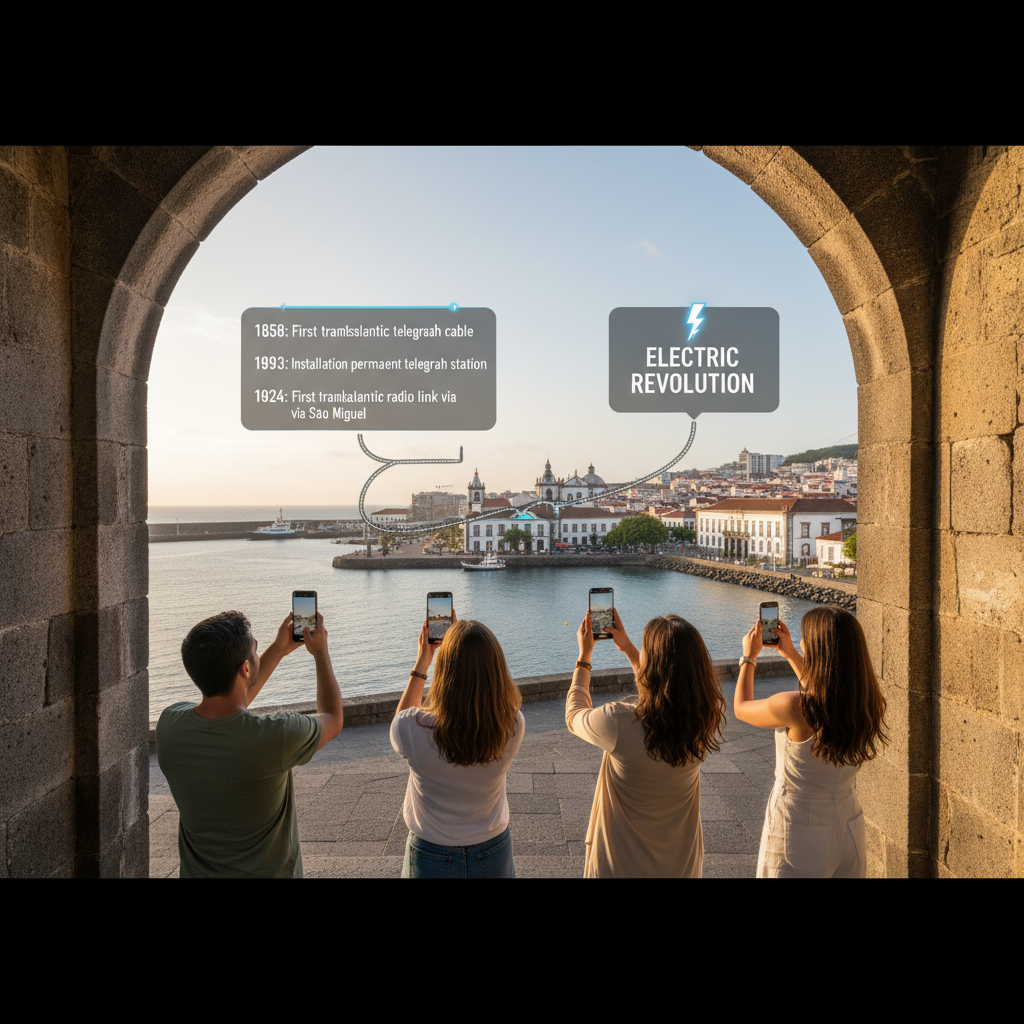
Ponta Delgada — Atlantic Cable Conspiracy
Uncover the silenced voices of the first transatlantic telegraph cable. Decode hidden messages in Ponta Delgada's landmarks to expose a sabotage plot that nearly severed global communications forever.
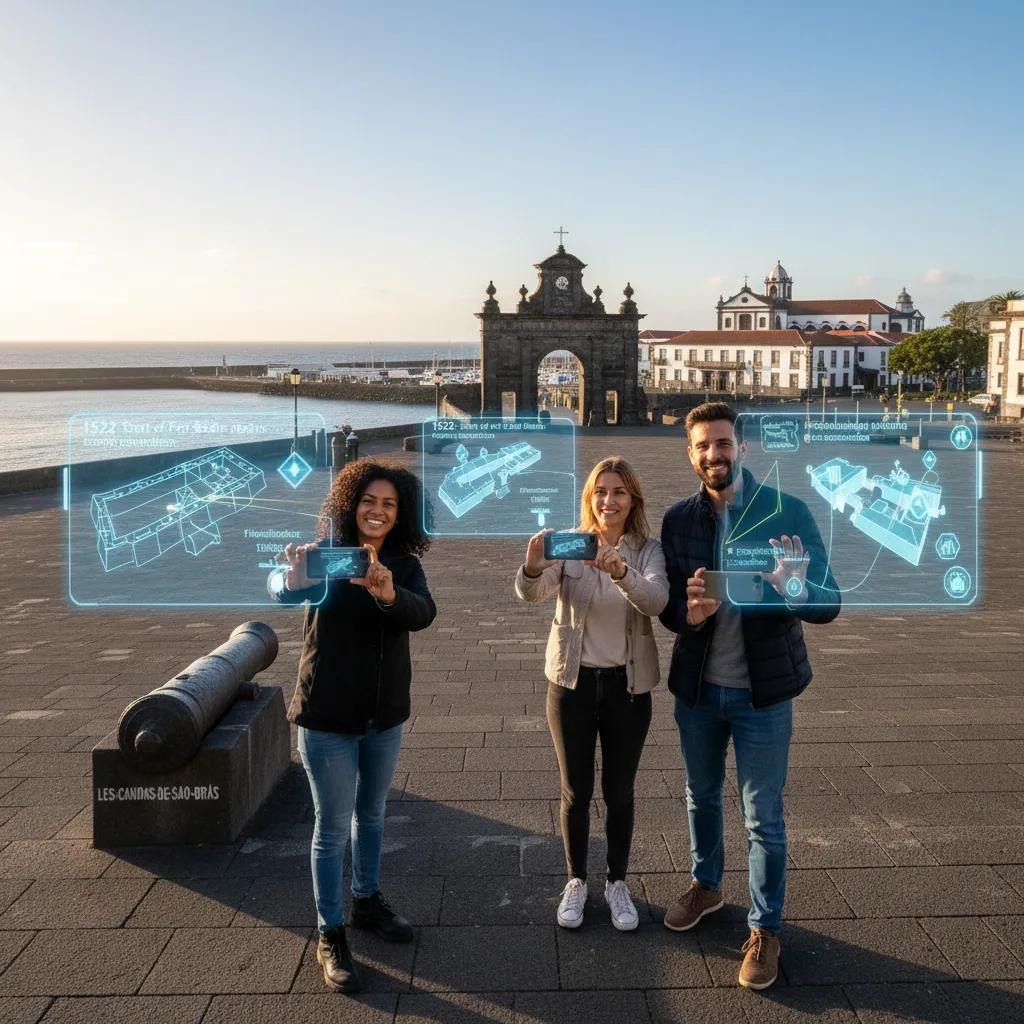
Ponta Delgada — Cannons of São Brás
Uncover the cannons of São Brás: decipher pirate codes hidden in 16th-century fortifications to expose a corsair conspiracy threatening the Azores' stronghold.
Landmarks of Ponta delgada
Monuments and sites covered by our escape games across the city.
Unusual things to do in Ponta Delgada
Among the unusual things to do in Ponta Delgada, our outdoor puzzle trail reveals the volcanic mysteries hidden in urban architecture. Discover the basalt stone details of baroque facades, maritime symbols carved on harbor quays, and references to Azorean navigators in the old town alleys. An original outing that decodes how past eruptions influenced local urban planning, away from the classic tourist circuits to crater lakes. The unusual activity in Ponta Delgada that turns a simple walk into an urban geological investigation.
Things to do in Ponta Delgada with kids
What to do with the family in Ponta Delgada? Our outdoor escape game, suitable from age 8, turns discovering the Azorean capital into a collective adventure. Kids love hunting for clues hidden in colorful azulejos, while teens decipher puzzles linked to the Azores' maritime history. The GPS trail avoids traffic and focuses on the historic center's pedestrian areas, perfect for a safe kids' activity. A teen-friendly outing combining local culture with gaming, ideal for discovering together this unique volcanic island in the heart of the Atlantic.
Ponta Delgada for couples
Ponta Delgada for couples is best savored in its ocean-facing gardens, hidden terraces of the historic quarter and sunsets from the marina. Our outdoor trail, perfect for a couples outing, guides you through romantic alleys paved with black basalt, between white facades adorned with blue azulejos. An unexpected romantic activity: decoding ancient maritime inscriptions together, solving puzzles facing the Portas da Cidade, then ending with a drink in a traditional café. An original romantic getaway to discover this Atlantic pearl away from tourist crowds.
What to do in Ponta Delgada when it rains
What to do in Ponta Delgada when it rains? Our outdoor escape game stays playable in light rain: 70% of the trail winds under the municipal market arcades, covered galleries around Praça Gonçalo Velho Cabral and vaulted passages of the historic center. A wet-weather activity revealing the natural shelters of this Atlantic city — when basalt cobblestones shine in the rain and baroque architecture reflects in puddles.
Where is Ponta Delgada, and where do the routes start?
Starting points of our routes and the places they pass through.
Route starting points
Places in Ponta Delgada
- City Gates
- Conceição Palace
- College Church
- Sardine Wharf
- São Brás Fort
- Hope Convent
- Ponta Delgada Lighthouse
- Public Library and Regional Archive
- Gonçalo Velho Cabral Square
- Ponta Delgada Marina
- Jesuit College Church
- Sant'Ana Palace
- Esperança Convent
- Carlos Machado Museum
The history of Ponta Delgada
From Fishing Village to Atlantic Hub
Ponta Delgada began in the mid-15th century as a fishing settlement on the southern coast of São Miguel Island. Its name, meaning "Thin Cape," refers to a rocky promontory extending into the sea. It was initially secondary to Vila Franca do Campo, the island's first capital. Ponta Delgada's status changed in 1522 after an earthquake and landslide destroyed Vila Franca do Campo. This event led to the transfer of the administrative, religious, and commercial center to Ponta Delgada. By 1546, King John III of Portugal officially granted Ponta Delgada city status, recognizing its growing importance.
Trade, Fortifications, and Liberal Revolutions
The 16th and 17th centuries brought prosperity to Ponta Delgada. Its location made it a mandatory stop for caravels traveling between Europe, Africa, and the Americas. The city's economy relied on the export of wheat and woad, a dye plant. Later, citrus fruits, especially oranges, generated revenues in the 18th century through trade with Great Britain. This wealth funded the construction of churches and fortifications, such as the star-shaped Fortress of São Brás, built between 1552 and 1580 to defend the port from pirate attacks. In 1832, Ponta Delgada served as Portugal's temporary capital when King Pedro IV arrived to form an army for liberal reforms. The city's maritime infrastructure was enhanced starting in 1861 with a project to build an artificial harbor and breakwater, establishing its role as a transatlantic port.
What to see in Ponta Delgada
- Portas da Cidade — These 18th-century basalt arches served as the main entrance to the city from the old pier. They were moved to their current position in Praça Gonçalo Velho Cabral in 1952.
- Forte de São Brás — This 16th-century seaside fortress, built between 1552 and 1580, protected the city's port from pirate and corsair raids.
- Igreja Matriz de São Sebastião — The main church of Ponta Delgada, this temple was enriched by trade revenues in the 16th and 17th centuries.
- Palácio da Conceição — This late 19th-century building, now the seat of the Regional Government of the Azores, incorporates parts of the earlier Convent of Conceição, including the late 17th-century Baroque Church of the Immaculate Conception.
- Mercado da Graça — An indoor market offering local products like Azorean pineapples, fresh fish, and cheeses. Fridays and Saturdays are often the best days to visit for fresh produce.
- Jardim António Borges — A botanical garden with a collection of trees and flowers.
When to visit Ponta Delgada
Ponta Delgada has mild temperatures year-round. The period from mid-July to early September is suitable for warm-weather activities. August is the warmest month, with average highs around 25°C and sea temperatures reaching 24°C. July is the clearest and driest month, with an average of 0.2 inches of rain. The cooler season runs from December to May, with February being the coldest month, averaging 13°C. December is the cloudiest and wettest month, with an average of 3.0 inches of rain. Brief showers are possible in any season, but rainfall is more frequent in cooler months. Avoid visiting in December if you prefer clear skies and less rain.
Getting around Ponta Delgada
João Paulo II Airport (PDL) is 5 km west of Ponta Delgada's city center. A taxi ride from the airport to downtown takes 5-10 minutes and costs €6-€12. The ANC Aerobus shuttle service takes about 15 minutes, with departures every 40 minutes, costing €8 for a single ticket.
The historic center of Ponta Delgada is walkable, with many attractions accessible on foot. For exploring beyond the city, renting a car is recommended for São Miguel island. Parking is available in designated areas around the city. The Mercado da Graça, the main local market, is open Monday to Saturday. Fridays and Saturdays are when fresh produce arrives and the market is most active.
Things you probably do not know about Ponta Delgada
Verified details most visitors walk straight past.
- Portas da Cidade
- These city gates were not always in their current prominent position. The Portas da Cidade were originally built in the 18th century next to the old pier and were only moved to Praça Gonçalo Velho Cabral in 1952 during the construction of Avenida Infante Dom Henrique.
- Forte de São Brás
- Ponta Delgada's fortress played a role in a naval battle. In 1582, the naval Battle of Ponta Delgada, part of the Portuguese succession crisis, took place off the coast. It was a Spanish victory that ended Portuguese resistance to King Philip II's takeover.
- Palácio da Conceição
- The current seat of the Azorean Regional Government has an older, religious past. The Palácio da Conceição was constructed at the end of the 19th century on the site of the former Convent of Conceição, integrating some of the monastery's original structures, including the late 17th-century Church of the Immaculate Conception.
- Mercado da Graça
- If you want to experience the local activity, there are specific days to visit the market. While open most weekdays and Saturdays, Fridays and Saturdays are considered the best days to visit Mercado da Graça. This is when fresh products arrive and the market is most active with locals and tourists.
Questions about visiting Ponta Delgada
How many days should I spend in Ponta Delgada?
To experience Ponta Delgada and use it as a base for exploring São Miguel, a minimum of 3 to 5 days is recommended. This allows time to see the city's historic sites, enjoy local cuisine, and take day trips to the island's natural features like the Sete Cidades lakes and Furnas hot springs.
What is the best way to get around Ponta Delgada?
Ponta Delgada's historic center is compact and can be explored on foot. For travel further on São Miguel, renting a car offers the most flexibility. Taxis are available, and a local bus system serves the city and some island routes, though schedules can be less frequent for remote areas.
Which neighborhood is best to stay in Ponta Delgada?
The historic city center, particularly around Praça Gonçalo Velho Cabral and the Portas da Cidade, is suitable for first-time visitors. It offers proximity to major attractions, restaurants, and the marina, providing access to the city's atmosphere and streets.
What is the typical budget for a trip to Ponta Delgada?
A moderate budget for Ponta Delgada might range from €80-€150 per person per day. This covers accommodation, meals, local transport, and some activities. Costs can vary based on hotel choices, dining preferences, and planned excursions. Eating at local 'tascas' and using public transport can help reduce expenses.
Is Ponta Delgada suitable for families with children?
Yes, Ponta Delgada is family-friendly. Children can explore the historic streets, visit the marina, and the nearby Jardim António Borges. São Miguel island offers outdoor activities for families, such as whale watching tours and exploring volcanic landscapes.
What are the local public transport options in Ponta Delgada?
Ponta Delgada has a local bus service that connects different parts of the city. The ANC Aerobus provides a direct link between João Paulo II Airport and the city center. For inter-city travel on São Miguel, there are regional bus lines, but services to more remote natural attractions might be limited.
Frequently asked questions
How much does an outdoor escape game in Ponta Delgada cost?
Our outdoor escape game in Ponta Delgada costs €12 per team (1 phone). For larger groups on the same trail, budget €19 for 2 phones and €25 for 3. A single price that lets you discover the Azorean capital in a fun and economical way, perfect for a controlled travel budget.
Is the Ponta Delgada escape game suitable for children?
Yes, our Ponta Delgada trail is suitable from age 8. The puzzles blend Azorean maritime history with local architectural details, creating multigenerational gameplay: kids spot colorful azulejos, teens decode navigator references, adults connect it all to island heritage. GPS guides safely through the pedestrian center.
How long does the outdoor escape game in Ponta Delgada last?
Allow around 2 hours to discover Ponta Delgada through our treasure hunt. The trail is self-guided: start when you want and progress at your pace. Perfect for a morning of discovery or a late afternoon before sunset over the Atlantic.
Do I need to book in advance?
Booking isn't mandatory but recommended in high season (June-September) when flights to the Azores are full. You receive your activation code by email instantly, usable whenever you want during your stay — no time constraints.
What else to see in Ponta Delgada beyond the escape game?
Ponta Delgada has three must-sees: the Portas da Cidade (baroque arches from 1783, city symbol), Igreja Matriz with magnificent azulejos, and the municipal market to taste Azorean specialties. Nearby, don't miss Sete Cidades lakes and Furnas hot springs. Our trail naturally incorporates the urban heritage.
When is the best time to visit Ponta Delgada?
Spring (April-June) and autumn (September-October) offer ideal climate: mild temperatures around 20°C, fewer tourists than summer, and magnificent light over the ocean. Summer remains perfect for outdoor activities, while winter reveals Azorean authenticity with spectacular Atlantic storms viewed from downtown cafés.
More cities in Portugal
Funchal
The fennel city — Columbus, Churchill and the Atlantic levadas
Cascais
The fishing village where the Portuguese monarchy ended
Sintra
Byron's "glorious Eden" — romantic palace and Moorish castle
Óbidos
The fortress-town given as a dowry — white ramparts and ginjinha
Lisbon
From Belém to Alfama — 8 escape games across the city of Discoveries
Setúbal
Port of Fernão Mendes Pinto — first European in Japan
Activities to discover nearby
Guided tours, skip-the-line tickets and local experiences to book in advance.
💡 Optional booking — you can also buy on-site. All links open in a new window, your OddballTrip visit stays preserved.