
Cumae — Sibyl's Lost Prophecy
Uncover the Sibyl of Cumae's final prophecy, hidden by Apollo's curse amid ancient ruins. Decipher cryptic clues at sacred sites to reveal her ultimate oracle before it vanishes forever.
📱 1 to 10 phones · 1 team per phone · Independent codes
In the shadowed caverns of Cumae, the Sibyl rejected Apollo's love, earning eternal life but endless decay
Cumae — Sibyl's Lost Prophecy
You are Aeneas, the Trojan hero, disembarking in ancient Campania around 1184 BC to consult the oracle of the Cumaean Sibyl.
Your urgent mission: decipher a
Delve into the millennia-old secrets of Cumae, the oldest Greek colony in the West, where the Sibyl prophesied the fate of heroes.
« They went obscure under the lonely night through the shade, and through the empty dwellings of Dis and his unsubstantial realm. »— Virgil, Aeneid, Book VI, lines 268-269 (29-19 BC)
The story that haunts this land
Your journey begins at the Porto di Cuma, on the Gulf of Gaeta, the arrival point for ancient fleets mentioned by Virgil in the Aeneid. Founded around 750 BC by Greek colonists from Euboea, Cumae was the first Greek colony in the West on mainland Italy. This natural port, essential for trade in ceramics, wine, and olive oil, gradually silted up between the 2nd and 4th centuries AD due to volcanic activity and coastal changes. Here, you grasp Cumae's strategic importance as a Mediterranean crossroads.
Continue towards the Mura di Cuma, the defensive ramparts from the 5th century BC, built with limestone blocks without mortar, a Cyclopean technique. These fortifications, with a 3 km perimeter and 4 meters thickness around the Acropoli, were reinforced in the 2nd century BC under Roman rule to protect the coast from pirate raids. You can observe preserved sections near the Porta Mediana and Porta Occidentale. The Cumaean Sibyl, a legendary prophetess, was the center of Cumae's cult, and her oracle is mentioned by Virgil in the Aeneid (Book VI).
The heart of your quest leads you to the Antro della Sibilla, a 131-meter underground gallery carved into the limestone rock, likely dating from the 5th century BC. Amedeo Maiuri's excavations (1930s-1940s) identified this cave, with its characteristic trapezoidal section, as the seat of the Sibyl's oracle. Virgil describes this place as the entrance to the underworld, reinforcing its mythological importance. Nearby, the Acropoli di Cuma, an 80-meter limestone plateau, houses the Temple of Apollo, built around 530 BC, one of the oldest Doric temples in Southern Italy, dedicated to the god of prophecy.
Your path then leads to the Arco Felice, a monumental Roman arch from the 1st century AD, likely under Vespasian (69-79 AD). Built of opus caementicium, it stands 20 meters high and 25 meters wide. It was part of the Via Domitiana, a coastal road connecting Naples to Cumae and Pozzuoli, built in 95 AD under Domitian. The Latin inscription 'Viam Domitianam muniendam curavit' (Domitian ordered the construction of the Via Domitiana) attests to this. This monument symbolizes Roman power succeeding Greek influence.
Finally, your journey concludes near Lago d'Averno, a volcanic crater dating back 4,000 years BC, located about 2 km southeast of Cumae. Its name, 'aornos' (without birds), comes from volcanic gas emissions that killed birds, giving rise to the myth of the entrance to the Underworld. Virgil places Aeneas' departure to Hades here (Aeneid, Book VI). Nearby, the Grotta di Cocceio, a 705-meter tunnel dug in the 1st century BC by Cocceius Auctus for Augustus, facilitated military transport. You leave this exploration in Campania with an understanding of the foundations of Western civilization, between myth and Roman engineering.
A game, a guided tour and a heritage guide — all in one
You're not just buying an escape game. You're carrying a living guide — historical anecdotes, forgotten legends, key monuments, hidden architecture — unfolding as you go.
At each stop, places ordinary guides miss — secret façades, sculpted crests, alleys steeped in history.
Every riddle is rooted in a real historical fact or local legend. You leave with dozens of stories to tell.
Learn to read buildings — flamboyant Gothic, Baroque, Art Deco — like a real art historian, while having fun.
Walk through the city like a novel's character — every alley becomes a stage, every square a theatre.
A voice walks with you at every step, tells the story of each place, reads clues, adds a cinematic feel.
Keep access to the guide & game for 1 year. Come back any time, share it with friends.
« You will not leave this city the way you entered it. »
How does it work?
Explore the city on foot solving puzzles based on real historical facts. No locked room — the city is your playground.
No app to download. Play directly from your browser. Guided step by step, at your own pace.
One purchase per phone is enough. Play with family, friends or as a couple — everyone participates.
Point your phone at the façade: a historical character appears and speaks to you in your language. Golden letters magically write themselves on the wall to reveal the puzzle answer.
Stuck? Progressive personalised hints. The character repeats the puzzle on demand — at your own pace.
French, English, German, Spanish, Italian + 27 other languages auto-translated by AI.
The game downloads to your phone on start. Once the "✓ Downloaded" indicator appears, everything works without data — narration, AR, GPS and puzzles. Perfect abroad without a data plan.
Want to go deeper?
Places tied to your adventure — optional entries, totally up to you · per person
The Route
8 stages through the city
The gameplay: AR, camera, hidden clues
At each stop, open your phone camera: an augmented reality character appears on the façade and speaks your language. Hunt the clue — it materializes as golden letters on the real wall or floats in front of you. When you find it, the phone vibrates, an AR chest opens and reveals your answer fragment. 8 stops, 8 clues to find with the camera, 1 final code.
The stops on your route are a surprise. You'll discover them one by one, guided by your phone, starting from the meeting point.
How does it work with a group?
One phone = one team. Pick the number at checkout (1 to 10).
Solo, or a group sharing the screen. One team, one code.
Family, couple, or 2-3 teams competing. Each phone has its own code and its own score.
Friends, bachelor/bachelorette, small office outing — each their own code, each plays at their own pace. Tiered pricing then €6 flat per phone from the 6th.
- ✓All codes are independent — play at the same time OR separately, each team advances at its own pace.
- ✓Leaderboard between your teams + global game leaderboard — each score appears in the public ranking.
- ✓More than 10 phones or need a personalized quest? Discover custom tours.
Ready to live this adventure?
Get my code · 12€No calendar booking. Code sent immediately by email.
🔒 Secure payment · Code in 5 min · Free cancellation
Practical info
Why this route?
Forgotten Prophecies
Decode the Sibylline oracles and uncover the secrets of Rome's future, whispered by an ancient voice.
Journey to the Underworld
Follow Aeneas on his journey to the gates of Hades to consult the souls of the dead and unravel the mystery.
Millennial Remains
Explore the ruins of the first Greek city in the West, a cradle of legends and civilization.
The oracle has spoken. Dare you listen?
Unravel the mysteries of the Sibyl's Cave and Aeneas' destiny.
9 features nobody else has
OddballTrip combines gamified play, augmented reality and AI. All our competitors deliver 1 or 2 of these angles. We deliver all 5.
AR treasure chest
A golden chest floats in front of the monument. Tap → opening animation → reveals a secret message.
AR narrator character
Point your phone at the façade: a knight, witch, monk, sailor, detective or ghost appears full-screen and speaks to you in your language with their dedicated ElevenLabs voice (each character has their own unique voice) — your living guide.
Magic golden letters
At the puzzle climax, golden letters magically write themselves on the real wall — that's the puzzle answer. An unforgettable visual effect.
Written + audio narration
Every puzzle available as text AND voice-over: read at your own pace or listen eyes-free while walking. Great in groups and for accessibility.
360° radar + vibration
A mini-radar shows the target even behind you, and the phone vibrates when you aim in the right direction.
Heritage storytelling
Every puzzle weaves in real historical facts (architecture, era, anecdotes). You learn by playing — like a gamified audioguide.
Progressive AI hints
3 levels of AI-generated help: vibe → where to look → answer format. You're never stuck.
AR selfie memento
At the end of the game, capture a selfie with OddballTrip banner + mascot, shareable on Instagram, TikTok.
Zero app to install
PWA technology: open the link, it plays in your browser. Same quality as an app, no App Store hassle.
Frequently asked questions
Q01Do I need an app or a paper guide?
Neither. Everything plays in your browser (Safari, Chrome) after you tap your activation link. No PDF to print, no download. The trail lives in your phone, that's it.
Q02Can we split Cumae — Sibyl's Lost Prophecy across two days?
Yes — your code stays active and progress is saved. You can start Saturday afternoon, finish Sunday morning. Some players actually prefer this format to make the most of a full weekend on site.
Q03Can we play Cumae — Sibyl's Lost Prophecy as a couple?
Great two-person format. Narration is dramatic without overdoing it, puzzles are designed to spark conversation. Ideal for new relationships or anniversaries — you discover the city and coordinate on puzzles simultaneously.
Q04Do we need 4G data to play?
Intermittent 4G is plenty. Maps are cached at startup. Narration and clues load per stop, so a so-so signal between stops is fine. GPS itself uses no data.
Adventurer reviews
Be the first to share your experience.
Did you play la prophetie de la sibylle de cumes? Check the email you received after your game to leave a verified review.
Your turn to play
Delve into the millennia-old secrets of Cumae, the oldest Greek colony in the West, where the Sibyl prophesied the fate of heroes.
1 purchase = 1 phone. Play several on the same device.
No calendar booking. Code sent immediately by email.
🔒Secure payment · Code in 5 min · Free cancellation
🪙+24 TripCoins granted with your booking
Other escape games in Italy
View Italy→More destinations, tours & urban treasure hunts across the country
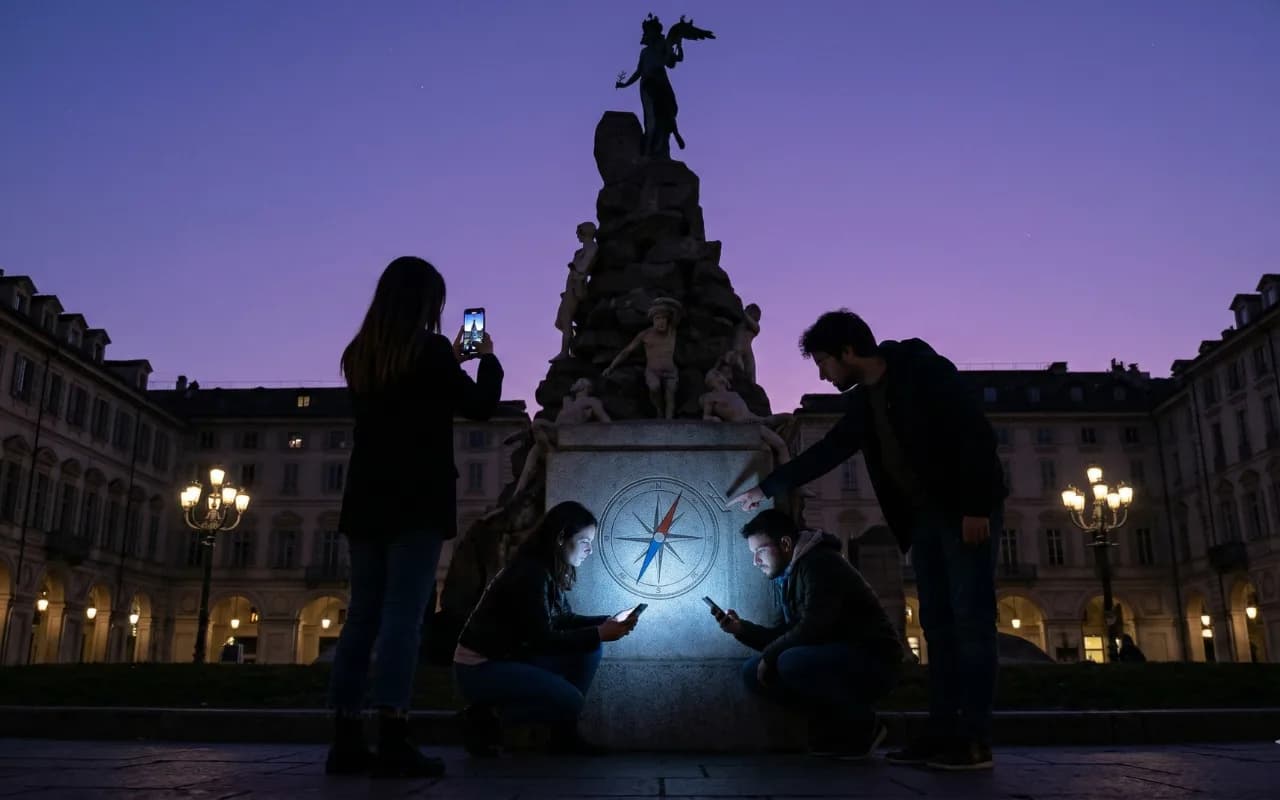
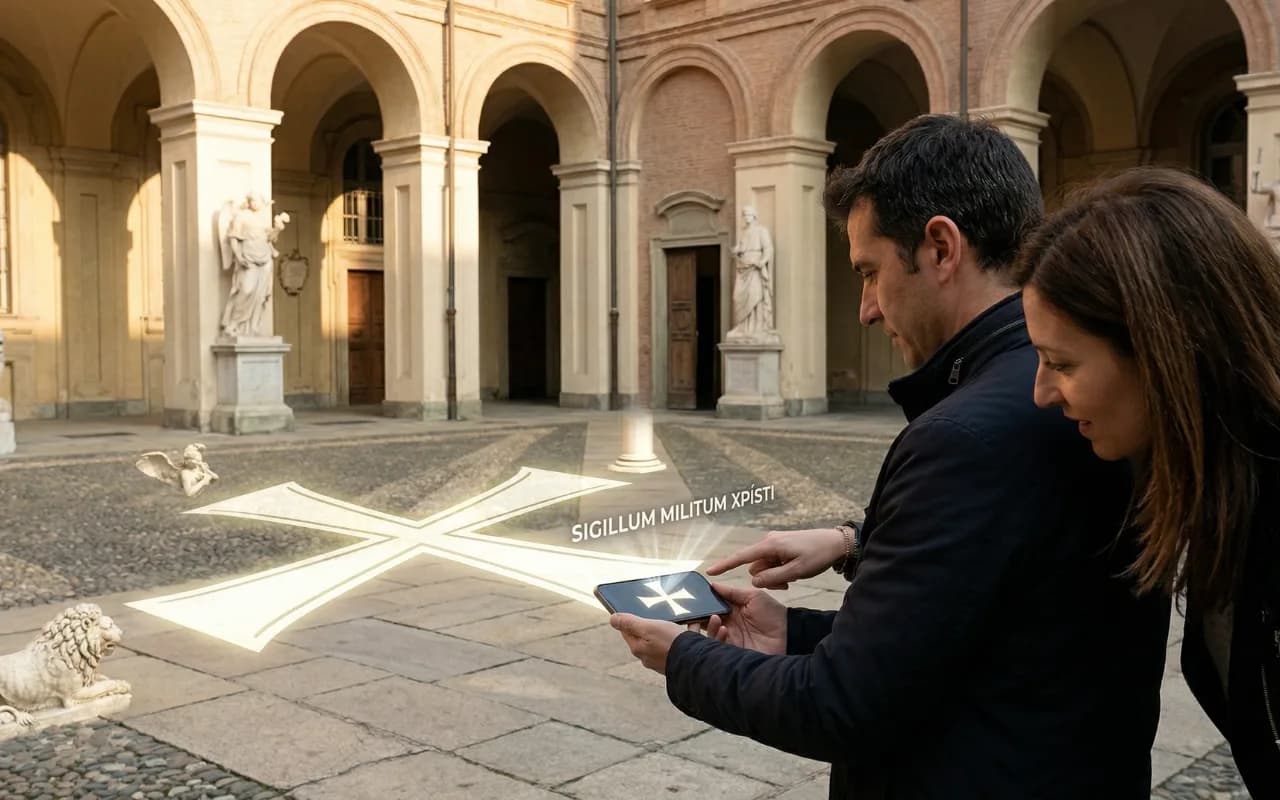
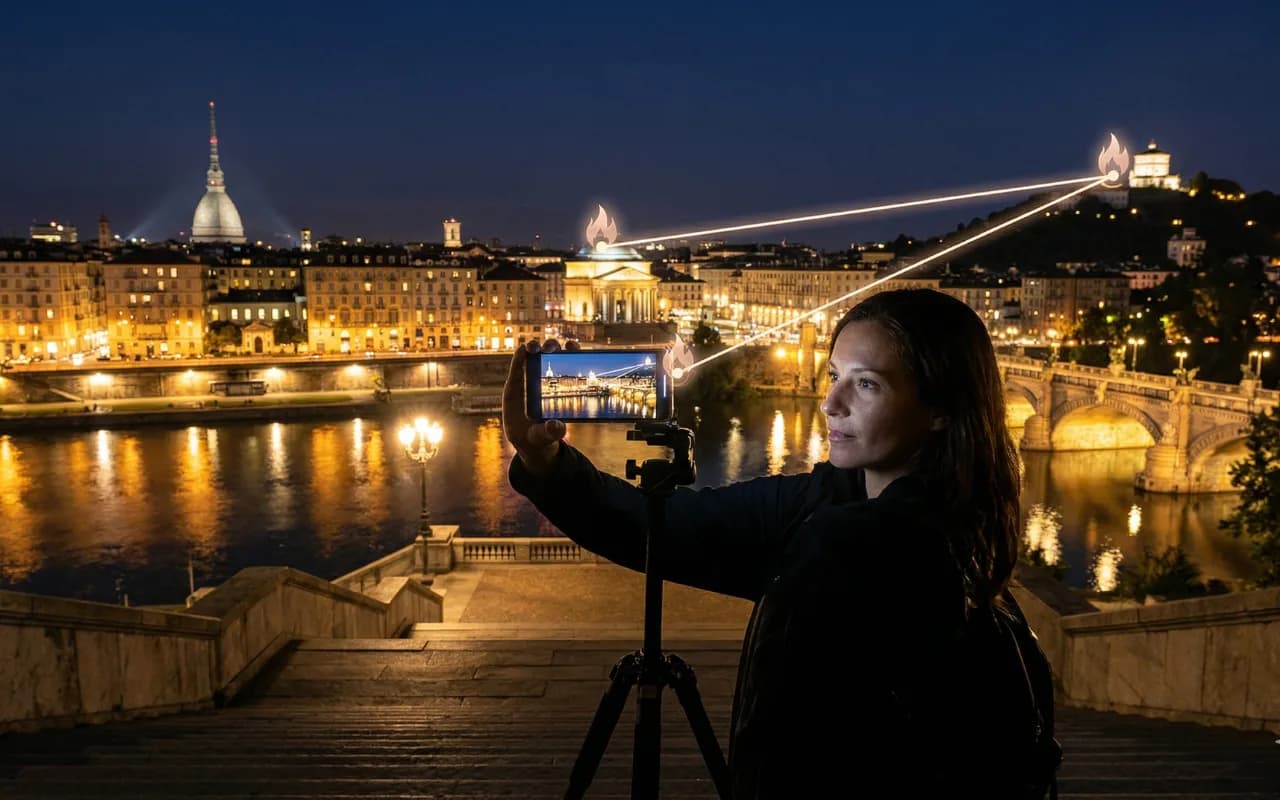
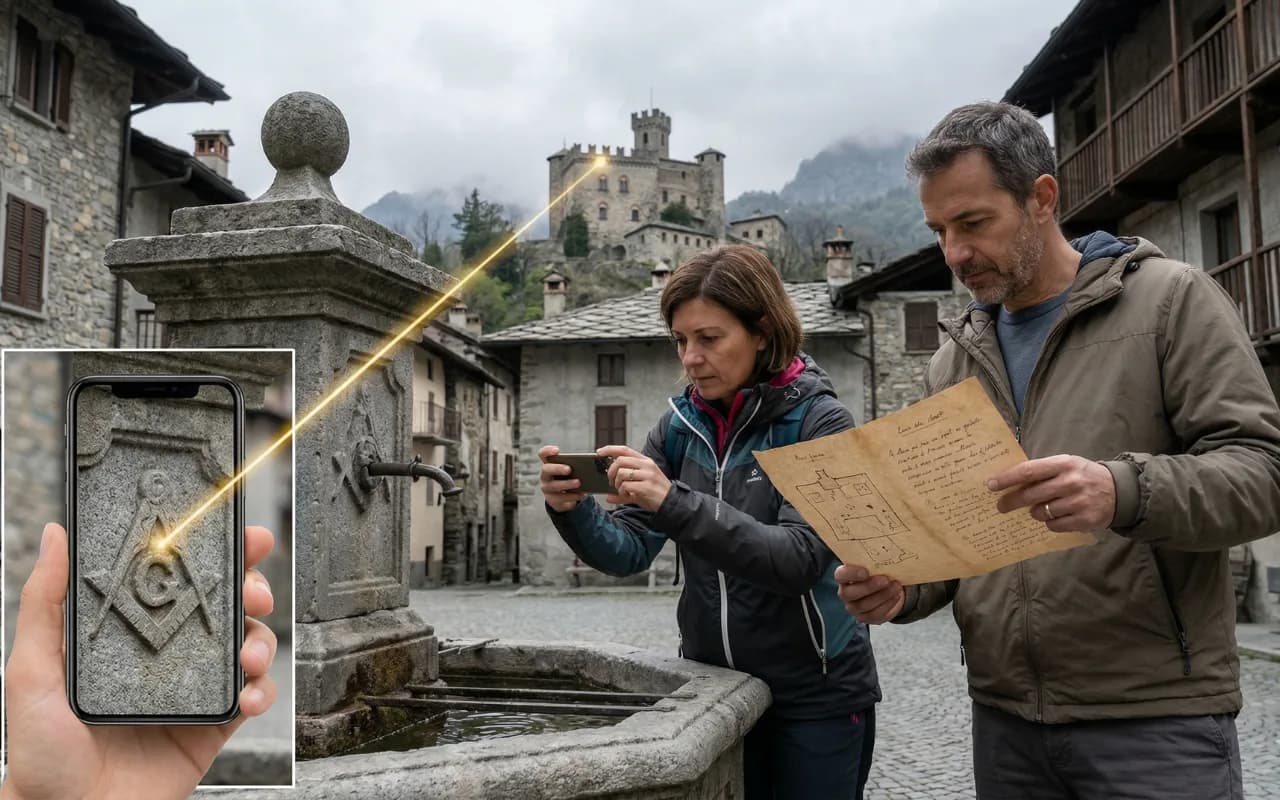
Explore other cities in Italy
Naples
Napoli Sotterranea, Dracula and the skull cult
Paestum
The world's best-preserved Greek temples
Rome
Porta Magica, catacombs and the Popes' Passetto
Civita di Bagnoregio
The dying city perched on a tuff bridge
Palermo
Normans, Arabs, Byzantines — the city of three crowns
Siena
The Contrade war and the world's oldest bank