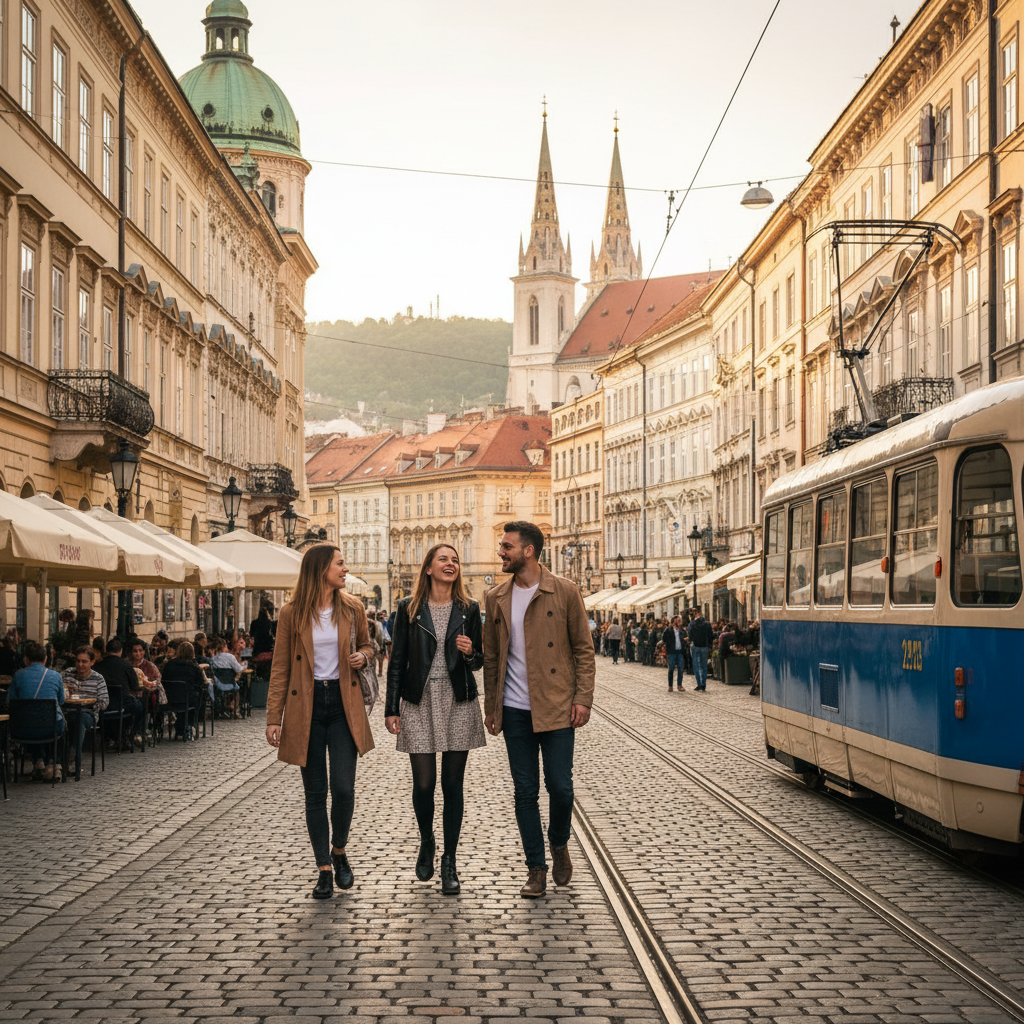
ZagrebOutdoor Escape Game & Treasure Hunt
Where Austro-Hungarian grandeur meets Balkan spirit
If you're wondering what to do in Zagreb, prepare for a captivating immersion in a city where history and modernity charmingly coexist. Stroll through the cobbled streets of the Upper Town (Gornji Grad), admire the colorful roofs of St. Mark's Church, and pass through the Stone Gate, a place imbued with spirituality. Zagreb is a human-sized capital, perfect for on-foot exploration, where every street corner reveals a surprise. For an unusual activity that stands out, OddballTrip offers a unique outdoor escape game. Imagine yourself on a treasure hunt, solving puzzles while discovering the city's secrets. It's much more than just a visit: it's a life-sized scavenger hunt that turns every monument into a clue, every square into a playground. A fun and memorable way to embrace Zagreb's Balkan spirit, nestled between its Austro-Hungarian facades and vibrant markets like Dolac.
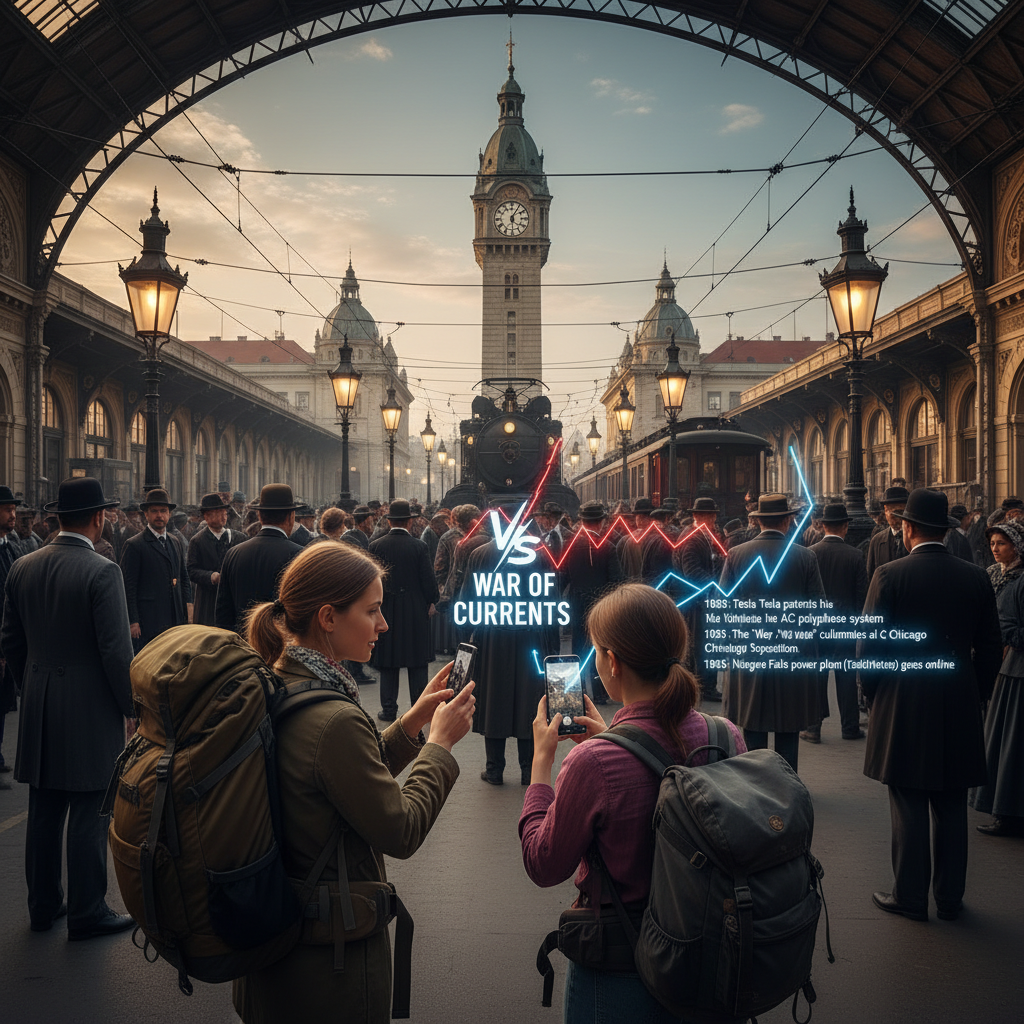
Zagreb — Edison's Plot Against Tesla
Uncover Thomas Edison's secret plot to sabotage Nikola Tesla's legacy in Zagreb. Decode clues hidden at monuments and sites tied to Tesla's genius and WWII shadows to expose the electrical conspiracy before it's buried forever.
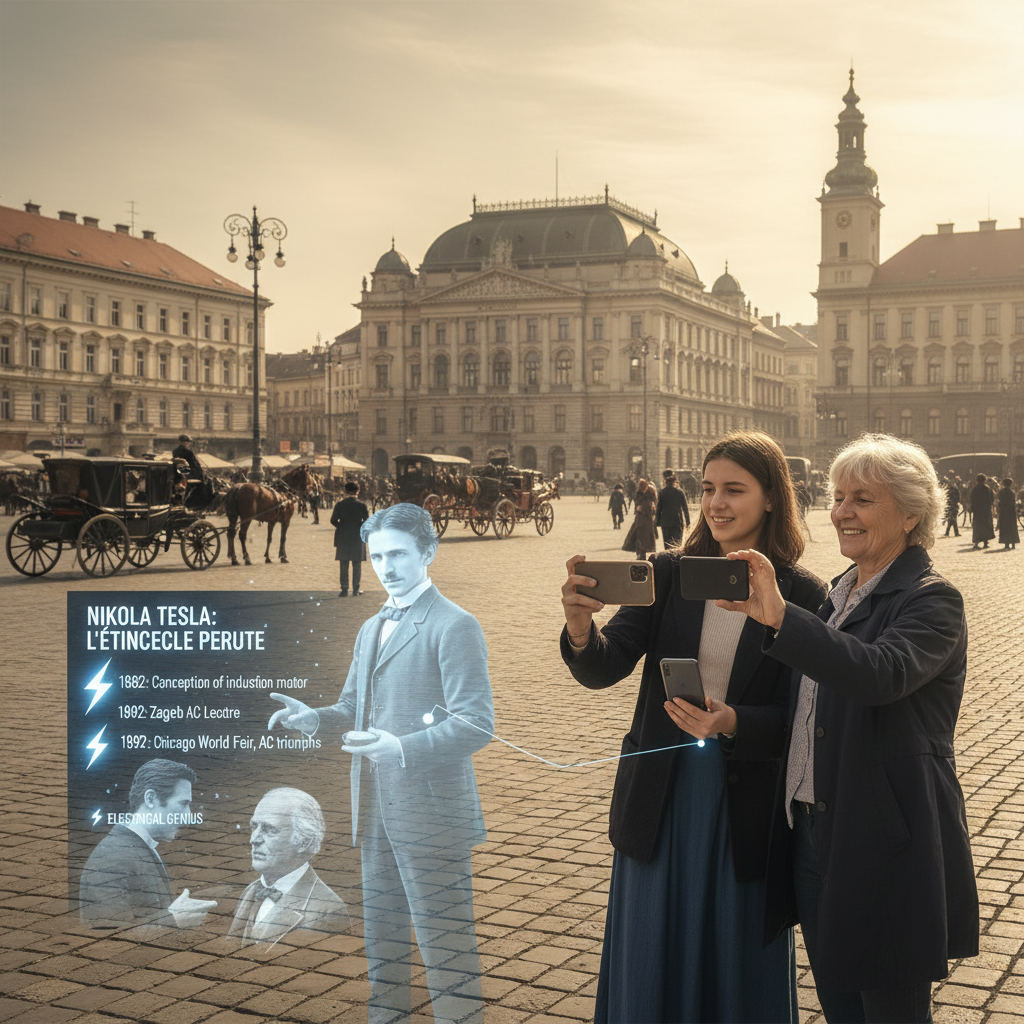
Zagreb — Tesla's Lost Spark
Uncover the conspiracy that buried Nikola Tesla's revolutionary AC power plans in Zagreb. Decode plaques, statues, and hidden messages across Lower Town to reclaim the lost spark before it's erased forever.
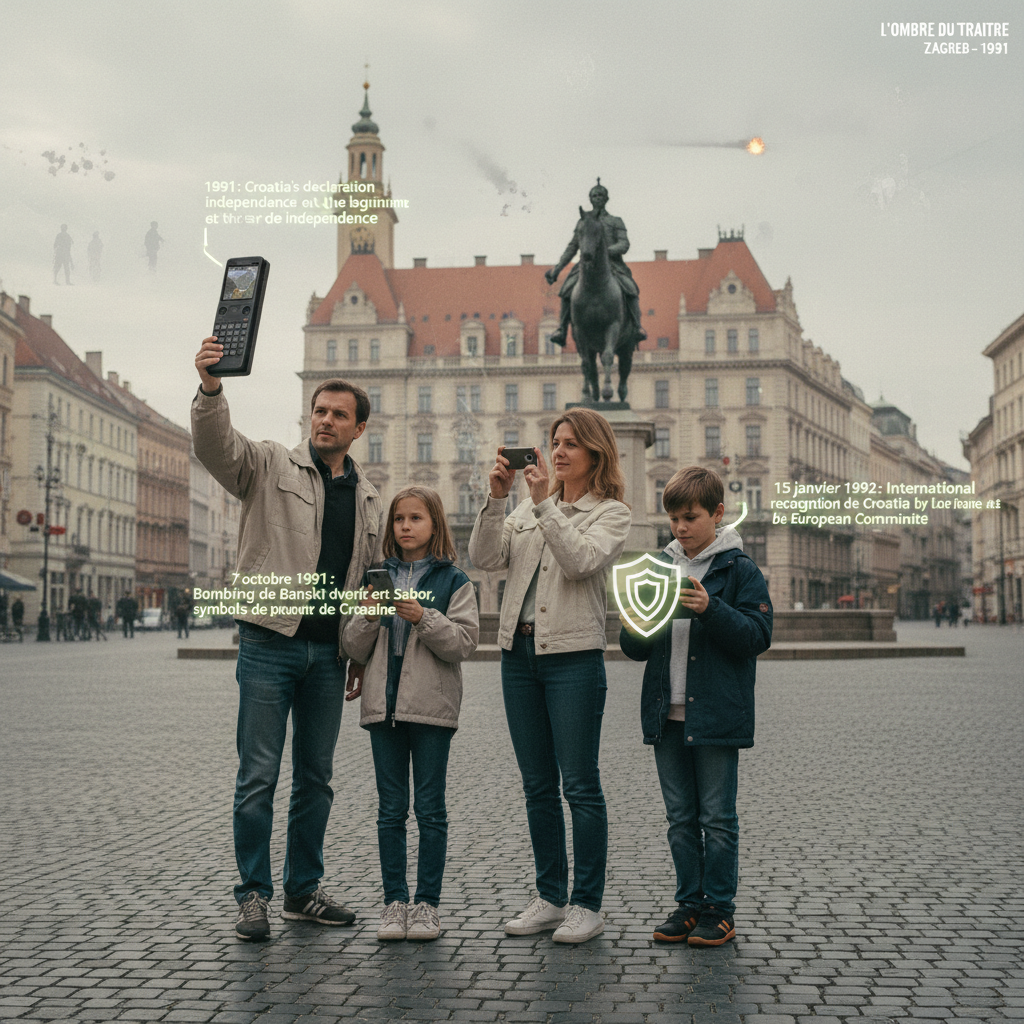
Zagreb 1991 — Uncover the Traitor's Shadow
Decipher coded intelligence from the October 1991 aerial attack on Banski Dvori. Track a suspected mole within the Croatian leadership and expose the conspiracy before the regime falls.
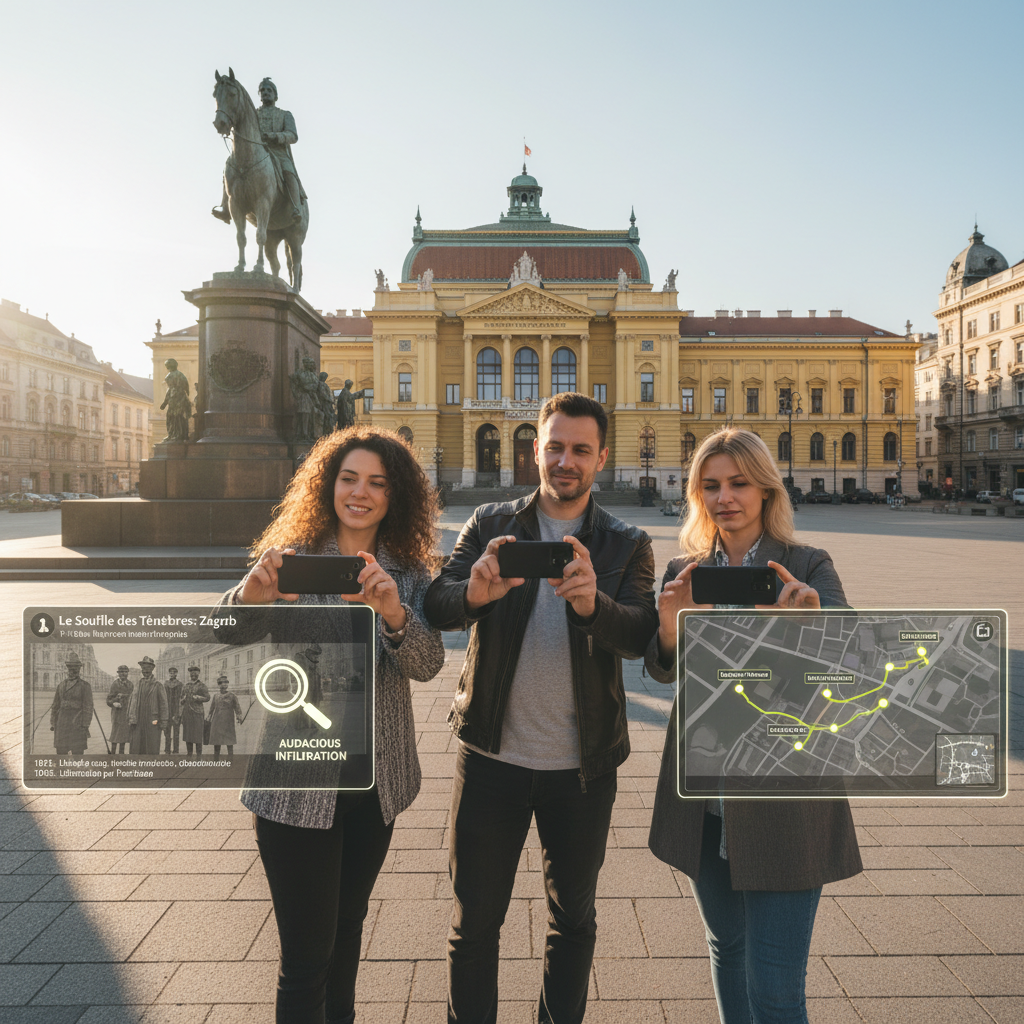
Zagreb — Breath of Darkness
Uncover the Ustasha's lethal code hidden in Upper Town's shadows. Decode their secret breath of darkness before it unleashes forgotten terror on Zagreb's streets.
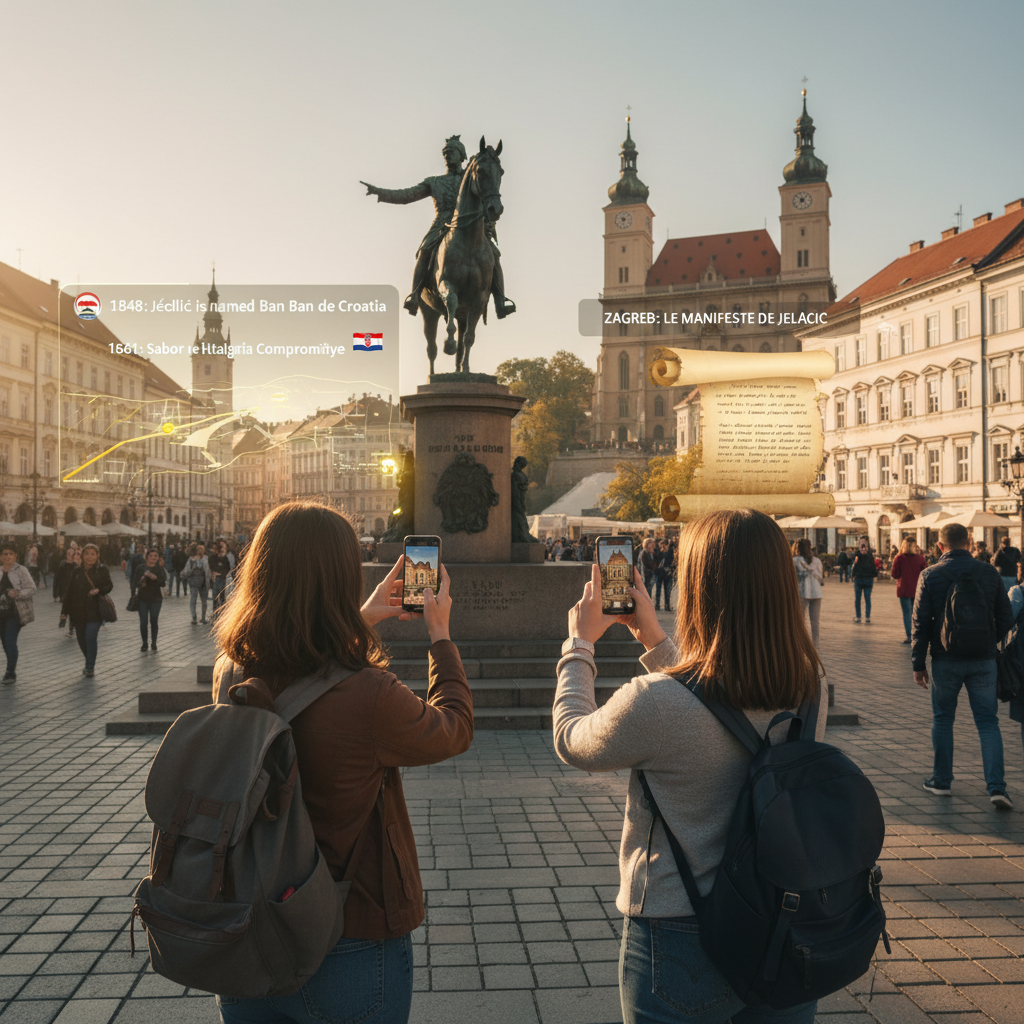
Ban Jelačić's Hidden Rebellion — Uncover the 1848 Uprising
Decipher the coded messages left by Ban Jelačić's conspirators during the 1848 revolution. Uncover the secret network that defied empires and shaped Croatian independence.
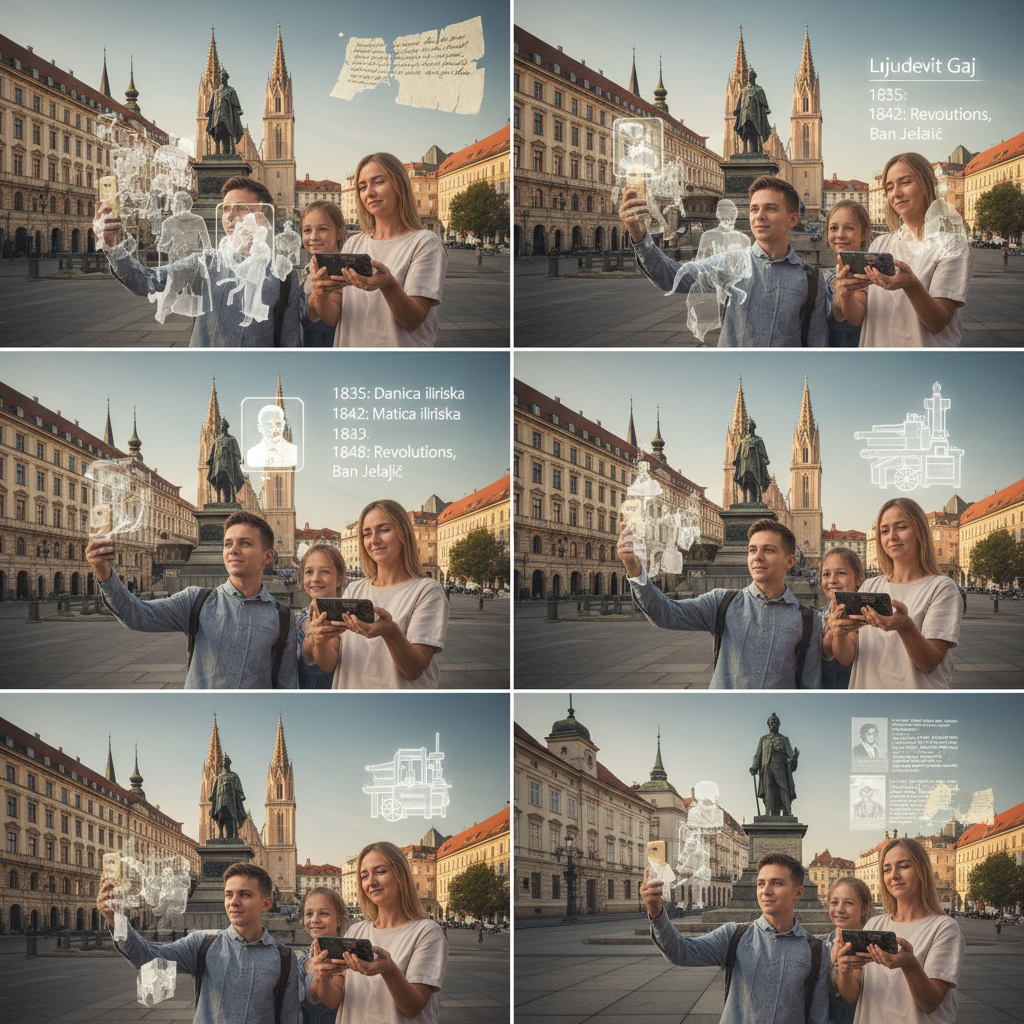
Grič — Gaj's Hidden Call
In 1830s Zagreb, Ljudevit Gaj concealed his call for Croatian unity from Austrian spies. Decode his fragmented message across Grič's landmarks to reassemble the secret and ignite the Illyrian flame.
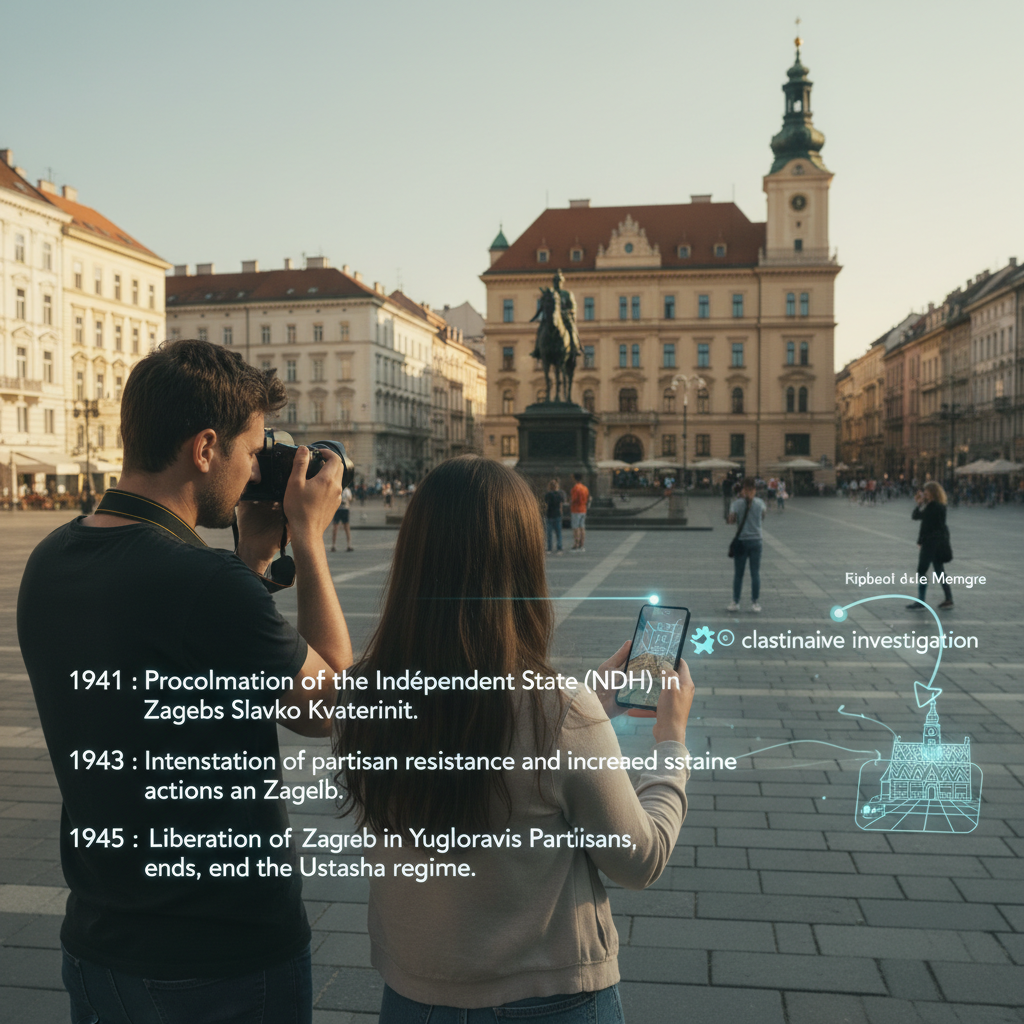
Zagreb's Shadow Code — Uncover the Hidden Resistance
Decipher coded messages left by anti-Nazi partisans in a WWII execution site. Uncover the truth the Ustasha regime tried to bury.
Unusual things to do in Zagreb
Zagreb is full of unusual activities that promise an original outing. Beyond the classics, venture to the Museum of Broken Relationships, a unique place in the world exploring romantic breakups through personal objects and their touching stories. It's a guaranteed emotional and introspective experience. For a touch of urban art, explore the hidden passages and graffiti-covered walls that dot the city, revealing a dynamic underground art scene. And of course, for an unusual activity in Zagreb that combines discovery and adventure, our outdoor escape games immerse you in captivating narratives while exploring the secret corners of the Croatian capital. A fun way to see the city from a different angle.
Things to do in Zagreb with kids
If you're looking for what to do with family in Zagreb, the city offers many fun options. Children and teens will love exploring the Upper Town, with its historic funicular and urban legends. Our outdoor escape games are perfectly suited for families, with a recommended minimum age of 8, for a safe and stimulating gaming experience. It's a great way to turn a simple walk into an interactive treasure hunt where everyone, from the youngest to teens, can contribute to solving the puzzles. The playful and collaborative aspect of these games strengthens bonds and creates unforgettable memories, while discovering the city in an active and fun way.
Zagreb for couples
Zagreb as a couple is a romantic and intimate experience, far from the hustle and bustle of major capitals. Get lost hand-in-hand in the cobbled streets of the Upper Town, discover secret passages, and admire breathtaking views of the city from the Strossmayer promenade. In the evening, the gas lamps of Gornji Grad create a magical atmosphere, perfect for a romantic stroll. Explore the rich architectural heritage together, enjoy a coffee on a terrace, or share dinner in a cozy restaurant. Our scavenger hunts are also an original way to strengthen your bond, collaborating to solve mysteries while creating precious memories in the heart of this charming city.
What to do in Zagreb when it rains
Don't let the rain spoil your exploration of Zagreb! The good news is that our outdoor escape game is designed to be playable even in rainy weather. Approximately 80% of the route takes place under arcades, covered passages, or near shelters, allowing you to continue the adventure comfortably. Additionally, Zagreb is full of cozy cafes and fascinating museums like the Museum of Broken Relationships or the Zagreb City Museum, perfect for a dry break. So, put on a raincoat and let yourself be surprised by Zagreb's charm, even in the rain!
Where is Zagreb, and where do the routes start?
Starting points of our routes and the places they pass through.
Route starting points
Places in Zagreb
- Zagreb Central Station
- Croatian State Archives
- King Tomislav Square
- University of Zagreb Rectorate Building
- Oktogon Passage
- Tkalčićeva Street
- Zagreb Cathedral (forecourt)
- Kaptol Square
- Ban Jelačić Square
- Croatian Academy of Sciences and Arts
- Croatian National Theatre
- Nikola Tesla Technical Museum
- Marulic Square
- Zrinjevac Park (Nikola Šubić Zrinski Square)
- Stone Gate (Kamenita Vrata)
- Lotrščak Tower
- Ban Josip Jelačić Square
- Stone Gate
The history of Zagreb
Early Settlements: Kaptol and Gradec
Zagreb's origins are found in two medieval settlements, Kaptol and Gradec, which developed on adjacent hills above the Sava River valley. Kaptol, the eastern settlement, was established in 1094 when Ladislaus I of Hungary founded the Zagreb diocese, making it an ecclesiastical center. Clergy residences, monasteries, and the Gothic Cathedral of the Assumption of the Blessed Virgin Mary, begun in the early 13th century, grew around it. On the western hill, Gradec developed as a secular community. After the Mongol invasion in 1242, King Béla IV of Hungary granted Gradec the status of a free royal city. Its citizens built defensive walls and towers between 1242 and 1261; many are still visible in Gornji Grad (Upper Town) today.
Unification and Modernization
For centuries, Kaptol and Gradec remained separate, often rival entities, with conflicts recorded as early as the mid-13th century. The Medveščak stream formed the border between them. In 1850, these two settlements, along with surrounding areas, were united into a single city, which became modern-day Zagreb. Janko Kamauf was elected as Zagreb's first mayor in 1851. The 19th century brought significant modernization and growth. The first railway line connecting Zagreb to Zidani Most and Sisak opened in 1862, and the city received its first waterworks in 1878. The layout of the Lower Town, with its squares and public buildings, developed after the 1880 Zagreb earthquake and continued until World War I. Zagreb was declared the capital of Croatia in 1845, again in 1945, and finally in 1991 after Croatia's independence.
What to see in Zagreb
- Zagreb Cathedral — Officially the Cathedral of the Assumption of the Blessed Virgin Mary, its twin spires define the city's skyline. The sacristy contains a 13th-century fresco.
- King Tomislav Square — This large green square features an equestrian statue of King Tomislav, the first King of Croatia. It introduces the Lower Town's monumental architecture.
- Croatian State Archives — Housed in an Art Nouveau building, the archives document Croatia's administrative and cultural history. Its facade and interior details are notable.
- Oktogon Passage — This Art Nouveau covered passageway connects Ilica Street and Petar Preradović Square. Designed by Josip Vancaš and built between 1898 and 1900, its octagonal central hall and glass dome provide natural light.
- Tkalčićeva Street — Once the Medveščak stream that separated Kaptol and Gradec, this pedestrian street is now known for its cafes, restaurants, and boutiques.
- Dolac Market — Behind Ban Jelačić Square, this open-air market, identifiable by its red umbrellas, has been a center of local life since 1930. Farmers and vendors sell produce, flowers, meats, and cheeses.
- Croatian National Theatre — This yellow building, designed by Austrian architects Ferdinand Fellner and Hermann Helmer, opened in 1895. It is a central landmark in the Lower Town, hosting opera, drama, and ballet performances.
When to visit Zagreb
For pleasant weather and fewer crowds, visit Zagreb in late spring (May to early June) or early autumn (September to mid-October). Temperatures in May and June range from 20-25°C, suitable for sightseeing and outdoor activities. September offers comfortable temperatures after summer, with highs around 24°C. Café terraces remain open during these months.
Avoid July and August if you prefer to avoid heat, as temperatures can reach 30°C or higher. Many locals go on holiday then, so some shops and restaurants might be closed. Winter (November to March) is cold, with average highs around 3°C in January and occasional snow, but it hosts Zagreb's Advent markets.
Getting around Zagreb
Zagreb Franjo Tuđman Airport (ZAG) is 15 kilometers southeast of the city center. The Pleso Prijevoz shuttle bus offers direct service to the central bus station, taking 35 to 45 minutes and costing around 9 euros. Taxis and ride-sharing services like Uber and Bolt cost approximately 25 to 35 euros to the city center.
Zagreb has a public transportation system of trams and buses, operated by ZET. Trams are the most common way to get around, with 15 daytime lines and 4 night lines. Tickets can be purchased at kiosks (Tisak or iNovine) or from the driver (at a slightly higher price). A single 30-minute ticket costs €0.53. The city center, especially the Upper Town and the flat Lower Town, is walkable. Parking is available but can be difficult in busy areas.
Things you probably do not know about Zagreb
Verified details most visitors walk straight past.
- Oktogon Passage
- What unusual monument was once hidden in the backyard of the Oktogon Passage? The Oktogon Passage used to house Zagreb's only monument to a dog. A stray dog named Pluto befriended the workers during the passage's construction between 1898 and 1900. After Pluto's death, architect Josip Vancaš and the workers erected a bas-relief in his memory. In 2013, it was moved to Mirko Bogović Street.
- Croatian National Theatre
- Which significant figure attended the grand opening of the current Croatian National Theatre building? The Austro-Hungarian Emperor Franz Joseph I was present at the unveiling of the new Croatian National Theatre building on November 14, 1895, during his visit to Zagreb. The first ceremonial performance, an allegorical stage prologue titled *Slava umjetnosti*, was held in his presence.
- Ban Jelačić Square
- What historical event is commemorated by the equestrian statue in Ban Jelačić Square? The equestrian statue in Ban Jelačić Square honors Ban Josip Jelačić, who united the rival settlements of Gradec and Kaptol into a single city in 1850. The square itself is named after him.
- Zagreb Funicular
- What record does Zagreb's funicular hold among public transportation systems? The Zagreb Funicular, which connects the Lower Town to the Upper Town, has a track length of only 66 meters and a travel time of 64 seconds, making it one of the shortest public funiculars in the world. It began operating in 1890.
- Dolac Market
- What was the original vision behind the location and layout of Dolac Market? Opened in 1930, Dolac Market was strategically built between Kaptol and Tkalčićeva Street to serve as a main market. It featured a raised open square for fruit, vegetable, and egg stalls, an indoor market at street level for meat and dairy, and a fish market (Ribarnica) added in 1933, inspired by the one in Trieste.
Questions about visiting Zagreb
How many days should I spend in Zagreb?
For a comprehensive experience of Zagreb's historical and cultural offerings, including the Upper and Lower Towns, key museums, and local café culture, plan for a minimum of 2-3 days. This allows for exploration without rushing.
What are the best ways to get around Zagreb?
Zagreb's city center is very walkable, with many attractions easily reached on foot. For longer distances, the extensive tram network is the most efficient and popular option, complemented by a bus system. Taxis and ride-sharing services are also available.
Which neighborhoods are worth exploring in Zagreb?
The Upper Town (Gornji Grad) offers medieval charm with its cobbled streets and historic sites. The Lower Town (Donji Grad) features grand 19th-century architecture, parks, and cultural institutions. Tkalčićeva Street is known for its lively atmosphere, while Dolac Market provides a glimpse into local life.
What is the typical budget for a trip to Zagreb?
Zagreb can be quite affordable compared to other European capitals. Accommodation, food, and public transport are reasonably priced. Eating at local markets like Dolac and using trams can help manage your budget effectively. Prices for accommodation tend to be more affordable during the moderate seasons.
Is Zagreb a good destination for families with children?
Zagreb offers several family-friendly attractions, including numerous parks and green spaces. The city's compact size and walkable center make it easy to navigate with children. The Nikola Tesla Technical Museum provides interactive exhibits, and the funicular ride is a unique experience.
What are the public transport options from Zagreb Airport to the city center?
From Zagreb Franjo Tuđman Airport (ZAG), you can take the Pleso Prijevoz shuttle bus directly to the main bus station, which takes about 35-45 minutes. Taxis and ride-sharing services like Uber and Bolt are also readily available for a direct ride to the city center.
Frequently asked questions
How much does an outdoor escape game cost in Zagreb?
Our outdoor escape games in Zagreb are designed to be accessible and fun for everyone. The price is €12 per team, which is very advantageous if you come with several people! This unique per-team rate allows you to play with your friends or family without worrying about the exact number of participants (within the recommended limit). It's excellent value for money for an activity that combines tourist discovery, puzzle-solving, and outdoor adventure. Get ready for a memorable experience without breaking the bank!
Is it suitable for children / families?
Absolutely! Our outdoor escape games in Zagreb are perfectly suited for families and groups with children. We recommend a minimum age of 8 for the youngest to fully participate in solving puzzles and understanding the story. It's a fantastic activity to stimulate collaboration and teamwork within the family. Parents can guide the little ones, while teens will find the challenges sufficiently stimulating. It's a fun and interactive way to discover the city together, creating unforgettable memories for all ages.
How long does an escape game in Zagreb last?
The duration of our outdoor escape games in Zagreb is designed to offer a complete experience without being too long. On average, allow between 1 hour 30 minutes and 2 hours to complete the route, depending on your pace and your ability to solve the puzzles. This time includes walking between different points of interest and moments of reflection. You are free to take breaks if you wish, to grab a coffee or admire a monument. The goal is to enjoy the adventure at your own pace, exploring the city in a relaxed and fun way.
Do I need to book in advance?
No, one of the great advantages of our outdoor escape games is flexibility! You don't need to book in advance. You can purchase the game whenever you want and start the adventure at the time that suits you best, once you are in Zagreb. This is ideal for spontaneous travelers or those who prefer to adapt their schedule based on the weather or their current desires. All you need is a charged smartphone and an internet connection to start your urban treasure hunt whenever the mood strikes you.
What to visit in Zagreb beyond escape games?
Zagreb is full of treasures to explore! Beyond our scavenger hunts, don't miss the charming Upper Town (Gornji Grad) with the iconic St. Mark's Church and its colorful roof, the Stone Gate, and the historic funicular. Wander through Dolac Market for an immersion in local life and its flavors. The Museum of Broken Relationships offers a unique and moving experience. For a green break, Zrinjevac Park is perfect. And don't forget to get lost in the hidden passages and lively pedestrian streets of the city center to discover Zagreb's unique atmosphere.
What is the best season to visit Zagreb?
Zagreb is pleasant to visit almost all year round, but each season has its charm. Spring (April-May) and autumn (September-October) are often considered the best times, with mild temperatures, fewer crowds, and beautiful colors. Summer (June-August) is hot and sunny, ideal for enjoying terraces and numerous outdoor festivals, but there may be more tourists. Winter (November-March) brings a magical atmosphere with Christmas markets, and although colder, the city is beautiful under the snow. Our scavenger hunts are playable in any season!
More cities in Croatia
Krapina
On the trail of Neanderthal man
Čakovec
Where Croatian history unfolds along the Drava
Senj
City of Uskoks and Adriatic fortress
Rijeka
Vibrant Adriatic port, where history meets culture
Krk
Adriatic gem, where ancient history meets turquoise waters.
Pula
Pula: Tracing the Roman Empire's legacy in Istria
Porec
Between Roman ruins and the Adriatic Sea
Zadar
Between sea organ and ancient ruins, the pearl of the Adriatic
Activities to discover nearby
Guided tours, skip-the-line tickets and local experiences to book in advance.
💡 Optional booking — you can also buy on-site. All links open in a new window, your OddballTrip visit stays preserved.