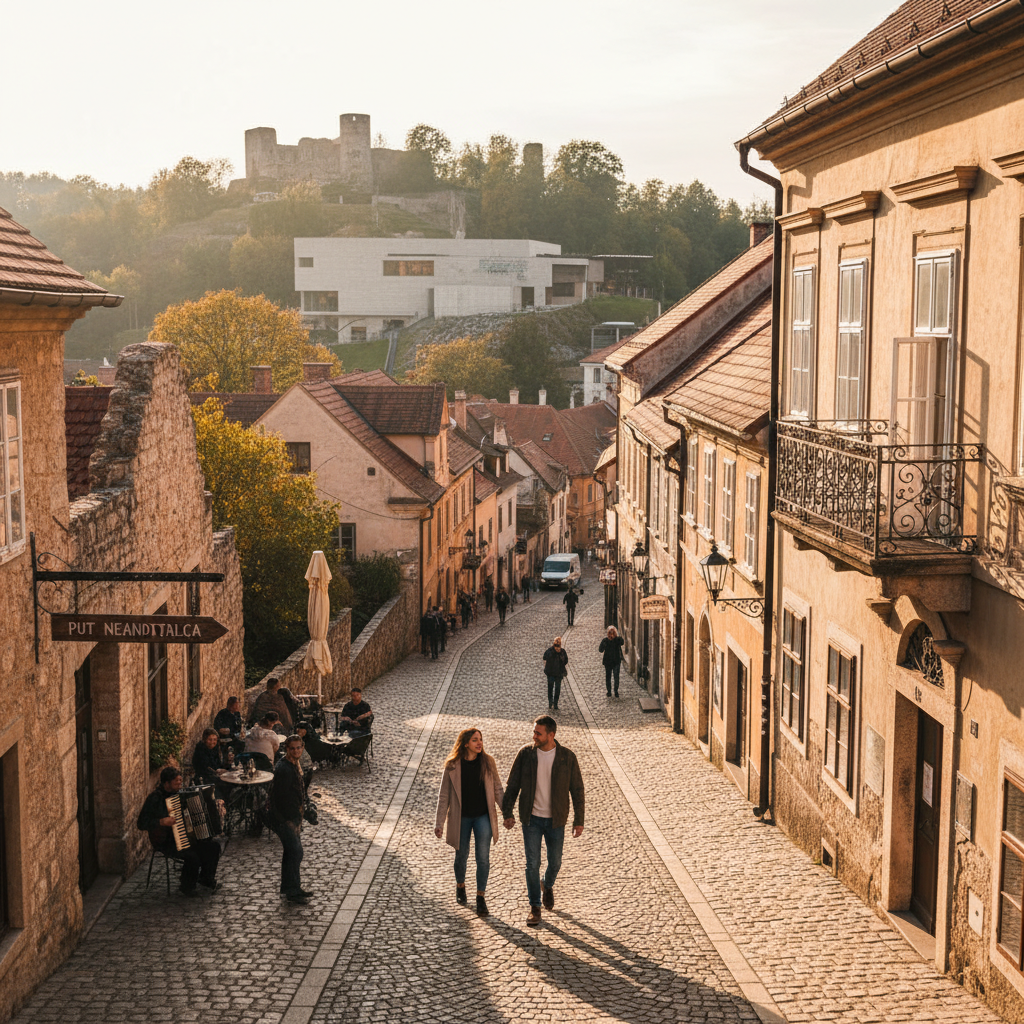
KrapinaOutdoor Escape Game & Treasure Hunt
On the trail of Neanderthal man
Krapina, nestled in the heart of Croatian Zagorje, is a destination that surprises with its rich history and natural beauty. If you're wondering what to do in this charming town, know that it offers much more than just a quick stop. Of course, the unmissable Krapina Neanderthal Museum, located on the Hušnjakovo site, will immerse you in the fascinating history of our ancestors. But for a truly immersive experience and an unusual activity, why not embark on an outdoor escape game? These innovative scavenger hunts transform Krapina's streets and hidden corners into a vast playground. Imagine a life-sized treasure hunt that will lead you through the old town, perhaps to the remains of Stari Grad Krapina or near the peaceful Franciscan Monastery, all while solving puzzles. It's a fun and original way to discover Krapina, its legends, and its heritage, far beyond the beaten path. Whether you're with family, friends, or as a couple, this adventure promises memorable souvenirs and an active exploration of the city.
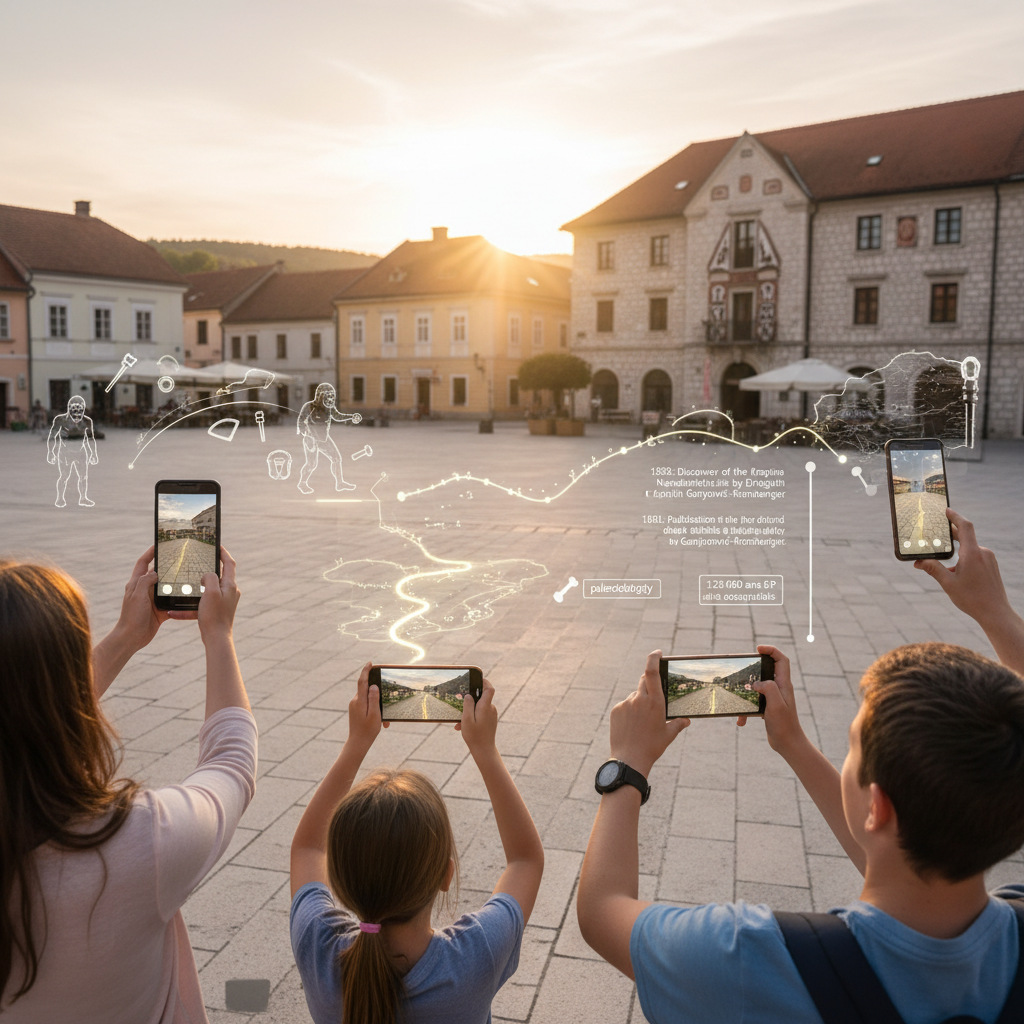
Krapina — Neanderthal Shadows
Uncover the dark secret of a Neanderthal ritual hidden in Krapina's caves. Decipher ancient marks on eagle talons to expose a forgotten ceremony of power and sacrifice before its shadows claim you.
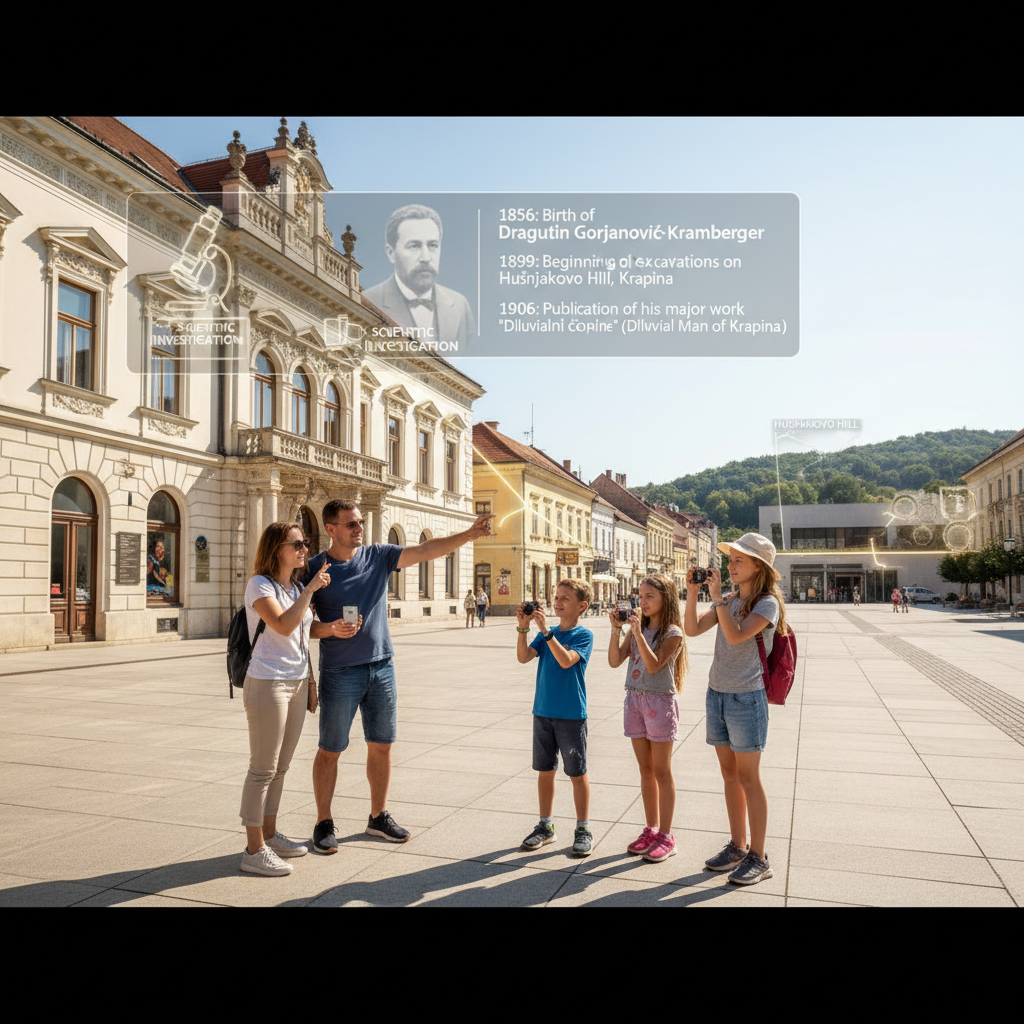
Gorjanović's Hidden Truth — The Neanderthal Conspiracy
Decipher the cryptic field notes of paleontologist Dragutin Gorjanović-Kramberger to uncover why the Krapina Neanderthals were ritually marked—and what he concealed from the world.
Unusual things to do in Krapina
For an unusual activity in Krapina, step off the beaten path and dive into the prehistoric era in a unique way. Beyond the museum, our outdoor escape games invite you to an original outing that merges history and adventure. Imagine solving puzzles inspired by the mysteries of Neanderthal man, all while exploring the hidden corners of the city. It's a life-sized treasure hunt where each clue brings you closer to a playful understanding of the past. A memorable experience that transforms Krapina into a vast historical playground.
Things to do in Krapina with kids
Krapina is an ideal destination for a family outing. If you're looking for things to do with family in Krapina, our outdoor escape games are perfectly suited. Designed to be accessible from 8-10 years old (accompanied), they transform city exploration into a playful adventure. Children and teens will love searching for clues and solving puzzles as a team, while parents will appreciate the educational aspect and the fresh air. It's an excellent way to stimulate the curiosity of the whole family about local history, especially that of the Neanderthals, while creating unforgettable memories.
Krapina for couples
For a romantic getaway, discovering Krapina as a couple is a charming experience. Away from the hustle and bustle, the town offers an intimate setting for strolling hand in hand. Imagine wandering through the picturesque alleys of the old town, discovering hidden viewpoints over the rolling landscape of Zagorje, or exploring the rich local heritage together. Our outdoor escape games can add a touch of adventure and complicity to your stay. It's an original way to share a unique moment, tackle challenges together, and create memorable souvenirs, all while soaking in Krapina's peaceful atmosphere.
What to do in Krapina when it rains
If rain decides to join your visit, don't worry, Krapina has solutions. For what to do in Krapina on a rainy day, the Krapina Neanderthal Museum is an excellent indoor option, offering a fascinating immersion. As for our outdoor escape games, rest assured: a good part of the route (approximately 80%) takes place under arcades, covered passages, or in sheltered areas of the city center. You can thus continue your playful adventure without being completely exposed to the elements, enjoying the city even in the rain.
Where is Krapina, and where do the routes start?
Starting points of our routes and the places they pass through.
Route starting points
Places in Krapina
- Dr. Ljudevit Gaj Square
- Path leading to Hušnjakovo Hill (starting near the museum)
- Exterior view of the Krapina rock shelter (archaeological site)
- Facade of the Krapina Neanderthal Museum (exterior part with motifs)
- Panoramic viewpoint near the museum
- Public green space near the museum
- A small forest path behind the main site
- Outdoor commemorative monument dedicated to the Krapina Neanderthals
- Facade of Krapina Town Hall (Gradska Vijećnica)
- Old printing house or historic building in the city center
- Main crossroads leading towards Hušnjakovo Hill.
- Exterior view of Hušnjakovo Park
- Viewpoint overlooking the Hušnjakovo archaeological site.
- Facade of Krapina Primary School (Osnovna škola Krapina)
- Side or rear facade of the Krapina Neanderthal Museum (outside main entrance).
- In front of the monument dedicated to Dragutin Gorjanović-Kramberger (if it exists, otherwise a public commemorative plaque).
The history of Krapina
Early Human Presence and Medieval Development
Krapina's history begins over 130,000 years ago. In 1899, on Hušnjakovo Hill, archaeologist Dragutin Gorjanović-Kramberger discovered over 800 fossil remains of Neanderthals. These findings, dated to approximately 130,000 years ago, include skulls, teeth, and skeletal parts from at least 24 individuals. The site also yielded around 1,200 artifacts, providing information on early human life in Europe.
The town of Krapina was first documented in 1193. By 1347, Hungarian King Louis I granted Krapina the status of a free royal city. A medieval fortress then developed at the foot of the hill. This fortress, which functioned as a royal estate, became a point for defending the border towards the Sutla river.
A Center of Croatian Identity
During the Ottoman invasions of the late 16th and early 17th centuries, the Croatian Sabor (parliament) met five times in the Krapina fortress. In the 17th century, the Franciscan order established itself in Krapina, constructing the Church of St. Catherine and a Franciscan monastery, which remain today. The 19th century saw Krapina become a center of Croatian national consciousness. It was the birthplace of Ljudevit Gaj, a figure and ideological leader of the Croatian National Revival, who promoted the Croatian language. The construction of the "Zagorje railroad" in 1886 connected Krapina to the wider region, contributing to its modernization. Today, Krapina functions as the cultural, political, and administrative center of Krapina-Zagorje County.
What to see in Krapina
- Krapina Neanderthal Museum and Hušnjakovo Hill — This museum, opened in 2010, presents human evolution with exhibits and multimedia installations. It connects to the Hušnjakovo archaeological site, where over 800 Neanderthal fossils were discovered from 1899 to 1905.
- Dr. Ljudevit Gaj Museum — This museum is in the birthplace of Ljudevit Gaj, a linguist and leader of the Croatian National Revival. It provides information on his life and work, and on Croatia's cultural development in the 19th century.
- Franciscan Monastery and St. Catherine's Church — These 17th-century religious buildings display Baroque architecture. The church has a Baroque interior and hosts the annual Krapinafest, a contemporary Christian music festival.
- Old Town Krapina (Stari Grad) — The medieval fortress that once stood above the town now consists of a two-floor building, divided in the 19th century. It stands on a hill overlooking Krapina. This site was used for defending the border towards Sutla.
- Church of Our Lady of Jerusalem (Crkva Majke Božje Jeruzalemske) — This Baroque church is known for its ceiling and wall paintings. It contains a statue of Mary, brought from Jerusalem.
- Krapina Town Hall (Gradska Vijećnica) — This historic building is in the city center. It is an example of the town's administrative architecture and a point of focus on the main square.
When to visit Krapina
The period from May through September offers pleasant weather, with average daily high temperatures above 21°C. July is the warmest month, with an average high of 26°C, and provides clear skies for outdoor activities and exploring the region's hills.
Spring (April to June) and fall (September to October) also have warm temperatures, ranging from 23°C to 26°C, with fewer visitors. September is the wettest month, with an average of 89 mm of precipitation.
Winter, from November to February, is cold and often snowy, with average daily high temperatures below 7°C. January is the coldest, with average lows around -3°C. The Krapina Neanderthal Museum is an indoor activity, but outdoor exploration is difficult due to cold and icy conditions. Some smaller, seasonal establishments may have reduced hours or close during this period.
Getting around Krapina
Krapina is accessible by various routes. Zagreb Airport (Pleso) is approximately 49 km away. From Zagreb, Krapina can be reached by train, with direct services taking about 1 hour and 20 minutes, departing five times a day (Monday to Saturday), at a cost of around €5. Buses also connect Krapina to towns in the Zagorje region, such as Samobor or Velika Gorica. The bus journey from Zagreb takes approximately 1 hour.
Within Krapina, the town center and its main attractions are walkable. For those arriving by car, parking is available near the Old Town Krapina at Starogradska ul. 4; fees may apply. The Krapina Neanderthal Museum also has a car park. Public transportation within the town is limited, but taxis are available. The Krapina Neanderthal Museum is the main paid attraction; much of the old town and surrounding landscape can be explored without charge.
Things you probably do not know about Krapina
Verified details most visitors walk straight past.
- Hušnjakovo Hill
- What unusual items were found among the Neanderthal remains on Hušnjakovo Hill, suggesting an unexpected aspect of their culture? Archaeologists discovered carefully worked white-tailed eagle claws with striations, believed to be the oldest known jewelry in the world, hinting at the Neanderthals' aesthetic sense over 125,000 years ago.
- Krapina River (Krapinčica)
- How did a local fish give Krapina its name? The town of Krapina is named after the Krapinčica River, which once teemed with freshwater carp. In the local Kajkavian dialect, carp are called 'krap'.
- Krapina Fortress (Stari Grad)
- Beyond its military role, what significant political gatherings took place within the walls of Krapina's medieval fortress? During the late 16th and early 17th centuries, the Croatian Sabor (parliament) convened five times in the Krapina fortress, highlighting its importance in Croatian political history.
- Dr. Ljudevit Gaj Square
- What important agreement for Croatian national identity was signed in Krapina, linking two influential figures? Political agreements defending Croatia's interests were signed in Krapina by Ante Starčević, known as the Father of the Nation, and Bishop Juraj Strossmayer.
Questions about visiting Krapina
How long should I plan to stay in Krapina?
A visit to Krapina typically ranges from one to two days. This allows time to explore the Krapina Neanderthal Museum and the Hušnjakovo archaeological site. You can also visit the Franciscan Monastery and St. Catherine's Church, and walk through the historic town center. If you plan to visit the surrounding Zagorje region for castles or thermal spas, consider extending your stay to two or three days.
What are the best ways to get around Krapina?
Krapina is a small town. Its main attractions, including the Neanderthal Museum and the town center, are walkable. For longer distances or exploring the wider Zagorje region, a car is recommended. Public buses connect Krapina to other towns, and train services are available to and from Zagreb. Taxis are an option for direct travel within the town or to nearby sites.
Is Krapina suitable for families with children?
Krapina is a destination for families, mainly due to the Krapina Neanderthal Museum. This museum is designed to be interactive for all ages, with multimedia exhibits that present human evolution. The outdoor park around the museum, with its life-sized Neanderthal statues, provides an educational experience for children. The town's size and pedestrian areas make it easy to navigate with children.
What is the typical budget for a visit to Krapina?
Krapina is affordable by Croatian standards. For a visit, accommodation in a guesthouse or smaller hotel may range from €40 to €70 per night for a double room. Dining at a local restaurant might cost €8 to €15 for a main course. The entrance fee for the Krapina Neanderthal Museum is typically around €8 for adults. Most of the old town and surrounding landscape can be explored for free; transportation costs depend on your chosen method.
Are there any specific cultural events or festivals in Krapina?
Krapina hosts several cultural events. The "Kajkavian Culture Week" is an annual event, ending with the "Kajkavian Song Festival," held since 1966, which celebrates the local Kajkavian dialect. The Franciscan Monastery and St. Catherine's Church host Krapinafest, an annual contemporary Christian music festival. Other events include the Krapinske špelancije (a theater festival), Summer in Krapina, and the Night of the Krapina Neanderthal.
What kind of local cuisine can I expect in Krapina?
In Krapina and the wider Zagorje region, you can expect continental Croatian cuisine. Traditional dishes often feature local ingredients like turkey with mlinci (a type of baked pasta), štrukli (cheese-filled pastries), and various stews. Given the region's agricultural heritage, fresh produce, cured meats, and homemade cheeses are common. The area is also known for its wine roads, offering opportunities for wine tasting. Local cafes and restaurants offer authentic Zagorje flavors.
Frequently asked questions
How much does an outdoor escape game cost in Krapina?
An outdoor escape game in Krapina typically costs €12 per team. This very affordable price gives you access to a complete adventure, where you and your teammates (friends, family, couple) can explore the city while solving puzzles. It's an economical and entertaining activity that offers excellent value for a unique urban discovery experience. The price is fixed per team, regardless of the number of participants (within the recommended limit for optimal playing comfort).
Is it suitable for children / families?
Absolutely! Our outdoor escape games in Krapina are designed to be a fantastic activity for the whole family. They are generally recommended for ages 8-10 and up, with adult supervision. The puzzles are fun and stimulating, encouraging collaboration between generations. It's a great way to spend quality time together, discover Krapina interactively, and create memorable experiences for children, teens, and parents alike. The outdoor aspect allows everyone to enjoy the fresh air and movement.
How long does an escape game last in Krapina?
The duration of an outdoor escape game in Krapina generally varies between 1h30 and 2h30, depending on your pace and the difficulty of the chosen scenario. This is the perfect amount of time for a complete immersion in the adventure without it becoming too long. You'll have plenty of time to explore the locations, solve all the puzzles, and fully enjoy the gaming experience. Remember that it's a flexible activity; you can take breaks if you wish.
Do I need to book in advance?
For our outdoor escape games in Krapina, it is highly recommended to book in advance, especially if you have a specific date or time in mind. Although some games may be accessible spontaneously via an app, booking guarantees availability and allows you to plan your adventure with peace of mind. It also helps us better organize player flow and ensure you have the best possible experience. A quick check on our website is enough to verify availability and secure your slot.
What to visit in Krapina beyond the escape games?
Beyond our exciting escape games, Krapina is full of treasures to discover. The must-see is the Krapina Neanderthal Museum and the Hušnjakovo paleontological site, which will immerse you in the history of humanity. You can also explore the city center with its charming Stari Grad Krapina (Old Town), its historic churches like the Franciscan Monastery and St. Catherine's Church, and enjoy the peaceful atmosphere of the streets. The surroundings also offer great opportunities for hiking and natural discoveries in the Zagorje region.
What is the best season to visit Krapina?
The best season to visit Krapina, and fully enjoy our outdoor escape games, is undoubtedly spring (April-June) and early autumn (September-October). During these periods, the weather is generally mild and pleasant, ideal for walking and exploring the city on foot. Summer can be very hot but remains an option if you prefer warmth. Winter, although charming, can make outdoor activities less comfortable due to the cold. Each season has its charm, but spring and autumn offer optimal conditions.
More cities in Croatia
Zagreb
Where Austro-Hungarian grandeur meets Balkan spirit
Čakovec
Where Croatian history unfolds along the Drava
Rijeka
Vibrant Adriatic port, where history meets culture
Senj
City of Uskoks and Adriatic fortress
Krk
Adriatic gem, where ancient history meets turquoise waters.
Porec
Between Roman ruins and the Adriatic Sea
Pula
Pula: Tracing the Roman Empire's legacy in Istria
Osijek
Slavonia's Baroque heart, by the Drava river