LiegeOutdoor Escape Game & Treasure Hunt
The Ardent City, between the Meuse and its hills
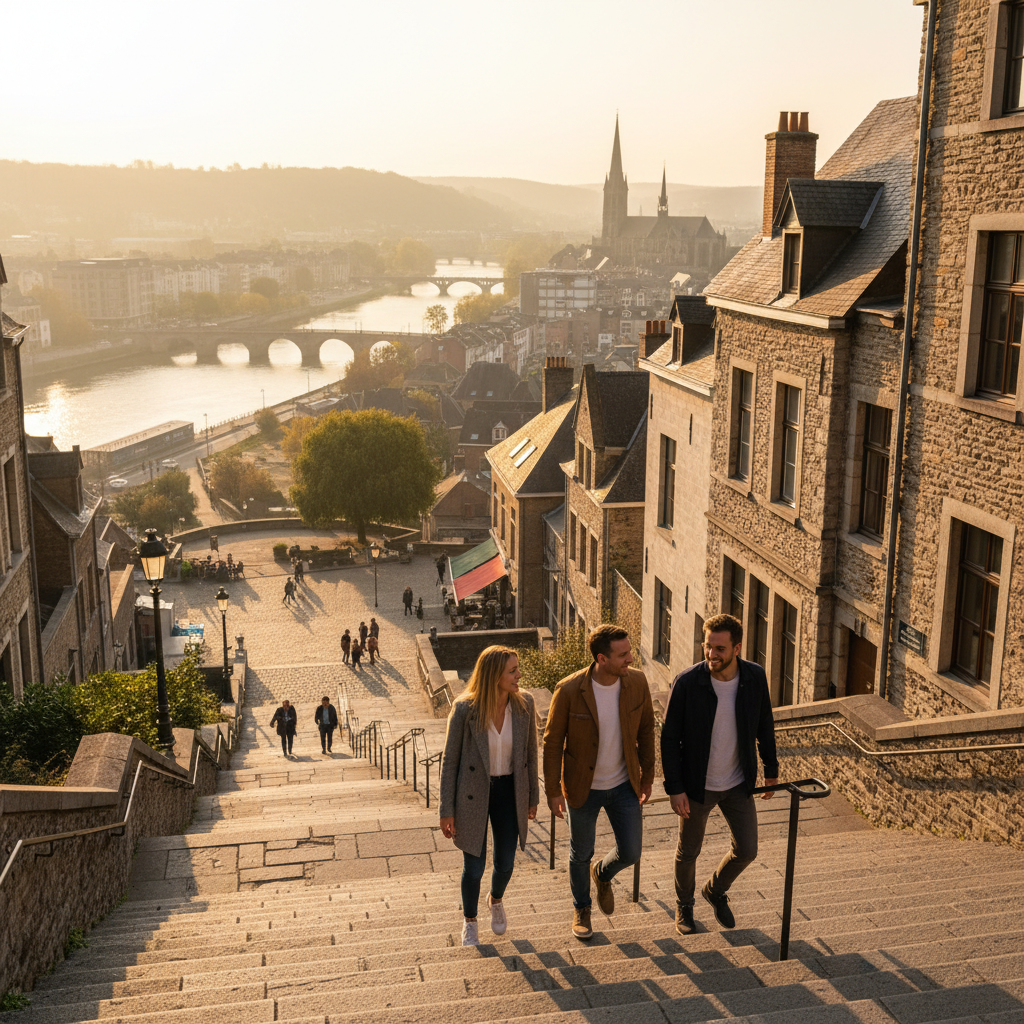
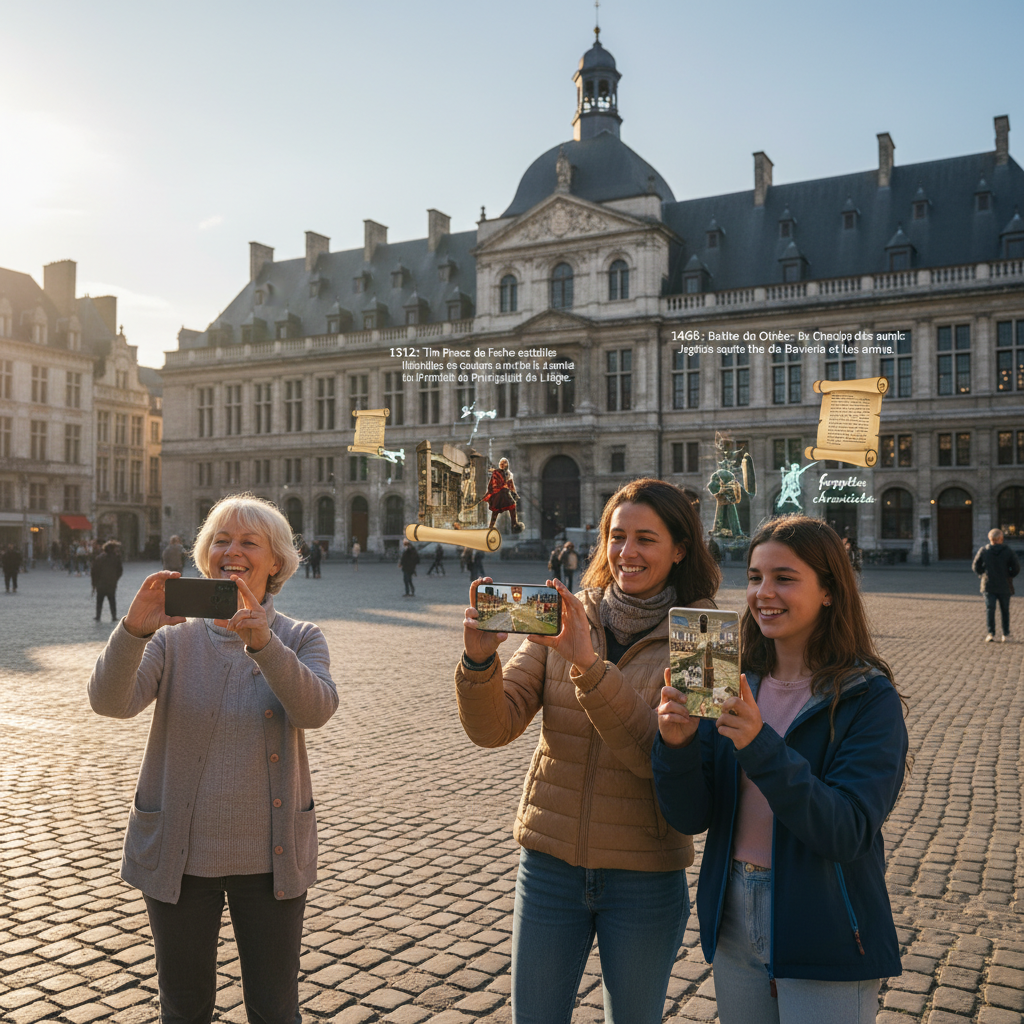
Liège, the vibrant Ardent City, invites you to a unique exploration blending its rich past with its current dynamism. If you're wondering "what to do in Liège," prepare to be surprised! Beyond its famous 374 steps of the Montagne de Bueren, offering breathtaking views of the city, or the imposing Place Saint-Lambert, the cradle of its history, Liège is full of hidden treasures. Imagine wandering through its picturesque alleys, uncovering fascinating anecdotes, and solving puzzles, all outdoors. This is precisely what an outdoor escape game offers: an immersive adventure that transforms the city into a giant playground. Far from the beaten path, this unusual activity combines a treasure hunt and a scavenger hunt, allowing you to discover Saint-Paul's Cathedral or the charms of the Le Carré district in a fun and memorable way. An original way to experience Liège, whether you're looking for culture or adrenaline.
Theux — Chronicle of the Franchimontois
Uncover the lost chronicle of the 600 Franchimontois who defied Charles the Bold in 1468. Decode their secrets hidden across Theux's landmarks to reveal the truth of their heroic stand.

Liège Armourers — Decode the Master's Blueprint
Uncover a hidden conspiracy among 19th-century master armourers. Decipher coded blueprints, expose industrial sabotage, and track down a stolen prototype that could rewrite weapons history.
Unusual things to do in Liege
For an unusual activity in Liège, step off the beaten path! The Ardent City is full of surprises. Beyond classic museums, dare for an original outing by exploring the secret alleys and courtyards of the Outremeuse district, or by discovering the street art that enlivens certain walls. Liège is also a city of urban legends and often little-known historical anecdotes. An outdoor escape game is the perfect opportunity to spice up your visit by transforming discovery into a true playful investigation, far from traditional tourist guides.
Things to do in Liege with kids
Liège is an ideal destination for a family outing! If you're looking for "what to do with family in Liège," our scavenger hunts are designed to appeal to children and teens, from the age of 8 (accompanied by an adult) or 12 independently. The playful aspect of our treasure hunts transforms the discovery of the city into a captivating adventure. Young and old collaborate to solve puzzles, find clues, and explore emblematic places. It's an interactive and memorable way to create memories together, away from screens, and to stimulate everyone's curiosity.
Liege for couples
For a romantic getaway, "Liège as a couple" offers a charming and intimate setting. Stroll hand in hand through the cobbled streets of the historic district, discover discreet squares, and admire the architecture that bears witness to Liège's rich heritage. Climb up to the Citadel or the Montagne de Bueren for breathtaking panoramic views of the Ardent City, ideal for a special moment. A scavenger hunt for two can also add a touch of adventure and complicity to your stay, allowing you to discover the city from a new angle, between challenges and shared discoveries.
What to do in Liege when it rains
Don't let the rain spoil your exploration of Liège! Our outdoor escape games are designed to minimize inconvenience. Indeed, approximately 80% of our routes in Liège take place under arcades, covered passages, or near shelters, allowing you to enjoy the adventure almost dry. It's a smart way to discover the city, even on a gray day, taking advantage of the protective architecture of the Ardent City. Just bring an umbrella for short transitions!
Where is Liege, and where do the routes start?
Starting points of our routes and the places they pass through.
Route starting points
Places in Liege
- Place Saint-Lambert
- Prince-Bishops' Palace (inner courtyard)
- The Perron
- Rue Hors-Château
- Montagne de Bueren (bottom of the stairs)
- Place du Vingt-Août (facing the University)
- Pont des Arches (west side)
- Rue de la Cathédrale (intersection with Rue Saint-Paul)
- Passage Lemonnier
- Place du Marché and the Perron
- Rue de la Cathédrale
- Quai de la Batte
- Grand Curtius (exterior)
- Pont des Arches
- Montagne de Bueren (at the foot)
The history of Liege
The Prince-Bishopric and City Identity
Liège's history began in the late 7th century, with settlements present in Roman times. By the 10th century, under the first prince-bishop, Notger (972-1008), Liège became a center within the Holy Roman Empire. It was known as the "Athens of the three Gauls," a hub of learning and culture. For over 800 years, Liège was ruled by an elected prince-bishop, an autonomous ecclesiastical principality that maintained independence from the Burgundian, Spanish, and Austrian Netherlands.
This independence is central to Liège's identity, earning it the nickname "La Cité Ardente" (The Ardent City). This name, which appeared around 1905, originally referred to the city's history of rebellions against Burgundian rule. An example is the uprising against Charles the Bold in 1468. This conflict resulted in the duke dismantling the Perron, a symbol of the city's liberties, and moving it to Bruges as punishment. The city was sacked, and thousands were killed, with the fire reportedly lasting seven weeks.
Industrial Development and Modern Renewal
In the 19th century, Liège became an industrial center. Coal mining, steel production, and arms manufacturing made it an industrial capital, attracting workers. This economic activity also contributed to the "Ardent City" moniker. The 20th century brought challenges, with Liège playing a role in both World Wars. The Battle of Liège in 1914 was the first major engagement of World War I, showing the city's strategic importance. Despite occupation by German forces in both conflicts, Liège's character persisted.
Today, heavy industries have been replaced by new projects. The city has focused on renewal and preserving its heritage. Restoration of historical buildings has led to renewed interest, allowing visitors to see the layers of history that shaped this city.
What to see in Liege
- Place Saint-Lambert — This square is the historical center of Liège. Until 1794, it held the Saint-Lambert Cathedral, destroyed during the Liège Revolution. The Archéoforum beneath the square shows archaeological remains of successive cathedrals and traces of a Roman-Gallo Villa.
- Prince-Bishops' Palace — This building on Place Saint-Lambert shows Liège's history as an independent principality. It now houses the Provincial Palace and the Palace of Justice.
- The Perron, Place du Marché — This stone column in Place du Marché is a symbol of Liège's civic freedom. Its current structure was built in 1305, with mentions in texts from the 12th century.
- Montagne de Bueren — This staircase, with 374 steps, was built in 1881 to allow soldiers to reach the citadel. Climbing it provides views of the city.
- Passage Lemonnier — Opened in 1839, this is Belgium's oldest covered commercial passage. It connects Vinâve d'Île to Rue de l'Université and contains shops. Its original neoclassical style was updated with Art Deco elements in the 1930s.
- Cathédrale Saint-Paul — Founded in the 10th century, the current Gothic building dates from the 13th century and became Liège's cathedral in 1801. Its vaulting and adjacent cloister are notable.
When to visit Liege
Visit Liège in late spring (May-June) or early autumn (September). Temperatures are mild, 10°C to 20°C in spring and 10°C to 18°C in autumn, suitable for walking. These seasons have fewer crowds than summer. Summer (June-August) has warmer weather, averaging 20°C to 25°C, and is suitable for festivals, but attractions will be busier. Winter (November-March) is colder and wetter, with average lows around 1°C in February. Many shops and restaurants may have reduced hours or close on Mondays.
Getting around Liege
Liège is accessible. Brussels Airport offers direct train connections to Liège-Guillemins station, the city's main transport hub. Liège Airport is 15 minutes by car, but has limited destinations. Charleroi Airport is another option, with bus connections to Charleroi-Central train station and then to Liège.
The city center is walkable. For longer distances or hilly areas like the Coteaux de la Citadelle, the TEC bus and tram network is available. A single journey costs €2.80, and a 1-day ticket is €4.40. Liège-Guillemins station is a 20-minute walk from the city center, or a short bus ride. Parking is available in public garages such as Parking Charles Magnette, Parking Cathédrale, and Parking Saint-Paul.
Many restaurants and shops, especially smaller ones, may close on Mondays. The La Batte market runs along the Meuse every Sunday from 8 AM to 2:30 PM.
Things you probably do not know about Liege
Verified details most visitors walk straight past.
- Place Saint-Lambert
- What once stood in the very center of Place Saint-Lambert, before the current open square? Until 1794, the massive Saint-Lambert Cathedral occupied this space. It was deliberately demolished by the Liège revolutionaries who saw it as a symbol of the hated prince-bishop's power.
- The Perron, Place du Marché
- Why was Liège's Perron once taken away from the city? In 1468, Charles the Bold, Duke of Burgundy, dismantled the Perron and transported it to Bruges. This act was a direct punishment for the rebellious people of Liège and a warning to others.
- Montagne de Bueren
- What was the surprising military reason behind building the Montagne de Bueren's 374 steps? The staircase was constructed in 1881 to provide soldiers with a direct route to the citadel, allowing them to bypass the city's lively, and at times unruly, red-light district.
- Passage Lemonnier
- What makes Passage Lemonnier a unique architectural landmark in Belgium? Opened in 1839, Passage Lemonnier is recognized as the oldest covered commercial gallery in Belgium, predating Brussels' Galeries royales Saint-Hubert by eight years.
- Rue de la Cathédrale
- Before Rue de la Cathédrale became a busy commercial street, what kind of landscape did it traverse? The area where Rue de la Cathédrale now stands was once a wetland, crisscrossed by several secondary streams (called 'biez') flowing from the main course of the Sauvenière river.
- Quai de la Batte
- How long has the Sunday market on Quai de la Batte been a fixture of Liège? The La Batte market has been a continuous tradition along the Meuse River since the 16th century, making it Belgium's oldest and largest market.
Questions about visiting Liege
How long should I plan to stay in Liège?
A day and a night is often suggested to experience the city's main sights, including its historic center and atmosphere. If you wish to explore museums, the Coteaux de la Citadelle, or take a river cruise, consider extending your stay to two or three days.
What are the best neighborhoods for tourists in Liège?
The Old Town (Coeur Historique), around Place Saint-Lambert and Place du Marché, is suitable for sightseeing due to its concentration of landmarks. Outremeuse offers a local character with its folklore and Art Deco buildings, while the Guillemins district is good for transport links and modern architecture.
Is Liège an expensive city to visit?
Liège generally offers a more budget-friendly experience compared to some of Belgium's more famous cities. Accommodation and food prices can be lower, especially if you visit during the off-peak winter months (excluding holidays) or early shoulder seasons.
How can I get around Liège?
The city center is walkable. For longer distances, Liège has a TEC bus and tram network. A single ticket costs €2.80, and a day pass is €4.40. Taxis are also available, and bicycles can be rented from the tourist information office or Liège-Guillemins train station.
What is Liège like for families with children?
Liège offers several attractions for families, including the Aquarium-Museum and La Boverie Park. The city's walkable center and the Montagne de Bueren (for older children) provide outdoor exploration. Consider staying in the Avroy neighborhood for a quieter, family-friendly setting.
What local specialties should I try in Liège?
Try Liège-style meatballs, locally brewed beers, and the authentic Liège waffle. The city also has a variety of local chocolates and its unique Liège coffee.
Frequently asked questions
How much does an outdoor escape game cost in Liège?
An outdoor escape game in Liège is a very accessible activity. The price is only €12 per team, which includes access to the game for all participants. This is a fixed rate per team, not per person, making it particularly economical if you come with a group of friends or family. You thus benefit from a fun and immersive city discovery experience at a very reasonable cost, allowing you to fully enjoy the adventure without breaking the bank.
Is it suitable for children / families?
Absolutely! Our outdoor escape games in Liège are perfectly suited for families and children. We recommend active participation from the age of 8 if children are accompanied by adults, who can guide them and help them solve the puzzles. For teenagers aged 12 and over, the adventure can be experienced independently, under parental supervision of course. It's an excellent activity to stimulate logic, observation, and teamwork in a fun way, while discovering the city.
How long does an escape game last in Liège?
The duration of an outdoor escape game in Liège is flexible and depends on your pace of play and your desire to explore. On average, allow between 1h30 and 2h30 to complete the adventure. Some very fast groups may finish a little earlier, while others prefer to take their time, stop for a coffee break, or admire the monuments. The goal is to have fun and discover the city at your leisure, without time pressure, which makes the experience very enjoyable and customizable.
Do I need to book in advance?
It is highly recommended to book your outdoor escape game in advance, especially if you plan to play during weekends, public holidays, or school vacation periods. Although our games are available at any time via the app, a reservation guarantees the availability of your preferred time slot and allows you to organize yourself calmly. It also helps us to anticipate and offer you the best possible experience. Once booked, you will receive all the necessary instructions to start your adventure.
What to visit in Liège beyond the escape games?
Liège is full of treasures to discover! After your escape game, don't miss strolling up the famous Montagne de Bueren for its breathtaking views, visiting the majestic Saint-Paul's Cathedral, or soaking in the atmosphere of Place Saint-Lambert. The Outremeuse district, with its typical narrow streets and folklore, is also a must-see. For art and history lovers, the Grand Curtius or La Boverie offer fascinating collections. Liège is a city to be experienced, between culture, gastronomy, and conviviality.
What is the best season to visit Liège?
Liège is a pleasant city to visit in any season, but spring (April-June) and autumn (September-October) are often considered the best times. Temperatures are mild and ideal for outdoor activities like our escape games, and nature adorns itself with its most beautiful colors. Summer is also very pleasant, with a lively atmosphere on terraces. Even in winter, the Ardent City has its charm, especially with its Christmas markets, and our routes are largely sheltered in case of rain.
Other destinations in Wallonia
Arlon
Belgium's oldest city, rich in Gallo-Roman heritage.
Bastogne
At the heart of the Battle of the Bulge
Bouillon
In the Ardennes heart, tracing Godfrey's steps and his mighty castle
Chimay
Between Trappist beer, castle, and Ardennes nature
Dinant
Between Meuse and Citadel, cradle of brass and Walloon history.
Durbuy
The world's smallest city, nestled in the Ardennes
Huy
Between Meuse and Citadel, a millennial history to explore
Lessines
Between porphyry and hospital heritage
Marche-en-Famenne
In the heart of Famenne, between history and Ardennes nature
Namur
Walloon capital, between Meuse and Sambre
Philippeville
Fortified city between caves and legends
Redu
The book village in the heart of the Ardennes
Rochefort
Caves, castles, and Trappist beers: adventure in the Ardennes
Saint-Hubert
European Capital of Hunting and Nature
Soignies
Where blue stone meets a thousand years of history
Spa
The water city, source of well-being and adventures
Spontin
Its medieval castle, springs, and legends
Thuin
Medieval city, UNESCO belfry and hanging gardens
Villers-la-Ville
Where Cistercian monks left their centuries-old mark
Waterloo
Where Napoleon faced his final defeat