DurbuyOutdoor Escape Game & Treasure Hunt
The world's smallest city, nestled in the Ardennes
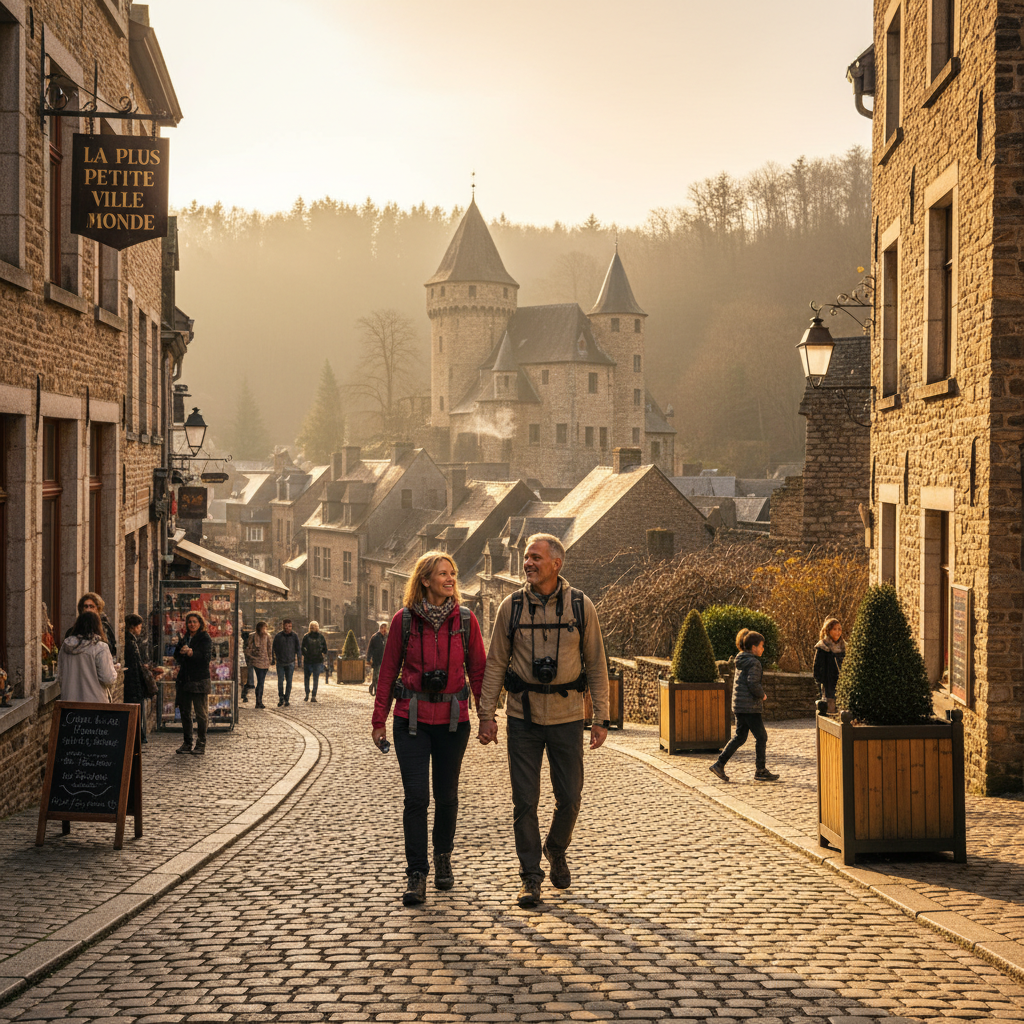
Durbuy, often called the smallest city in the world, is a pearl in the Belgian Ardennes that invites discovery and wonder. What to do in Durbuy? Beyond its undeniable charm, this medieval town offers a multitude of activities for all tastes. Stroll through the Old Town with its cobbled streets and typical stone houses, admire the majestic Durbuy Castle overlooking the Ourthe river, or let yourself be surprised by the vegetal forms of the Topiary Park. For those seeking an original way to explore the city, an outdoor escape game is the quintessential unusual activity. Imagine solving puzzles outdoors, turning every street corner into a clue for an exciting treasure hunt. It's a unique experience, a true scavenger hunt that immerses you in the heart of Durbuy's history and legends, while enjoying its warm atmosphere and bucolic landscapes. An invitation to adventure and relaxation, far from the daily hustle and bustle.
Unusual things to do in Durbuy
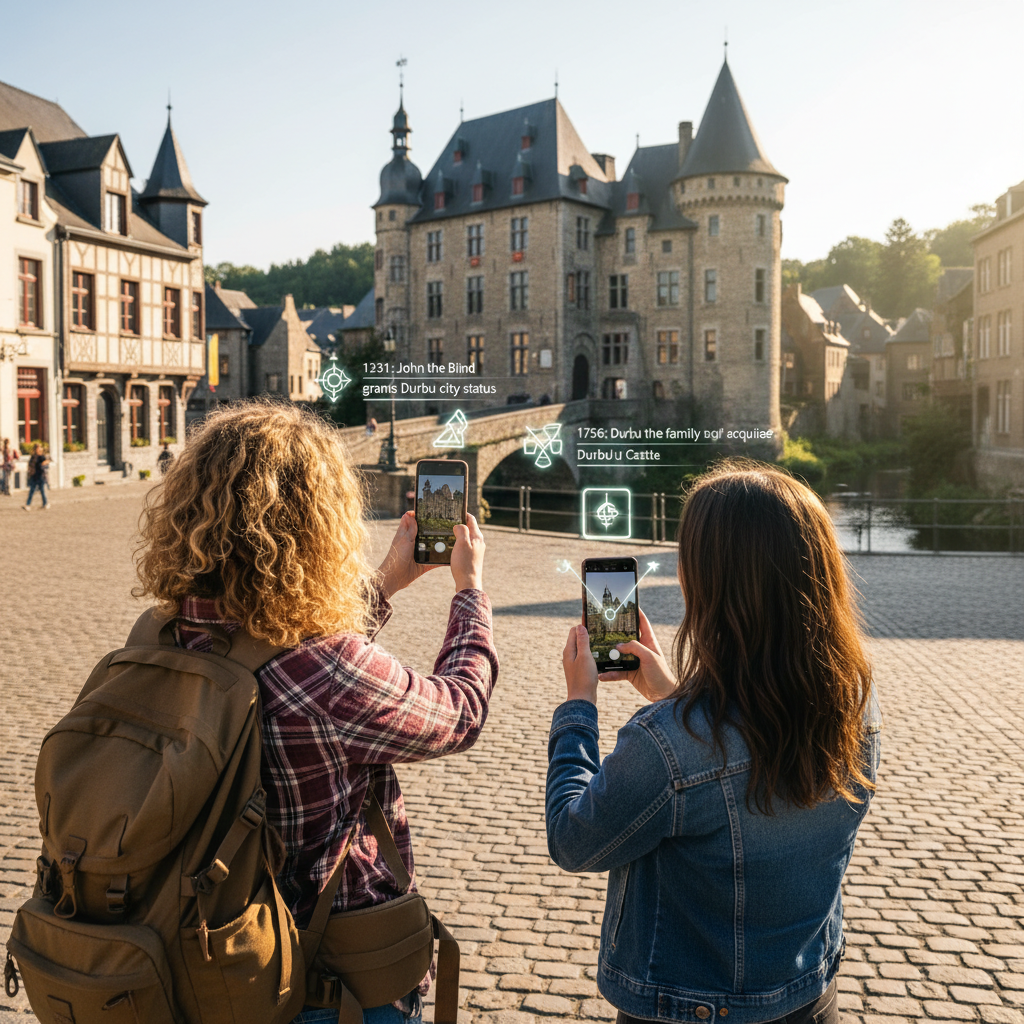
In Durbuy, the unusual lurks around every corner. Forget classic tours and opt for an unusual activity in Durbuy that stands out from the ordinary. In addition to its medieval charm, the city offers unique experiences. Imagine transforming the old town into a huge playground where every monument becomes a clue. Our outdoor escape games are the ultimate original outing, combining urban exploration and puzzle-solving. It's a fun and immersive way to discover Durbuy's hidden secrets, its legends, and its heritage, all while having fun as a team. A memorable adventure guaranteed!
Things to do in Durbuy with kids
Durbuy is an ideal destination for unforgettable family moments. If you're wondering what to do with family in Durbuy, our outdoor escape games are a perfect answer. Designed to be accessible from 8 years old, they transform city exploration into a big game. Children and teens will love searching for clues and solving puzzles as a team, strengthening bonds while learning local history in a playful way. It's a fun way to create memories, away from screens, by exploring Durbuy's charms. An adventure that will surely please the whole family!
Durbuy for couples
For a romantic getaway, discovering Durbuy as a couple is an enchanting experience. Let yourself be charmed by the intimate atmosphere of its cobbled alleys, where every step is an invitation to stroll hand in hand. Admire the breathtaking views of the Ourthe valley from the city heights, or get lost in the history of its rich heritage. Our outdoor scavenger hunts offer an original way to share a special moment, solving puzzles together and discovering Durbuy's secret corners. It's a complicit adventure, perfect for strengthening your bond and creating precious memories.
What to do in Durbuy when it rains
Even if the sun isn't shining, what to do in Durbuy on a rainy day? No worries! Our outdoor escape game is designed to let you enjoy the city whatever the weather. Approximately 80% of the route takes place under arcades, covered passages, or near shelters, thus protecting you from bad weather. You can therefore continue your exploration and puzzles sheltered, transforming a grey day into a bright and fun adventure.
Where is Durbuy, and where do the routes start?
Starting points of our routes and the places they pass through.
Route starting points
Places in Durbuy
- Place aux Foires
- Old Market Hall (Rue Alphonse Eloy)
- Durbuy Castle facade (view from the Ourthe river)
- Sighs Bridge (Rue Jean de Bohême)
- Durbuy Anticline (Durbuy Ridge Viewpoint)
- Rue de la Prévôté
- Saint-Nicolas Church Square
- Confluence of Ourthe and Petite Ourthe (public view)
The history of Durbuy
From Fortified Outpost to City Status
Durbuy's origins date to the early Middle Ages. The first written mention of a fortress on its site is from the 11th century. In 1078, the castle of Dolbui was documented as belonging to the Dukes of Lorraine. The town's location, in a bend of the Ourthe River, provided natural protection and made it a northern outpost for the County of Luxembourg, guarding its borders against the Prince-Bishopric of Liège.
In 1331, John I, Count of Luxembourg and King of Bohemia, granted Durbuy city status and its corresponding privileges. This allowed for the construction of fortress walls, watchtowers, and city gates, some of which are still visible. Despite its size, Durbuy had the attributes of a medieval city, including a court and a covered grain market, indicating its economic importance through trade and crafts like metallurgy.
Shifting Fortunes and Modern Identity
Ownership of Durbuy Castle passed to the Schetz family in 1628. Their descendants, the Dukes d'Ursel, still own it. The medieval fortress was rebuilt into a residential castle in 1731, acquiring its current appearance. In the 18th century, the Ourthe River's meander around the town was drained and filled, altering the landscape.
After various rulers, including the Duchy of Luxembourg and Napoleonic France, Durbuy became part of the independent Kingdom of Belgium in 1830. The mid-19th century brought improved road networks, attracting artists and early tourists to the Ardennes. In 1977, administrative reforms increased Durbuy's territory and population by merging neighboring villages. Today, Durbuy functions as a tourist destination, known for its preserved medieval center and its claim of being the 'smallest city in the world.'
What to see in Durbuy
- Durbuy Castle (Château de Durbuy) — The exterior of this private residence, with foundations from the 11th century and a neo-Gothic style from 1880-1882, offers a view over the Ourthe River.
- Old Market Hall (Halle aux Blés) — This 16th-century half-timbered building, also known as the Spanish House, once housed a court and grain market. It is now a protected architectural monument.
- Durbuy Anticline (Roche à Sept Heures) — This geological fold, over 300 million years old, is a cross-section of marine limestone layers folded upwards by geological forces. It is a site for geology education and offers a viewpoint over the Ourthe Valley.
- Saint-Nicolas Church Square — The Église Saint-Nicolas, built in the 17th century, displays intricate interiors.
- Rue de la Prévôté — These narrow, cobbled streets are lined with traditional stone houses, showing the medieval layout that has remained since the 14th century.
- Topiary Park (Parc des Topiaires) — This riverside park features over 250 topiary sculptures, including figures of animals and people, created from boxwood plants.
When to visit Durbuy
Durbuy has distinct characteristics throughout the year. Spring (March-May) is suitable for hiking as the forests become green and temperatures are mild, with fewer visitors than summer. Summer (June-August) is peak season for kayaking and outdoor activities, but expect higher prices and more tourists. Autumn (September-November) is when the Ardennes forests display colors, suitable for cycling and gastronomy. Winter (December-February) is known for the Durbuy Christmas Market, which creates a festive atmosphere.
To avoid the busiest times, visit on a weekday, as weekends and Belgian public holidays are more crowded in the historic core. January and February tend to have the coldest weather, with average daytime temperatures around 6°C (43°F) and nighttime lows near 0°C (32°F).
Getting around Durbuy
Durbuy is a walkable town; its compact medieval center is explored on foot. The cobbled streets are pedestrian-friendly. Parking is available in designated areas outside the old town, but it can be limited and paid, especially during peak seasons and weekends. Arriving early is recommended.
Durbuy does not have its own train station. The nearest main station is Bomal-sur-Ourthe, about 5 km away. From Bomal, take a TEC bus service (e.g., Line 10) directly to Durbuy center; buses run approximately every hour. Brussels Airport (BRU) is about 120 km away, with train connections to major stations for onward travel to Bomal. For drivers, Durbuy is reached via the E411 or E25 motorways. A tourist train also circles the town.
Things you probably do not know about Durbuy
Verified details most visitors walk straight past.
- Durbuy Castle
- The castle you see today is not the original one, and it played a role in a 20th-century conflict. The first Durbuy Castle was built in 889, but the medieval original was destroyed in the 17th century. The current château, rebuilt in 1731 and later in a neo-Gothic style around 1880, was used as an American military hospital during WWI.
- Durbuy Anticline
- This rock formation is a geological feature with an older name. The Durbuy Anticline, a 300-million-year-old folded rock formation, was scientifically described as early as 1807 by Jean-Baptiste-Julien d'Omalius d'Halloy, known as the 'Father of Belgian Geology.' It is also known as 'Roche à Sept Heures' or 'Omalius' Rock'.
- Old Market Hall (Halle aux Blés)
- This timber-framed building indicates more than just commerce in Durbuy's past. The Halle aux Blés, a 16th-century half-timbered building, served not only as a covered grain market but also housed a court, signifying the town's administrative and economic importance in medieval times.
- Confluence of Ourthe and Petite Ourthe
- The geography that protected Durbuy for centuries was altered at one point. Durbuy originally grew on an island encircled by a meander of the Ourthe River, providing natural defense. However, in the 18th century, this meander was drained and filled in, leaving a dry bed where the river once flowed.
- Rue de la Prévôté
- The narrow streets of Durbuy's old town have a specific reason for their character. The architectural character of Durbuy, with its high building density and preserved medieval street network, is a direct result of its development within the geographical constraints of a narrow Ourthe River bend and at the foot of a cliff.
Questions about visiting Durbuy
How long should I stay in Durbuy?
A stay of two to three days is typical to see Durbuy's main features, including the Old Town and outdoor activities. An extended stay of four to five days allows for exploration of nearby attractions like Radhadesh and the Durbuy Christmas Market if visiting during the season.
What is the best way to get around Durbuy?
Durbuy's historic center is compact and is best explored on foot, as many streets are pedestrian-only. For venturing further to nearby attractions like Adventure Valley Durbuy or the megalithic sites of Wéris, a car or bicycle is recommended. A tourist train also offers a ride through the town.
Is Durbuy suitable for families with children?
Yes, Durbuy is a family-friendly destination. Beyond its medieval character, there are activities for children, including Adventure Valley Durbuy with its climbing forest, tubing, and indoor playground, as well as miniature golf and the Topiary Park. The tourist train is also popular with younger visitors.
What is the typical budget for a trip to Durbuy?
For local transport, budget around €2-€5 per bus trip, or €15-€20 per day for a bike rental. Entry fees for attractions like the Topiary Park or adventure parks typically range from €5-€10, while guided tours or special activities can be €20-€40. Dining and accommodation costs will vary.
When is the Durbuy Christmas Market held?
The Durbuy Christmas Market is an annual event during the winter months, typically from December to February. It features decorated stalls, handmade crafts, and seasonal treats.
What kind of local cuisine can I expect in Durbuy?
Durbuy's culinary scene combines traditional Ardennes flavors with gourmet innovation. Expect local specialties such as wild game dishes, smoked ham, and artisanal cheeses. Trout from the Ourthe River is often featured on menus, alongside artisan chocolates and regional beers or Ardennes wines.
Frequently asked questions
How much does an outdoor escape game cost in Durbuy?
The price for an OddballTrip outdoor escape game in Durbuy is very affordable and designed for groups. It costs only €12 per team, not per person! This means that if you come with several people, for example 4 or 5, the cost per participant is truly minimal. This single price gives you access to a complete adventure, including all puzzles and access to our game platform. It's an excellent option for a fun and economical outing in the smallest city in the world.
Is it suitable for children / families?
Absolutely! Our outdoor escape games are perfectly suited for children and families. We recommend participation from 8 years old, but younger children can certainly follow along and help search for clues. It's an activity designed to be fun and interactive for all ages. The puzzles are varied, encouraging collaboration between young and old. It's a great way to discover Durbuy as a family, share laughs, and create memorable moments together, away from screens.
How long does an escape game in Durbuy last?
An OddballTrip escape game in Durbuy usually lasts between 1h30 and 2h30. The exact duration depends on your pace of play, the complexity of the puzzles you solve, and the time you wish to take to admire the city's landscapes and monuments. There's no stressful timer; you're free to progress at your own pace, take breaks for a drink or a photo. The goal is to have fun and fully enjoy the experience.
Do I need to book in advance?
At OddballTrip, flexibility is our watchword! It is not necessary to book our outdoor escape games in Durbuy in advance. You can purchase your game directly on our website and start the adventure whenever you want, even at the last minute. This is ideal for spontaneous decisions or if the weather suddenly changes. Once purchased, the game is accessible whenever you want, without any fixed date or time constraints, offering you total freedom.
What to visit in Durbuy beyond escape games?
Durbuy is full of treasures beyond our escape games! After your adventure, be sure to stroll through the charming Old Town with its cobbled streets and typical houses. The Topiary Park, with its astonishing plant sculptures, is also a must-see. For food lovers, enjoy a local beer or an Ardennes specialty in one of the many restaurants. In season, the Durbuy Labyrinth, although slightly outside the city center, is a very popular family attraction. There's always something new to discover!
What is the best season to visit Durbuy?
Durbuy is beautiful in all seasons, but each offers a different atmosphere! Spring and summer are perfect for enjoying terraces and outdoor activities, with longer days and generally milder weather. Autumn transforms the region into a canvas of flamboyant colors, ideal for walks. Winter, with its Christmas market and illuminations, gives the city a magical charm. For our escape games, all seasons are good, because Durbuy's beauty always works its magic, even under a grey sky!
Other destinations in Wallonia
Arlon
Belgium's oldest city, rich in Gallo-Roman heritage.
Bastogne
At the heart of the Battle of the Bulge
Bouillon
In the Ardennes heart, tracing Godfrey's steps and his mighty castle
Chimay
Between Trappist beer, castle, and Ardennes nature
Dinant
Between Meuse and Citadel, cradle of brass and Walloon history.
Huy
Between Meuse and Citadel, a millennial history to explore
Lessines
Between porphyry and hospital heritage
Liege
The Ardent City, between the Meuse and its hills
Marche-en-Famenne
In the heart of Famenne, between history and Ardennes nature
Namur
Walloon capital, between Meuse and Sambre
Philippeville
Fortified city between caves and legends
Redu
The book village in the heart of the Ardennes
Rochefort
Caves, castles, and Trappist beers: adventure in the Ardennes
Saint-Hubert
European Capital of Hunting and Nature
Soignies
Where blue stone meets a thousand years of history
Spa
The water city, source of well-being and adventures
Spontin
Its medieval castle, springs, and legends
Thuin
Medieval city, UNESCO belfry and hanging gardens
Villers-la-Ville
Where Cistercian monks left their centuries-old mark
Waterloo
Where Napoleon faced his final defeat