BastogneOutdoor Escape Game & Treasure Hunt
At the heart of the Battle of the Bulge
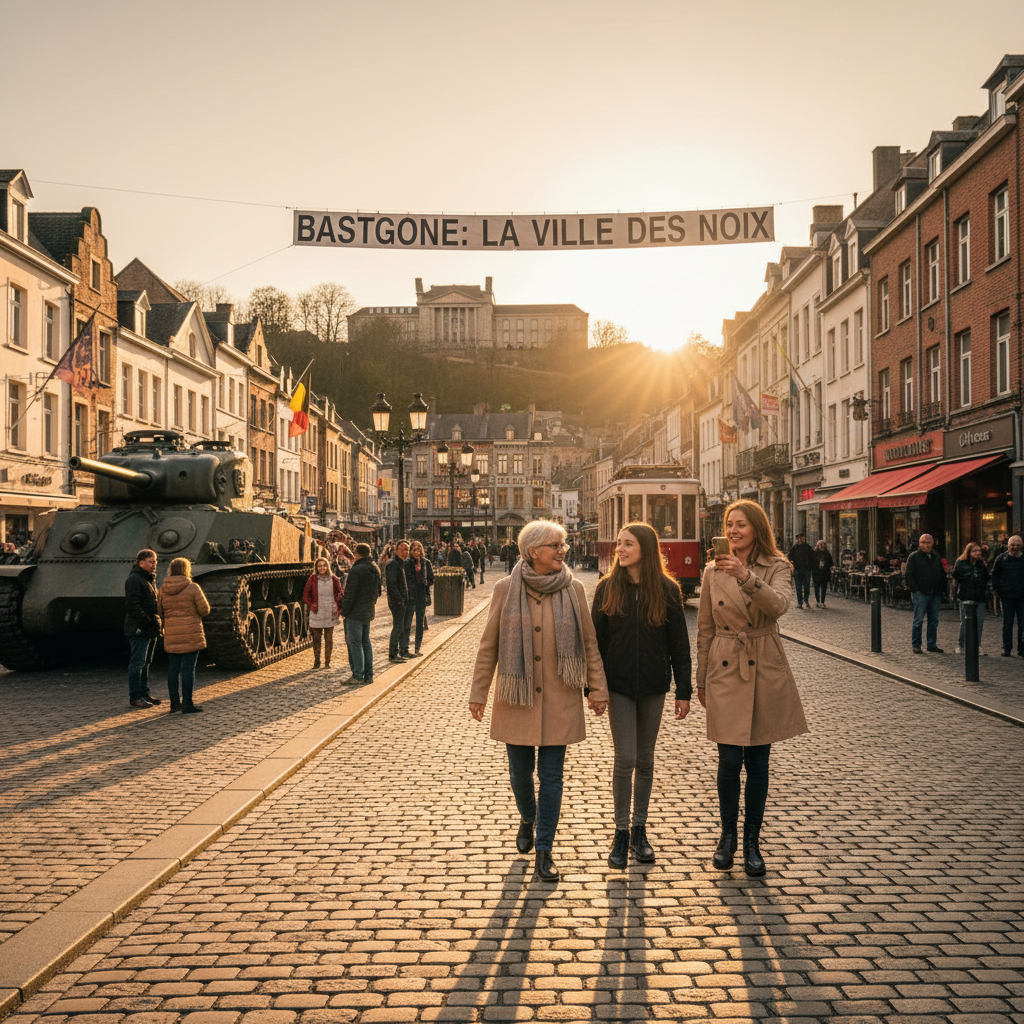
Bastogne, a city steeped in history in the heart of the Belgian Ardennes, offers much more than just a journey into the past. If you're wondering what to do in Bastogne, get ready for a unique immersion. Beyond the poignant Mardasson Memorial, which pays tribute to the heroes of the Battle of the Bulge, and the fascinating Bastogne War Museum, the city is full of hidden gems to explore. Stroll through Place McAuliffe, admire the Sherman tank, and feel the vibrant atmosphere of this resilient city. For an unusual activity, why not try an outdoor escape game? It's an original and fun way to discover Bastogne's streets and secrets. Imagine yourself on a real treasure hunt, solving puzzles while exploring the local heritage. A true scavenger hunt that transforms the city into a huge playground, perfect for curious minds and adventurers seeking unexpected discoveries.
Unusual things to do in Bastogne
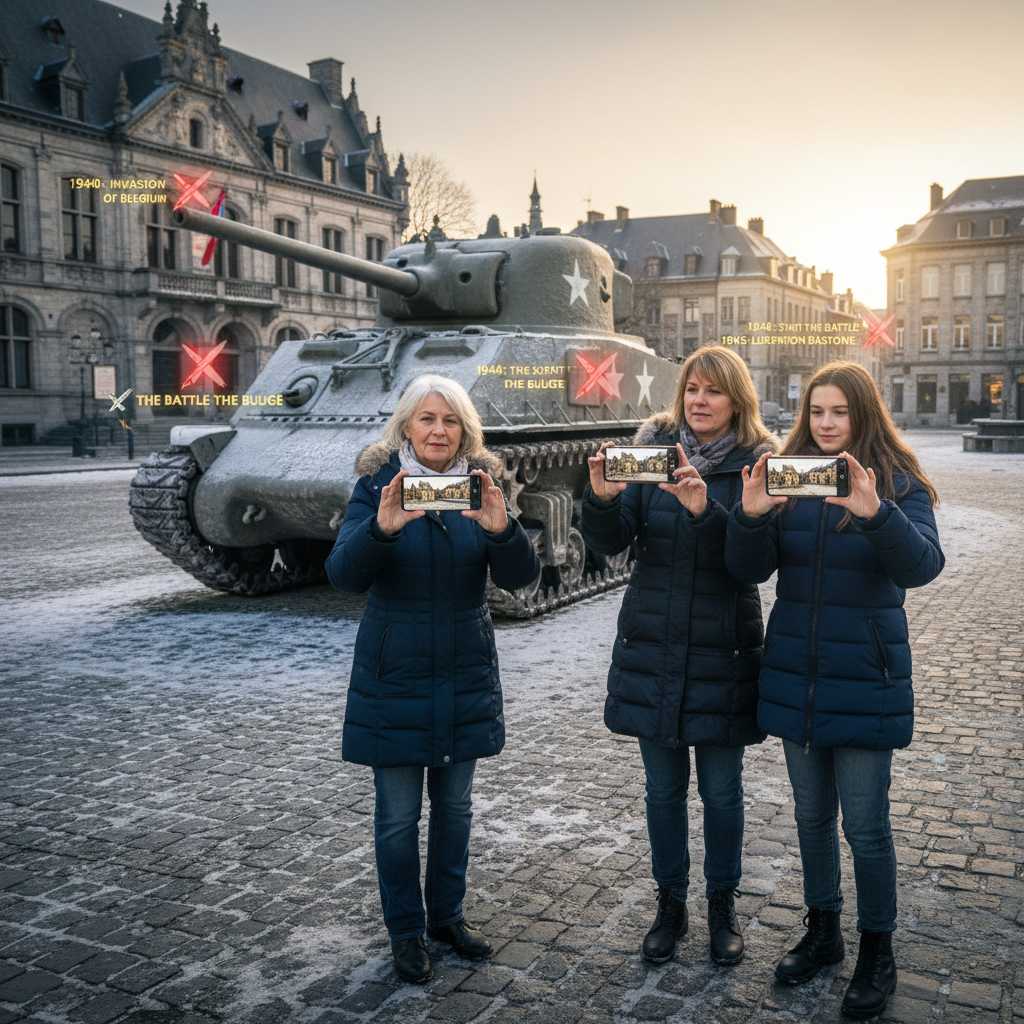
Looking for an unusual activity in Bastogne? The city, famous for its history, lends itself wonderfully to original explorations. Far from classic tours, imagine yourself diving into a captivating scenario, with the streets becoming the backdrop for your own adventure. An OddballTrip outdoor escape game offers an original outing, combining heritage discovery with the thrill of puzzle-solving. It's an opportunity to see Bastogne from a new angle, to pay attention to architectural or historical details you might have missed otherwise, all while sharing a memorable and stimulating moment. An experience that shakes up the codes of traditional tourism.
Things to do in Bastogne with kids
What to do in Bastogne with the family to entertain both young and old? The city is full of options for shared moments. An outdoor escape game is an excellent idea for families with children and teens from 8-10 years old. It's a fun activity where everyone has a role to play, stimulating cooperation and team spirit. Beyond museums, which can sometimes be intense for younger ones, this urban treasure hunt transforms the visit into an interactive adventure. It's a fun way to learn and marvel together, creating unforgettable memories while actively exploring the city.
Bastogne for couples
Bastogne for couples is an opportunity to share an escapade rich in emotions and discoveries. Far from the hustle and bustle, the narrow streets of the city center invite you to stroll hand in hand, where every corner reveals a part of history. Imagine wandering, searching for clues for a scavenger hunt, transforming your walk into a shared adventure. Bastogne's heritage provides an intimate setting for deep discussions and moments of connection. End the day with a panoramic view of the region, or a dinner in a local restaurant, for a memorable experience that strengthens bonds and creates precious memories.
What to do in Bastogne when it rains
What to do in Bastogne when it rains? Don't panic, our outdoor escape game is designed to minimize inconvenience. Approximately 80% of the route takes place under arcades, covered passages, or sheltered areas. This means you can solve most puzzles sheltered from the weather, fully enjoying the city's unique atmosphere. An umbrella for short transitions will suffice, and the adventure won't be spoiled. It's an original and comfortable way to discover Bastogne, even in the rain.
Where is Bastogne, and where do the routes start?
Starting points of our routes and the places they pass through.
Route starting points
Places in Bastogne
- General McAuliffe Square
- The 'Barracuda' Sherman Tank
- Bastogne Town Hall
- Saint-Pierre Church (Exterior)
- 101st Airborne Division Monument
- Former Bastogne Post Office (Rue du Sablon)
- Former Bastogne South Train Station
- Mardasson Memorial (Exterior)
The history of Bastogne
From Roman Roads to Medieval Walls
Bastogne's strategic importance was recognized long before the 20th century. The region was inhabited by the Treveri, a Gallic tribe, when the Romans arrived. The name "Bastogne," or an early form of it, first appears in historical records in 634 AD, when local lords ceded territory to St. Maximin's Abbey near Trier. By the 13th century, Henry VII, Holy Roman Emperor and Count of Luxembourg, minted coins in Bastogne. In 1332, his son, John the Blind, granted Bastogne its city charter and ordered the construction of defensive walls. Remnants of these walls, such as the Porte de Trèves, are visible today. These fortifications protected the town during the turbulent centuries that followed.
The Scar of the Ardennes Offensive
Bastogne's most defining moment arrived in December 1944, during World War II. The town, at the junction of seven crucial roads in the Ardennes Forest, became a pivotal objective for Allied and German forces. Hitler's last major offensive on the Western Front, known as the Battle of the Bulge, aimed to cut through Allied lines and seize the port of Antwerp. The German plan hinged on quickly capturing Bastogne to control its road network for troop and supply movements. American forces, including the 101st Airborne Division, reached and occupied the town before the Germans completely surrounded it on December 20. For days, Bastogne was under siege, enduring shelling and attacks. The "Nuts!" reply by General Anthony McAuliffe, acting commander of the 101st Airborne, to a German surrender demand, became a symbol of American resolve. The siege was lifted on December 26 when General George Patton's Third Army broke through, marking a turning point in the battle. The fighting left more than half of Bastogne's 1,200 homes destroyed or uninhabitable, with few buildings untouched. Today, the town is rebuilt, but the memorials of this winter of 1944-1945 are present, shaping Bastogne's identity as a place of remembrance.
What to see in Bastogne
- General McAuliffe Square — This central square honors Brigadier General Anthony McAuliffe and the American defenders of Bastogne. Here you will find the "Nuts" monument and a Sherman tank, a gift from the U.S. Army, commemorating the Battle of the Bulge.
- The 'Barracuda' Sherman Tank — Located in General McAuliffe Square, this Sherman tank is a link to the armored divisions that fought in the Ardennes. Its presence underscores the heavy fighting that took place in and around Bastogne.
- Bastogne Town Hall — The Town Hall is a building in the city center. Its architecture reflects the town's reconstruction after the war, and it stands as a civic hub in a place marked by history.
- Saint-Pierre Church (Exterior) — This church, with its silhouette, has witnessed centuries of Bastogne's history. Damaged during the Battle of the Bulge, it was restored, symbolizing the town's enduring spirit. Its exterior shows a blend of historical architecture and post-war rebuilding.
- 101st Airborne Division Monument — This monument honors the soldiers of the 101st Airborne Division, who defended Bastogne during the siege. It is a key site for understanding the human cost of the Battle of the Bulge.
- Former Bastogne Post Office (Rue du Sablon) — This building, now a local development agency, is an example of the town's pre-war architecture. Its survival or reconstruction speaks to the broader story of Bastogne's recovery.
- Former Bastogne South Train Station — Though Bastogne no longer has an active train station, the former South Train Station building is a relic of an earlier era of transportation. It indicates the town's historical connections and its role as a regional hub before the widespread use of automobiles.
- Mardasson Memorial (Exterior) — This star-shaped memorial, outside the town center, is dedicated to the American soldiers who died during the Battle of the Bulge. Its scale and design offer a space for reflection on the sacrifices made.
When to visit Bastogne
Visit Bastogne in spring (April-June) and autumn (September-October). During these months, the weather is mild, and crowds are smaller. Summer (July-August) has warmer temperatures and most attractions are open daily, but it is the busiest period. December is a time to visit due to the "Nuts Weekend" and Christmas Market, which include commemorative parades, reenactments, and a festive atmosphere. Weather can be cold and snowy. Avoid late autumn and early spring if you prefer milder weather, as the Ardennes can be chilly and damp.
Getting around Bastogne
Bastogne does not have its own train station. The closest major train station is in Libramont, about 30 kilometers away, connected to the Belgian national rail network. From Libramont, TEC buses run to Bastogne town center, taking 40-50 minutes. Luxembourg Airport (LUX) is the nearest international airport, approximately 80 km away, while Brussels South Charleroi Airport (CRL) is about 120 km. A rental car is recommended for exploring the wider Ardennes region and outlying historical sites.
Bastogne's town center is compact and walkable. For sites outside the center, such as the Mardasson Memorial or the Bastogne War Museum, a car or local bus is necessary. Parking in Bastogne is generally straightforward, with free and paid options near the town center and major attractions. Look for blue zones where a parking disc may be required. Paid parking in the city center is active Monday to Saturday from 9 AM to 12 PM and 2 PM to 5:30 PM, and Sundays/holidays from 2 PM to 5:30 PM.
Things you probably do not know about Bastogne
Verified details most visitors walk straight past.
- Porte de Trèves
- What historical function, beyond defense, did the Porte de Trèves serve for centuries? The Porte de Trèves, a surviving section of Bastogne's 14th-century defensive walls, also functioned as a prison and a guesthouse for travelers.
- General McAuliffe Square
- Why is there a monument shaped like a nut in the main square of Bastogne? The "Nuts" monument in General McAuliffe Square commemorates General McAuliffe's famous one-word reply to a German demand for surrender during the Battle of the Bulge in December 1944.
- Former Bastogne South Train Station
- What popular cycling event passes through Bastogne, despite the town no longer having an active train station? The Liege-Bastogne-Liege cycle race, one of the oldest and most prestigious one-day races in cycling, highlights Bastogne's historical significance as a turning point in the arduous race route.
- Bastogne War Museum
- How does the Bastogne War Museum connect visitors to the personal experiences of the Battle of the Bulge? The museum uses immersive exhibits and personal testimonies from soldiers, civilians, and commanders to provide a gripping and emotional account of life during the winter of 1944-45.
- Bois Jacques Battlefield
- What specific historical remnants can still be seen at the Bois Jacques battlefield? Visitors to the Bois Jacques battlefield can still see the original foxholes used by American soldiers, famously featured in the TV series "Band of Brothers."
- Mardasson Memorial
- What unique feature of the Mardasson Memorial allows visitors to experience the history from an unusual perspective? The Mardasson Memorial has a central open area where visitors can stand and look up at the names of the American states inscribed on the inner walls, creating a sense of connection to the fallen.
Questions about visiting Bastogne
How long should I plan to stay in Bastogne?
A good itinerary for Bastogne is one to two days to explore key historical sites like the Bastogne War Museum and the Mardasson Memorial. An extended stay of three to four days allows for deeper dives into the Battle of the Bulge history or exploring the wider Ardennes region.
What are the best ways to get around Bastogne?
The town center of Bastogne is walkable. To reach many significant historical sites and museums outside the town center, such as the Mardasson Memorial or the Bois Jacques, a car or local bus service (TEC) is necessary.
What is the typical budget for a visit to Bastogne?
Bastogne offers a range of accommodation and dining options. While specific costs vary, visitors can find affordable choices for hotels and local cuisine. Consider the cost of museum entries and transportation for sites outside the town center.
Is Bastogne a good destination for families with children?
Yes, Bastogne can be a good destination for families. The interactive exhibits at the Bastogne War Museum can engage older children, and the outdoor memorials offer space for reflection. The historical significance provides educational opportunities.
What is the best season to visit Bastogne for good weather and fewer crowds?
For pleasant weather and fewer tourist crowds, spring (April to June) and autumn (September to October) are ideal times to visit Bastogne. Temperatures are mild, making it comfortable for outdoor exploration.
Are there any specific local customs or closing times to be aware of in Bastogne?
While Bastogne does not have unique customs like a siesta, some shops and attractions might have reduced hours on Sundays and public holidays. Paid parking in the city center is active on specific hours during weekdays and Sunday afternoons.
Frequently asked questions
How much does an outdoor escape game cost in Bastogne?
An OddballTrip outdoor escape game in Bastogne is available at the very affordable price of €12 per team. This price is fixed, whether you are 2, 3, or 4 players, making it an economical and accessible activity for everyone. It offers excellent value for a 1h30 to 2h gaming experience, combining city discovery, puzzle-solving, and convivial moments. No hidden fees, just the pleasure of urban adventure at a single rate per group, making the outing simpler and more enjoyable to organize.
Is it suitable for children / families?
Absolutely! Our outdoor escape games are perfectly suited for families with children aged 8-10 and up. The puzzles are designed to be accessible and stimulating for all ages, encouraging cooperation between young and old. It's a fun and interactive activity that allows you to discover Bastogne in an original way, far from traditional tours. Children love the treasure hunt aspect, and parents appreciate sharing quality time where everyone can contribute to the adventure. A memorable and educational outing for the whole family!
How long does an escape game in Bastogne last?
An OddballTrip outdoor escape game in Bastogne typically lasts between 1h30 and 2h. The exact duration may vary slightly depending on your pace and your ability to solve the puzzles. Some faster groups might finish in 1h15, while others prefer to take their time, admire the scenery, and savor each step. There's no strict timer; the goal is to enjoy the experience and the discovery of the city. It's an ideal duration for an afternoon activity, leaving time for other discoveries.
Do I need to book in advance?
No, one of the great advantages of our outdoor escape games is that no reservation is necessary! You can purchase your game online whenever you want and start the adventure immediately or at any time that suits you. It's total flexibility: no need to worry about fixed schedules or availability. Whether you decide to play on a whim or plan in advance, the game is always ready for you. All you need is a charged smartphone and the desire to discover Bastogne in a fun way.
What to visit in Bastogne beyond escape games?
Beyond the excitement of our escape games, Bastogne is full of historical and cultural sites to explore. The Mardasson Memorial is a must-see, offering a moving perspective on the Battle of the Bulge. The Bastogne War Museum, right next door, perfectly complements the visit with immersive exhibitions. Stroll through Place McAuliffe to admire the Sherman tank and the city's atmosphere. For nature lovers, the surrounding Ardennes offer beautiful walks. Don't miss Bois Jacques and its foxholes for an even deeper dive into history. Bastogne is a city to discover at every step.
What is the best season to visit Bastogne?
Bastogne is a city that can be pleasantly visited all year round, but each season offers a different atmosphere. Spring and summer are ideal for enjoying terraces and long days, perfect for our outdoor escape games. The Ardennes landscapes are green and invite you to stroll. Autumn, with its flamboyant colors, provides a magnificent setting for walks. Winter, though cooler, can transform Bastogne into a magical setting, especially if there's snow, adding a special dimension to the historical sites. Choose the season that best suits your desire for adventure!
Other destinations in Wallonia
Arlon
Belgium's oldest city, rich in Gallo-Roman heritage.
Bouillon
In the Ardennes heart, tracing Godfrey's steps and his mighty castle
Chimay
Between Trappist beer, castle, and Ardennes nature
Dinant
Between Meuse and Citadel, cradle of brass and Walloon history.
Durbuy
The world's smallest city, nestled in the Ardennes
Huy
Between Meuse and Citadel, a millennial history to explore
Lessines
Between porphyry and hospital heritage
Liege
The Ardent City, between the Meuse and its hills
Marche-en-Famenne
In the heart of Famenne, between history and Ardennes nature
Namur
Walloon capital, between Meuse and Sambre
Philippeville
Fortified city between caves and legends
Redu
The book village in the heart of the Ardennes
Rochefort
Caves, castles, and Trappist beers: adventure in the Ardennes
Saint-Hubert
European Capital of Hunting and Nature
Soignies
Where blue stone meets a thousand years of history
Spa
The water city, source of well-being and adventures
Spontin
Its medieval castle, springs, and legends
Thuin
Medieval city, UNESCO belfry and hanging gardens
Villers-la-Ville
Where Cistercian monks left their centuries-old mark
Waterloo
Where Napoleon faced his final defeat