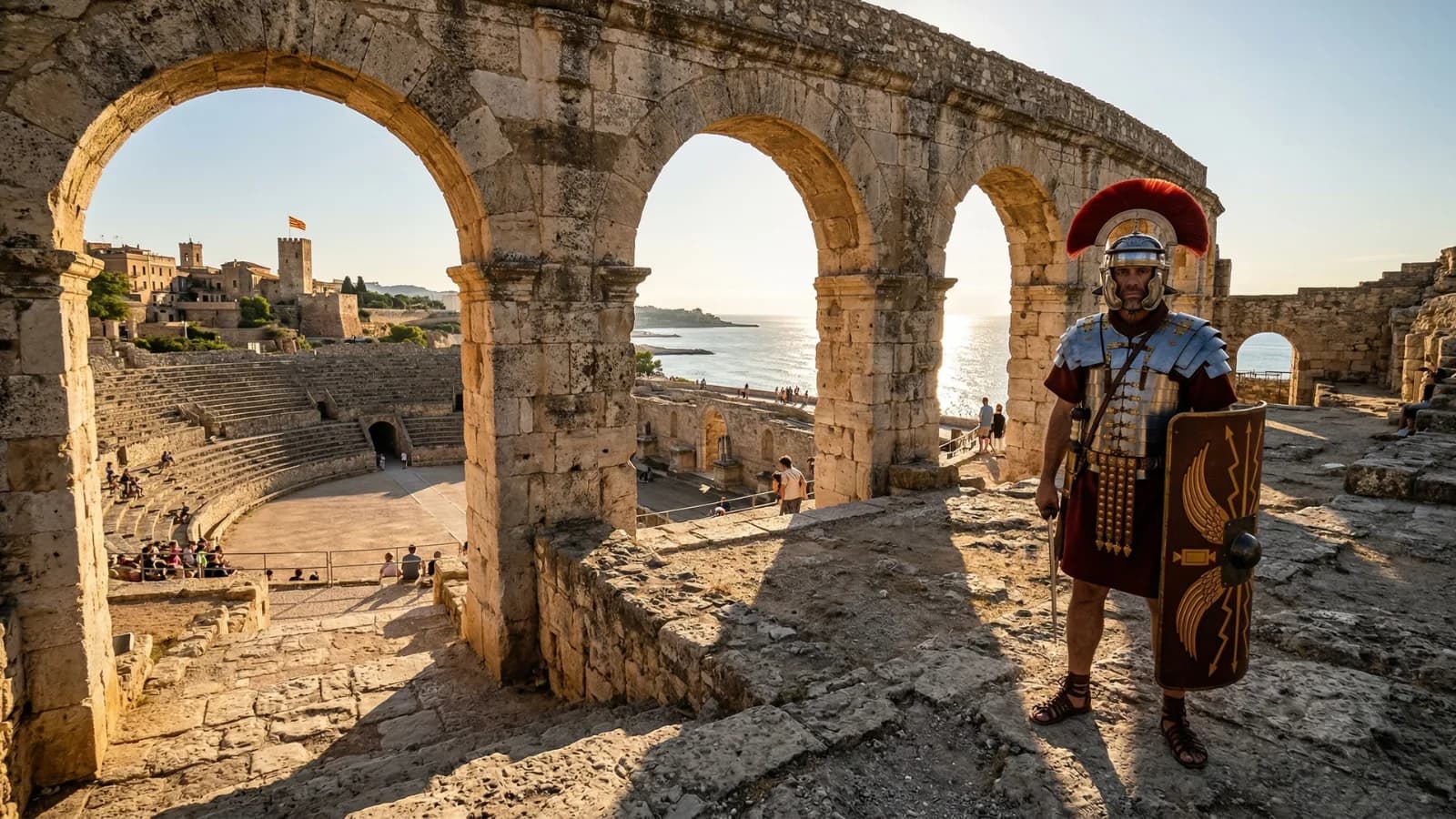
TarragonaOutdoor Escape Game & Treasure Hunt
Roman Tarraco and medieval cathedral
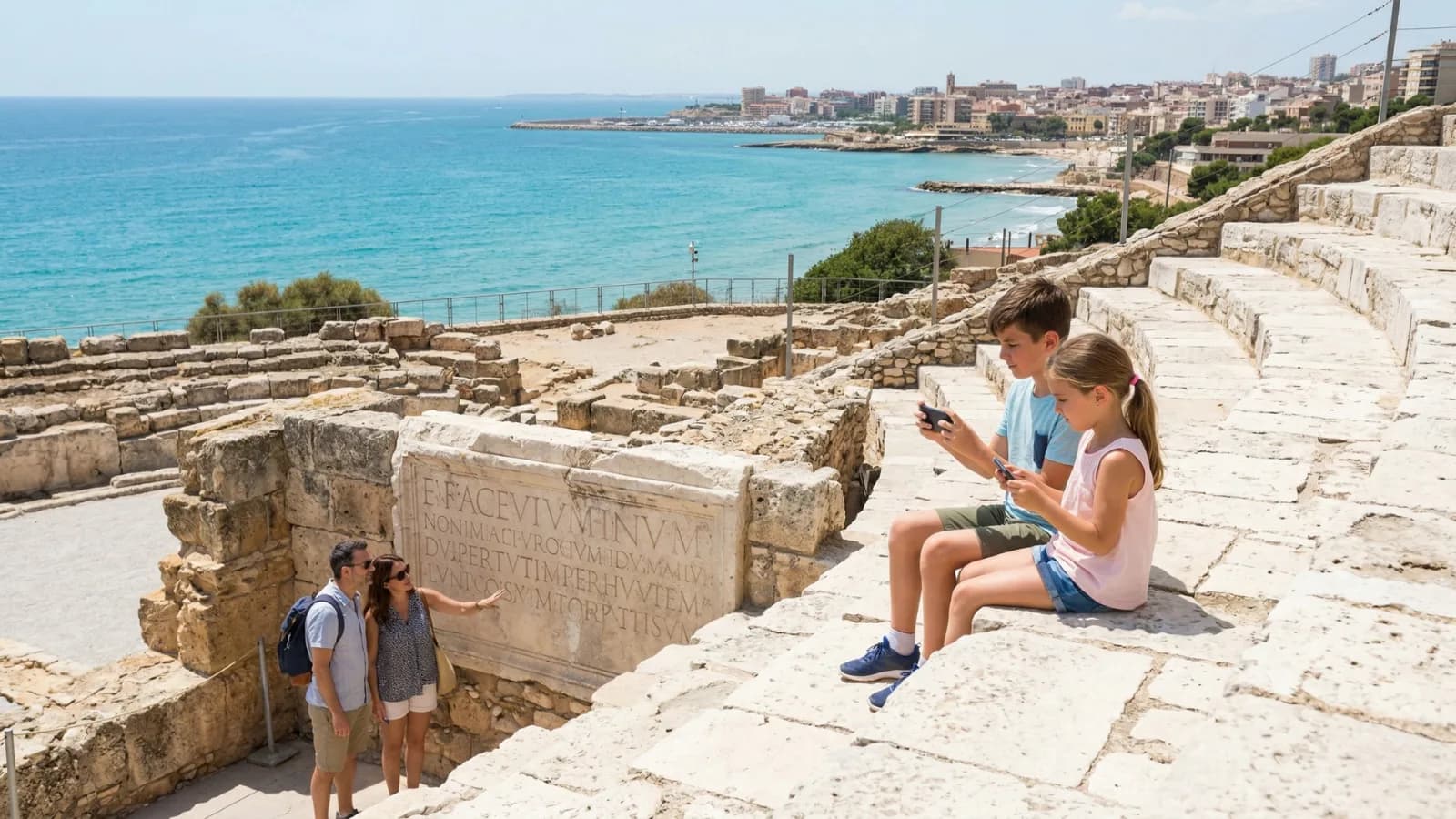
Tarraco Imperialis
When the Roman Empire ruled from the Mediterranean
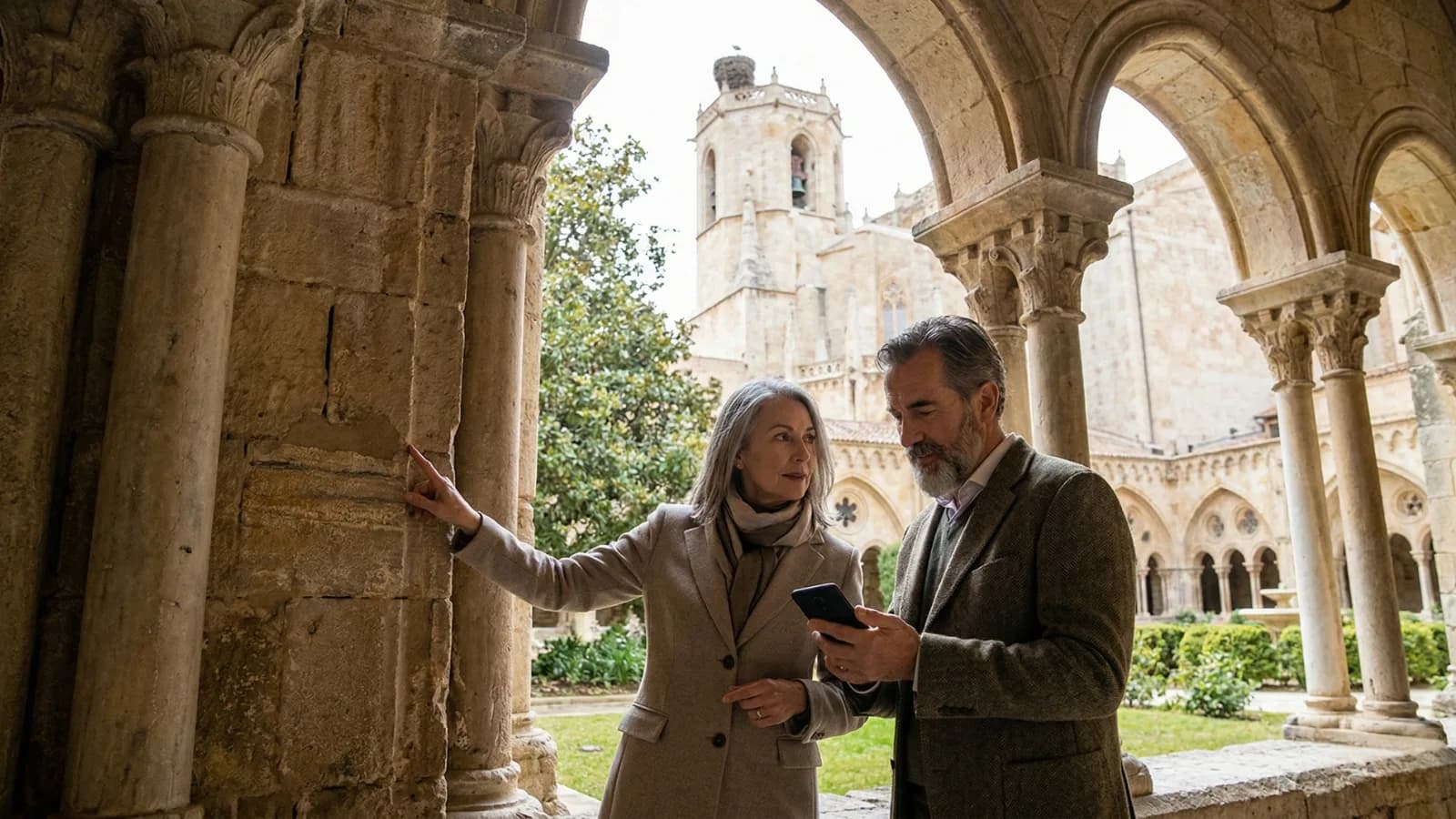
The Cathedral on the Temple
When each civilization built upon the last
Where is Tarragona, and where do the routes start?
Starting points of our routes and the places they pass through.
Route starting points
Places in Tarragona
- Amfiteatre romà de Tarragona
- Circ romà de Tarragona
- Pretori romà (Torre de Pilats)
- Fòrum provincial de Tàrraco
- Passeig Arqueològic · Muralles de Tarragona
- Catedral de Tarragona · Roman foundations
- Claustre de la Catedral de Tarragona
- El Call · Jewish quarter of Tarragona
- Pla de la Seu
The history of Tarragona
Roman Foundation and Provincial Capital
Tarragona, known as Tarraco in Roman times, is the oldest Roman settlement on the Iberian Peninsula. Its history began in 218 BC, when Roman armies established a military base and port during the Second Punic War. The city became a strategic point, and by 45 BC, Julius Caesar granted it the status of a Roman colony, naming it Colonia Iulia Urbs Triumphalis Tarraco. Emperor Augustus wintered in Tarraco around 27 BC, which contributed to its growth as the capital of the Hispania Citerior province, and later Hispania Tarraconensis.
The Roman walls, among the oldest Roman military fortifications outside Italy, were constructed between the 3rd and 2nd centuries BC. These cyclopean walls, built without mortar, protected a perimeter of about 4.2 kilometers and stood between 6 and 9 meters high. After the collapse of Roman defenses, Tarraco was occupied by the Visigoths in 476 AD. The city then came under Islamic rule, serving as a border city of the Caliphate of Córdoba between 750 and 1013. By the mid-10th century, the city was largely abandoned by Muslims, and its Christian repopulation in the 12th century marked a new era.
Medieval Revival and Lasting Structures
The medieval period saw Tarragona revive. Construction of the Tarragona Cathedral began around 1171 and it was consecrated in 1331. This structure was built on the site of a former Roman temple dedicated to Augustus, which had later become a mosque. The city's Roman foundations were often reused; for example, two of the four walls of the Cathedral's cloister align with the perimeter walls of the Roman Temple of Augustus. The city's defensive structures also continued to evolve; during the Middle Ages, new defensive towers and curtain walls were erected upon the Roman foundations, with further fortifications added in the 16th, 17th, and 18th centuries to withstand artillery. Today, Tarragona's history is visible in the Archaeological Ensemble of Tarraco, declared a UNESCO World Heritage Site in 2000, which preserves its past structures.
What to see in Tarragona
- Amfiteatre Romà de Tarragona — This 2nd-century AD Roman amphitheater hosted gladiatorial contests, animal fights, and public executions. Visitors can see much of the arena and seating tiers, which held about 15,000 spectators.
- Circ Romà de Tarragona — Much of the Roman circus is integrated into later buildings. Visitors can explore its underground vaults and passages, which were part of the structure where chariot races were held. Roman arches are visible in some shop fronts where the modern city was built over the circus.
- Pretori Romà (Torre de Pilats) — This Roman praetorium tower was part of the provincial forum, serving as a residence and administrative center. The top offers views of the city and Roman ruins.
- Fòrum Provincial de Tàrraco — This provincial forum, built around 30 BC, was the administrative and religious center of Roman Tarraco. Remnants of the basilica, cistern, and Corinthian columns are visible.
- Passeig Arqueològic and Muralles de Tarragona — A walk along the Archaeological Promenade shows the Roman walls, some of the oldest Roman military fortifications outside Italy, dating from the 3rd and 2nd centuries BC. Megalithic foundations and towers like the Torre de Minerva are present.
- Catedral de Tarragona — This cathedral, consecrated in 1331, shows a transition from Romanesque to Gothic architecture. It stands on the site of a Roman temple dedicated to Augustus and later a mosque. Inside, a 15th-century high altarpiece by Pere Johan is visible.
- Claustre de la Catedral de Tarragona — The cathedral's cloister, built between the late 12th and early 13th centuries, is notable for its size and sculptural decoration on its nearly 300 capitals, depicting biblical, legendary, and moral themes. Two of its walls are part of the original Roman temple of Augustus.
When to visit Tarragona
The best time to visit Tarragona is during late spring (May to early June) or early autumn (mid-September to early October). Temperatures range from 22°C to 27°C (72-81°F), suitable for exploring Roman ruins and beaches without intense summer heat or crowds. Rainfall is moderate, and the sea is warm enough for swimming from late May through early October.
Avoid July and August if you prefer cooler temperatures and fewer crowds. Daytime highs often exceed 30°C (86°F), making sightseeing uncomfortable, especially for the exposed Roman archaeological route. September can be a good month, but it is also the wettest month, with possible heavy Mediterranean downpours.
Getting around Tarragona
Tarragona is about 100km southwest of Barcelona. Reus Airport (REU) is the closest, approximately 10-15 minutes away by car, with bus or taxi services to Tarragona. The city center is compact and walkable, especially the Part Alta (old town) with its narrow streets.
For parking, the Part Alta is largely restricted. Use one of the underground car parks around the city center, such as those on Rambla Nova or Plaça de la Font. Online booking can offer better rates. On-street parking is regulated by the ORA system, with blue, green, and orange zones indicating different time limits and resident priorities.
Tarragona hosts a street market on Rambla Nova near Plaza Corsini on Tuesday and Thursday mornings, selling produce, clothing, and household goods. The Bonavista market takes place every Sunday morning, a short bus ride from the city center, offering a variety of items.
Things you probably do not know about Tarragona
Verified details most visitors walk straight past.
- Tarragona Cathedral Cloister
- What kind of unexpected artistic influences can you find in the Romanesque cloister of Tarragona Cathedral? The cloister, built in the late 12th and early 13th centuries, features pierced stonework oculi and a frieze of polylobed arches that clearly show Islamic influences, a testament to the region's diverse history.
- Roman Walls of Tarragona
- Why are some sections of Tarragona's Roman walls built with unusually large, irregular stones? The oldest sections of the Roman walls, dating from the late 3rd century BC, were built using cyclopean blocks without mortar, a construction technique that predates the more refined squared stone blocks used in later Roman phases.
- Tarragona Cathedral
- What significant Roman structure lies beneath the foundations of the Tarragona Cathedral? The Tarragona Cathedral was built on the highest point of the ancient Roman city of Tarraco, directly on the site where a grand Roman temple dedicated to Emperor Augustus once stood.
- Circ Romà de Tarragona
- How can you still experience the Roman circus in modern-day Tarragona? Many of the shops and buildings in Tarragona's historic center are built directly on top of the Roman circus's ancient vaults and structures. If you look closely at some shop fronts and building foundations, you can still see the original Roman arches.
- Pla de la Seu
- What unique, living tradition can you sometimes witness in the squares of Tarragona, including Pla de la Seu? Tarragona is a renowned center for 'castells,' the Catalan tradition of building human towers. These impressive and sometimes nine-story-high structures, recognized by UNESCO, can often be seen performed in the city's squares, especially during festivals.
- Roman foundations
- What surprising material was often reused from Roman Tarraco in the construction of the medieval cathedral? The builders of the Tarragona Cathedral extensively repurposed marble from the remains of Roman Tarraco, utilizing it in various parts of the cathedral, including the cloister.
Questions about visiting Tarragona
How do I get to Tarragona?
Tarragona is easily accessible. Reus Airport (REU) is the closest, about 10-15 minutes away by car. Barcelona-El Prat Airport (BCN) is approximately 100km north, with good train and bus connections to Tarragona. The city also has a train station with routes connecting to major Spanish cities.
How long should I stay in Tarragona?
To fully appreciate Tarragona's Roman heritage and explore its historic town, a stay of 2 to 3 days is recommended. This allows enough time to visit the major archaeological sites, the cathedral, and experience the local atmosphere without rushing.
What are the main neighborhoods to explore?
The primary area of interest for visitors is the Part Alta, Tarragona's historic quarter, which encompasses most of the Roman and medieval sites, including the Cathedral and the Roman walls. The area around Rambla Nova offers a more modern feel with shops and restaurants, leading down to the Mediterranean Balcony.
What is the best season to visit Tarragona?
The ideal times to visit Tarragona are late spring (May to early June) and early autumn (mid-September to early October). The weather is comfortably warm for sightseeing and beach activities, and crowds are generally smaller than during the peak summer months.
What is a reasonable daily budget for Tarragona?
A moderate daily budget for Tarragona, excluding accommodation, would be around €50-€80 per person. This would cover entry fees to attractions, public transport, a couple of meals, and some casual spending. Dining out can vary, with local tapas bars offering good value.
Is Tarragona suitable for visiting with children?
Yes, Tarragona is a destination for families. Children often enjoy exploring the Roman amphitheater and circus, walking along the ancient walls, and discovering the city's history. The beaches are also a major draw, and the city hosts family-friendly events, especially during festivals.
Other destinations in Catalonia
More cities in Spain
Zaragoza
From Moorish palace to Napoleonic sieges
Palma de Mallorca
Reconquista, corsairs and crypto-Jews
Valencia
Silk Exchange and Holy Grail mystery
Ibiza
Dalt Vila fortress and pirates
Ujué
Ujué: Medieval fortress and stunning views of Navarre.
Menorca
British colonial period and Talayotic culture
Activities to discover nearby
Guided tours, skip-the-line tickets and local experiences to book in advance.
💡 Optional booking — you can also buy on-site. All links open in a new window, your OddballTrip visit stays preserved.