BarcelonaOutdoor Escape Game & Treasure Hunt
Medieval secrets of the Gothic Quarter
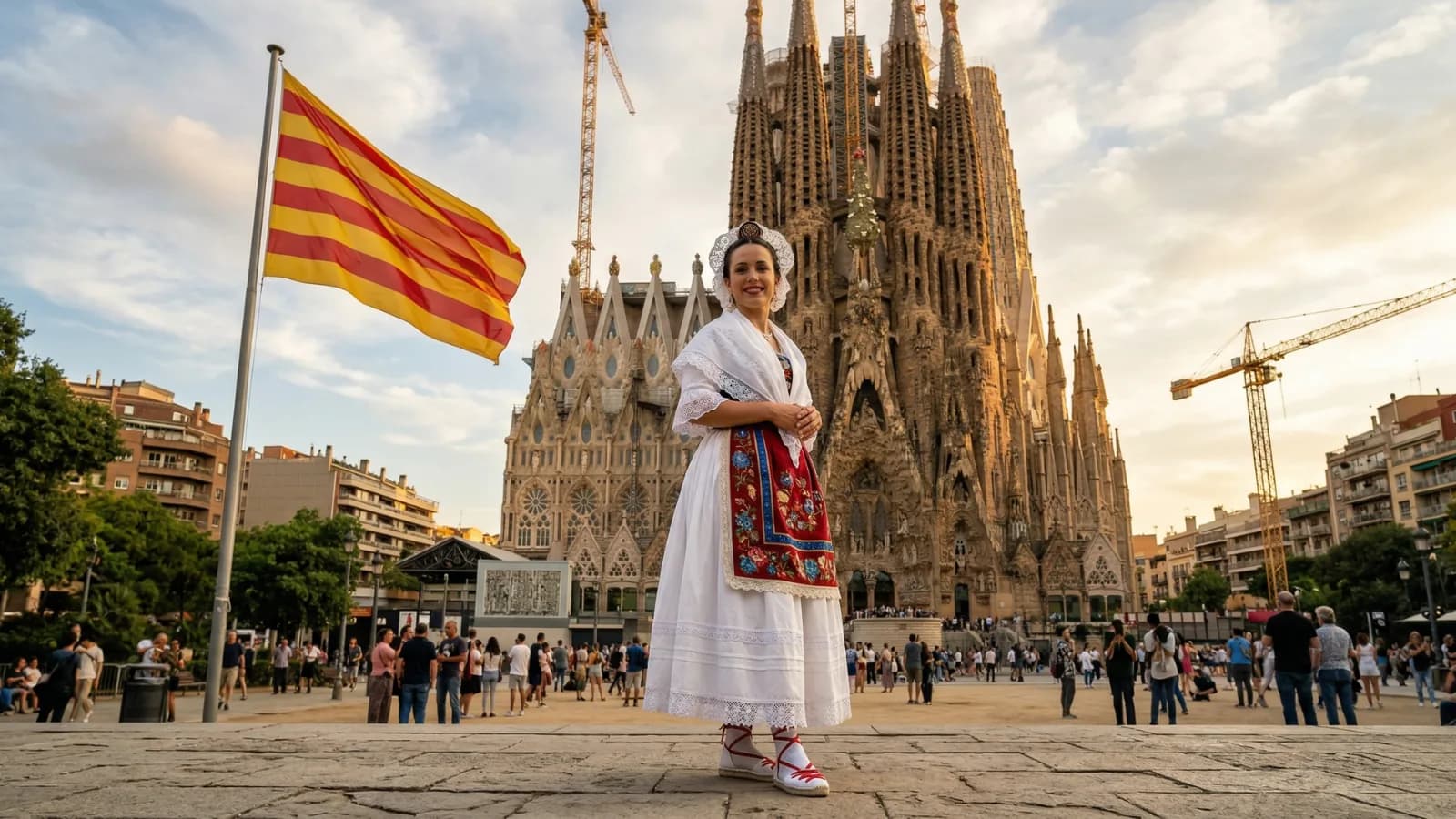
Barcelona, the vibrant capital of Catalonia, is a city that never sleeps, brimming with history, art, and Mediterranean flavors. Between Gaudí's breathtaking architecture, like the majestic Sagrada Familia and the whimsical Park Güell, and the labyrinthine streets of the Gothic Quarter, every corner invites wonder. But how about discovering this Catalan gem in a completely new and exciting way? OddballTrip offers you an unusual activity to explore Barcelona: a unique outdoor escape game. Imagine yourself on a treasure hunt, solving puzzles while soaking in the local atmosphere. Our scavenger hunts transform you into urban explorers, combining adventure with cultural discovery. Get ready for a memorable experience that will change how you see the city.
Unusual things to do in Barcelona
Looking to venture off the beaten path and have a memorable experience in Barcelona? Beyond classic tours, the city is full of unusual activities that will spice up your stay. Imagine transforming the historic streets into a life-sized playground! Our OddballTrip outdoor escape game is the perfect opportunity to combine cultural discovery with playful adventure. It's a modern treasure hunt, a captivating scavenger hunt that will make you notice unsuspected details and solve exciting mysteries. Forget traditional museums for an afternoon and dive into a unique urban quest, where every clue brings you closer to Barcelona's secret history.
Things to do in Barcelona with kids
Barcelona is a fantastic destination for families, offering a multitude of activities for all ages. But how do you keep the kids entertained while exploring the city? Our outdoor escape game is the ideal solution for a family activity in Barcelona. Away from screens, young and old alike collaborate to solve puzzles, follow clues, and uncover the secrets of the Gothic Quarter. It's an interactive and fun way to immerse yourselves in Catalan history and culture. The route is designed to stimulate curiosity and teamwork, guaranteeing laughter and unforgettable memories for the whole family. An adventure that's sure to please!
Barcelona for couples
For a romantic getaway in Barcelona, the city offers an idyllic setting. From candlelit dinners to hand-in-hand strolls in Parc de la Ciutadella, there's no shortage of options. To spice up your couple's stay, why not embark on a shared adventure with our outdoor escape game? It's the perfect opportunity to strengthen your bond by solving puzzles together, exploring hidden nooks, and creating unique memories. Imagine deciphering codes in the Gothic Quarter, transforming a simple walk into an exciting quest. It's an original activity that promises laughter, complicity, and a new perspective on Barcelona's beauty.
What to do in Barcelona when it rains
What to do in Barcelona on a rainy day? While the Catalan sun is often present, a shower can always occur. Our OddballTrip escape games are predominantly outdoor activities. If a light drizzle doesn't spoil the adventure, we advise you to bring an umbrella or opt for an indoor activity in case of heavy rain, such as visiting the Picasso Museum or one of the many art galleries. Keep our routes in mind for sunny days, as that's when they truly reveal their magic!
Where is Barcelona, and where do the routes start?
Starting points of our routes and the places they pass through.
Route starting points
Places in Barcelona
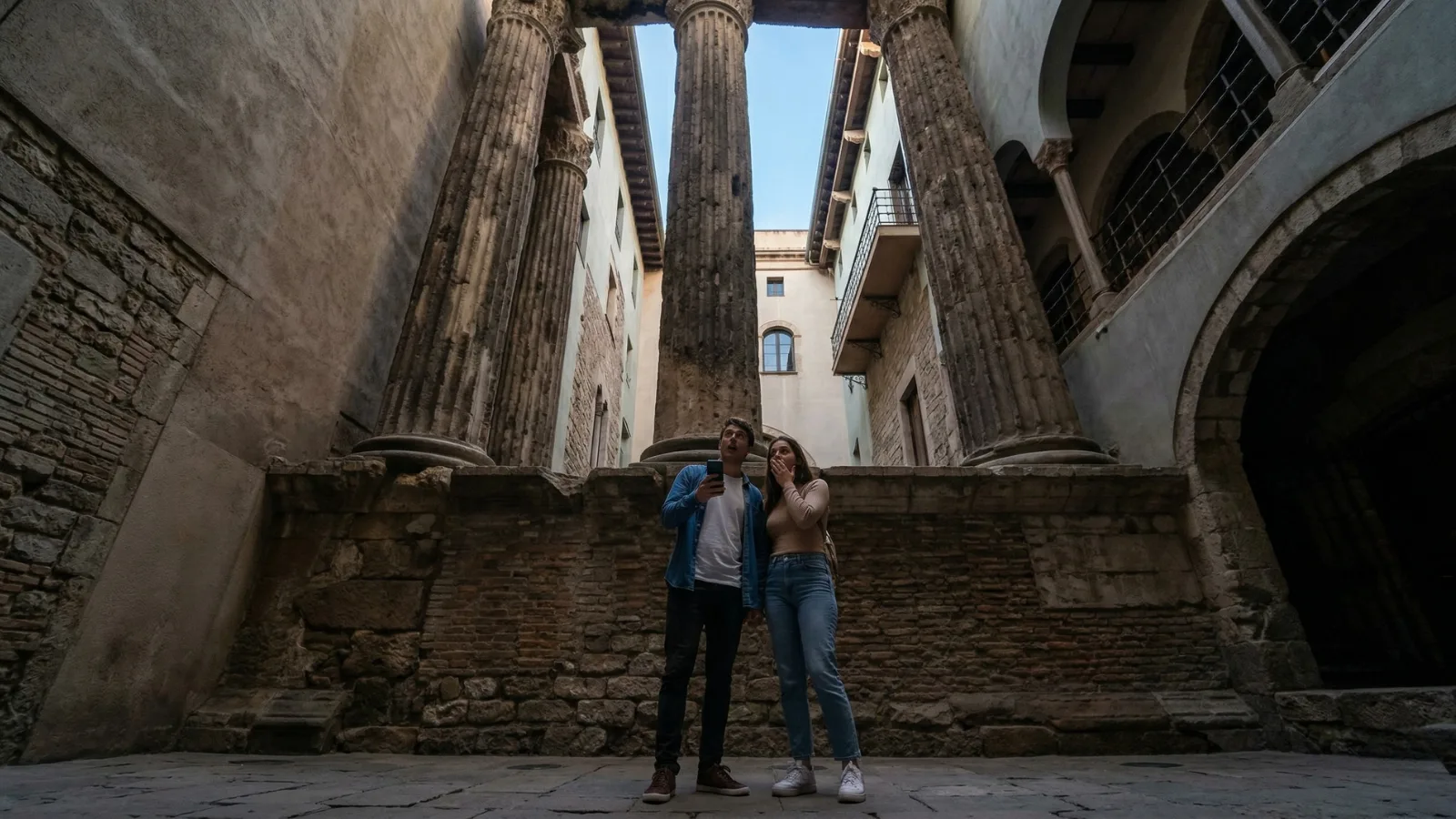
- Temple of Augustus · Hidden in an apartment courtyard
- El Call Major · Barcelona's former Jewish quarter
- Plaça del Rei · The Palau Reial Major and the Tinell Hall
- Cathedral of the Holy Cross and Saint Eulalia · The Gothic cathedral
- Pont del Bisbe · Barcelona's most photographed fake Gothic bridge
The history of Barcelona
From Roman Barcino to the County of Barcelona
Barcelona's history began over 2,000 years ago as an Iberian village named Barkeno. Around 15 BC, the Romans established a colony called Barcino on the small hill now known as Mont Tàber, which forms the core of today's Gothic Quarter. This Roman settlement was fortified with walls and structured around a central forum and two main streets, the cardo and decumanus, whose layout is still visible in the Gothic Quarter. Barcino was a trading hub, though less significant than Tarraco (Tarragona) or Caesaraugusta (Zaragoza) during the Roman era.
After the decline of the Roman Empire, the Visigoths conquered the city in the early 5th century, briefly making it their capital. In the early 8th century, Barcelona fell under Muslim control. However, in 801, Charlemagne's son Louis the Pious retook the city, establishing it as the seat of the Carolingian "Hispanic March," a buffer zone between the Frankish Empire and Muslim-controlled Iberia. By the 10th century, the County of Barcelona emerged as an independent Christian territory.
Medieval Power and Catalan Identity
Barcelona developed in the 12th and 13th centuries as the capital of the Crown of Aragon, a Mediterranean empire that extended its influence to Sicily, Naples, and parts of Greece. This period saw growth in maritime trade, banking, and the arts, establishing Barcelona's status as a European medieval city. The Gothic Quarter, with its buildings, shows this period. The city's political institutions, like the Corts Catalanes (Catalan Parliament) established in 1283, and the Generalitat of Catalonia, which took its seat in the Palau de la Generalitat in Plaça Sant Jaume in the early 15th century, further established Catalan identity. The Consolat del Mar, a code of maritime law, was established in 1258, regulating trade and port activities and becoming the first widely accepted code of international maritime law. However, the union of the crowns of Aragon and Castile in the late 15th century gradually shifted political power to Madrid, leading to centuries of decline and suppression of Catalan autonomy, notably after the War of Spanish Succession in 1714.
What to see in Barcelona
- Temple of Augustus — In a courtyard on Carrer del Paradís, four columns from the Roman Temple of Augustus are visible, a direct link to ancient Barcino.
- El Call Major (Barcelona's former Jewish quarter) — The narrow streets of the old Jewish Quarter show its medieval layout. Street names and the area's structure hint at the community that lived here in medieval times.
- Plaça del Rei — This square in the Gothic Quarter is surrounded by medieval buildings, including the Palau Reial Major, the former residence of the Counts of Barcelona and Kings of Aragon, and the Saló del Tinell, a ceremonial hall.
- Cathedral of the Holy Cross and Saint Eulalia — This Gothic cathedral, constructed between the 13th and 15th centuries, is dedicated to the city's co-patron saint, Eulalia of Barcelona. Inside, visitors find the crypt of Saint Eulalia and a cloister completed in 1448.
- Pont del Bisbe — This bridge connecting the Casa dels Canonges to the Palau de la Generalitat was built in 1928. It is a spot for photos, but its history is more recent than its Gothic style suggests.
- Roman Walls near Plaça Nova — Sections of the Roman defensive walls of Barcino are visible near Plaça Nova, connecting to the city's Roman origins.
When to visit Barcelona
The best times to visit Barcelona are during the shoulder seasons: April to June and September to October. Temperatures are mild, ranging from 18-25°C (64-77°F), suitable for walking. Crowds are also smaller than during the peak summer months.
May and September offer warm weather, fewer tourists, and various festivals. For example, September hosts La Mercè Festival, Barcelona's largest street festival. Avoid July and August if possible, as these are the hottest months, with temperatures often exceeding 27°C (80°F), and the city is at its most crowded and expensive. Many locals also leave for vacation in August.
Getting around Barcelona
Barcelona-El Prat Airport (BCN) is 13 km (8 miles) southwest of the city center. The Aerobus is a shuttle bus connecting both terminals to Plaça de Catalunya in about 35 minutes, with stops at Plaça Espanya, Gran Via-Urgell, and Plaça Universitat. A one-way ticket costs around €10.25. Taxis are available, costing approximately €30-€40 for a 20-30 minute ride to the city center, with a minimum fare of €20 from the airport.
Walking is the best way to explore central neighborhoods like the Gothic Quarter and El Born, as many areas are pedestrianized. For longer distances, Barcelona has a public transport system including metro, buses, and trams. On-street parking in the city center is limited and regulated, with blue and green zones having time limits and higher costs for non-residents. It is recommended to use underground parking garages, which can cost between €25-€35 per day in the city center.
Things you probably do not know about Barcelona
Verified details most visitors walk straight past.
- Las Ramblas
- Barcelona's promenade, Las Ramblas, was not always a pedestrian street. What was it before? The word 'rambla' comes from the Arabic term 'ramla', meaning 'sandy ground' or 'watercourse'. Las Ramblas was originally a seasonal stream that flowed from the mountains to the Mediterranean Sea.
- Columbus Monument (Mirador de Colom)
- At the end of Las Ramblas, the statue of Christopher Columbus points out to sea. Is he pointing towards the Americas? The statue of Columbus does not point towards the Americas. There are several theories, including aesthetic reasons, for why it points towards the Mediterranean Sea.
- Barcelona Cathedral
- The Gothic façade of Barcelona Cathedral appears old, but when was it actually completed? While construction of the main Gothic cathedral began in 1298 and continued for 150 years, the Neo-Gothic façade visible today was only completed in the late 19th and early 20th centuries, inspired by a 15th-century design.
- Barcelona's Beaches
- Barcelona is known for its beaches, but they have not always been a natural part of the city's landscape. What is their origin? Before the 1992 Olympic Games, Barcelona's coastline was industrial. The city created its beaches artificially for the event, importing sand from Egypt.
- Eiffel Tower
- The Eiffel Tower could have stood in Barcelona. Why did it not? Gustave Eiffel initially proposed building his 300-meter-tall steel tower in Barcelona for the 1888 Universal Exposition. However, the city's coordinators rejected the project, deeming it too 'radical' and not fitting with Barcelona's aesthetics, opting instead for the Arc de Triomf.
- Barcelona Taxis
- The black and yellow taxis of Barcelona have a specific reason for their colors. Why these two colors? In 1924, the city council mandated that taxis be painted with a line under the window for easier identification. The color of the stripe indicated the service rate, and eventually, the black body with a yellow stripe became the standard.
Questions about visiting Barcelona
How many days should I spend in Barcelona?
Most visitors find that 3 to 5 days allow enough time to explore Barcelona's main attractions, delve into its history, and enjoy the local culture without feeling rushed. This duration allows for visits to major landmarks, time in different neighborhoods, and enjoying the city's culinary scene.
What are the best neighborhoods to stay in Barcelona?
For first-time visitors, the Gothic Quarter (Barri Gòtic) offers historical charm, while El Born is known for its bohemian atmosphere and boutiques. Eixample provides a more modern feel with wide boulevards and Gaudí architecture. Gràcia offers a village-like ambiance with lively squares and independent shops. Each neighborhood provides a different experience.
What is the typical budget for a trip to Barcelona?
A mid-range budget for Barcelona typically ranges from €70 to €150 per person per day. This would cover accommodation in a decent hotel or apartment, meals at local restaurants, public transport, and entry fees to a few attractions. You can save money by eating at local markets and using public transportation extensively.
Is Barcelona a good city to visit with children?
Yes, Barcelona is very family-friendly. It offers numerous parks, beaches, and engaging attractions like the Barcelona Aquarium, Tibidabo Amusement Park, and the CosmoCaixa science museum. Many restaurants are accommodating to families, and the public transport system is efficient for getting around with kids.
What are the public transport options in Barcelona?
Barcelona has an efficient and extensive public transport network, including a metro, bus system, trams, and local trains. A single ticket costs around €2.55, but multi-day passes like the Hola Barcelona Travel Card offer unlimited travel on all public transport, including airport lines, for a set period.
Are there any local customs or etiquette I should be aware of?
Catalans typically eat dinner later, often after 9 PM. Tipping is appreciated but not mandatory, and usually a small amount for good service is sufficient. While Spanish is widely spoken, Catalan is the official language of the region, and locals appreciate efforts to use a few Catalan phrases. Many shops close for a siesta in the afternoon, especially outside major tourist areas.
Frequently asked questions
How much does an outdoor escape game cost in Barcelona?
Our outdoor escape games in Barcelona are designed to be accessible and offer excellent value. The price is €12 per team, not per person! This means you can share the adventure with your friends or family without breaking the bank. This rate includes access to the app, all the puzzles, and a total immersion in the city's history. It's an economical and entertaining activity to explore Barcelona in a unique and memorable way. Get ready for an incredible adventure without emptying your wallet!
Is it suitable for children / families?
Absolutely! Our escape games are a fantastic activity for families and children aged 8 and up, accompanied by adults. The puzzles are designed to be challenging but accessible, encouraging collaboration and collective thinking. It's an excellent way to introduce younger ones to Barcelona's history and monuments in a fun and interactive way. The routes are safe and take place in pedestrian areas, allowing everyone to enjoy the adventure with complete peace of mind.
How long does an escape game in Barcelona last?
The duration of our outdoor escape games in Barcelona generally ranges from 1h30 to 2h30. This time includes solving puzzles, moving between points of interest, and a short break if you wish. The beauty of our games is that you play at your own pace. You can take your time to admire the sights, pause for a coffee or a photo, and resume the adventure whenever you want. The important thing is to fully enjoy the experience!
Do I need to book in advance?
No, advance booking is not necessary for our outdoor escape games in Barcelona! This is one of the great advantages of our games. You can purchase and start your game whenever you want, 24/7, directly from our app. Whether you have a spontaneous urge or are planning your day last minute, OddballTrip is always ready for adventure. Just download the app, choose your route, and start playing!
What to visit in Barcelona beyond the escape games?
Barcelona is full of treasures to explore! After discovering the secrets of the Gothic Quarter with our escape game, don't miss the majestic Sagrada Familia and the whimsical Park Güell, masterpieces by Gaudí. Stroll along the famous Las Ramblas, discover the Boqueria market, and get lost in the colorful Gràcia neighborhood. For art lovers, the Picasso Museum is a must-see, and for relaxation, the beaches of Barceloneta await you.
What is the best season to visit Barcelona?
Barcelona is pleasant almost all year round, but the best seasons to visit are spring (April to June) and autumn (September to October). The weather is mild and sunny, perfect for exploring the city on foot and enjoying our outdoor escape games without the summer crowds. Summer can be very hot and very busy with tourists. Winter is cooler but still mild, offering a calmer atmosphere to discover the city.