Palma de MallorcaOutdoor Escape Game & Treasure Hunt
Reconquista, corsairs and crypto-Jews
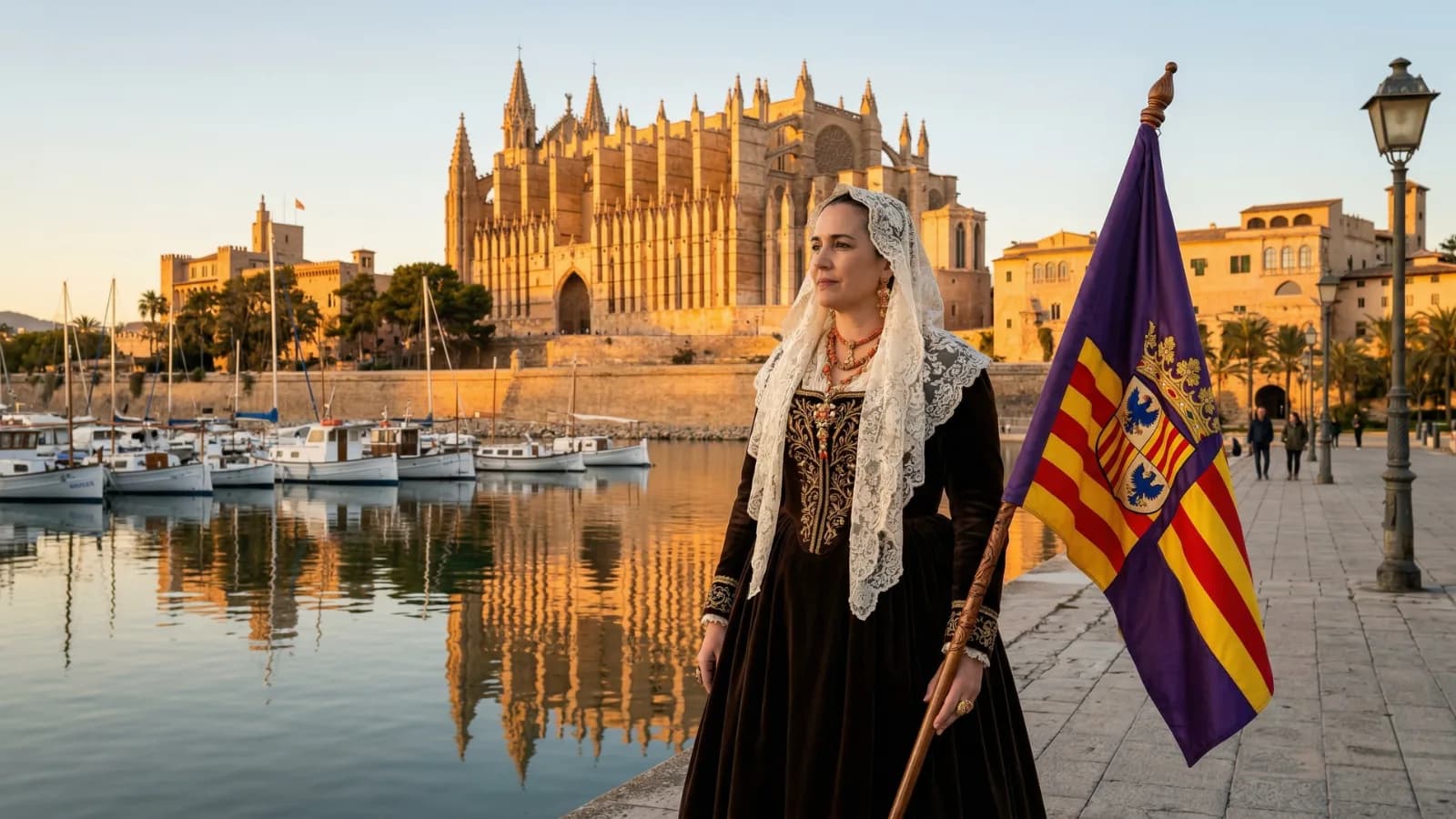
Palma de Mallorca, jewel of the Balearic Islands, invites you to a memorable exploration! Beyond its idyllic beaches, the capital abounds with historical and cultural treasures. Stroll through the winding streets of Old Palma, admire the imposing La Seu Cathedral dominating the harbor, or let yourself be charmed by the Santa Catalina district and its bohemian atmosphere. But if you're looking for an unusual and immersive activity to discover the city differently, OddballTrip offers a unique experience: an outdoor escape game. Our scavenger hunts and treasure hunts plunge you into the heart of local history, between legends of corsairs and secrets of the Reconquista. Get ready to solve riddles, decipher codes, and explore Palma like never before. Our courses are the ideal way to combine adventure, culture, and fun, whether you're with family, friends, or as a couple. Discover our games now for an unforgettable adventure!
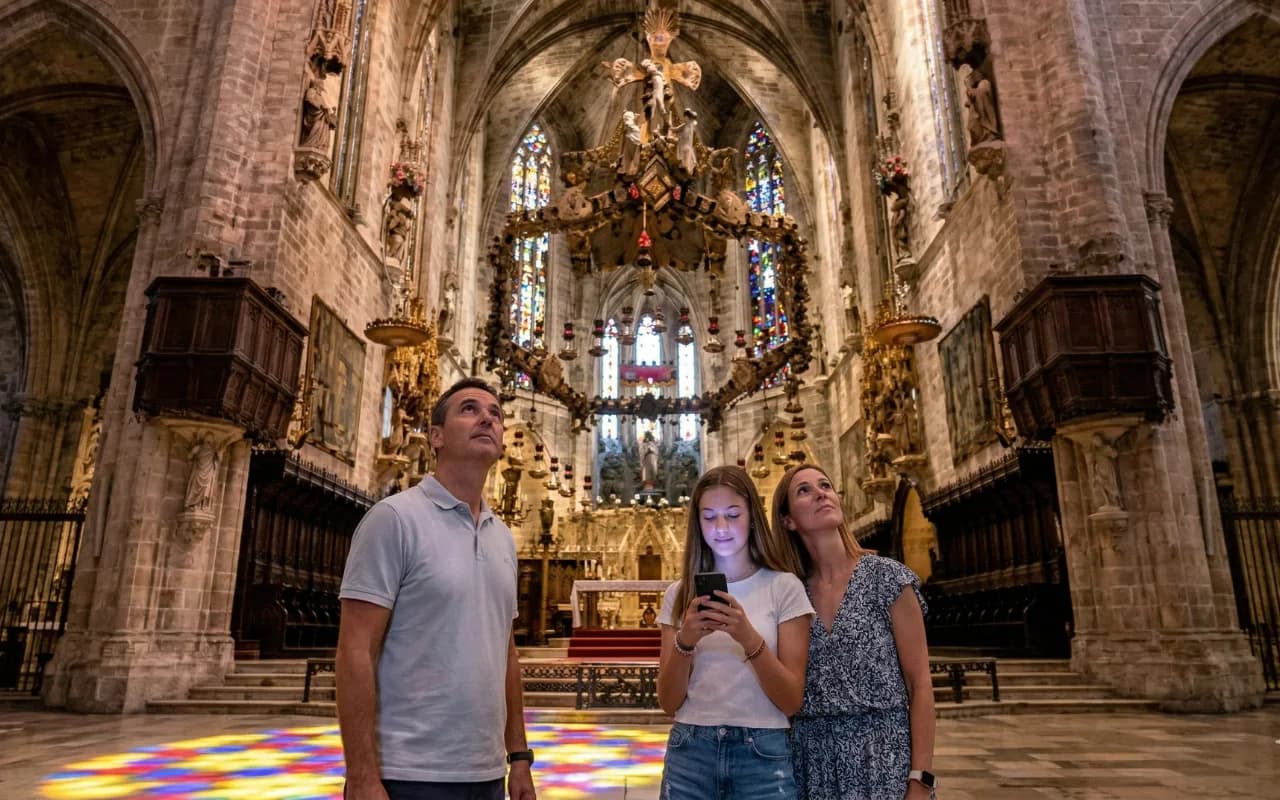
The Light of the Seu
The cathedral's light spectacle and Gaudí's rosette
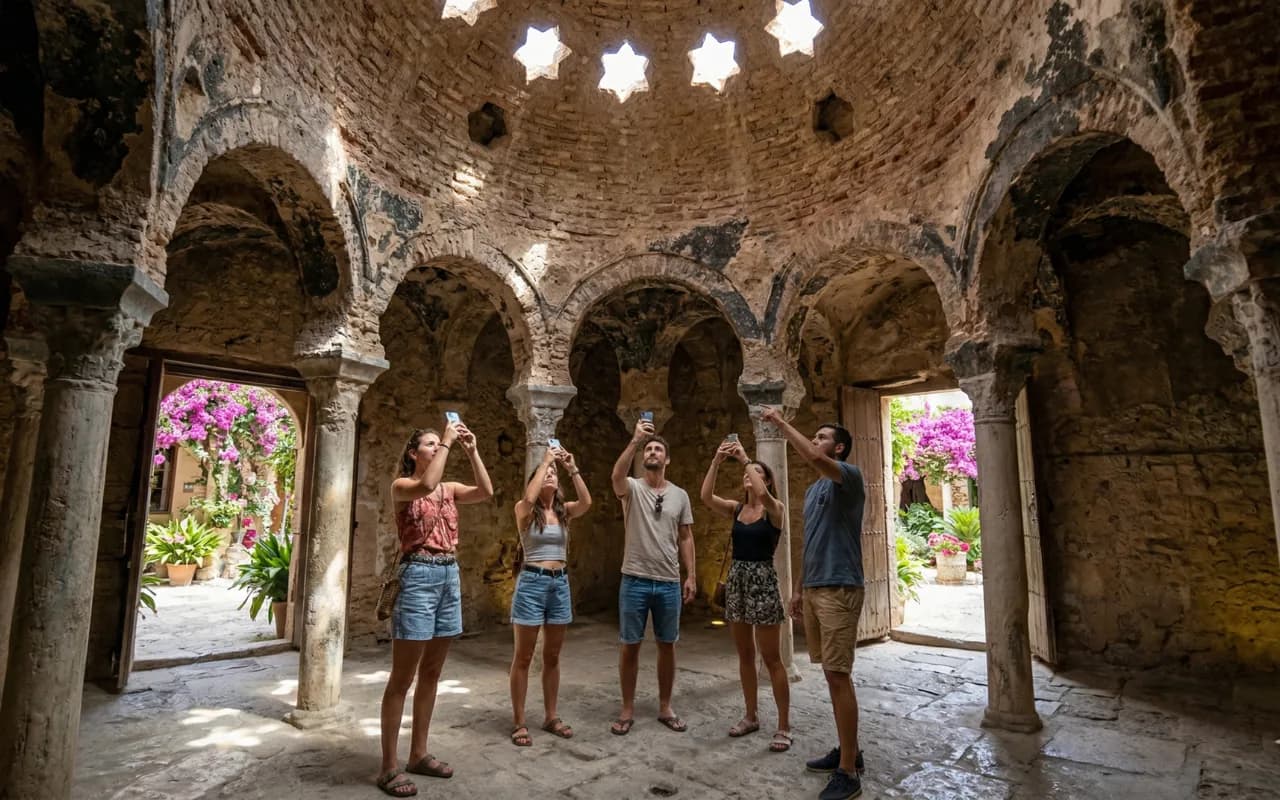
The Conquest of Jaume
The Reconquista of Mallorca by Jaume I in 1229
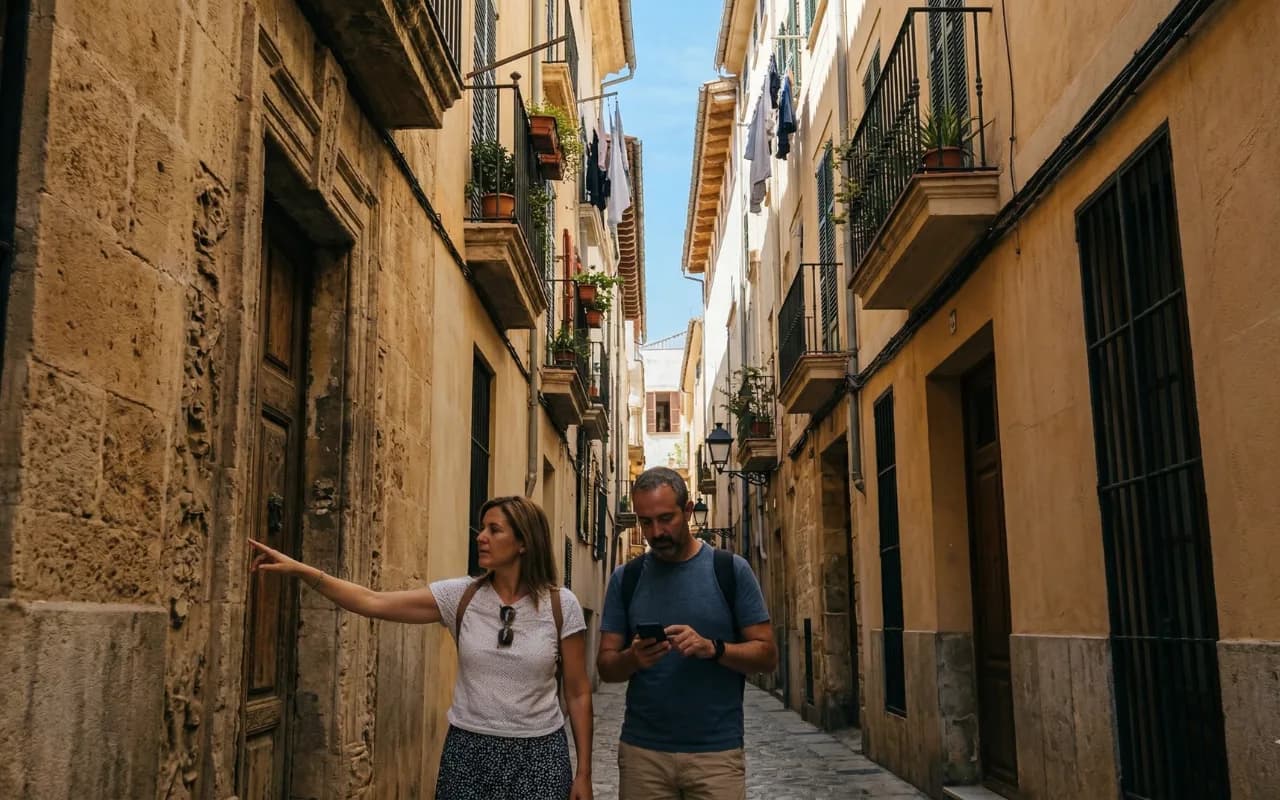
The Xuetes of Palma
Mallorca's crypto-Jews facing the Inquisition
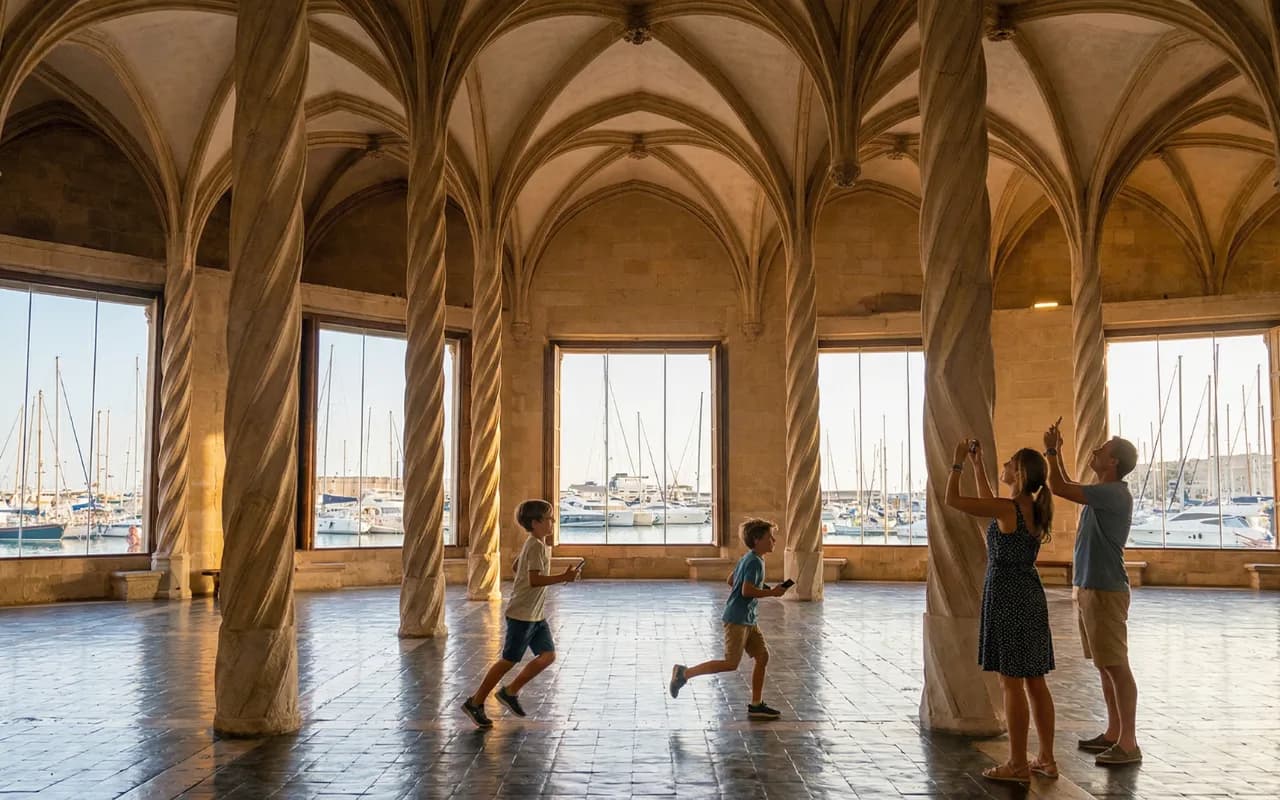
The Corsairs of Mallorca
Barbary raids and Palma's maritime defence
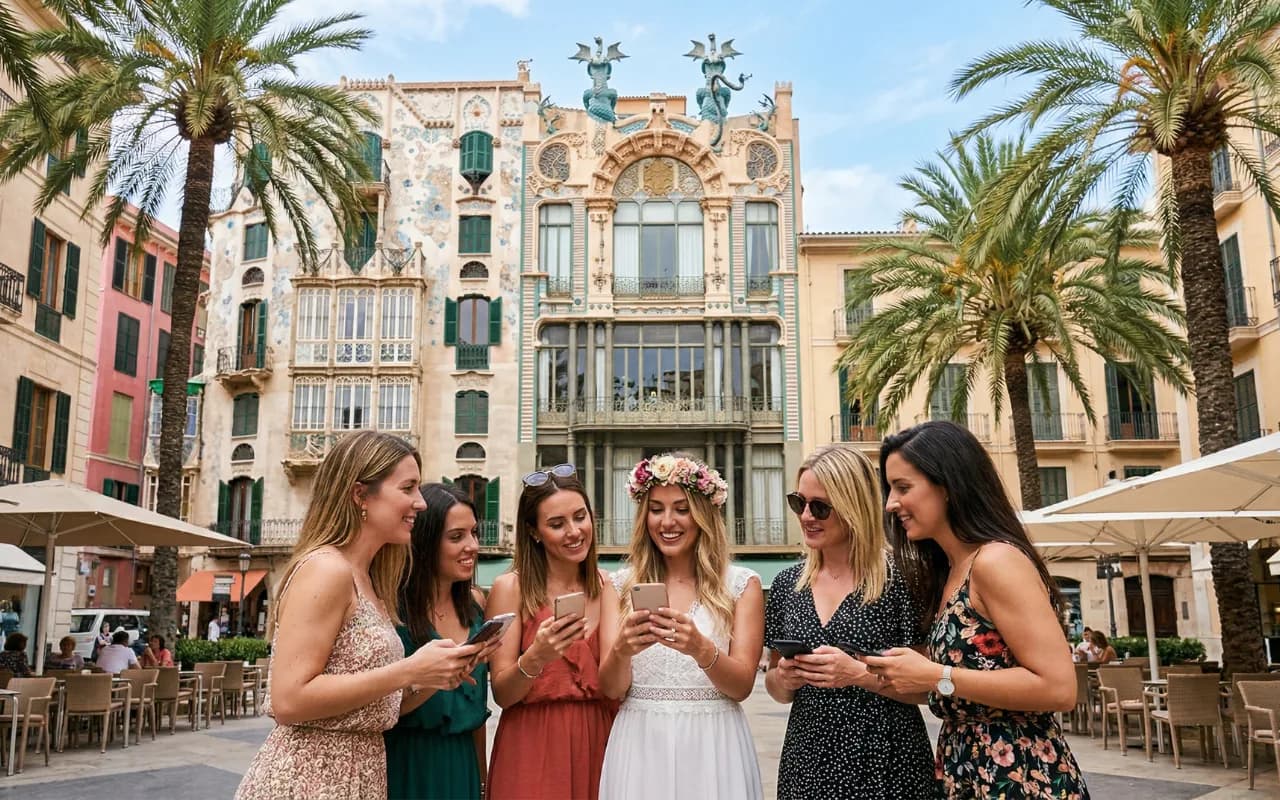
Modernist Palma
Art Nouveau treasures of the Mallorcan capital
Unusual things to do in Palma de Mallorca
Looking to get off the beaten path in Palma de Mallorca? Our outdoor escape games are the ultimate unusual activity to spice up your stay. Far from traditional guided tours, our scavenger hunts transform you into urban explorers, solving riddles and discovering hidden anecdotes about the city. Imagine unraveling the secrets of the Reconquista or following in the footsteps of legendary corsairs, all in the open air. It's an original and interactive way to immerse yourself in Palma's history and culture, while having fun and stimulating your team spirit. Forget boredom and embrace adventure with OddballTrip!
Things to do in Palma de Mallorca with kids
Palma de Mallorca is a fantastic destination for a family vacation, and our outdoor escape games offer a fun and educational way to explore the city. Designed to be accessible to everyone, these scavenger hunts transform the discovery of monuments and neighborhoods into a real treasure hunt. Children will love searching for clues, solving riddles, and actively participating in the adventure, while parents will appreciate the opportunity to share quality time outdoors. It's the perfect occasion to create lasting memories, learn while having fun, and see Palma from a new angle, stimulating everyone's curiosity.
Palma de Mallorca for couples
For a romantic and original getaway in Palma de Mallorca, our outdoor escape games are a perfect idea. Far from classic candlelit dinners, treat yourselves to an adventure for two that will test your complicity and team spirit. Wander through the picturesque streets of the old town hand in hand, solve riddles together, and discover Palma's hidden charms in a new light. It's an intimate and exciting way to share laughs, overcome challenges, and create unique memories, strengthening your bond while exploring the beauty of the Majorcan capital. A memorable experience guaranteed!
What to do in Palma de Mallorca when it rains
What to do in Palma de Mallorca when it rains? Let's be honest, our escape games are mostly outdoor activities, designed to enjoy the Mediterranean sun. However, some of our courses include covered passages or sheltered areas that can offer a respite. For a very rainy day, we recommend visiting the Cathedral, a museum, or the Aquarium instead. If it's just a light drizzle, a poncho and an adventurous spirit will be enough to enjoy our scavenger hunts!
Where is Palma de Mallorca, and where do the routes start?
Starting points of our routes and the places they pass through.
Route starting points
Places in Palma de Mallorca
- Banys Àrabs · Carrer de Can Serra
- Arc de la Drassana · Carrer de l'Almudaina
- Palau Episcopal · Carrer del Mirador
- Església de Santa Eulàlia · Plaça de Santa Eulàlia
- S'Hort del Rei Gardens · Beneath the Almudaina
- Parc de la Mar · Facing the cathedral
- Porta del Mirador · South façade of the Seu
- Inside the Seu · High altar
- Palau de l'Almudaina · Royal residence
- Museu Diocesà · Seu cloister
- Carrer dels Argenters · Heart of the Call
- Església de Montesión · Former synagogue
- Carrer del Sol · Houses with double entrances
- Convent de Santa Clara · Carrer de Can Fonollar
- Església de Sant Domingo · Plaça de Sant Domingo
- Sa Llotja · Passeig de Sagrera
- Baluard de Sant Pere · Es Baluard Museum
- Porta del Mar · Passeig Marítim
The history of Palma de Mallorca
From Roman Camp to Moorish Medina
Palma de Mallorca's story begins before its current Gothic skyline. The Romans founded Palma around 123 BC, establishing a camp on the remains of a Talaiotic settlement. They developed the island, focusing on salt mining and olive cultivation, and Palma became a trade center, connecting to Carthage and other Roman cities.
As the Roman Empire declined, Palma, then known as Medina Mayurqa, came under Byzantine rule in 534 AD. Almost two centuries later, in 902 AD, the Moors from North Africa conquered the island, incorporating it into the Caliphate of Córdoba. Under Moorish rule, Palma developed into an urban center in the western Mediterranean. The city's defensive walls and its streets, designed to catch breezes and provide shade, were laid out during this period. The Moorish influence is visible in the narrow streets of the Old Town and the Banys Àrabs.
The Christian Reconquest and a Golden Age
In 1229, King James I of Aragon reconquered Mallorca. This led to the island's incorporation into the Crown of Aragon and the beginning of a new Christian era, with the construction of religious buildings. The Cathedral of Santa Maria, known as La Seu, began construction shortly after the conquest in 1229, built directly on the site of the city's central mosque. The Palau de l'Almudaina, originally a Muslim alcázar, was transformed into a royal palace by King James II in the 14th century, blending its Moorish past with Gothic architecture. Palma's location fostered trade with Catalonia, Valencia, Provence, the Maghreb, and Italian republics, ushering in a golden age that lasted until the Aragonese conquest in 1344.
What to see in Palma de Mallorca
- La Seu Cathedral — This Gothic cathedral, built between 1229 and 1601, stands by the waterfront. It has a large rose window, which casts light across the interior.
- Palau de l'Almudaina — Originally a Muslim fortress from the 10th century, this royal palace was transformed in the 14th century by King James II. Visitors can explore the King's and Queen's rooms, the Royal Chapel, and the Gothic hall, observing a mix of Moorish and Gothic architectural styles.
- Banys Àrabs (Arab Baths) — These 10th-century baths are among the few remaining examples of Moorish architecture in Palma. The central room features horseshoe arches and a dome with small skylights.
- Església de Santa Eulàlia — One of Palma's older churches, built in 1236 on the site of a former Moorish mosque. This Gothic church has a nave, high vaults, and a bell tower. A spiral staircase leads to the rooftop terrace.
- S'Hort del Rei Gardens — These medieval gardens, of Andalusian origin, date back to the Moorish period and are near the Palau de l'Almudaina. They offer a green space with fountains, pergolas, and sculptures.
- Carrer de l'Almudaina — This street runs near the cathedral and Almudaina Palace, and is part of the Dalt Murada, a section of the medieval stone wall that once surrounded Palma.
- Carrer dels Argenters — This street is in the former Jewish Quarter, known as the Call, and shows the historical layout of this community within Palma.
When to visit Palma de Mallorca
The best time to visit Palma de Mallorca is during spring (April to June) and early autumn (September to October). Temperatures are mild, ranging from 19 to 24°C, suitable for sightseeing. Crowds are lighter than in summer. The sea is warm enough for swimming into September.
Summer (July and August) is peak season, with temperatures around 29-30°C and crowded beaches. Prices for accommodation are at their highest. Winter (November to March) is milder, but cooler and wetter, especially in the Tramuntana Mountains. Many hotels outside Palma close for the season.
Getting around Palma de Mallorca
Palma de Mallorca Airport (PMI) is the main gateway. From there, the city center is reachable by bus or taxi. Palma is a compact city, and its old town is walkable; most major sights are within a 20-minute walk.
For longer distances, Palma has a public bus network (EMT). For other areas of Mallorca, Transports de les Illes Balears (TIB) buses depart from the Intermodal Station at Plaça d'Espanya.
Finding free parking in the city center is difficult. Public underground car parks are available at Parc de la Mar, Via Roma, or Plaça d'Espanya. Street parking in blue zones (Zona Azul) is paid during specific hours (typically Monday to Friday from 9:00 to 14:00 and 16:00 to 20:00, and sometimes Saturday mornings), and usually free outside these hours, on Sundays, and public holidays. Check local signs for exact times.
Things you probably do not know about Palma de Mallorca
Verified details most visitors walk straight past.
- La Seu Cathedral
- What unusual material was used in the construction of Palma's grand cathedral that might surprise you? La Seu Cathedral, unlike most Gothic cathedrals, doesn't rely on massive diagonal supports like flying buttresses. Instead, it uses a row of slender blocks down each side to support its walls.
- Palau de l'Almudaina
- This royal palace has a name that hints at its much older origins. What does 'Almudaina' mean? The name 'Almudaina' comes from the Arabic word for 'fortress', a direct reference to its beginnings as a Muslim alcázar before its transformation into a Gothic royal palace in the 14th century.
- Església de Santa Eulàlia
- This historic church played a somber role in the aftermath of anti-Jewish riots in the late 14th century. What event gave it the nickname 'church of conversion'? On August 2, 1391, following a rebellion against the Crown of Mallorca that resulted in the deaths of nearly 300 Jews, those who were not killed or did not flee were converted in Santa Eulàlia, leading to its nickname.
- Palma City Walls
- Much of Palma's extensive city walls were demolished in the 19th century. What replaced them? During the early 19th century, many parts of Palma's great wall were demolished to make way for what are now known as the Avenidas, the city's broad avenues.
- Carrer de l'Almudaina
- If you walk along Carrer de l'Almudaina, you're treading on history that goes back further than you might think. What Roman remains are sometimes found beneath Palma's streets? While few significant Roman remains are visible today, archaeological finds are occasionally made in city center excavations, especially near the Cathedral and historic center, directly beneath the modern streets.
Questions about visiting Palma de Mallorca
How many days are enough to visit Palma de Mallorca?
Three to five days are generally enough to explore Palma's main highlights, including the cathedral, the Old Town, markets, and some restaurants, without feeling rushed. This also allows for one or two day trips to other parts of the island.
What are the best neighborhoods to explore in Palma?
The Old Town is essential for its history and architecture. Santa Catalina has a bohemian atmosphere with its market and dining scene. La Lonja is known for its artisan market and evening ambiance. For a mix of culture and beach, consider areas near Cala Major.
Is Palma de Mallorca suitable for families with children?
Yes, Palma is family-friendly. The Old Town is compact and walkable, there are playgrounds like Parc de Sa Feixina, and several city beaches. Activities include Palma Aquarium, Bellver Castle, and the Sóller train.
What is the typical budget for a trip to Palma de Mallorca?
Palma can accommodate various budgets. Accommodation prices vary by season, with summer being the most expensive. Eating out can range from affordable tapas in local markets to high-end restaurants. Public transport is economical, and many attractions offer reasonable entry fees. Visiting in spring or fall can help reduce costs.
How do you get around Palma de Mallorca?
Palma is walkable, especially the city center and Old Town. For longer distances, a public bus network (EMT) operates within the city. Buses for other parts of Mallorca (TIB) depart from Plaça d'Espanya. Taxis are available, and cycling is also an option with over 50 kilometers of bike paths.
What are the local market days in Palma?
The Mercat de l'Olivar is Palma's largest covered market, open most weekdays and Saturday mornings, offering fresh produce, seafood, and local specialties. On weekend evenings, artisan markets can be found along the old city walls near La Lonja.
Frequently asked questions
How much does an outdoor escape game cost in Palma de Mallorca?
Our outdoor escape games in Palma de Mallorca are designed to be accessible and fun for everyone. The price is €12 per team, which is very advantageous as you pay per group, not per person. This means the more people you are (within the recommended number of players per game), the less the activity costs individually. This single rate gives you access to a complete adventure, with riddles to solve and a unique exploration of the city. It's an excellent option for quality entertainment without breaking the bank!
Is it suitable for children / families?
Absolutely! Our escape games are a fantastic activity for families and children. The courses are designed to be interactive and stimulating, with varied riddles that appeal to all ages. Younger ones will love the treasure hunt aspect and searching for clues, while teenagers and adults will appreciate the complexity of the challenges and the cultural discovery. It's a great opportunity to work as a team, stimulate children's curiosity, and create unforgettable memories together by exploring Palma de Mallorca in a fun way.
How long does an escape game last in Palma de Mallorca?
The duration of our outdoor escape games in Palma de Mallorca generally varies between 1h30 and 2h30. This depends on the chosen course, your playing pace, and your team's speed in solving riddles. We encourage you to take your time, enjoy the scenery and the city's atmosphere. The goal is not just to finish the game, but to live an immersive experience and discover Palma de Mallorca from a new perspective. You are free to take breaks and play at your own pace!
Do I need to book in advance?
No, the good news is that our outdoor escape games in Palma de Mallorca do not require advance booking! You can start the adventure whenever you want; just download the app and choose your course. This is ideal for a spontaneous activity or to fit into your vacation schedule. However, we recommend checking the availability of courses via the app before you start, especially if you have a specific game in mind. Flexibility is one of our major assets!
What to visit in Palma de Mallorca beyond the escape games?
Palma de Mallorca is full of magnificent sites to explore! After enjoying our escape games, don't miss the majestic La Seu Cathedral, the Royal Palace of La Almudaina, or the picturesque Jewish Quarter. Stroll along the Passeig des Born, visit Castell de Bellver for panoramic views, or relax on the urban beaches. The Olivar market is perfect for discovering local flavors. The city offers a perfect blend of history, culture, and relaxation, perfectly complementing the adventure you'll experience with OddballTrip.
What is the best season to visit Palma de Mallorca?
The best season to visit Palma de Mallorca and fully enjoy our outdoor escape games is spring (April-June) or autumn (September-October). During these periods, the weather is pleasantly mild and sunny, ideal for walking around and solving outdoor riddles, without the intense heat of summer or the coolness of winter. Tourist crowds are also smaller, allowing you to explore the city more serenely. Summer remains an option if you don't mind the heat and crowds!
Other destinations in Balearic Islands
More cities in Spain
Tarragona
Roman Tarraco and medieval cathedral
Montserrat
Sacred mountain, ancient monastery, and breathtaking landscapes.
Valencia
Silk Exchange and Holy Grail mystery
Girona
Jewish quarter, sieges and alchemy
Zaragoza
From Moorish palace to Napoleonic sieges
Cartagena
Carthaginian port and Roman theater
Activities to discover nearby
Guided tours, skip-the-line tickets and local experiences to book in advance.
💡 Optional booking — you can also buy on-site. All links open in a new window, your OddballTrip visit stays preserved.