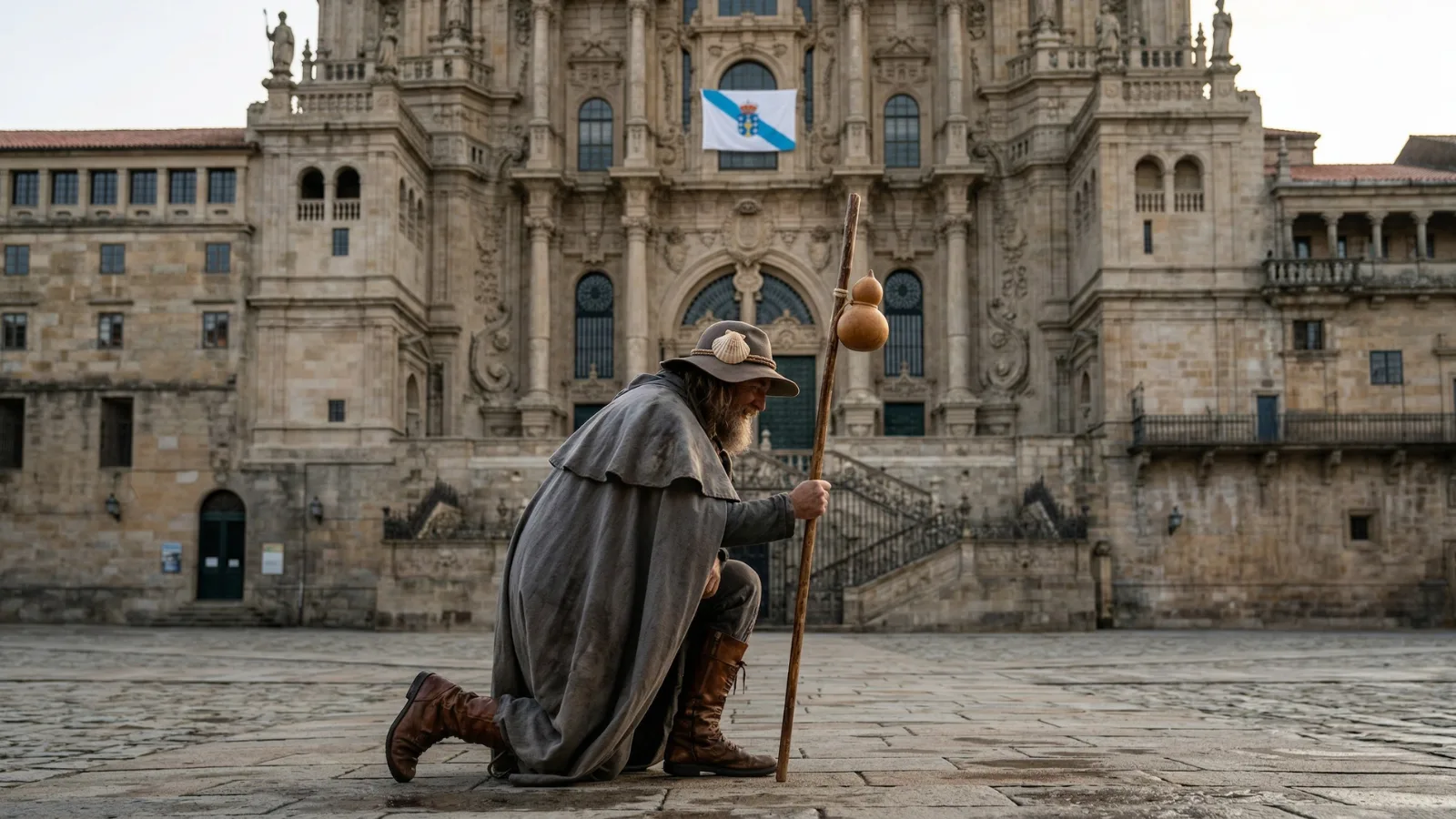
Santiago de CompostelaOutdoor Escape Game & Treasure Hunt
Following the millennial pilgrims
Santiago de Compostela, a mythical destination and the culmination of the Camino, invites you to explore far beyond its famous pilgrimages. What to do in this UNESCO World Heritage city? Stroll through the history-rich alleys of the Old Town, admire the imposing Cathedral in Praza do Obradoiro, and soak in the vibrant atmosphere of the Mercado de Abastos. But if you're looking for an unusual activity to spice up your stay, OddballTrip.com offers a unique way to uncover its secrets. Our outdoor escape games transform the city into a giant playground. Imagine a life-sized treasure hunt or a captivating scavenger hunt that will lead you through iconic landmarks and hidden nooks. Ready to explore Santiago de Compostela in an unprecedented way, blending adventure with cultural discovery? Discover our routes and embark on a memorable adventure!
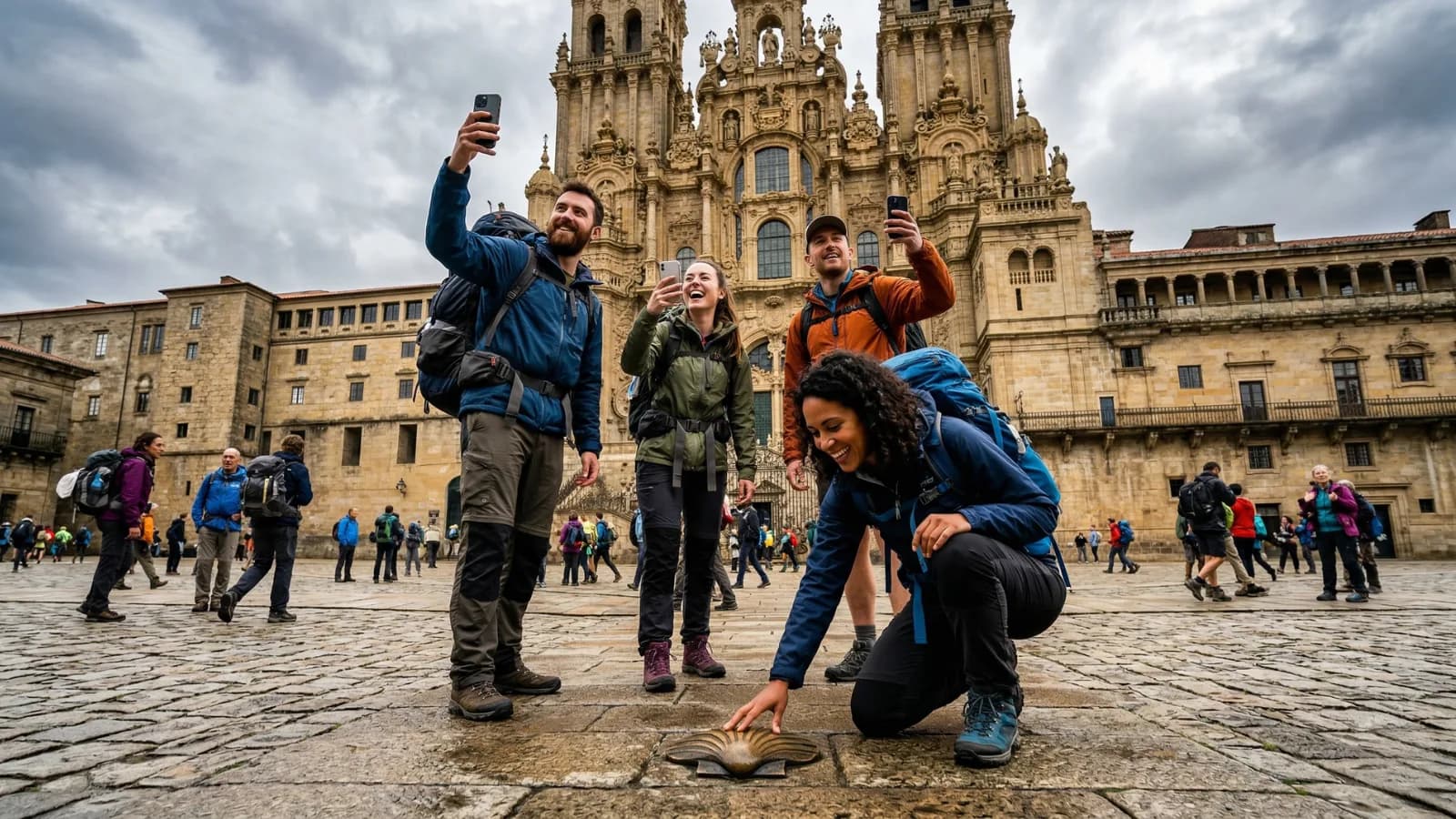
The Last Pilgrim
The final steps of the Camino — a thousand years of faith in one walk
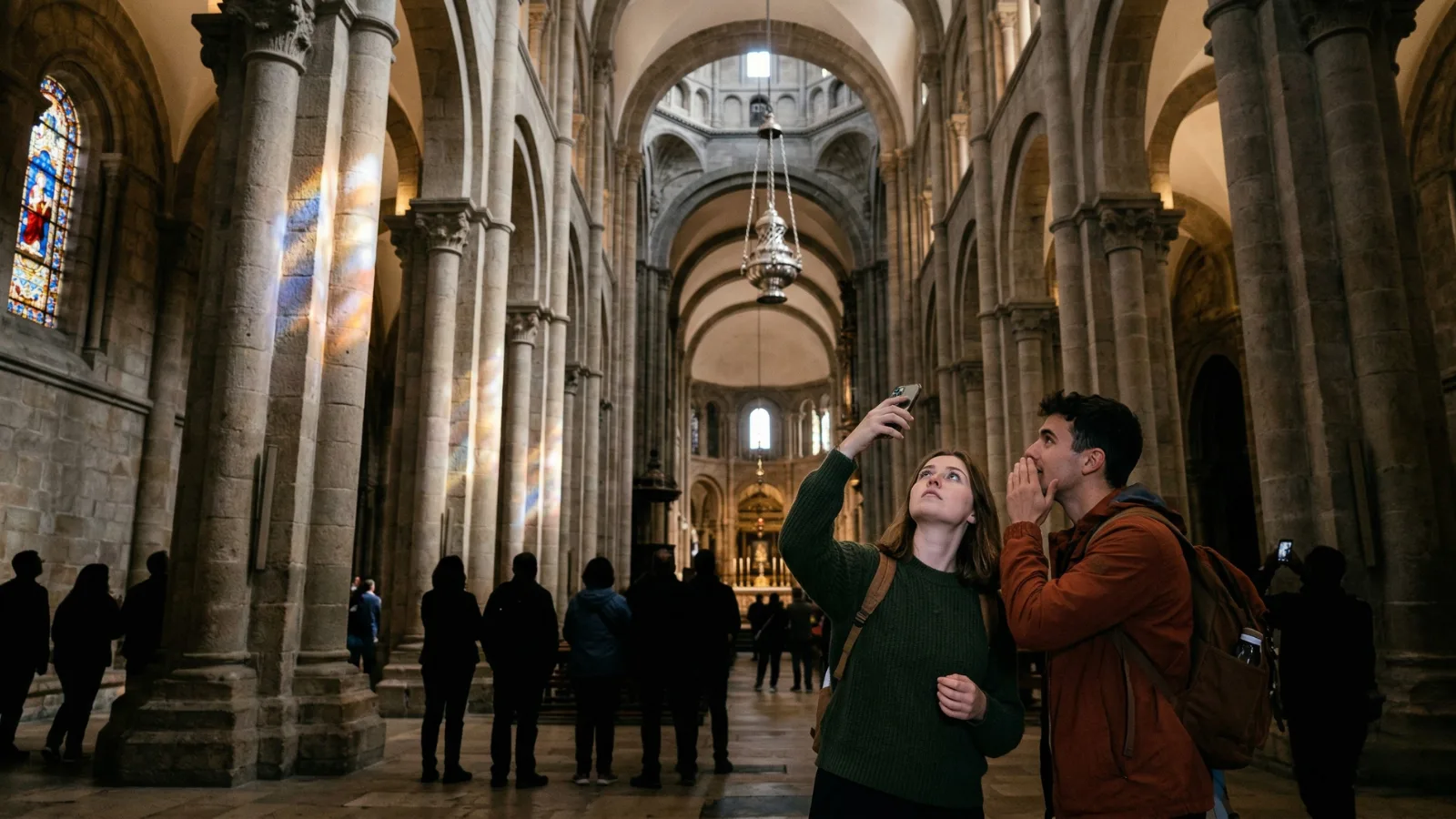
The Relics of the Apostle
The cathedral, the tomb and the power of sacred bones
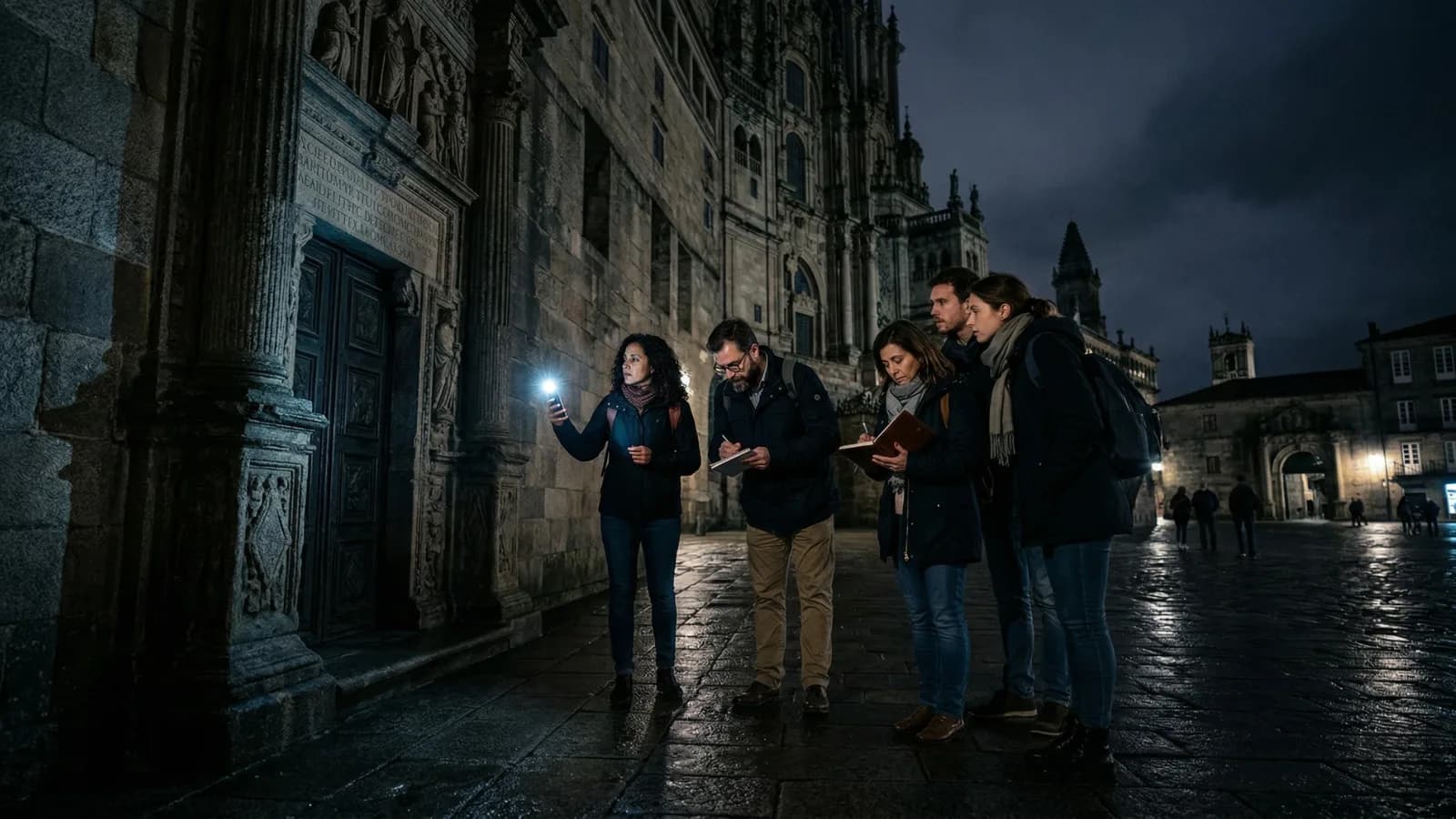
The Inquisitor of Compostela
The Spanish Inquisition in Galicia — heretics, hidden Jews and bonfires
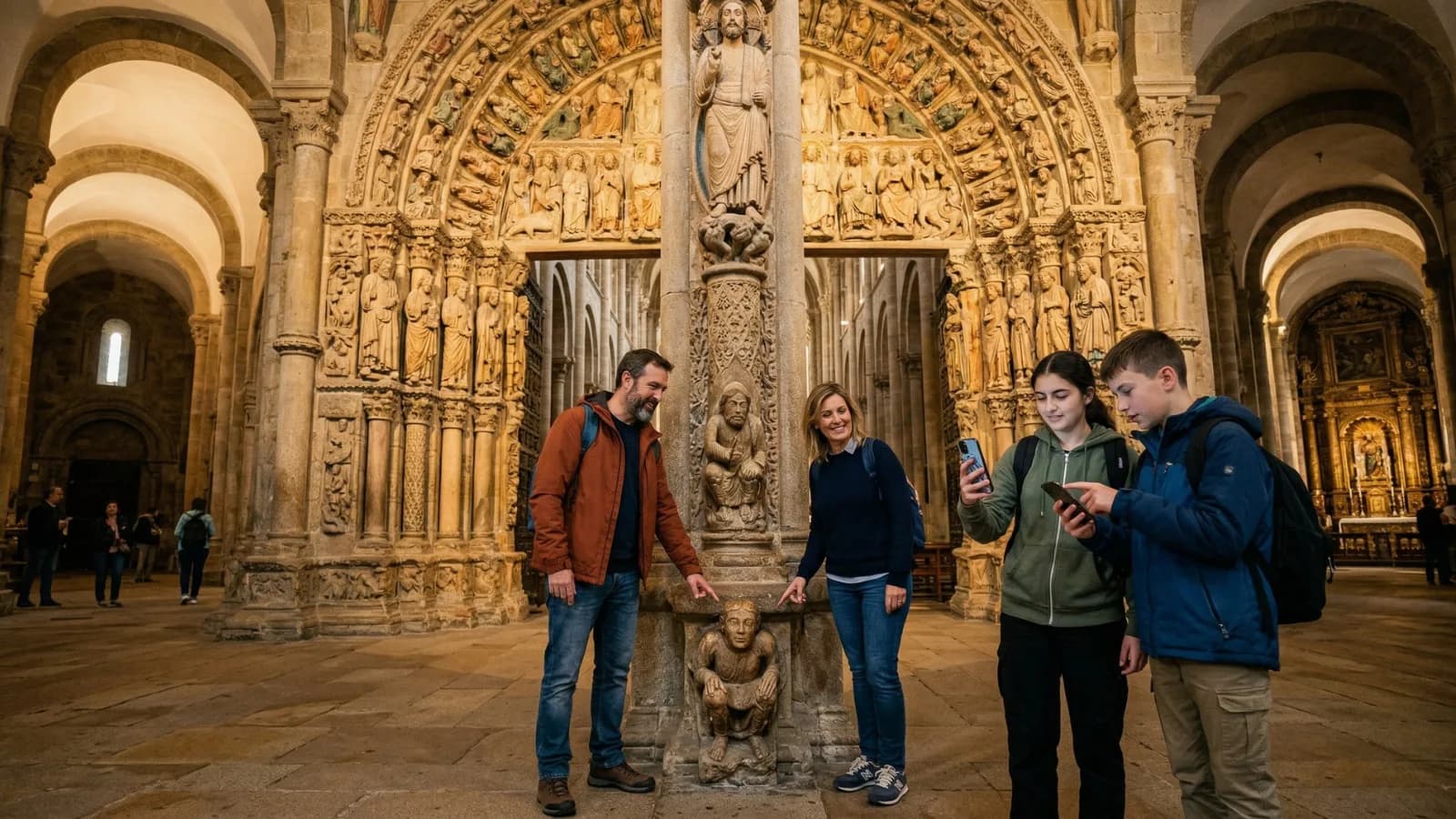
The Portico of Glory
Master Mateo's masterpiece — 200 living stone figures
Unusual things to do in Santiago de Compostela
Looking to get off the beaten path in Santiago de Compostela? Our outdoor escape games are the ultimate unusual activity! Far from traditional guided tours, OddballTrip offers a fun and interactive immersion. Solve puzzles, follow clues, and discover the city from a new perspective, even its most secret corners. It's the perfect opportunity to transform a simple stroll into a real adventure, where every monument, every alley becomes part of your quest. A memorable experience guaranteed for curious explorers!
Things to do in Santiago de Compostela with kids
Santiago de Compostela with family guarantees unforgettable memories! Our outdoor escape games are designed to appeal to all ages. Away from screens, young and old collaborate to solve puzzles, explore the city, and experience a life-sized treasure hunt. It's a fantastic way to turn a cultural visit into an exciting scavenger hunt, where everyone contributes. The routes above offer a great opportunity to strengthen family bonds while discovering the city's wonders in a fun and educational way.
Santiago de Compostela for couples
For a romantic getaway in Santiago de Compostela, surprise your significant other with an unusual activity! Our outdoor escape games offer an original alternative to classic dinners. Imagine yourselves hand in hand, solving puzzles while exploring the city's hidden charms. It's a unique opportunity to share laughs, tackle challenges together, and create memorable moments away from the crowds. The routes above are perfect for an original date, adding a touch of adventure and togetherness to your couple's stay in this historic city.
What to do in Santiago de Compostela when it rains
What to do in Santiago de Compostela on a rainy day? Our outdoor escape games are mostly outdoors. But the adventure doesn't stop for a few drops! Equip yourself with a good umbrella and a raincoat, and transform gloomy weather into a memorable experience. The city in the rain has a special charm, and solving puzzles while defying the elements adds an epic touch to your treasure hunt. An original way to discover the city, even under grey skies!
Where is Santiago de Compostela, and where do the routes start?
Starting points of our routes and the places they pass through.
Route starting points
Places in Santiago de Compostela
- Cathedral · Crypt beneath the high altar
- Cathedral · Main nave
- Palacio de Gelmírez · North side of the cathedral
- Monastery of San Martiño Pinario · Plaza de la Inmaculada
- Baroque facade of the cathedral · Praza do Obradoiro
- Left arch of the Pórtico · Old Testament
- Central tympanum of the Pórtico
- Central pillar of the Pórtico · Self-portrait of Mateo
- Monte do Gozo · Last hill before the cathedral
- Porta do Camiño · Former gate of the walls
- Rúa de San Pedro · Traditional pilgrim path
- Praza do Obradoiro · Cathedral square
- Cathedral of Santiago · High altar
- Plaza de la Quintana · Behind the cathedral
- Puerta Santa · East facade of the cathedral
- Rúa Nova · Former merchant quarter
- Convent of San Domingos de Bonaval
The history of Santiago de Compostela
The Founding of a Pilgrimage Site
Santiago de Compostela's origins are based on a 9th-century account: the discovery of the tomb of Saint James the Greater by a hermit named Pelayo. King Alfonso II of Asturias, informed of this find, ordered a small chapel built on the site. As the number of worshippers increased, a larger church followed. By 1075, construction began on the present-day Cathedral of Santiago de Compostela under Bishop Diego Peláez. The cathedral was largely completed and consecrated in 1211. This established Santiago as a major Christian pilgrimage site, alongside Rome and Jerusalem, a status officially declared by Pope Alexander VI in 1492.
Architectural Development and Transformation
Throughout the Middle Ages, the pilgrimage route, the Camino de Santiago, brought wealth and influence to the city. The 12th century saw architectural developments, including the creation of the Romanesque Pórtico da Gloria by Master Mateo in 1188. This work of medieval sculpture once served as the cathedral's main entrance. Much of what visitors see today in the Praza do Obradoiro dates from later periods. The Baroque façade of the cathedral, the Fachada del Obradoiro, with its two towers, was designed by Fernando de Casas Novoa and built between 1738 and 1750. This transformation in the 17th and 18th centuries gave the cathedral its Baroque appearance, incorporating Gothic and Renaissance elements added over time.
What to see in Santiago de Compostela
- Cathedral of Santiago de Compostela — This building marks the end of the Camino, housing the tomb of Saint James the Greater beneath the high altar. Its architecture combines Romanesque, Gothic, and Baroque styles. The 18th-century Obradoiro facade stands on the main square.
- Pórtico da Gloria — Located behind the Baroque facade of the Cathedral, this Romanesque portal from 1188, created by Master Mateo, features over 200 carved biblical figures depicting scenes from the Last Judgment.
- Palacio de Gelmírez — Next to the Cathedral on Praza do Obradoiro, this 12th-century episcopal palace is an example of civil Romanesque architecture. The main hall contains carved corbels depicting medieval banquet scenes.
- Monastery of San Martiño Pinario — Facing the north side of the Cathedral, this is the second largest monastery in Spain. Its origins date to around 899, but most of the current structure, including its Baroque facade, was rebuilt from the 16th to 18th centuries.
- Mercado de Abastos — Santiago's food market, the city's second most visited attraction after the Cathedral. Open Monday to Saturday mornings, it sells fresh seafood, local produce, cheeses, and traditional Galician products. Thursdays and Saturdays are the busiest days.
- Monte do Gozo — This hill offers pilgrims their first view of the Cathedral's towers, indicating the end of their journey. It is about 5 kilometers from the city center and has a monument commemorating Pope John Paul II's 1989 visit.
When to visit Santiago de Compostela
Santiago de Compostela has an Atlantic climate, with rain possible year-round. The period for warm-weather activities is from late June to early September, with average daily highs between 21-25°C. July is active due to the Feast of Saint James on the 25th, which includes concerts, fireworks, and religious events. Summer is also the busiest season with the most pilgrims. Spring (March to May) and early autumn (September) offer milder temperatures (12-18°C in spring, 18-22°C in early autumn) and fewer crowds. Rainfall increases in late autumn and winter (December to February), making sightseeing less comfortable due to frequent rain, fog, and strong winds.
Getting around Santiago de Compostela
Santiago de Compostela is served by Santiago–Rosalía de Castro Airport (SCQ), located about 12 kilometers from the city center. The city's historic center, a UNESCO World Heritage site, is compact and suitable for walking. The entire old town can be crossed in about 20 minutes. Parking is difficult in the old town, which is largely pedestrianized. It is best to find parking outside the historic core, for example, in the Ensanche (new town) area, and then walk. The Mercado de Abastos is open Monday to Saturday mornings, with Thursdays and Saturdays being the busiest. While siesta culture exists in Spain, many tourist-oriented establishments in Santiago's old town remain open throughout the day, especially during peak season. Smaller shops might close for a few hours in the afternoon.
Things you probably do not know about Santiago de Compostela
Verified details most visitors walk straight past.
- Pórtico da Gloria (Cathedral)
- Why do pilgrims touch a specific column at the Pórtico da Gloria? For centuries, pilgrims have touched the left foot of the statue of Saint James on the central pillar of the Pórtico da Gloria, leaving a visible handprint in the soft stone as a tradition of devotion upon completing their journey.
- Palacio de Gelmírez
- What unusual scenes are carved into the walls of this episcopal palace? The main hall of the Palacio de Gelmírez features carved corbels depicting medieval banquet scenes with people eating and drinking, a rare inclusion of secular details within a religious building from that era.
- Monastery of San Martiño Pinario
- What was the original purpose of the land where this grand monastery now stands? The Monastery of San Martiño Pinario originated from a chapel dedicated to Santa Maria called Corticela, which was demolished in the late 9th century. The monastery was built around 899, initially housing Benedictine monks who moved from the old chapel.
- Praza do Obradoiro
- What does the name "Obradoiro" actually mean? The name Praza do Obradoiro translates to "workshop" in Galician, referring to the stonecutters' workshops that were historically located in the square during the construction of the Cathedral's famous Baroque facade.
- Monte do Gozo
- What medieval tradition was associated with being the first to reach the summit of Monte do Gozo? In medieval times, the first pilgrim in a group to reach Monte do Gozo and shout "Monxoi!" upon seeing the Cathedral towers was honorarily proclaimed the "King of the Pilgrimage," granting them the right to lead the group into the basilica.
- Porta do Camiño
- What ceremonial role did this former city gate play beyond its defensive function? The Porta do Camiño, a vital part of Santiago's medieval defensive walls, also served as a ceremonial threshold where new archbishops of Santiago de Compostela would symbolically receive the keys to the city during their enthronement.
Questions about visiting Santiago de Compostela
How many days should I spend in Santiago de Compostela?
Most visitors find that two to three days are sufficient to explore the main attractions of Santiago de Compostela, including the Cathedral, historic old town, and local cuisine. This allows for a relaxed pace and even a short day trip if desired.
What are the best neighborhoods to explore in Santiago de Compostela?
The **Casco Histórico (Old Town)** is the center of the city, with medieval architecture and the Cathedral. **Rúa do Franco** and the **Mercado de Abastos** area offer culinary options. The **Alameda** provides garden views, while the **University district** has a student atmosphere.
Is Santiago de Compostela suitable for visiting with children?
Yes, Santiago de Compostela can be visited with children, though the cobbled, uphill streets of the old town can be challenging for pushchairs. The city has several parks, such as Parque de la Alameda with its playground, and some museums like the Museo do Pobo Galego can be engaging for kids.
What is the typical budget for a trip to Santiago de Compostela?
While Santiago de Compostela can be enjoyed on various budgets, prices for accommodation in the Casco Histórico can range from $40 to $200 per night. Eating at local tapas bars and the Mercado de Abastos can be economical, while fine dining offers higher-end options. Transportation within the city center is mostly on foot, saving on costs.
How do I get around Santiago de Compostela?
The historic center of Santiago de Compostela is very walkable, and most major sights are within easy reach on foot. For areas outside the old town, local buses are available. Parking within the historic core is limited, so it is recommended to park in designated areas outside the center and walk in.
What are the local customs I should be aware of?
While Spanish customs like siesta are present, many businesses in the tourist-heavy old town often operate continuously. It's common to see pilgrims arriving in the Praza do Obradoiro, often emotional, after completing the Camino. Tipping is appreciated but not mandatory, and mealtimes tend to be later than in some other countries.
Frequently asked questions
How much does an outdoor escape game cost in Santiago de Compostela?
Our escape games are designed to be accessible and fun for everyone. The price is €12 per team, not per person! This means that if you come with 4 or 5 friends, the cost per player is very affordable. This unique team rate gives you access to the entire route, the puzzles, and a captivating urban adventure. It's an excellent option for an economical and exciting group activity in the heart of Santiago de Compostela.
Is it suitable for children / families?
Absolutely! Our escape games are a fantastic activity for families. The puzzles are designed to encourage collaboration and critical thinking, with different difficulty levels that allow both children and adults to contribute. It's a great opportunity to spark the curiosity of the youngest, introduce them to the city in an interactive way, and create precious memories together. We generally recommend a minimum age of 6-8 years, accompanied by adults, to fully enjoy the experience.
How long does an escape game last in Santiago de Compostela?
The duration of our escape games in Santiago de Compostela generally varies between 1.5 to 2.5 hours, depending on the chosen route and your pace. The advantage of our games is their flexibility: you are free to take breaks, grab a coffee, or visit a monument that interests you along the way. It's your adventure, at your own pace! This duration is ideal for an activity that doesn't take up the whole day but offers a complete immersion.
Do I need to book in advance?
With OddballTrip, advance booking is not strictly mandatory as our games are available 24/7. However, we recommend planning your adventure and purchasing your route online a few hours before starting, especially if you're coming in a group or during peak times. This ensures instant access to the game and allows you to start your treasure hunt as soon as you're ready, without any waiting.
What to visit in Santiago de Compostela beyond the escape games?
Santiago de Compostela is full of treasures! Beyond our outdoor escape games which will help you discover the city in a fun way, don't miss the majestic Cathedral and its Pórtico da Gloria. Explore the charming streets of the UNESCO-listed Old Town, and soak up the local atmosphere at the Mercado de Abastos. For breathtaking views of the city, head to the Parque de la Alameda. Every street corner tells a story, and our games are an excellent prelude to this in-depth exploration.
What is the best season to visit Santiago de Compostela?
The best season to visit Santiago de Compostela and fully enjoy our outdoor escape games is undoubtedly spring (April-June) or early autumn (September-October). The weather is generally mild and pleasant, ideal for strolling and solving puzzles outdoors. Summer (July-August) is also very popular but can be hotter and more crowded. Winter offers a quieter and more mystical atmosphere, though cooler and potentially rainy. Our games are available year-round, adapting to every season!
Other destinations in Galicia
More cities in Spain
Oviedo
Pre-Romanesque UNESCO art and Camino Primitivo
Salamanca
The golden city and its university secrets
Santillana del Mar
Medieval village and Altamira caves
Santander
1941 great fire and Belle Époque
Burgos
El Cid's cathedral and Camino gateway
Ávila
Medieval walls and Saint Teresa
Cáceres
UNESCO medieval city and noble families
Activities to discover nearby
Guided tours, skip-the-line tickets and local experiences to book in advance.
💡 Optional booking — you can also buy on-site. All links open in a new window, your OddballTrip visit stays preserved.