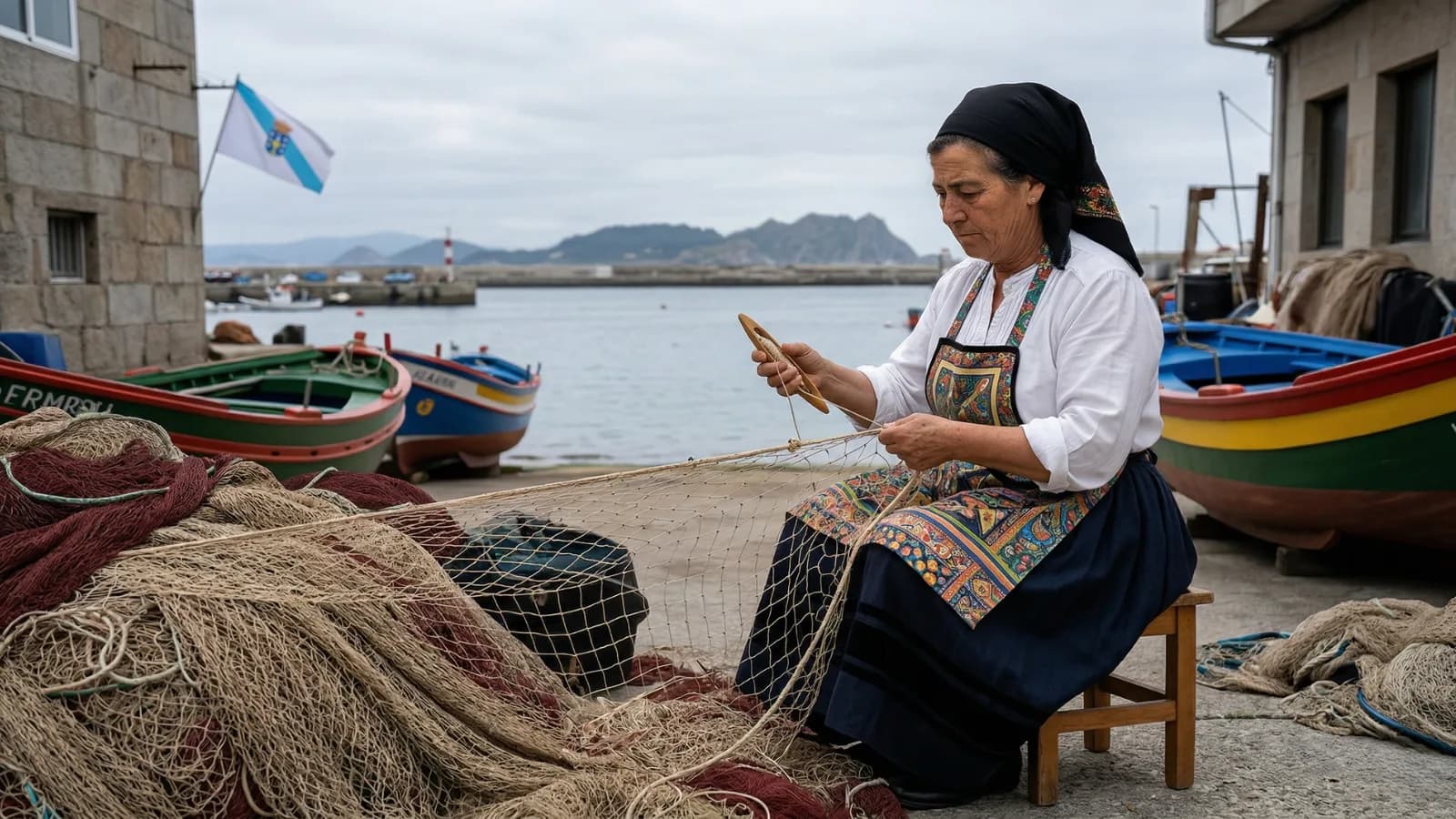
VigoOutdoor Escape Game & Treasure Hunt
Sunken treasures and Celtic heritage
Welcome to Vigo, the vibrant port city of Galicia, where the Atlantic Ocean meets rich history and unique culture! If you're looking for things to do in Vigo, you've come to the right place. Stroll through the charming Casco Vello with its cobbled streets and stone houses, discover local flavors at the Mercado da Pedra, or admire breathtaking views of the ria from Monte do Castro. Vigo is a city full of surprises, perfect for an unusual activity. Whether you're seeking adventure or cultural discoveries, this city has it all. And to spice up your exploration, why not embark on an outdoor escape game? Our scavenger hunts and treasure hunts will make you discover Vigo from a new perspective, combining fun and discovery. Get ready to explore the city's hidden treasures by solving thrilling puzzles.
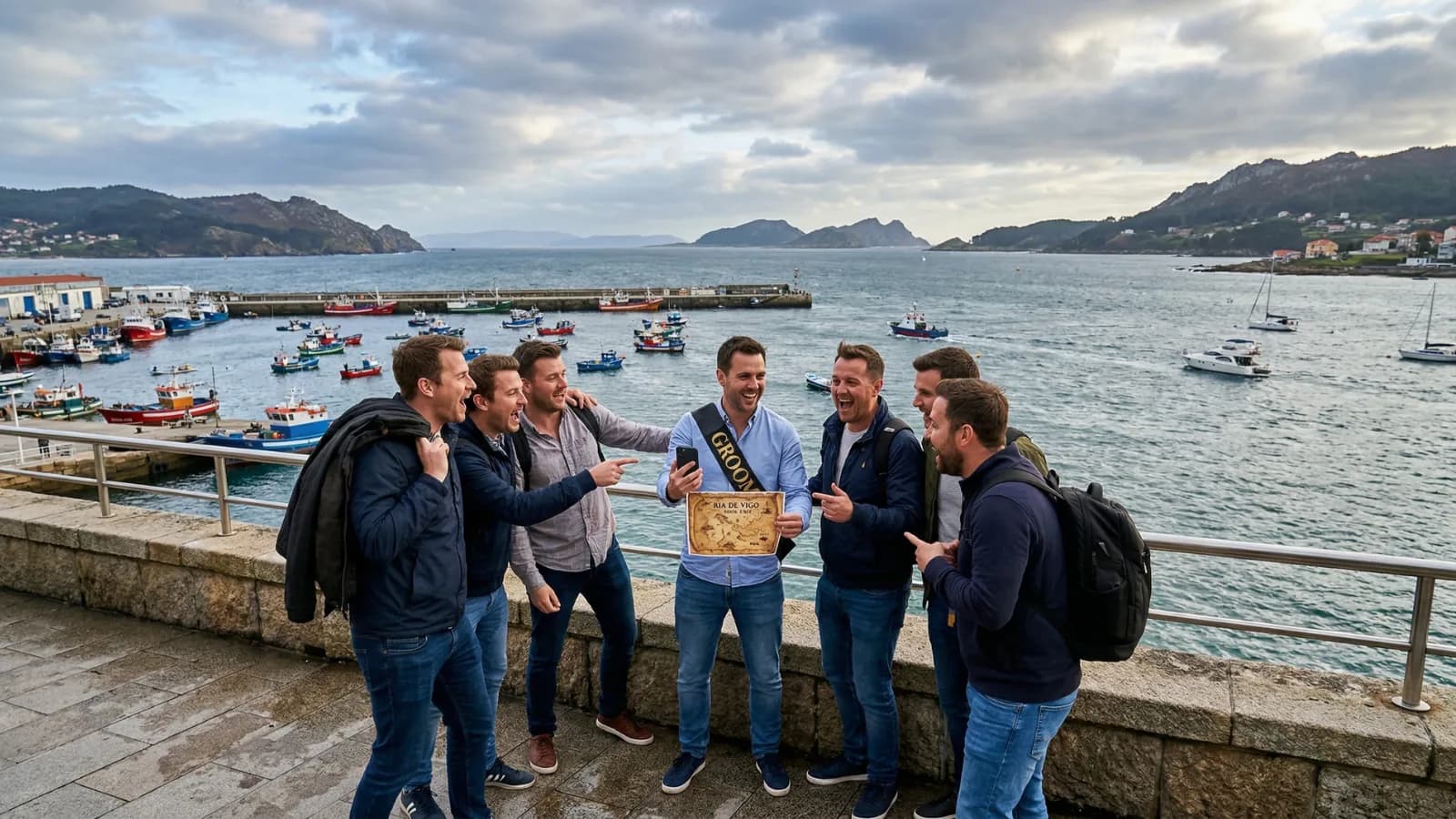
The Gold of Rande
The sunken treasure of the Vigo estuary
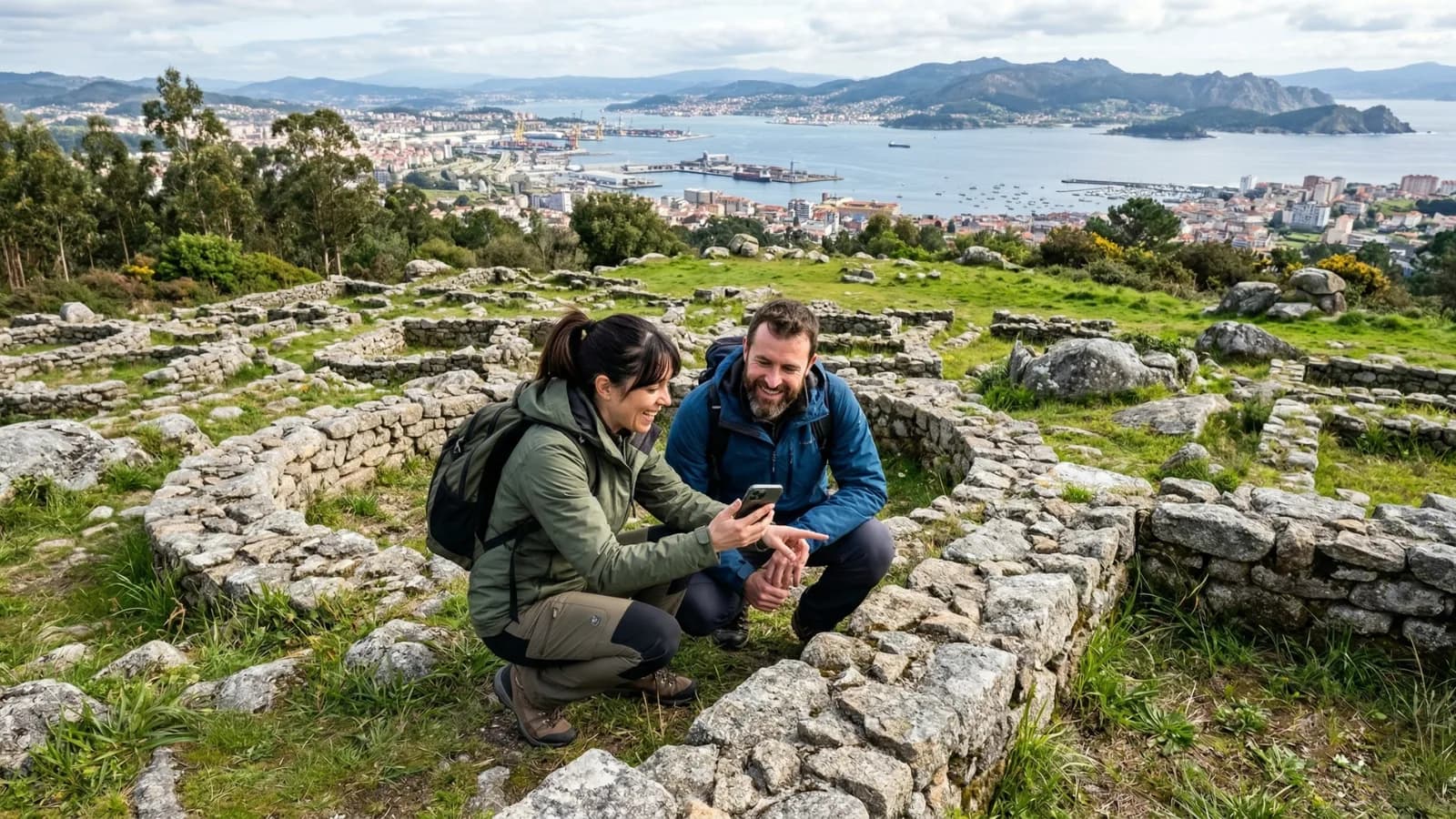
The Sons of the Castro
From Celts to oyster farmers: Vigo through the ages
Unusual things to do in Vigo
Vigo is full of unusual activities, and our outdoor escape games are definitely among them! Far from the beaten path, our courses invite you to explore the city in a fun and original way. Imagine solving puzzles outdoors, deciphering codes hidden in the architecture of the Casco Vello, or following clues along the port. It's a life-sized treasure hunt that transforms Vigo into a huge playground. Forget classic guided tours and opt for an adventure that will stimulate your team spirit and observation skills. It's the perfect opportunity to have a memorable experience and discover Vigo's secrets in a completely new way.
Things to do in Vigo with kids
Vigo is a fantastic destination for families, and our outdoor escape games are a great way to explore the city with children! The courses above are designed to engage both young and old in a shared adventure. Imagine your children transformed into detectives, solving puzzles and searching for clues in the streets of Vigo. It's an activity that combines play, discovery, and learning, away from screens. Monte do Castro offers green spaces to let off steam, and the port is always fascinating. Our treasure hunts allow you to create unforgettable family memories, while discovering the city's history and legends in an interactive and fun way.
Vigo for couples
Looking for a romantic and original getaway in Vigo? Our outdoor escape games are the perfect activity for couples! Far from typical candlelight dinners, our courses invite you to collaborate, communicate, and laugh together while exploring the city's charms. Imagine yourselves hand in hand, deciphering puzzles in the picturesque setting of the Casco Vello or admiring a sunset from Monte do Castro after solving your last challenge. It's a unique way to strengthen your bond, share an exciting adventure, and create memorable memories. Let yourself be seduced by this urban treasure hunt and discover Vigo from a new perspective, hand in hand.
What to do in Vigo when it rains
Vigo is a beautiful city, but what to do if rain comes calling? Our outdoor escape games, although mostly outdoors, can be played with an umbrella for the more adventurous! However, if the weather is truly dismal, it's best to prioritize indoor activities. The courses above will have you exploring the streets, so pack a raincoat. Otherwise, the Galicia Sea Museum or the Afundación Cultural Center are excellent alternatives to take shelter and continue discovering Vigo's riches indoors.
Where is Vigo, and where do the routes start?
Starting points of our routes and the places they pass through.
Route starting points
Places in Vigo
- Puerto de Vigo · The fishing port and waterfront
- Casco Vello · The cobbled lanes of the old town
- Castillo de San Sebastián · The fortress on Castro hill
- Praza da Constitución · The heart of the old town
- Faro de la Guía · The lighthouse facing the Cíes Islands
- Monte do Castro · The Celtic castro remains
- Muralla medieval · The old town ramparts
- Rúa Real · The galleried houses
- Mercado da Pedra · Vigo's oldest market
- Rúa das Ostras · Vigo's oyster farmers
The history of Vigo
From Roman Settlement to Fishing Port
Vigo's history begins with pre-Roman fortified settlements, known as castros, on Monte do Castro, dating from the 3rd-1st centuries BC. With the arrival of the Romans in the 1st-4th centuries AD, a settlement called Vicus emerged, believed to be the origin of the city's modern name. Vigo remained a fishing village throughout the Middle Ages, often overshadowed by larger neighboring towns. The first written records mentioning Vigo as an independent settlement appear between the 11th and 15th centuries.
The city's location on the protected Ria de Vigo bay was central to its development. In 1529, King Charles V granted Vigo the right to trade with the American colonies, which boosted its port and economy. This growing importance attracted attention, leading to attacks by privateers like Francis Drake in 1589. To counter such threats, construction of city walls began in 1656 under King Philip IV.
Industry and Modern Growth
One of Vigo's historical moments occurred on October 23, 1702, during the War of the Spanish Succession, when the naval Battle of Rande took place in the Bay of Vigo. An Anglo-Dutch fleet destroyed a Franco-Spanish squadron. A century later, on March 28, 1809, the people of Vigo expelled Napoleon's French troops, making it the first city in Europe to be liberated from French occupation. In recognition of this, Vigo was granted the honorary title "Faithful, Loyal and Courageous City" in 1810.
The late 19th century marked a turning point with the arrival of Catalan entrepreneurs who developed the fish canning industry. This transformed Vigo from a fishing village into an industrial center, leading to population growth. The city continued its industrial expansion into the 20th century, with the creation of the Free Trade Zone (Zona Franca de Vigo) in 1947, which further supported its economic development.
What to see in Vigo
- Puerto de Vigo — Europe's largest fishing port. Observe trawlers, tugs, and ferries, and see the scale of the fishing industry.
- Casco Vello — The old town preserves a medieval layout with narrow granite streets and small squares. It features traditional Galician architecture with stone facades and wrought-iron balconies.
- Castillo de San Sebastián — This 17th-century fortress was built to defend Vigo from English and Portuguese attacks. Only the northern walls and two sentry boxes remain, offering views of the estuary.
- Praza da Constitución — This square has been central to Vigo's social life since the 19th century. It is surrounded by traditional granite buildings with arcades and wrought-iron balconies. The towers of the Co-Cathedral of Santa María are visible from here.
- Faro de la Guía — This lighthouse provides views across the Ria de Vigo towards the Cíes Islands. The surrounding area is a spot for a walk and offers a perspective of the city and its harbor.
- Monte do Castro — Explore the remains of a Celtic castro, a fortified settlement from the Iron Age, which are the earliest signs of human habitation in Vigo. The park also offers views over the city and the bay.
- Rúa Real — This street in the Casco Vello is lined with houses, including the 15th-century Casa de Ceta (also known as Casa de Arines), which now houses the Camoes Institute of the Portuguese Language.
- Mercado da Pedra — This market, dating back to the early 19th century, was a hub for local produce and seafood. Today, it is known for its oyster stalls and local delicacies.
When to visit Vigo
The period from mid-June to mid-September offers warm weather. During these months, temperatures are above 23°C (74°F). July is the clearest and driest month. Ferries to the Cíes Islands operate frequently then, but booking in advance is essential as visitor numbers are capped.
Shoulder seasons, from mid-April to mid-June and mid-September to mid-October, offer milder weather and fewer crowds, though rainfall is more frequent. Avoid the period from October to May if you want to avoid rain, as Vigo is rainy then, with December being the wettest month. Winters are mild but often cloudy, rainy, and windy.
Getting around Vigo
Vigo-Peinador Airport (VGO) is 13 km from the city center. A taxi ride takes about 15 minutes and costs €25.50. The 9A urban bus connects the airport to the city center in about 30 minutes. Santiago de Compostela Airport (SCQ) is 76 km away, with high-speed trains to Vigo taking around 70 minutes.
The city center and Casco Vello are best explored on foot due to their narrow, cobbled streets. Public transport, including buses, is available for longer distances. Parking in the city center can be challenging; look for underground parking garages. Local street markets, such as Coia Market on Wednesdays and Bouzas Market on Sundays, offer a range of goods. The Mercado da Pedra is open daily and offers fresh seafood. Many shops and businesses may observe a siesta in the early afternoon, typically between 2 PM and 5 PM, particularly outside the main commercial areas.
Things you probably do not know about Vigo
Verified details most visitors walk straight past.
- Co-Cathedral of Santa María
- What's unusual about the sundial on Vigo's Co-Cathedral of Santa María? The sundial on the Co-Cathedral of Santa María, built in 1811, is not south-facing, which is an uncommon orientation for religious buildings of its type.
- O Berbés neighborhood
- Why do many houses in the O Berbés neighborhood have arcades at ground level? The arcades in the O Berbés neighborhood were a functional architectural element, allowing fishermen to store their gear and small boats, and to clean and sell their catch almost at their doorstep, as the sea once reached these houses directly.
- Mercado da Pedra
- What illicit trade once thrived in the Mercado da Pedra due to its proximity to the port? During the post-Civil War years of scarcity, the Mercado da Pedra became a hub for 'estraperlo' (black marketeering), where products brought by ship would be exchanged almost clandestinely, often hidden in fruit or fish boxes.
- Vigo's nickname: 'Cidade Olívica'
- Why is Vigo known as the 'Olive City'? Vigo earned the nickname 'Cidade Olívica' (Olive City) because, after a conflict where Galician nobility supported Juana la Beltraneja against Isabel de Castilla, the victor ordered the cutting down of all olive trees in Galicia, which symbolized peace.
- Castillo de San Sebastián
- What happened to parts of the Castillo de San Sebastián? One bastion and two half-bastions of the 17th-century Castillo de San Sebastián were demolished to make way for the construction of the City Hall.
Questions about visiting Vigo
How many days should I spend in Vigo?
To experience Vigo's main attractions, including its historic center, port, and natural surroundings like Monte do Castro, a stay of 2 to 3 days is generally recommended. This allows time for exploration and enjoying the local cuisine.
What are the best neighborhoods to explore in Vigo?
The Casco Vello (Old Town) is essential for its history and traditional architecture. The O Berbés area, near the port, offers a glimpse into Vigo's fishing heritage. For a more modern feel, the Ensanche district showcases 19th-century growth and elegant buildings.
Is Vigo a good destination for families with children?
Yes, Vigo offers several family-friendly activities. Beaches like Samil are suitable for children with calm, shallow waters. The city also has parks, museums, and during Christmas, it transforms with elaborate light displays and festive attractions.
What is the typical budget for a day in Vigo?
A moderate daily budget for Vigo, excluding accommodation, could range from €50 to €80. This would cover meals, public transport, and entry to a few attractions. Dining on fresh seafood can vary in cost, but local tapas bars offer more affordable options.
How easy is it to get around Vigo without a car?
Vigo's city center and old town are very walkable. For longer distances, an extensive public bus network connects different parts of the city. Taxis are also readily available. Ferries provide access to the Cíes Islands and other points in the estuary.
What are some local specialties I should try in Vigo?
Vigo is known for its seafood. You can try the fresh oysters from Rúa das Ostras, often with a local Albariño wine. Other specialties include *pulpo á feira* (Galician-style octopus) and a variety of fresh fish and shellfish from the ria.
Frequently asked questions
How much does an outdoor escape game cost in Vigo?
An OddballTrip outdoor escape game in Vigo costs €12 per team, not per person! This unique price makes the activity very affordable, especially if you come with a group of friends or family. It's the perfect opportunity to enjoy a thrilling adventure without breaking the bank, while exploring the city in a unique way. The price includes access to the full game, puzzles to solve, and access to the application. Get ready for an unforgettable experience on a controlled budget!
Is it suitable for children / families?
Absolutely! Our outdoor escape games in Vigo are designed to be an excellent family activity. The puzzles are varied and accessible, allowing everyone to participate and contribute. Children love the treasure hunt aspect and the playful discovery of the city. It's a great way to spend quality time with family, stimulate the curiosity of the youngest, and create memorable moments together. We generally recommend a minimum age of 8 for active participation.
How long does an escape game last in Vigo?
The duration of our outdoor escape games in Vigo generally varies between 1h30 and 2h30. This depends on your pace, your team spirit, and your ability to solve the puzzles! We advise you to allow a 3-hour slot to be comfortable, including preparation time and a few breaks if you wish. The goal is to have fun and explore the city, not to rush. Take your time to fully enjoy the experience and the beautiful landscapes of Vigo.
Do I need to book in advance?
No, no reservation needed with OddballTrip! Our outdoor escape games in Vigo are designed to offer you maximum flexibility. You can buy your game online whenever you want and start the adventure at the most convenient time for you, once you're there. No time constraints, no fixed appointments. It's ideal for organizing your day without stress and adapting to unforeseen circumstances. Buy, download the app, and start exploring whenever you feel like it!
What to visit in Vigo beyond escape games?
Beyond our exciting escape games, Vigo offers a multitude of treasures to discover. Don't miss the historic Casco Vello district, ideal for strolling and enjoying tapas. Climb Monte do Castro for breathtaking panoramic views of the ria and the city. Vigo's port is also fascinating, a testament to intense maritime activity. For seafood lovers, the Mercado de la Pedra is a must-visit. And if time permits, an excursion to the Cíes Islands, a protected natural park, is an unforgettable experience.
What is the best season to visit Vigo?
The best season to visit Vigo and fully enjoy our outdoor escape games is undoubtedly spring (April to June) and summer (July to September). During these months, the climate is mild and sunny, ideal for walking and exploring the city on foot. Summer also offers many festivities and the opportunity to enjoy the beaches. Autumn can be pleasant, but with a higher risk of rain. Winter is cooler and wetter, but the city remains charming for a cultural getaway.
Other destinations in Galicia
More cities in Spain
Oviedo
Pre-Romanesque UNESCO art and Camino Primitivo
Salamanca
The golden city and its university secrets
Cáceres
UNESCO medieval city and noble families
Ávila
Medieval walls and Saint Teresa
Trujillo
Cradle of Conquistadors, a medieval city in Extremadura.
Santillana del Mar
Medieval village and Altamira caves
Segovia
The devil's aqueduct and Isabella's crown
Activities to discover nearby
Guided tours, skip-the-line tickets and local experiences to book in advance.
💡 Optional booking — you can also buy on-site. All links open in a new window, your OddballTrip visit stays preserved.