
LanzaroteOutdoor Escape Game & Treasure Hunt
Volcanic landscapes and Manrique legacy
Lanzarote, the volcanic island of the Canary Islands, is a captivating destination with its lunar landscapes and unique artistic heritage, notably thanks to César Manrique. Beyond the golden beaches of Papagayo and the waves of Famara, the island is full of treasures to explore. Whether you're fascinated by the geothermal wonders of Timanfaya National Park, charmed by the cactus gardens, or intrigued by the Jameos del Agua, Lanzarote offers a multitude of activities. For a truly different experience, why not embark on an outdoor escape game? It's an original and fun way to discover the island's secrets. Our scavenger hunts and treasure hunts invite you to explore cities and their hidden corners, transforming your visit into a real adventure. Ready to take on the challenge and experience an unusual activity that combines discovery and reflection? Our courses await you for unforgettable moments!
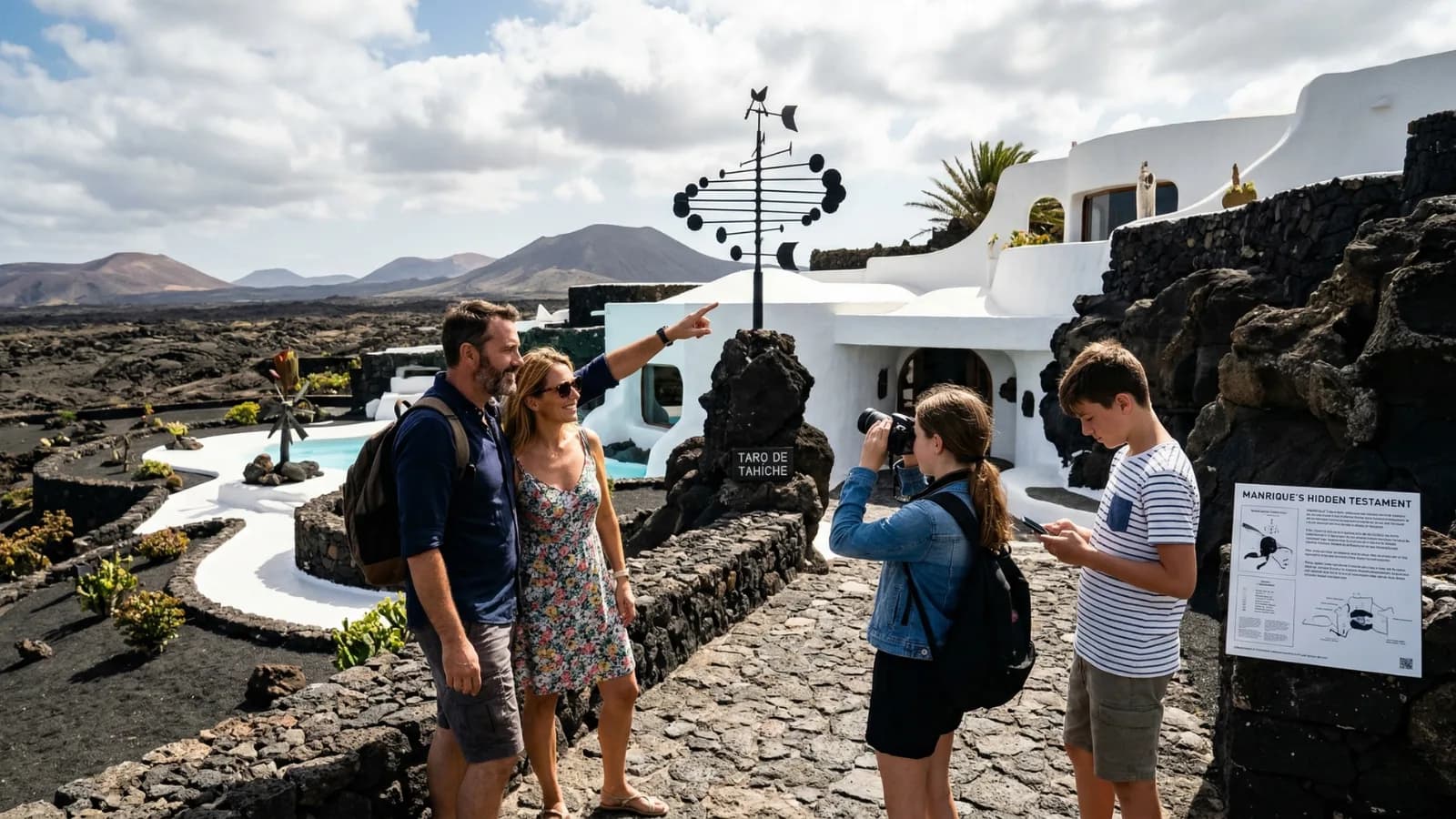
Manrique's Volcano
César Manrique, the artist who turned lava into art
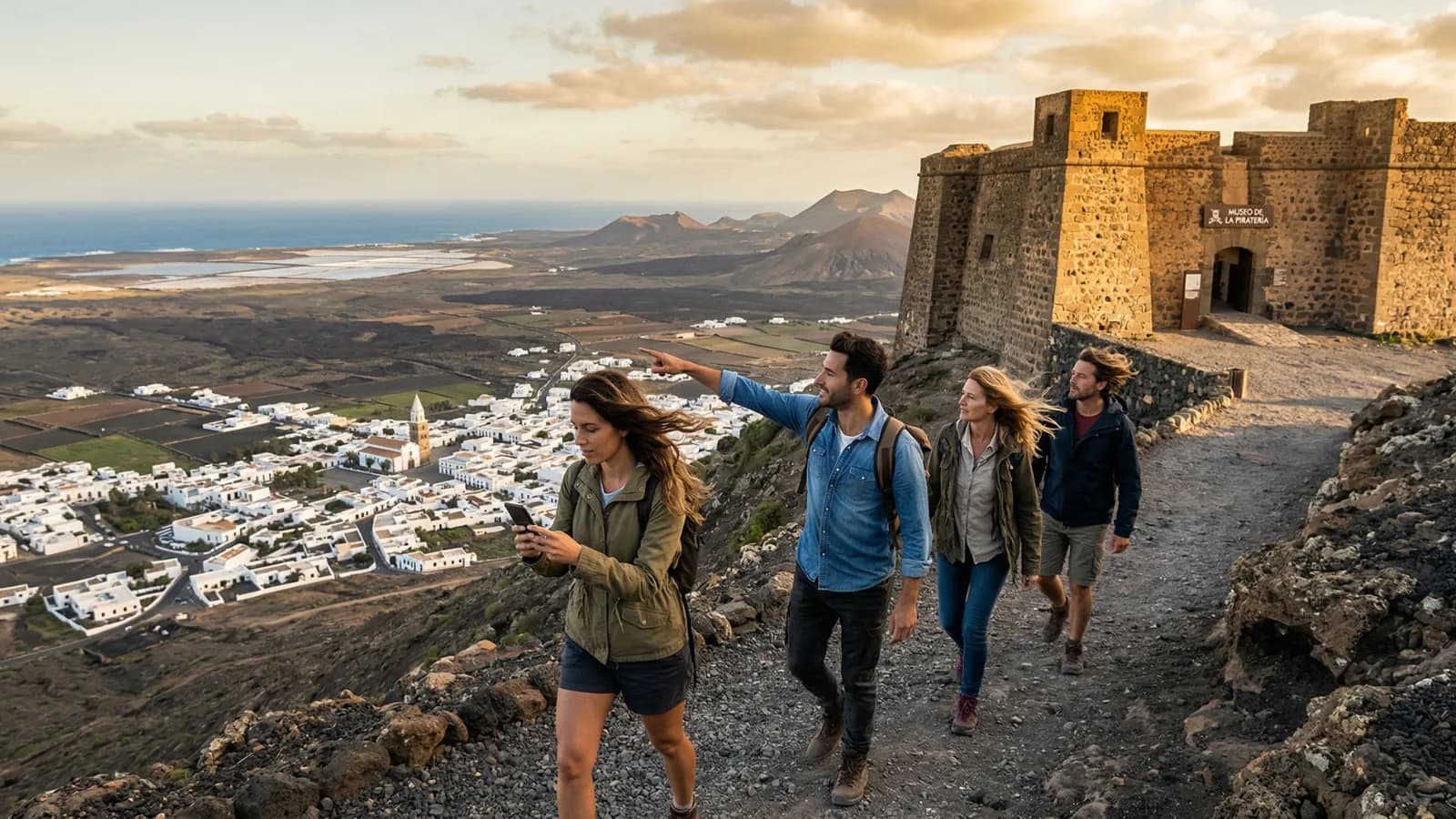
The Treasure of Teguise
The last Béthencourt heir and the copper-engraved poem
Unusual things to do in Lanzarote
Lanzarote is, par excellence, the island of unusual experiences. Beyond the beaten path, you can explore volcanic tunnels, marvel at fire-sculpted landscapes, or even taste wine grown on lava fields. To add a touch of adventure and mystery to your stay, our outdoor escape games are the perfect activity. Imagine solving puzzles outdoors, amidst breathtaking landscapes, transforming a simple stroll into a true treasure hunt. It's a unique way to immerse yourself in the island's atmosphere while stimulating your mind.
Things to do in Lanzarote with kids
Lanzarote is a fantastic destination for families, offering activities for all ages. From safe beaches to water parks, and educational visits to Manrique's works, there's always something to do. To spice up your vacation and create unforgettable memories, our outdoor escape games are an ideal option. Designed to be accessible and fun, they transform the discovery of the island into a grand scavenger hunt where young and old collaborate to solve puzzles. It's an excellent way to stimulate children's curiosity while exploring the charms of Lanzarote as a team.
Lanzarote for couples
Lanzarote offers an idyllic setting for a romantic getaway. Between spectacular sunsets over volcanoes, intimate dinners facing the ocean, and strolls hand-in-hand on deserted beaches, the island is conducive to connection. For a couple's activity that's out of the ordinary, our outdoor escape games invite you to share an intellectual and fun adventure. It's the perfect opportunity to strengthen your bonds by solving puzzles together, laughing, and creating memorable souvenirs while exploring Lanzarote's charming corners. An experience for two, combining complicity and discovery.
What to do in Lanzarote when it rains
Although Lanzarote is renowned for its generous sunshine, the sky can sometimes be cloudier. While our escape games are primarily outdoor activities, a little shower won't spoil the adventure! Equip yourself with a raincoat and the exploration continues. For more persistent rainy days, the island offers alternatives such as museums, art galleries, or visits to Jameos del Agua and Cueva de los Verdes, which provide natural shelter and captivating indoor experiences.
Where is Lanzarote, and where do the routes start?
Starting points of our routes and the places they pass through.
Route starting points
Places in Lanzarote
- Fundación César Manrique · Taro de Tahíche
- Jameos del Agua · Atlantida volcanic tunnel
- Mirador del Río · Northern cliff of Lanzarote
- Castillo de San José · Arrecife
- Plaza de la Constitución · Heart of the former capital
- Iglesia de Nuestra Señora de Guadalupe · 15th-century fortress-church
- Palacio Spínola · Former Genoese merchants' residence
- Convento de Santo Domingo · Now an art center
- Castillo de Santa Bárbara · Piracy Museum
The history of Lanzarote
Early Inhabitants and European Arrival
Lanzarote's history extends back at least two millennia. Archaeological findings indicate the island was first settled by people of Berber descent from North Africa. These early inhabitants, known as Majos, sustained themselves through pastoralism, fishing, and limited agriculture. They referred to the island as Tyterogaka.
The island remained largely isolated until the early 14th century. The Genoese navigator Lancelotto Malocello is believed to have been the first European to visit, giving the island its current name. The Spanish conquest began in 1402 with the arrival of Jean de Béthencourt, who claimed Lanzarote for the Crown of Castile.
Volcanic Activity and Artistic Influence
A significant period in Lanzarote's modern history occurred between 1730 and 1736. A series of volcanic eruptions dramatically altered the island's landscape, creating 32 new volcanoes. This volcanic activity, while initially destructive, eventually led to a unique agricultural system. Islanders learned to use volcanic ash to enhance crop productivity, particularly for grapes, which boosted exports.
The 20th century brought a different kind of transformation, largely shaped by the artist, architect, and environmentalist César Manrique (1919–1992). Born in Arrecife, Manrique returned to Lanzarote in the 1960s. He developed a vision to integrate art and architecture with the island's natural volcanic environment. He promoted sustainable development, advocating for low-rise buildings and the use of local materials such as volcanic stone and whitewashed walls. His efforts prevented the overdevelopment seen in other tourist destinations. Manrique's influence is visible across the island, contributing to its designation as a UNESCO Biosphere Reserve in 1993, the year after his death.
What to see in Lanzarote
- Fundación César Manrique — César Manrique's former residence, constructed within a lava flow near Tahíche. The building incorporates five volcanic bubbles as living spaces, demonstrating his integration of natural formations and architecture.
- Jameos del Agua — Part of a volcanic tunnel system, adapted by César Manrique into an artistic and cultural center. It contains a natural underground lake inhabited by a species of blind albino crabs.
- Mirador del Río — A viewpoint designed by César Manrique, located on the Risco de Famara at 475 meters above sea level. It provides views of the Chinijo Archipelago, including La Graciosa island. The structure was built on the site of a 19th-century artillery battery.
- Castillo de San José — An 18th-century fortress in Arrecife, originally built to defend the port. César Manrique later converted its basement into an International Museum of Contemporary Art and a restaurant.
- Castillo de Santa Bárbara — Located on Guanapay volcano near Teguise, this 15th-century fortress now houses a Piracy Museum, detailing the island's historical defense against pirate raids.
- Palacio Spínola — A historic residence in Teguise, once home to Genoese merchants. It displays traditional Canarian architecture.
- Iglesia de Nuestra Señora de Guadalupe — The main church in Teguise, a religious and architectural landmark in the former capital, featuring a distinct bell tower.
When to visit Lanzarote
Lanzarote has a consistent climate throughout the year. For comfortable weather and fewer people, consider visiting during the shoulder seasons: April to June and September to November. During these months, daytime temperatures range from 22-29°C. Sea temperatures are around 20-22°C.
Avoid July and August if you prefer to avoid the largest crowds and highest temperatures, which can reach 30-31°C. These months also bring strong trade winds to the northern beaches. December and January are the wettest months, though average highs remain around 20-21°C.
Getting around Lanzarote
Lanzarote César Manrique Airport (ACE) is 5-6 kilometers southwest of Arrecife. A taxi to Arrecife takes about 10 minutes and costs approximately €15. Bus lines 22 and 23 connect the airport to Arrecife in 7-15 minutes for €1.40.
While buses (guaguas) serve major towns, their coverage to many attractions is limited, and frequencies decrease on weekends and holidays. Renting a car is recommended for exploring the island. Roads are generally good, and fuel costs are moderate. Parking is usually free outside central resort areas.
Markets are held regularly: the largest is every Sunday in Teguise. Arrecife hosts a craft market every Saturday morning in Plaza de las Palmeras. Markets also take place in Marina Rubicón (Playa Blanca) on Wednesdays and Saturdays, and in Costa Teguise on Friday evenings.
Things you probably do not know about Lanzarote
Verified details most visitors walk straight past.
- Mirador del Río
- What was the Mirador del Río before César Manrique transformed it into a viewpoint? Before Manrique's intervention in the early 1970s, the site was a late 19th-century artillery position known as Baterías del Río, used to protect the strategic northern coast during the Spanish-American War.
- Castillo de San José
- Why did an 18th-century military fortress in Arrecife come to house a contemporary art museum in its basement? The Castillo de San José, built between 1777 and 1779 to defend Arrecife from pirate attacks, was transformed by César Manrique in the 1970s into the International Museum of Contemporary Art (MIAC), integrating a restaurant into its historic structure.
- Jameos del Agua
- What unusual residents can be found in the natural lake within Jameos del Agua? The natural underground lake at Jameos del Agua is home to a unique and rare species of blind albino crabs, *Munidopsis polymorpha*, which are typically found in deep ocean waters.
- Fundación César Manrique
- How did César Manrique incorporate volcanic geology directly into his former home? César Manrique's former home, now the Fundación César Manrique, was built directly into a lava flow and incorporates five natural volcanic bubbles as distinct living spaces, blending architecture with the geological formations.
- Lanzarote's Agriculture (La Geria)
- How did Lanzarote's devastating volcanic eruptions in the 18th century lead to a unique agricultural method? The volcanic eruptions from 1730 to 1736 covered much of the island in ash. Islanders learned to cultivate grapes in hollows dug into the volcanic soil, protecting the vines from wind and retaining moisture, creating the distinctive landscape of La Geria and boosting wine production.
Questions about visiting Lanzarote
How many days should I spend in Lanzarote?
For a first-time visitor, 3 to 7 days is a good duration. Three days allows you to cover the main highlights, while a week offers a more relaxed pace to explore the island's diverse landscapes, César Manrique's works, and enjoy the beaches.
What is the best way to get around Lanzarote?
While public buses (guaguas) connect major towns and resorts, renting a car is highly recommended for exploring Lanzarote's attractions freely, as many sites are not well-served by public transport. Taxis are also available and metered.
Which areas are best for staying in Lanzarote?
Popular tourist centers include Puerto del Carmen, Costa Teguise, and Playa Blanca, offering a range of accommodations and amenities. Puerto del Carmen is particularly convenient for car-free travel due to its extensive excursion options and walkable layout.
Is Lanzarote a good destination for families with children?
Yes, Lanzarote is family-friendly, especially during July and August when the seas are calm and everything is open. The island offers various activities, from beaches and water parks to exploring volcanic landscapes and unique art centers.
What is the typical budget for a trip to Lanzarote?
Costs vary, but visiting during the shoulder seasons (March-May and October-November) can offer better value on flights and accommodation. Fuel is relatively cheap, and public transport is affordable for inter-town travel.
Are there any local customs or traditions I should be aware of?
While not as prevalent as in mainland Spain, some smaller shops and businesses in Lanzarote might observe a siesta, typically closing in the early afternoon for a few hours. It's always good to check opening times. Tipping is customary in restaurants and for services.
Frequently asked questions
How much does an outdoor escape game cost in Lanzarote?
Our outdoor escape games in Lanzarote are designed to be accessible to everyone. The price is €12 per team, not per person! This means you can play with your friends or family without worrying about the individual cost. It's excellent value for money for an activity that combines exploration, problem-solving, and fun, allowing you to discover the city in an original and economical way.
Is it suitable for children / families?
Absolutely! Our courses are designed to be playable by families. The puzzles are varied, some requiring adult logic, while others are more visual or require observation from younger participants. It's a perfect collaborative activity for bonding and creating memories. We generally recommend active participation from age 8, but younger children can certainly follow along and help search for clues.
How long does an escape game in Lanzarote last?
The duration of our escape games in Lanzarote is flexible, as you play at your own pace. On average, allow between 1h30 and 2h30 to complete a course. This includes the time spent solving puzzles and moving between points of interest. You are free to take breaks, have a drink, or visit a monument along the way, making the experience fully customizable.
Do I need to book in advance?
No, not necessarily! One of the great advantages of our outdoor escape games is their flexibility. You can purchase and start your game whenever you want, without time constraints or booking requirements. All you need is your charged smartphone and an internet connection. It's ideal for last-minute decisions or for adapting your vacation schedule to your current desires.
What to visit in Lanzarote beyond the escape games?
Lanzarote is full of wonders! Don't miss Timanfaya National Park with its volcanic landscapes, Jameos del Agua and Cueva de los Verdes for their underground beauty, or Mirador del Río for breathtaking views. Explore César Manrique's works, such as the Foundation or the Cactus Garden. Of course, beaches like Papagayo or Famara are essential for relaxation or water sports.
What is the best season to visit Lanzarote?
Lanzarote enjoys pleasant weather all year round, making it an ideal destination in any season. However, the spring months (April-May) and autumn (September-October) offer mild temperatures and fewer crowds, perfect for exploring the island and enjoying our escape games. Summer is warmer and livelier, while winter remains mild and sunny, ideal for escaping continental cold.
More cities in Spain
Activities to discover nearby
Guided tours, skip-the-line tickets and local experiences to book in advance.
💡 Optional booking — you can also buy on-site. All links open in a new window, your OddballTrip visit stays preserved.