VindolandaOutdoor Escape Game & Treasure Hunt
Roman fort at the edge of the Empire
What to do in Vindolanda? Immerse yourself in the heart of Roman history at this fascinating archaeological site, an ancient fort on the edge of the Empire. Far from the crowds of big cities, Vindolanda offers a unique immersive experience, where every stone tells a millennia-old story. Beyond simply visiting the famous Roman Fort and its museum, home to the precious Vindolanda tablets, imagine exploring the ruins in a completely new way. Our two outdoor escape games invite you to a real-life treasure hunt, transforming the ruins into a huge playground. It's an unusual activity and a captivating scavenger hunt that will lead you through different layers of history, from barracks to baths, and the foundations of Roman dwellings. Get ready to solve puzzles while soaking in the unique atmosphere of this historical place, an adventure that will delight both young and old explorers.
Vindolanda — The Lost Tablets
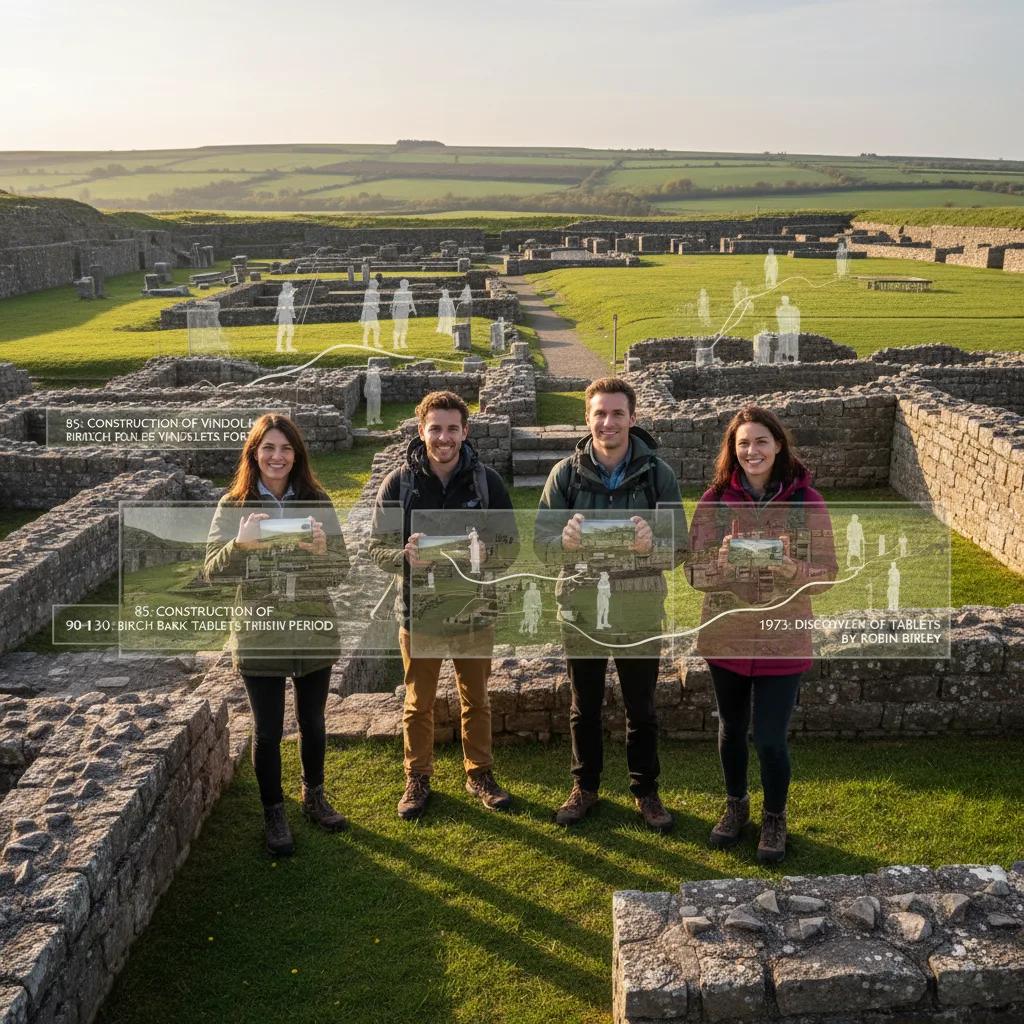
Uncover the secrets of the lost Vindolanda tablets! Decode hidden messages from Roman soldiers, solve the mystery of their disappearance, and reveal a conspiracy that threatened the frontier.
Vindolanda — The Scribes' Cipher
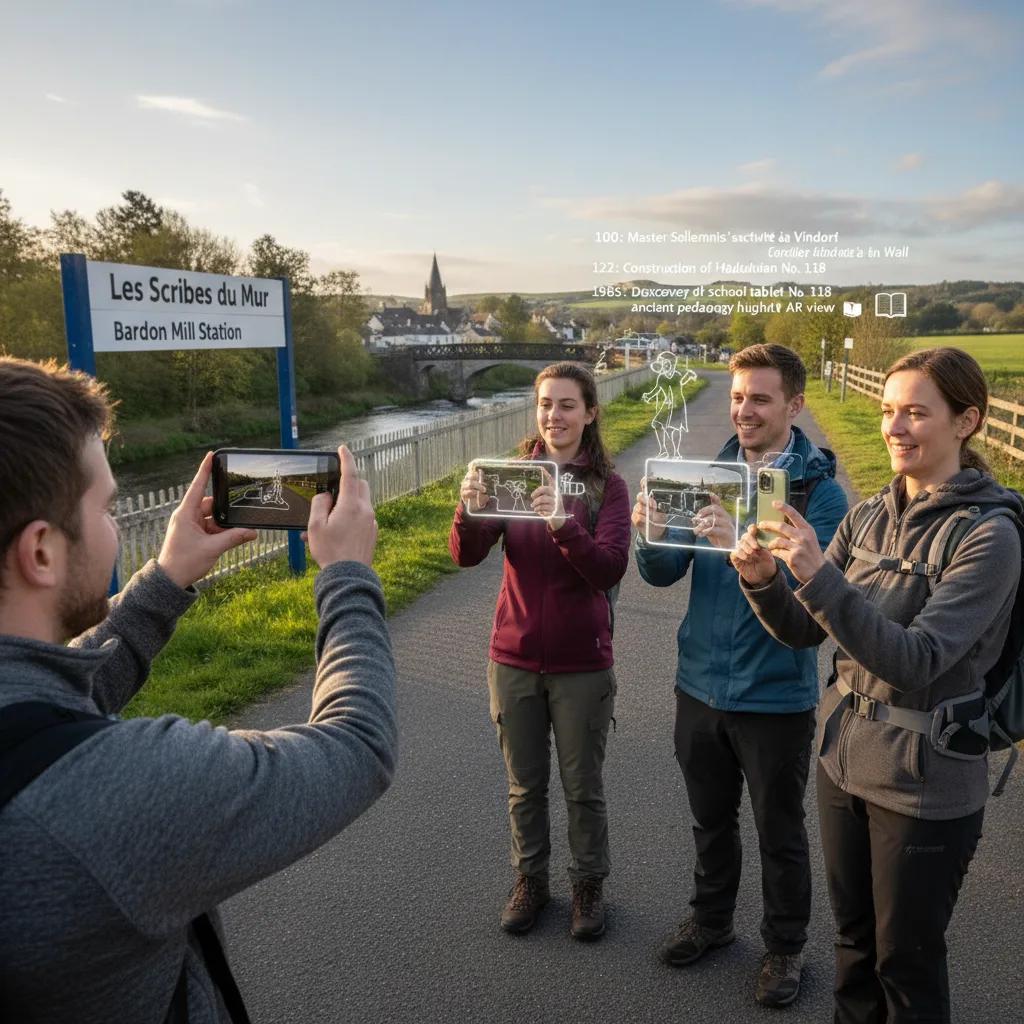
Uncover the encrypted secrets of Vindolanda's scribes. Decode hidden messages on ancient tablets revealing a conspiracy that threatened Rome's northern frontier.
Unusual things to do in Vindolanda
For an unusual activity in Vindolanda, off the beaten path, our outdoor escape games offer a fresh perspective on this historic site. Imagine solving puzzles and uncovering mysteries while wandering among the remains of the Roman fort, with the wind whispering tales of past legions. It's an original outing that combines archaeological exploration with the thrill of an interactive adventure. You don't just observe history; you live it, searching for clues hidden in the architecture and landscape. A memorable experience for those looking to spice up their cultural visit.
Things to do in Vindolanda with kids
Vindolanda is a fantastic destination for a family outing. Our escape games are designed to be accessible from age 6, with adapted puzzles that stimulate the curiosity of children and teens. It's a fun way to learn Roman history, transforming the archaeological site into a giant playground. Younger ones will love searching for clues and solving challenges alongside their parents, while teenagers will appreciate the strategic aspect and immersion. An educational and entertaining adventure that creates precious memories for the whole family, far beyond history books.
Vindolanda for couples
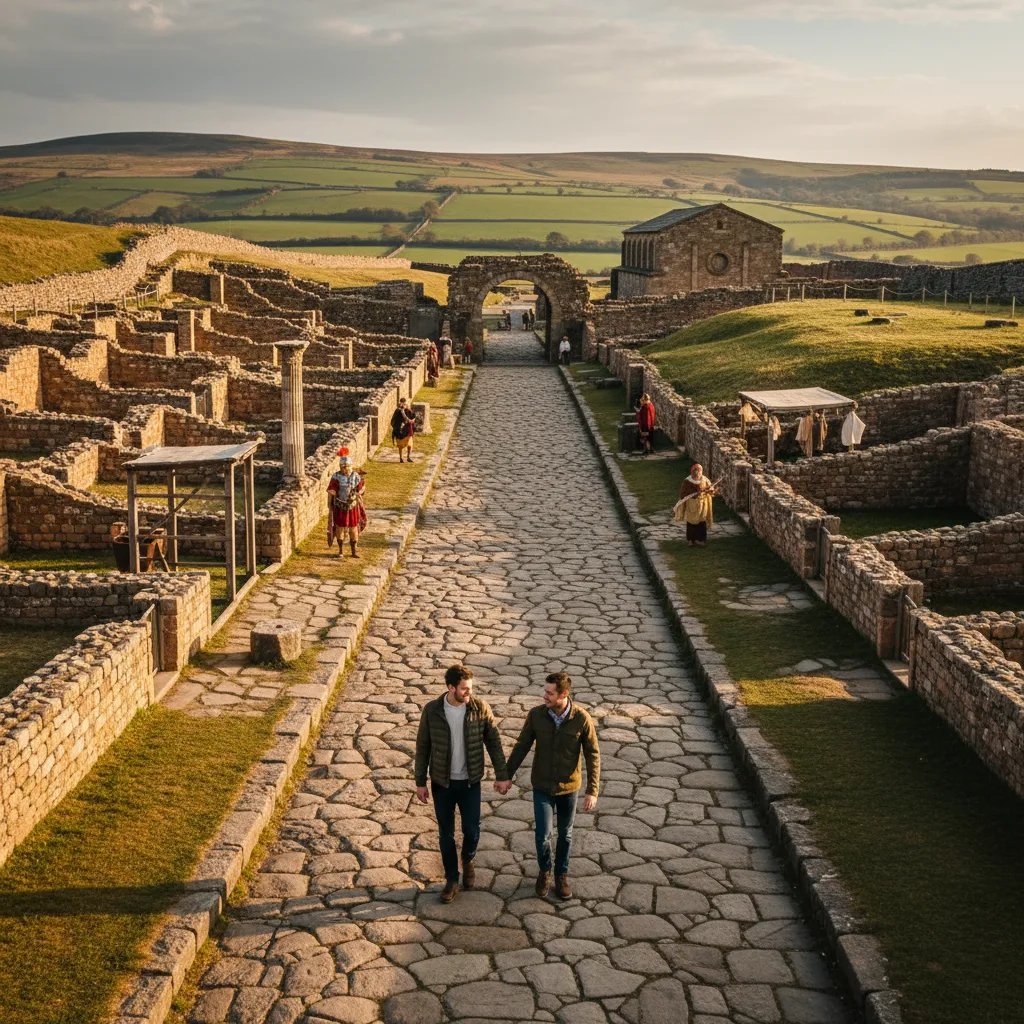
For couples seeking a romantic and enriching getaway, Vindolanda offers a unique setting. Imagine walking hand-in-hand, exploring the ancient Roman fort's pathways, with Hadrian's Wall as a backdrop. Our scavenger hunts are an excellent opportunity to share a special moment, collaborate on puzzles, and discover the secrets of this millennia-old heritage together. It's an intimate and interactive way to immerse yourselves in history, away from the hustle and bustle. Enjoy the breathtaking views of the Northumberland countryside and let the magic of the place create a memorable outing for two.
What to do in Vindolanda when it rains
What to do in Vindolanda when it rains? If the weather is unpredictable, don't worry about our escape games! Approximately 80% of our game routes take place under arcades, covered passages, or inside partially restored structures, offering welcome shelter. You can thus continue your treasure hunt without being too exposed to the elements. It's an excellent option to enjoy history and adventure even when the sky is grey, staying relatively dry while exploring the ruins.
Where is Vindolanda, and where do the routes start?
Starting points of our routes and the places they pass through.
Route starting points
Places in Vindolanda
- Principia (headquarters)
- Roman bath complex
- Vicus (civilian village)
- Fortified granaries
- Military barracks
- Military sanctuary
- Porta decumana
- Archaeological excavation area
- Bardon Mill Station
- Bridge over South Tyne
- St Luke's Church
- Path to Vindolanda
- Commanding officer's house
- West barracks
- Administrative building
- Vindolanda Museum (exterior)
The history of Vindolanda
From Timber to Stone: A Fort's Evolution
Vindolanda, meaning "white lawn" or "white field" in Celtic, was a Roman auxiliary fort established around 85 AD. It predates Hadrian's Wall by approximately 40 years. The fort was positioned on the Stanegate, an early Roman road connecting the River Tyne to the Solway Firth, serving as a defensive point on the northern frontier of Roman Britain. Over its nearly 300-year occupation, Vindolanda was demolished and rebuilt at least nine times, each iteration leaving its mark on the landscape.
The earliest forts were constructed from timber and turf, built quickly from available materials. These early layers, buried up to 13 feet deep in oxygen-free, waterlogged soil, have preserved an array of organic materials, including the Vindolanda writing tablets. Around 122 AD, Emperor Hadrian visited Britannia. While Hadrian's Wall was under construction, Vindolanda likely served as a supply base. The fort saw a transformation in the mid-2nd century, when it was rebuilt in stone, a common practice for longer-occupied sites.
Life Beyond the Garrison: The Civilian Settlement
Beyond the fort walls, a civilian settlement, known as a vicus, grew. This village was an integral part of Vindolanda, housing the families of soldiers, merchants, and artisans. The vicus at Vindolanda in the 3rd century spanned about 15 acres, larger than the fort itself, which was only three acres. This civilian population could be two to three times the size of the resident regiment. The fort and its accompanying vicus remained in use until about 285 AD, when it was largely abandoned. While Roman troops officially withdrew from Britain in 407 AD, occupation at Vindolanda continued for some time, with a small church even being built inside the old headquarters courtyard after 400 AD.
What to see in Vindolanda
- The Fortified Granaries — These buildings stored grain and other foodstuffs. They have raised floors for air circulation to keep provisions cool and dry. Their external walls were built and buttressed to withstand the pressure of stored grain.
- The Principia (Headquarters Building) — This was the administrative center of the fort. It typically featured a large courtyard, administrative offices, a treasury strongroom, and the sacred chapel where the unit's battle standards were venerated. The Vindolanda principia initially had an open courtyard with colonnaded porticoes, later enclosed into smaller rooms.
- The Roman Bath Complex — Vindolanda has two bathhouses: a large pre-Hadrianic one and a preserved 3rd-century complex. These were social centers where soldiers and civilians could clean themselves, exercise, and socialize. They featured heated rooms with hypocaust systems and cold plunge pools.
- The Vicus (Civilian Village) — Explore the remains of the civilian settlement that grew outside the fort. This area provides insight into the lives of families, traders, and craftspeople who supported the military garrison. You can see evidence of houses, workshops, and a tavern.
- Military Barracks — These narrow buildings, typically 10 meters wide and 40-50 meters long, housed a century or a turma of soldiers. Each block contained contubernia, paired rooms for eight men, with officers' accommodation at the end.
- Archaeological Excavation Area — During the digging season (April to September), you can often see live archaeological excavations in progress, offering a direct glimpse into ongoing discoveries at this site.
- The Vindolanda Museum — This museum displays artifacts unearthed at the site, including the Vindolanda writing tablets, leather goods, wooden objects, and textiles. It offers information on daily life on the Roman frontier.
When to visit Vindolanda
The best time to visit Vindolanda is between April and September. During these months, the weather is generally milder, and archaeological excavations are active, offering visitors the chance to see discoveries as they happen. The site is open from February to December, but the colder, wetter months outside of the main season can make exploring the outdoor ruins less comfortable. The Northumberland weather can be unpredictable, so layers are advisable.
Getting around Vindolanda
Vindolanda is near the village of Bardon Mill in Northumberland. The nearest train station is Bardon Mill Station, a few miles from the site. From there, visitors typically arrange a taxi or walk along the designated path to Vindolanda. Newcastle International Airport (NCL) is the closest major airport, approximately an hour's drive away. Parking is available on-site for visitors arriving by car. The site is best explored on foot, allowing visitors to walk through the extensive ruins and surrounding landscape. The terrain can be uneven in places due to the archaeological nature of the site. A café and toilets are available for visitors.
Things you probably do not know about Vindolanda
Verified details most visitors walk straight past.
- Vindolanda Tablets
- What mundane items did Roman soldiers request from home, revealing a surprisingly relatable aspect of ancient life? Among the thousands of fragments of wooden writing tablets found at Vindolanda, one soldier famously requested 'socks, two pairs of sandals, and two pairs of underpants' from home, offering a glimpse into the everyday needs of those stationed on the frontier.
- Roman Bath Complex
- Beyond scrubbing away dirt, what other, less pleasant, aspect of Roman life has been revealed by studying the drains of the bathhouse? Recent scientific studies of sediment from the bath complex's latrine drain have revealed widespread intestinal parasite infections among the Roman soldiers, including roundworm, whipworm, and Giardia, indicating persistent issues with hygiene and contaminated water.
- The Principia (Headquarters Building)
- The grand courtyard of the Principia might seem purely ceremonial, but what practical and surprising transformation did it undergo over time? While initially designed with grand, open, colonnaded porticoes, the administrative needs of the fort led to these airy spaces being enclosed and partitioned into smaller, functional rooms, traces of which can still be seen in the archaeological record.
- Fortified Granaries
- The robust construction of the granaries was designed to protect food supplies, but what insidious threats still managed to compromise the Roman diet? Despite their strong design with raised floors and buttressed walls, evidence from other Roman granaries, such as those in York and South Shields, shows that grain beetles, rats, mice, voles, and shrews posed a constant threat to stored provisions.
- Vicus (civilian village)
- The civilian settlement outside the fort housed diverse populations, but what unique construction technique found in some of its early buildings points to a specific origin for some inhabitants? Some early buildings in the *vicus*, dating to around 105–120 CE, were constructed using a distinctive wattle-and-daub technique with leather scraps from discarded tent panels for waterproofing or insulation, a method also seen in earlier fort ramparts built by a Tungrian unit from Belgic Gaul.
- Military Barracks
- Roman barracks are often imagined as purely male domains, but what unexpected evidence found within these structures challenges that assumption? Archaeological finds within the barracks, such as children's footwear and textiles, indicate that women and children also shared these crowded living spaces with the soldiers, disproving the long-held belief of an exclusively male military frontier.
Questions about visiting Vindolanda
How much time should I allocate for visiting Vindolanda?
To fully experience Vindolanda, including the fort ruins, the civilian settlement, and the museum, plan for at least 3 to 4 hours. If you wish to witness the ongoing archaeological excavations, factor in additional time, especially during the active digging season from April to September.
What are the best ways to get to Vindolanda?
Vindolanda is near Bardon Mill in Northumberland. The most convenient way to reach the site is by car, with parking available. If using public transport, take a train to Bardon Mill Station, then arrange for a taxi or walk along the designated path to the site.
Is Vindolanda suitable for children?
Yes, Vindolanda is a destination for children. The extensive ruins offer space to explore, and the museum provides engaging exhibits, including replicas of Roman buildings and artifacts. The ongoing excavations can also be a sight for younger visitors.
Are there any dining options available at Vindolanda?
Yes, Vindolanda has a café on-site that offers hot and cold drinks, snacks, lunches, and afternoon tea. These facilities are reserved for visitors to the Roman Vindolanda Fort and Museum.
Why is Vindolanda located south of Hadrian's Wall?
Vindolanda predates Hadrian's Wall. It was initially part of an earlier frontier defense system known as the Stanegate Frontier, established around 85 AD. When Hadrian's Wall was constructed around 122 AD, Vindolanda became an important support fort for the Wall.
What makes the artifacts at Vindolanda so well-preserved?
The preservation of organic artifacts like wood, leather, and textiles at Vindolanda is due to unique anaerobic conditions in the deeply buried early occupation layers. Roman builders would often cap demolished structures with clay and turf, creating oxygen-free environments that prevented decay.
Frequently asked questions
How much does an outdoor escape game cost in Vindolanda?
An outdoor escape game in Vindolanda costs €12 per team. This price is fixed, regardless of the number of players in your group (typically 2 to 6 people for an optimal experience). It's excellent value for a 1.5 to 2-hour activity that allows you to explore the site in a fun and interactive way. The price includes access to the game and all necessary elements to solve the adventure. Get ready for total immersion without breaking the bank!
Is it suitable for children / families?
Absolutely! Our escape games are designed to be a perfect family activity. The puzzles are varied, some more visual, others requiring a bit of thought, allowing everyone, from the youngest (from 6 years old with an adult) to adults, to contribute. It's a fantastic way to introduce children and teenagers to Roman history in a fun and engaging manner. They will love searching for clues and solving challenges together, creating unforgettable memories while learning.
How long does an escape game last in Vindolanda?
The average duration of an outdoor escape game in Vindolanda is approximately 1.5 to 2 hours. However, this can vary depending on your pace and your ability to solve the puzzles. Some faster groups might finish in 1 hour 15 minutes, while others may prefer to take their time exploring the site and soaking in the atmosphere, potentially taking up to 2.5 hours. The important thing is to enjoy the experience at your leisure, without pressure.
Do I need to book in advance?
Yes, it is highly recommended to book your escape game in advance, especially if you plan to visit during weekends, school holidays, or peak tourist season. This guarantees the availability of your preferred time and game, allowing you to plan your visit with peace of mind. While last-minute slots may sometimes be available, early booking ensures a better experience and avoids any disappointment.
What to visit in Vindolanda beyond the escape games?
Beyond our exciting escape games, Vindolanda is full of treasures to explore. Don't miss the famous Roman Fort, with its impressive foundations and reconstructions that bring antiquity to life. The Vindolanda Museum is an absolute must-see, housing the extraordinary Vindolanda tablets, unique written documents that offer an intimate glimpse into daily Roman life. Also, remember that the site is in immediate proximity to Hadrian's Wall, a marvel of Roman engineering.
What is the best season to visit Vindolanda?
Vindolanda can be visited year-round, but each season has its charm. Spring (April-May) and autumn (September-October) are often considered the best times, with pleasant temperatures and beautiful colors, ideal for outdoor exploration. Summer (June-August) offers the longest days but can be busier. Winter (November-March) is quieter and offers a mystical atmosphere, although the weather can be cold and wet. Always plan for appropriate clothing for English weather!
Other destinations in Northumberland
More cities in England
Hadrian's Wall
In the footsteps of Roman legions
Carlisle
Fortress of the Anglo-Scottish borders
Durham
Medieval city, between castle and cathedral
Whitby
Birthplace of Dracula and Gothic legends
Haworth
Home of the Brontë sisters and mysterious moors
York
Roman, Viking, and medieval city, between walls and legends.
Manchester
Cradle of innovation and music
Activities to discover nearby
Guided tours, skip-the-line tickets and local experiences to book in advance.
💡 Optional booking — you can also buy on-site. All links open in a new window, your OddballTrip visit stays preserved.