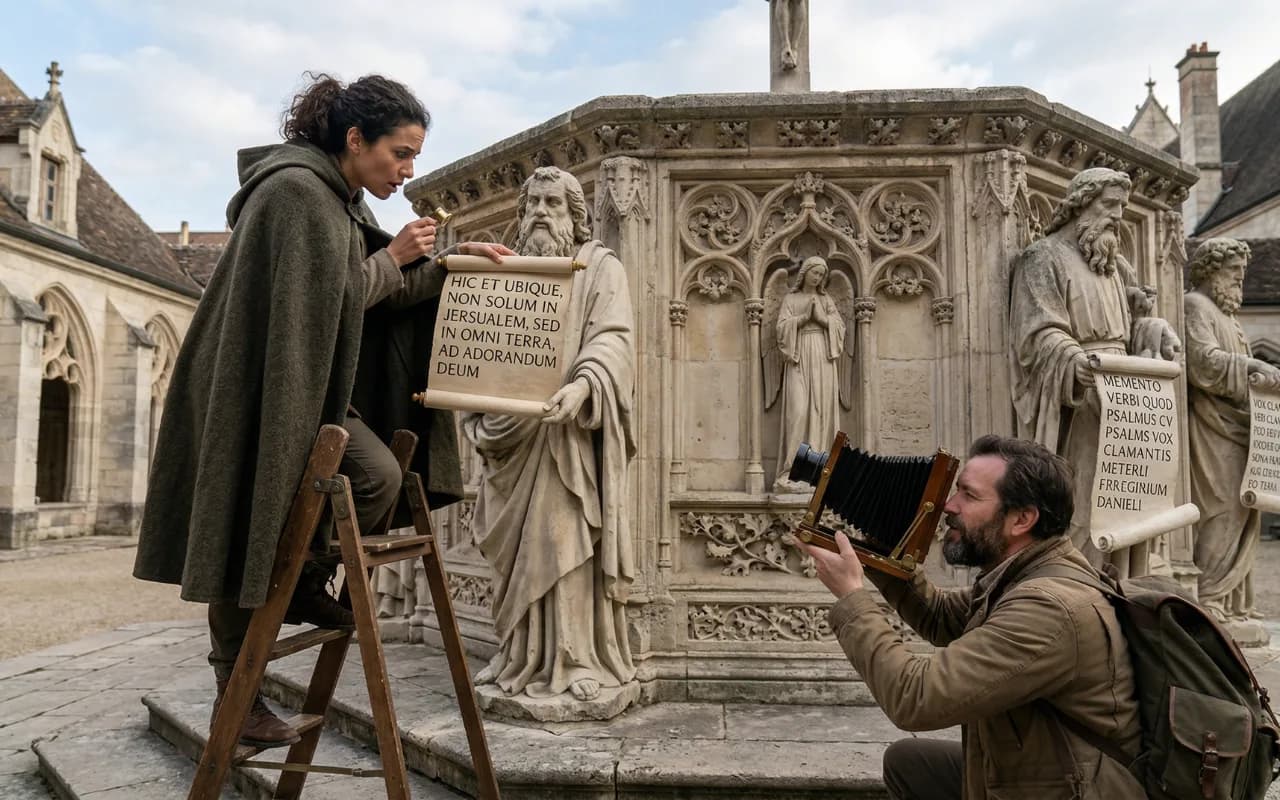
DijonOutdoor Escape Game & Treasure Hunt
Palace of the Dukes of Burgundy and royal mustard
Dijon, capital of the Dukes of Burgundy, opens its doors for an exploration rich in history and flavors! Beyond its famous mustard and the Palace of the Dukes, the city is full of treasures to discover. Stroll through the historic heart, admire the half-timbered houses in the antique dealers' quarter, or get lost in the cobbled streets around Notre-Dame Church, following the Owl's Trail. But Dijon is also a city that loves to surprise. For an unusual and memorable activity, why not embark on an outdoor escape game? Our treasure hunts and urban adventures invite you to rediscover the city in a fun and immersive way. Ready to take on the challenge and transform your visit into a thrilling adventure? Discover our unique courses awaiting you just below.
Unusual things to do in Dijon
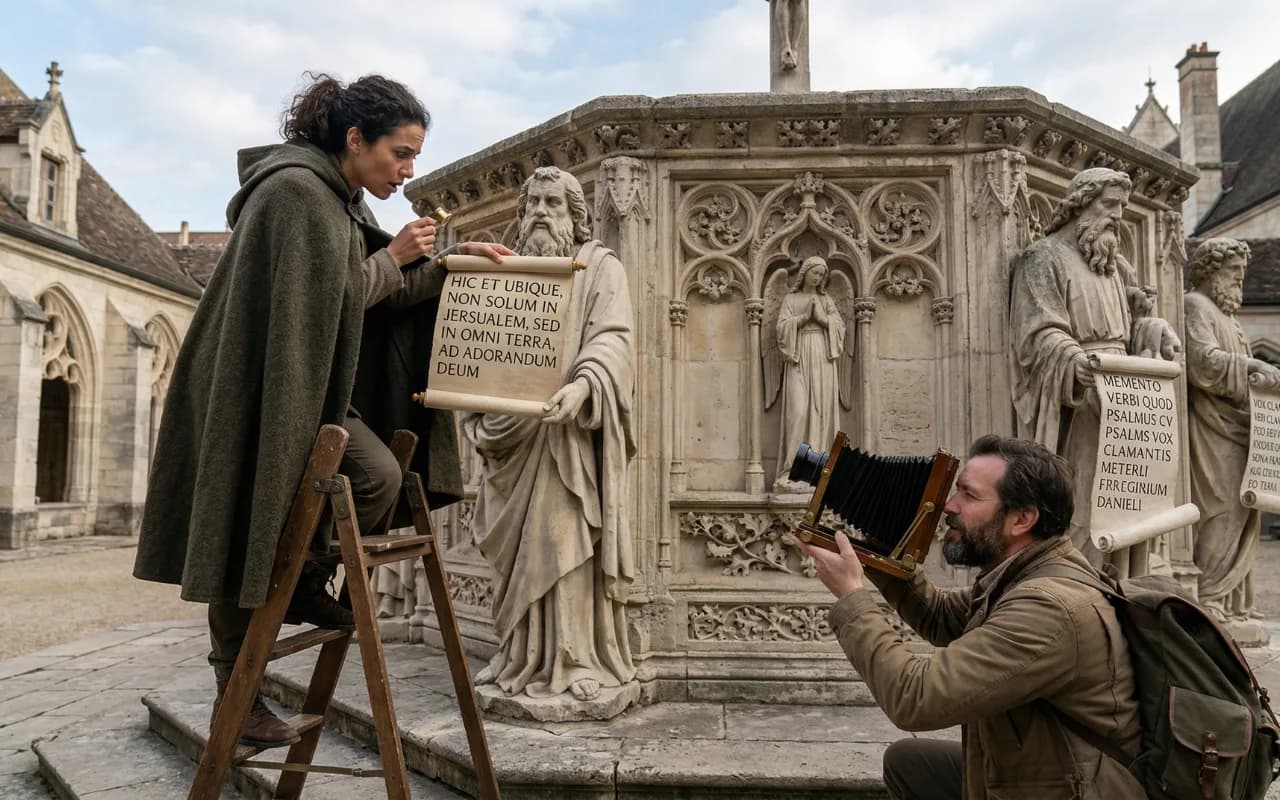
Looking to spice up your stay in Dijon with a touch of originality? Beyond traditional visits, the city is full of unusual activities that will make you see the Burgundian capital in a new light. Our outdoor escape games are the perfect option for this! Far from enclosed rooms, these urban treasure hunts transform you into explorers, solving puzzles outdoors while discovering hidden anecdotes and unexpected corners of Dijon. It's a fun and interactive way to combine cultural discovery with adventure, guaranteeing memorable souvenirs and a unique experience off the beaten path.
Things to do in Dijon with kids
Organizing a family outing in Dijon doesn't always have to mean quiet museums! To captivate both young and old, our outdoor escape games are the ideal activity. These treasure hunts, designed for all ages, transform the city into a huge playground. Children will love searching for clues and solving puzzles, while parents will appreciate the fun discovery of Dijon's heritage. It's a great way to spend quality time together, stimulate teamwork, and create joyful, shared memories, all while enjoying the fresh air and magnificent urban scenery.
Dijon for couples
For a romantic getaway in Dijon that goes beyond the ordinary, our outdoor escape games offer a unique experience to share as a couple. Imagine yourselves hand in hand, strolling through Dijon's charming streets, solving puzzles together and discovering well-kept secrets. It's the perfect opportunity to strengthen your bond, laugh together, and tackle stimulating challenges, all while enjoying the city's enchanting setting. Far from traditional candlelit dinners, this fun and interactive adventure promises intimate moments and an original way to create unforgettable memories.
What to do in Dijon when it rains
What to do in Dijon when it rains? While our escape games are primarily outdoor activities, a light shower won't spoil the adventure if you're well-equipped! However, if the weather is truly capricious, it's good to know that most of our courses take place outdoors. For a dry alternative, Dijon offers many museums like the Musée des Beaux-Arts or covered passages. If you choose to brave the rain, bring an umbrella and a raincoat to turn the challenge into an even more memorable and characterful experience!
Where is Dijon, and where do the routes start?
Starting points of our routes and the places they pass through.
Route starting points
Places in Dijon
- Palace of the Dukes · Place de la Libération
- Tower of Philip the Good · Cour de Bar
- Chartreuse de Champmol · Well of Moses
- Church of Notre-Dame · Rue de la Chouette
- Rue de la Chouette · Wall of Notre-Dame
The history of Dijon
From Roman Outpost to Ducal Capital
Dijon's origins date to the Neolithic period, with archaeological finds over 12,000 years old. It became a Roman settlement called Divio, on the road connecting Lyon to Paris. The city's name, Divio, may mean "sacred fountain" or "place by two waters," referring to the confluence of the Ouche and Suzon rivers. In the late 3rd century AD, defensive walls with 33 towers were built to protect against invasions, securing the settlement and contributing to its growth.
Dijon's political importance began in 1015 when Robert I, Duke of Burgundy, chose it as the capital for his duchy. The city developed from 1364 to 1477 under the Valois dynasty, a period known as Dijon's "Golden Age." During this time, the Dukes of Burgundy were wealthier and more powerful than the King of France, with an empire from the Alps to the North Sea. They invested in their capital, making Dijon a European center of art, learning, and science. This era saw the construction of many buildings, including the Chartreuse de Champmol, founded in 1383 by Philip the Bold as a dynastic burial place. After the death of Charles the Bold in 1477 without a male heir, the Duchy of Burgundy was absorbed into the Kingdom of France. Dijon then became a regional capital, and its architectural legacy from this ducal period remains largely intact today.
Enduring Heritage and Modern Revival
After its annexation by France, Dijon retained its importance as a provincial capital, housing the Burgundy Parliament. The city experienced prosperity in the 18th century, becoming an intellectual hub in France. The French Revolution led to a decline as provincial institutions were suppressed. A new era of wealth and population growth began in 1851 with the arrival of the railways. The city's historic center, recognized for its medieval and Renaissance architecture, was designated a UNESCO World Heritage site in 2015, acknowledging its role in regulating Burgundy wine production. Today, Dijon continues to show its layered past through diverse architectural styles, from Capetian and Gothic to Renaissance and 18th-century townhouses.
What to see in Dijon
- Palace of the Dukes of Burgundy (Palais des Ducs) — This palace, once the residence of the Dukes of Burgundy, now houses the Hôtel de Ville (city hall) and the Musée des Beaux-Arts de Dijon. The ornate tombs of Philip the Bold and John the Fearless are within the museum.
- Place de la Libération — This semi-circular square, completed in 1686, was originally named Royal Square and featured a statue of Louis XIV, destroyed during the French Revolution. Today, it is a pedestrian area with fountains and open-air cafes.
- Tower of Philip the Good (Tour Philippe le Bon) — Climb this 46-meter tower, accessible from the Palace of the Dukes, for views across Dijon's rooftops.
- Church of Notre-Dame (Église Notre-Dame de Dijon) — This 13th-century Gothic church has a western façade with 51 ornamental gargoyles. Inside, there is the statue of Notre-Dame de Bon-Espoir, also known as the Black Madonna, from the 11th or 12th century.
- Rue des Forges — This street has half-timbered houses from the 13th, 15th, and 16th centuries.
- Chartreuse de Champmol and Well of Moses — Founded by Philip the Bold in 1383 as a Carthusian monastery and dynastic burial place, this site now largely houses a hospital. Remaining works by Flemish sculptor Claus Sluter include the church portal, depicting Philip the Bold and his wife Marguerite of Flanders, and the Well of Moses, with statues of Old Testament prophets.
When to visit Dijon
The best time to visit Dijon is during spring (March to May) or autumn (September to November). Spring offers temperatures averaging 8–16°C, with moderate rainfall, and the city's parks are in bloom. September and October in autumn are warm, with daytime temperatures around 20°C, and it is the wine harvest season. Expect moderate rainfall during these months.
Summer (June to August) is also popular, with average highs of 24°C in July, but it can be crowded and hotel rates are higher. Winter (December to February) is cold, with average lows around 0°C and moderate rainfall. Avoid January and February if you prefer warmer weather and more outdoor activities.
Getting around Dijon
Dijon is accessible via its main train station, Gare de Dijon-Ville, west of the historic center. High-speed TGV trains connect Dijon to Paris (about 1 hour 35 minutes from Gare de Lyon) and Lyon, as well as international destinations in Switzerland. The station is open daily from 4:30 AM to 11:15 PM.
The city center is walkable, with many attractions concentrated on pedestrian streets. For longer distances, Dijon has a public transport network operated by Divia, including buses and two tram lines. A single ticket costs €1.70 and is valid for one hour. Free shuttle buses operate in the city center from 8 AM to 7 PM, Monday to Saturday. Parking is available, but the historic center has restricted vehicle access. Dijon also offers DiviaVélodi, a self-service bike rental system with over 40 stations.
Things you probably do not know about Dijon
Verified details most visitors walk straight past.
- Church of Notre-Dame
- Have you ever wondered why there's a small stone owl carving on the side of Notre-Dame Church, and why it's so smooth? The small stone owl, known as La Chouette, is Dijon's mascot and a bringer of luck. Legend has it that rubbing the owl with your left hand while making a wish ensures good fortune, which is why it has been polished smooth by thousands of visitors over centuries.
- Place de la Libération
- This grand semi-circular square has had several names throughout history. Do you know why it's called Place de la Libération today? Originally named Royal Square in 1686 in honor of Louis XIV, the square's statue of the king was destroyed during the French Revolution, and it was renamed Place d'Armes. After further name changes under different regimes, it was finally named Place de la Libération in 1944 to commemorate Dijon's freedom from German occupation during World War II.
- Les Halles Market
- Dijon's covered market, Les Halles, is an architectural structure. Who might have had a hand in its design? Built in 1868 and modeled after the Halles of Paris, it is believed that Gustave Eiffel, the engineer behind the Eiffel Tower, had a hand in designing Les Halles Market.
- Well of Moses at Chartreuse de Champmol
- The Well of Moses is a piece of medieval sculpture. But did you know it was once part of a much larger, more interactive display? This sculpture by Claus Sluter, created around 1395-1405, was originally part of a large cross in the center of the great cloister of the Chartreuse de Champmol. It is believed the water in the well may have been tinted red to enhance the realism and pathos of the scene, connecting it to contemporary Passion Plays.
- Dijon Mustard
- Dijon is known for its mustard, but is all 'Dijon mustard' actually made in Dijon, and where do the seeds come from? While Dijon mustard originated in Dijon in 1856 when Jean Naigeon substituted verjuice for vinegar in the recipe, the term "Dijon mustard" is now genericized under EU law. Most mustard seeds used in local production are imported, mainly from Canada, and not all Dijon mustard is necessarily produced near Dijon.
Questions about visiting Dijon
How many days should I spend in Dijon?
Two to three days are suitable to experience Dijon. This allows time to explore the historic city center on foot, visit the ducal palace and museums, enjoy local gastronomy, and take a short trip to the nearby Burgundy vineyards.
What is the best way to get around Dijon?
Dijon's historic center is walkable, with many main attractions close by. For longer distances, the city has a public transport network of buses and trams (Divia network). Free shuttle buses also operate in the city center.
Which neighborhood is best to stay in Dijon?
The historic city center (Centre Ville) is generally the best area to stay for first-time visitors, as it puts you within walking distance of most major sights, restaurants, and shops. It offers an atmosphere with medieval and Renaissance architecture.
Is Dijon an expensive city to visit?
Compared to larger French cities like Paris, Dijon can be a more affordable destination. While dining and wine tasting can vary in price, accommodation and public transport tend to be reasonably priced, especially outside of peak season.
What are some family-friendly activities in Dijon?
Families can explore the Owl's Trail, which guides you through the city's landmarks. Parc de la Colombière offers a mini-zoo and carousels, while Lake Kir provides a beach in summer and cycling trails.
What are Dijon's local food specialties?
Beyond its mustard, Dijon is known for dishes like *boeuf bourguignon* (beef braised in wine), *œufs en meurette* (poached eggs in red wine sauce), *escargots de Bourgogne* (Burgundy snails), and *pain d'épices* (gingerbread). Local wines and *crème de cassis* are also available.
Frequently asked questions
How much does an outdoor escape game cost in Dijon?
Our outdoor escape games in Dijon are designed to be accessible and fun. The price is €12 per team, regardless of the number of participants (within the recommended limit for an optimal experience, usually 2 to 6 players). This unique team rate allows you to enjoy a complete adventure, including all puzzles and the scenario. It's an economical option for an original and memorable outing, whether you're with family, friends, or as a couple.
Is it suitable for children / families?
Absolutely! Our outdoor escape games in Dijon are perfectly suitable for families and children aged 8 and up (accompanied by an adult). The puzzles are designed to be stimulating without being too complex, encouraging collaboration and teamwork. It's an excellent way to introduce the city to youngsters in a fun and interactive manner, transforming the visit into a real treasure hunt. Every family member, regardless of age, will find their role in the adventure.
How long does an escape game in Dijon last?
The duration of our outdoor escape games in Dijon generally varies between 1h30 and 2h30. This depends on the chosen route, your pace of play, and how quickly your team solves the puzzles. You are free to take your time to admire the city's monuments and architecture between challenges. The goal is to have fun and enjoy the experience, without excessive time pressure, even if a good competitive spirit can spice up the adventure!
Do I need to book in advance?
No, no reservation is needed for our outdoor escape games in Dijon! This is one of the great advantages of our games. You can simply purchase your game online whenever you want and start the adventure when you're ready. This offers great flexibility and allows you to adapt your schedule based on the weather or your current desires. All you need is a charged smartphone and an internet connection to start your urban exploration.
What to visit in Dijon beyond the escape games?
Dijon is full of treasures to explore! After solving our puzzles, don't miss the Palace of the Dukes of Burgundy and its Tour Philippe le Bon for breathtaking views. Stroll through the medieval quarter around Notre-Dame Church and follow the famous Owl's Trail. The Museum of Fine Arts, the Hôtel de Vogüé, or the Halles de Dijon for food lovers, are also must-sees. And of course, take advantage of the many cellars for a Burgundy wine tasting!
What is the best season to visit Dijon?
Dijon is charming in all seasons, but spring (April-June) and autumn (September-October) are often considered the best times. The weather is generally mild and sunny, ideal for our outdoor escape games and for strolling through the streets. Summer is also very pleasant, with its lively terraces. In winter, the city is adorned with its Christmas lights, offering a magical atmosphere, though cooler for outdoor activities. Each season has its unique charm for discovering the Burgundian capital.
Other destinations in Burgundy-Franche-Comté
Vézelay
Eternal hill and departure point for the Crusades
Besançon
Vauban citadel and Victor Hugo's birthplace
Cluny
The most powerful abbey in medieval Christendom
Autun
Sister and rival of Rome in Gaul
Auxerre
Carolingian crypt and Chablis vineyards
Tournus
Saint-Philibert abbey and Saône riverside
Lure
Mining town and forgotten Benedictine abbey
Alise-Sainte-Reine
Where Vercingetorix defied Caesar: the echo of Alesia still resonates
Châtillon-sur-Seine
In the heart of Burgundy, between ancient treasures and vineyards.
More cities in France
Activities to discover nearby
Guided tours, skip-the-line tickets and local experiences to book in advance.
💡 Optional booking — you can also buy on-site. All links open in a new window, your OddballTrip visit stays preserved.