MurciaOutdoor Escape Game & Treasure Hunt
Baroque cathedral and Islamic heritage
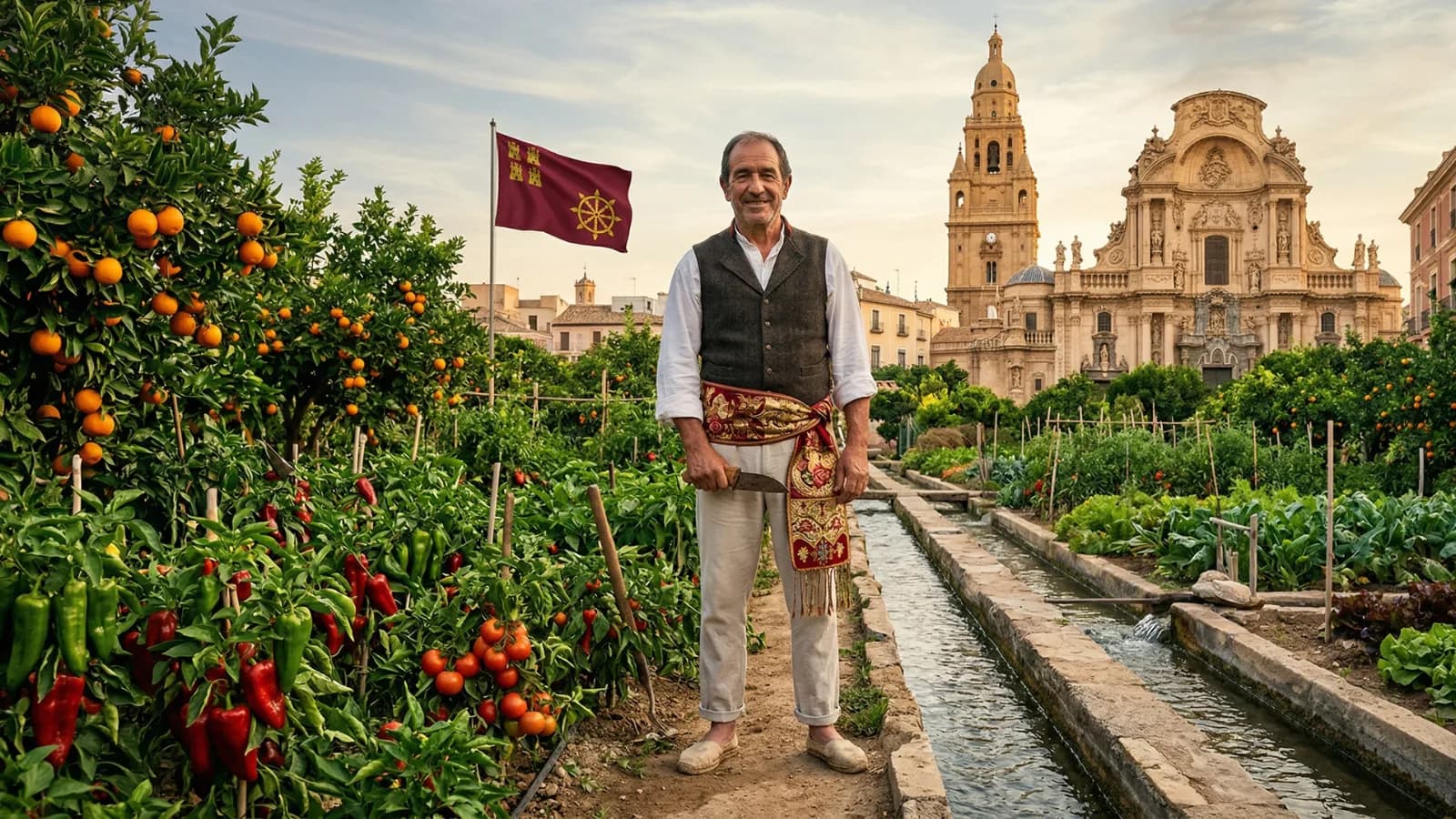
Murcia, the pearl of southeastern Spain, invites you to an exploration rich in history and flavors. Away from the hustle and bustle of major metropolises, this city offers an enchanting blend of Baroque culture and Islamic heritage. Stroll through the narrow streets of the historic quarter, admire the majestic Murcia Cathedral with its exuberant facade, or let yourself be charmed by the elegance of the Real Casino. But Murcia is also an ideal playground for adventurers! If you're looking for an unusual activity to spice up your stay, why not embark on an outdoor escape game? Imagine solving puzzles in the open air, a kind of giant scavenger hunt or modern treasure hunt, which will make you discover the city from a new perspective. Get ready for an immersive experience that combines cultural discovery with the thrill of adventure. Our courses are designed to help you experience Murcia differently, transforming every street corner into a clue.
Unusual things to do in Murcia
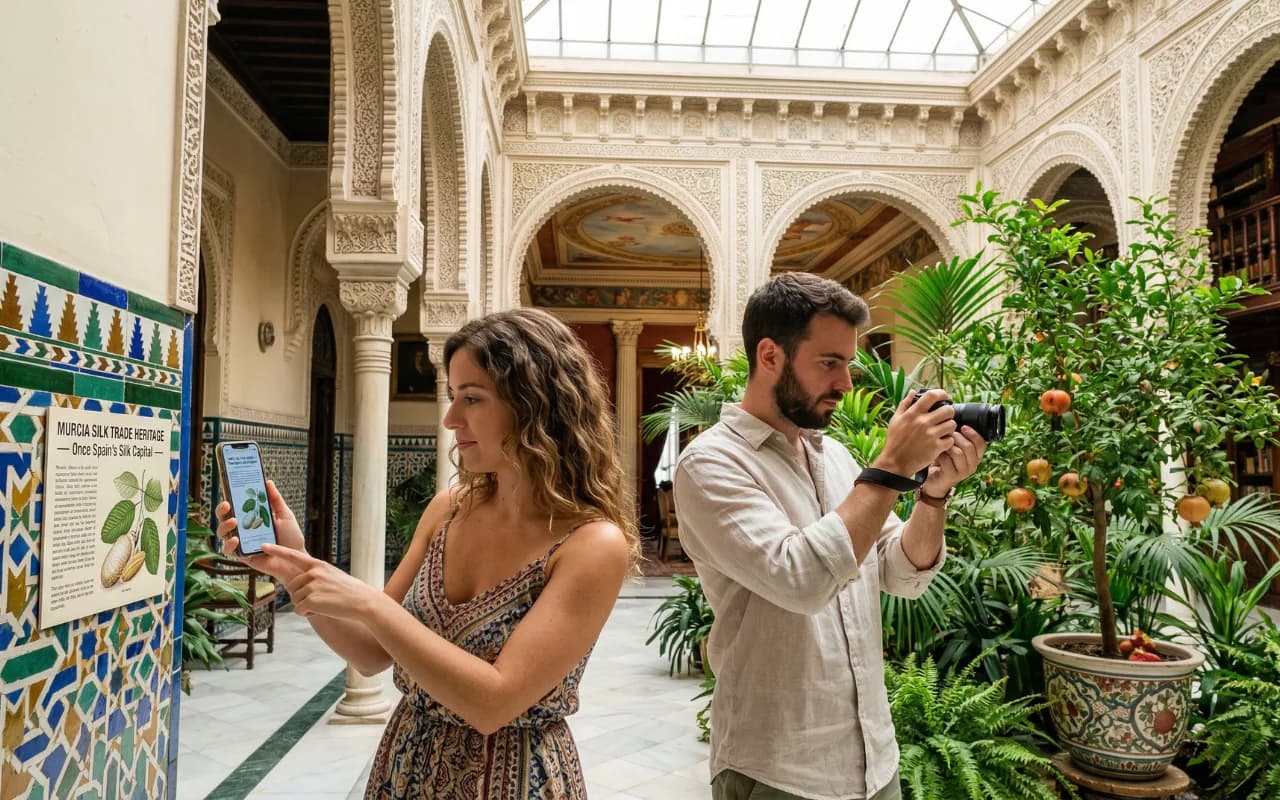
Looking to get off the beaten path in Murcia? Beyond classic tours, the city is full of surprises for curious minds. Our outdoor escape games offer an unusual activity par excellence, transforming streets and monuments into a huge playground. Imagine a life-sized treasure hunt where each clue reveals a secret of the city. It's a unique and interactive way to discover Murcia, away from the crowds, by solving puzzles that will stimulate your team spirit and observation skills. A memorable experience guaranteed for those who love adventure and originality.
Things to do in Murcia with kids
Murcia is a fantastic destination for families, and our outdoor escape games are the perfect activity to create unforgettable memories. Away from screens, young and old alike can collaborate to solve exciting puzzles while exploring the city. It's a fun and educational way to discover Murcia's heritage, where every family member, from the youngest to the grandparents, will find their role and enjoyment. Our courses are designed to be accessible and fun, transforming the visit into a great collective adventure. An original way to spend quality time together and strengthen family bonds.
Murcia for couples
Looking for a romantic and original getaway in Murcia? Forget classic dinners and usual strolls. Our outdoor escape games are the ideal activity for couples seeking adventure and complicity. Explore the city hand in hand, solve puzzles together, and discover hidden places in Murcia in a new light. It's a unique way to test your teamwork, share laughs, and create memorable memories. An interactive and intimate experience that will strengthen your bond while exploring the beauty of this sunny city.
What to do in Murcia when it rains
Murcia generally enjoys a sunny climate, but if rain decides to visit, what to do? Our escape games are primarily outdoor activities, meaning they take place outside. While this might be an option if the rain is light and you're prepared, we recommend opting for indoor alternatives in case of heavy downpours. Murcia offers many museums, such as the Museo Salzillo, art galleries, or the Real Casino, perfect for sheltering and continuing to enjoy the city dry.
Where is Murcia, and where do the routes start?
Starting points of our routes and the places they pass through.
Route starting points
Places in Murcia
- Catedral de Santa María · Plaza del Cardenal Belluga
- Consejo de Hombres Buenos · Apostles' Door of the cathedral
- Palacio Almudí · Former granary and silk market
- Acequia Mayor · The huerta's main canal
The history of Murcia
From Moorish Foundation to Castilian Rule
Murcia's history begins in 825 AD, when Abd ar-Rahman II, the Emir of Cordoba, founded the city as Madinat Mursiyah. This location on the Segura River was chosen to maintain peace in the Kingdom of Tudmir. Moorish planners used the river, creating a network of irrigation channels (the Acequia Mayor being an example) that transformed the land into an agricultural hub. This led to Murcia being known as "Europe's orchard."
After the fall of the Caliphate of Córdoba in 1031, Murcia became the capital of its own independent taifa kingdom in the 11th century. This period saw Murcia develop industries in ceramics, silk, and paper. Its coinage served as a model across Europe. However, prosperity decreased as Mediterranean trade routes shifted, and conflicts with Christian kingdoms and the Ottoman Empire occurred. In 1243, under the Treaty of Alcaraz, Murcia became a protectorate of the Kingdom of Castile. By 1266, King Alfonso X incorporated the city into his realm. This Christian reconquest led to changes, with mosques being replaced by churches and an influx of Christian settlers.
The Baroque Period and Later Developments
The 18th century was a "Murcian Golden Age," with urban and administrative transformations, influenced by figures like Cardinal Belluga. Many of the city's Baroque buildings, including the facade of the Catedral de Santa María, date from this era. This period was followed by hardship in the 19th century, with the city being looted by Napoleonic troops in 1810. A devastating earthquake in 1829 claimed an estimated 6,000 lives across the province. Plague and cholera outbreaks also affected the city. Despite these challenges, Murcia continued to evolve, becoming the capital of its autonomous community in 1982 and growing into a services and university city.
What to see in Murcia
- Catedral de Santa María — This cathedral, built between 1394 and 1467, shows Gothic, Renaissance, and Baroque styles. Its Baroque facade, designed by Jaume Bort i Meliá in the 18th century, is a notable feature. The 95-meter-tall bell tower, the tallest in Spain, took over two centuries to complete and incorporates various architectural styles across its five levels.
- Plaza del Cardenal Belluga — This square is in Murcia's historic center, with the Cathedral and the Palacio Episcopal, the Bishop's Palace. It is a place to observe Baroque architecture.
- Palacio Almudí — Originally a 16th-century grain warehouse and later an arms store and Palace of Justice, this building now serves as a cultural center and exhibition space. A section of the original Moorish wall is visible in the downstairs exhibition space.
- Real Casino de Murcia — This 19th-century private gentlemen's club has interiors, including a Moorish-inspired patio and a ballroom, that are open to the public. It shows a period of the city's history.
- Puente de los Peligros — Also known as the Old Bridge, this 18th-century stone bridge connects the historic center with the neighborhood of El Carmen across the Segura River. It provides views of the river and the city.
- Museo de Santa Clara — This museum is in a former Moorish palace that was converted into a convent in the 14th century. It displays archaeological finds from the Islamic period and religious art, showing Murcia's layered history.
When to visit Murcia
The best times to visit Murcia are spring (March to May) and autumn (October to November). During these periods, temperatures are pleasant, ranging from 22°C to 28°C in spring and 21°C to 26°C in autumn. Spring brings blossoming citrus groves and coincides with the Fiestas de Primavera. Autumn offers comfortable weather, though October is typically the wettest month. Avoid July and August if possible, as summers are long, dry, and hot, with daytime highs often exceeding 35°C (95°F). The city tends to close during the hottest hours.
Getting around Murcia
Murcia is served by Región de Murcia International Airport (RMU), approximately 25 kilometers south of Murcia city. A taxi ride takes about 22 minutes, with a fixed rate starting around €18. Buses connect the airport to the main bus station in the city, taking about 30 minutes and costing €2.50. Murcia del Carmen railway station, built in 1863, is the city's main train station, in the southern part of the city, about 2.1 kilometers from the city center. It offers long-distance services to cities like Madrid, Barcelona, and Valencia, as well as regional connections. The city center is walkable. Public buses and trams are available for longer distances. Parking is available in underground garages in the city center. Many smaller shops and businesses observe a siesta, typically closing in the early afternoon and reopening in the late afternoon.
Things you probably do not know about Murcia
Verified details most visitors walk straight past.
- Catedral de Santa María
- What unusual royal request is honored within the cathedral? The heart and entrails of King Alfonso X the Wise are buried beneath the main altar of the Catedral de Santa María, a testament to his affection for Murcia and the city's loyalty to him.
- Palacio Almudí
- What hidden detail on the Palacio Almudí's facade symbolizes Murcian hospitality and abundance? The facade of the Palacio Almudí features a medallion from 1575, crafted by Hernando de Torquemada, depicting the Matrona de Murcia (Matron of Murcia) surrounded by children, including a strange child she is nursing alongside her own, symbolizing the city's hospitality. It's topped with a pelican, representing abundance.
- Acequia Mayor
- How did the ancient irrigation system of Murcia influence its nickname? The complex network of irrigation channels, like the Acequia Mayor, developed by Moorish planners in the 9th century, transformed the fertile Segura River valley into a highly productive agricultural area, leading to Murcia being known as "Europe's orchard."
- Calle Trapería and Calle Platería
- What do the names of two prominent streets in Murcia's old town reveal about its medieval inhabitants? The streets Calle Trapería (meaning 'clothes' or 'drapery') and Calle Platería (meaning 'silversmiths' or 'precious metals') in the old town are named after the trades practiced by the city's Jewish inhabitants during the medieval period.
- Murcia Cathedral Bell Tower
- Beyond telling time, what other crucial roles did the bells of Murcia Cathedral play for the city? The 24 bells in the Cathedral of Murcia's bell tower, dating from the 17th and 18th centuries and each individually named, not only called Murcians to prayer but also rang out warnings of wars and floods, as well as messages of peace and celebration.
Questions about visiting Murcia
How many days should I spend in Murcia?
To experience Murcia's main historical sites, enjoy its cuisine, and observe the local atmosphere, a stay of 2 to 3 days is generally recommended. This allows enough time to explore the city center, visit key attractions, and perhaps take a short excursion into the surrounding huerta.
What are the best neighborhoods to stay in Murcia?
For visitors, the historic city center around the Catedral de Santa María and Plaza del Cardenal Belluga is suitable, offering walking access to most sights, restaurants, and shops. The area near the Real Casino de Murcia is also central. For a quieter stay, consider areas just across the Segura River in El Carmen, still within walking distance of the core attractions.
Is Murcia a good destination for families with children?
Yes, Murcia can be a family destination. The city's pedestrianized areas make it pleasant for strolling, and parks like Jardín de Floridablanca offer green spaces. Children might enjoy the interactive elements in some museums or exploring the historic streets and plazas. The nearby coast also provides beach options for family outings.
What is the typical budget for a trip to Murcia?
Murcia generally offers a more affordable experience compared to larger Spanish cities. A mid-range budget for accommodation, meals, and activities could be around €60-€100 per person per day. Eating at local tapas bars and utilizing public transport can help manage costs. Prices for attractions are often modest.
How can I get around Murcia without a car?
Murcia's city center is walkable, making it easy to explore most historical sites on foot. For longer distances, the city has a public bus network and a tram system. Taxis are also available. The main train station, Murcia del Carmen, is connected to the city center by bus and is about a 20-minute walk from Calle Trapería.
What are the local customs regarding siesta in Murcia?
Like many Spanish cities, Murcia observes a siesta. Most smaller shops, independent businesses, and some public offices typically close between 2 PM and 5 PM, especially during the hotter months. Larger chain stores and shopping centers usually remain open throughout the day. Restaurants often close after lunch service and reopen for dinner around 8 PM or later.
Frequently asked questions
How much does an outdoor escape game cost in Murcia?
Our outdoor escape games in Murcia are designed to be accessible and offer excellent value. The price is €12 per team, which is very advantageous as you pay for the collective experience, not per person. This means the cost per participant significantly decreases if you come as a group of friends or family. This rate includes access to the application, puzzles, the immersive scenario, and the complete adventure through the streets of Murcia. An economical and entertaining way to discover the city!
Is it suitable for children / families?
Absolutely! Our escape games are perfectly suited for families and children. The courses are designed to be fun and engaging for all ages, with varied puzzles that stimulate logic, observation, and collaboration. It's an excellent opportunity to spend quality time together, strengthen family bonds, and create memorable memories. We generally recommend the presence of at least one adult per team to guide the younger ones, but teamwork is the key to success for everyone!
How long does an escape game last in Murcia?
The duration of our outdoor escape games in Murcia generally varies between 1h30 and 2h30. This depends on your pace of play, your ability to solve puzzles quickly, and the time you wish to take to admire the landscapes and monuments you will encounter. You are completely free to take breaks, have a coffee, or visit a point of interest. The goal is to have fun and enjoy the experience at your leisure, without time pressure.
Do I need to book in advance?
No, one of the great advantages of our outdoor escape games is their flexibility! There's no need to book in advance. You can purchase your game whenever you want and start the adventure immediately or at any time that suits you. This is ideal for spontaneous decisions or to adapt your visit schedule to the weather or your current desires. All you need is a charged smartphone and the OddballTrip app to embark on your exploration of Murcia.
What to visit in Murcia beyond the escape games?
Murcia is full of treasures beyond our games! Don't miss the majestic Murcia Cathedral, a Baroque masterpiece, and the sumptuous Real Casino, an architectural gem. Stroll through the historic Santa Eulalia quarter, discover the Salzillo Museum and its famous processional sculptures, or relax in the Floridablanca gardens. The Puente de los Peligros offers beautiful views of the Segura River. Local gastronomy is also a must-try, with its tapas and traditional dishes.
What is the best season to visit Murcia?
Murcia enjoys a pleasant Mediterranean climate almost all year round. The best seasons to visit are spring (April-May) and autumn (September-October). During these periods, temperatures are mild and ideal for exploring the city on foot and enjoying our outdoor escape games without suffering from the summer heat. Winter is also mild, but summer (June-August) can be very hot, with temperatures often exceeding 30°C, making outdoor activities more tiring.
Other destinations in Murcia
More cities in Spain
Valencia
Silk Exchange and Holy Grail mystery
Ibiza
Dalt Vila fortress and pirates
Cuenca
Hanging houses and vertiginous gorges
Toledo
Three cultures, a thousand secrets
Palma de Mallorca
Reconquista, corsairs and crypto-Jews
Tarragona
Roman Tarraco and medieval cathedral
Zaragoza
From Moorish palace to Napoleonic sieges
Activities to discover nearby
Guided tours, skip-the-line tickets and local experiences to book in advance.
💡 Optional booking — you can also buy on-site. All links open in a new window, your OddballTrip visit stays preserved.