AlicanteOutdoor Escape Game & Treasure Hunt
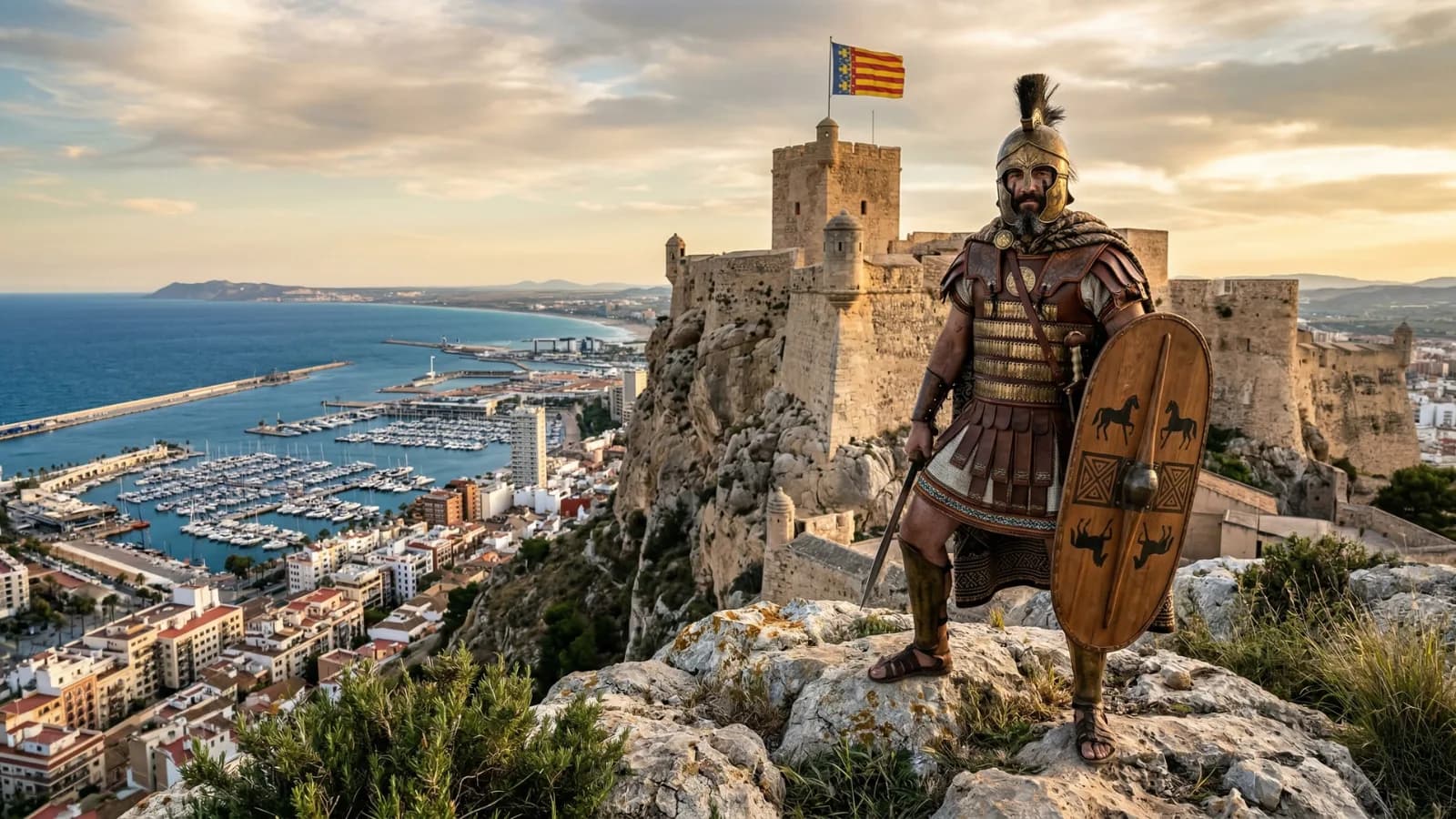
Santa Bárbara castle and maritime history
Welcome to Alicante, the pearl of the Costa Blanca, where the Mediterranean sun meets rich history and breathtaking landscapes! Whether you love lounging on golden beaches, are a history enthusiast, or seek adventure, Alicante has something to charm you. Start your exploration with the iconic Santa Bárbara Castle, offering stunning panoramic views of the city and the sea. Then, stroll along the Explanada de España, lined with palm trees and mosaics, before getting lost in the colorful alleys of the charming Santa Cruz neighborhood. But for a truly unique experience, why not turn the city itself into your playground? Our outdoor escape games invite you on a real-life treasure hunt, a captivating scavenger hunt that combines tourist discovery with fun challenges. It's the perfect unusual activity to spice up your stay. Ready to take on the challenge and discover Alicante differently with our routes?
Unusual things to do in Alicante
Looking for unusual things to do and unforgettable moments in Alicante? Our outdoor escape games are the ultimate unusual activity to explore the city from a new perspective. Far from classic guided tours, you'll become the heroes of your own adventure, solving puzzles while strolling through Alicante's emblematic sites and secret corners. It's a fun and interactive way to immerse yourself in the local culture and the city's maritime history, turning every street and monument into a potential clue. Get ready for an urban treasure hunt that will stimulate your team spirit and observation skills.
Things to do in Alicante with kids
Planning a family vacation in Alicante can be a challenge, but our outdoor escape games are the ideal solution to entertain both young and old! Forget screens: here, the whole family participates in an exciting treasure hunt through the sunny streets. It's a great way to discover Santa Bárbara Castle or the bustling port while collaborating to solve puzzles. Our routes are designed to be accessible for different ages, encouraging communication and teamwork. Offer your children a memorable and educational experience, where learning happens through play and adventure.
Alicante for couples
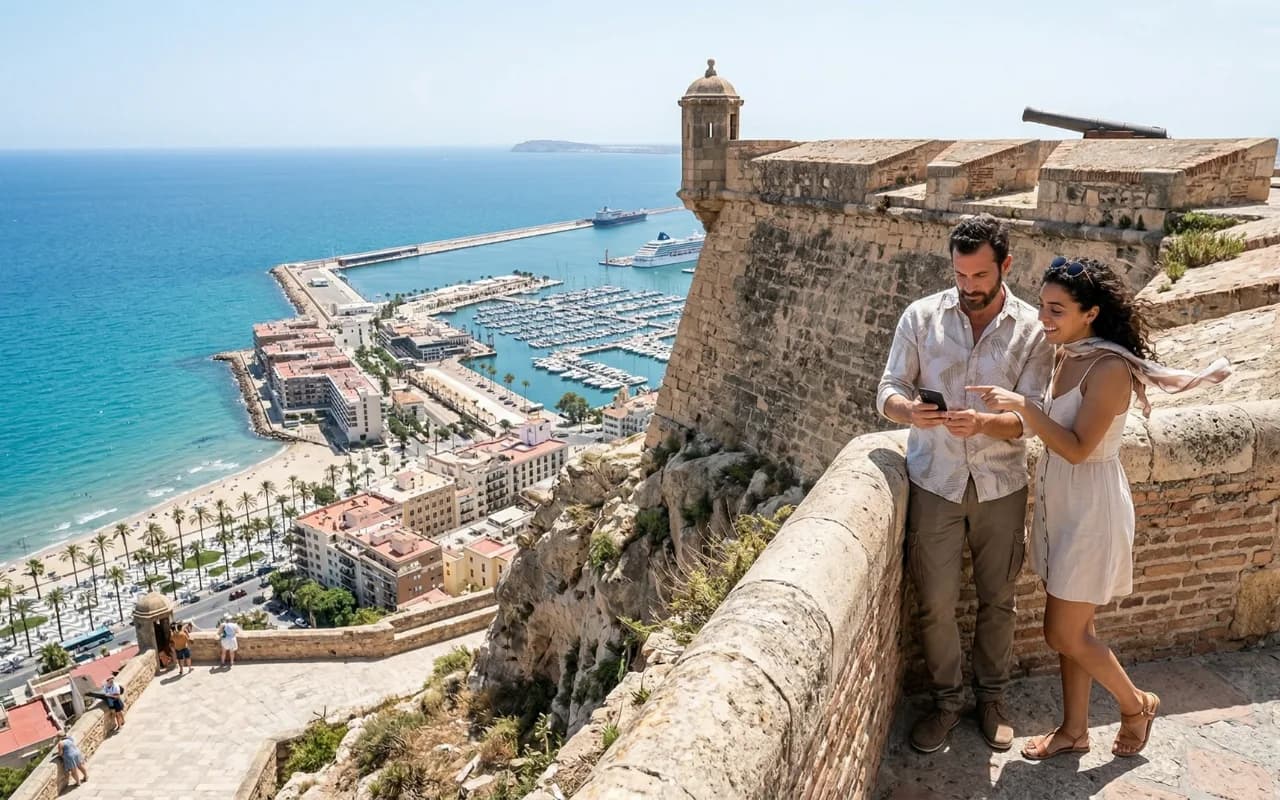
For a romantic getaway in Alicante, our outdoor escape games offer an original touch for couples seeking shared experiences. Far from typical candlelight dinners, imagine yourselves hand in hand, exploring Alicante's charms while solving puzzles together. It's the perfect opportunity to strengthen your bond, laugh, and create unique memories by deciphering the city's mysteries. Whether strolling through the Santa Cruz neighborhood or admiring the sunset from the castle, our scavenger hunts transform every moment into a complicit and stimulating adventure.
What to do in Alicante when it rains
Even though Alicante is blessed with sunshine, what if rain decides to visit? It's important to note that our outdoor escape games are, as their name suggests, designed to be played outdoors. Therefore, they are not the ideal option in rainy weather. However, if an unexpected shower occurs, the city offers other indoor alternatives such as the Archaeological Museum of Alicante (MARQ) or the Gravina Museum of Fine Arts (MUBAG). For our games, we recommend waiting for good weather to fully enjoy the experience.
Where is Alicante, and where do the routes start?
Starting points of our routes and the places they pass through.
Route starting points
Places in Alicante
- Torreta · The castle summit at 166 metres
- Cuerpo de Felipe II · The castle's central body
- Barrio de Santa Cruz · The former Moorish quarter on the Benacantil's flank
- Explanada de España · 6.5 million tesserae & harbour
- Co-cathedral of San Nicolás de Bari · Renaissance cloister
The history of Alicante
From Ancient Akra Leuke to Roman Lucentum
Alicante's history dates back over 7,000 years, with evidence of hunter-gatherers near Mount Benacantil between 5000 and 3000 BC. Around 1000 BC, Greek and Phoenician traders arrived. The Greeks established a settlement called "Akra Leuke" (White Summit) in 325 BC, likely referring to the prominent hill. The Carthaginians conquered the region around 400 BC. By 201 BC, the Romans captured the city, renaming it Lucentum, meaning "City of Light." Lucentum functioned as a port in the Roman province of Hispania. Remnants of Roman baths and city layouts are visible at archaeological sites like Tossal de Manises.
Moorish Influence and Christian Reconquest
After the Western Roman Empire's fall, Alicante came under Visigothic rule, then Moorish conquest in the second half of the 8th century. Under Moorish rule, from 718 to 1249, the city was known as "Al-Laqant" and developed as a center of trade and agriculture. Santa Bárbara Castle saw significant development during this period. The Christian Reconquista reached Alicante in the 13th century. King Alfonso X of Castile conquered the city in 1246. Jaime II of Aragon incorporated it into the Kingdom of Valencia in 1308. In 1490, Ferdinand the Catholic granted Alicante its City Charter. The city experienced a period of growth in the 15th century, becoming a Mediterranean trading hub for goods such as rice, wine, olive oil, oranges, and wool. However, the expulsion of the Moriscos between 1609 and 1614 impacted the region's economy due to the loss of skilled artisans and agricultural laborers.
Modern Resurgence and Civil War Scars
Alicante faced challenges in the early 18th century during the War of Spanish Succession (1701-1714). The city sided with Carlos, suffered bombardment by British troops, and lost its semi-autonomous status. After a period of decline in the 18th and early 19th centuries, the city recovered with the arrival of the railway in 1858, which reinforced its role as a port. The late 19th century saw economic recovery, boosted by increasing international trade, particularly during World War I when Spain remained neutral. The 20th century brought urban development and the Spanish Civil War (1936-1939). Alicante was the last city loyal to the Republican government to be occupied by General Franco's troops on April 1, 1939. The city endured air bombings, including the Italian Aviazione Legionaria bombing of the Mercado Central on May 25, 1938, which killed over 300 civilians. After the war, tourism began to develop in the late 1950s and early 1960s, transforming Alicante into a destination along the Costa Blanca.
What to see in Alicante
- Santa Bárbara Castle — The castle stands on Mount Benacantil at 166 meters. It offers views of the city and the Mediterranean. Visitors can explore its sections, including the Torreta, Cuerpo de Felipe II, and the central body. An elevator provides access from Avenida Jovellanos for €2.70 round-trip.
- Barrio de Santa Cruz — This is the former Moorish quarter, located on the flank of Mount Benacantil. It has narrow, winding streets, colorful houses, and small squares. The area involves a steep climb.
- Explanada de España — This promenade runs parallel to the port, from Plaza Puerta del Mar to Parque de Canalejas. It features a wavy mosaic pavement made of 6.5 million tesserae in red, ivory, and marquina black, laid out in the 1950s. Four rows of palm trees line the promenade.
- Co-cathedral of San Nicolás de Bari — This 17th-century co-cathedral has a Renaissance cloister and a Baroque façade. It stands on the site of a former mosque. Its dome is a feature of the city's skyline.
- Mercado Central — This two-story market building from the early 20th century is on Avenida Alfonso X El Sabio. It sells local produce, seafood, meats, and cheeses.
- Lucentum Archaeological Site (Tossal de Manises) — Located north of the city, this site contains the remains of the Roman city of Lucentum. Visitors can see the layout of ancient streets, houses, and Roman baths.
When to visit Alicante
For general sightseeing, visit Alicante from late April to early July and from late September to late October. Temperatures range between 18°C and 27°C. Spring (March to May) offers temperatures averaging 17°C to 23°C, with fewer crowds. The sea is cooler, around 15°C to 19°C. Autumn (September to November) sees temperatures in the high 20s to low 30s in September, with the sea still warm, before cooling to 22°C-26°C in October. October is the wettest month, with an average of 1.3 inches of rain.
Avoid July and August if you prefer to escape heat and large crowds. These months have average daily highs around 30°C, often exceeding 30°C, with high humidity. Many local festivals, such as Hogueras de San Juan, occur in late June, which can lead to crowded conditions and higher prices.
Getting around Alicante
Alicante-Elche Airport (ALC) is 15 km southwest of the city. The C6 airport bus runs 24/7, connecting the airport to the city center every 20 minutes; the fare is €4.50. The main train station, Alicante-Terminal, is centrally located and connects to cities like Valencia (2.5 hours) and Madrid (3.5 hours via AVE high-speed rail).
The city center is walkable, especially the area between Rambla de Méndez Núñez, Explanada de España, and Mount Benacantil. For longer distances or to reach beaches like San Juan, Alicante has a tram network (TRAM Metropolitano de Alicante) with several lines. A Bono Móbilis card is recommended for more than seven rides, costing €5.25 for 10 trips plus €2 for the card itself (as of April 2026). This makes individual rides cheaper than the €1.45 cash fare. City buses (Subus Alicante) cover areas not reached by the tram, generally operating from 6:30 AM to 10:30 PM, with night routes on weekends.
On-street parking in Alicante's blue zones allows up to 2 hours, while green zones permit up to 4 hours, with rates from €0.60 to €1.25 per hour. Parking garages are available, with daily rates around €12. Free street parking can be found off-season near Postiguet Beach and at El Palmeral Park, south of the city. Taxis are available at stands near the train station, bus station, and Plaza Luceros.
Things you probably do not know about Alicante
Verified details most visitors walk straight past.
- Explanada de España
- What was the Explanada de España before it became the promenade it is today? Before its transformation, the Explanada de España was Alicante's sea wall. In 1830, civil governor Perfecto Manuel de Olalde began its conversion into a public promenade with gardens, initially named Paseo de Olalde.
- Santa Bárbara Castle
- Why is Alicante's most prominent landmark, Santa Bárbara Castle, named after a saint? The castle was captured from the Moors by Castilian King Alfonso X in 1248 on the feast day of Saint Barbara (December 4th), leading to its namesake.
- Mercado Central
- The Mercado Central is a hub of daily life, but it also carries a somber history from the Spanish Civil War. What tragic event occurred here? On May 25, 1938, during the Spanish Civil War, the Mercado Central was the target of an air bombing by the Italian Aviazione Legionaria, resulting in over 300 civilian casualties.
- Co-cathedral of San Nicolás de Bari
- What stood on the site of the Co-cathedral of San Nicolás de Bari before its construction? The Co-cathedral of San Nicolás de Bari was built on the site of a former mosque, reflecting the city's transition from Moorish to Christian rule.
- Lucentum Archaeological Site
- The Roman name for Alicante, Lucentum, translates to 'City of Light.' But what was the earlier Greek name for the settlement, and what did it mean? Before the Romans, the Greeks established a settlement they called 'Akra Leuke,' which translates to 'White Summit' or 'White Promontory,' likely referring to Mount Benacantil.
Questions about visiting Alicante
How many days should I spend in Alicante?
For a general visit to the city, plan for two to three days. This allows time to explore the main attractions and take a day trip to nearby places like Tabarca Island or a coastal town like Altea. If you use Alicante as a base for wider exploration of the Costa Blanca, a week would be suitable.
What is the best way to get around Alicante?
Alicante's city center is walkable. For longer distances, the TRAM network connects major districts and beaches, while local buses cover areas the tram does not reach. Taxis are also available. Consider purchasing a Bono Móbilis card for public transport if you plan more than seven trips.
What are the best neighborhoods to stay in Alicante?
Staying in the old town triangle, bordered by Rambla de Méndez Núñez, Explanada de España, and Mount Benacantil, places you within walking distance of many sights. Areas near the marina or Playa del Postiguet are also popular for their proximity to the beach.
What is the typical budget for a trip to Alicante?
Alicante can accommodate various budgets. Accommodation prices vary by season, with summer being the most expensive. Public transport is affordable, especially with a multi-trip card. Dining options range from inexpensive tapas to higher-end restaurants. Winter is generally the most budget-friendly time to visit.
Is Alicante a good destination for families with children?
Yes, Alicante is family-friendly. The city offers beaches like Playa del Postiguet, parks, and the Santa Bárbara Castle, which has elevator access. The Explanada de España is suitable for walks, and the tram can take you to other coastal towns for day trips. Many restaurants accommodate families.
What is the best time of year to visit Alicante to avoid crowds?
To avoid the largest crowds, visit in spring (March to May) or autumn (September to November), outside of the peak summer months of July and August. September, in particular, offers warm sea temperatures and fewer families.
Frequently asked questions
How much does an outdoor escape game cost in Alicante?
Our outdoor escape games in Alicante are priced at €12 per team, not per person! This is a single rate that covers access to the adventure for your entire group, whether you are 2, 3, or more. This price includes the mobile application with all the puzzles, clues, and tracking of your progress, guaranteeing a complete experience with no hidden fees. An excellent economical option for a group activity!
Is it suitable for children / families?
Absolutely! Our escape games are designed to be a family activity and are perfectly suitable for children, generally from 8 years old, provided they are accompanied by adults. The puzzles stimulate logic and observation, and intergenerational collaboration is often the key to success. It's a wonderful way to spend quality time as a family, discover Alicante together, and create memorable souvenirs.
How long does an escape game last in Alicante?
The duration of our escape games in Alicante generally varies between 1 hour 30 minutes and 2 hours 30 minutes, depending on the chosen route and your pace of play. You are completely free to take your time to explore the city, take breaks, or even stop for a refreshment. The advantage of an outdoor scavenger hunt is this flexibility: the adventure adapts to your desires and your rhythm.
Do I need to book in advance?
No, one of the great advantages of our outdoor escape games is the flexibility! You don't need to book in advance. You can purchase your game whenever you want and start the adventure as soon as you're ready. Just download the app and go. It's ideal for a last-minute decision or to adapt to the day's weather.
What to visit in Alicante beyond the escape games?
Alicante is full of treasures! After your adventure, be sure to relax on Postiguet beach, stroll along the Explanada de España with its palm trees and mosaic floor. The historic Santa Cruz neighborhood, with its colorful houses and flowery streets, is a must-see. Of course, Santa Bárbara Castle offers breathtaking views. And for foodies, the Mercado Central is perfect for discovering local flavors.
What is the best season to visit Alicante?
Alicante enjoys a pleasant Mediterranean climate almost all year round. The best seasons for an outdoor escape game and to fully enjoy the city are spring (April-May) and autumn (September-October). Temperatures are mild, the sun is generous, and there are fewer crowds than in mid-summer. Summer (June-August) is also very pleasant, but prefer to play early in the morning or late in the afternoon to avoid the hottest hours.
Other destinations in Valencian Community
More cities in Spain
Cartagena
Carthaginian port and Roman theater
Ibiza
Dalt Vila fortress and pirates
Cuenca
Hanging houses and vertiginous gorges
Palma de Mallorca
Reconquista, corsairs and crypto-Jews
Tarragona
Roman Tarraco and medieval cathedral
Toledo
Three cultures, a thousand secrets
Zaragoza
From Moorish palace to Napoleonic sieges
Activities to discover nearby
Guided tours, skip-the-line tickets and local experiences to book in advance.
💡 Optional booking — you can also buy on-site. All links open in a new window, your OddballTrip visit stays preserved.