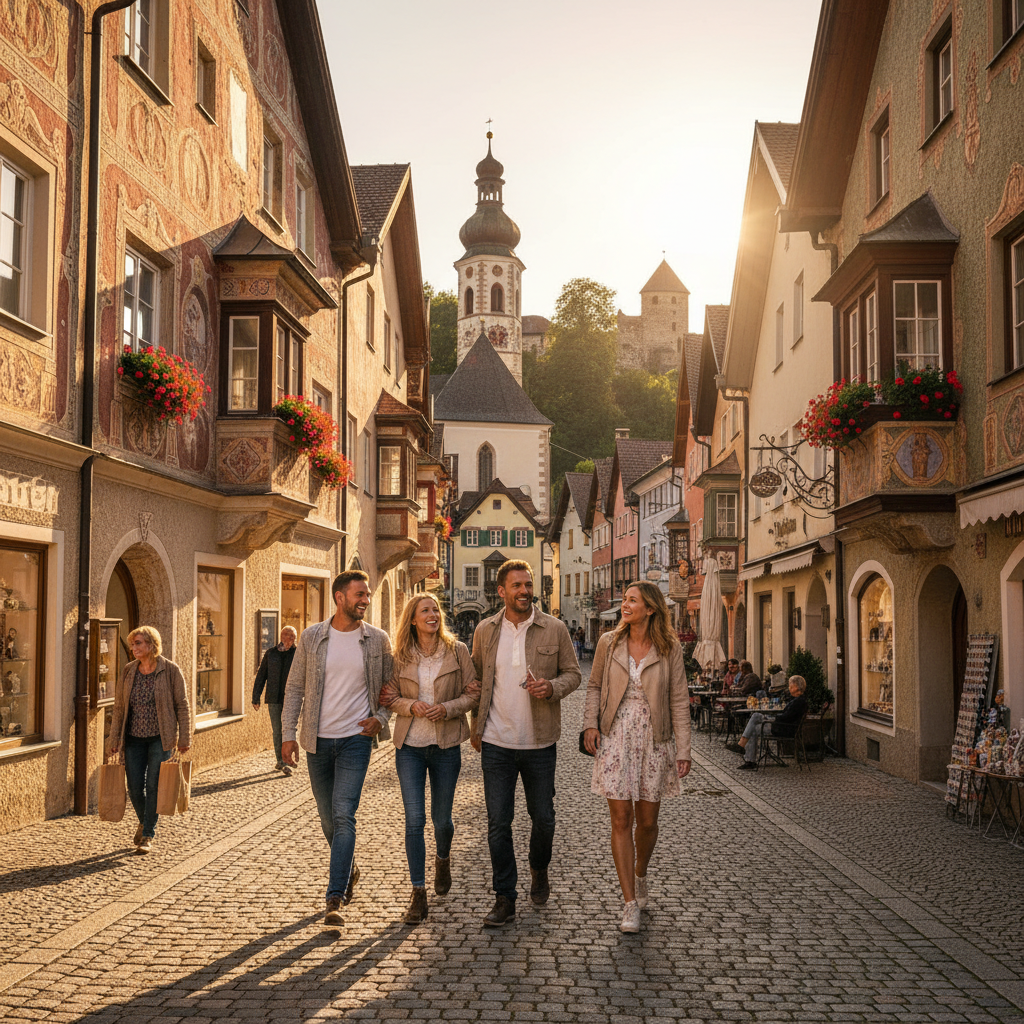
RattenbergOutdoor Escape Game & Treasure Hunt
Austria's smallest town, a gem of glass and history
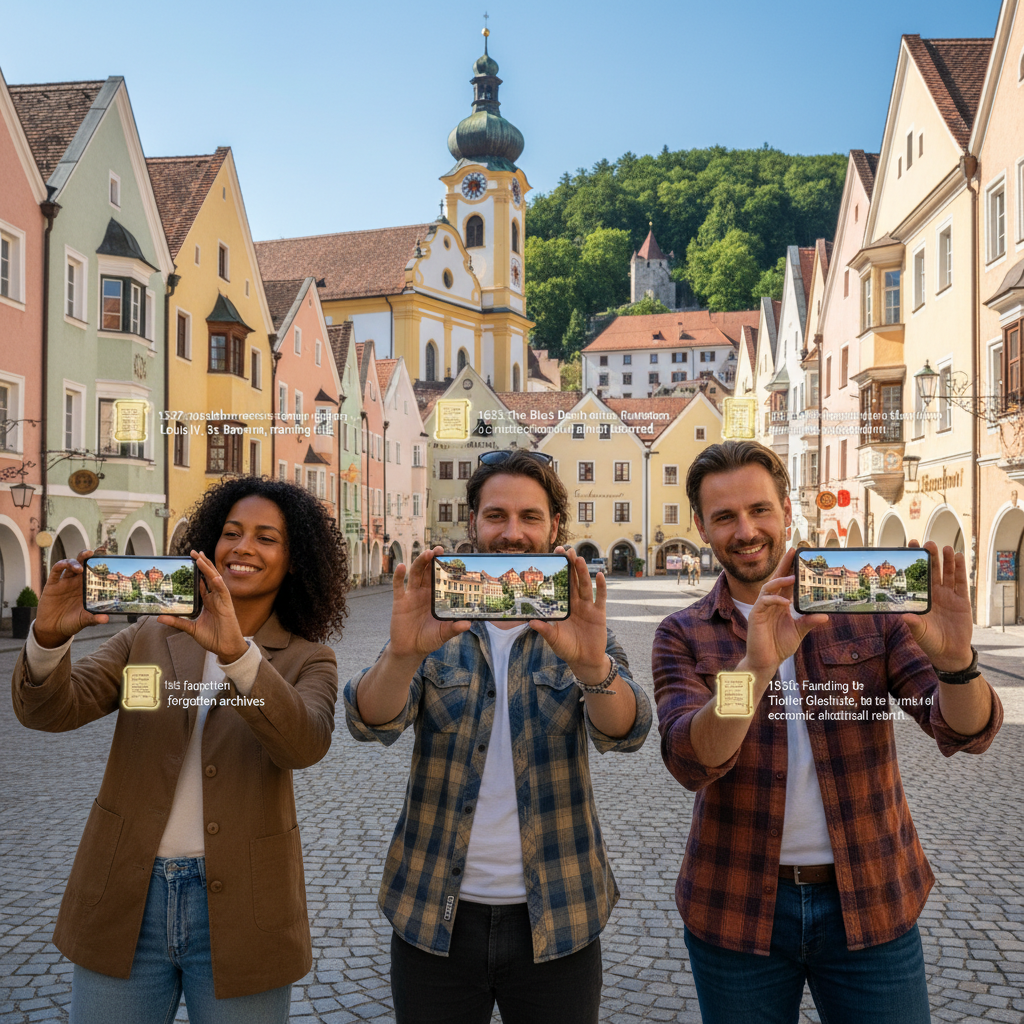
Rattenberg, Austria's smallest town, is a true gem where history and glass art converge. If you're wondering what to do in Rattenberg, prepare to be charmed by its medieval alleys and unique atmosphere. Beyond its famous glassblower workshops along the Hauptstraße, the town offers an immersive experience for the curious. Imagine strolling, solving puzzles during an outdoor escape game that will lead you from the majestic Augustinermuseum to the imposing Pfarramt St. Virgil, passing by the ruins of Schlossberg offering breathtaking views of the Inn River. It's an original way to discover the city's heritage. This treasure hunt transforms every street corner into a clue, every historic facade into part of a grand mystery. An interactive scavenger hunt that promises not only fun but also a deep immersion into the soul of Rattenberg, off the beaten path. It's an unusual activity that combines cultural discovery with the thrill of adventure, perfect for exploring this Tyrolean jewel at your own pace.
Unusual things to do in Rattenberg
For an unusual activity in Rattenberg, let yourself be surprised by the unique alliance of its medieval past and its status as the "glass city." Beyond glassblowing demonstrations, an original outing involves exploring the town in a playful way. Participate in an exploration game that will make you see architectural details and local legends in a new light. It's a unique opportunity to uncover the secrets of Austria's smallest town, transforming your visit into an interactive adventure. Every sparkling shop window and every cobbled alley becomes the backdrop for a story you are invited to actively discover.
Things to do in Rattenberg with kids
What to do with family in Rattenberg? The town is a wonderful playground for explorers of all ages. Children and teenagers, from 8-10 years old, will love the playful aspect of a scavenger hunt or a treasure hunt. Rather than just visiting, they become the heroes of their own adventure, solving puzzles that lead them through the city. It's an excellent way to stimulate their curiosity while helping them discover Rattenberg's history and culture interactively. The friendly atmosphere and numerous glass shops also offer pleasant breaks for the whole family.
Rattenberg for couples
Rattenberg as a couple is a timeless romantic experience. Stroll hand in hand through its medieval alleys, where every step reveals new charm. Admire the historic facades lit by the setting sun and let yourself be carried away by the intimate atmosphere of the town. Climb up to the Schlossberg ruins to enjoy breathtaking panoramic views of the Inn Valley, a perfect setting for a special moment. Rattenberg's architectural heritage and peaceful ambiance create an idyllic backdrop for unforgettable memories for two, punctuated by the discovery of small artisans and cozy cafes.
What to do in Rattenberg when it rains
Don't let the rain spoil your visit to Rattenberg! The town is surprisingly well-suited to fickle weather. Thanks to its many arcades and covered passages lining the famous Hauptstraße, you can explore about 80% of the outdoor escape game route under shelter. It's the perfect opportunity to immerse yourself in the medieval atmosphere without getting wet, while enjoying the sparkling shop windows of the glass artisans. An umbrella is still useful for short crossings, but the experience remains pleasant and immersive.
Where is Rattenberg, and where do the routes start?
Starting points of our routes and the places they pass through.
Route starting points
Places in Rattenberg
- Stadtplatz (Main Square)
- Access to Rattenberg Castle Ruins (hill base)
- Pfarrkirche St. Virgil und St. Nikolaus (Parish Church)
- Augustinerkirche and Augustiner Museum
- Obere Stadtgasse (Upper Town Street)
- Inn River Embankment
- Kisslinger Kristall-Glas (Shop front)
The history of Rattenberg
From Bavarian Stronghold to Tyrolean Town
Rattenberg, Austria's smallest town, was first documented in 1254. Its origins likely trace back to the 10th century with the Bavarian house of Rapotonen. The name "Rattenberg" is thought to derive from the Bavarian first name Ratolt or Ratobo, meaning "Mountain of Ratold." The town's location near the border between Bavaria and Tyrol, and at the convergence of two major trade routes, gave it economic and political significance during the medieval era. The Inn River also played a role, with the town maintaining a large berthing facility and levying taxes on both road and water traffic.
Shifting Allegiances and Enduring Craft
The town's border location led to frequent changes in ownership. In 1292, it was mortgaged from Duke Ludwig of Bavaria to Duke Albrecht of Austria, eventually passing to Duke Meinhard of Carinthia-Tyrol in 1293 or 1294. Rattenberg officially received its town charter from Duke Stefan III on January 7, 1393, which benefited its economy and political standing. In 1504, after a war of succession, Rattenberg permanently became part of Tyrol under Emperor Maximilian I. During the 19th century, the old city gates were removed to accommodate changing transportation needs. Like other Tyrolean towns, Rattenberg experienced economic growth through copper and silver mining. Today, the town is known for its glass art, a tradition that became prominent in the 19th century, with companies like Kisslinger Kristall-Glas continuing the craft.
What to see in Rattenberg
- Rattenberg Castle Ruins (Schlossberg) — Hike up to these remnants of a medieval fortress, originally built around the 11th century to guard the border. The "Biener" tower is preserved, and from the top, there are views of Rattenberg and the Inn Valley.
- Augustiner Museum — Housed in the former Augustinian monastery, this museum, opened in 1993, displays Tyrolean art from nine centuries, including religious folk art. Visitors can climb the church tower, the only one in Tyrol open to the public, for a perspective over the town.
- Pfarrkirche St. Virgil und St. Nikolaus (Parish Church) — This church, dedicated to Saints Virgil and Nicholas, is a religious site in Rattenberg. Its exterior shows centuries of architectural history.
- Obere Stadtgasse (Upper Town Street) — Walk along this medieval pedestrian zone, where historic buildings and glass art shops are found. Many businesses offer glassblowing demonstrations.
- Nagelschmiedhäuser (Nailsmith Houses) — These double-gabled houses, built into the rock at the western entrance of Rattenberg, were active nail forging workshops from the 12th century until 1912. Today, they house a craftsmanship museum, displaying cots, wooden parlours, period bedrooms, and information on Inn River navigation.
- Inn River Embankment — Walk along the Inn River, which historically served as a trade route and customs station for Rattenberg. The river offers a background to the medieval town.
When to visit Rattenberg
The best times to visit Rattenberg are late spring (May-June) or early autumn (September-October). During these periods, expect mild weather with average temperatures around 20°C and fewer tourists. July and August are also active, with outdoor eateries and cafes open, but the town will be more crowded. Winter, especially during the Advent weekends from late November to late December, offers the Rattenberg Advent market, illuminated by candles and torches. Avoid visiting in November through February if you prefer warmer weather and longer daylight hours, as it can be cold and snowy.
Getting around Rattenberg
Rattenberg is accessible by train or car. The Rattenberg-Kramsach train station is at the town's eastern gate, with connections from Wörgl (under 10 minutes) and Innsbruck (around 50 minutes). If driving, Rattenberg is near the A12 highway. There are several paid parking lots at the west and east entrances; some offer free parking (P3 and P4). The old town is a pedestrian zone, suitable for walking. For EasyPark app users, the first hour of parking is free. Rattenberg is small, with seven streets, making it easy to navigate on foot. A visit can take half a day to a full day.
Things you probably do not know about Rattenberg
Verified details most visitors walk straight past.
- Stadtplatz (Main Square)
- Why might you spot a colorful chameleon on Südtirolerstraße, near the Stadtplatz? The chameleon is actually a painted sign indicating that vehicles are prohibited on this road, but bicycles are allowed, highlighting Rattenberg's commitment to its pedestrian-friendly old town.
- Augustiner Museum
- What makes the church tower of the Augustiner Museum particularly special in Tyrol? It is the only church tower in the entire Tyrol region that is open to the public. Visitors can climb a narrow wooden staircase past centuries-old bells for a panoramic view.
- Nagelschmiedhäuser (Nailsmith Houses)
- What unusual daily quota did nailsmiths in Rattenberg have to meet to earn a living? Until 1912, a nailsmith had to produce around 2,000 nails every day to make a living from their craft in these houses.
- Rattenberg Castle Ruins (Schlossberg)
- Who was 'Chancellor Biener' and what is his connection to the castle ruins? The well-preserved "Biener" tower within the castle ruins is named after Chancellor Biener, who was tragically beheaded there.
- Rattenberg Old Town
- Why might you notice a distinct lack of electric lights during the Rattenberg Advent market? During the Advent weekends, Rattenberg intentionally foregoes artificial electric lighting, instead illuminating its medieval streets with candles, torches, and open fires to create a contemplative atmosphere.
- Inn River Embankment
- How did the Inn River directly contribute to Rattenberg's medieval economy beyond just transportation? Rattenberg maintained a large berthing facility on the Inn River and levied taxes on both road and water traffic, making it an important customs station and regional hub.
Questions about visiting Rattenberg
How long should I plan for a visit to Rattenberg?
For a comprehensive visit to Rattenberg, you should plan at least half a day to a full day to explore its key highlights, such as the Augustiner Museum and the medieval pedestrian zone.
What is the easiest way to get around Rattenberg?
Rattenberg's old town is largely a pedestrian zone, making it very easy to explore on foot. The town is small, with only about seven streets, so walking is the best way to experience its medieval charm.
Is Rattenberg suitable for families with children?
Yes, Rattenberg is suitable for families. Children might enjoy the glassblowing demonstrations, exploring the castle ruins, and during Advent, there's a fairy tale path and a children's train ride.
What kind of local food and drink should I try in Rattenberg?
Be sure to try traditional Austrian desserts like Kaiserschmarrn or Apple Strudel at a local Konditorei, such as Café Konditorei Hacker, which has been operating since 1774.
What is the parking situation like in Rattenberg?
There are several paid parking lots located at the west and east entrances to Rattenberg. Some options, like P3 and P4, offer free parking, and the EasyPark app provides the first hour free for users.
Are there any special events or markets in Rattenberg?
Rattenberg is known for its annual Schlossbergspiele, a summer theater festival held in the castle ruins, and the Rattenberg Advent, a contemplative Christmas market held on weekends in late November and December.
Frequently asked questions
How much does an outdoor escape game cost in Rattenberg?
An outdoor escape game in Rattenberg is an accessible adventure for everyone. The price is generally €12 per team, making it very affordable, especially if you play with several people. This single price per team, regardless of its size (within the recommended limit for a better experience, often 2 to 6 players), allows you to share costs and enjoy a fun and cultural activity without breaking the bank. It offers excellent value for hours of entertainment and discovery of the city. Think of it as an investment in a memorable day out.
Is it suitable for children / families?
Absolutely! The outdoor escape game in Rattenberg is perfectly suited for families with children and teenagers. The puzzles are designed to be stimulating without being overly complex, allowing young minds to participate actively. We generally recommend active participation from 8-10 years old, but younger children can certainly follow along and help with observation. It's a fantastic activity to strengthen family bonds, encourage cooperation, and turn a simple visit into a truly educational and fun adventure for everyone.
How long does an escape game in Rattenberg last?
The duration of an outdoor escape game in Rattenberg can vary depending on your team's pace and the complexity of the chosen scenario. On average, expect between 1h30 and 2h30 to complete the route. However, one of the great advantages of this type of game is its flexibility: you can take breaks whenever you want to explore a monument in more detail, grab a coffee, or simply admire the scenery. It's your adventure, at your own pace, without strict time constraints.
Do I need to book in advance?
For most outdoor escape games, it is highly recommended to book in advance, especially if you have a specific date and time in mind. While some games can be played at any time once you have the game materials (often via an app), prior booking ensures you'll have access to the game without waiting and that all necessary information will be provided to you. It's the best way to ensure a smooth and hassle-free experience, and to start your Rattenberg adventure with peace of mind.
What to visit in Rattenberg beyond escape games?
Beyond the excitement of the escape game, Rattenberg is full of treasures to explore. Don't miss the famous Hauptstraße, the pedestrian main street lined with medieval houses and glassblower workshops where you can watch artisans at work. The Augustinermuseum houses an impressive collection of sacred art. The ruins of Schlossberg offer spectacular panoramic views of the city and the Inn Valley. Finally, the Pfarrkirche St. Virgil is a beautiful example of Baroque architecture. Every street corner invites you on a journey through time.
What is the best season to visit Rattenberg?
Rattenberg is charming in every season, but each offers a different ambiance. Spring and summer are ideal for fully enjoying the terraces and clear views, with pleasant weather for strolling. Autumn adorns the valley with magnificent colors, creating a picturesque setting. Winter, with its Christmas market and illuminations, transforms the town into a fairytale, offering a particularly magical and intimate atmosphere. The town's arcades also allow for comfortable exploration even in cooler weather.
Other destinations in Tyrol
Hall in Tirol
Medieval salt city in the heart of the Tyrolean Alps
Innsbruck
In the heart of the Alps, between imperial history and majestic peaks.
Kufstein
Tyrol's pearl, between fortress and Alpine peaks.
Otztal
In the heart of the Tyrolean Alps, between peaks and eternal glaciers
Schwaz
Tyrol's silver heart: historic mines, alpine beauty.
More cities in Austria
Hallein
In the heart of salt mines, a Celtic and medieval treasure
Salzburg
Mozart's city, a baroque gem nestled in the Alps.
Hallstatt
Postcard-perfect alpine village, between lake and mountains
Friesach
In the heart of medieval Carinthia
Admont
In the heart of the Alps, discover an ancient abbey and its library