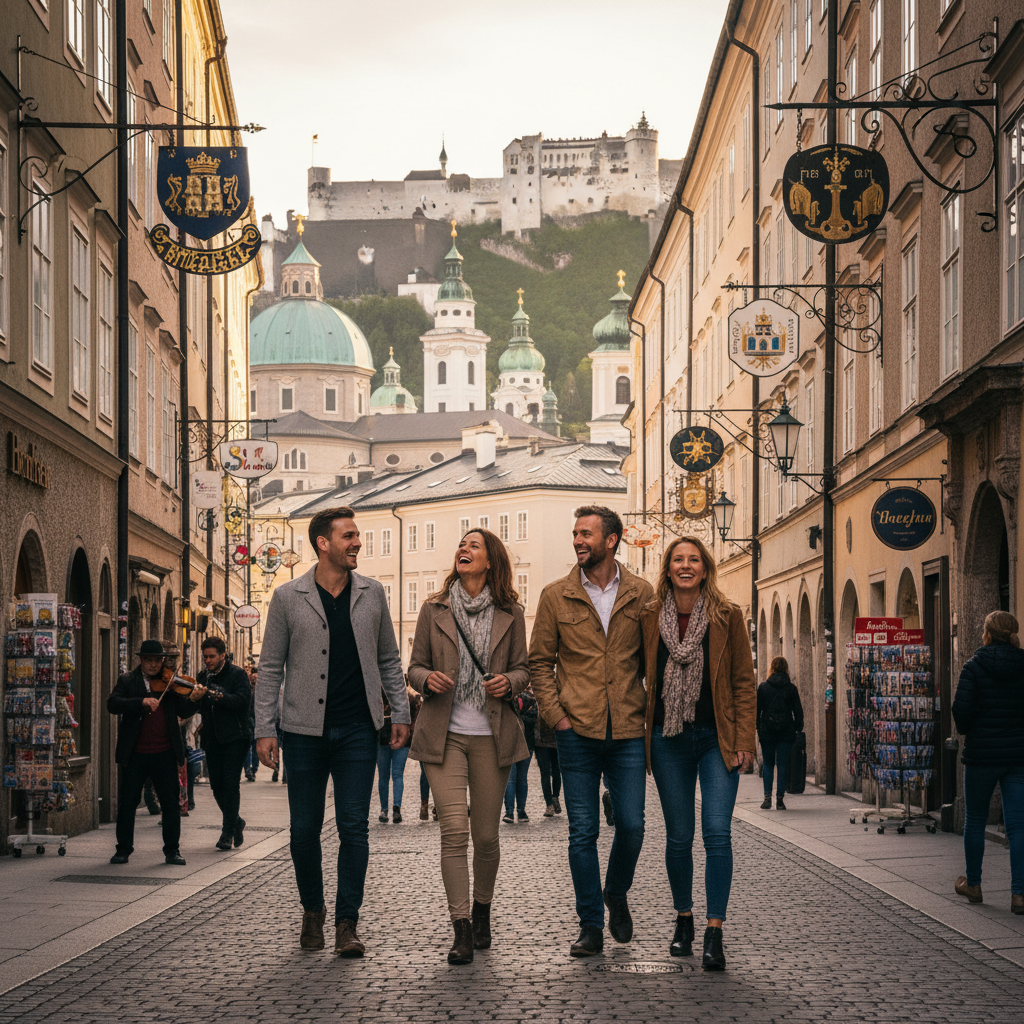
SalzburgOutdoor Escape Game & Treasure Hunt
Mozart's city, a baroque gem nestled in the Alps.
Salzburg, this Austrian gem nestled between the Alps and the Salzach river, is much more than Mozart's birthplace. It's an invitation to escape, a magnificent backdrop for unforgettable adventures. If you're wondering what to do in Salzburg, prepare to be enchanted. Stroll through the Old Town (Altstadt), a UNESCO World Heritage site, where every cobblestone alley whispers centuries-old stories. Ascend to the Hohensalzburg Fortress for breathtaking panoramic views, or let yourself be charmed by the perfect symmetry of the Mirabell Gardens. But for those seeking an unusual activity, Salzburg also proves to be an ideal playground for an outdoor escape game. Imagine solving riddles in the open air, transforming the city into a giant scavenger hunt. It's a real-life treasure hunt that will allow you to discover its hidden secrets in a fun and immersive way. A unique experience awaits you, off the beaten path.
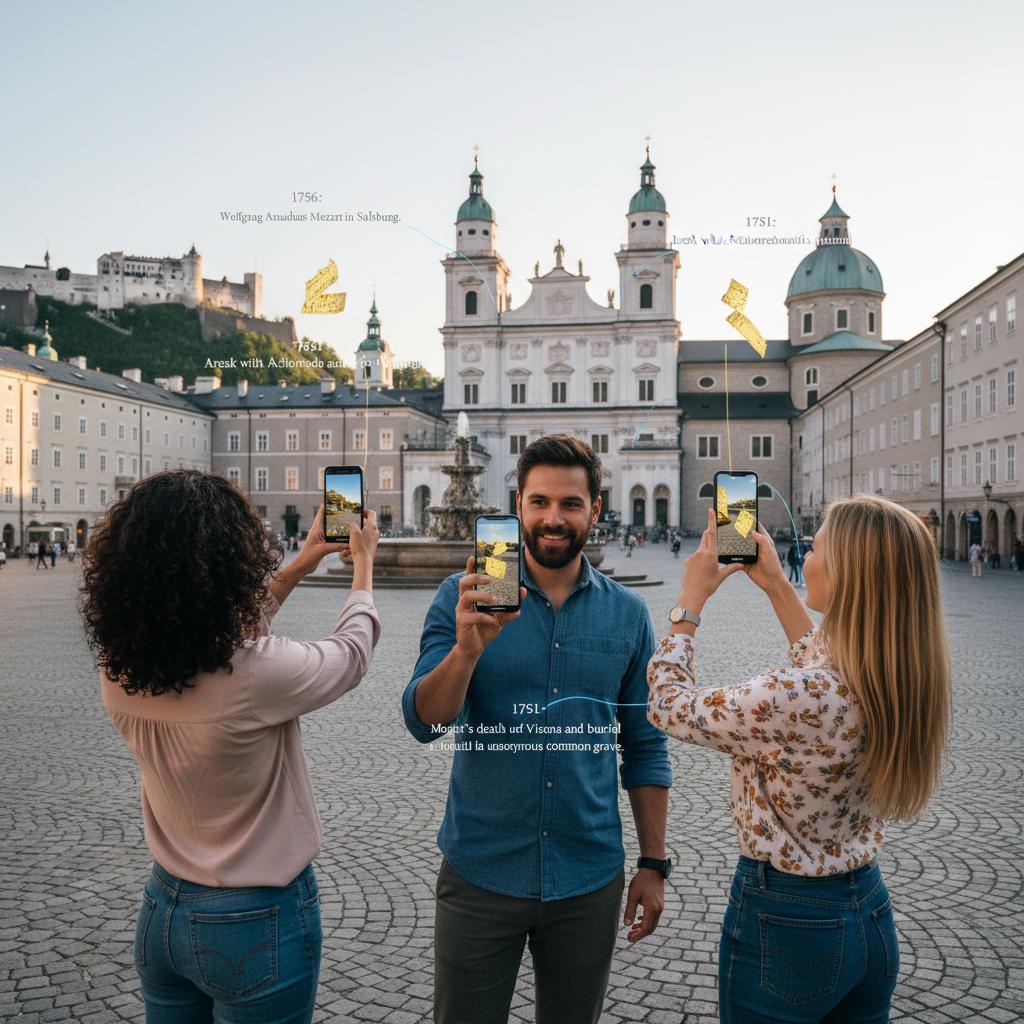
Salzburg — Mozart's Last Breath
Uncover the conspiracy behind Mozart's final days in Salzburg. Decode clues from his birth home, residences, and monuments to reveal a deadly secret hidden in the Altstadt shadows before it claims another genius.
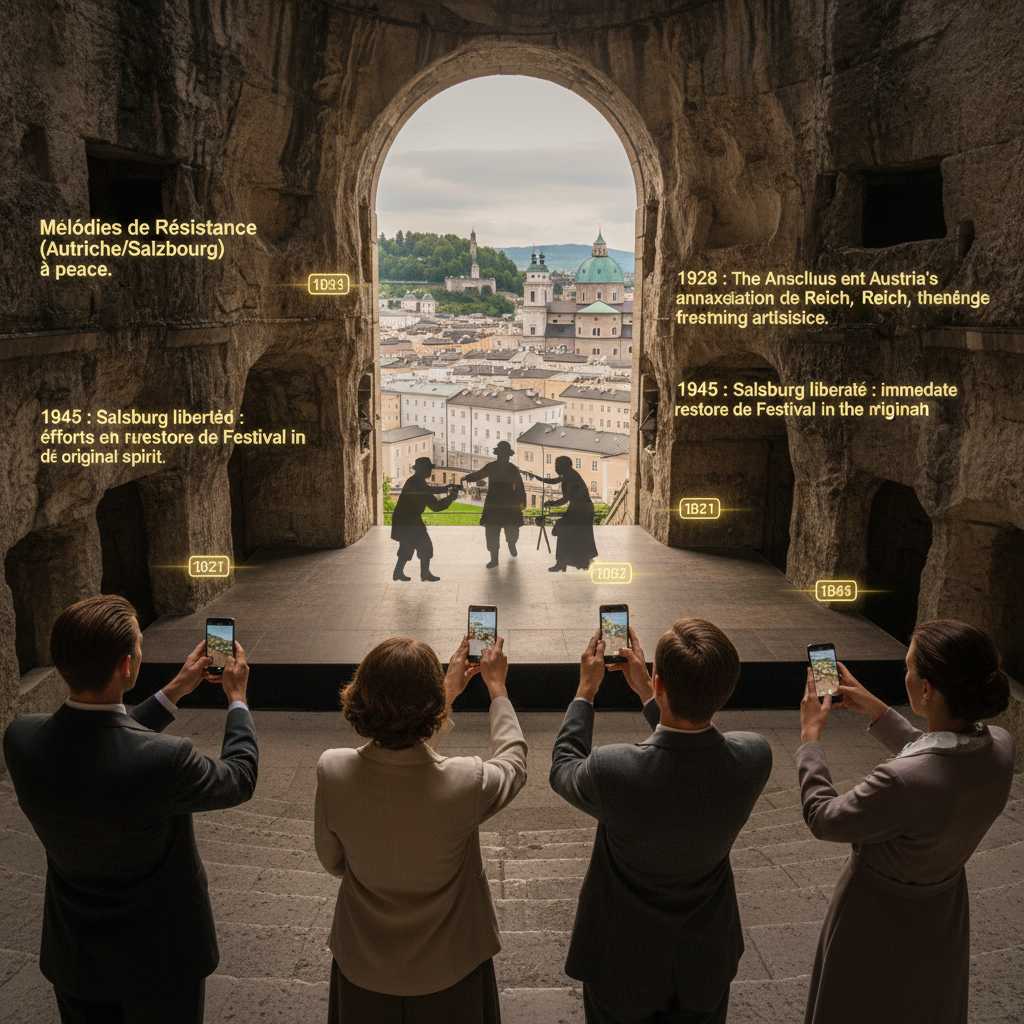
Salzburg Old Town — Melodies of Resistance
Uncover the secret Swing Youth network in Nazi-era Salzburg. Decode hidden messages in forbidden jazz melodies echoing from clandestine spots to expose their defiant resistance code before it's silenced forever.
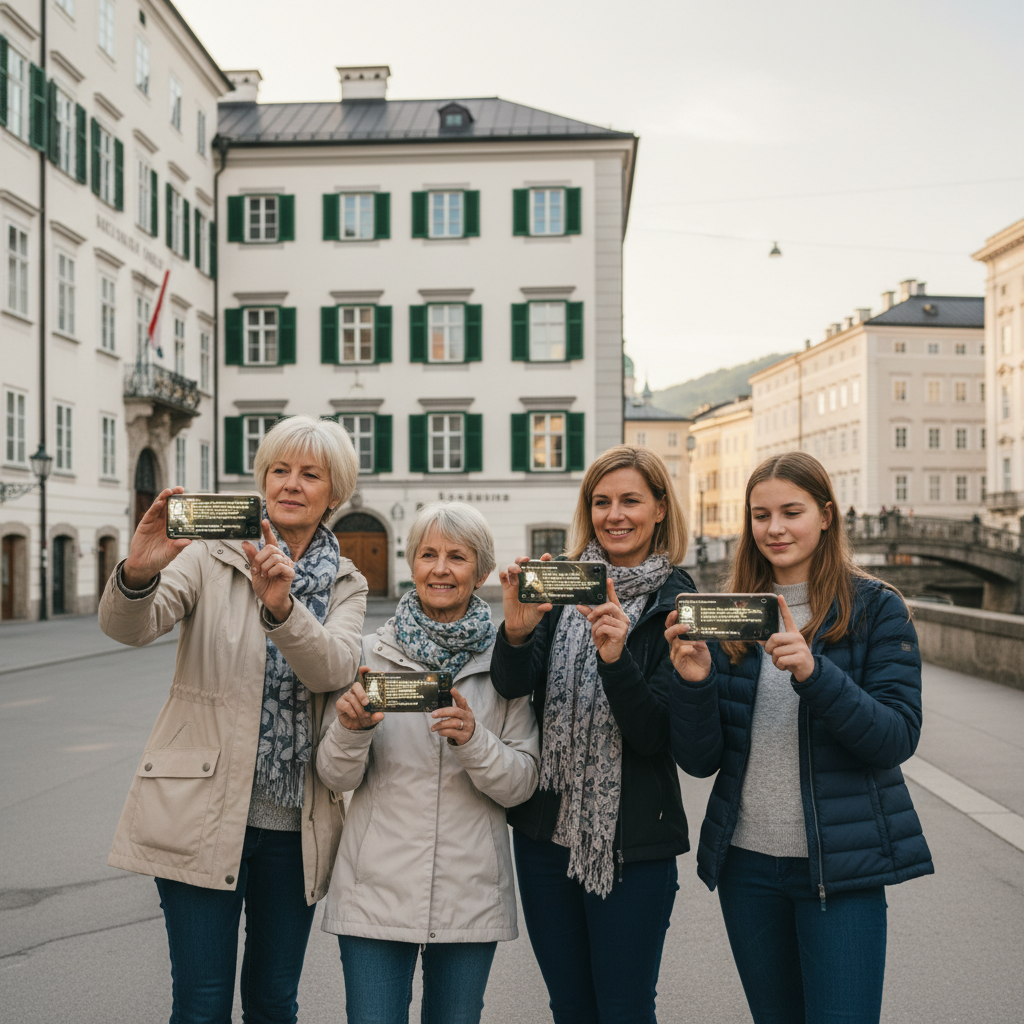
Salzburg — Mozart's Forgotten Will
Uncover the secret testament Mozart hid in Salzburg's shadows before his untimely death. Decode clues across his birthplaces, residences, and sacred sites to claim his final legacy and expose a family conspiracy.
Unusual things to do in Salzburg
For an unusual activity in Salzburg, let yourself be surprised by the city's hidden corners beyond its iconic sites. Instead of just visiting, why not become an active participant in your discovery? An OddballTrip outdoor escape game offers an original outing, transforming the streets into a giant game board. It's a unique way to immerse yourself in Salzburg's heritage, solving mysteries that might lead you in Mozart's footsteps or through little-known local legends. Another idea would be to explore Hangar-7, an aviation and modern art museum with spectacular architecture, offering an astonishing perspective on innovation and design.
Things to do in Salzburg with kids
Salzburg offers plenty of activities for the whole family, from young children to teens, to marvel at. Beyond traditional museums, an outdoor escape game is a fantastic way to turn a visit into a playful adventure. Suitable for children aged 8-10 and up, accompanied by adults, it encourages collaboration and teamwork. Imagine your children solving puzzles in the historic streets, a true treasure hunt that stimulates their curiosity. The Haus der Natur museum, with its interactive exhibits and aquarium, is also a sure bet. And for a touch of magic, Salzburg's puppet theater is a charming experience for all ages.
Salzburg for couples
Salzburg is a dream destination for a romantic getaway for couples. Let yourself be carried away by the timeless atmosphere of the Old Town, hand in hand, through its cobblestone alleys and secret passages. The panoramic views from Mönchsberg or Hohensalzburg Fortress at sunset are simply magical, offering special moments to admire the city and the surrounding Alps. Share a Viennese coffee in a historic establishment or enjoy a candlelit dinner in a typical restaurant. Exploring the rich heritage together means creating precious memories that will last, far from the daily hustle and bustle.
What to do in Salzburg when it rains
Even if rain visits Salzburg, your exploration is not compromised! The Old Town is surprisingly well-suited for bad weather. Approximately 80% of our scavenger hunts and many walks can be done under cover, thanks to the arcades, covered passages, and "Durchhäuser" (connecting passages) that link the streets. This way, you can continue your treasure hunt or cultural discovery without getting wet. Museums like Mozart's Birthplace or the Salzburg Museum also offer great escapes, but the essential charm of the city remains accessible even in the rain.
Where is Salzburg, and where do the routes start?
Starting points of our routes and the places they pass through.
Route starting points
Places in Salzburg
- Residenzplatz (Residence Square)
- Getreidegasse (near Mozart's Birthplace)
- Salzburg Cathedral (Salzburger Dom)
- Mirabell Gardens (Mirabellgarten)
- St. Peter's Cemetery (Petersfriedhof)
- Sigmund-Haffner-Gasse
- Makartplatz (Makart Square)
- Nonnberg Gardens (city view)
- Felsenreitschule
- Max-Reinhardt-Platz
- Residenzplatz
- Mozartplatz
- Kapitelplatz
- Getreidegasse (in front of Mozart's Birthplace)
- Makartplatz
- Mirabellplatz (in front of St. Andrew's Church)
- Getreidegasse (arcades and shops)
- Franziskanergasse (in front of the Franciscan Church)
The history of Salzburg
From Roman Settlement to Prince-Archbishopric Power
Salzburg's history begins before its Baroque period. The region had inhabitants in the Neolithic period, with archaeological finds near Untersberg and Dürrnberg pointing to early settlements. The Celts, specifically the Noric tribe, started intensive salt mining on the Dürrnberg around 750 BC, trading this "white gold" widely. This early salt trade established Salzburg's later economic importance.
The Romans arrived and founded Juvavum, which received municipium status in 45 AD under Emperor Claudius. This Roman town was a strategic and commercial center on major trade routes. After the Roman era, Christianity was re-established in 696 AD with Saint Rupert and Saint Peter's Abbey. The first Salzburg Cathedral was consecrated in 774 by Bishop Virgil.
The Age of Prince-Archbishops and Baroque Transformation
Wealth from salt mining and trade was central to Salzburg's development. In 1191, the Salzburg prince-archbishops revitalized salt production, securing a monopoly that made them powerful rulers and transformed the city into a Central European trading hub. This wealth funded the construction of many of Salzburg's buildings.
The Hohensalzburg Fortress, a large medieval castle, began construction in 1077 under Archbishop Gebhard von Helfenstein to protect the principality and the archbishops. It was expanded over centuries, notably by Archbishop Leonhard von Keutschach between 1495 and 1519, which gave it much of its current appearance.
The 17th century brought a Baroque transformation. After a fire in 1598, Prince-Archbishop Wolf Dietrich von Raitenau planned a new cathedral. His successor, Markus Sittikus, assigned Santino Solari to the project. The current Salzburg Cathedral, the first major early-Baroque cathedral north of the Alps, was consecrated in 1628. This period saw Salzburg become a meeting point of Italian and German cultures, with Italian architects like Vincenzo Scamozzi and Santino Solari shaping its Baroque identity. The city's preserved urban fabric, from the Middle Ages to the 19th century, led to its inscription as a UNESCO World Heritage site in 1996.
What to see in Salzburg
- Hohensalzburg Fortress — This is one of the largest medieval castles in Europe, with construction starting in 1077. Take the funicular for views of the city and the Alps, and explore the Fortress Museum, the Prince's Chambers, and the armory.
- Salzburg Cathedral (Salzburger Dom) — A 17th-century Baroque cathedral. You can see the 14th-century bronze baptismal font where Wolfgang Amadeus Mozart was baptized on January 28, 1756.
- Mirabell Gardens (Mirabellgarten) — These Baroque gardens, laid out in the late 17th century, feature symmetrical designs, mythological statues, and the Pegasus Fountain. They were opened to the public in 1854. The Dwarf Garden, Europe's oldest, has marble sculptures.
- Getreidegasse — This shopping street in the Old Town has tall, historic townhouses and wrought-iron guild signs. Wolfgang Amadeus Mozart's birthplace at No. 9 is here; he lived there until he was 17.
- Residenzplatz — A central square surrounded by Baroque buildings including the Salzburg Residenz, the New Residenz, and the Salzburg Cathedral. It hosts events and markets.
- St. Peter's Cemetery (Petersfriedhof) — One of the oldest cemeteries in Salzburg. It features catacombs carved into the Mönchsberg cliff and historic gravestones.
When to visit Salzburg
Salzburg is generally pleasant from May to September, with warm temperatures and outdoor events. Summer (June-August) has the warmest weather and the Salzburg Festival, but also the largest crowds and highest accommodation prices. Spring (April-May) and early autumn (September-October) offer milder weather, fewer tourists, and scenery as flowers bloom or leaves change color. Winters are cold and often snowy, with Christmas markets, but some outdoor attractions might have reduced hours or be closed. Avoid late July and August if you prefer to escape peak tourist season and higher costs.
Getting around Salzburg
Salzburg Airport (SZG) is a few kilometers from the city center. Trains are an option, with direct Railjet Xpress services connecting to Vienna in about 2 hours 25 minutes and Munich in about 1 hour 40 minutes.
The historic center of Salzburg is largely a pedestrian zone, suitable for walking. The city's public transport network uses electric trolleybuses and S-Bahn commuter trains, with buses running frequently. The SalzburgMobil app can help with route planning. If driving, parking garages are available on the outskirts of the Old Town.
For local produce, the Grünmarkt at Universitätsplatz is open Monday to Saturday. The Schranne Market in front of St. Andrew's Church takes place every Thursday morning, offering regional products since 1906.
Things you probably do not know about Salzburg
Verified details most visitors walk straight past.
- Getreidegasse
- The name "Getreidegasse" translates to "Grain Lane" in modern German, but this was not its original meaning. The street's earliest records from around 1150 referred to it as "Trabgasse," derived from "traben," meaning "to trot" or "to hurry," describing how merchants moved quickly through the narrow street before city gates closed.
- Felsenreitschule
- This open-air theater, carved into the Mönchsberg rock, was not always a stage for the Salzburg Festival. Originally built in 1693-94, it served as a summer riding school and a venue for animal hunts, with 96 arcades carved into the rock for spectators.
- Mirabell Gardens (Mirabellgarten)
- The Mirabell Palace and its gardens were initially built for an unconventional reason for an archbishop. Prince-Archbishop Wolf Dietrich von Raitenau commissioned the palace in 1606 as a private residence for his mistress, Salome Alt, and their fifteen children.
- Salzburg Cathedral (Salzburger Dom)
- The current Baroque cathedral is not the first church on this site; its predecessor met a fiery end. The original Romanesque cathedral was destroyed by a fire in 1167, and a later iteration also burned down in 1598, leading to the construction of the present Baroque structure.
- Hohensalzburg Fortress
- Despite its size and strategic location, the Hohensalzburg Fortress has a limited history of actual sieges. The fortress was only truly besieged once, during the German Peasants' War in 1525, when miners, farmers, and townspeople attempted, unsuccessfully, to oust Prince-Archbishop Matthäus Lang.
- St. Peter's Cemetery (Petersfriedhof)
- Beyond the gravestones, this historic cemetery holds a secret within the mountain itself. The cemetery includes ancient catacombs carved directly into the Mönchsberg cliff, which date back to early Christian times and offer a glimpse into Salzburg's spiritual past.
Questions about visiting Salzburg
How many days are enough to visit Salzburg?
Most visitors find that 2 to 3 days are sufficient to experience Salzburg's main attractions, including the Old Town, Hohensalzburg Fortress, and major museums. This allows for a good balance of sightseeing and enjoying the city's atmosphere without feeling rushed.
What is the best way to get around Salzburg?
Salzburg's historic city center is best explored on foot due to its pedestrian-friendly zones. For longer distances, the city has an efficient public transport system of electric trolleybuses and S-Bahn trains. The Salzburg Card offers unlimited travel and free entry to many attractions.
Which neighborhood is best to stay in Salzburg?
The Altstadt (Old Town) is ideal for first-time visitors, offering easy access to major sights and a appealing atmosphere. For a quieter stay with good connections, areas across the Salzach River like Andräviertel or Elisabeth-Vorstadt are good alternatives, often with more modern accommodation options.
What is the average daily budget for a trip to Salzburg?
A mid-range traveler can expect to spend around $214 (€185) per day, including about $81 (€71) on meals and $22 (€19) on local transportation. Budget travelers might spend around $89 (€77) daily, while luxury options can exceed $484 (€417).
Is Salzburg a good city to visit with children?
Yes, Salzburg offers many family-friendly activities. Children often enjoy exploring Hohensalzburg Fortress, the trick fountains at Hellbrunn Palace, and the Mirabell Gardens with its Dwarf Garden. The Haus der Natur (Natural History Museum) and Salzburg Zoo are also popular choices.
What is the best time of year to visit Salzburg?
The shoulder seasons of spring (April-May) and early autumn (September-October) are often considered ideal, offering pleasant weather and fewer crowds than the peak summer months. The Christmas markets in winter also provide a unique and festive experience.
Frequently asked questions
How much does an outdoor escape game cost in Salzburg?
An OddballTrip outdoor escape game in Salzburg is designed to be accessible and fun. The price is €12 per team, which is very advantageous if you are several people! This unique price per team, and not per person, allows you to fully enjoy the adventure, whether you are 2, 3, 4, or more (up to the recommended limit for an optimal experience). It's excellent value for money for an activity that lets you discover the city in an original and interactive way, while solving puzzles in the open air. Get ready for total immersion without breaking the bank!
Is it suitable for children / families?
Absolutely! Our outdoor escape games are perfectly suited for families and children aged 8-10 and up, accompanied by adults. The puzzles are designed to be stimulating without being overly complex, encouraging collaboration and communication among participants of all ages. It's an excellent way to turn a simple visit into a thrilling adventure, where everyone can contribute. Younger children will love the treasure hunt and exploration aspect, while teens and adults will appreciate the problem-solving and discovering Salzburg's secrets. A fun and educational activity for everyone!
How long does an escape game in Salzburg last?
The duration of an OddballTrip outdoor escape game in Salzburg is flexible and depends on your pace of exploration and your ability to solve the puzzles! On average, it takes between 1.5 and 2.5 hours to complete the route. The advantage is that you manage your time: you can take breaks to admire a monument, grab a coffee, or simply soak in the city's atmosphere. There's no time pressure, which allows you to fully enjoy the experience at your leisure, while discovering Salzburg interactively.
Do I need to book in advance?
No, the beauty of our outdoor escape games is their flexibility! You don't need to book in advance. Once you've purchased the game, it's immediately available on your smartphone via our app. You can start your adventure whenever you want, at the time that suits you best, and even on the day of your choice. This gives you total freedom to organize your schedule in Salzburg without constraints. It's the ultimate spontaneous activity, perfect for adapting to your current desires or unexpected weather changes!
What to visit in Salzburg beyond the escape games?
Beyond our exciting escape games, Salzburg is full of treasures to explore. Don't miss the majestic Hohensalzburg Fortress, offering breathtaking views of the city. Stroll through the charming Old Town (Altstadt), a UNESCO World Heritage site, with its narrow alleys and historic squares. The Mirabell Gardens, with their flowerbeds and baroque sculptures, are a peaceful haven. For music lovers, Mozart's Birthplace is a must-see. Finally, Hellbrunn Palace and Gardens, with their famous trick fountains, offer a refreshing and playful experience, especially in summer.
What is the best season to visit Salzburg?
Salzburg is beautiful in every season, but spring (April-May) and autumn (September-October) are often considered the best times. The weather is generally mild and pleasant, ideal for walking and enjoying outdoor activities, including our escape games. Crowds are less dense than in mid-summer, and the landscapes are enhanced by spring blooms or the vibrant colors of autumn. Summer (June-August) is also very popular, with many festivals, but it can be warmer. Winter offers a magical atmosphere with its Christmas markets and snow, but temperatures are cooler.
More cities in Austria
Hallstatt
Postcard-perfect alpine village, between lake and mountains
Linz
Between Danube, modern art and Austrian history
Admont
In the heart of the Alps, discover an ancient abbey and its library
Schwaz
Tyrol's silver heart: historic mines, alpine beauty.
Mauthausen
On the Danube's banks, where history meets stone.
Friesach
In the heart of medieval Carinthia
Innsbruck
In the heart of the Alps, between imperial history and majestic peaks.
Activities to discover nearby
Guided tours, skip-the-line tickets and local experiences to book in advance.
💡 Optional booking — you can also buy on-site. All links open in a new window, your OddballTrip visit stays preserved.