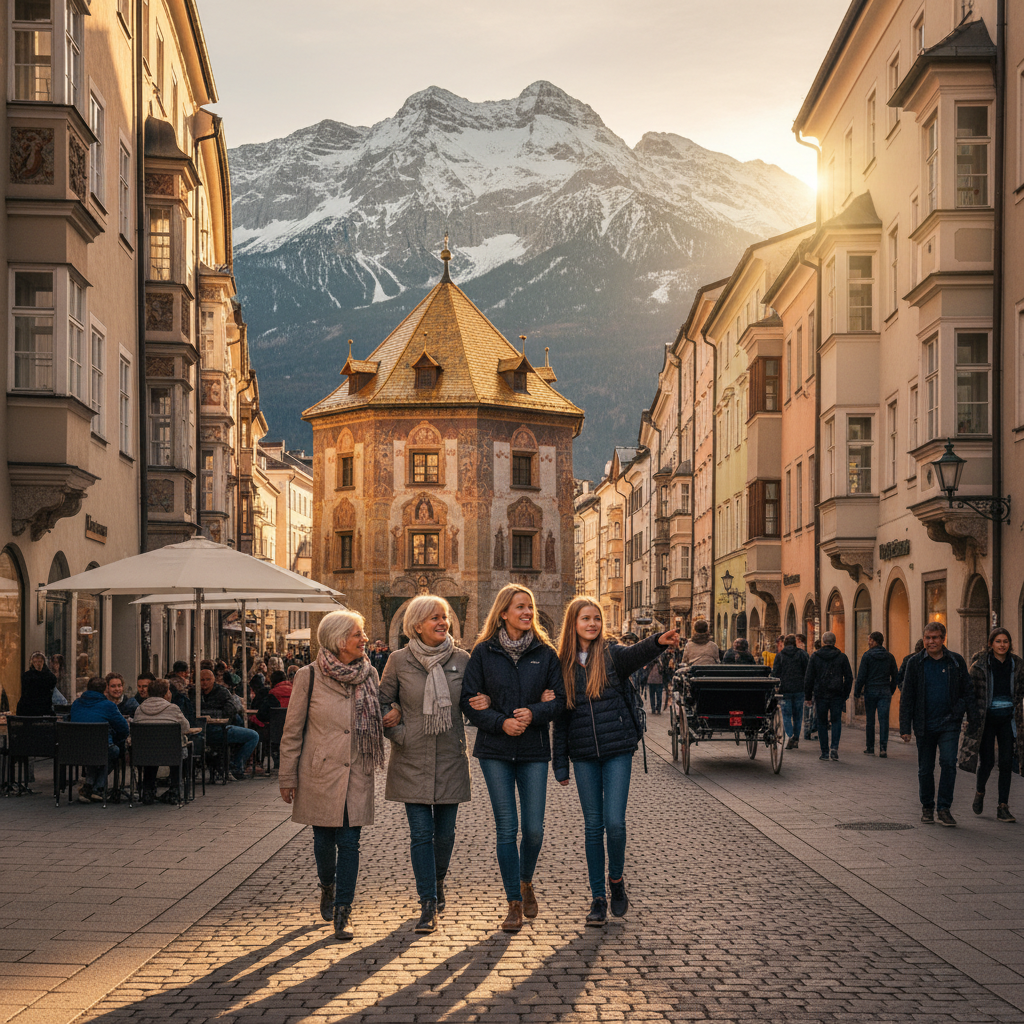
InnsbruckOutdoor Escape Game & Treasure Hunt
In the heart of the Alps, between imperial history and majestic peaks.
Innsbruck, nestled in the heart of the Tyrolean Alps, is a city that invites exploration and wonder. What to do in Innsbruck? Beyond its breathtaking mountain landscapes, the capital of Tyrol is full of historical and cultural treasures. Stroll through the charming Old Town, admire the famous Golden Roof shimmering under the alpine sun, or delve into imperial history by visiting the Hofburg Palace. But for those seeking an unusual activity and an original way to discover the city, an outdoor escape game is an adventure not to be missed. Imagine solving puzzles outdoors, transforming the streets and monuments into a vast playground. Whether it's a fun treasure hunt or a captivating scavenger hunt, our routes will make you see Innsbruck in a new light, blending cultural discovery with the thrill of adventure. It's a unique way to soak up Innsbruck's atmosphere, between tradition and modernity.
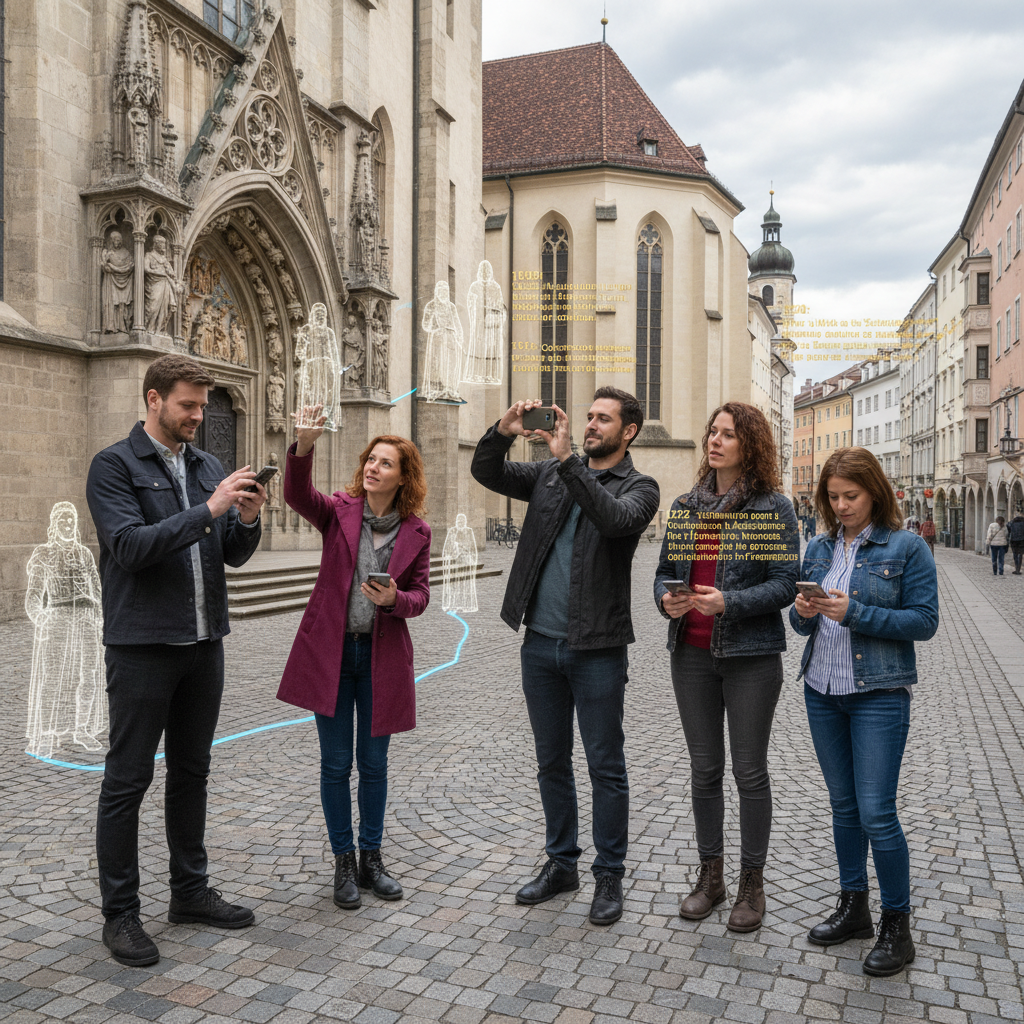
The Black Guard's Secret — Innsbruck's Hidden Dynasty
Decipher the cryptic symbols hidden among the 28 bronze sentinels guarding Emperor Maximilian's empty tomb. Uncover the conspiracy that kept his true burial place secret for centuries.
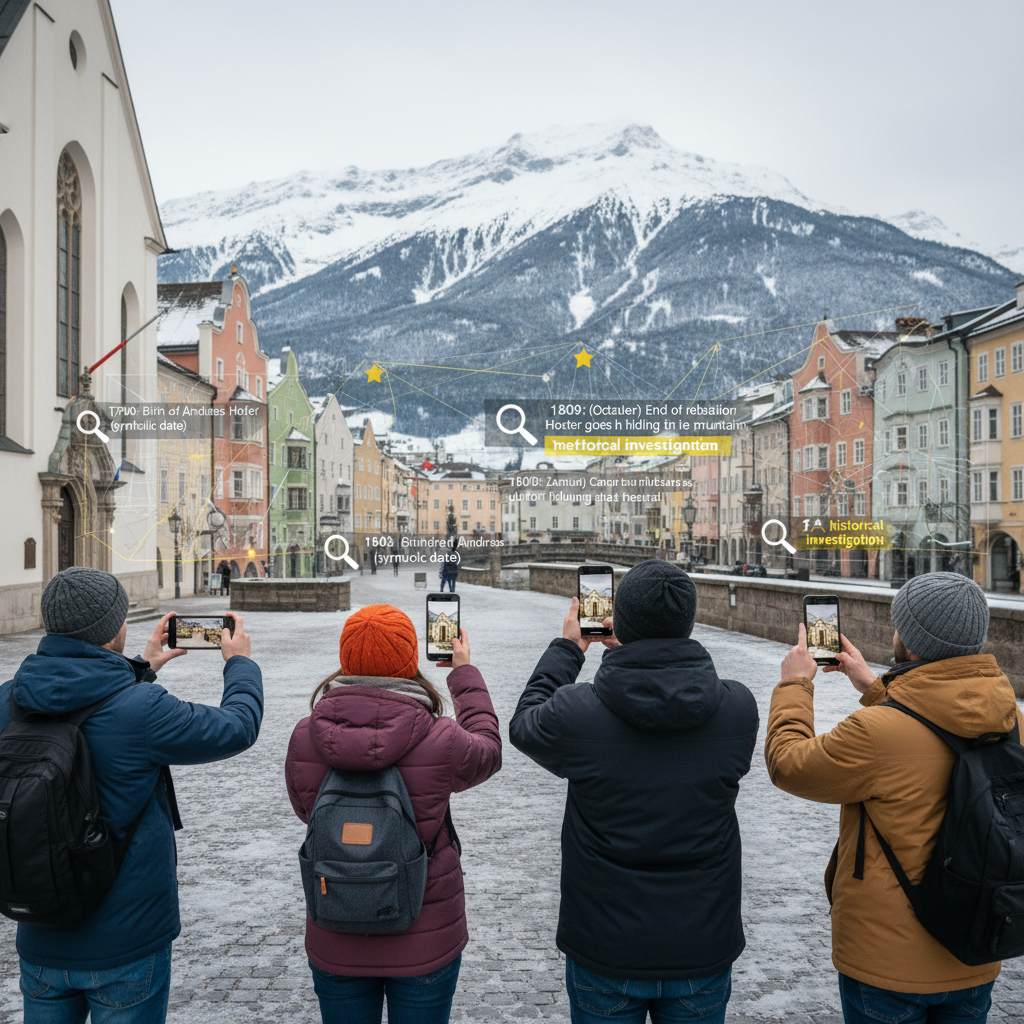
Innsbruck — The Tyrol Uprising's Final Betrayal
Uncover the conspiracy that doomed Andreas Hofer's 1809 rebellion. Decipher coded messages, expose the spy network, and solve the mystery of the traitor who sealed the Tyrol's fate.
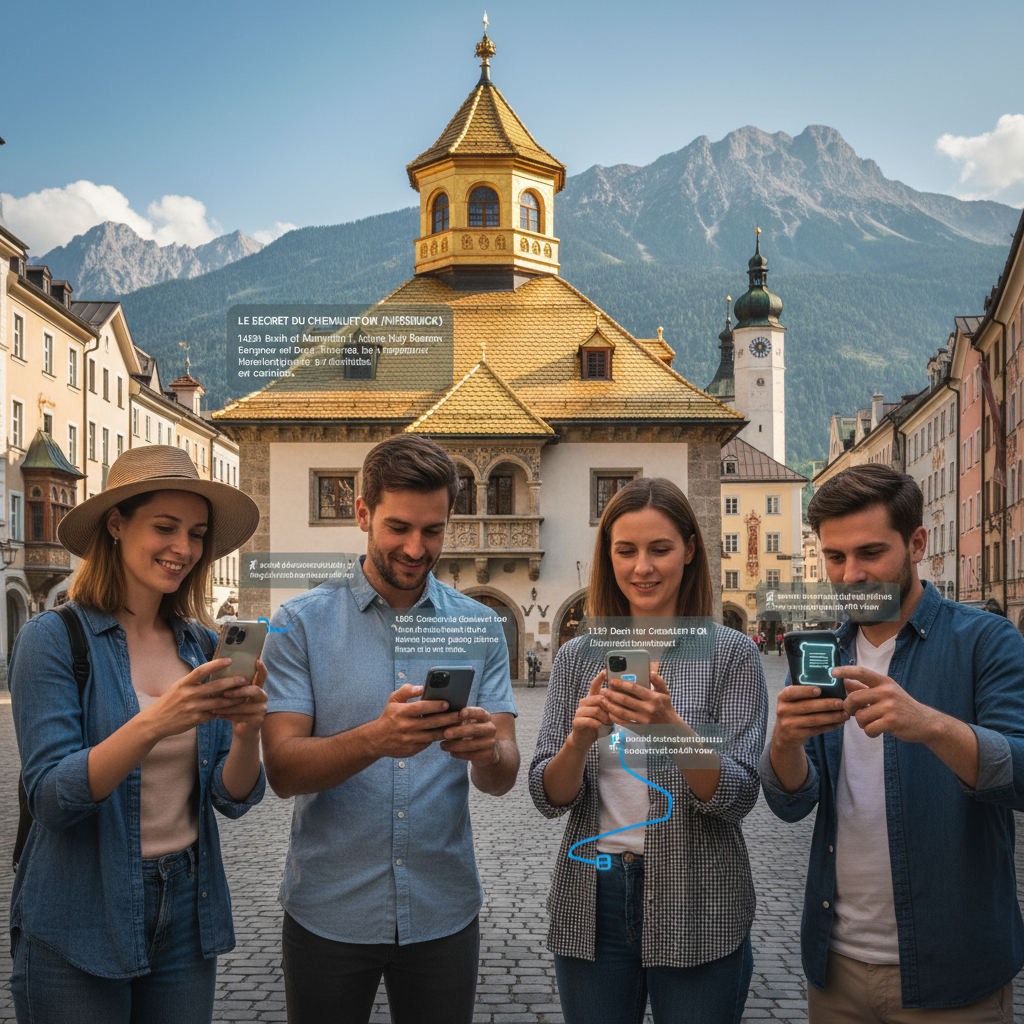
The Golden Knight's Cipher — Maximilian I's Hidden Legacy
Decipher Emperor Maximilian I's encrypted final testament hidden within Innsbruck's Renaissance monuments. Uncover the conspiracy that nearly toppled the Habsburg dynasty.
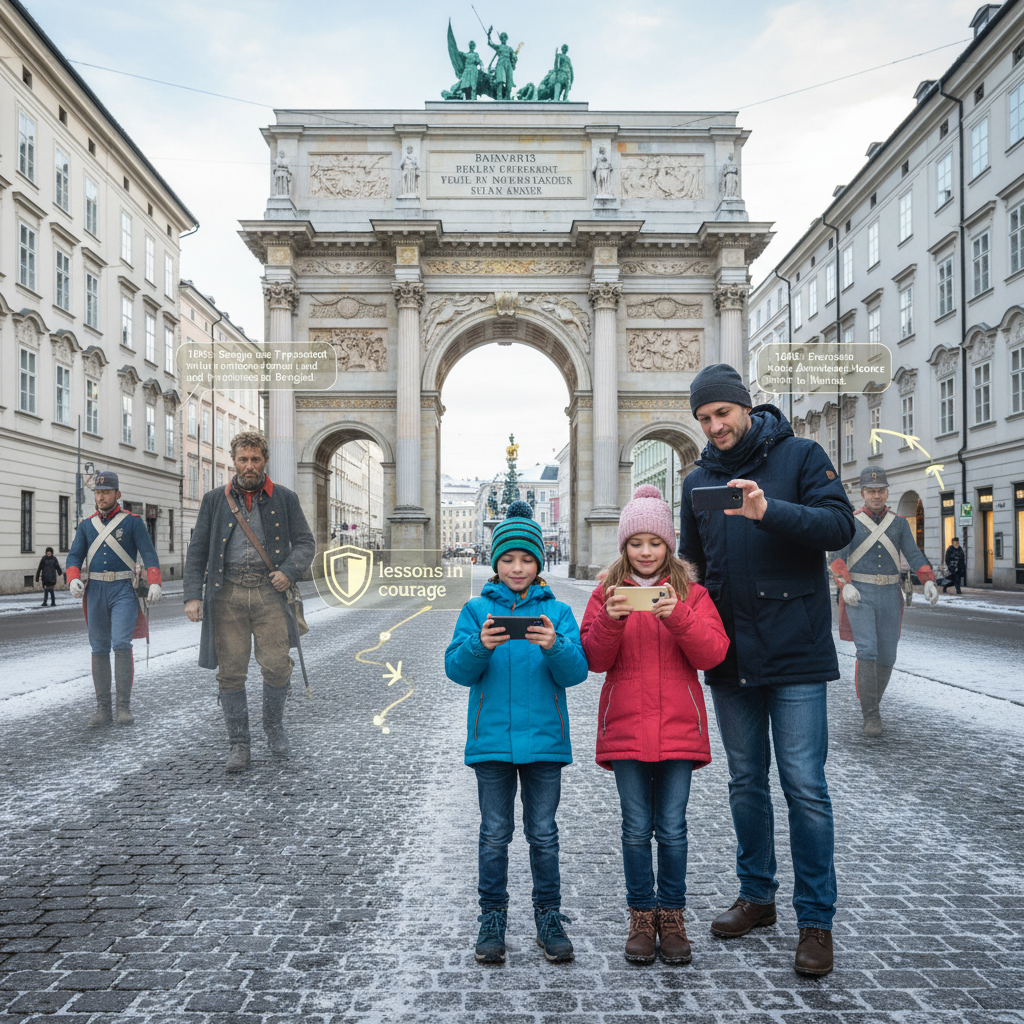
Innsbruck — The Innkeeper's Last Oath
Uncover the innkeeper Sandwirt's final oath amidst Tyrolean resistance. Decode hidden messages at historic landmarks to expose a WWII betrayal plot before it's too late.
Unusual things to do in Innsbruck
Innsbruck is a city that knows how to surprise, offering much more than its alpine panoramas. For an unusual activity in Innsbruck, imagine combining the adrenaline of a challenge with the discovery of lesser-known places. Our outdoor escape games transform the city into a giant playground, inviting you to solve puzzles while exploring secret passages and hidden courtyards of the historic center. It's an original outing that allows you to immerse yourself in imperial history while stimulating your team spirit. Off the beaten path, it's an opportunity to live a unique adventure, blending heritage and playful innovation, making every street corner a stage in your quest.
Things to do in Innsbruck with kids
For a memorable family day in Innsbruck, our outdoor escape games are the ideal option. Designed to be accessible from 8-10 years old, they transform city discovery into a real treasure hunt. Children and teens will love solving puzzles together, stimulating their team spirit and observation skills. It's a fun activity that allows everyone, from the youngest to the oldest, to get actively involved. Far from traditional tours, this interactive approach guarantees laughter and precious memories, while exploring the wonders of Innsbruck in an enjoyable and engaging way for the whole family.
Innsbruck for couples
Discovering Innsbruck as a couple takes on a special dimension with our scavenger hunts. Stroll hand in hand through the picturesque alleys of the Old Town, let yourself be charmed by the imperial architecture and the breathtaking views of the surrounding mountains. Our routes are designed to offer moments of complicity, where solving puzzles becomes a pretext for sharing laughs and observations. It's an intimate and original way to appropriate Innsbruck's heritage, discover hidden corners, and create unique memories, away from the hustle and bustle, in a romantic and stimulating atmosphere.
What to do in Innsbruck when it rains
Even in rainy weather, Innsbruck retains all its charm, and our outdoor escape games adapt perfectly. The good news is that the majority of our routes, about 80%, guide you through covered passages, historic arcades, and sheltered nooks of the Old Town. You can thus continue your adventure without getting too wet, enjoying the unique atmosphere of the cobblestone streets and centuries-old buildings. What to do in Innsbruck on a rainy day? Our game is an excellent option to stay dry while exploring the city in a fun way.
Where is Innsbruck, and where do the routes start?
Starting points of our routes and the places they pass through.
Route starting points
Places in Innsbruck
- Hofkirche (Court Church)
- Golden Roof (Goldenes Dachl)
- Hofgarten (Imperial Garden)
- Altes Rathaus (Old Town Hall)
- Deutschordenshaus (Teutonic Order House)
- Jesuitenkirche (Jesuit Church)
- Innbrücke (Inn Bridge)
- Annasäule (St. Anne's Column)
- Court Church (exterior)
- Riesengasse / Old Town
- Helblinghaus
- Inn Bridge (Innbrücke)
- Ottoburg
- Town Hall Tower (exterior)
- Provincial Parliament Square
- Bergisel (Andreas Hofer Monument)
- Hofburg (Imperial Palace)
- Stadtturm (City Tower)
The history of Innsbruck
From Roman Outpost to Imperial Residence
Innsbruck's story begins with its location in the Alps, north of the Brenner Pass and on the Inn River. Around 15 BC, the Romans established the military station Veldidena (whose name survives in the Wilten district today) to protect the trade route from Verona to Augsburg. This early settlement was a crossing point over the Inn River, reflected in the city's name, derived from "Oeni Pons" or "Oeni Pontum," Latin for "bridge over the Inn."
In the 12th century, the Counts of Andechs acquired land from Wilten Abbey to expand a trading post. Between 1187 and 1204, Innsbruck was granted town privileges, with 1239 often cited as the official founding date when Otto VIII, the last Count of Andechs, formally confirmed the town charter. By 1363, Innsbruck came under Habsburg control, a pivotal moment that shaped its future. The city grew in the 15th century when Frederick IV, Duke of Austria, moved the government seat of Tyrol from Merano to Innsbruck in 1420, making it a royal residence. Emperor Maximilian I (1459–1519) further developed Innsbruck, commissioning buildings like the Golden Roof and the Imperial Court Church, establishing its status as a political and cultural center of Tyrol.
Habsburg Influence and Modern Development
Following Maximilian I's reign, Innsbruck continued to serve as a significant Habsburg residence. Ferdinand I, Maximilian's grandson, continued the family's building projects, including the Hofkirche. The city's strategic position ensured its role in Alpine trade and defense. During the Napoleonic Wars, Innsbruck became a focal point of the Tyrolean Rebellion of 1809, led by Andreas Hofer, who fought against Bavarian and French occupation. Hofer's resistance, though ultimately unsuccessful, cemented his place as a national hero and is commemorated in the city.
In the 19th and 20th centuries, Innsbruck developed into a center for tourism and winter sports. The city hosted the Winter Olympics twice, in 1964 and 1976, which led to significant infrastructure improvements, including sports facilities and transportation networks. Today, Innsbruck remains a regional capital, an educational center with its university, and a gateway to the surrounding Alpine landscape. The historical buildings from its Roman and Habsburg past continue to define its urban core.
What to see in Innsbruck
- Golden Roof (Goldenes Dachl) — This late Gothic oriel, completed around 1500 for Emperor Maximilian I, is covered with 2,600 fire-gilded copper tiles. It was built to mark his marriage and served as a royal box for watching events in the square below.
- Hofkirche (Court Church) — Built between 1553 and 1563 by Emperor Ferdinand I, this Gothic church contains the cenotaph of Emperor Maximilian I. Although Maximilian is buried in Wiener Neustadt, his tomb in Innsbruck is surrounded by 28 bronze statues of his ancestors and relatives, known as the "Schwarzmander" (black men), and features 24 marble reliefs depicting scenes from his life. Tyrol's national hero, Andreas Hofer, is also entombed here.
- Altes Rathaus (Old Town Hall) and Stadtturm (City Tower) — The Old Town Hall, completed in 1358, was the first official town hall in Tyrol. Adjacent to it, the City Tower, built between 1442 and 1450, served as a watchtower. In 1560, it was topped with an onion dome, known as the Augsburg cap.
- Annasäule (St. Anne's Column) — This red marble column on Maria-Theresien-Straße was erected in 1706 to commemorate the Tyrolean forces' repulsion of Bavarian invaders on St. Anne's Day, July 26, 1703, during the War of the Spanish Succession. The statue atop the column is the Virgin Mary, but the column retains its popular name due to the victory's date.
- Jesuitenkirche (Jesuit Church) — This Baroque church, officially the University Church of the Immaculate Conception, was built between 1627 and 1646. Commissioned by Tyrolean sovereign Leopold V and his wife Claudia de Medici, it served as the spiritual center of the Jesuit college. Its design drew from Rome's Il Gesù and Salzburg Cathedral. The crypt beneath the high altar holds the remains of eleven Habsburg family members, including Leopold V.
- Imperial Palace (Hofburg) — The former imperial residence, originally a medieval castle, was rebuilt in Baroque and Rococo styles in the 18th century under Empress Maria Theresia. Visitors can see the Giant's Hall, the Imperial Apartments, and the Court Chapel.
When to visit Innsbruck
For warm-weather activities like hiking and cycling, late June to late August is suitable, with average daily high temperatures above 19°C. July is the clearest month, with the sky clear or partly cloudy 52% of the time. June, July, and August are also the wettest months.
For winter sports and Christmas markets, December to March is ideal. January is the coldest month, averaging -1°C with snowfall. Avoid mid-April to the end of May, and most of November. During these shoulder seasons, many cable cars, mountain huts, and higher trails close for maintenance or are still covered in snow.
Getting around Innsbruck
Innsbruck Airport (INN) is about 4 km from the city center. A taxi takes 10-15 minutes and costs around €15. The public F bus runs from the airport to the city center, including stops near Maria-Theresien-Straße and the main train station, taking 15-20 minutes and costing €2.80. The bus operates from 05:46 to 23:06 daily.
Innsbruck's city center is walkable. Public transport, including buses and trams, is efficient. The main train station, Innsbruck Hauptbahnhof, is a hub for international and regional trains. For parking, use one of the city's underground garages, as street parking is limited in the Old Town. Tipping is customary, usually by rounding up the bill.
Things you probably do not know about Innsbruck
Verified details most visitors walk straight past.
- Annasäule (St. Anne's Column)
- The Annasäule in Maria-Theresien-Straße is named after Saint Anne, but the statue at its very top isn't actually of her. Who is it? The statue atop the red Kramsach marble column is actually the Virgin Mary, depicted as the “Woman of the Apocalypse” standing on a crescent moon. It was originally intended as a Marian column, but the consecration on St. Anne's Day left a lasting impression, giving it its popular name.
- Hofkirche (Court Church)
- Emperor Maximilian I planned an elaborate tomb for himself in the Hofkirche, complete with 28 bronze figures. But if you visit, you'll find his actual remains aren't there. Why? Maximilian I had expressed a wish to be buried in the St. George's Chapel of Wiener Neustadt Castle, and his wish was granted. The 40 bronze figures he commissioned for his tomb were too heavy for that location, so his grandson, Emperor Ferdinand I, had a separate church built in Innsbruck with an empty tomb (cenotaph) for them.
- Altes Rathaus (Old Town Hall)
- The Old Town Hall, built in 1358, had a very specific role for ensuring fair trade in medieval Innsbruck. What was it? The market inspectors were based in the Old Town Hall and oversaw the quality and quantity of goods. For instance, a "bread guardian" would weigh bread at a counter in the town hall to prevent fraud and extortion.
- Jesuitenkirche (Jesuit Church)
- The current Jesuit Church, a grand Baroque structure, wasn't the first attempt at building a church for the Jesuit College. What happened to the initial construction? The first church for the Jesuit College was initiated in 1619, but its shell collapsed into the square in 1626, leading to the construction of the present church between 1627 and 1640.
- Old Town (Altstadt)
- Innsbruck's Old Town has a unique urban planning feature that separates the market square from the cathedral. What was the reasoning behind this layout? Innsbruck is built in the style of Inn-Salzach towns, which separate the market square from the church to avoid merchants setting up stalls directly in the temple, referencing the biblical story of Jesus chasing merchants from the temple.
- Helblinghaus
- The Helblinghaus is known for its elaborate Rococo stucco facade, but this wasn't its original appearance. When did it get its distinctive 'icing-like' decoration? The Helblinghaus was originally a late medieval building. Its distinctive 'icing-like' Rococo stucco decoration was added much later, around 1730.
Questions about visiting Innsbruck
What are the best neighborhoods to stay in Innsbruck?
For first-time visitors, the Altstadt (Old Town) is central for its historic atmosphere and proximity to major sights. Maria-Theresien-Straße offers a central base with shopping and dining. For quieter stays and mountain views, consider the Hungerburg/Nordkette side via the funicular. Wilten is an option for budget travelers and those wanting access to the train station and ski resorts.
How many days should I spend in Innsbruck?
Most visitors find 2 to 3 nights sufficient to explore Innsbruck. This allows time to visit the main attractions, enjoy mountain excursions, and experience the city's atmosphere at a comfortable pace.
Is Innsbruck a good destination for families with children?
Yes, Innsbruck offers family-friendly activities. Children can visit the Alpenzoo, Europe's highest zoo, with indigenous Alpine animals. Other options include the Swarovski Crystal Worlds, tobogganing in winter, and exploring the Old Town with its streets and historical landmarks.
What is the typical budget for a trip to Innsbruck?
Innsbruck is a mid-range destination compared to other Alpine cities. Accommodation prices vary, with three- and four-star hotels available in the Old Town and Maria-Theresien-Straße. Public transport is affordable, and many attractions offer combined tickets or city cards to help manage costs.
How can I get around Innsbruck without a car?
Innsbruck is a compact city, and its main attractions are walkable, especially in the Old Town and Maria-Theresien-Straße. The city has a public transport network of buses and trams, making it easy to reach areas further afield or mountain lifts.
What are the best times for festivals and events in Innsbruck?
Innsbruck hosts various events throughout the year. The Christmas markets are a major draw from November through December. The Alpine Folk Music Festival takes place in September. For those interested in winter sports, events like the Air & Style Contest occur, and the Osterfestival Tirol is held in March or April.
Frequently asked questions
How much does an outdoor escape game cost in Innsbruck?
An outdoor escape game in Innsbruck with OddballTrip.com costs only €12 per team, regardless of the number of participants! This unique and affordable rate makes the experience accessible to everyone, whether you come as a couple, with family, or with friends. There are no hidden fees, and this price includes full access to the adventure, puzzles, and clues. It's an economical and incredibly fun way to discover the city and enjoy an unusual activity without breaking the bank. Get ready for a memorable adventure without emptying your wallet!
Is it suitable for children / families?
Absolutely! Our outdoor escape games are perfectly suited for families and children from 8-10 years old. The puzzles are designed to be stimulating yet accessible, encouraging collaboration between generations. It's a great activity to entertain children and teens while allowing them to discover the city in a fun and interactive way. Younger ones love the treasure hunt aspect, and parents appreciate sharing a moment of complicity and reflection outdoors. An ideal outing for the whole family!
How long does an escape game in Innsbruck last?
The duration of an outdoor escape game in Innsbruck generally ranges from 1 hour 30 minutes to 2 hours 30 minutes, depending on your pace and how quickly you solve the puzzles. We encourage you to take your time to fully enjoy the experience and the magnificent urban and alpine landscapes of Innsbruck. There's no time pressure; you can take breaks, take photos, or even stop for a coffee. The goal is to have fun and explore at your leisure.
Do I need to book in advance?
No, it is not necessary to book in advance for our outdoor escape games in Innsbruck. You can purchase your game whenever you want and start the adventure at any time, 7 days a week. This is one of the great advantages of our scavenger hunts: total flexibility! Whether you have a spontaneous urge or are planning your day at the last minute, OddballTrip.com is ready when you are. All you need is your charged smartphone and the installed app to start.
What to visit in Innsbruck beyond the escape games?
Innsbruck is full of sites to discover after your escape game! Don't miss the famous Golden Roof in the Old Town, the Imperial Palace of Hofburg, and the Court Church (Hofkirche). For breathtaking views, take the funicular and cable car up to Nordkette. The Bergisel Olympic ski jump also offers panoramic views and an interesting museum. And for an immersion in nature, hiking trails around the city are accessible within minutes.
What is the best season to visit Innsbruck?
Innsbruck is beautiful in every season, each period offering a unique experience. Summer (June-September) is ideal for hiking and outdoor activities, with mild and sunny weather. Winter (December-March) transforms the city into a snowy paradise, perfect for skiing and Christmas markets. Spring and autumn are charming shoulder seasons, with fewer crowds and magnificent colors, ideal for exploring the city and its surroundings at a more tranquil pace.
Other destinations in Tyrol
Hall in Tirol
Medieval salt city in the heart of the Tyrolean Alps
Kufstein
Tyrol's pearl, between fortress and Alpine peaks.
Otztal
In the heart of the Tyrolean Alps, between peaks and eternal glaciers
Rattenberg
Austria's smallest town, a gem of glass and history
Schwaz
Tyrol's silver heart: historic mines, alpine beauty.
More cities in Austria
Hallein
In the heart of salt mines, a Celtic and medieval treasure
Salzburg
Mozart's city, a baroque gem nestled in the Alps.
Hallstatt
Postcard-perfect alpine village, between lake and mountains
Friesach
In the heart of medieval Carinthia
Admont
In the heart of the Alps, discover an ancient abbey and its library
Linz
Between Danube, modern art and Austrian history
Activities to discover nearby
Guided tours, skip-the-line tickets and local experiences to book in advance.
💡 Optional booking — you can also buy on-site. All links open in a new window, your OddballTrip visit stays preserved.