
Fountains AbbeyOutdoor Escape Game & Treasure Hunt
Cistercian jewel in the heart of Yorkshire
Fountains Abbey, a Cistercian gem nestled in the heart of Yorkshire, is much more than just a historical site; it's an invitation to exploration and adventure. What to do in Fountains Abbey? Beyond contemplating the magnificent abbey ruins and the serene Studley Royal Water Garden, a UNESCO World Heritage site, the area comes alive in a truly unique way. Imagine wandering among millennia-old vestiges, your eyes fixed on architectural details, all while solving puzzles. Our outdoor escape games transform your visit into a real-life treasure hunt. This captivating game will lead you through the verdant pathways and secret corners of this iconic location, including the surroundings of Fountains Hall. It's an unusual activity perfect for discovering heritage from a fun and interactive perspective, far from traditional guided tours. Prepare for a total immersion where history and mystery converge.
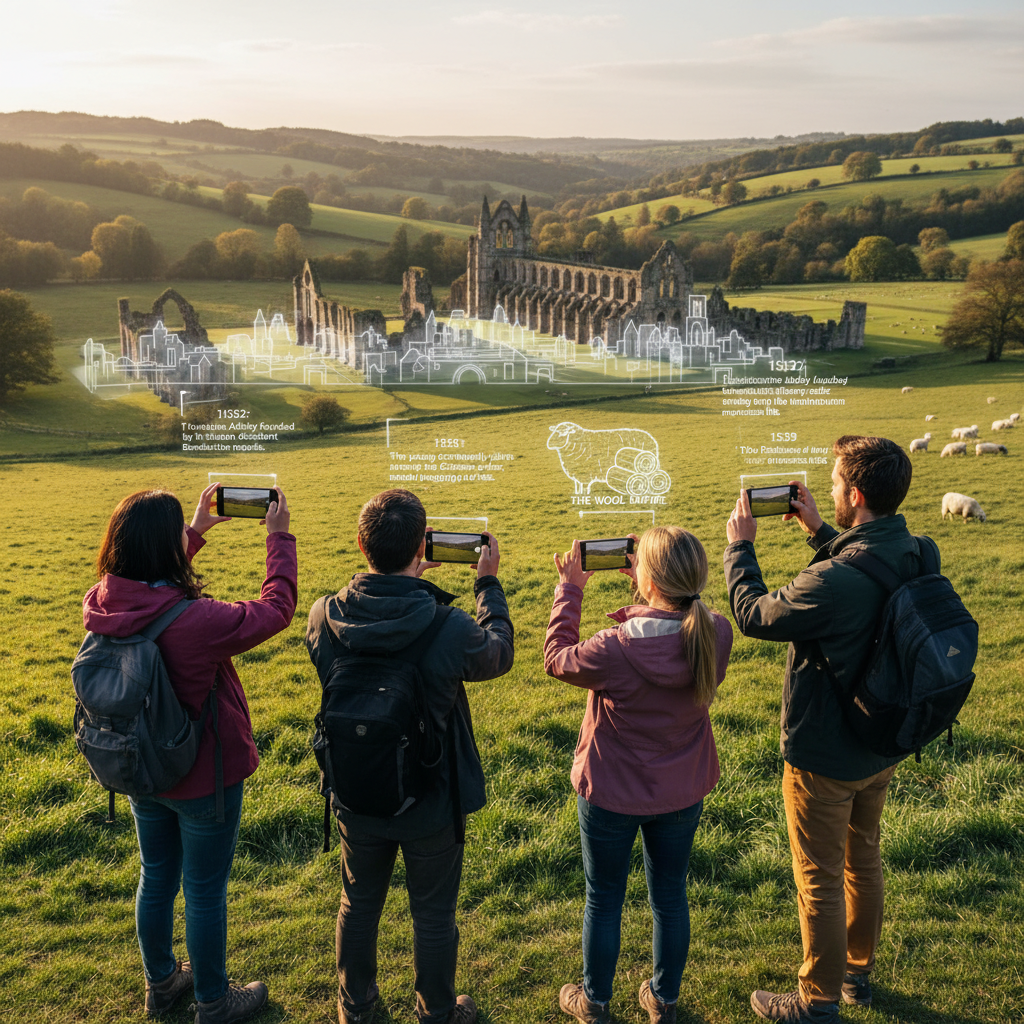
Unusual things to do in Fountains Abbey
For an unusual activity in Fountains Abbey, let yourself be tempted by an out-of-the-ordinary adventure. Instead of a simple visit, transform your exploration of the majestic ruins and the Studley Royal gardens into a real playground. Imagine deciphering codes hidden in ancient stones, following clues scattered along verdant pathways, or solving puzzles that reveal the secrets of this history-rich place. It's an original outing that merges cultural discovery with the thrill of investigation, offering a new and engaging perspective on this exceptional heritage site. A memorable experience guaranteed!
Things to do in Fountains Abbey with kids
What to do with family in Fountains Abbey? Our treasure hunts are an excellent option to entertain both young and old. With a recommended minimum age of around 8 years old for children, accompanied by adults, the adventure is designed to be accessible to everyone. Children and teenagers will love the playful aspect of the treasure hunt, where each solved clue brings them closer to the final solution. It's an interactive way to discover heritage, where learning happens through play. Parents will appreciate seeing their children marvel at history while collaborating to solve challenges. A day full of discoveries and laughter for the whole family!
Fountains Abbey for couples
Fountains Abbey as a couple offers an idyllic setting for a romantic getaway. Imagine yourselves hand in hand, exploring the majestic abbey ruins at sunset, or strolling through the peaceful Studley Royal Water Garden. The winding paths and breathtaking views of the verdant landscape create an intimate atmosphere, perfect for shared confidences and memories. Participating in a treasure hunt for two adds a playful dimension to your discovery of the heritage, transforming every corner into a place of mystery to solve together. It's an original way to strengthen your bond while soaking in the beauty and history of this exceptional site.
What to do in Fountains Abbey when it rains
What to do in Fountains Abbey on a rainy day? Although the experience is mostly outdoors, the abbey ruins surprisingly offer many natural shelters. Approximately 80% of our game routes can be partially completed under the majestic arcades, vaulted passages, and vast roofless naves which, due to their structure, protect from light showers. This allows for continued exploration without being completely exposed. An umbrella is still recommended for transitions, but the ingenious architecture of the Cistercian monks will surprise you with its ability to offer unexpected refuge, transforming the rain into a mystical ambiance.
Where is Fountains Abbey, and where do the routes start?
Starting points of our routes and the places they pass through.
Route starting points
Places in Fountains Abbey
- Public viewpoint over the Skell Valley
- Public path alongside the abbey enclosure
- Public field adjacent to former monastic farmlands
- Bank of the River Skell
- View of the abbey ruins from adjacent public land
- Historical information panel on monastic granges (outside paid site)
- Exterior view of the Studley Royal Water Garden features
- Remains of the old abbey grange (if visible from outside)
The history of Fountains Abbey
Cistercian Settlement in the Skell Valley
Fountains Abbey began in 1132 with thirteen Benedictine monks from St Mary's Abbey in York. They sought a stricter adherence to the Rule of St Benedict. After a dispute with their abbot, Archbishop Thurstan of York granted them land in the Skell Valley. The valley, then remote, offered the solitude they sought. Their initial dwellings were simple, made of wood. They followed the Cistercian order, which emphasized manual labor and self-sufficiency. The abbey grew, attracting new recruits and endowments. By the mid-12th century, significant stone buildings were under construction. The church, chapter house, and refectory began to take shape, reflecting the Cistercian architectural style.
From Monastic Wealth to Ruined Estate
By the 13th century, Fountains Abbey was one of the wealthiest Cistercian monasteries in England. This was largely due to its extensive sheep farming and wool trade. It controlled large estates, known as granges, across Yorkshire, including agricultural lands and mills along the River Skell. The abbey's prosperity allowed for further expansion, including the infirmary and the infirmarer's hall. This period of monastic dominance ended in 1539 with the Dissolution of the Monasteries under King Henry VIII. The abbey was surrendered to the Crown, its assets seized, and its buildings stripped of valuable materials. Lead from the roofs was melted down, and stone was removed for other constructions. What remained decayed, transforming the complex into the ruins seen today. In the 18th century, the Aislabie family, owners of the adjacent Studley Royal estate, incorporated the abbey ruins into their landscape garden. This created the Studley Royal Water Garden, a blend of natural features and architectural decay.
What to see in Fountains Abbey
- Fountains Abbey Ruins — Explore the remains of the Cistercian monastery. The nave and transepts of the church show the scale of the original building. The cellarium is a large vaulted storage area. The chapter house is where monks met. The infirmary complex shows aspects of daily life and care for sick monks.
- Studley Royal Water Garden — Walk through this 18th-century landscape garden, a UNESCO World Heritage site. It is designed around ornamental lakes, canals, and classical temples. The Serpentine River, a man-made feature, winds through the valley, leading to various follies and viewpoints.
- Banquet House — This small building within the water garden offers views across the main pond. It was designed for outdoor dining.
- Surprise View — This specific viewpoint within the Studley Royal Water Garden is placed to offer a view of the abbey ruins as visitors round a corner.
- St Mary's Church, Studley Royal — This Victorian church, built in the 1870s by William Burges, is an example of Gothic Revival architecture with intricate interior decorations.
- Fountains Hall — A 17th-century Jacobean mansion built partly with stone salvaged from the dissolved abbey. Its architecture shows the subsequent history of the estate.
When to visit Fountains Abbey
Visit Fountains Abbey during late spring (May-June) or early autumn (September-October). In spring, the gardens have new growth, and the weather is mild, with fewer visitors than in summer. Early autumn offers foliage colors around the water gardens and comfortable temperatures. Summer (July-August) can be warm and busy due to school holidays. Avoid visiting in winter (November-February) if possible. Garden features may be less defined, and the weather can be cold and damp. Some facilities might have reduced hours during the off-season.
Getting around Fountains Abbey
Fountains Abbey is near Ripon in North Yorkshire. The closest major train station is Harrogate, about 15 miles away, with connections to Leeds and York. From Harrogate, a local bus service (the 36) goes to Ripon. From Ripon, a taxi or a walk is required. Driving is the most convenient option, with parking available on-site. The site is walkable, but expect uneven paths and some inclines, especially in the water garden. Wear comfortable shoes. Ripon hosts a market in the market square on Thursdays. Most facilities at Fountains Abbey operate daily. Check their official website for seasonal opening hours.
Things you probably do not know about Fountains Abbey
Verified details most visitors walk straight past.
- Fountains Abbey Cellarium
- Why is the Cellarium at Fountains Abbey so unusually large and impressive? The Cellarium, a massive vaulted undercroft, was built to store the abbey's extensive produce, particularly wool, which was the foundation of its wealth and a major export commodity in medieval England.
- Studley Royal Water Garden
- What unusual feature was once part of the Studley Royal Water Garden's original design? The original 18th-century design of the water garden included a 'temple of fame' that housed busts of famous figures, reflecting the intellectual and artistic tastes of the era.
- Fountains Hall
- How did Fountains Hall come to be built using materials from the abbey? After the Dissolution of the Monasteries, the abbey stone was a readily available and valuable resource. Stephen Proctor acquired the site in 1597 and used much of the abbey's dressed stone to construct Fountains Hall in the early 17th century.
- River Skell
- What natural disaster significantly impacted the River Skell and the abbey grounds in the 18th century? In 1763, a severe flood caused the River Skell to burst its banks, damaging parts of the Studley Royal Water Garden and altering the landscape around the abbey.
Questions about visiting Fountains Abbey
How much time should I allocate for a visit to Fountains Abbey and Studley Royal Water Garden?
To explore both the abbey ruins and the extensive water garden, including walking between features, plan for at least 3 to 4 hours. A full day allows for a more leisurely pace and time to experience the different viewpoints.
Are there dining options available at Fountains Abbey?
Yes, there are several options. The main visitor centre has a restaurant and a shop. A smaller tearoom near the abbey ruins offers lighter refreshments and snacks. Picnics are also welcome in designated areas.
Is Fountains Abbey accessible for visitors with mobility challenges?
Parts of the site are accessible, particularly around the main visitor centre and some paths within the abbey ruins. However, the terrain in the water garden can be uneven, and some areas have steps or inclines. Accessible routes are marked on site maps.
Can I bring my dog to Fountains Abbey and Studley Royal Water Garden?
Dogs on leads are welcome in most outdoor areas of Fountains Abbey and Studley Royal Water Garden, including the abbey ruins and the water garden. There are specific areas where dogs are not permitted, such as inside the visitor centre and some buildings.
What is the best way to get to Fountains Abbey without a car?
While driving is most convenient, you can reach Fountains Abbey by public transport. Take a train to Harrogate, then a bus to Ripon. From Ripon, a local bus service (the 139) operates to Fountains Abbey on certain days, or you can take a taxi.
Are there any special events or tours at Fountains Abbey?
Fountains Abbey hosts various events throughout the year, including guided tours, family activities, and seasonal celebrations. It is advisable to check their official website for a current schedule of events and booking information before your visit.
Frequently asked questions
How much does an outdoor escape game cost in Fountains Abbey?
Our outdoor escape games in Fountains Abbey are designed to be accessible and fun for everyone. The price is €12 per team, which makes it very affordable, especially if you come with a group of friends or family. This unique price per team, and not per person, allows you to fully enjoy the adventure without worrying about the exact number of participants (within the recommended limit for an optimal experience, of course). It's excellent value for money for an activity that combines heritage discovery, puzzle-solving, and convivial moments in the heart of an exceptional historical site.
Is it suitable for children / families?
Absolutely! Our treasure hunts are perfectly suited for families and children from about 8 years old, accompanied by adults. The goal is to make heritage discovery fun and interactive. The puzzles are designed to stimulate everyone's thinking, and collaboration is key to success. It's an excellent opportunity for parents to share a bonding moment with their children and teenagers, while introducing them to the history of Fountains Abbey in an entertaining and engaging way. An outing that will surely please the whole family!
How long does an escape game last in Fountains Abbey?
The duration of our outdoor escape games in Fountains Abbey is flexible and depends on your pace of exploration and your ability to solve the puzzles. On average, allow between 1h30 and 2h30 to complete the route. This includes time to admire the scenery, take photos, and discuss clues. There's no strict timer; you are free to enjoy the experience at your leisure. The important thing is to have fun and immerse yourself in the history and mysteries of this unique place.
Do I need to book in advance?
No, flexibility is one of the great advantages of our outdoor escape games. It is generally not necessary to book in advance. You can purchase your game online and start the adventure whenever you want, according to your schedule and weather conditions. Once the game is purchased, you will receive all instructions to start your treasure hunt in Fountains Abbey. This is ideal for last-minute decisions or to adapt to a changing visit program. Enjoy this freedom to explore at your own pace!
What to visit in Fountains Abbey beyond the escape games?
Beyond our exciting escape games, Fountains Abbey and Studley Royal Water Garden offer an incredible wealth to explore. Don't miss the impressive ruins of the Cistercian abbey, a UNESCO World Heritage site, where you can wander and imagine monastic life of yesteryear. The Studley Royal Water Garden, with its pools, statues, and temples, is an 18th-century landscaping masterpiece. Fountains Hall, an elegant Jacobean house, is also worth discovering. Every corner of this estate is an invitation to discovery and wonder.
What is the best season to visit Fountains Abbey?
Fountains Abbey is beautiful in all seasons, but each offers a different experience. Spring sees the gardens awaken with vibrant flowers, while summer is ideal for enjoying long sunny days and picnics on the vast lawns. Autumn transforms the landscape into a palette of warm colors, offering spectacular views of the changing foliage. Even winter has its charm, with a quieter atmosphere and sometimes a blanket of snow that makes the ruins even more majestic. The choice will depend on your personal preferences and the ambiance you are looking for.
Other destinations in Yorkshire
Haworth
Home of the Brontë sisters and mysterious moors
Hull
Port city, rich in history and culture
Malham Cove
A spectacular natural limestone amphitheatre
Richmond
A Norman castle in the heart of the Yorkshire Dales
Rievaulx
Dive into the history of Cistercian monks in a beautiful valley
Skipton
Gateway to the Dales and its medieval castle
Whitby
Birthplace of Dracula and Gothic legends
York
Roman, Viking, and medieval city, between walls and legends.