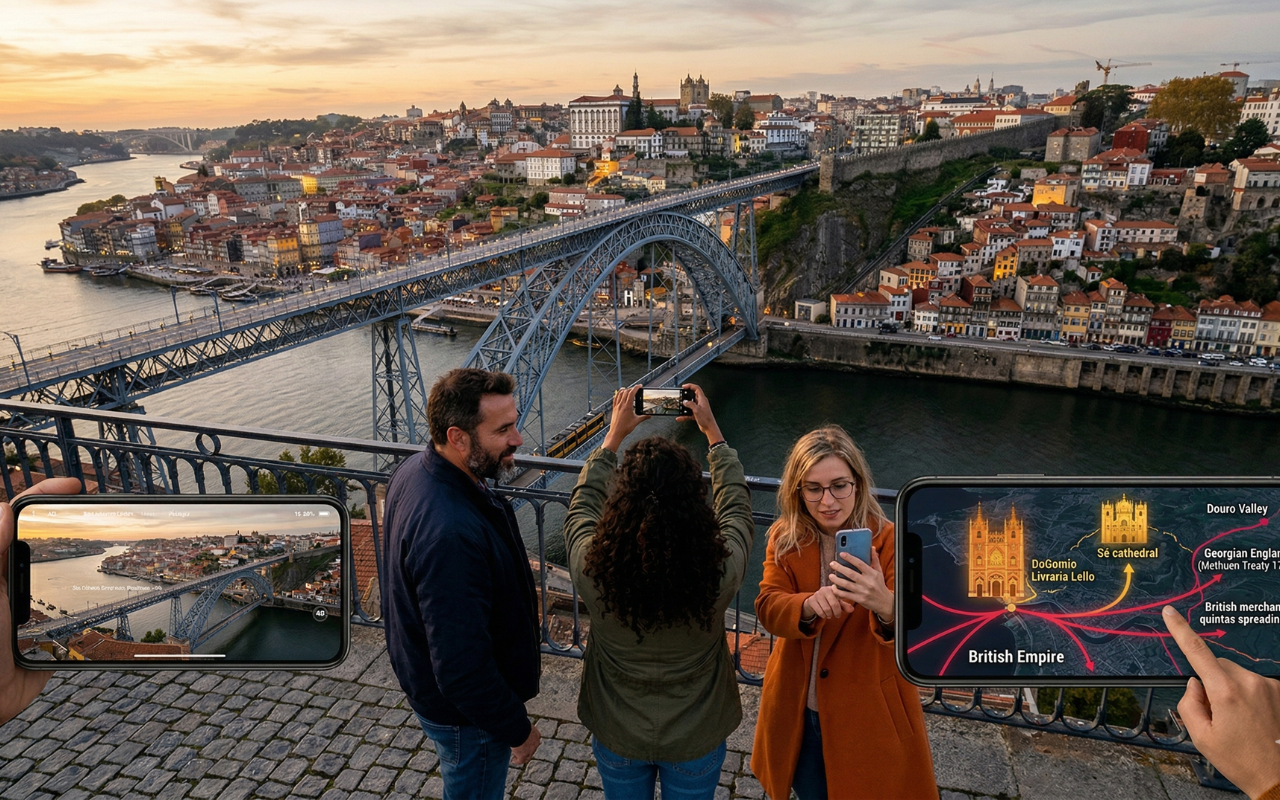
PortoOutdoor Escape Game & Treasure Hunt
Four escape games in the city of the Douro and the Discoveries
If you're wondering what to do in Porto, prepare to be enchanted by a city where history meets modernity around every corner. Stroll through the colorful, UNESCO-listed Ribeira district, admire the breathtaking views from the Clérigos Tower, or lose yourself in the magic of Livraria Lello, often cited as one of the most beautiful bookstores in the world. But Porto offers much more than its iconic landmarks. For an unusual activity and a memorable experience, why not embark on an outdoor escape game? It's a unique way to discover the city, transforming your exploration into a real-life scavenger hunt. Imagine a thrilling treasure hunt that leads you through historic neighborhoods, solving puzzles while soaking up the local atmosphere. Whether you're seeking culture, gastronomy, or adventure, Porto will surprise and charm you at every turn.
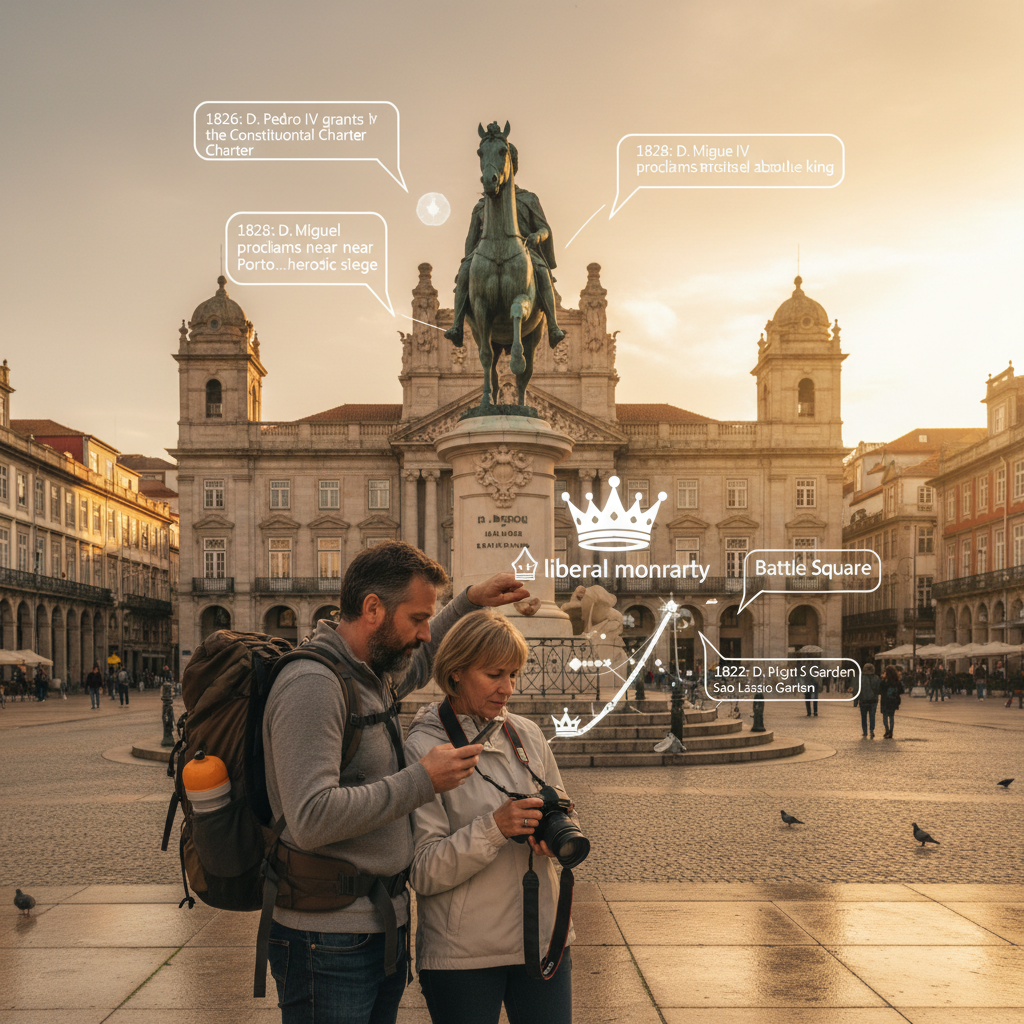
Porto 1820 — Decipher the Revolutionary Manifesto
Uncover the hidden documents and coded messages that sparked Portugal's Liberal Revolution. Decipher the manifesto that challenged absolute monarchy and trace the conspirators' secret network through Porto's historic streets.
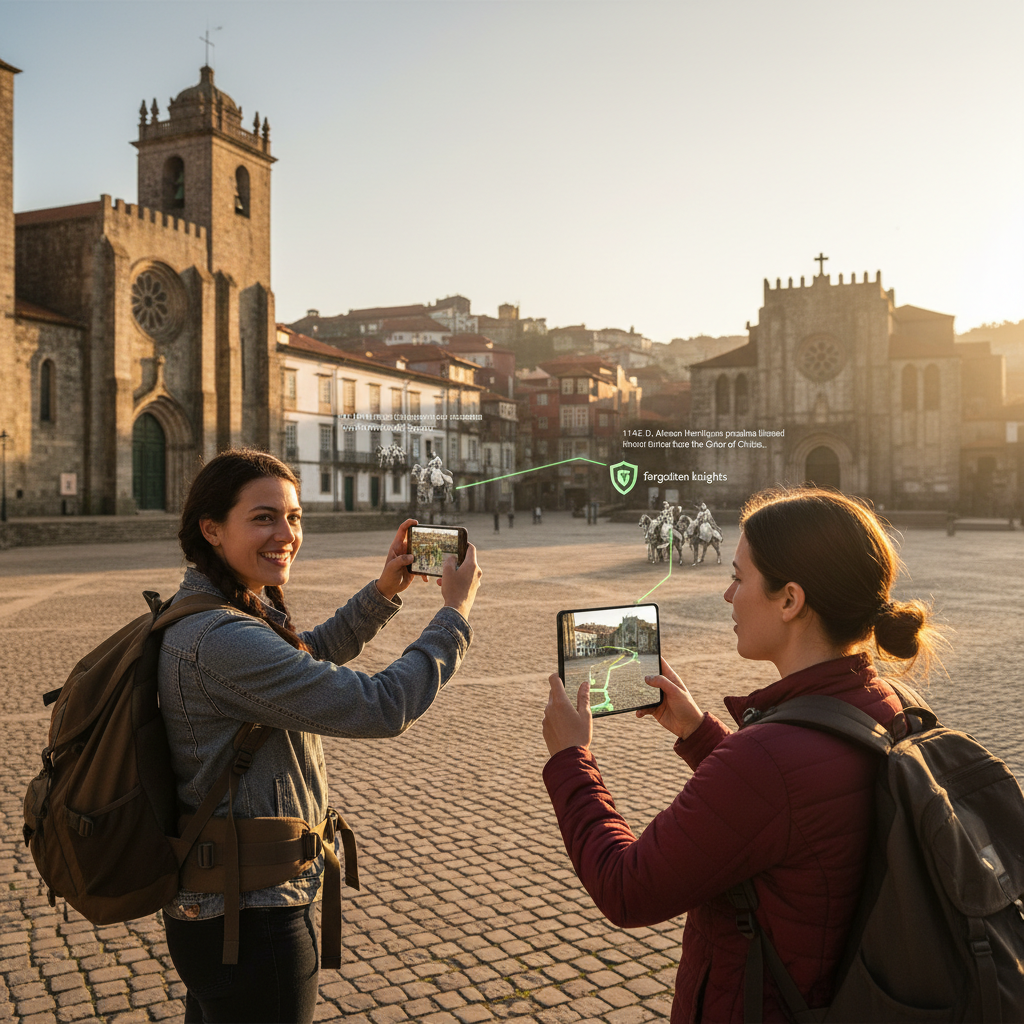
Porto — Enigma of the Christ Cross
Uncover the Templars' heirs secret code hidden in Christ Cross symbols across Ribeira. Decode their legacy before a modern conspiracy buries it forever.
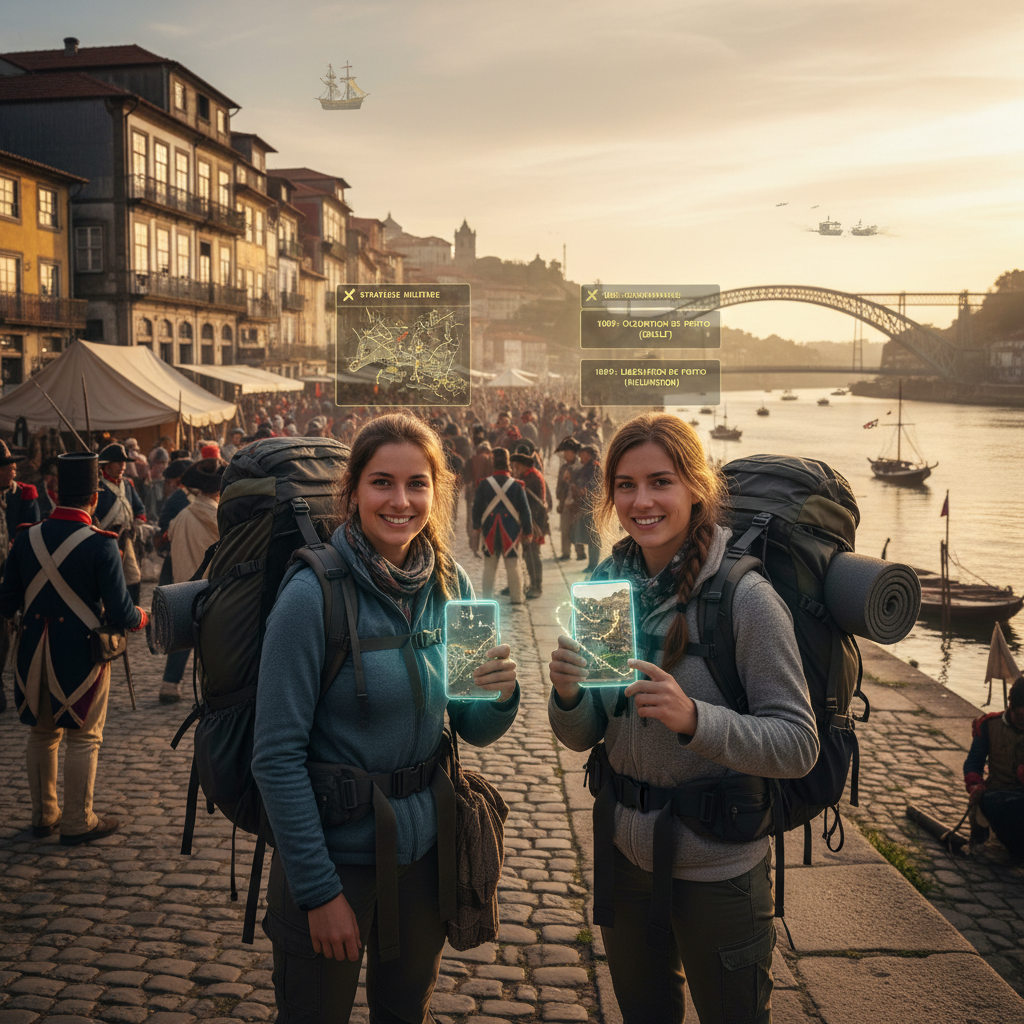
Porto's Hidden Resistance — Uncover the Secrets of the Peninsular War
Decipher the coded messages left by Portuguese resistance fighters during the 1809 French occupation. Uncover the conspiracy that saved Porto from total destruction.
Unusual things to do in Porto
For an unusual activity in Porto, beyond the beaten path, explore the cellars of Vila Nova de Gaia for a Port wine tasting, but with an original twist: some offer interactive tours or blending workshops. Another original outing would be to discover the city's abundant street art, especially in the Miragaia or Cedofeita districts, which are full of murals and ephemeral works. Or, dare a nighttime tuk-tuk ride to admire the illuminated bridges, offering a different and charming perspective on the city. These experiences will provide you with unique memories and a deeper immersion into the Portuguese soul.
Things to do in Porto with kids
Porto is a fantastic destination for families, with a multitude of activities for children and teenagers. Our scavenger hunts are designed to be accessible from around 8 years old, transforming city exploration into a fun and educational adventure. Imagine your children solving puzzles while exploring historic alleys! Beyond the escape game, you can visit the World of Discoveries, an interactive museum about Portuguese explorations, or take a Rabelo boat trip on the Douro. SEA LIFE Porto is also an excellent option to amaze the little ones. These activities guarantee moments of togetherness and unforgettable memories for the whole family.
Porto for couples
Porto is a city that breathes romance, perfect for a couple's getaway. Stroll hand in hand through the winding alleys of the Ribeira district, where every corner reveals a new colorful facade or a breathtaking view of the Douro. Ascend to the Miradouro da Vitória at sunset for a spectacular panorama of the city and its illuminated bridges, a moment of rare beauty. Enjoy a glass of Port wine in a cellar in Vila Nova de Gaia, or share a candlelit dinner in a typical restaurant. The intimate atmosphere and rich heritage of the city create an idyllic setting for shared memories, far from the hustle and bustle of everyday life.
What to do in Porto when it rains
Even in rainy weather, Porto retains its charm, and our outdoor escape games are surprisingly suitable! A large part of our routes leads you under historic arcades or through covered passages, offering natural shelter. Approximately 80% of the game can be played sheltered from the elements. It's an excellent opportunity to discover the city from a different angle, enjoying the cozy atmosphere of cafes between puzzles. Don't hesitate, adventure awaits, even in the rain, for a unique and memorable experience.
Where is Porto, and where do the routes start?
Starting points of our routes and the places they pass through.
Route starting points
Places in Porto
- Praça da Liberdade (Statue of D. Pedro IV)
- Facade of Paços do Concelho (City Hall)
- Battle Square
- São Lázaro Garden
- Facade of the São João National Theatre
- Santa Catarina Street
- Facade of Porto University Rectorate
- Cordoaria Garden
- Porto Cathedral Forecourt
- Fernandina Wall
- Largo de São Domingos
- Facade of the Church of Saint Francis
- Ribeira Quay
- Facade of the Church of Saint Nicholas
- Facade of the House of the Prince
- Prince Henry Square
- Porto Cathedral Terrace
- Former Appeal Court Prison Building
The history of Porto
From Roman Port to the Birth of a Nation
Porto's history predates the formation of Portugal. Archaeological evidence indicates human activity at the mouth of the Douro River as early as the 8th century BC, with a Phoenician trading settlement. The Romans established a town here in the 1st century BC, naming it Portus, meaning 'port'. This 'Portus Cale' is considered the origin of the name 'Portugal'. The Romans built roads and aqueducts, establishing the city's infrastructure.
After periods of Germanic Suebi and Visigothic rule, the Moors invaded in the 8th century. Their presence, though relatively brief, influenced architecture and agriculture. By the 11th century, Christian forces reconquered the region. Porto was central to the formation of Portugal: in 1120, Teresa of León granted the city to the Bishop of Porto. Her son, Afonso Henriques, who became Portugal's first king, used Porto as a base to unify the country. In 1143, the Treaty of Zamora recognized Portugal's independence, with Porto becoming part of the new kingdom.
A City of Trade and Resilience
During the 14th and 15th centuries, Porto developed as a center for trade and exploration. Its shipbuilders and sailors contributed to Portugal's Age of Discovery. The city's location on the Douro made it a port for exporting goods, particularly wine. This era saw the development of Port wine, produced in the Douro Valley and aged in Vila Nova de Gaia's cellars, which attracted British trading houses and stimulated the economy.
The 18th century brought growth and modernization, with Baroque and Neoclassical architecture appearing in the historic center. The 19th century saw industrialization transform Porto into an economic hub, with textile, ceramic, and metalworking factories. The city endured the Liberal Wars (1832-1833), with a year-long siege, earning it the nickname "Cidade Invicta" (the Unvanquished City). The Dom Luís I Bridge, built in 1886, connected Porto with Vila Nova de Gaia, aiding trade and transportation.
What to see in Porto
- Praça da Liberdade — This square, established in the early 18th century as Praça Nova, is in downtown Porto. It features an equestrian statue of King D. Pedro IV, inaugurated in 1866, representing Portuguese liberalism.
- Facade of Paços do Concelho (City Hall) — This building stands at the northern end of Avenida dos Aliados, an avenue that replaced older structures. Its architecture reflects early 20th-century urban development.
- Porto Cathedral Forecourt (Terreiro da Sé) — The cathedral, a mix of Romanesque, Gothic, and Baroque styles, began construction in the second half of the 12th century. The forecourt provides views over the city and the Douro River. The area around the cathedral was redeveloped in the 1930s and 1940s, removing a medieval neighborhood to create the open plaza.
- Fernandina Wall (Muralha Fernandina) — These medieval fortifications were built between 1336 and 1376, during the reigns of D. Afonso IV and D. Fernando, to enclose the expanding city. Most of the original 2.5 to 3 kilometers of walls were demolished as Porto grew in the 18th and 19th centuries. Sections remain, particularly above the Ribeira quarter, showing Porto's defensive past.
- Largo de São Domingos — This square is in the Ribeira district, a UNESCO-listed area with narrow streets and colored houses. It retains medieval urban characteristics.
- Facade of the Church of Saint Francis (Igreja de São Francisco) — This church, originally Gothic, underwent Baroque transformation in the 17th and 18th centuries, particularly in its interior. Its facade retains some earlier Gothic elements.
When to visit Porto
The best times to visit Porto are during late spring (May to June) and early autumn (September to early October). Temperatures are typically 20°C to 25°C (68-77°F), with sunshine and fewer crowds than in summer. June includes the Festa de São João on the 23rd, a cultural celebration. September is suitable for wine enthusiasts, coinciding with the Douro Valley grape harvest.
Summer (July and August) is the warmest, with highs around 28-30°C, but it is also the busiest and most expensive. Winters (November to March) are mild but wet, with frequent rainfall, making it a quieter period less suited for outdoor exploration.
Getting around Porto
Porto's Francisco Sá Carneiro Airport (OPO) is 11-19 km northwest of the city center. The Metro Line E (Violet) reaches the city center in 26-35 minutes to Trindade or Bolhão stations. A single Z4 ticket costs about €2.30, plus €0.60 for a rechargeable Andante card. Taxis cost €25-€35, while ride-hailing services like Uber or Bolt range from €15-€22.
Walking is suitable for Porto's historic center, though expect steep hills and uneven paths. Public transport includes metro, bus, and historic tram lines. A 24-hour Andante Tour pass costs about €7 and covers all zones. Single metro tickets within the city (Z2) cost €1.40. Historic tram tickets are bought on board for €3-€5 per trip. Parking in the city center is difficult; consider public transport or parking garages on the outskirts.
Things you probably do not know about Porto
Verified details most visitors walk straight past.
- Porto Cathedral (Sé do Porto)
- What secret did the 20th-century renovations of Porto Cathedral reveal? During restoration work between 1959 and 1962, a Gothic house-tower was discovered alongside the Sé Cathedral, which was subsequently restored and became a significant example of medieval military architecture.
- Fernandina Wall (Muralha Fernandina)
- How did Porto fund the construction of its extensive medieval walls? The construction of the Fernandina Wall, which took place between 1368 and 1437, was partly financed by a tax levied on wine transfers, a fitting detail for a city so closely tied to its wine trade.
- Praça da Liberdade
- What historical events unfolded in Praça da Liberdade, beyond its role as a public square? Praça da Liberdade, originally known as Praça Nova in the 18th century, was not only a meeting place but also a site of significant political events, including the execution of liberals in 1829 and the planning of the Republic on January 31, 1891.
- Porto
- Why are the people of Porto sometimes called 'tripeiros'? During the Age of Discovery in the 15th century, when ships were being prepared for expeditions, the best cuts of meat were sent with the sailors, leaving the local population to eat tripe, earning them the nickname 'tripeiros' (tripe-eaters).
Questions about visiting Porto
How many days should I spend in Porto?
Most travelers find that 2 to 3 days are sufficient to explore Porto's main attractions, including the historic center, Ribeira district, and a visit to the Port wine cellars in Vila Nova de Gaia. If you plan day trips to the Douro Valley or nearby beaches, consider adding an extra day or two.
What is the best way to get around Porto?
Porto's historic center is best explored on foot, though its hilly terrain can be challenging. The city has an efficient public transport system, including metro, buses, and historic trams. The metro is ideal for longer distances, while buses cover areas not reached by the metro. Trams offer a scenic way to see specific routes.
Which neighborhood is best to stay in Porto?
For first-time visitors, the Baixa/Sé district (city center) is popular due to its central location and proximity to major landmarks. The Ribeira district offers a appealing, historic atmosphere right by the river. Cedofeita is known for its art galleries and boutiques, while Foz do Douro provides a more relaxed, coastal vibe.
What is the weather like in Porto throughout the year?
Porto has a Mediterranean climate with Atlantic influences. Summers (June-August) are warm and sunny, with temperatures often reaching 25-30°C. Spring (March-May) and autumn (September-October) offer milder temperatures (13-24°C) and less rain. Winters (November-February) are mild but typically wet, with temperatures around 10-15°C.
What is a reasonable budget for a trip to Porto?
A moderate budget for Porto could range from €60-€100 per person per day. This would cover accommodation in a mid-range hotel (€45+), meals, public transport (€7-€16 for a multi-day pass), and some attractions. You can save money by utilizing free walking tours, eating at local tascas, and opting for public transport over taxis.
Is Porto a good city to visit with children?
Yes, Porto can be a great city for families. Many attractions are suitable for children, such as the World of Discoveries museum, the SEA LIFE Porto aquarium, and the Funicular dos Guindais for a fun ride. The city's parks and riverside areas offer space for children to play, and boat trips on the Douro River are also popular.
Frequently asked questions
How much does an outdoor escape game cost in Porto?
Our outdoor escape games in Porto are designed to be accessible to everyone, with a unique and very advantageous rate. The price is only €12 per team, regardless of the number of participants (within the recommended limit of 2 to 6 players for a better experience). This flat rate makes the activity very economical, especially if you come in a group. It's a fantastic way to discover the city without breaking the bank, enjoying an interactive and memorable adventure. No hidden fees, just guaranteed fun for your urban exploration!
Is it suitable for children / families?
Absolutely! Our scavenger hunts are designed to be a quintessential family activity. The puzzles are varied and adapted so that everyone, from the youngest (around 8 years old) to adults, can participate and have fun. It's an excellent way to foster team spirit and communication within the family, while exploring Porto in a playful manner. Children love the treasure hunt aspect, and parents appreciate discovering the city from a new, interactive angle. A guaranteed outing to create beautiful memories together.
How long does an escape game in Porto last?
The duration of our outdoor escape games in Porto generally ranges between 1h30 and 2h30, depending on your pace of play and your ability to solve the puzzles. There is no strict time limit, so you are free to take your time to admire the scenery, take breaks for a photo, or a local treat. The goal is to enjoy the experience and the city. It's an ideal duration for an activity that doesn't take up the whole day but offers a complete immersion.
Do I need to book in advance?
No, one of the great advantages of our outdoor escape games is their flexibility! There's no need to book in advance. You can start your game whenever you want, as soon as you're ready. Simply purchase the game online and launch it from your smartphone. This is perfect for spontaneous travelers or those who prefer to adapt their schedule day by day. Whether you decide to play in the morning, afternoon, or even in the evening, adventure is at your fingertips, without any time slot constraints.
What to visit in Porto beyond the escape games?
Porto is full of treasures to discover! After your escape game, don't miss strolling through the Ribeira district, with its colorful houses and narrow streets. Cross the Dom Luís I bridge to explore the Port wine cellars in Vila Nova de Gaia and enjoy a tasting there. Visit the majestic São Bento station, famous for its azulejos, or climb the Clérigos Tower for panoramic views. Livraria Lello, Porto Cathedral, and the Palácio da Bolsa are also must-sees. Every street corner reveals a part of Portuguese history and culture.
What is the best season to visit Porto?
Porto is pleasant to visit almost all year round, but the shoulder seasons, spring (April to June) and autumn (September to October), are often considered the best. The weather is generally mild and sunny, ideal for walking and enjoying outdoor activities, without the intense heat of summer or the chill of winter. Moreover, crowds are less dense than in mid-summer, making the experience more enjoyable. Summer (July-August) is also very popular, but expect more people and higher temperatures.
Other destinations in Porto and North
More cities in Portugal
Activities to discover nearby
Guided tours, skip-the-line tickets and local experiences to book in advance.
💡 Optional booking — you can also buy on-site. All links open in a new window, your OddballTrip visit stays preserved.