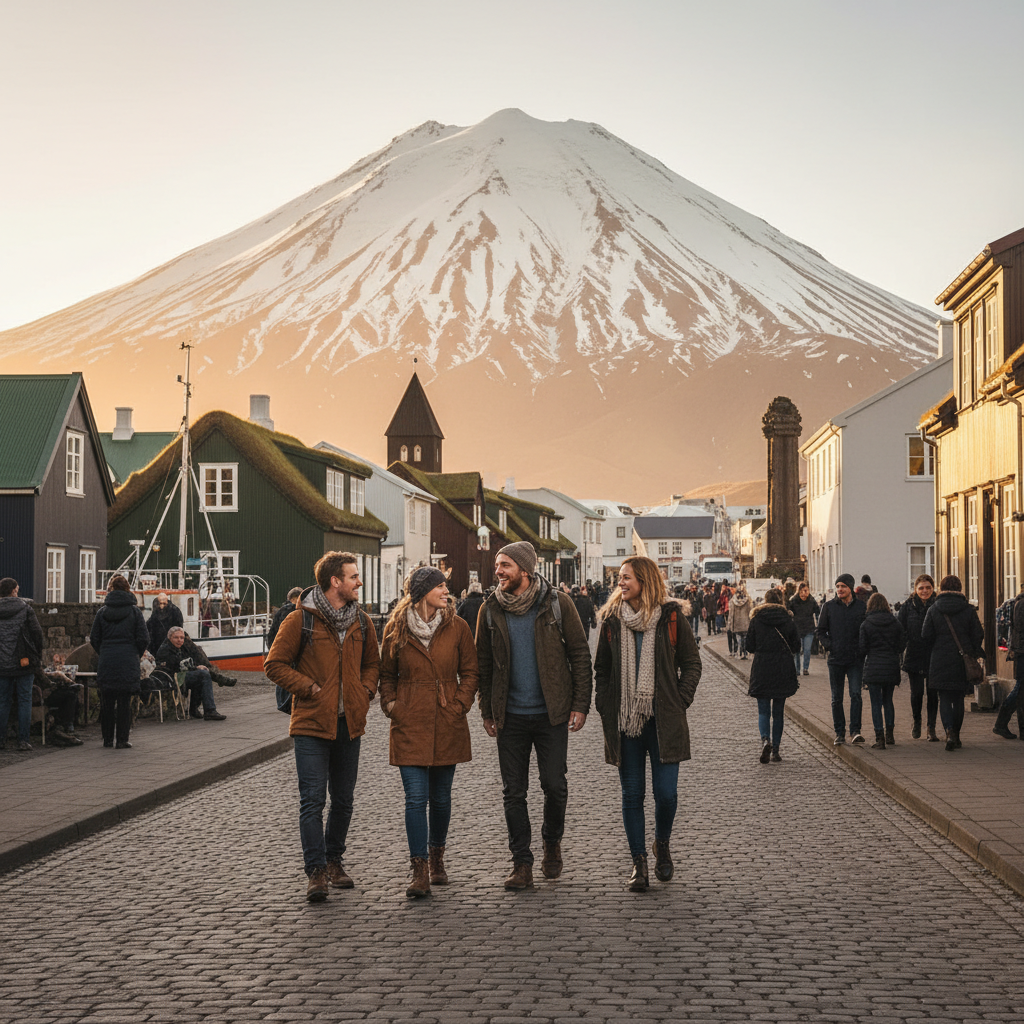
SnaefellsjokullOutdoor Escape Game & Treasure Hunt
Glacier-capped volcano, gateway to the Earth's core.
What to do in Snaefellsjokull? Beyond its majestic ice cap, this Icelandic peninsula offers a true immersion into raw and mysterious nature. Imagine exploring landscapes worthy of Jules Verne, with dizzying basalt cliffs like those at Arnarstapi, where the basalt columns of Gerðuberg stand proudly. You can also venture onto the black sand beaches of Djúpalónssandur, witnesses to past shipwrecks, or discover charming small fishing villages like Hellnar, nestled in the coves. For a truly unique experience, OddballTrip.com invites you to transform your visit into a thrilling adventure with an outdoor escape game. It's a real-life scavenger hunt, a true treasure hunt that will guide you through the wonders of Snæfellsjökull National Park. An unusual activity perfect for discovering local legends while solving outdoor puzzles, making your exploration much more than just a stroll.
Unusual things to do in Snaefellsjokull
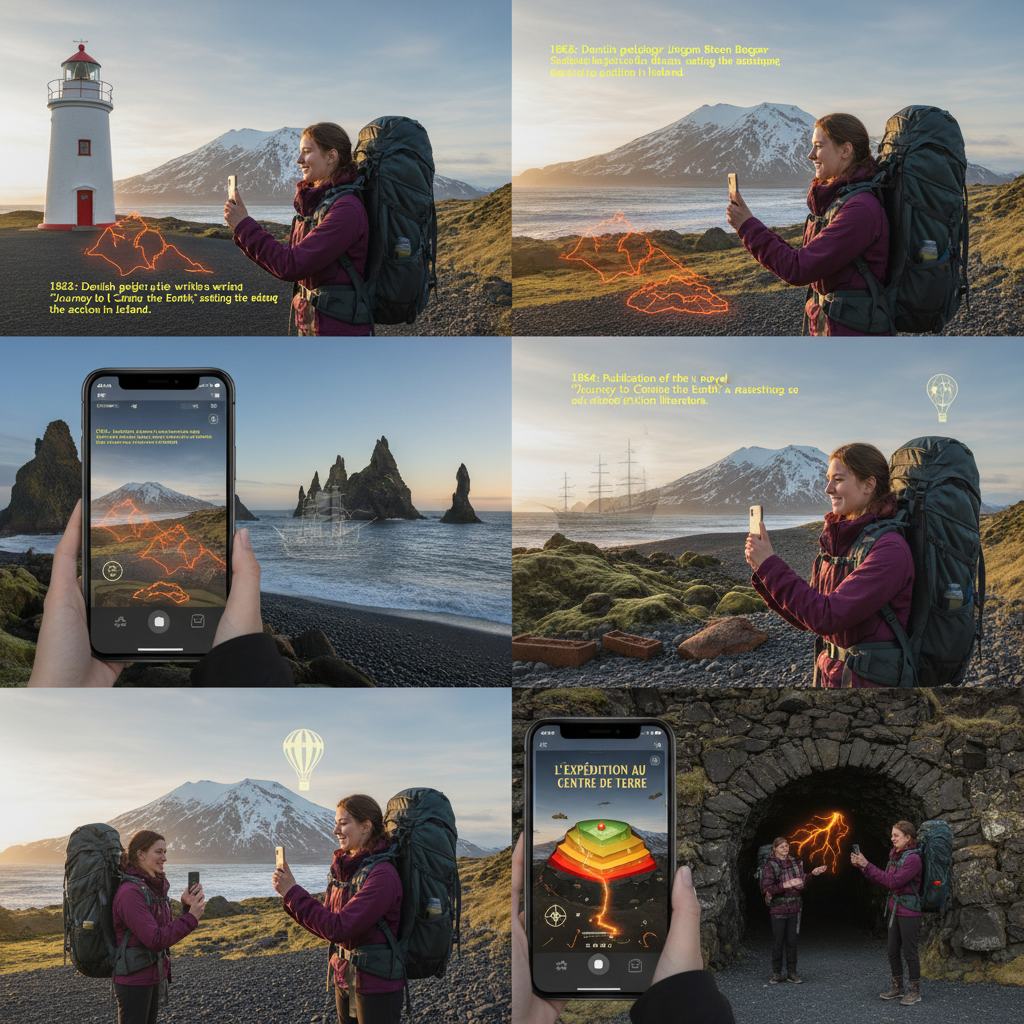
For an unusual activity in Snaefellsjokull, let yourself be tempted by an exploration that's out of the ordinary. Imagine following in Jules Verne's footsteps, searching for the "gateway to the center of the Earth" through the volcano-glacier. Our outdoor escape game plunges you into the heart of Icelandic legends, transforming the landscape into a vast playground. It's an original outing where every rock, every cove, every cliff becomes a clue or a backdrop for your adventure. You won't just visit; you'll live a story, solving puzzles while admiring spectacular views and soaking in the mystical atmosphere of this unique place.
Things to do in Snaefellsjokull with kids
What to do with family in Snaefellsjokull? Iceland is an ideal adventure playground for children and teenagers, and our outdoor escape game is designed to be a fun and educational experience for all. From 8 years old (accompanied), the youngest can actively participate in solving puzzles, transforming the discovery of the National Park into a real quest. It's a fantastic way to explore the lunar landscapes and black sand beaches, while stimulating the curiosity and team spirit of the family. Get ready to share laughter, challenges, and unforgettable moments in the heart of breathtaking nature.
Snaefellsjokull for couples
Snaefellsjokull as a couple offers a spectacular backdrop for a romantic and adventurous getaway. Imagine walking hand-in-hand, exploring the dramatic cliffs of Arnarstapi or the beaches of Djúpalónssandur, with the immense volcano-glacier in the background. Our scavenger hunt invites you to share an intimate adventure, where each solved puzzle strengthens your bond. It's a unique opportunity to create memorable souvenirs, far from the hustle and bustle, by connecting with wild nature and local legends. Enjoy the breathtaking sunset views and the exceptional natural heritage of this magical place.
What to do in Snaefellsjokull when it rains
In Snaefellsjokull, the weather is unpredictable, and rain is part of the Icelandic experience. Our outdoor escape game is designed to be played outdoors, with the route being largely exposed to the elements. It is therefore essential to equip yourself with waterproof clothing and suitable footwear to fully enjoy the adventure, even in the rain. In case of severe weather, small villages like Hellnar or Arnarstapi offer a few cozy cafes where you can shelter and warm up. The beauty of the landscape remains intact, whatever the weather, but preparation is key!
Where is Snaefellsjokull, and where do the routes start?
Starting points of our routes and the places they pass through.
Route starting points
Places in Snaefellsjokull
- Malarrif Lighthouse
- Lóndrangar Viewpoint
- Djúpalónssandur Beach
- Exterior of Vatnshellir Cave entrance
- Ruins of the old fishing village in Hellnar
- Arnarstapi
- Summit of Saxhóll crater
- Snæfellsjökull Glacier Viewpoint (e.g., near Rjúkandi)
The history of Snaefellsjokull
Glacier Formation and Literary Impact
The Snæfellsjökull volcano, a stratovolcano, has defined the Snæfellsnes Peninsula for 700,000 to 800,000 years. Its last confirmed eruption was about 1,900 years ago, though some evidence indicates activity as recently as 200 years ago. The glacier covering its summit adds geological complexity; an eruption would cause explosive phreatomagmatic events, similar to the 2010 Eyjafjallajökull eruption.
The Snæfellsjökull region gained international recognition in 1864 with Jules Verne's novel, Journey to the Center of the Earth. Verne selected Snæfellsjökull as the entry point to a subterranean world, a choice based on his study of Iceland's geology. This literary connection has shaped the glacier's image, attracting visitors and writers for centuries.
Coastal Settlements and Fishing Traditions
The coastal villages on the Snæfellsnes Peninsula have a maritime history. Hellnar was one of the peninsula's largest fishing stations, with seafaring records dating to 1560. By 1703, Hellnar had 38 houses and 194 residents, a substantial settlement for Iceland at the time. However, with the industrialization of Iceland's fishing industry and a shift towards larger centers like Reykjavík in the 19th and 20th centuries, Hellnar's population decreased. The nearby village of Arnarstapi was often favored by Danish authorities, further affecting Hellnar's growth.
Djúpalónssandur beach was also central to the local fishing economy. Generations of fishermen launched open rowing boats from its coves into the Atlantic waters. The demanding nature of this work is shown by the ancient lifting stones on the beach, used to test the strength of aspiring fishermen. These stones remain as a testament to the physical requirements of the trade.
What to see in Snaefellsjokull
- Malarrif Lighthouse — This 20-meter-tall, rocket-shaped lighthouse, built in 1946, has a white tower and a red lantern. It stands on the coastline, offering views of the Atlantic Ocean and the black pebbled shores.
- Lóndrangar Viewpoint — Here, two basalt sea stacks are visible, remnants of an ancient volcanic crater. The taller stack is about 75 meters high, and the shorter one is about 61 meters. These formations result from slow cooling lava.
- Djúpalónssandur Beach — This black pebble beach features smooth, dark stones and rusted iron fragments from the British trawler Epine GY 7, which shipwrecked here in 1948, causing fourteen deaths. Ancient lifting stones, or Aflraunasteinar, used by fishermen to test strength, are also on the beach.
- Vatnshellir Cave — This 8,000-year-old lava tube formed during an eruption from the Purkhólar crater. Visitors descend 35 meters into the cave via a metal spiral staircase, exploring its 200-meter length and observing lava formations and mineral-colored walls.
- Ruins of the old fishing village in Hellnar — Hellnar was a significant fishing station, with settlement records from the 11th century. Today, old fishermen's cottages and the Hellnar Church, standing since 1945 (replacing an 1833 chapel), are visible.
- Arnarstapi, near Gatklettur arch — Arnarstapi has basalt sea cliffs and the natural rock arch of Gatklettur. The coastal walk between Arnarstapi and Hellnar, a protected nature reserve since 1979, offers views of these formations and seabirds in summer.
- Summit of Saxhóll crater — This volcanic crater, formed 3,000 to 4,000 years ago, rises about 109 meters above sea level. A metal staircase with approximately 385 steps leads to the summit, providing views of the Snæfellsjökull glacier, lava fields, and the Atlantic Ocean.
When to visit Snaefellsjokull
The best time to visit Snæfellsjökull National Park is from June through August. Temperatures range from 10°C to 15°C, and daylight extends up to 21 hours, suitable for outdoor activities and exploring coastal roads. This is also the busiest period.
For fewer crowds and a chance to see the Northern Lights, consider September or late spring (April-May). Avoid November to February for general exploration due to limited daylight, cold temperatures, heavy snowfall, and potential road closures. While winter offers Northern Lights viewing, access to some park areas may be restricted.
Getting around Snaefellsjokull
Snæfellsjökull National Park is about 190 kilometers from Reykjavík, a 2.5 to 3-hour drive via Route 1 and Route 54. Public transportation on the peninsula is limited. Guided tours from Reykjavík are available, but a rental car provides the most flexibility for exploring. Many attractions within the park are accessible via maintained paths and roads. Parking is generally available at viewpoints, with small fees at some locations. The coastal path between Arnarstapi and Hellnar is a walking route. For lava caves like Vatnshellir, guided tours are required, and equipment is provided. Prepare for changeable weather with layers and sturdy footwear.
Things you probably do not know about Snaefellsjokull
Verified details most visitors walk straight past.
- Malarrif Lighthouse
- What makes the Malarrif Lighthouse stand out from other lighthouses in Iceland? The Malarrif Lighthouse, rebuilt in 1946, has a distinctive rocket-ship design, with flared support fins and a tapering shape that evokes mid-20th-century pulp comics.
- Lóndrangar Viewpoint
- What unusual explanation do local folktales offer for the formation of the Lóndrangar basalt pillars? According to Icelandic folklore, the two towering basalt pillars of Lóndrangar are said to be trolls who were so engrossed in each other that they didn't notice the sun rising and were turned to stone.
- Djúpalónssandur Beach
- Beyond the shipwreck, what traditional test of strength can you find on Djúpalónssandur beach? On Djúpalónssandur beach, you'll find four ancient lifting stones, or *Aflraunasteinar*, with names like 'Full-Strong' and 'Useless,' which fishermen once used to prove their worthiness to join a boat crew.
- Vatnshellir Cave
- What unique sensory experience awaits visitors at the deepest point of Vatnshellir Cave? At the deepest point of Vatnshellir Cave, guides often instruct visitors to turn off their headlamps, allowing them to experience the profound, all-consuming darkness and silence of the 8,000-year-old lava tube.
- Hellnar
- What natural feature near Hellnar changes color throughout the day and was once used for a specific purpose? The Baðstofa sea cave at Hellnar fills with reflected light from the water, changing color from green to deep blue depending on the sun's angle. Nearby, an 18th-century priest carved one of the freshwater wells, Ásgrímsbrunnur, directly into the cliff.
- Saxhóll crater
- What modern architectural detail makes climbing Saxhóll crater an easier and more visually integrated experience? The summit of Saxhóll crater is reached via a purpose-built steel staircase, completed in 2015, whose untreated steel was designed to rust and blend visually with the surrounding volcanic landscape, even winning an international landscape prize in 2018.
Questions about visiting Snaefellsjokull
How long should I plan to stay in the Snæfellsjökull area?
To properly experience the Snæfellsjökull National Park and its surrounding attractions, it's recommended to dedicate at least one full day, though two days would allow for a more relaxed exploration of the diverse landscapes and coastal villages.
Is it possible to visit Snæfellsjökull without a car?
While public transportation within the Snæfellsnes Peninsula is limited, you can visit Snæfellsjökull National Park by joining guided tours that depart from Reykjavík or other nearby towns. This is the most practical option if you don't have your own vehicle.
What are the typical weather conditions in Snæfellsjökull?
Weather in Snæfellsjökull can be highly unpredictable, even in summer. Milder temperatures (10-15°C) are common from June to August, but fog, wind, and sudden changes are frequent. Winters are harsh, with heavy snowfall, cold temperatures, and limited daylight.
Are there any specific safety considerations when visiting the Snæfellsjökull region?
Always stay on marked paths, especially near cliff edges and volcanic craters. The ocean currents at black sand beaches like Djúpalónssandur can be dangerous, so never wade or swim. In winter, be aware of rapidly changing road conditions and potential closures due to snow and ice.
What kind of budget should I expect for a trip to Snæfellsjökull?
Iceland, in general, can be an expensive destination. For Snæfellsjökull, your budget will depend on accommodation, dining, and activities. Car rental and fuel will be significant costs. Guided tours, especially those involving glacier hikes or cave explorations, also add to the expense.
Is Snæfellsjökull National Park suitable for families with children?
Yes, many sites within Snæfellsjökull National Park are suitable for families. Easy walking trails, accessible viewpoints like Saxhóll crater with its staircase, and the intriguing Vatnshellir Cave (with a minimum age of 5 for tours) offer engaging experiences for children.
Frequently asked questions
How much does an outdoor escape game cost in Snaefellsjokull?
An OddballTrip.com outdoor escape game in Snaefellsjokull is offered at a single price of €12 per team, not per person! This is great news for groups of friends or families, as it makes the adventure very affordable. This price includes access to the digital scavenger hunt, which will guide you through the mysteries of Snæfellsjökull National Park. Once purchased, the game is yours, and you can start it whenever you wish. No hidden fees, just an unforgettable experience at an unbeatable price to explore this magical place.
Is it suitable for children / families?
Absolutely! Our outdoor escape games are designed to be a fantastic activity for the whole family. Children from 8 years old, accompanied by an adult, can actively participate in solving the puzzles. It's a fun and interactive way to discover the unique landscapes of Snaefellsjokull. The game stimulates curiosity, teamwork, and observation, transforming a simple walk into a captivating adventure. Young and old alike will find something to enjoy in this real-life treasure hunt, creating precious memories together.
How long does an escape game last in Snaefellsjokull?
The duration of an OddballTrip.com escape game in Snaefellsjokull is flexible and depends on your pace and thirst for exploration! On average, allow between 1h30 and 2h30 to complete the route. However, you are free to take your time, pause to admire the breathtaking panoramas of the National Park, take photos, or even stop for a picnic. There are no time constraints; you can progress at your leisure and fully enjoy every moment of this immersive adventure in the heart of Icelandic nature.
Do I need to book in advance?
No, one of the great advantages of our outdoor escape games is that no prior reservation is necessary! Once you've purchased the game online, it's immediately accessible via the app. So you can decide to start your adventure in Snaefellsjokull whenever you wish, whether it's on the day of purchase or several weeks later. This flexibility allows you to adapt the activity to the often unpredictable Icelandic weather or your spontaneous desires, without stress or time constraints.
What to visit in Snaefellsjokull beyond escape games?
Snaefellsjokull is full of natural wonders far beyond our escape game! Don't miss exploring Snæfellsjökull National Park itself, with its breathtaking volcanic and glacial landscapes. Visit the basalt cliffs of Arnarstapi and Hellnar, where rock formations are spectacular and birdlife is abundant. Descend onto the black sand beaches of Djúpalónssandur and Dritvík, steeped in maritime history. For the more adventurous, a hike to the summit of the volcano-glacier offers unforgettable panoramic views. Every corner of this peninsula is an invitation to wonder.
What is the best season to visit Snaefellsjokull?
The best season to visit Snaefellsjokull depends on what you're looking for! Summer (June to August) offers the longest days, milder weather, and easier access to all areas of the National Park, ideal for hiking and our escape game. It's also the time to observe puffins. Spring and autumn are quieter, with magnificent colors and possible Northern Lights, but the weather can be more unpredictable. Winter, though majestic with its snow-covered landscapes, makes access more difficult and daylight hours are short.