LogroñoOutdoor Escape Game & Treasure Hunt
Wine culture and Calle Laurel
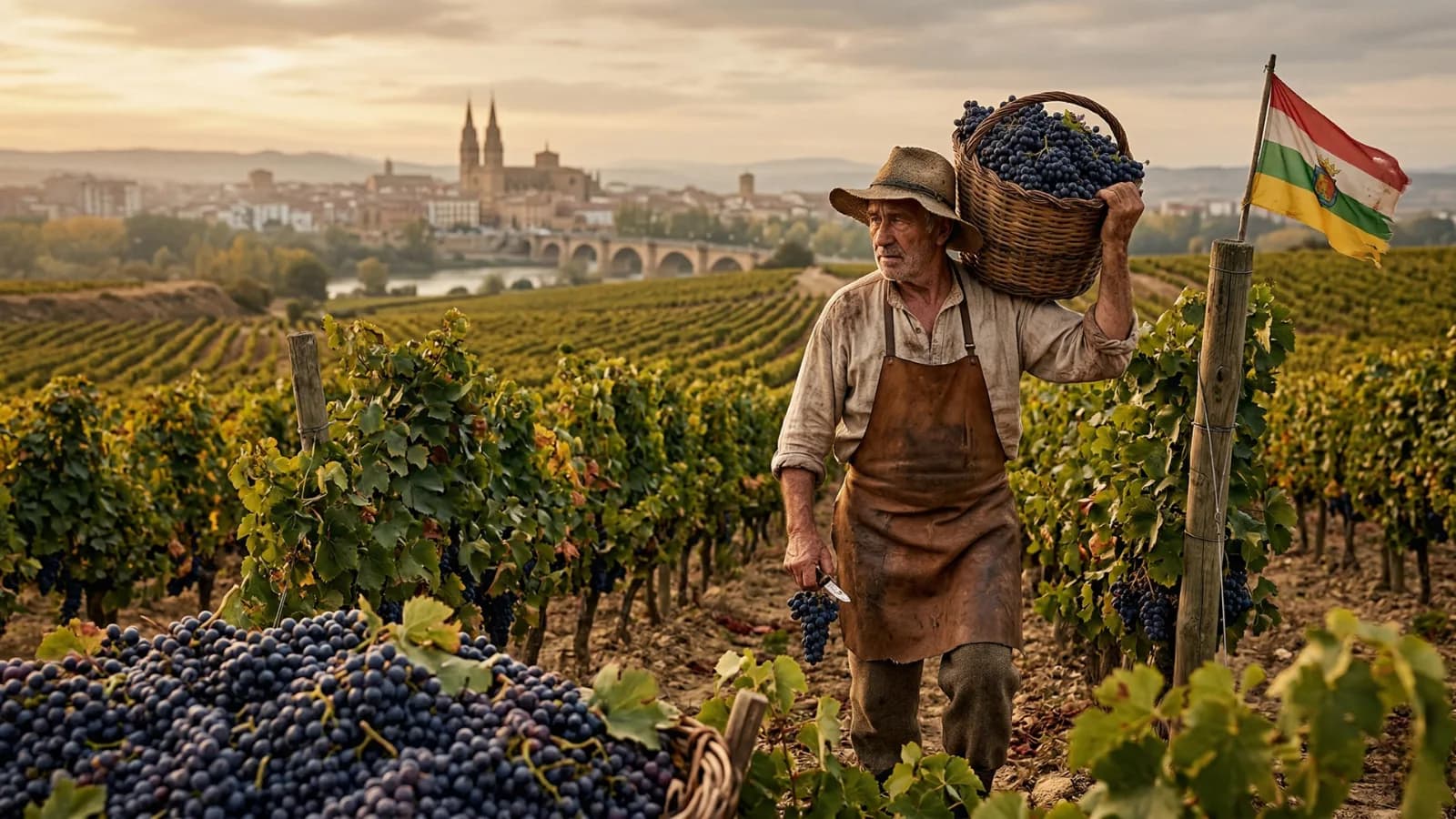
Logroño, the capital of La Rioja, is much more than just a stop on the Camino de Santiago. It's a vibrant city where wine culture blends with the lively atmosphere of Calle Laurel, famous for its tapas. Stroll through the historic center, admire the majestic Co-Cathedral of Santa María de la Redonda, or cross the picturesque Stone Bridge over the Ebro. But Logroño is also the ideal playground for an unusual and memorable activity. Imagine transforming the city into a giant game board, where every street and monument becomes a clue. Our outdoor escape games offer an immersive experience, combining a treasure hunt and a city exploration game, perfect for discovering Logroño from a new and fun perspective. Ready to take on the challenge and explore the city's secrets?
Unusual things to do in Logroño
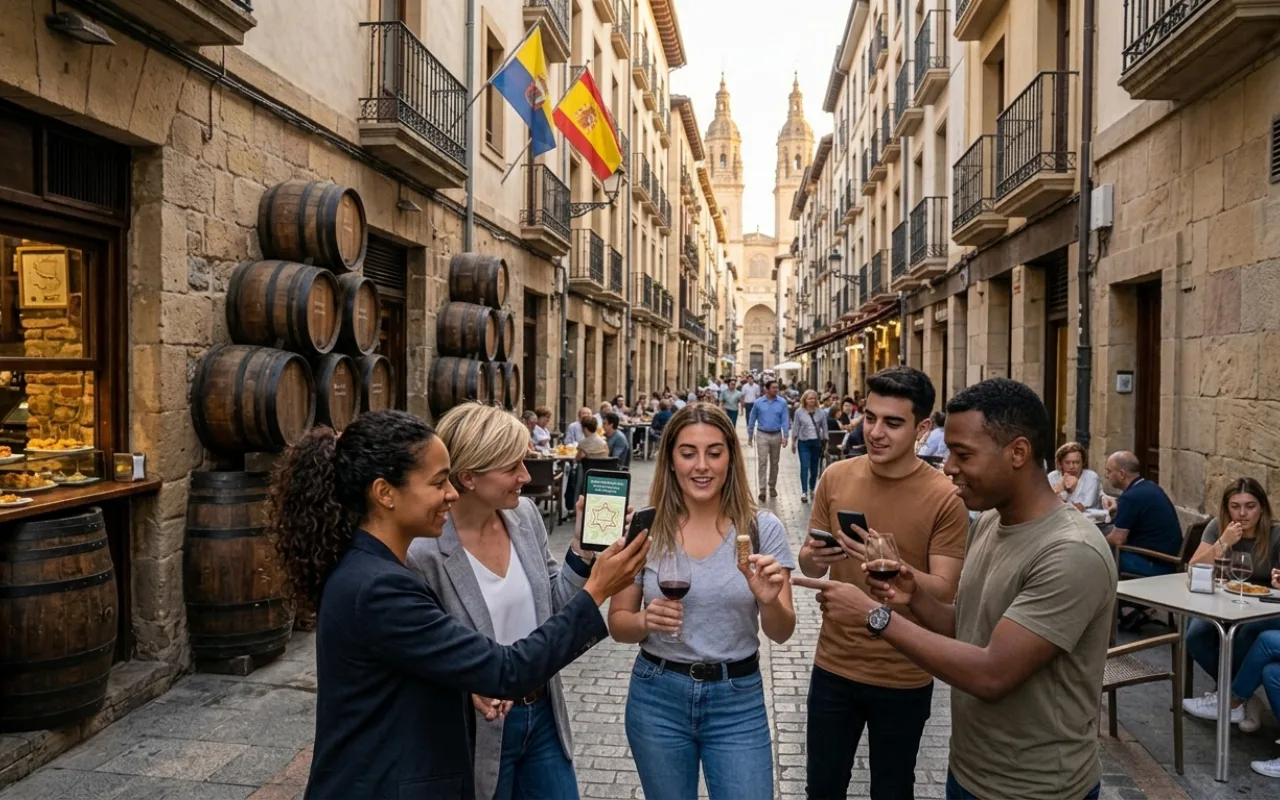
Looking for unusual experiences in Logroño? Our outdoor escape games are just what you need! Far from the beaten path, these urban routes transform the city into a life-sized playground. Instead of just visiting, you explore, solve puzzles, and interact with the environment. It's a unique and interactive way to discover Logroño's hidden treasures, from Calle Laurel to the banks of the Ebro, all while stimulating your sense of adventure. Get ready for an unusual activity that will make your stay memorable!
Things to do in Logroño with kids
Logroño is full of activities to entertain the whole family, and our outdoor escape games are a great option! Designed to be accessible to everyone, these treasure hunts transform a simple walk into an exciting adventure. Kids will love searching for clues and solving puzzles, while adults will appreciate the fun way to discover the city. It's the perfect opportunity to create unforgettable memories together, explore Logroño's parks and historic streets, and collaborate as a team. A family activity that combines fun and culture!
Logroño for couples
For a romantic getaway in Logroño, add a touch of adventure to your itinerary! Our outdoor escape games are an original way to share a special moment together. Imagine strolling hand in hand through the charming streets of the city, solving puzzles together and discovering hidden corners. It's an activity that strengthens bonds, stimulates communication, and offers unique memories, far beyond a classic dinner. After the effort, the reward: a wine tasting or tapas on Calle Laurel await you!
What to do in Logroño when it rains
What to do in Logroño when the weather isn't cooperating? Our escape games are primarily outdoor experiences. If a surprise shower catches you, don't panic! Most of our games can be paused and resumed later, or you can take shelter in a café until the rain passes. However, for a purely indoor activity, we recommend exploring the city's museums or wine cellars. Our games remain a fun option if the rain is light or intermittent!
Where is Logroño, and where do the routes start?
Starting points of our routes and the places they pass through.
Route starting points
Places in Logroño
- Puente de Piedra · The Ebro crossing since the 11th century
- Iglesia de Santiago el Real · The pilgrims' stop
- Calle Laurel · Logroño's gastronomic artery
- Co-cathedral of Santa María de la Redonda · The jewel of the historic centre
The history of Logroño
From Roman Port to Medieval Crossroads
Logroño's history begins with a Roman settlement named Vareia in the 1st century AD. This port on the Ebro River was a trading hub. After the fall of the Roman Empire, Visigoths controlled the area, but the settlement was destroyed in 574 by King Liuvigild. Muslim kingdoms arrived around 711, starting the Reconquista era. Throughout the 10th century, Logroño's ownership was contested between the kings of Navarre and Castile, with the region eventually annexed by Castile.
The city developed in the Middle Ages due to its position on the Camino de Santiago. King Alfonso VI of Castile granted Logroño the "Fuero de Logroño" in 1095, a charter of rights and tax exemptions that fostered growth and attracted residents. This period saw the development of its historic center with streets like Ruavieja and Barriocepo, designed for pilgrims. In 1431, King Juan II of Castile granted Logroño city status.
Sieges, Witch Trials, and Modern Expansion
Logroño faced a challenge in 1521 when it withstood a 17-day siege by 30,000 French-Navarrese troops. This victory, celebrated annually during the Festival of San Bernabé, led Emperor Charles V to add three fleurs-de-lis to the city's coat of arms. In 1610, Logroño was the main seat of the Basque Witch Trials, part of the Spanish Inquisition. Dozens were accused, and 11 people were burned at the stake.
The 19th century brought changes. In 1833, Logroño was designated the capital of its province, stimulating an influx of people and the construction of administrative buildings. The old fortress walls were demolished in 1861, allowing the city to expand. This led to the creation of avenues and public spaces like the Paseo del Espolón. Railway connections in 1863 boosted the economy, particularly the trade in grape products, solidifying Logroño's role as a center for Rioja wine.
What to see in Logroño
- Puente de Piedra — This stone bridge, also known as Puente de San Juan de Ortega, is a Logroño symbol and a crossing point for pilgrims on the Camino de Santiago. The current structure dates from 1884, rebuilt after the previous one collapsed in 1871.
- Iglesia de Santiago el Real — A stop on the Camino de Santiago, this church, from the early 16th century, stands next to the Fuente de Santiago, a fountain built for pilgrims.
- Calle Laurel — Logroño's gastronomic street, this area has tapas bars, each often specializing in one or two dishes. It is a place to experience the local "pintxos" culture.
- Co-cathedral of Santa María de la Redonda — This co-cathedral, built between the 15th and 17th centuries, has Baroque twin towers and a painting attributed to Michelangelo behind its main altar.
- Iglesia de San Bartolomé — The oldest church in Logroño, from the 12th century, it shows Romanesque features on its façade and Gothic vaults. Its Mudejar tower was part of the city's defensive wall.
- Iglesia de Santa María de Palacio — This church, built between the 12th and 13th centuries, is recognized by its 13th-century Gothic octagonal spire, called "the needle."
- Museo de La Rioja — Housed in an 18th-century Baroque building, this museum offers a cultural overview of the area, displaying artifacts from Celtiberian stone carvings, Roman-era exhibits, and 19th and early 20th-century paintings.
When to visit Logroño
The period from early June to late September offers pleasant weather for visiting Logroño. Daytime temperatures range from 28°C in August to 29°C in July, with less rainfall. Festivals occur, including the Rioja Wine Harvest Festival (Fiesta de San Mateo) in late September, with grape stomping and wine offerings. La Rioja Day on June 9th also features music, dance, and wine tastings.
Spring (April to early June) has mild weather and fewer crowds. Autumn (September and October) is also suitable, coinciding with the grape harvest. Avoid July and August if high temperatures are a concern, as afternoons can exceed 30°C. Winters (December to February) are quiet and cold, with average lows around 2°C and highs of 10°C in January.
Getting around Logroño
Logroño is walkable, especially its historic center. Logroño is about 130 km from Bilbao and 330 km from Madrid. The city has a bus station and a train station. If driving, regulated parking is available in blue zones for short stays and green zones for residents and longer stays. Parking is enforced Monday to Saturday, from 9:00 AM to 2:00 PM and 4:30 PM to 8:00 PM; Sundays and holidays are typically free. Underground car parks are available in the city center, such as Parking Plaza de la Paz.
Logroño hosts various markets. The Corregidor Market, an indoor municipal market, is open Monday to Saturday from 7:30 AM to 2:15 PM, with an evening session Monday to Friday from 5 PM to 8:15 PM, offering fresh produce. On Sundays, the Logroño Weekly Market operates from 9:00 AM to 2:00 PM, selling clothing, footwear, and handicrafts.
Things you probably do not know about Logroño
Verified details most visitors walk straight past.
- Puente de Piedra
- What happened to the original Stone Bridge that once stood in Logroño? The original Puente de Piedra, also known as Puente de San Juan de Ortega, which featured 12 arches and three towers, collapsed in 1871 due to a flood, leading to the construction of the current bridge, inaugurated in 1884.
- Co-cathedral of Santa María de la Redonda
- Beyond its Baroque towers, what unexpected residents can be found on Logroño's Co-cathedral? The Co-cathedral of Santa María de la Redonda is known for having storks as permanent residents on its towers, an unusual detail for a city landmark.
- Iglesia de San Bartolomé
- Why does Logroño's oldest church have a tower that looks different from the rest of the building? The Mudejar tower of the Iglesia de San Bartolomé was originally part of the city's medieval defensive wall, explaining its distinct architectural style compared to the main Romanesque and Gothic elements of the church.
- City Walls (Muralla del Revellín)
- What remains of Logroño's extensive medieval fortifications? While most of Logroño's old fortress walls were demolished in 1861 to allow for city expansion, the Arch of Revellín Wall is the last remaining gate, offering a glimpse into the city's past defenses.
- Calle Laurel
- What makes the tapas experience on Calle Laurel unique compared to other Spanish cities? Many bars on Calle Laurel specialize in just one or two specific tapas, meaning patrons often hop from bar to bar to sample different specialties, creating a unique culinary crawl.
- Festival of San Bernabé
- What unusual meal is traditionally eaten during Logroño's San Bernabé festival, and why? During the Festival of San Bernabé in June, Logroño celebrates its 1521 victory against a French siege by reenacting the survival of its citizens on a diet of bread, fish, and wine, which is still served during the festivities.
Questions about visiting Logroño
How long should I stay in Logroño?
A good itinerary length for Logroño is two to three days to explore key highlights like Calle Laurel, the Co-cathedral, and the Museum of La Rioja. An extended stay of three to five days allows for deeper exploration of the Rioja wine region.
What are the best neighborhoods to explore in Logroño?
The historic center, particularly around Calle Laurel, Calle Portales, and the area near the Co-cathedral of Santa María de la Redonda, is ideal for exploring on foot. This area offers a blend of ancient architecture, tapas bars, and cultural landmarks.
Is Logroño a good destination for families with children?
Logroño offers parks like Parque del Ebro for outdoor relaxation and the Casa de Las Ciencias, a science museum, which can be engaging for children. The walkable city center and atmosphere of Calle Laurel can also be enjoyable for families.
What is the typical budget for a trip to Logroño?
Logroño can be relatively affordable, especially when enjoying its tapas culture. Many bars offer small plates and drinks at reasonable prices. Accommodation ranges from budget-friendly hostels to more upscale hotels. Transportation within the city is often done on foot, reducing costs.
How do I get around Logroño?
Logroño is a very walkable city, particularly its historic center. Public bus services are available for longer distances, and the city also has a train station connecting it to other major Spanish cities.
What are the local customs I should be aware of?
Meal times in Logroño, like much of Spain, tend to be later than in some other countries. Lunch is typically around 2 PM and dinner rarely before 9 PM. The "chiquiteo" or tapas crawl on Calle Laurel is a popular social custom, involving moving between bars for different small bites and drinks.
Frequently asked questions
How much does an outdoor escape game cost in Logroño?
The price for an OddballTrip outdoor escape game in Logroño is €12 per team, not per person! This makes the activity very affordable, especially if you play with several people. This rate includes access to the game, the puzzles, and the complete adventure through the city. It's an excellent option for group entertainment without breaking the bank. Gather your team and embark on an adventure to discover Logroño in a unique and economical way!
Is it suitable for children / families?
Absolutely! Our outdoor escape games in Logroño are designed to be played with family or friends. The puzzles are varied, ranging from observation to logic, allowing everyone, young and old, to contribute to the solution. It's an excellent way to stimulate children's curiosity, develop their teamwork skills, and help them discover the city interactively. We generally recommend adult supervision for younger participants to ensure the experience is fun and enriching for everyone.
How long does an escape game last in Logroño?
The duration of an outdoor escape game in Logroño generally varies between 1h30 and 2h30, depending on the chosen route and your pace. The advantage is that you play at your leisure: you can take breaks to admire a monument, have a coffee, or enjoy some tapas. There is no imposed time limit; you are free to enjoy the experience and the city at your own pace. It's a flexible activity that perfectly adapts to your schedule!
Do I need to book in advance?
No, advance booking is not mandatory for our outdoor escape games in Logroño. You can start your adventure whenever you want; all you need is your smartphone charged and the app ready. This offers great flexibility, ideal for last-minute decisions or adapting to the weather. However, if you prefer to plan, you can certainly purchase your game in advance. The important thing is that you are ready to explore the city and solve mysteries!
What to visit in Logroño beyond the escape games?
Beyond our exciting escape games, Logroño is full of treasures to discover! Don't miss strolling down the famous Calle Laurel for its tapas and wines, an unmissable culinary experience. Visit the Co-Cathedral of Santa María de la Redonda and admire its twin towers. Cross the Stone Bridge for a magnificent view of the Ebro and the city. The Museum of La Rioja offers insight into local history. And of course, explore the many surrounding wineries for wine tastings. Logroño is a city rich in culture and flavors!
What is the best season to visit Logroño?
Logroño is pleasant all year round, but spring (April-June) and autumn (September-October) are often considered the best seasons. The weather is generally mild and sunny, perfect for strolling through the city, enjoying the terraces, and, of course, playing our outdoor escape games. Autumn is particularly charming with the colors of the vineyards and the grape harvest. Summer can be hot, but the evenings are pleasant. Winter is cooler, but the Christmas markets and the cozy atmosphere of the wineries have their own charm.
More cities in Spain
Pamplona
Hemingway, San Fermín and Kingdom of Navarre
Ujué
Ujué: Medieval fortress and stunning views of Navarre.
Bilbao
From industrial Casco Viejo to the Guggenheim
San Sebastián
From Belle Époque to Carlist wars
Burgos
El Cid's cathedral and Camino gateway
Zaragoza
From Moorish palace to Napoleonic sieges
Santander
1941 great fire and Belle Époque
Santillana del Mar
Medieval village and Altamira caves
Activities to discover nearby
Guided tours, skip-the-line tickets and local experiences to book in advance.
💡 Optional booking — you can also buy on-site. All links open in a new window, your OddballTrip visit stays preserved.