PamplonaOutdoor Escape Game & Treasure Hunt
Hemingway, San Fermín and Kingdom of Navarre
Pamplona, a historic and vibrant city in the heart of Navarre, invites you to a unique exploration! Beyond its famous San Fermín festival and its connection to Ernest Hemingway, the Navarrese capital is full of treasures to discover. Stroll along the majestic city walls, visit the magnificent Santa María Cathedral, or get lost in the lively streets of the Casco Viejo, the historic quarter, where every corner tells a story. For a truly memorable experience, why not turn your visit into a real outdoor escape game? OddballTrip.com offers you a captivating treasure hunt, a real-life scavenger hunt that will make you see Pamplona in a new light. It's the perfect unusual activity to discover the city while having fun. Get ready to solve puzzles and unlock Pamplona's secrets with our immersive games!
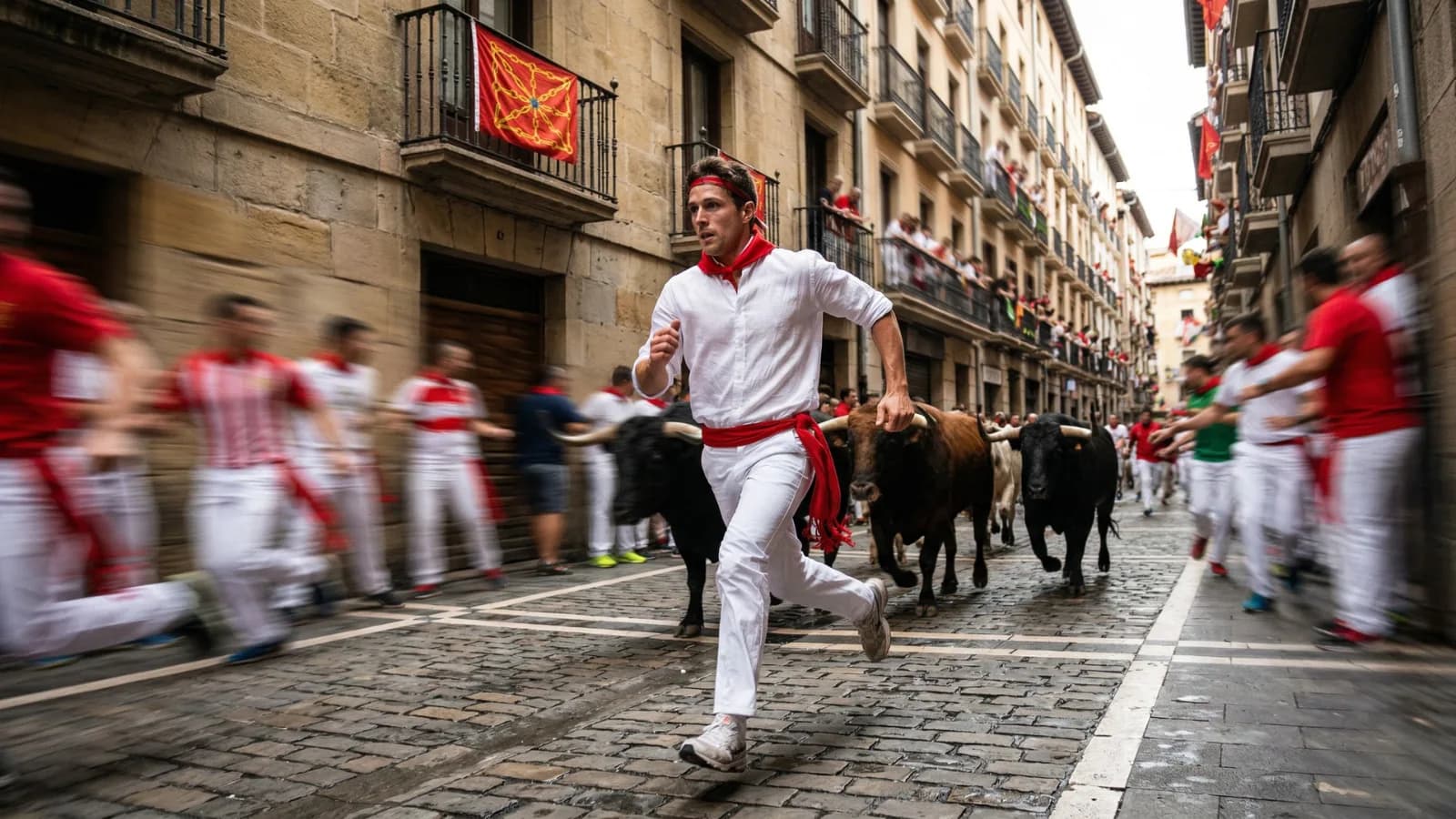
The Bulls of Pamplona
When the entire city becomes a bullring
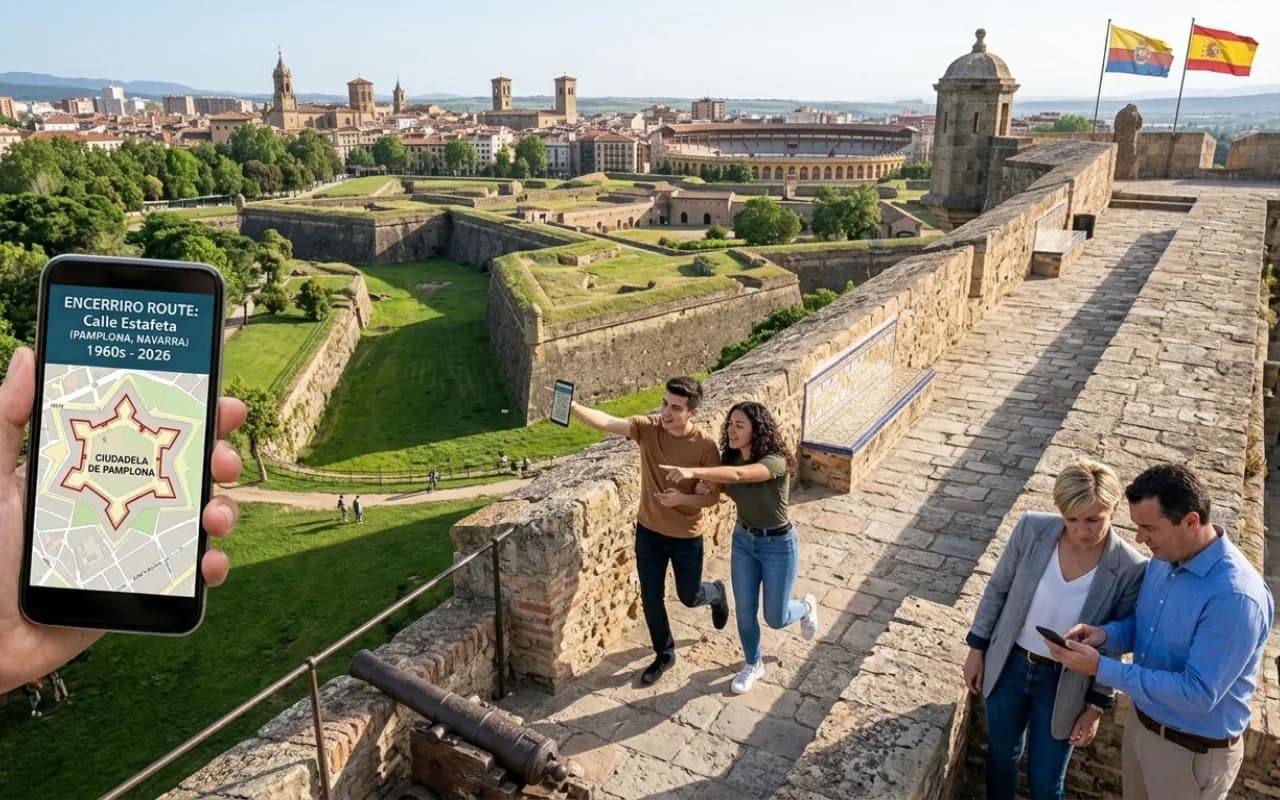
The Citadel of Navarre
When a kingdom became a star of stone
Unusual things to do in Pamplona
Looking to get off the beaten path in Pamplona? Our OddballTrip.com outdoor escape games are the ultimate unusual activity! Far from traditional guided tours, you'll dive into the heart of the city on an interactive adventure. Imagine solving puzzles outdoors, exploring hidden corners, and discovering Pamplona's history in a fun and original way. It's a unique way to combine tourism and entertainment, ideal for those looking for a memorable and different experience. Our routes guarantee moments of surprise and discovery, turning every street into a clue, every monument into a stage of your quest.
Things to do in Pamplona with kids
Pamplona is a fantastic destination for families, and our outdoor escape games offer a perfect activity for all ages! Imagine your children transformed into real explorers, solving puzzles and discovering the city while having fun. Our routes are designed to be engaging and accessible, allowing parents and children to collaborate to achieve a common goal. It's a unique opportunity to create unforgettable memories together, away from screens, enjoying the fresh air and the beautiful urban landscapes of Pamplona. An adventure that will stimulate their curiosity and team spirit, while allowing them to discover local heritage in a fun way.
Pamplona for couples
Pamplona offers a romantic and stimulating setting for couples, and our outdoor escape games are an original way to share a unique experience. Far from candlelight dinners, why not take on a challenge together, test your complicity and teamwork while exploring the city's charms? Imagine yourselves hand in hand, solving puzzles, deciphering clues, and discovering iconic places in Pamplona. It's an activity that strengthens bonds, creates fun memories, and allows you to see your partner in a new light. An urban adventure that spices up your romantic getaway!
What to do in Pamplona when it rains
What to do in Pamplona when it rains? Even if our escape games are mostly outdoor, a little shower won't spoil your adventure! Equip yourself with an umbrella and a raincoat, and turn the rain into an extra game element. The mysterious atmosphere of the city in the rain can even add a special charm to your treasure hunt. If the weather is truly capricious, Pamplona also offers fascinating museums like the Museum of Navarre, or the Cathedral to shelter you while waiting for it to clear up.
Where is Pamplona, and where do the routes start?
Starting points of our routes and the places they pass through.
Route starting points
Places in Pamplona
- Ciudadela de Pamplona
- Catedral de Santa María la Real
- Murallas de Pamplona · Portal de Francia
- Museo de Navarra
- Cuesta de Santo Domingo
- Calle Estafeta
- Plaza de Toros de Pamplona
- Plaza del Castillo · Café Iruña
- Ayuntamiento de Pamplona
The history of Pamplona
From Roman Foundation to Medieval Boroughs
Pamplona's origins are a Vascones settlement named Iruña, meaning 'the city' in Basque. This settlement became a Roman city around 74 BC when the Roman general Pompey established a military camp during his campaign against Sertorius. He named it Pompelo, which later became Pamplona. Its location made it a link between the Iberian Peninsula and Europe, serving as a military and commercial center.
After the fall of the Roman Empire, Pamplona was under Visigothic and Muslim rule between the 4th and 9th centuries. In the 10th century, local noble clans formed the independent Kingdom of Pamplona, which, under Sancho III (1000–1035), became the most powerful Christian state on the Iberian Peninsula in the 11th century. During the medieval era, Pamplona was three distinct boroughs: La Navarrería, San Cernin (or San Saturnino), and San Nicolás. Each had its own walls. These internal conflicts ended in 1276 with the destruction of La Navarrería. Peace came in 1423 when King Charles III the Noble issued the "Privilege of the Union," uniting the three boroughs into a single municipality and establishing a single Town Hall.
A Fortified City and Modern Expansion
Pamplona's position near the French border meant it became a fortified city. After Navarre's annexation by the Crown of Castile in 1512, King Philip II ordered the construction of Renaissance walls and the star-shaped Ciudadela starting in 1569, designed by Giovan Giacomo Paleari and Vespasiano Gonzaga. These fortifications were used during conflicts like the Peninsular War, when French troops occupied the city from 1808 to 1813. The city's military role restricted its growth for centuries, leading to increased housing density within its walls. In 1915, portions of the defensive walls were approved for demolition, allowing for the creation of the Segundo Ensanche (second expansion district) and modern urban development.
What to see in Pamplona
- Ciudadela de Pamplona — This pentagonal star fort, built in the 16th century, is a Renaissance military structure. It now functions as a public park and cultural center.
- Catedral de Santa María la Real — The cathedral's exterior has a Neoclassical facade. Its interior is French Gothic, dating from the 14th to 15th centuries. Visitors can climb its bell tower for city views.
- Murallas de Pamplona — The city walls, from the late 16th to 18th centuries, allow for a walk along the historic perimeter of the old town. These fortifications were updated to strengthen Pamplona's outpost status.
- Portal de Francia (Rochapea Gate) — This is one of the significant and preserved gates in Pamplona's city walls. It shows the city's defensive past and is a traditional entry point for pilgrims on the Camino de Santiago.
- Museo de Navarra — Housed in a 16th-century hospital, the museum displays archaeological and artistic heritage from Navarre, including Roman artifacts like the 1st-century mosaic known as the "Triumph of Bacchus."
- Cuesta de Santo Domingo — This street is the starting point of the running of the bulls during the San Fermín festival. The route can be walked, and a niche with a statue of San Fermín is visible where runners sing for protection.
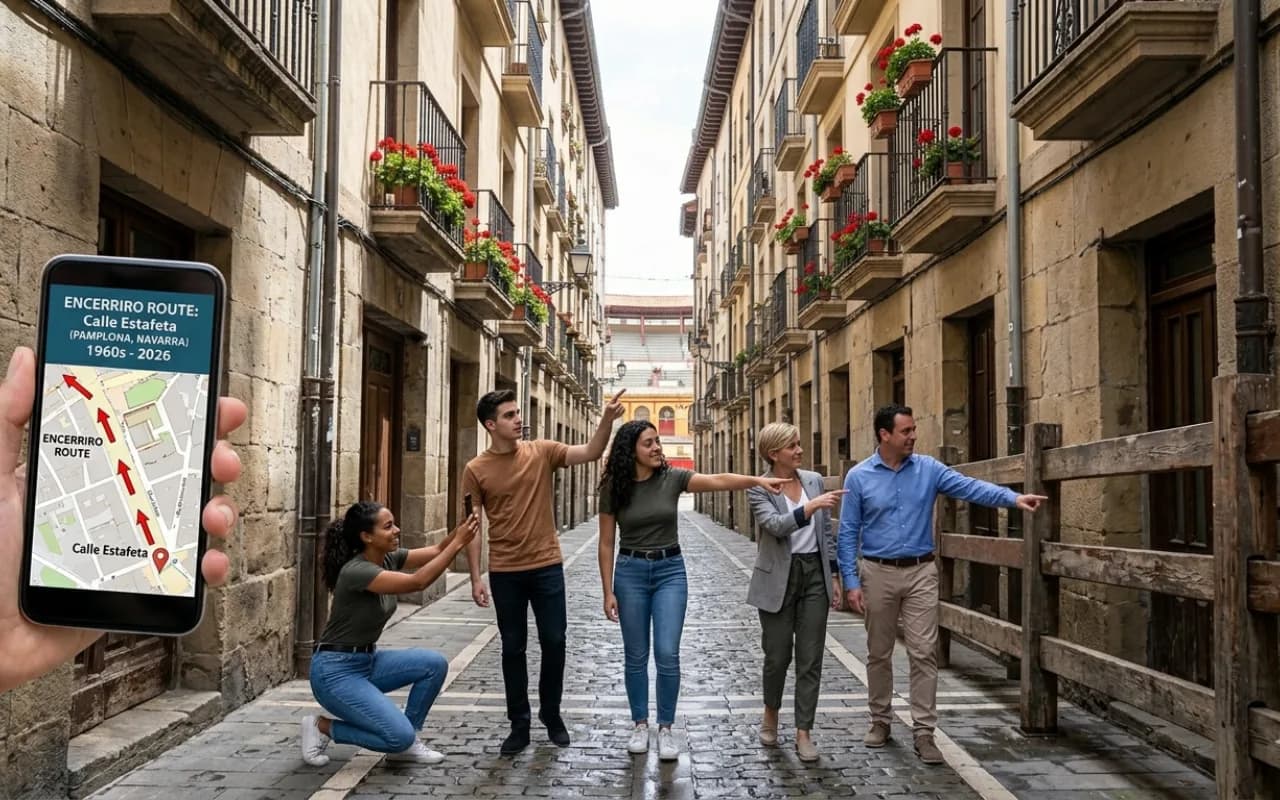
- Calle Estafeta — This section of the bull run route is lined with balconies, shops, bars, and restaurants. It maintains activity year-round.
- Plaza de Toros de Pamplona — The bullring is the final destination of the encierro (bull run) and hosts bullfights during the San Fermín festival. Outside of the festival, the arena and its museum can be visited.
- Plaza del Castillo — This central, arcaded square has been the center of Pamplona for centuries, connecting the old and new parts of the city. It is surrounded by buildings, including Café Iruña.
- Café Iruña — An historic café on Plaza del Castillo, opened in 1888, it was frequented by Ernest Hemingway. Its interior and terrace are a location for observation.
- Ayuntamiento de Pamplona (City Hall) — Located in the old town, the City Hall building has a Baroque facade and is the site of the Chupinazo, the opening ceremony of the San Fermín festival.
When to visit Pamplona
For pleasant weather and fewer crowds, visit Pamplona during late May to June or September to early October. Temperatures are mild, from 18°C to 25°C, suitable for walking. Spring has wildflowers and is suitable for Camino de Santiago pilgrims.
Avoid the first two weeks of July if you prefer to avoid large crowds and high prices, as this is when the San Fermín festival occurs. The city center becomes crowded, and accommodation costs increase. July and August are the hottest months, with average highs around 28°C, and less rain. Winter, from November to February, is cold and wet, with daytime highs around 9-12°C and limited sunshine, making it less suitable for outdoor activities.
Getting around Pamplona
Pamplona Airport (PNA) is 6 kilometers (3.7 miles) from the city center, between Noáin and Esquíroz. The city center is reachable by bus in about 7 minutes for approximately €2, with services every 10 to 20 minutes daily. Taxis take around 9-12 minutes and cost €17-22.
The historic center of Pamplona, the Casco Viejo, is pedestrianized and explored on foot. For areas outside the old town, a public bus system is available. For drivers, on-street parking is regulated with blue (2-hour limit) and orange (9.5-hour limit) zones; green zones are for residents. Paid underground car parks are available 24/7 in locations like Plaza del Castillo, Plaza de Toros, and Baluarte.
Some smaller shops and restaurants may close for a few weeks in August as locals take holidays.
Things you probably do not know about Pamplona
Verified details most visitors walk straight past.
- Ciudadela de Pamplona
- What purpose does the star shape of the Ciudadela serve, beyond aesthetics? The Ciudadela's distinctive five-pointed star design, built in the 16th century, was a military innovation intended to defend the city against artillery attacks by offering multiple angles of fire and reducing blind spots.
- Catedral de Santa María la Real
- Why does Pamplona's main cathedral look so different on the outside compared to its interior? The Cathedral of Santa María la Real features a Neoclassical facade, added in the late 18th century by Ventura Rodríguez, which contrasts sharply with its original Gothic interior, largely built between the 14th and 15th centuries.
- Murallas de Pamplona
- Beyond defense, what other, less obvious purpose did the formidable city walls serve after the 16th century? After Navarre's annexation by Castile in 1512, the modernization of Pamplona's walls by King Philip II was not only for external defense but also to control the local population and reinforce the city's role as a Castilian outpost on the border with French-allied Navarre.
- Plaza del Castillo
- This central square once had a very different, and quite imposing, structure in its center. What was it? Before it became the open public space it is today, the Plaza del Castillo was home to a medieval castle. This castle was demolished in 1513 by order of King Ferdinand V after the Castilian conquest of Navarre.
- Museo de Navarra
- What unexpected ancient Roman artwork can you find preserved in the Museo de Navarra? The Museo de Navarra houses a 1st-century Roman mosaic known as the "Triumph of Bacchus," a testament to Pamplona's Roman origins as Pompaelo.
- Calle Estafeta
- Is Calle Estafeta the entire route of the famous Running of the Bulls? No, Calle Estafeta is only the most well-known section of the *encierro* route. The full run begins on Cuesta de Santo Domingo and passes through several other streets before reaching the Plaza de Toros.
Questions about visiting Pamplona
How many days should I spend in Pamplona?
To experience Pamplona's main sights, including its historic center, city walls, and museums, two to three days are generally sufficient. This allows time for exploration and enjoying the local gastronomy.
What are the best neighborhoods to stay in Pamplona?
The Casco Viejo (Old Town) is suitable for first-time visitors, offering proximity to major attractions, restaurants, and activity. For a quieter stay with good connections, areas in the Primer or Segundo Ensanche, just outside the walls, are also options.
Is Pamplona a walkable city?
Pamplona is walkable, especially its historic center. Many main attractions are close, and pedestrianized streets make it pleasant to explore on foot. Public buses serve areas outside the old town.
What is the local cuisine like in Pamplona?
Pamplona's cuisine is rooted in Navarrese tradition, known for its local produce. Expect *pintxos* (small snacks), stews, vegetables like asparagus and artichokes, and red wines from the Navarra region.
Is Pamplona suitable for visiting with children?
Pamplona is suitable for families. Children can walk the city walls, explore the Ciudadela's park and mini-zoo, visit the Taconera Gardens, or follow the bull run route. The Planetarium also offers activities.
What is the average budget for a trip to Pamplona?
A moderate budget for Pamplona, outside of the San Fermín festival, might range from €70-€120 per person per day. This covers accommodation in a mid-range hotel, meals including *pintxos* and a sit-down dinner, public transport, and entrance fees. Prices will be higher during San Fermín.
Frequently asked questions
How much does an outdoor escape game cost in Pamplona?
An OddballTrip escape game in Pamplona is very affordable and comes as a pass for a team. The price is €12 per team, regardless of the number of players (within the recommended limit of 2 to 6 people for an optimal experience). This single price makes the activity very economical, especially if you come with a group of friends or family. It's excellent value for money for a fun and cultural activity that allows you to explore the city in an original and autonomous way.
Is it suitable for children / families?
Absolutely! Our outdoor escape games in Pamplona are perfectly suitable for families and children. The puzzles are designed to be accessible and fun, encouraging collaboration between different generations. It's a great way to discover the city together, stimulate the curiosity of the youngest, and share a moment of togetherness. We recommend the presence of at least one adult per team to guide the children, but the adventure is designed for everyone to enjoy.
How long does an escape game in Pamplona last?
The duration of our outdoor escape games in Pamplona typically ranges between 1h30 and 2h30. This time includes solving puzzles and moving between different points of interest. However, the beauty of our routes lies in their flexibility: you play at your own pace. If you want to take breaks to admire a monument, have a drink, or enjoy some pintxos, it's entirely possible. The goal is to enjoy the experience and the city at your leisure.
Do I need to book in advance?
No, there's no need to book in advance for our OddballTrip escape games in Pamplona! Our games are available 24/7. You can purchase your pass directly online whenever you want, even a few minutes before starting your adventure. Once payment is made, you instantly receive instructions to start the game on your smartphone. It offers total flexibility, ideal for last-minute decisions or adapting to an unforeseen travel schedule.
What to visit in Pamplona beyond the escape games?
Pamplona is full of magnificent sites to explore! After solving the mysteries of our escape games, be sure to stroll along the famous City Walls and in the Citadel, impressive testimonies to the city's military history. Visit the majestic Santa María Cathedral, explore the charming Casco Viejo district with its winding streets and lively squares, and relax in the Taconera Park. And of course, soak up the unique atmosphere associated with the San Fermín Festival.
What is the best season to visit Pamplona?
Pamplona is pleasant to visit in all seasons, but spring (April-June) and early autumn (September-October) are often considered the best times. The weather is generally mild and sunny, ideal for outdoor activities like our escape games. Summer (July-August) is also very popular, especially with the San Fermín Festival, but it can be very hot. Winter is cooler and rainier, but the city retains its charm and is less crowded.
More cities in Spain
San Sebastián
From Belle Époque to Carlist wars
Bilbao
From industrial Casco Viejo to the Guggenheim
Zaragoza
From Moorish palace to Napoleonic sieges
Burgos
El Cid's cathedral and Camino gateway
Santander
1941 great fire and Belle Époque
Santillana del Mar
Medieval village and Altamira caves
Segovia
The devil's aqueduct and Isabella's crown
Activities to discover nearby
Guided tours, skip-the-line tickets and local experiences to book in advance.
💡 Optional booking — you can also buy on-site. All links open in a new window, your OddballTrip visit stays preserved.