GranadaOutdoor Escape Game & Treasure Hunt
Albaicín and the last Moorish kingdom
Granada, a jewel of Andalusia, invites you on a fascinating journey between history and modernity. Stroll through the labyrinthine streets of the Albaicín, a UNESCO World Heritage site, and let yourself be charmed by its flowery patios and breathtaking views of the Alhambra. This iconic palace-fortress, a masterpiece of Nasrid architecture, is an absolute must-see. But Granada is not just about its grandiose monuments. It's also a vibrant city, perfect for an unusual activity. How about exploring its secrets in a completely different way? With an outdoor escape game, a treasure hunt, or a scavenger hunt, transform your visit into a thrilling adventure. Discover hidden places and surprising anecdotes while solving puzzles. Get ready for an immersive experience that combines culture, exploration, and fun, just before you discover our games.
Unusual things to do in Granada
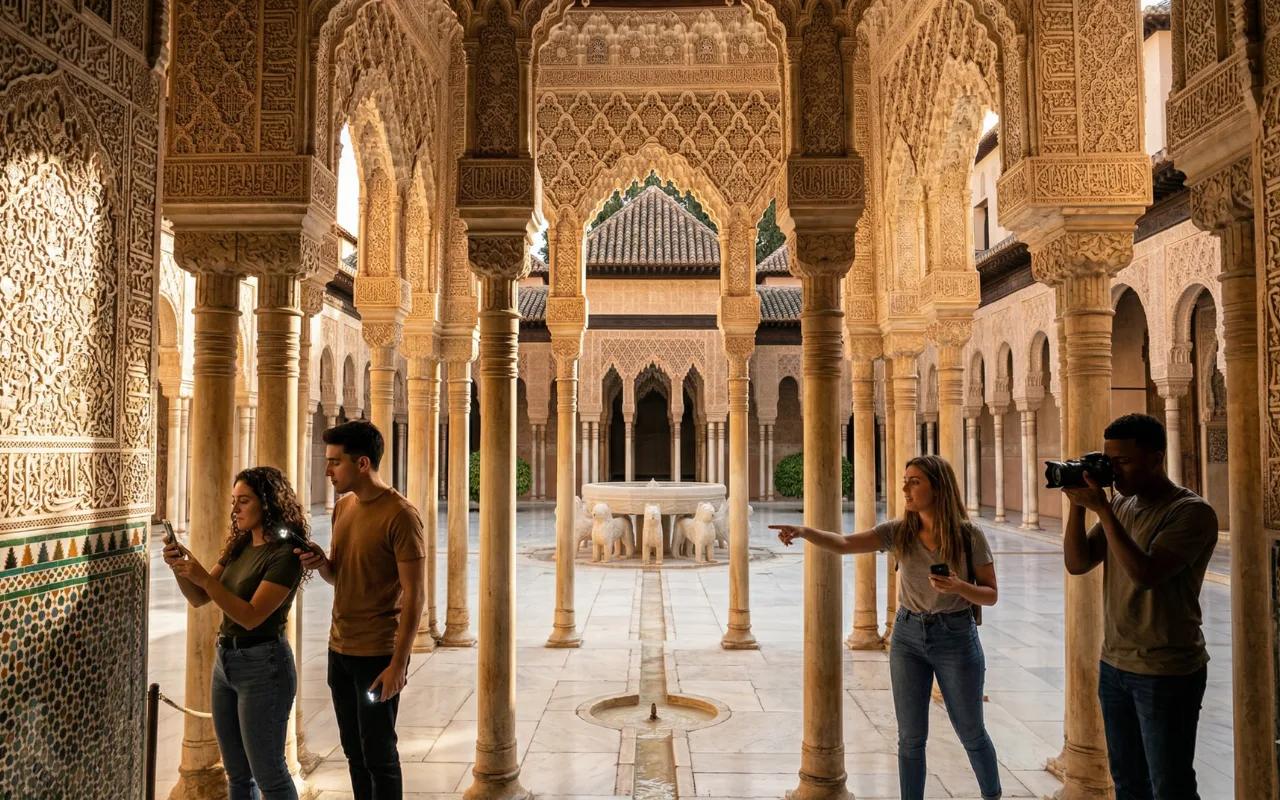
Looking for unusual things to do in Granada? Beyond classic visits to the Alhambra or the Cathedral, the city is full of gems for explorers seeking originality. Our outdoor escape games offer an unusual activity par excellence: a life-sized treasure hunt that plunges you into the heart of local history and legends. Imagine solving puzzles in the narrow streets of the Albaicín or unraveling the mysteries of Sacromonte. It's a unique and interactive way to discover Granada, away from the crowds, transforming every street corner into a clue. A memorable adventure guaranteed!
Things to do in Granada with kids
Granada is a fantastic destination for families, and our outdoor escape games are the perfect activity for all ages! Far from visits where children might get bored, our treasure hunts transform city exploration into a truly interactive adventure. Together, you'll embark on a clue hunt in historical districts, solve fun puzzles, and learn interesting facts about local culture. It's an excellent way to stimulate children's curiosity, develop their teamwork skills, and create unforgettable family memories. A fun and educational experience guaranteed!
Granada for couples
Granada, with its romantic atmosphere and breathtaking landscapes, is the ideal city for a couple's getaway. Imagine yourselves hand in hand, exploring the winding streets of the Albaicín at sunset, or admiring the majesty of the Alhambra. To spice up your stay, our outdoor escape games offer a unique activity to share. Work together to solve puzzles, discover hidden corners, and create complicit memories. It's an original and interactive way to strengthen your bond while exploring the city in a fun and memorable way. An extraordinary adventure for two!
What to do in Granada when it rains
If rain invites itself during your stay in Granada, don't panic! Although our escape games are mostly designed to be played outdoors and enjoy the Andalusian sun, the city offers many alternatives. You can take refuge in museums, visit the magnificent Cathedral, or get lost in the souks of the Alcaicería. If the weather permits between showers, our treasure hunts remain a fun option for exploring the city, but be sure to bring an umbrella and a raincoat to stay dry!
Where is Granada, and where do the routes start?
Starting points of our routes and the places they pass through.
Route starting points
Places in Granada
- Puerta de la Justicia · The main entrance to the Alhambra since 1348
- Sala del Mexuar · The oldest hall of the Nasrid Palaces
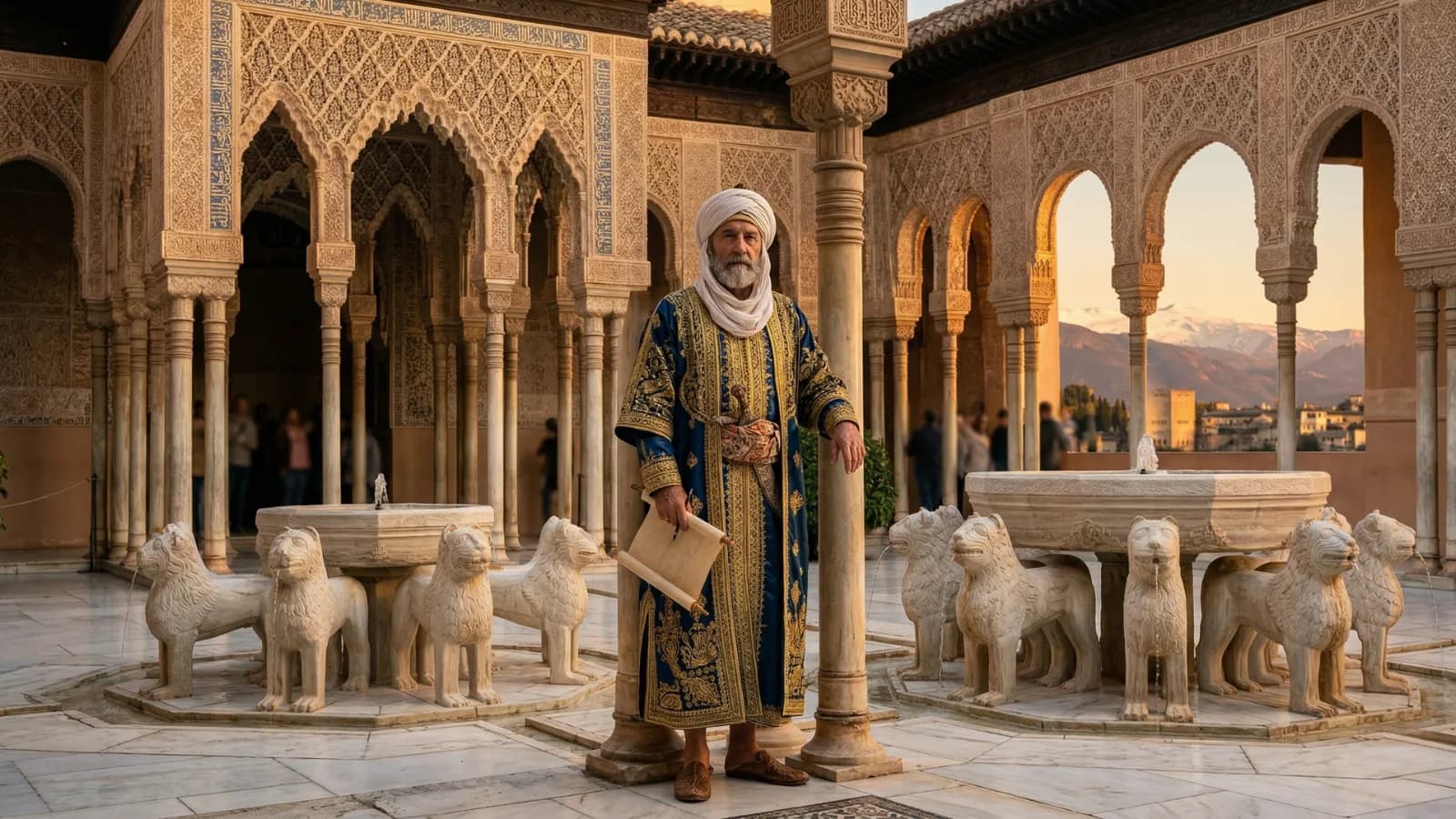
- Patio de los Leones · Muhammad V's masterpiece
- Generalife · The summer residence of the Nasrid sultans
- Mirador de San Nicolás · The eternal view of the Alhambra
The history of Granada
From Roman Iliberis to Nasrid Splendor
The origins of Granada date back to the 7th century BC, with the Iberian tribe of the Turduli founding a settlement called Ihverir. The Romans conquered the area around 180 BC, renaming it Iliberis. This Roman settlement was on the Alcazaba and Albaicín hills, extending to the Alhambra hill. After centuries of Roman rule, the Visigoths took control in the 5th century, and the city grew in importance, with defensive walls being built.
The Moorish conquest of the Iberian Peninsula began in 711 AD. The founding of present-day Granada occurred in the 11th century. Following a civil war, a Berber general, Zawi ben Ziri, established an independent kingdom, the Taifa of Granada, in 1013. He moved the capital from Medina Elvira to Medina Garnata, giving the city its current name, which may derive from the Latin for pomegranate, granatum, or the Arabic gar-anat meaning "city of pilgrims."
The Last Moorish Stronghold and Christian Transformation
Granada entered its golden age under the Nasrid dynasty, founded by Muhammad I ibn Nasr in 1238. It became the capital of the Emirate of Granada, the last Muslim-ruled state in the Iberian Peninsula. The Alhambra, a medieval Nasrid citadel and palace, was built between 1238 and 1358 during the reigns of Ibn al-Ahmar and his successors, notably princes Yusuf I and Muhammad V. The Nasrid reign ended on January 2, 1492, when the Catholic Monarchs conquered Granada, marking the completion of the Reconquista.
Following the conquest, Granada was transformed into a Christian city throughout the 16th century. Mosques were converted into churches or destroyed, and new Christian buildings, such as the Granada Cathedral and the Capilla Real, were erected. The expulsion of many Jewish and Muslim residents, who were forced to convert or emigrate, led to an economic decline, and the Alhambra itself fell into centuries of neglect. In the early 19th century, during the Peninsular War, Napoleon's troops occupied the Alhambra and attempted to dynamite the complex upon evacuating, but a Spanish soldier, José Garcia, saved much of it by disabling the remaining fuses.
What to see in Granada
- Granada Cathedral — This Renaissance-style cathedral, begun in 1523, stands on the site of the city's former main mosque. It has a large scale and intricate details, particularly in the main chapel.
- Capilla Real (Royal Chapel) — Adjacent to the Cathedral, this Gothic building was constructed between 1505 and 1517 to house the tombs of the Catholic Monarchs, Isabella I of Castile and Ferdinand II of Aragon, along with their daughter Joanna and her husband Philip I. Their sarcophagi are visible.
- Alcaicería — This network of narrow streets, near the Cathedral, is a recreation of Granada's original Moorish silk market. While the original was destroyed by fire in the 19th century, this bazaar offers stalls selling ceramics, textiles, spices, and souvenirs.
- Carrera del Darro — This street runs alongside the Darro River, offering views of the Alhambra and the Albaicín. It has ancient bridges and historic buildings.
- Sacromonte — This neighborhood is known for its cave dwellings, historically inhabited by the Romani community. Visitors can explore the Museo Cuevas del Sacromonte to understand this way of life and experience flamenco shows in cave venues.
- Parque de las Ciencias — An interactive science museum with 70,000 m² of exhibits, a planetarium, and a BioDomo greenhouse. It offers hands-on science experiments and activities.
When to visit Granada
The best times to visit Granada are spring (March to May) and autumn (September to November). During these periods, temperatures are mild, ranging from 18-26°C in spring and 22-28°C in autumn. The Generalife gardens are in bloom in spring, and autumn brings a golden light to the city. Crowds are manageable, though April and May can be busy due to festivals like Semana Santa and Cruces de Mayo.
Avoid July and August, as temperatures can reach 34-40°C, making midday sightseeing difficult. While winter (December to February) is less crowded and offers cooler temperatures (around 12-14°C), it can be cold at night with occasional frosts, and December is the wettest month.
Getting around Granada
Granada is served by Federico García Lorca Granada-Jaén Airport (GRX), 17 km west of the city. An ALSA bus service (Line 245) connects the airport to the city center, stopping at the bus station, Gran Vía, and Puerta Real, with a journey time of approximately 45 minutes. Taxis are also available.
Within the city, Granada is walkable, especially the historic center. However, the Albaicín and Sacromonte neighborhoods are on hills with steep, cobbled streets and steps, so comfortable walking shoes are necessary. Public transport includes an urban bus system operated by Transportes Alsa and a tram system (Metro). A single bus ticket costs around €1.60. A Credibús card costs €2 and can be topped up, reducing the fare to €0.53-€0.90 per ride and allowing free transfers within 60 minutes.
Parking in Granada's city center is challenging due to restricted access zones. Several underground car parks are available, such as Parking San Agustín, Parking APK2 Puerta Real, and Parking Palacio de Congresos, with daily rates typically around €10-€23. On-street parking (ORA) is regulated, but often free on Sundays and public holidays.
Local markets include Mercado San Agustín, a covered food market near the Cathedral, open Monday to Saturday mornings, offering fresh produce. The Mercadillo del Zaidín, a large street market, takes place on Saturdays. Plaza Larga in the Albaicín hosts a smaller market from Tuesday to Saturday mornings with fruits, vegetables, and crafts.
Things you probably do not know about Granada
Verified details most visitors walk straight past.
- Alhambra
- Have you ever wondered why some towers of the Alhambra look different from others? During the Peninsular War (1810-1812), French troops occupied the Alhambra. Upon their evacuation, they attempted to blow up the entire complex, successfully destroying eight towers before a Spanish soldier, José Garcia, managed to disable the remaining fuses, saving the rest of the monument.
- Granada Cathedral
- What secret lies beneath the grandeur of Granada's main cathedral? The Granada Cathedral was built on the site of the city's former Great Mosque, a common practice after the Reconquista. This transformation symbolized the shift from Muslim to Christian rule in the city.
- Corral del Carbón
- What was the original purpose of the Corral del Carbón, a Moorish building in the city center? Built in the 14th century, the Corral del Carbón was originally a *alhóndiga*, an inn for merchants and their goods. it provided lodging for traders and stables for their animals, making it a crucial hub for commerce in Nasrid Granada.
- Palacio de la Madraza
- What significant institution once occupied the site of the Palacio de la Madraza, now a part of the University of Granada? The Palacio de la Madraza was once the first public university in Granada, founded in 1349 by Yusuf I, the Nasrid sultan. It served as a center for Islamic learning until the Reconquista.
- Plaza Bib-Rambla
- What dark events unfolded in Plaza Bib-Rambla during the Spanish Inquisition? Plaza Bib-Rambla, a lively square today, was historically the site of public executions and *autos-da-fé* during the Spanish Inquisition, where heretics were tried and punished.
- Sacromonte Caves
- Beyond flamenco, what unique purpose did some of the Sacromonte caves serve? While famous for flamenco, some of the Sacromonte caves were historically used as homes by the Romani community, who adapted these natural dwellings into their living spaces, creating a distinct cultural landscape.
Questions about visiting Granada
How many days should I spend in Granada?
For a first-time visitor, 2 to 3 days is generally recommended to experience Granada's main attractions without feeling rushed. This allows enough time to visit the Alhambra, explore the Albaicín and Sacromonte neighborhoods, and enjoy the local tapas culture.
What are the best neighborhoods to stay in Granada?
The Albaicín offers historic charm and Alhambra views, though its narrow, hilly streets can be challenging with luggage. The city center (Centro) provides easy access to shops, restaurants, and transport. Realejo, a former Jewish quarter, is central and active, while Sacromonte offers a unique cave-dwelling experience and flamenco.
Is Granada a good destination for families with children?
Yes, Granada is family-friendly. Children often enjoy exploring the Alhambra's gardens and Alcazaba, the interactive exhibits at the Parque de las Ciencias, and the cave dwellings in Sacromonte. Many tapas bars welcome children, and the city has parks like Federico García Lorca Park.
What is the typical budget for a trip to Granada?
Granada can be affordable, especially with its tradition of free tapas accompanying drinks. Accommodation ranges from budget hostels to luxury hotels. Public transport is inexpensive, and many attractions offer reduced prices for children. Daily expenses can vary widely based on your choices, but it is possible to enjoy the city on a moderate budget.
How do I get around Granada?
Granada's city center is best explored on foot. For longer distances or to navigate the hilly areas like Albaicín and Sacromonte, the urban bus system is efficient. Consider purchasing a Credibús card for reduced fares and free transfers. Taxis are also available, and a metro tram system connects the city with suburban areas.
What are some local customs or tips to know before visiting Granada?
Granada is known for its free tapas culture; a drink often comes with a complimentary snack. Siesta, a midday break, is still observed by some smaller shops and businesses, particularly between 2 PM and 5 PM. It is advisable to book Alhambra tickets well in advance, especially during peak seasons.
Frequently asked questions
How much does an outdoor escape game cost in Granada?
Our outdoor escape games in Granada are designed to be accessible and fun for everyone. The price is €12 per team, regardless of the number of participants (usually 2 to 6 players). This means the cost per person is very affordable, especially if you come as a group. This single price gives you access to the complete adventure, all the puzzles, and a unique exploration of the city. No hidden fees, just pure fun and discovery!
Is it suitable for children / families?
Absolutely! Our outdoor escape games are a fantastic activity for families with children. The routes are designed to be interactive and stimulating for all ages, with varied puzzles that appeal to both adults and younger players. It's an excellent opportunity to work as a team, stimulate children's curiosity, and help them discover Granada in a fun way. We generally recommend adult supervision for children under 12 to ensure an optimal experience for everyone.
How long does an escape game in Granada last?
The duration of our escape games in Granada generally ranges from 1 hour 30 minutes to 2 hours 30 minutes. This depends on your pace, the size of your team, and your ability to solve the puzzles! The advantage is that you play at your own rhythm. You can take breaks to admire a monument, enjoy some tapas, or simply soak in the atmosphere. It's a flexible activity that adapts to your schedule and allows you to fully enjoy your exploration.
Do I need to book in advance?
No, advance booking is not mandatory for our outdoor escape games in Granada. This is one of the great advantages of our treasure hunts: you can start your adventure whenever you want, without fixed time constraints. Simply download the game and start playing! However, if you have specific questions or prefer to plan, our customer support is always available to help you. Flexibility is our keyword to make your experience as pleasant as possible.
What to visit in Granada beyond the escape games?
Granada is full of treasures to explore once you've finished your outdoor escape game! Of course, the unmissable Alhambra and the Generalife gardens will transport you to another world. Don't miss getting lost in the narrow streets of the historic Albaicín district, with its panoramic views, or discovering the unique atmosphere of Sacromonte and its caves. The majestic Cathedral and the Royal Chapel are also enriching visits. And for an authentic experience, end your day with tapas offered with every drink in local bars!
What is the best season to visit Granada?
Granada is beautiful all year round, but the best seasons to visit are spring (April-May) and autumn (September-October). During these periods, the weather is mild and sunny, ideal for enjoying our outdoor escape games and exploring the city on foot without suffering from the summer heat. Gardens are in bloom in spring, and autumn colors offer a picturesque setting. Winter is also an option, with cooler but often sunny temperatures and fewer crowds. Summer can be very hot, but evenings are pleasant.
Other destinations in Andalusia
Seville
The Alcázar and Moorish splendor
Córdoba
Mosque-cathedral and Caliphate glory
Málaga
From Phoenicians to Picasso
Cádiz
The oldest city in the West
Antequera
City of ancient dolmens and the Alcazaba
Baeza
Andalusian Renaissance jewel, a UNESCO World Heritage site.
Medina Azahara
Forgotten splendor of the Caliphate of Cordoba
Ronda
The suspended city, where history meets vertigo
Úbeda
Andalusian Renaissance gem, a UNESCO World Heritage site
More cities in Spain
Cartagena
Carthaginian port and Roman theater
Toledo
Three cultures, a thousand secrets
Mérida
Rome in Spain: theater, bridge and temples
Trujillo
Cradle of Conquistadors, a medieval city in Extremadura.
Cuenca
Hanging houses and vertiginous gorges
Cáceres
UNESCO medieval city and noble families
Valencia
Silk Exchange and Holy Grail mystery
Ávila
Medieval walls and Saint Teresa