CórdobaOutdoor Escape Game & Treasure Hunt
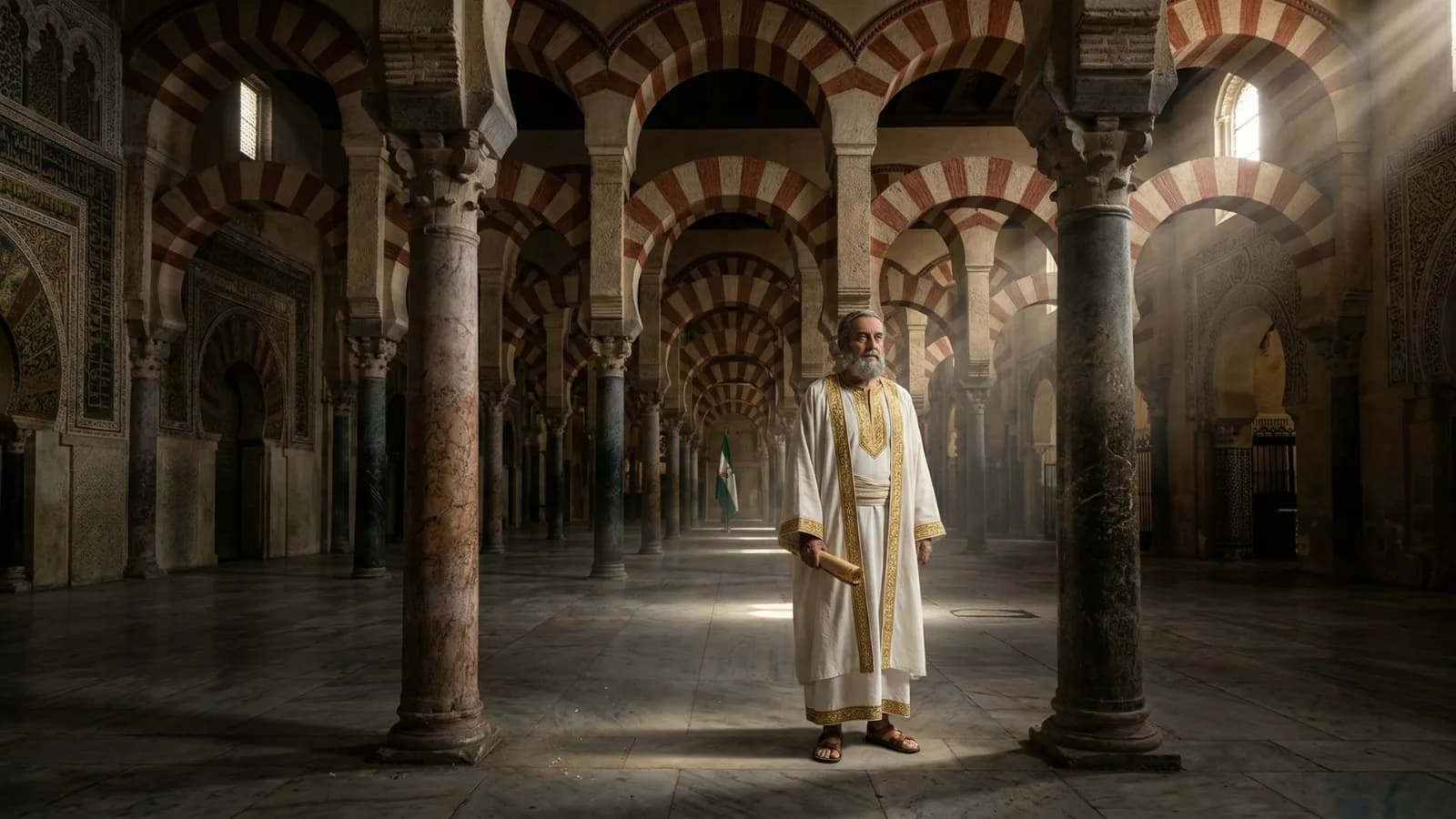
Mosque-cathedral and Caliphate glory
Cordoba, a jewel of Andalusia, is a city that breathes history on every corner. Its famous Mosque-Cathedral, an architectural masterpiece, testifies to its multicultural past and caliphate glory. But Cordoba is also about strolling through the flowery streets of the Judería, getting lost in the labyrinth of the San Basilio neighborhood with its magnificent patios, or admiring the splendor of the Alcázar de los Reyes Cristianos. Beyond traditional visits, the city offers a multitude of unique experiences. If you're looking for an unusual activity to explore Cordoba differently, why not embark on an outdoor escape game? It's an exciting way to transform your visit into a real treasure hunt or a city-wide scavenger hunt. Get ready to solve puzzles while discovering the hidden secrets of this ancient city. Our routes are designed to offer you an unforgettable adventure, combining cultural discovery with playful thrills.
Unusual things to do in Córdoba
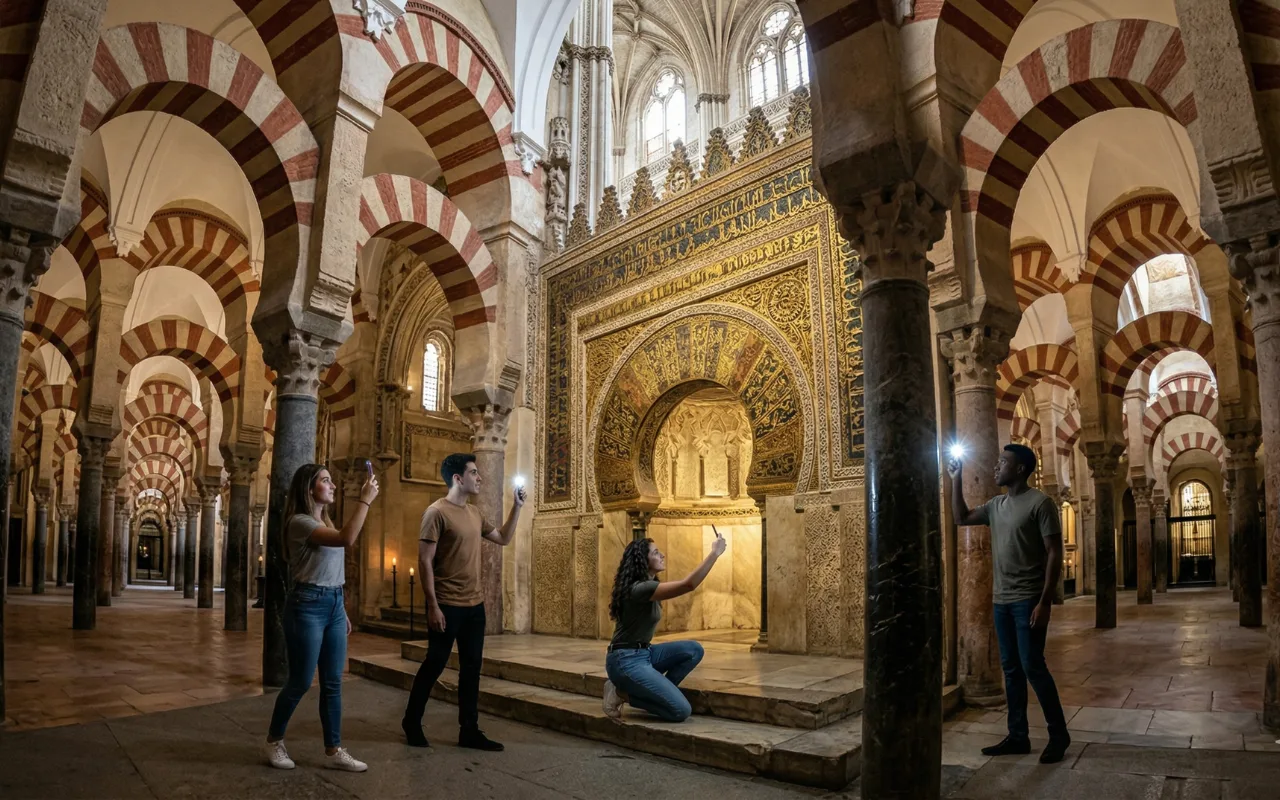
Looking to step off the beaten path in Cordoba? Our outdoor escape games are the ultimate unusual activity to spice up your stay. Far from classic guided tours, you'll transform into urban explorers, solving puzzles and challenges that will lead you through the city's most charming and sometimes lesser-known corners. It's a real-life treasure hunt that offers a unique perspective on Cordoban heritage, combining culture, mystery, and fun. Get ready for a memorable adventure, perfect for those seeking an original and interactive experience.
Things to do in Córdoba with kids
Exploring Cordoba as a family becomes a thrilling adventure with our outdoor escape games! Designed to entertain both young and old, these scavenger hunts transform city discovery into an interactive treasure hunt. Gone are the boring traditional visits: here, everyone actively participates in solving puzzles, strengthening team spirit and camaraderie. It's an excellent way to learn while having fun, stimulate children's curiosity, and create unforgettable memories together. Our routes are adapted so that the whole family can fully enjoy the magic of Cordoba.
Córdoba for couples
For a romantic getaway in Cordoba, our outdoor escape games offer a touch of originality. Imagine yourselves hand in hand, strolling through historic streets, solving puzzles together, and discovering secret spots that only the most curious know. It's a perfect activity to strengthen your bond, share laughs, and create unique memories, far from clichés. Transform your walk into an intimate and playful adventure, where each solved clue brings you a little closer to the city's hidden wonders and to each other.
What to do in Córdoba when it rains
Is it raining in Cordoba? Unfortunately, our escape games are primarily outdoor activities, designed to fully enjoy the charm of the city's streets and patios. While a light shower won't spoil the adventure, truly rainy weather might make the experience less pleasant. In that case, we recommend postponing your game if possible, or exploring Cordoba's indoor treasures like the Mosque-Cathedral, the Alcázar, or the Archaeological Museum, while waiting for the sun to return for your urban treasure hunt.
Where is Córdoba, and where do the routes start?
Starting points of our routes and the places they pass through.
Route starting points
Places in Córdoba
- Mezquita-Catedral · The most singular building in Europe
- Mihrab of the Mezquita · The holy of holies of the Caliphate
- Judería de Córdoba · The medieval Jewish quarter
- Puente Romano · Sixteen arches over the Guadalquivir
The history of Córdoba
Roman and Visigothic Foundations
Córdoba was established as a Roman colony in 169 BC, becoming the capital of the Roman province of Hispania Ulterior Baetica. It was a center of Roman culture, producing figures such as the Stoic philosopher Seneca and the poet Lucan. The Roman Bridge, constructed in the early 1st century AD, was a vital part of the Via Augusta, linking Rome to Cádiz, and served as the city's primary southern entrance for centuries.
In the 6th century, the Visigothic Kingdom assumed control. This period set the stage for the city's next transformation, though few Visigothic structures remain visible today, often subsumed by later constructions. The continuity of urban life, however, persisted, laying groundwork for subsequent developments.
The Caliphate and Christian Reconquest
A significant shift occurred in the 8th century with the Muslim conquest of the Iberian Peninsula. Under the Umayyad dynasty, Córdoba was transformed into the capital of the Emirate and later the Caliphate of Córdoba. By the end of the first millennium, it was one of Europe's largest and most developed cities, with an estimated population between 350,000 and 1 million. This era saw architectural and intellectual development, most notably the Mezquita-Catedral, which began construction in 785 AD. The Caliphate's power declined in the early 11th century due to civil war, leading to the fragmentation of al-Andalus into smaller 'taifa' states. Córdoba remained under Moorish rule until 1236, when Castilian king Ferdinand III conquered it, incorporating the city into Christian Spain. The Christian period brought new architectural styles, such as the Alcázar de los Reyes Cristianos, built in the 14th century, and the conversion of the Great Mosque into a cathedral, altering the city's religious and architectural landscape.
What to see in Córdoba
- Mezquita-Catedral — This building started as a mosque in the 8th century and was consecrated as a cathedral in the 13th century. Its interior features a pattern of columns and arches, combining Islamic and Christian architectural styles. The Mihrab, the prayer niche of the Caliphate, is a notable element.
- Judería de Córdoba — The medieval Jewish quarter is a network of narrow, whitewashed streets and courtyards. It was home to a Jewish community between the 10th and 15th centuries. Here are the Córdoba Synagogue, one of three medieval synagogues remaining in Spain, and the Plaza de Tiberíades with a statue of Maimonides.
- Puente Romano — This bridge crosses the Guadalquivir River. It was originally built by the Romans in the 1st century BC. Much of the current structure dates from an 8th-century Umayyad reconstruction. The bridge offers views of the city. At its southern end stands the Torre de la Calahorra.
- Alcázar de los Reyes Cristianos — This fortress-palace, built in the 14th century by the Catholic Monarchs over earlier Moorish structures, includes gardens with fountains and ponds. Visitors can climb a tower for views of the city.
- Palacio de Viana — This residence, dating to the late 14th century, is known for its twelve patios and a garden. Each courtyard, developed over centuries by various owners, features different designs with plants and tile work. It opened as a public museum in 1981.
- Plaza de la Corredera — This large, rectangular plaza is distinct among Córdoba's squares. It is one of Spain's few Castilian-style main squares, characterized by its arcaded buildings. Historically, it hosted bullfights and public events.
When to visit Córdoba
The best times to visit Córdoba are spring (April and May) and autumn (September and October). Temperatures are generally in the low 20s °C (low 70s °F). Spring sees flowers blooming and festivals, including the Patios Festival in May, when residents open their courtyards. April and May are the busiest months, with more crowds and higher hotel prices.
Avoid visiting in summer (June to August) due to high temperatures, which often exceed 40°C (104°F) during the day. Winter (November to February) is cooler and less crowded, with average January lows around 4°C (39°F) and highs around 15°C (59°F). November is typically the wettest month.
Getting around Córdoba
Córdoba is accessible by train and bus. The Córdoba-Central train station is a hub for high-speed AVE trains, connecting to Madrid (1 hour 40 minutes), Seville (40 minutes), and Malaga (50 minutes). The bus station is across from the train station, with intercity coaches to other parts of Andalusia and Spain.
The historic center is compact and suitable for walking. Some areas, like parts of the Old City and the Roman Bridge, have steps and cobblestones. Public transportation includes an urban bus network operated by Aucorsa; a single ticket costs about €1.30. For drivers, several parking lots are available. Be aware of the traditional Spanish siesta, when some smaller shops and businesses may close during the afternoon's hottest hours.
Things you probably do not know about Córdoba
Verified details most visitors walk straight past.
- Mezquita-Catedral
- The Mezquita-Catedral is famous for its nearly 1,000 columns, but do you know why many of them look so different from each other? Many of the columns and capitals used in the initial construction of the Great Mosque in the 8th century were repurposed from Roman and Visigothic buildings already existing in Córdoba, reflecting the city's layered history and the resourcefulness of its builders. This practice of spolia gives each column a unique character.
- Puente Romano
- The Roman Bridge is called 'Roman' for a reason, but how much of the original Roman structure do you actually see today? Despite its name, only two of the Roman Bridge's sixteen arches are truly original Roman constructions. Most of the present structure dates from a major 8th-century Umayyad reconstruction, with further medieval and modern repairs.
- Judería de Córdoba
- The Judería is known for its narrow, winding streets. Was this just a appealing design choice, or was there a practical reason behind it? The labyrinthine layout of the Judería, characteristic of medieval Islamic cities, was not merely aesthetic. These narrow, often dead-end streets and compact buildings were designed to provide shade and coolness in Córdoba's hot, dry climate, creating a more comfortable microclimate within the neighborhood.
- Palacio de Viana
- The Palacio de Viana is celebrated for its twelve patios. Was this a grand design from its inception, or did it evolve over time? The twelve patios of the Palacio de Viana are not the result of a single design plan. They accumulated over five centuries as the aristocratic residence changed hands approximately eighteen times, with each new owner adding courtyards according to their wealth and architectural tastes.
- Torre de la Calahorra
- The Calahorra Tower, guarding the Roman Bridge, has a surprising modern use within its ancient walls. What can you find inside today? The Torre de la Calahorra, a fortified tower originally built in the 12th century by the Almohad Caliphate to protect the Roman Bridge, now houses the Museo Vivo de al-Andalus (Museum of al-Andalus), offering insights into Córdoba's multicultural past.
- Plaza de la Corredera
- This grand, rectangular plaza stands out among Córdoba's more intimate squares. What historical events shaped its unique design? Plaza de la Corredera is one of Spain's few Castilian-style main squares, characterized by its rectangular shape and arcaded buildings. It was historically used for bullfights, public spectacles, and even executions, giving it a distinct character compared to the more organic plazas found elsewhere in the city.
Questions about visiting Córdoba
How many days should I spend in Córdoba?
For a first visit, two full days are a minimum to cover the Mezquita, Judería, Alcázar, and the Roman Bridge. Three days is ideal, allowing for a more relaxed pace, a visit to Medina Azahara, and time to explore additional neighborhoods and museums without rushing.
What are the best neighborhoods to stay in Córdoba?
The historic center, particularly around the Judería, is excellent for its proximity to major attractions and appealing atmosphere. Other good options include the San Basilio neighborhood for its patios, or areas closer to the train station for convenience if you plan day trips.
What is the typical budget for a trip to Córdoba?
Córdoba can be enjoyed on various budgets. Accommodation ranges from hostels to boutique hotels. Food costs vary, with tapas bars being economical. Entrance fees to major sites are generally moderate. Public transport is affordable, and many attractions are walkable, reducing travel costs within the city.
Is Córdoba a good destination for families with children?
Yes, Córdoba is family-friendly. Children often enjoy the Alcázar gardens with peacocks, walking across the Roman Bridge, and exploring the narrow streets of the Judería. The Ciudad de los Niños (Kid City) is a large playground, and the Royal Stables offer equestrian shows.
How do I get around Córdoba?
Córdoba's historic center is very walkable. For longer distances, an extensive urban bus network (Aucorsa) covers the entire city, with single tickets costing around €1.30. Taxis are also readily available. The city does not have a metro or subway system.
What are the local customs regarding siesta and opening hours?
Like much of Spain, Córdoba observes siesta, especially during the hot summer months. Many smaller shops and some businesses may close in the early afternoon (typically from 2 PM to 5 PM) and reopen in the late afternoon or evening. Restaurants generally have later dining hours than in many other countries.
Frequently asked questions
How much does an outdoor escape game cost in Cordoba?
An outdoor escape game in Cordoba with OddballTrip is a very affordable activity, especially if you come as a group! The price is fixed per team, not per person. For only €12 per team, you can embark on the adventure and discover the city in a fun and original way. Whether you are 2, 3, or 4 players, the price remains the same, making it an economical and entertaining option to explore the wonders of Cordoba without breaking the bank. It's the ideal way to have fun while discovering the city.
Is it suitable for children / families?
Absolutely! Our outdoor escape games in Cordoba are designed to be a fantastic activity for the whole family. The puzzles are clever but accessible, encouraging collaboration between generations. Children love the "treasure hunt" aspect and the challenge of solving mysteries, while adults appreciate the cultural discovery and playful side. It's an excellent way to create memorable experiences together, transforming a simple visit into an interactive adventure where everyone finds their place and contributes to the team's success.
How long does an escape game in Cordoba last?
The duration of our outdoor escape games in Cordoba is flexible and depends on your pace of play, but also on your desire to take breaks to admire monuments or grab a coffee. On average, allow between 1.5 to 2.5 hours to complete one of our routes. This is the ideal time to explore a significant part of the city, solve all the puzzles, and fully enjoy the experience without feeling rushed. You are in control of your time, allowing you to adapt the adventure to your desires and those of your team.
Do I need to book in advance?
No, not at all! One of the great advantages of our outdoor escape games is their flexibility. You don't need to book a specific time slot. Simply purchase the game online whenever you want, and you can start the adventure when you're ready, on the day of your choice. This gives you total freedom to organize your day in Cordoba without constraints. Whether you decide to play at the last minute or plan in advance, access to your treasure hunt is immediate after purchase.
What to visit in Cordoba beyond the escape games?
Cordoba is full of treasures to explore! After solving the puzzles of our routes, don't miss visiting the unmissable Mosque-Cathedral, an architectural masterpiece. Stroll through the Jewish Quarter, the Judería, with its narrow streets and flowery patios. The Alcázar de los Reyes Cristianos and its magnificent gardens are also a must-see. For a touch of greenery, the Alcázar Gardens or the Viana Palace with its twelve patios are sublime. And don't forget to taste local delicacies in one of the many typical "tabernas"!
What is the best season to visit Cordoba?
The best season to visit Cordoba and fully enjoy our outdoor escape games is undoubtedly spring (April-May) or autumn (September-October). During these periods, temperatures are mild and pleasant, ideal for walking and exploring the city on foot. Spring is particularly magnificent with the blooming patios and festivals. Summer can be very hot, making outdoor activities more difficult, while winter is generally mild but can be a bit rainier.
Other destinations in Andalusia
Seville
The Alcázar and Moorish splendor
Granada
Albaicín and the last Moorish kingdom
Málaga
From Phoenicians to Picasso
Cádiz
The oldest city in the West
Antequera
City of ancient dolmens and the Alcazaba
Baeza
Andalusian Renaissance jewel, a UNESCO World Heritage site.
Medina Azahara
Forgotten splendor of the Caliphate of Cordoba
Ronda
The suspended city, where history meets vertigo
Úbeda
Andalusian Renaissance gem, a UNESCO World Heritage site
More cities in Spain
Mérida
Rome in Spain: theater, bridge and temples
Trujillo
Cradle of Conquistadors, a medieval city in Extremadura.
Cáceres
UNESCO medieval city and noble families
Toledo
Three cultures, a thousand secrets
Ávila
Medieval walls and Saint Teresa
Cuenca
Hanging houses and vertiginous gorges
Cartagena
Carthaginian port and Roman theater
Segovia
The devil's aqueduct and Isabella's crown
Activities to discover nearby
Guided tours, skip-the-line tickets and local experiences to book in advance.
💡 Optional booking — you can also buy on-site. All links open in a new window, your OddballTrip visit stays preserved.