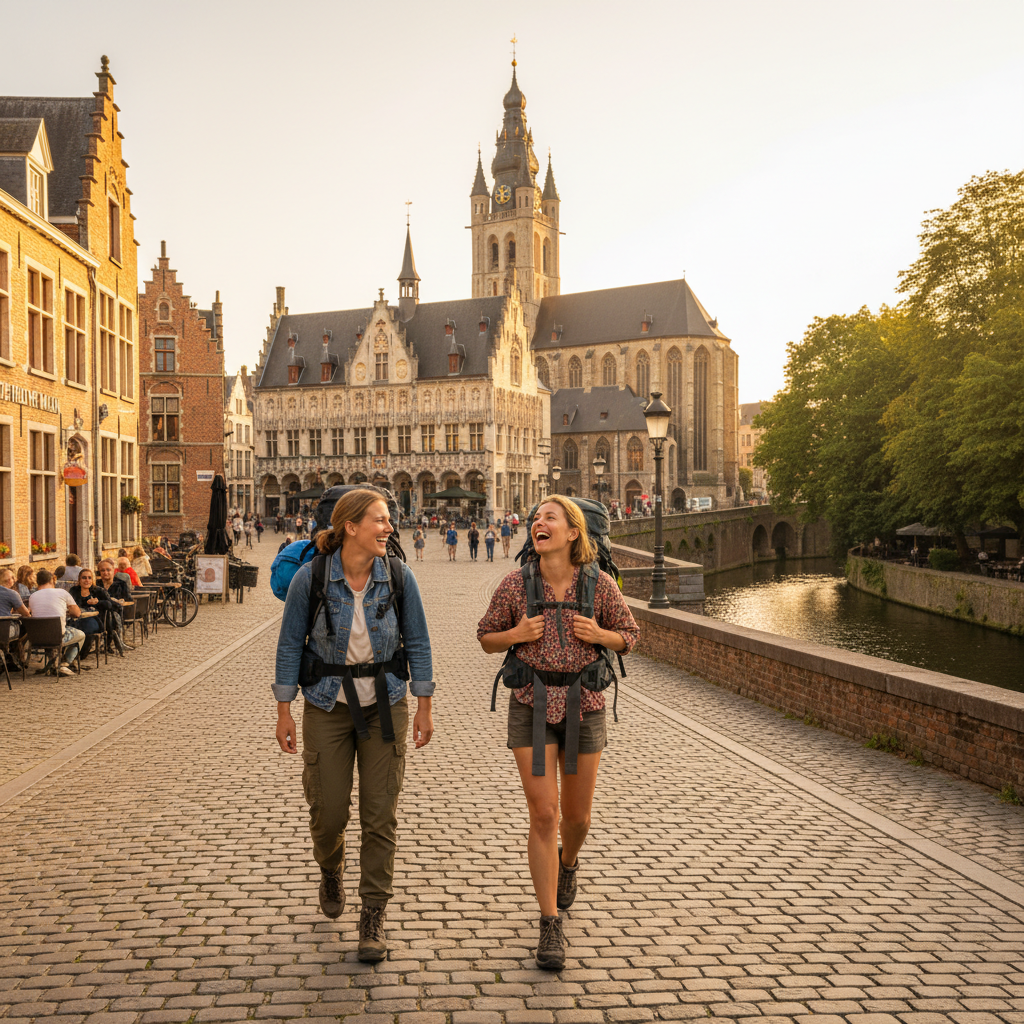
DiestOutdoor Escape Game & Treasure Hunt
Princely and fortified city, where history meets Brabant nature.
Diest, this Brabant pearl, invites you to an exploration that harmoniously blends history and nature. If you're wondering what to do in Diest, prepare to be surprised! Beyond its historic facades, the city is an ideal playground for an unusual activity. Imagine an outdoor escape game that leads you through its secrets, transforming every alley into a clue and every monument into a stage of a real-life treasure hunt. Start your adventure on the vibrant Grote Markt, admire the imposing Sint-Sulpitiuskerk, then let yourself be charmed by the Diest Beguinage, a UNESCO site where time seems to stand still. This unique scavenger hunt will allow you to discover Diest from a new angle, solving puzzles while soaking in the serene atmosphere of the Beguinage or the remains of the fortifications. It's a fun and immersive way to embrace the history of this princely city, while enjoying the fresh air and green landscapes along the Demer. A memorable experience awaits you, off the beaten path.
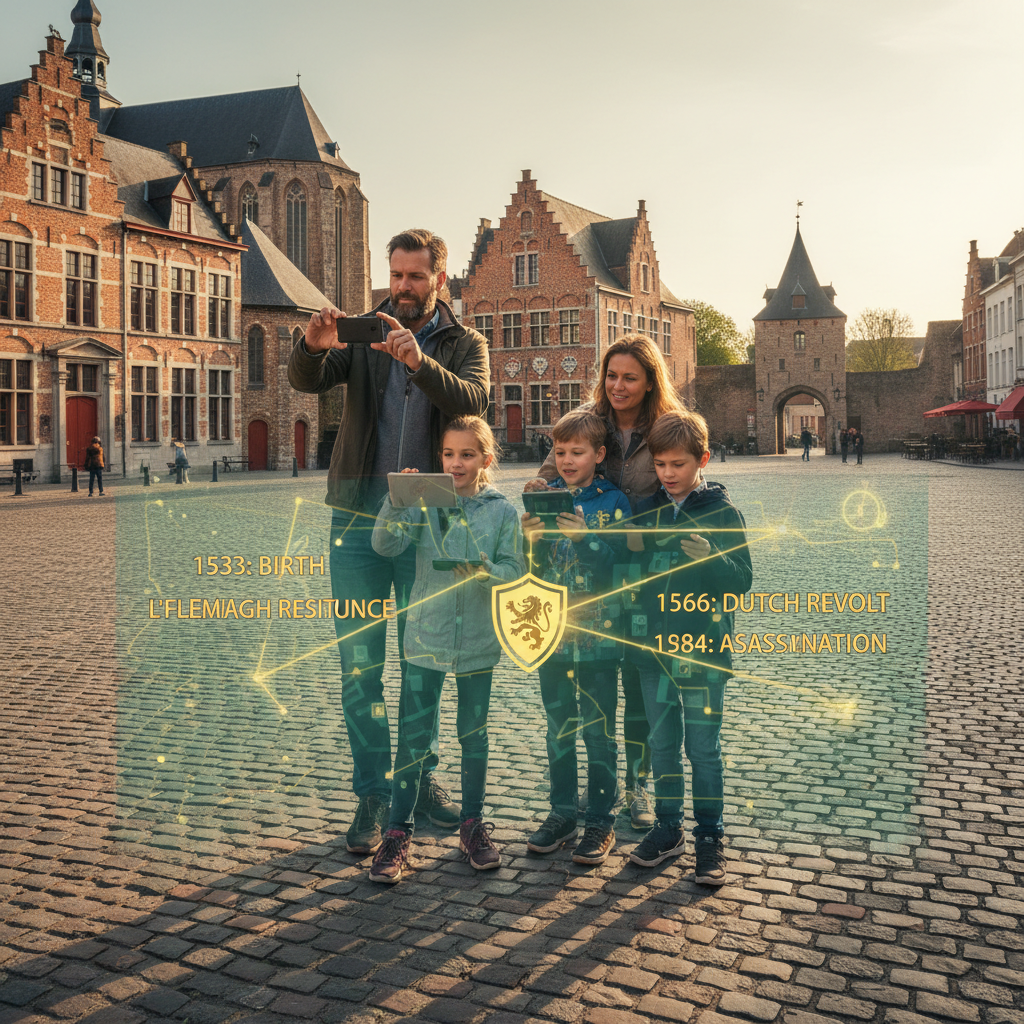
Unusual things to do in Diest
For an unusual activity in Diest, let yourself be tempted by an adventure that’s out of the ordinary. The city, with its rich past as a fortified city and its UNESCO-listed Beguinage, offers a perfect setting for an original outing. Instead of a simple guided tour, imagine yourself solving outdoor puzzles, unearthing hidden clues in medieval architecture or along the banks of the Demer. It's a unique way to immerse yourself in Diest's history and heritage, transforming the entire city into a huge playground. A fun and memorable experience that will reveal the most surprising facets of Diest.
Things to do in Diest with kids
Diest is an ideal destination for a family day out, where fun is guaranteed for everyone. What to do with family in Diest? Our outdoor escape game is designed to entertain children from 8 years old and teenagers, while stimulating parents' team spirit. It's a unique opportunity to share laughs and challenges, exploring the city's hidden treasures. The playful route through the Beguinage and historic streets transforms the discovery of heritage into a true adventure. Your children will be thrilled to search for clues and solve puzzles, making this outing a memorable and educational experience for the whole family.
Diest for couples
For a romantic getaway, Diest as a couple is a charming destination. Away from the hustle and bustle, the city offers an intimate setting perfect for hand-in-hand strolls. Wander through the cobblestone alleys of the Beguinage, a UNESCO-listed haven of peace, where every corner tells a story. Enjoy picturesque views along the Demer or from the heights of the old fortifications. A couple's scavenger hunt can add a playful touch to your discovery, transforming the city into a playground where complicity and heritage discovery blend to create unforgettable memories. Diest promises a privileged moment.
What to do in Diest when it rains
Don't let the rain spoil your adventure in Diest! Our outdoor escape game is surprisingly well-suited to unpredictable weather. In fact, the course design means that nearly 80% of the route takes place under arcades, covered passages, or sheltered areas. You can thus continue your treasure hunt and solve puzzles without worrying about showers. It's the perfect opportunity to discover the hidden charms of Diest, even on a grey day, enjoying a fun and protected activity.
Where is Diest, and where do the routes start?
Starting points of our routes and the places they pass through.
Route starting points
Places in Diest
- Grote Markt (Main Square)
- Saint Sulpice Church (Sint-Sulpitiuskerk)
- Diest Beguinage (Begijnhof)
- Old City Walls of Diest
- Banks of the Demer River (near Warandepark)
- Lakenhalle (Cloth Hall)
- House of Nassau
- Schepenhuis (Old Courthouse)
The history of Diest
From Demer Settlement to Orange City
Diest's origins trace back to a settlement on the southern bank of the Demer River, first mentioned in 835. During the Middle Ages, the city developed under a feudal system. In 1499, Diest came into the possession of Engelbrecht II, Count of Nassau, through an exchange. This brought the city under the influence of the House of Nassau. One of Engelbert's successors, René van Chalon, adopted the title 'Prince of Orange' from 1530 onwards, connecting Diest to the House of Orange-Nassau, which reigns in the Netherlands today.
Fortified City and Enduring Heritage
Diest was first fortified with city walls around 1360. The city's strategic importance led to further defensive developments, including the construction of the Citadel of Diest between 1845 and 1853. This pentagonal brick fortress, designed by Major Laurillard-Fallot, was a part of Belgium's defense system after its independence, intended to protect Brussels. Its primary military function ceased by 1895, but the Citadel remains a protected historical site, showing 19th-century military architecture. Throughout its history, Diest experienced turmoil, including Spanish confiscations in 1572 and plundering by Protestant troops in 1580, which damaged the Sint-Sulpitiuskerk. Much of Diest's heritage, from its medieval structures to its connection with the House of Orange, is still visible.
What to see in Diest
- Diest Beguinage (Begijnhof) — Founded in 1253, this UNESCO World Heritage site contains whitewashed houses and convents from the 17th and 18th centuries, around the 13th-century St. Catherine's Church.
- Sint-Sulpitiuskerk — This Gothic parish church, built between 1321 and 1533 with local iron-sandstone, houses the tomb of Philip William of Orange-Nassau. Its crossing tower is known as the "Mosterdpot" (Mustard Pot).
- Lakenhalle (Cloth Hall) — Dating to 1346, this building on the Grote Markt was the guildhall for cloth merchants. After the cloth trade declined in the late 17th century, it served as a slaughterhouse and school, and now functions as an exhibition space and music school.
- Citadel of Diest — Built between 1845 and 1853, this pentagonal brick fortress is the only surviving citadel of its kind in Flanders. Its ramparts offer views and show 19th-century defensive architecture.
- Grote Markt — The central square of Diest, lined with houses from the 16th to 18th centuries. The 18th-century city hall stands here, beneath which is the Stadsmuseum De Hofstadt, displaying items like the armor of Philip of Orange.
- Banks of the Demer River — The revitalized riverside walk, 'de Kaai', offers a path for walking, with platforms and seating.
When to visit Diest
The period from late June to early September is suitable for warm-weather activities. In July and August, average high temperatures are around 23.8°C (74°F), with less rainfall. Skies are clearest in July. Summers are comfortable; winters are cold, mostly cloudy, and windy. The cool season runs from mid-November to early March, with average daily highs below 9°C (49°F). December is typically the wettest month, and January the coldest. Snow can occur in winter and sometimes in April. While events may occur in colder months, the weather can limit outdoor exploration.
Getting around Diest
Diest is about 60 km east of Brussels and is accessible by train, with direct hourly services from Brussels Central taking approximately 45 minutes. The city center is a short walk from the railway station. By car, Diest is reachable via the E314 highway (exits at Bekkevoort or Halen) or the N2 national road. Free perimeter car parks include Citadel (3-minute walk to center), Kluisberg (5-minute walk), and Halve Maan (10-minute walk). Paid parking is available in the city center from Monday to Saturday, 9 AM to 6 PM, with the first 30 minutes free. The underground parking at Ezeldijksite is a 10-minute walk from the Grote Markt. The city center and ramparts are walkable, with a walk across town taking about twenty minutes. Bikes can be rented at Fietspunt Diest near the railway station or at the Halve Maan recreational area.
Things you probably do not know about Diest
Verified details most visitors walk straight past.
- Sint-Sulpitiuskerk
- The tomb of Philip William of Orange-Nassau lies within the Sint-Sulpitiuskerk, but his legacy extends beyond his final resting place. Philip William, son of William the Silent, not only chose this church as his burial site in 1618, but also stipulated in his will that an 'everlasting mass for the peace of his soul' be held there. This tradition, after centuries of not being observed, was reintroduced in 2008.
- Lakenhalle
- The Lakenhalle, or Cloth Hall, has seen many transformations since its construction in the 14th century. After its use as a guildhall for cloth merchants declined in the late 17th century, the building was repurposed as a slaughterhouse and later as a school before becoming an exhibition and music space.
- Diest Beguinage
- The monumental Baroque entrance gate to the Diest Beguinage, built in 1671, features a prominent sculpture. On the front side of the gateway, there is a sculpture of the Virgin Mary, while on the backside, you'll find the patron saint of the Beguinage Church, Saint Catherine of Alexandria.
- Citadel of Diest
- The Citadel of Diest, a pentagonal fortress, was built for a very specific defensive purpose in the 19th century. Constructed between 1845 and 1853, it was designed as a last refuge for the young Belgian state, intended to protect Brussels, and was entirely self-sufficient with its own bakery and armories.
- Warandepark
- The neoclassical entrance gate to Warandepark features statues that once adorned a different significant location. When Doctor Henri Verstappen bequeathed his estate to the city in 1939, his house was demolished to create the park entrance, and the statues on top of the new gate were originally from the Noord-station at Rogierplein in Brussels.
- Grote Markt (City Hall)
- Beneath the 18th-century neoclassical City Hall on the Grote Markt lies a much older part of Diest's history. The cellars of the medieval building that once stood here are now home to the Stadsmuseum De Hofstadt, offering a glimpse into Diest's past.
Questions about visiting Diest
How long should I plan to stay in Diest?
You can experience the main historical sights of Diest, including the Beguinage and the city center, in a full day. If you wish to explore the surrounding nature reserves or delve deeper into the museums, a two-day visit would be more comprehensive.
What are the best ways to get around Diest?
Diest's city center and ramparts are easily walkable, with most attractions within a 20-minute stroll. For exploring the nearby Flemish countryside, renting a bicycle is a good option, with rental services available at the railway station and Halve Maan recreational area.
Is Diest suitable for families with children?
Yes, Diest offers family-friendly activities. The Halve Maan recreational area has playgrounds and a sandy beach. The Webbekoms Broek nature reserve is also suitable for walks, with a visitor information center catering to children.
What is the typical budget for a day in Diest?
Diest can be explored on a moderate budget. Many key attractions like the Beguinage and Sint-Sulpitiuskerk have free entry. Parking is available with free options on the perimeter, and food costs vary depending on your choices, from casual eateries to restaurants on the Grote Markt.
Are there any specific local customs or closing times to be aware of?
While there are no widespread siesta customs, it's worth noting that some smaller shops or museums might have limited opening hours, especially outside of peak tourist season. For instance, the Sint-Sulpitiuskerk has more restricted hours from September to April. It's always advisable to check specific opening times for attractions in advance.
What neighborhoods are best for exploring the historic side of Diest?
The historic heart of Diest is concentrated around the Grote Markt, where you'll find the City Hall, Sint-Sulpitiuskerk, and Lakenhalle. The Diest Beguinage, a short walk from the center, is another essential historic area with its unique architecture and tranquil atmosphere.
Frequently asked questions
How much does an outdoor escape game cost in Diest?
An outdoor escape game in Diest is a very accessible activity, designed to be shared. The price is only €12 per team, which is excellent value for an activity that lasts several hours and allows you to discover the city in a fun and original way. This unique price per team, not per person, makes the experience even more advantageous, especially if you come with a group of friends or family. It's an economical and entertaining way to immerse yourself in Diest's heritage, solve puzzles, and create unforgettable memories without breaking the bank. Get ready for an exciting adventure!
Is it suitable for children / families?
Absolutely! Our outdoor escape games are perfectly designed for families and groups with children. The minimum recommended age is generally 8 years old, as some puzzles require a certain logic and reading ability, but younger children can certainly participate and help with clue-finding under adult supervision. It's a fantastic activity to stimulate teamwork, communication, and everyone's curiosity. Children love the 'treasure hunt' aspect, and parents appreciate discovering the city in an interactive and fun way, far from classic tours.
How long does an escape game in Diest last?
The duration of an outdoor escape game in Diest is flexible, as it entirely depends on your pace and your ability to solve the puzzles. On average, allow between 2h30 and 3h30 to complete the adventure. Some faster groups might finish in less time, while others, who like to take their time to admire the scenery or take a coffee break, might spend a bit more. The important thing is to enjoy the moment and the exploration of the city. There's no strict time limit, so take your time and savor every moment of your scavenger hunt!
Do I need to book in advance?
Yes, booking in advance is highly recommended to guarantee your experience. While our games are flexible and available at any time once booked, this allows us to best prepare your adventure and ensure everything is ready for your arrival. Booking is easily done online via our platform. It's also a way to plan your day and avoid any waiting, especially during busy periods like weekends or school holidays. Once your slot is chosen and confirmed, you'll receive all the necessary instructions to start your scavenger hunt in Diest.
What to visit in Diest beyond the escape games?
Diest is full of treasures to explore once your escape game is over. Don't miss the magnificent Beguinage, a UNESCO World Heritage site, a haven of peace perfect for strolling. The Grote Markt (Grand Place) is the city's beating heart, lined with historic houses and inviting terraces. The imposing Saint Sulpitius Church is also worth a visit for its architecture. For nature lovers, the ramparts and the banks of the Demer offer beautiful walks. Finally, the Diest Citadel, perched on its hill, offers panoramic views of the city and its surroundings. Diest is a city to be savored, on foot or by bike.
What is the best season to visit Diest?
Diest is charming in every season, but each offers a different experience. Spring (April-May) and autumn (September-October) are often considered the best times, with mild temperatures, beautiful colors, and fewer crowds. This is ideal for fully enjoying walks and the outdoor escape game. Summer (June-August) is also very pleasant, with long sunny days, perfect for terraces and outdoor activities, although the city can be busier. Even in winter, with a good coat, Diest's historic atmosphere has a special charm, especially if you combine your game with a comforting hot chocolate.
Other destinations in Flanders
Antwerp
Diamonds, Flemish art and millennial port
Bruges
The Venice of the North, medieval jewel of Flanders
Ghent
Medieval gem with a thousand canals
Geraardsbergen
Discover the original Manneken Pis and the mythical Wall.
Herentals
Medieval gates guarding the secrets of the Kempen
Ieper
At the heart of the Great War's history
Kortrijk
Where history meets water, Flanders' golden past
Leuven
Leuven, where beer, knowledge, and history intertwine
Lier
Lier, city of beguinages and historic clockwork.
Mechelen
City of carillons and religious capital
Ostend
Belgium's Queen of the Beaches
Sint-Truiden
Between ancient abbey and blossoming orchards
Tongeren
Belgium's oldest city, following the footsteps of the Romans.