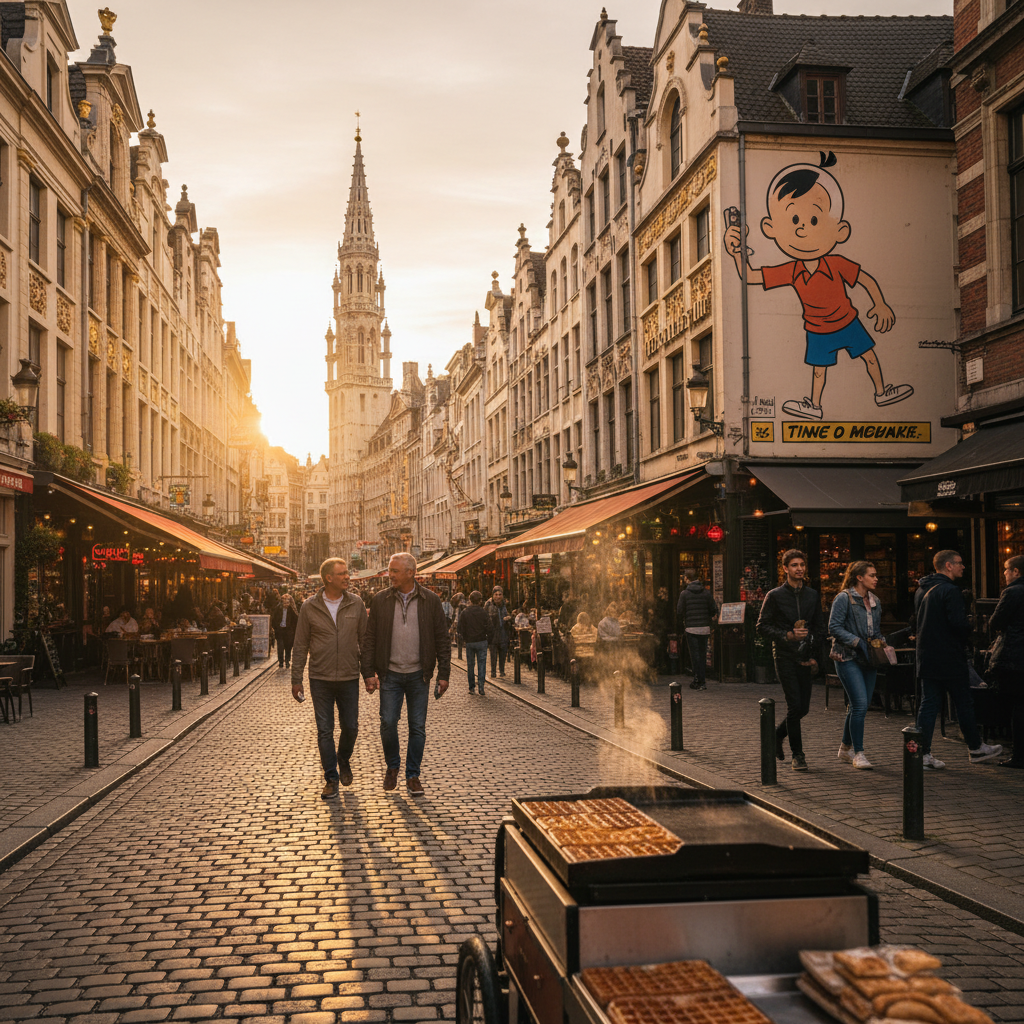
Brussels IxellesOutdoor Escape Game & Treasure Hunt
European capital, between art, history and comic strips.
Eager to discover Brussels Ixelles from a new perspective? Far from the beaten path, this vibrant municipality invites you to a unique immersion. What to do in Brussels Ixelles, you ask? Beyond its famous ponds and Place Flagey, the beating heart of cultural and nightlife, Ixelles is full of hidden treasures. Embark on an adventure in the Matongé district, a hub of African culture, or stroll around the charming Constantin Meunier Museum, the artist's former home. For a truly memorable experience, try an outdoor escape game. It's a fantastic way to transform your visit into a real-life treasure hunt, an urban scavenger hunt that will reveal the city's secrets. This unusual activity is perfect for exploring the architectural richness and local anecdotes, all while having fun and solving puzzles outdoors. Get ready to see the European capital like never before!
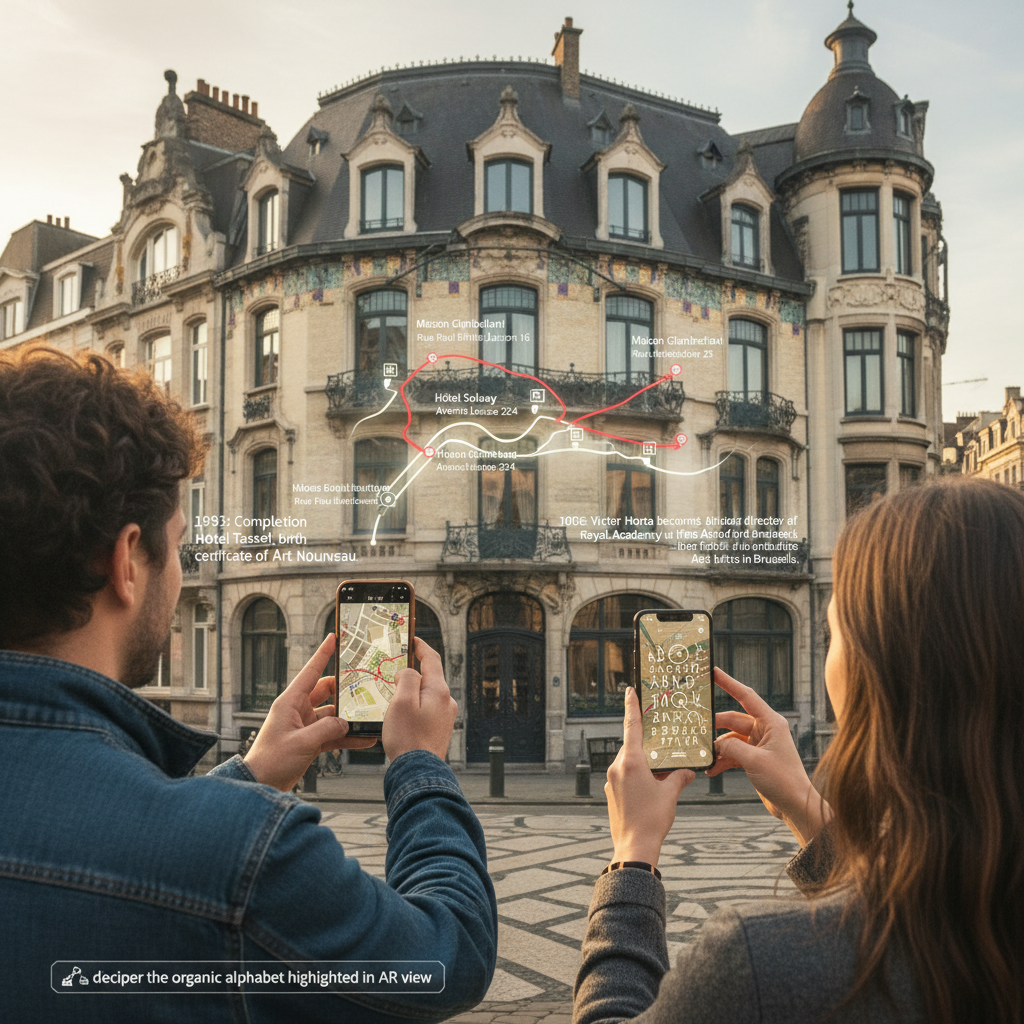
Unusual things to do in Brussels Ixelles
For an unusual activity in Brussels Ixelles, let yourself be surprised by local gems. Beyond the art galleries and vintage shops of Rue du Bailli, explore hidden passages or unsuspected inner courtyards that give Ixelles its unique character. An original outing could be a street art tour through the neighborhoods, revealing stunning murals and committed messages. Or why not a tasting of local products at the Place Flagey market, followed by an architectural stroll to admire the Art Nouveau facades? Every street corner can hide a story or a work, transforming your exploration into a true quest.
Things to do in Brussels Ixelles with kids
Looking for things to do with family in Brussels Ixelles? The municipality offers an ideal setting for fun times with your children and teens. Our adventure games are designed to be accessible from 8 years old (accompanied), stimulating curiosity and teamwork. Imagine your children transformed into detectives, solving puzzles outdoors! Beyond the escape game, Ixelles' parks, such as the ponds or Tenbosch Park, are perfect for afternoon games. It's an opportunity to combine cultural discovery and entertainment, offering a memorable experience for the whole family, where everyone, from the youngest to teens, will find something to enjoy in this urban adventure.
Brussels Ixelles for couples
Brussels Ixelles as a couple guarantees a romantic and charming getaway. Stroll hand in hand through the cobbled streets of the Abbaye de la Cambre district, where history and greenery meet. Admire the magnificent Art Nouveau facades lining Avenue Louise and its surroundings, offering breathtaking views of a unique architectural heritage. End the day with an intimate dinner in one of the many cozy restaurants in Châtelain or around Place Flagey, before getting lost in the gentle ambiance of Brussels evenings. An experience that blends culture, gastronomy, and privileged moments for two.
What to do in Brussels Ixelles when it rains
Don't let the rain spoil your exploration of Brussels Ixelles! Our outdoor escape game is designed to allow you to enjoy the city even on gloomy days. Indeed, approximately 80% of the route takes place under arcades, covered passages, or sheltered by emblematic buildings, thus protecting you from bad weather. This is an excellent option for what to do in Brussels Ixelles on a rainy day, allowing you to continue your urban treasure hunt without interruption. Bring an umbrella for short transitions, and the adventure continues, dry and warm, through the secrets of the capital.
Where is Brussels Ixelles, and where do the routes start?
Starting points of our routes and the places they pass through.
Route starting points
Places in Brussels Ixelles
- Hôtel Tassel
- Maison Ciamberlani
- Hôtel Solvay
- Musée Horta
- Maison Hannon
- Maison Sander Pierron
- Former House and Studio of Constantin Meunier
- Ixelles Culture House (Town Hall)
The history of Brussels Ixelles
From Forest Hamlet to Independent Municipality
Ixelles, or Elsene in Dutch, began its story around 1210, first mentioned as 'Elsela,' meaning 'alder woods' in Old Dutch. Its origins are tied to the foundation of the Abbey of La Cambre in 1196 by a Benedictine nun, near the Maelbeek springs within the Sonian Forest. For centuries, the area's existence revolved around this abbey.
The 15th and 16th centuries brought both devastation and growth. Wars between Louis XI of France and Maximilian I, Holy Roman Emperor, in 1478, ravaged the abbey and its surroundings. In 1585, the Spanish burned down most of the abbey buildings to prevent Calvinists from using them as a refuge. Despite this, the abbey was restored by 1599, coinciding with the Joyous Entry of the Archdukes Albert and Isabella. During this period, more manors and castles were built, gradually transforming Ixelles from a hamlet into a village. The purity of the pond water in the area also attracted numerous breweries, some of which operated well into the 20th century.
The Age of Art Nouveau and Urban Expansion
In 1795, following the French Revolution, the French regime declared Ixelles an independent municipality, incorporating areas like Neder-Elsene, Opper-Elsene, Boondaal, Tenbos, and Solbos. The Abbey of La Cambre was stripped of its religious functions, serving various purposes including a cotton factory, a farm, a military school, and a hospital. The 19th century saw a dramatic population boom, from just 677 residents in 1813 to over 58,000 by 1900, accompanied by a significant francisation of the municipality.
A pivotal moment arrived in 1864 when Brussels annexed a narrow strip of land, including the Bois de la Cambre, to construct Avenue Louise. This decision geographically bisected Ixelles, creating its distinctive two-part layout today. By the late 19th and early 20th centuries, Ixelles, particularly around Avenue Louise, became a fashionable area, attracting artists and celebrities. This era ushered in an architectural revolution, with Art Nouveau and Art Deco styles becoming prominent. Victor Horta, a pioneer of Art Nouveau, built several structures here between 1892 and 1900, many of which are now UNESCO World Heritage sites.
What to see in Brussels Ixelles
- Hôtel Tassel — Designed by Victor Horta between 1892 and 1893, this townhouse is considered one of the first Art Nouveau buildings. It features an early use of iron, glass, and curved lines, particularly in the central atrium and staircase, integrating structure, decoration, and light.
- Hôtel Solvay — An Art Nouveau building by Victor Horta, constructed between 1895 and 1900 for Armand Solvay. Horta designed all details, from furniture to the doorbell, using materials like marble, onyx, bronze, and tropical woods. The Wittamer family acquired it in the 1950s and preserved it, leading to its UNESCO World Heritage status in 2000.
- Musée Horta — This museum is in Victor Horta's former home and studio, built between 1898 and 1901. It displays the architect's work and the Art Nouveau style, showing his use of light, fluid spaces, and organic motifs.
- Maison Hannon — Built between 1902 and 1904 by architect Jules Brunfaut for Édouard and Marie Hannon, this house combines Belgian and French Art Nouveau. Its curved façade, greenhouse, and interior frescoes by Albert Baudouin present a symbolic and dreamlike universe. It reopened as a house-museum in June 2023.
- Ixelles Ponds (Étangs d'Ixelles) — These two artificial lakes are remnants of larger ponds drained in the late 19th century. They offer walking paths and green spaces. The surrounding area has many late-19th and early-20th century townhouses.
- Place Flagey — A cultural center with the 1935 Art Deco 'Steamship' Flagey building, which hosts concerts. The square has a daily morning food market, particularly active on Saturdays and Sundays, and is surrounded by cafes.
When to visit Brussels Ixelles
The best times to visit Ixelles are from late April through June or in September. During these months, temperatures are mild (averaging 18-20°C in May and September), daylight hours are long, and rainfall is moderate. Spring brings blooming parks and the opening of outdoor terraces by mid-April.
July and August are the warmest months, with average highs around 21-23°C, but they also bring the highest tourist crowds and accommodation prices. While December offers Christmas markets, it is cold, damp, and experiences limited daylight. January and February are the coldest and cheapest months, suitable for museum visits with fewer queues, but expect average highs of 5-7°C and short daylight hours.
Getting around Brussels Ixelles
Ixelles is connected to the rest of Brussels. From Brussels Central Station, tram 81 goes directly to Ixelles, a journey of about 5-15 minutes to the Pentagon area. Metro lines 2 and 6 serve stations like Porte de Namur and Louise, which are near parts of Ixelles. Buses also run frequently, with routes connecting to major city points.
Walking is a way to explore Ixelles' neighborhoods, but comfortable shoes are needed due to its size and varied terrain. For parking, street parking is available but can be difficult to find, with various colored zones and time limits (e.g., blue zones often limit free parking to two hours with a disc). Public and private parking garages offer more secure options, with rates typically ranging from €2-€4 per hour. The Châtelain market takes place on Wednesday afternoons, and the Flagey market runs daily, with peak activity on Saturday and Sunday mornings.
Things you probably do not know about Brussels Ixelles
Verified details most visitors walk straight past.
- Hôtel Tassel
- What made the Hôtel Tassel a revolutionary building, even for its time? Designed by Victor Horta in 1892-1893, the Hôtel Tassel is considered the world's first true Art Nouveau building because it integrated structure, decoration, and light into a single, fluid system, exposing its iron framework rather than concealing it.
- Hôtel Solvay
- How did a chocolate-making family save one of Brussels' most exquisite Art Nouveau homes? The Hôtel Solvay, a UNESCO World Heritage site, remained largely intact thanks to the Wittamer family, renowned chocolatiers, who acquired the house in the 1950s and meticulously preserved and restored it, saving it from potential demolition.
- Maison Hannon
- The architect of Maison Hannon was initially unfamiliar with the Art Nouveau style. What convinced him to embrace it? Jules Brunfaut, a Beaux-Arts architect rooted in classical design, was commissioned by his friends Édouard and Marie Hannon in 1902. Their enthusiasm after visiting the 1900 Paris Exhibition and seeing Émile Gallé's work, coupled with their desire for a 'total work of art,' inspired Brunfaut to study Art Nouveau masters like Horta and create this unique blend of Belgian and French Art Nouveau.
- Ixelles Ponds
- What historical industry was attracted to the area around the Ixelles Ponds centuries ago? The purity of the water in the Ixelles Ponds area attracted numerous breweries in the 16th century, some of which continued to operate well into the 20th century.
- Avenue Louise
- Why is Ixelles geographically split into two distinct parts? Ixelles is bisected by Avenue Louise because in 1864, after years of resistance from Ixelles, the City of Brussels annexed the narrow strip of land needed to construct this monumental avenue, along with the Bois de la Cambre, to provide easy access to the recreational area.
- Former House and Studio of Constantin Meunier
- Beyond his artistic legacy, what other significant role did Constantin Meunier's former home play? Constantin Meunier's former house and studio now serves as a museum dedicated to his work, but it was originally his residence and workspace, offering insight into the daily life and creative process of this influential Belgian realist artist.
Questions about visiting Brussels Ixelles
How do I get around Ixelles and Brussels?
Ixelles is served by public transport. You can use trams (like line 81 connecting to the city center), metro lines (2 and 6 at Porte de Namur and Louise), and various bus routes. Walking is also recommended to explore the distinct neighborhoods.
How many days should I spend in Ixelles?
To appreciate Ixelles' Art Nouveau architecture, diverse districts like Matongé and Châtelain, and its cultural offerings, plan for at least two to three days. This allows for exploration of museums, markets, and green spaces without rushing.
Which neighborhoods should I visit in Ixelles?
Ixelles offers several distinct areas. Visit Flagey for its cultural hub and market, Matongé for its African culture, Châtelain for boutiques and its Wednesday market, and the area around the Ixelles Ponds for walks and townhouses.
What is the best season to visit Ixelles?
The ideal time to visit Ixelles is from late April through June or in September. Temperatures are mild, daylight hours are long, and tourist crowds are more manageable than in the peak summer months. Spring brings blossoms and open terraces, while early autumn offers pleasant weather and colorful foliage.
What is the typical budget for a day in Ixelles?
A moderate daily budget for Ixelles could range from €50-€100, covering public transport, a meal at a casual restaurant or market, museum entries, and a coffee or two. Higher-end dining, extensive shopping, or private tours would increase this significantly.
Is Ixelles suitable for visiting with children?
Yes, Ixelles is family-friendly. The Ixelles Ponds offer green spaces for walks, and the Bois de la Cambre, adjacent to Ixelles, is a large park for outdoor activities. Many cafes are welcoming, and the markets provide interesting sights and snacks for all ages.
Frequently asked questions
How much does an outdoor escape game cost in Brussels Ixelles?
Our outdoor escape games in Brussels Ixelles are designed to be accessible and offer a quality experience at an affordable price. The rate is €12 per team, which makes it very attractive, especially if you come with several people. This unique price per team, and not per person, allows you to fully enjoy the adventure without worrying about the exact number of participants (within the recommended limit). It's excellent value for money for an activity that combines city discovery, puzzle solving, and friendly moments with friends or family. Get ready for a total immersion!
Is it suitable for children / families?
Absolutely! Our outdoor escape games in Brussels Ixelles are perfectly suited for families and groups with children. We recommend active participation from 8 years old, always under adult supervision. The puzzles are designed to be stimulating without being too complex, encouraging collaboration and observation. It's a great way to spend quality time with family, stimulate the curiosity of the youngest, and create memorable memories. Both young and old will have fun exploring the city in a fun and interactive way, transforming the visit into a true collective adventure.
How long does an escape game last in Brussels Ixelles?
The duration of our outdoor escape games in Brussels Ixelles is generally about 1h30 to 2h00. This, of course, depends on your pace, your ability to solve the puzzles, and the time you want to take to admire the sights or take a short break. The goal is not speed, but to fully enjoy the experience and the discovery of the city. We recommend planning a two-hour slot to be comfortable and not feel rushed. This is ample time to explore, solve challenges, and soak in the unique atmosphere of Ixelles.
Do I need to book in advance?
For our outdoor escape games in Brussels Ixelles, booking is not mandatory but highly recommended, especially if you have a specific date or time in mind. This guarantees availability and allows you to start your adventure without waiting. By booking in advance, you will receive all necessary instructions by email, which greatly facilitates the start of the game. It's a simple and quick process that ensures a smooth and hassle-free experience, allowing you to focus on the excitement of exploration as soon as you arrive in Brussels Ixelles.
What to visit in Brussels Ixelles beyond escape games?
Beyond our exciting escape games, Brussels Ixelles is full of places to explore. Don't miss the magnificent Ixelles Ponds, perfect for a relaxing stroll, or the vibrant Place Flagey, animated by its markets and events. The Châtelain district is ideal for its trendy boutiques and restaurants, while the Abbaye de la Cambre offers a historical haven of peace. Art lovers will appreciate the Constantin Meunier Museum or the many galleries. Ixelles is a fascinating mix of culture, greenery, and urban life, offering you a multitude of options to complete your day after your adventure!
What is the best season to visit Brussels Ixelles?
Brussels Ixelles has its charm in every season, but to fully enjoy the outdoor escape game experience and walks, spring (April-June) and early autumn (September-October) are often ideal. Temperatures are pleasant, nature is generous, and terraces are lively. Summer (July-August) is also an excellent time, with many outdoor events. Even in winter, the city offers a warm atmosphere, and our game is designed to be playable. Whatever the season, adventure awaits, but be sure to bring appropriate clothing!