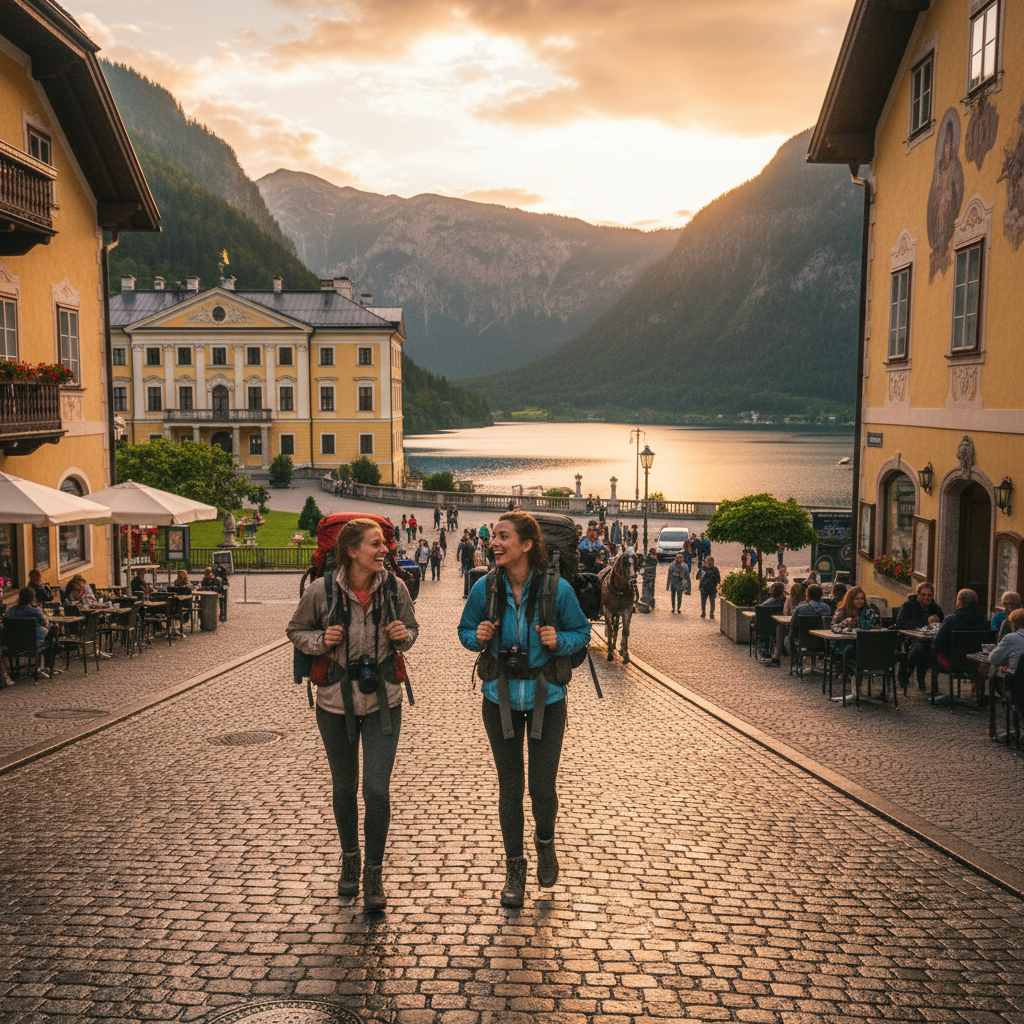
Bad IschlOutdoor Escape Game & Treasure Hunt
Imperial summer residence, nestled between lake and mountains.
What to do in Bad Ischl? Immerse yourself in imperial elegance and Austrian charm! Start with a visit to the majestic Kaiservilla, the former summer residence of Emperor Franz Joseph and Sisi, where history comes alive in every room. Then, stroll through the magnificent Kurpark, a peaceful haven perfect for a relaxing walk amidst nature. For adventurous spirits, Bad Ischl offers a unique experience: an outdoor escape game. Imagine solving captivating puzzles while exploring the charming streets and iconic sites of the city, such as the historic Konditorei Zauner or the picturesque Esplanade. It's much more than just a visit; it's a real treasure hunt that transforms Bad Ischl into a life-sized playground. This urban scavenger hunt is an unusual activity that invites you to discover the city from a new perspective, blending imperial heritage and modern entertainment. Whether you're seeking culture, relaxation, or adventure, Bad Ischl will charm you with its unique mix of history and engaging activities.
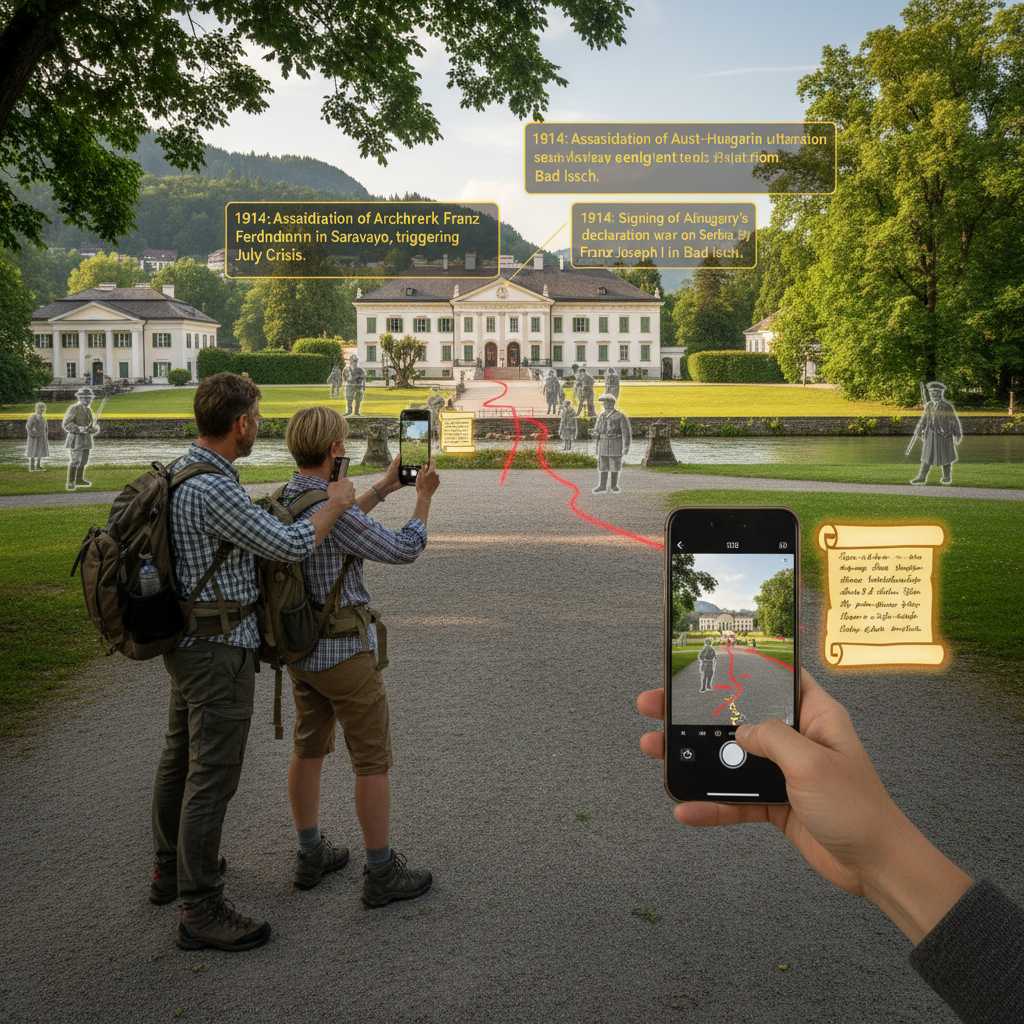
Unusual things to do in Bad Ischl
For an unusual activity in Bad Ischl, treat yourself to an urban treasure hunt that transforms the city into your personal playground. Forget classic guided tours and dive into a life-sized scavenger hunt. Solve puzzles while strolling along the Esplanade or admiring the baroque architecture of the Pfarrkirche St. Nikolaus, discovering hidden anecdotes and little-known places. It's an original outing that combines exploration, reflection, and fun, perfect for those looking to experience Bad Ischl differently, off the beaten path. A playful and interactive way to soak up the imperial atmosphere while stimulating your mind.
Things to do in Bad Ischl with kids
Bad Ischl is an ideal destination for families seeking adventure and discovery. An outdoor escape game is a fantastic activity for children and teens (from 8-10 years old with parental help), turning the city into a huge playground. It's a life-sized treasure hunt that stimulates their curiosity and teamwork. While exploring the city, young detectives will have fun deciphering codes and finding hidden clues near the Kaiservilla or Kurpark. It's a playful way to discover heritage while creating memorable family memories, where everyone actively participates in the adventure.
Bad Ischl for couples
For a romantic getaway in Bad Ischl as a couple, the imperial city offers an enchanting and intimate setting. Stroll hand in hand through the historic streets, soak up the atmosphere of yesteryear, and admire the elegant architecture of the buildings. A leisurely walk along the Esplanade, with breathtaking views of the Traun river and the surrounding mountains, is perfect for special moments. Discover the city's secrets together through a playful treasure hunt, which adds a touch of adventure to your exploration of the rich heritage, such as the Kaiservilla. End your day with a sweet gourmet interlude at the famous Konditorei Zauner, for an imperial memory for two.
What to do in Bad Ischl when it rains
Don't let the rain spoil your visit to Bad Ischl! Our outdoor escape game is designed to be enjoyable even in wet weather. Approximately 80% of the route takes place under covered passages, arcades, or near shelters, especially in the historic city center and its charming galleries. This way, you can solve puzzles and explore the imperial city sheltered from the drops, enjoying the unique atmosphere without getting soaked. If you're looking for other indoor options, the Kaiservilla and the city museum are excellent choices.
Where is Bad Ischl, and where do the routes start?
Starting points of our routes and the places they pass through.
Route starting points
Places in Bad Ischl
- Kaiservilla (exterior)
- Kaiserpark
- Stadtmuseum Bad Ischl (exterior)
- Esplanade along the Traun
- Trinkhalle (exterior)
- Stadtpfarrkirche St. Nikolaus (exterior)
- Lehár Theater (exterior)
- Kurpark
The history of Bad Ischl
Salt Production and Habsburg Control
Bad Ischl's origins are tied to the salt industry of the Salzkammergut region, an area known for salt extraction since prehistoric times. The name Ischl derives from the Celtic "Iscla" or "Iscula," a river mentioned in documents from 829 AD. For thousands of years, salt was mined by hand and transported via the Traun River.
The Habsburg dynasty's connection to the region began in 1282, when King Rudolf I appointed his son Albrecht as duke of Austria and Styria. Albrecht took an interest in the salt industry, building the Rudolf Tower in 1284 near Hallstatt for its protection. After his death in 1308, his widow Elisabeth reorganized the salt industry into a crown monopoly. This system remained in place until the 20th century and was a significant source of Habsburg finances for over 600 years.
Imperial Summer Residence
In the early 19th century, the therapeutic qualities of Ischl's mineral water springs were identified. Dr. Josef Götz opened the first bathing salon in 1823. By the 1820s, medical professionals recommended Ischl for cures and relaxation, which led to the town becoming a spa resort, attracting figures like Prince Klemens Wenzel von Metternich.
The town's status changed in 1853 when Archduchess Sophie purchased a villa as a wedding gift for her son, Emperor Franz Joseph I, and his fiancée Elisabeth of Bavaria. Their engagement took place in this villa, which became known as the Kaiservilla. It served as the imperial summer residence from 1854 to 1914. Franz Joseph celebrated his birthday in Ischl almost every year, and the town became a summer gathering point for high society, artists, and composers. Bad Ischl was granted city status in 1940.
What to see in Bad Ischl
- Kaiservilla — This was the summer residence of Emperor Franz Joseph I and Empress Elisabeth (Sisi) for over 60 years. Visitors can tour their private rooms, preserved as they were in 1914, including the desk where Franz Joseph signed the declaration of war against Serbia in 1914.
- Kaiserpark — This park surrounds the Kaiservilla and contains the Marmorschlössl, which was Sisi's private tea house.
- Stadtmuseum Bad Ischl — Located in the Seeauerhaus on the Esplanade, this museum displays the town's history, with artifacts from its salt-mining past and its period as an imperial spa town. The engagement of Emperor Franz Joseph and Elisabeth occurred in this building in August 1853.
- Trinkhalle — Built between 1829 and 1831 as a neoclassical brine bath facility, it was used for drinking cures. This columned building now hosts events and exhibitions, and houses the Bad Ischl Tourist Information Centre.
- Stadtpfarrkirche St. Nikolaus — This Roman Catholic parish church, first mentioned in 1320, has a 72-meter-high Gothic tower from 1490 with a twisted, octagonal spire. Inside, there are frescoes, altar paintings, mosaics, carved Stations of the Cross, and the "Kaiser-Jubiläums-Orgel" from 1910.
- Lehár Theater — Originally built in 1827, this theater was renamed in 1940 for operetta composer Franz Lehár, who spent many summers in Bad Ischl. It once had a separate staircase for the imperial family.
- Kurpark — In the center of Bad Ischl, this park features a music pavilion, redesigned in 2015, and hosts events, including parts of the Christmas Market.
When to visit Bad Ischl
The period from May through September offers pleasant weather for exploration, with July daytime highs reaching 22°C (72°F). July and August are the busiest months, with cultural events like the Lehár Festival, and the lakes around Bad Ischl are suitable for swimming. The Kaiserfest, celebrating Emperor Franz Joseph's birthday, takes place in mid-August.
For fewer crowds and cooler temperatures, consider April to June, when flowers are in bloom. Autumn offers changing foliage and fewer tourists. Winter, from November to February, is quieter, with temperatures from -5°C to 2°C (23-35°F), and a Christmas market at the Trinkhalle from late November to late December.
Avoid January to March if seeking outdoor activities, as it is not a winter sports destination, though nearby slopes are accessible.
Getting around Bad Ischl
Bad Ischl is 42 km (26 miles) east-southeast of Salzburg. It can be reached by train, with connections from Linz or Salzburg via Attnang-Puchheim. The town center is walkable, with many attractions close to each other.
Parking options are available, but specific details on garages or fees require local inquiry. The weekly farmer's market is held every Friday from 7:00 AM to 12:00 PM around Kaiser-Franz-Josef-Straße, offering local and international products.
Bad Ischl is a family-friendly destination, with playgrounds in the Kurpark and Sisi Park, and the EurothermenResort Bad Ischl providing indoor swimming. While many shops and cafes are open daily, checking specific opening hours for smaller establishments is advisable, as some may have reduced hours on Sundays or Mondays.
Things you probably do not know about Bad Ischl
Verified details most visitors walk straight past.
- Kaiservilla
- Why does the Kaiservilla have an unusual 'E' shape when viewed from above? The Kaiservilla was originally a neoclassical country house. When Archduchess Sophie acquired it as a wedding gift for Franz Joseph and Elisabeth in 1853, it was significantly expanded. The architect, Antonio Legrenzi, added two side wings at right angles to the main block, creating a floor plan in the shape of a capital 'E' as an architectural homage to Empress Elisabeth, or 'Sisi'.
- Marmorschlössl (in Kaiserpark)
- Empress Elisabeth had a specific retreat built within the Kaiserpark. What was its purpose? The Marmorschlössl, or Marble Little Castle, was built between 1856 and 1861 as Empress Elisabeth's private tea house. It served as her exclusive refuge, reflecting her desire for isolation and distance from the formal court ceremonial.
- Trinkhalle
- What ancient motto is inscribed on the Trinkhalle, and what does it mean? The Trinkhalle, designed to resemble an ancient Greek temple, bears the Latin inscription "IN SALE ET IN SOLE OMNIA CONSISTUNT" on its east and west gables. This translates to "All things depend on salt and sun," reflecting the motto of Dr. Wirer, the imperial physician who championed Ischl as a spa town.
- Stadtpfarrkirche St. Nikolaus
- What unusual architectural feature can you spot on the tower of the Stadtpfarrkirche St. Nikolaus? The Stadtpfarrkirche St. Nikolaus is topped with a distinctive 72-meter-high Gothic tower from 1490 that features a twisted, octagonal spire.
- Konditorei Zauner
- How did the famous Zaunerstollen, a local pastry, come into existence? The Zaunerstollen was created by accident in 1905. It evolved from a macaroon called "Nickerl-Batz," made from nougat, hazelnut, and chocolate with crumbled wafers. Pastry chef Josef Nickerl and Viktor Zauner refined this into the finger-thick, chocolate-glazed cake known today.
- Lehár Theater
- Despite its imperial connections, the Lehár Theater had a specific clarification about its status. What was it? While the Lehár Theater had a court box for the imperial family and was often called the "little castle," an inscription above the entrance clarifies that it was never an imperial and royal court theatre. It initially belonged to a joint-stock company of Ischl citizens and later to the municipality.
Questions about visiting Bad Ischl
How long should I plan to stay in Bad Ischl?
A stay of two to three days in Bad Ischl allows for exploration of the Kaiservilla and Park, a ride on the Katrin Cable Car, and a visit to the Congress and Theatre House. For an extended visit of four to five days, consider activities such as canyoning tours or day trips to nearby Hallstatt.
What are the best ways to get around Bad Ischl?
Bad Ischl is a compact town, and many main attractions are accessible on foot. For longer distances or exploring the surrounding Salzkammergut region, train services are available, with key stops including Bad Ischl Station.
Is Bad Ischl suitable for families with children?
Yes, Bad Ischl is family-friendly. It offers activities for children, including playgrounds in the Kurpark and Sisi Park. The EurothermenResort Bad Ischl has brine pools and a children's area, and the surrounding Salzkammergut region provides opportunities for lake swimming and hiking.
What is the typical budget for a visit to Bad Ischl?
Bad Ischl offers a range of accommodation options, with more budget-friendly choices compared to smaller towns like Hallstatt. A variety of restaurants and activities are available to suit different price points.
Are there any specific neighborhoods or areas to explore in Bad Ischl?
The town center, particularly around the Esplanade and Pfarrgasse, contains many historic buildings, shops, and cafes like Konditorei Zauner. The Kaiserpark and Kurpark offer green spaces, while areas along the Traun River provide scenic walks.
What are the local market days in Bad Ischl?
Bad Ischl hosts a weekly farmer's market every Friday. It runs from 7:00 AM to 12:00 PM and is located around Kaiser-Franz-Josef-Straße. Here, you can find local specialties and various delicacies.
Frequently asked questions
How much does an outdoor escape game cost in Bad Ischl?
An outdoor escape game in Bad Ischl costs €12 per team. This price is fixed, regardless of the number of participants in your team (usually 2 to 6 players), making it a very affordable and friendly activity. It's excellent value for money for an adventure that lasts several hours and allows you to discover the city in a fun and interactive way. No hidden fees, just pure fun and adventure for all budgets!
Is it suitable for children / families?
Absolutely! Our outdoor escape games are perfectly suited for families and children from 8-10 years old, with adult assistance. It's a fantastic activity to stimulate teamwork, curiosity, and observation skills in younger participants. The puzzles are designed to be accessible and engaging, transforming the discovery of Bad Ischl into a real treasure hunt for both young and old. It's a great way to spend quality time together as a family.
How long does an escape game in Bad Ischl last?
An outdoor escape game in Bad Ischl generally lasts between 1.5 to 2.5 hours. The exact duration depends entirely on your pace, the number of puzzles to solve, and the time you take to admire the city's iconic landmarks. The advantage is that you are free to take breaks whenever you wish to explore a monument, grab a coffee, or simply enjoy the atmosphere, making the experience very flexible and customizable.
Do I need to book in advance?
No, it's not necessary to book our outdoor escape games in Bad Ischl in advance. This is one of our big advantages! You can purchase the game directly online on our platform and start the adventure whenever you want, at any time of day, without time constraints. This total flexibility allows you to easily integrate this activity into your visit schedule, even at the last minute, for maximum spontaneity.
What to visit in Bad Ischl beyond the escape games?
Bad Ischl is full of treasures to discover! Beyond our games, don't miss the majestic Kaiservilla, the imperial summer residence, and the magnificent Kurpark for a relaxing stroll. The charming Lehár Villa, the Pfarrkirche St. Nikolaus, and the famous Konditorei Zauner, a true paradise for gourmands, are also must-sees. Walk along the Esplanade to enjoy breathtaking views of the Traun river and the surrounding mountains. The city offers a rich historical and cultural heritage to explore.
What is the best season to visit Bad Ischl?
Bad Ischl is charming in all seasons, but each period offers a different experience. Spring and summer (May to September) are ideal for fully enjoying outdoor activities, blooming gardens, and sunny terraces. Autumn offers magnificent landscapes with its vibrant colors, perfect for photography enthusiasts. Even in winter, with snow, the city has a special charm and a magical atmosphere, especially if you appreciate quieter settings and Christmas markets.
More cities in Austria
Hallstatt
Postcard-perfect alpine village, between lake and mountains
Admont
In the heart of the Alps, discover an ancient abbey and its library
Linz
Between Danube, modern art and Austrian history
Friesach
In the heart of medieval Carinthia
Mauthausen
On the Danube's banks, where history meets stone.
Melk
The baroque abbey, jewel of the Wachau