DoverOutdoor Escape Game & Treasure Hunt
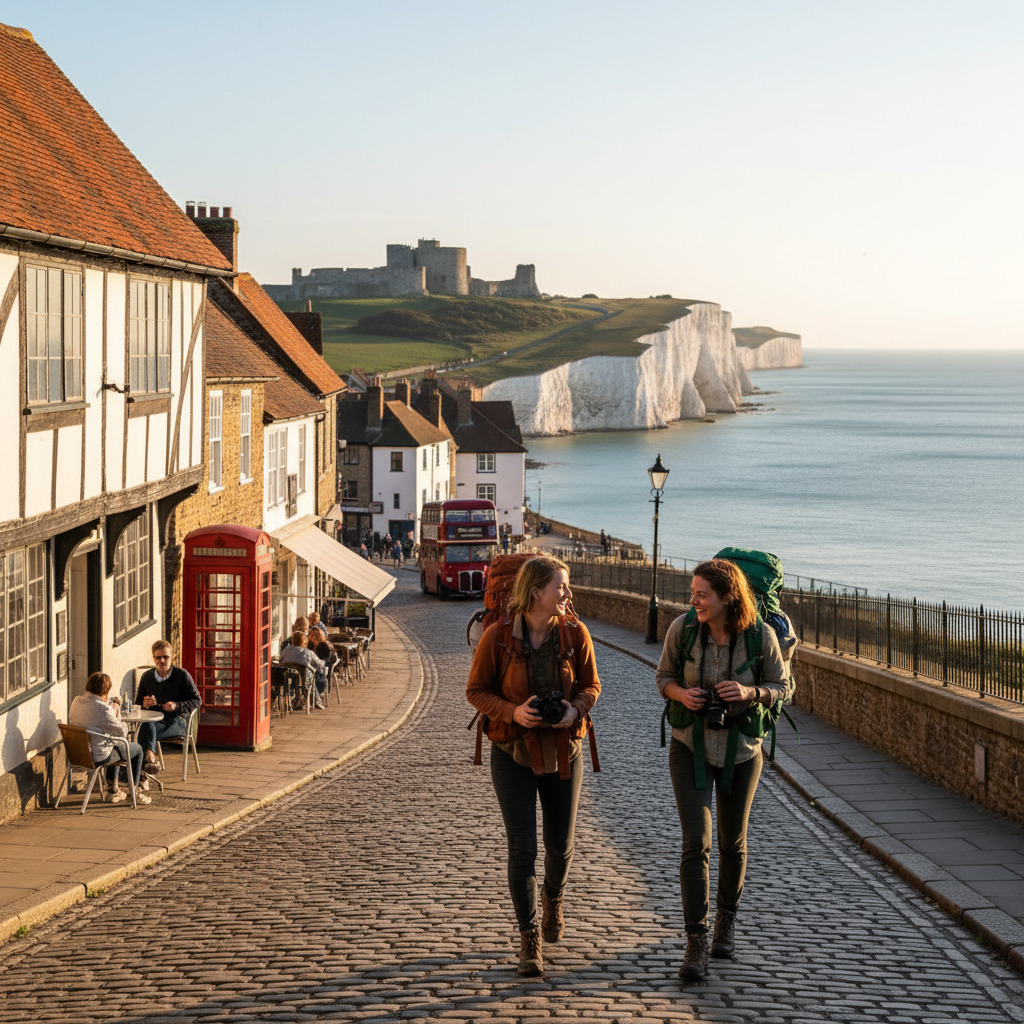
The white cliffs, historical guardians of England
Dover, with its iconic White Cliffs guarding the English Channel, is much more than just a gateway port. It's a city rich in history and surprises, perfect for a memorable getaway. If you're wondering what to do in Dover, know that adventure awaits you around every corner. Beyond the imposing Dover Castle, which dominates the landscape and tells millennia of English history, you can stroll through the city center to discover hidden gems like the Roman Painted House, a fascinating testament to Roman occupation. For an unusual activity, why not embark on an outdoor escape game? It's a fun and interactive way to discover the city, transforming your visit into a real treasure hunt or a large-scale scavenger hunt. An excellent way to soak up Dover's atmosphere while solving puzzles outdoors.
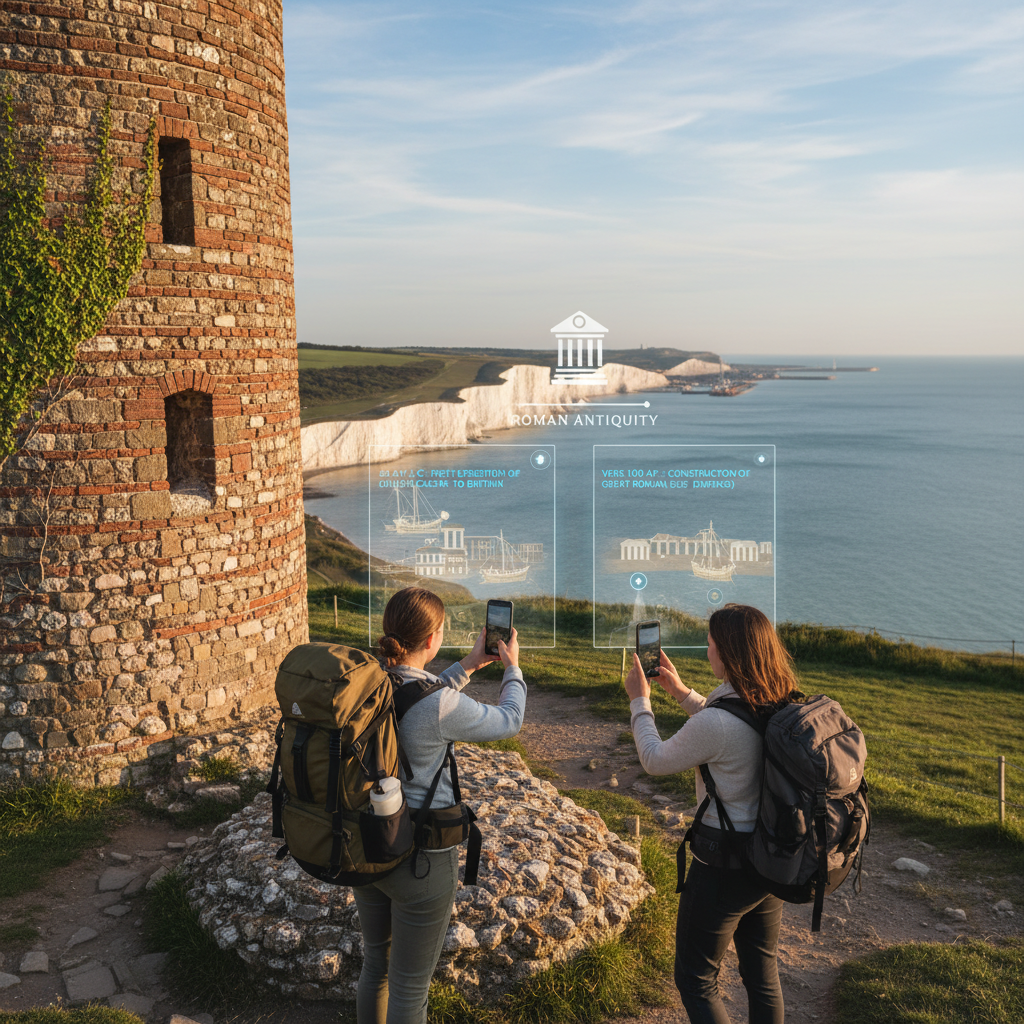
Dover — Roman Port Conspiracy
Uncover the conspiracy that sabotaged Portus Dubris: decipher hidden codes in Roman ruins, pharos signals, and painted houses to expose the traitor who nearly collapsed the legions' gateway to Britain.[1][5]

Dover Castle — The Keys of England
Uncover the lost keys that unlocked England's fate. From Henry II's ramparts to hidden war tunnels, solve the conspiracy that guarded the realm's ultimate secret.[1][2][5]
Unusual things to do in Dover
Looking for an unusual activity in Dover that's out of the ordinary? Beyond classic tours, the city offers unique experiences. Imagine exploring its historic streets and maritime panoramas while solving mysteries. Our outdoor escape game routes transform Dover into a huge playground, inviting you to a real urban treasure hunt. It's an original outing that combines cultural discovery and adrenaline, allowing you to see the White Cliffs and the castle from a new angle, as a team, while deciphering puzzles related to local history. A guaranteed fun immersion!
Things to do in Dover with kids
What to do in Dover with family to entertain young and old? Our outdoor escape games are a fantastic option! Designed to be accessible from 8 years old, they are perfect for children and teenagers, transforming a city visit into a thrilling adventure. It's a fun activity where everyone, from the youngest to the parents, can actively participate in solving puzzles. Imagine your children, map in hand, searching for clues and unlocking secrets around Dover Castle or along the quays. It's an interactive and memorable way to create family memories, away from screens.
Dover for couples
Dover for couples is an opportunity to share intimate moments and discover a rich heritage hand in hand. Stroll along the White Cliffs for breathtaking views of the English Channel, a romantic setting par excellence. Explore the narrow streets of the city center, discover traditional pubs and picturesque shops. Our scavenger hunts are also an excellent idea for couples, transforming your walk into a shared adventure where you solve puzzles together, strengthening your bond while discovering the city's secrets. It's an original way to immerse yourselves in the history and beauty of Dover.
What to do in Dover when it rains
What to do in Dover on a rainy day? Even if the sun isn't out, Dover retains its charm. Our outdoor escape games are an excellent option, as approximately 80% of the route takes place under arcades, covered passages, or inside accessible monuments, thus protecting you from bad weather. You can also explore the Dover Museum for a fascinating dive into local history, or take refuge in a cozy cafe for a cup of tea. The city offers alternatives so your visit won't be spoiled by a few drops.
Where is Dover, and where do the routes start?
Starting points of our routes and the places they pass through.
Route starting points
Places in Dover
- Base of the Great Roman Lighthouse (Pharos)
- White Cliffs of Dover path (panoramic view)
- Approximate site of the ancient Roman port (near the modern quay)
- Route of the ancient Via Romana (modern street)
- Current market square (site of an ancient Roman forum)
- Exterior remains of Roman baths
- Presumed site of a Roman honorary arch (Town Hall square)
- St Mary's Cemetery (near Roman remains)
- White Cliffs viewpoint
- Outer wall of Dover Castle
- External access to the Secret Wartime Tunnels (near the medieval infirmary)
- Near Peverell's Tower
- Fosse's Bastion (exterior view)
- Approximate location of underground HQ (surface view)
- East section of the wall walk (exterior view)
- Near the Victorian Lighthouse
The history of Dover
Roman Gateway to Britannia
Dover's strategic importance began before the Romans, with an Iron Age hillfort on the site of Dover Castle. The Romans established Dover as a vital port. Known as Portus Dubris, or DUBRAS, meaning 'waters' in British, the town served as one of three main ports for trade and military movement in Roman Britain. Around 115-120 AD, a fort covering over two acres was built on the west bank of the River Dour to house the Classis Britannica, the Roman fleet protecting cross-Channel routes. To guide ships into the harbour, two lighthouses, or pharoses, were constructed on the heights flanking the estuary. One, built in the early 2nd century, stands within Dover Castle and is Britain's oldest standing building.
Medieval Fortress and Wartime Stronghold
After the Norman Conquest in 1066, William the Conqueror fortified Dover, recognizing its defensive position. Much of Dover Castle was constructed during the reign of Henry II, who, between 1179 and 1189, invested to create a European castle. This medieval fortress withstood challenges, including two sieges by French forces in 1216-1217 during the First Barons' War. Centuries later, Dover's role as the 'Key to England' was reaffirmed during both World Wars. In the First World War, it was a military centre and harbour for supplying armies in Europe. During the Second World War, Dover became known as 'Hellfire Corner' due to shelling and bombing from German positions across the Channel. The Secret Wartime Tunnels beneath Dover Castle served as the command centre for the Dunkirk Evacuation in May 1940, masterminded by Vice-Admiral Sir Bertram Ramsay.
What to see in Dover
- Dover Castle — This site includes a Roman lighthouse, a Roman structure in England, and the medieval Great Tower built by Henry II in the 1180s. The Secret Wartime Tunnels, which served as a command centre during World War II, are also accessible.
- The White Cliffs of Dover — Walk along the chalk cliffs for views across the English Channel. On a clear day, the coast of France is visible. The cliffs support birdlife and wildflowers in summer.
- Roman Painted House — This site contains the remains of a Roman mansio, or official hotel, dating to around 200 AD. It features over 400 square feet of painted plaster, found north of the Alps, and an underfloor heating system (hypocaust).
- Dover Museum and Bronze Age Boat Gallery — See the remains of a wooden, rope-sewn plank boat discovered in 1992, dating from 1550 BC. The museum also houses a collection of Roman Samian ware found in the area.
- St Mary's Church — This Grade II* listed Anglican church has Norman origins, with parts of its tower and nave dating from the early 12th century. It stands on the site of Roman baths.
When to visit Dover
The period from June through October offers suitable weather for outdoor activities in Dover. Summer months have warm temperatures, good for exploring the White Cliffs and other outdoor attractions. May, September, and October provide comfortable temperatures and fewer crowds. Rain can occur at any time, but the cliffs are visible year-round. Avoid January and February if you prefer milder weather, as these are the coldest months.
Getting around Dover
Dover has train services to nearby destinations. For air travel, London Gatwick (LGW) and London Heathrow (LHR) are the closest major airports, both offering train connections to Dover Priory station. If driving, public car parks are available in Dover, including Norman Street and Stembrook. Blue Badge holders can park for up to three hours.
Dover is walkable, especially around the town centre and harbour. The Dover Artisan Market runs on the third Saturday of each month in Market Square, offering local produce and handmade goods. Spence's Bazaar & Amish Market operates on Tuesdays, Fridays, and Saturdays at 550 South New Street.
Things you probably do not know about Dover
Verified details most visitors walk straight past.
- Peverell's Tower, Dover Castle
- During the construction of Dover Castle, one particular tower seemed cursed, repeatedly collapsing. Why did the masons struggle so much with Peverell's Tower? Legend has it that masons building Peverell's Tower were confounded by its repeated collapse. Superstitious workers believed an old woman was buried alive in its foundations to appease evil spirits and ensure the tower stood.
- Roman Lighthouse (Pharos), Dover Castle
- The Roman lighthouse at Dover Castle is remarkably well-preserved, but it wasn't always just a lighthouse. What other function did this ancient structure serve for centuries? The Roman lighthouse, built in the early 2nd century, was converted into a belfry during the Saxon era (around 1000 AD) and had a new upper layer added around 1430.
- St Mary's Church
- From 1581 to 1826, St Mary's Church played a surprisingly active role in Dover's local politics. What happened inside the church during this period? Between 1581 and 1826, the Freemen of Dover elected the Mayor and Members of Parliament inside St Mary's Church, at the Communion Table. A barrier was even placed down the centre to keep rival factions apart, and elections sometimes led to bloodshed.
- Roman Painted House
- The Roman Painted House is renowned for its lively frescoes, but its survival is largely due to an unusual act by the Roman army. What did they do that inadvertently preserved these unique paintings? The Roman Painted House, part of a large *mansio* (official hotel), was deliberately demolished and buried by the Roman army around 270 AD during the construction of a larger Saxon Shore Fort, which cut through three of its rooms. This burial preserved over 400 square feet of its painted plaster.
- Market Square
- Dover's Market Square has a long history, dating back to Roman times. How can you still see evidence of its ancient past in the modern paving? The probable line of the east wall of Dover's late 3rd-century Roman garrison fort has been traced and is marked with different coloured paving in the modern Market Square.
Questions about visiting Dover
How long should I plan to stay in Dover?
A good itinerary for Dover is one to two days to explore key highlights like the White Cliffs of Dover, Dover Castle, and Dover Beach. For a more extended stay of two to three days, you can delve deeper into these sites and explore the surrounding area, including nearby Canterbury Cathedral.
What are the best ways to get around Dover?
Dover is well-served by train, making it easy to travel within the area and to nearby destinations. The town centre is also very walkable. For exploring further afield, local buses conveniently serve East Kent.
Which neighbourhoods are best to explore in Dover?
The town centre offers a mix of historic buildings and shops, while the area around Dover Castle provides access to centuries of history and views. The White Cliffs area is best for walks and connecting with nature. Each area offers a different facet of Dover's character.
What is the typical budget for a visit to Dover?
Dover offers options for various budgets. Many historical sites, like the Roman Painted House, offer free admission. Accommodation ranges from guesthouses to hotels, and dining options vary from casual eateries to more formal restaurants. Planning ahead for attractions with entry fees, like Dover Castle, can help manage your budget.
Is Dover a good destination for families with children?
Yes, Dover is a destination for families. Dover Castle offers interactive experiences and historical insights that can engage children, while the White Cliffs provide opportunities for outdoor adventures and exploring nature. The Roman Painted House offers a glimpse into Roman life.
Are there any specific local events or festivals in Dover?
Dover hosts various local events throughout the year. The Dover Artisan Market takes place on the third Saturday of each month in Market Square, featuring local producers, handmade goods, and live music. Spence's Bazaar & Amish Market is a market open on Tuesdays, Fridays, and Saturdays, offering food and unique items.
Frequently asked questions
How much does an outdoor escape game cost in Dover?
An outdoor escape game in Dover typically costs €12 per team. This price is fixed, whether you are 2, 3, or 4 players, making the activity very affordable and social. It offers excellent value for a unique game experience that combines city discovery, puzzle-solving, and shared moments. No hidden fees, just the joy of an outdoor adventure, making it a perfect option for tight budgets or groups of friends looking for an original activity without breaking the bank.
Is it suitable for children / families?
Absolutely! Our outdoor escape games are designed to be accessible and fun for the whole family. We recommend participation from 8 years old, but younger children can certainly accompany and help search for clues. It's a playful activity that stimulates curiosity and teamwork, perfect for creating memorable experiences. Parents will appreciate the cultural aspect of discovering Dover, while children and teens will be captivated by the scavenger hunt and treasure hunt elements. An excellent way to explore the city together!
How long does an escape game in Dover last?
The duration of an outdoor escape game in Dover generally ranges between 1 hour 30 minutes and 2 hours 30 minutes, depending on your pace and your ability to solve the puzzles. This time includes walking between different points of interest and moments of reflection. You are free to take your time, pause to admire the scenery, or grab a coffee. The goal is to enjoy the experience at your leisure, without pressure. It's an ideal duration for a half-day adventure, leaving plenty of time for other activities in Dover.
Do I need to book in advance?
No, it is generally not necessary to book in advance for our outdoor escape games in Dover. You can purchase your game directly online and start the adventure whenever you wish, at your convenience. This is one of the great advantages of our scavenger hunts: total flexibility! Whether you decide to play on a whim or plan your day at the last minute, you have the freedom to start when you are ready. This greatly facilitates the organization of your visit and allows you to adapt to unforeseen circumstances.
What to visit in Dover beyond the escape games?
Beyond our exciting escape games, Dover is full of historical sites to explore. The majestic Dover Castle is an absolute must-see, with its secret tunnels and millennia of history. The famous White Cliffs of Dover offer spectacular views and magnificent hiking trails. Don't miss the Roman Painted House, a unique testament to the Roman era, and the Dover Museum for a fascinating dive into the city's past. Each place offers a different perspective on the rich heritage of Dover.
What is the best season to visit Dover?
The best season to visit Dover depends on your preferences, but spring (April to June) and summer (July to September) are often preferred. The weather is generally milder and sunnier, ideal for enjoying the White Cliffs and outdoor activities. However, autumn offers beautiful colors and fewer crowds, while winter, though cooler, allows you to discover the city in a more intimate atmosphere, especially if you focus on museums and the castle. Our escape games are playable all year round, adapting to every season.
Other destinations in South East
Arundel
Between its medieval castle and its cathedral
Battle
Where 1066 changed England's destiny forever
Brighton
Vibrant seaside city, pier, and royal splendour
Canterbury
Follow pilgrims' footsteps and Chaucer's tales
Chichester
Roman and medieval city of Sussex
Winchester
Ancient royal capital, historical cradle of England
More cities in England
Rye
Medieval hilltop town of cobbled streets
Pevensey
Where William the Conqueror landed in 1066
Lewes
Cradle of English democracy
Greenwich
Where time and the world converge
London
Historic, royal and vibrant
Cambridge
University city of excellence, blending history and innovation.