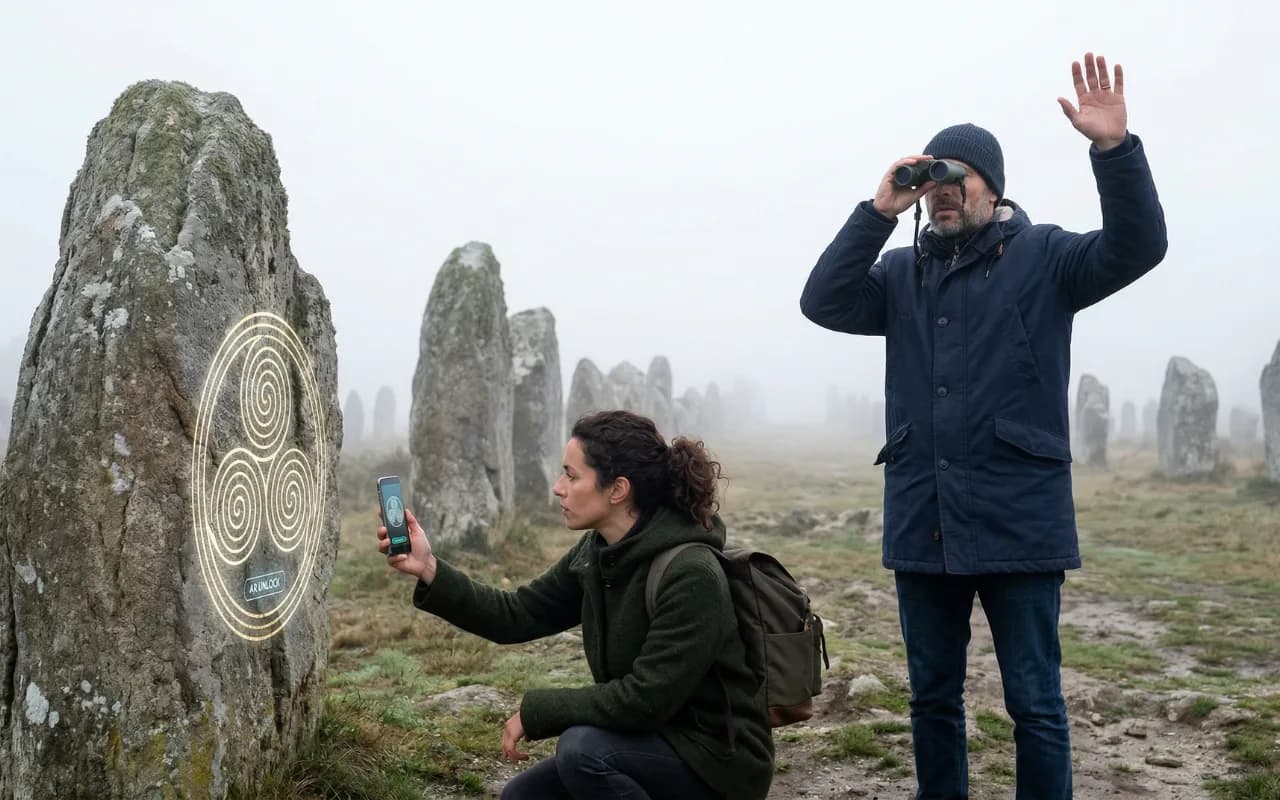
CarnacOutdoor Escape Game & Treasure Hunt
The millennia-old megalithic alignments
Carnac, this pearl of Morbihan in Brittany, is world-renowned for its mysterious megalithic alignments, witnesses to a millennial history that fascinates young and old alike. But beyond these impressive standing stones, such as those of Ménec or Kermario, the town offers a charming setting with its fine sandy beaches, its lively marina, and its picturesque town center. Whether you are looking for cultural discoveries, sunbathing, or adventures, Carnac has something to charm you. To spice up your stay and explore the town in a totally new way, why not embark on an outdoor escape game? It's an unusual activity that combines the pleasures of a real-life treasure hunt with the challenges of a scavenger hunt. Get ready to solve puzzles as a team and discover the secrets of Carnac while having fun. Our courses are designed to give you a memorable experience, just before we present our available games.
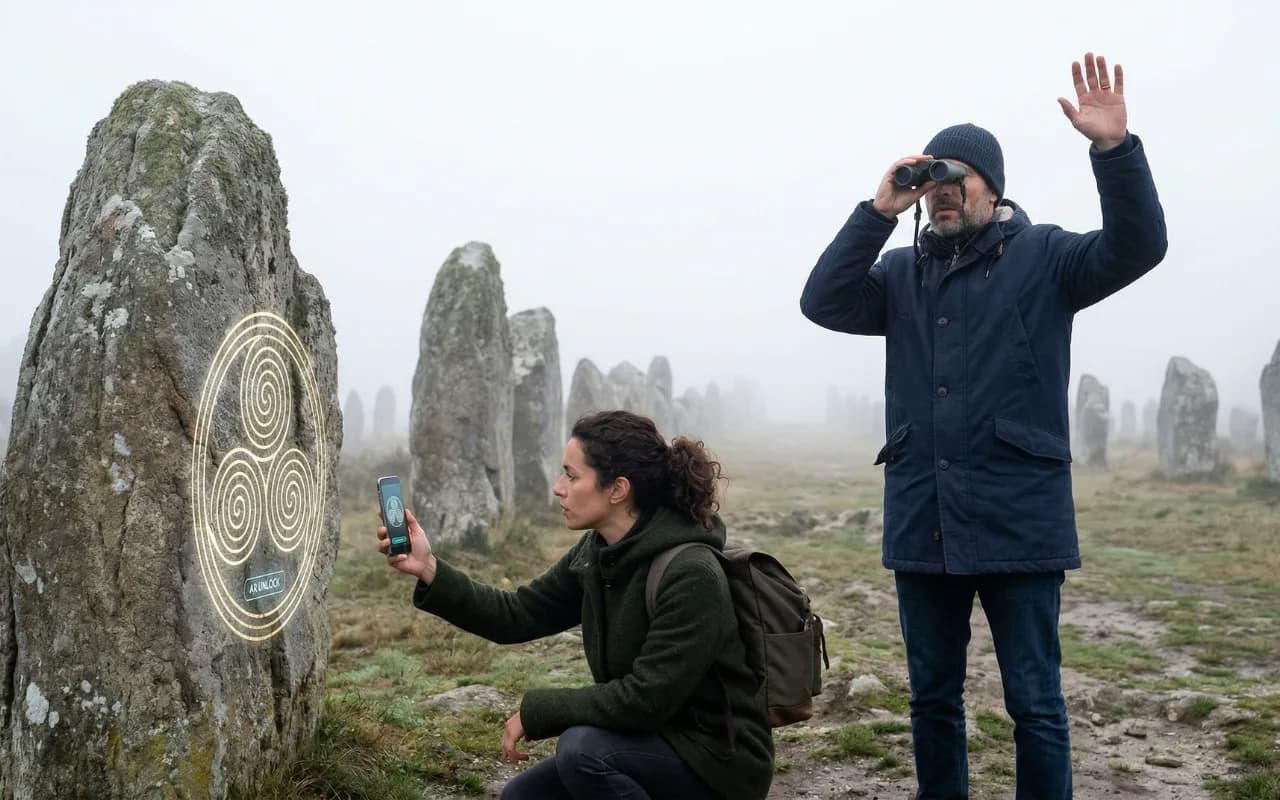
The Carnac Alignments
3,000 standing stones, zero explanation

Atlantic Neolithic: alignments, dolmens and coastal tumuli
1–3-day roadtrip · Bretagne
Unusual things to do in Carnac
Looking to step off the beaten path during your visit to Carnac? In addition to the unmissable exploration of the megalithic alignments, the town offers plenty of opportunities for unique experiences. Imagine solving puzzles outdoors, deciphering codes, and following hidden clues through Carnac's historic streets and iconic landscapes. Our outdoor escape games transform the town into a huge playground, offering an immersive and unusual activity. It's the perfect occasion to combine cultural discovery with playful adventure, far from traditional guided tours. Let yourself be surprised by a new way of seeing Carnac, where every corner might hide a secret waiting to be revealed.
Things to do in Carnac with kids
Carnac is an ideal destination for families, offering a multitude of activities for all ages. After a day of building sandcastles on Légenèse beach or marveling at the menhirs, our outdoor escape games are the perfect activity to extend the adventure as a team. Designed to be accessible and fun, they transform the discovery of the town into a giant treasure hunt. Parents and children collaborate to solve puzzles, explore emblematic places, and create unforgettable memories. It's an excellent way to stimulate the curiosity of the youngest and share a moment of outdoor complicity, guaranteeing laughter and challenges for the whole family.
Carnac for couples
Fancy a romantic and original getaway in Carnac? Let yourself be charmed by the unique atmosphere of this Breton town, between hand-in-hand strolls along the beaches at sunset and intimate dinners facing the ocean. To add a touch of adventure to your romantic stay, our outdoor escape games are a perfect option. It's a fun and collaborative way to discover the town, share laughs, and strengthen your bonds by solving challenges together. Imagine exploring the charms of Carnac, its narrow streets, and its emblematic sites, all while embarking on an exciting scavenger hunt. A memorable and out-of-the-ordinary experience for couples seeking new sensations.
What to do in Carnac when it rains
Even under Brittany's sometimes capricious sky, Carnac retains its charm. However, it's important to note that our escape games are primarily outdoor activities. This means they take place outdoors and therefore require fair weather to fully enjoy the experience. In case of light rain, a good raincoat and some motivation might suffice. For more intense downpours, it's best to postpone the adventure or explore other indoor options in the town, such as the Carnac Museum of Prehistory. We prioritize your comfort and enjoyment, so check the weather before embarking on our courses!
Where is Carnac, and where do the routes start?
Starting points of our routes and the places they pass through.
Route starting points
Places in Carnac
- Ménec alignments · 1
- Kermario alignments · 1
- Saint-Michel Tumulus · Highest point of Carnac
- Manio Quadrilateral · Megalithic enclosure
- Table des Marchands · Locmariaquer
The history of Carnac
The Neolithic Builders of Carnac
Carnac's history begins in the Neolithic period, between 4500 BC and 2000 BC, when its standing stones, or menhirs, were erected. Archaeological findings, particularly around Le Plasker, indicate that the earliest megalithic structures in the region date back to 4600-4300 BC. This makes the Bay of Morbihan one of Europe's earliest megalithic regions. These monuments, cut from local rock, were set up by pre-Celtic peoples. The purpose of these alignments is debated, with theories including astronomical observatories, places of worship, or markers of ancestral honoring.
From Roman Legends to Modern Tourism
After the Neolithic era, the sites were occupied during the Metal Ages and Gallo-Roman period. Some funerary monuments were reused as places of worship. During the Middle Ages, the first chapel was built on the Saint-Michel Tumulus. A local legend, recorded since at least the 17th century, attributes the straight lines of menhirs to Saint Cornelius (Saint Cornély). The story claims the saint, fleeing Roman soldiers, turned his pursuers into stone. In 1864, La Trinité-sur-Mer, with its port, separated from Carnac because fishermen found the Saint-Cornély church too distant. The 19th century saw intensified archaeological research, led by figures like James Miln and Zacharie Le Rouzic, who excavated sites such as the Saint-Michel Tumulus. The late 19th and early 20th centuries marked the start of Carnac's development as a tourist destination. Carnac-Plage was created on former salt flats in 1903. This development continued through the 1950s, leading to the distinct areas of Carnac-Ville and Carnac-Plage.
What to see in Carnac
- Ménec Alignments — Rows of standing stones stretching over a kilometer. The stones vary in size, with the largest at the western end and gradually decreasing in height.
- Kermario Alignments — An alignment of menhirs.
- Saint-Michel Tumulus — A large artificial mound, built around 4500 BC. A 16th-century chapel, Chapelle Saint-Michel, sits atop the tumulus. The summit offers views of Carnac, Quiberon Bay, and the Rhuys peninsula.
- Manio Quadrilateral — A megalithic enclosure of stones forming a rectangular shape, near the Manio alignments.
- Table des Marchands (Locmariaquer) — A dolmen in Locmariaquer, part of the wider megalithic complex. It features a large capstone and engravings within its chamber.
- Musée de Préhistoire de Carnac — This museum houses a collection of prehistoric artifacts, including items found during excavations of local megalithic sites, such as pottery, tools, and jewelry.
- Church of Saint-Cornély (Carnac-Ville) — A 17th-century church in Carnac-Ville. Its Renaissance porch is notable, and the pulpit is an ironwork piece.
When to visit Carnac
The period from late spring to early autumn, specifically June through September, is suitable for visiting Carnac. During these months, the weather is warm for exploring outdoor megalithic sites and beaches. July and August are the busiest, with events and night markets. These peak summer months also bring crowds, affecting parking and site access. For fewer crowds and milder temperatures, late spring (May-June) and early autumn (September-October) offer a relaxed experience. Winter is quiet but can be cold and cloudy; December is the wettest month.
Getting around Carnac
Carnac is accessible by train via Auray station, 13 kilometers away, with services from cities like Paris and Nantes. From Auray, take a bus or taxi to Carnac. During summer (June to September), the "Tire-Bouchon" tourist train runs from Auray to Quiberon, stopping at Plouharnel-Carnac, 5km from Carnac, where you can connect to a BreizhGo bus.
Walking is suitable for exploring the town and many megalithic sites. Marked hiking trails connect the megaliths, coast, and countryside. A free shuttle bus, "Carnavette," operates in July and August between Carnac-Ville and Carnac-Plage. Parking is available, with free and paid options near sites and the town center. During summer, parking is in high demand. Free parking is available year-round along beaches like Saint-Colomban and Ty Bihan, and near the Ménec Alignments. Paid parking is in effect in Carnac-Plage from June 15 to September 15.
Markets are held on Wednesdays and Sundays in the Saint-Fiacre car park in Carnac-Ville, from 7:30 AM to 1:00 PM. In July and August, a farmers' and organic market is held on Tuesday mornings in Parc Vavasseur near the Carnac-Plage Tourist Office, and a night market takes place every Thursday evening in Carnac-Ville.
Things you probably do not know about Carnac
Verified details most visitors walk straight past.
- Alignments of Carnac
- What did a Roman legion have to do with the standing stones of Carnac? A local legend, dating back to the 17th century, claims that the perfectly straight lines of menhirs are actually Roman soldiers who were turned to stone by Pope Cornelius (Saint Cornély) as he fled their persecution.
- Saint-Michel Tumulus
- What surprising structure was built on top of this ancient burial mound in the Middle Ages? The Saint-Michel Tumulus, a massive Neolithic burial mound, has a 16th-century chapel, Chapelle Saint-Michel, at its summit, offering a unique blend of prehistoric and medieval heritage.
- Church of Saint-Cornély
- Why are there sculpted bulls on the porch of the Church of Saint-Cornély? The 17th-century Church of Saint-Cornély features two sculpted bulls on its large door, a visual reminder that Saint Cornély is the patron saint of horned animals.
- Les Salines (The Salt Marshes)
- What role did the current bird-filled salt marshes play in the development of Carnac-Plage? Carnac-Plage, the seaside resort area, was created in 1903 on old salt flats, which were partially transformed into the salt marshes you see today, now a frequented bird site.
- La Trinité-sur-Mer
- Why did the town of La Trinité-sur-Mer separate from Carnac in the 19th century? In 1864, La Trinité-sur-Mer and its port became a separate commune because the local fishermen found the main church in Saint-Cornély, Carnac-Ville, too far from their port for convenient worship.
Questions about visiting Carnac
How do I get around Carnac?
Carnac is best explored on foot, especially its megalithic sites and the town center. During July and August, a free shuttle bus called "Carnavette" connects Carnac-Ville, Carnac-Plage, and the main attractions. Buses also run between Carnac and nearby towns like Auray.
How long should I stay in Carnac?
To fully experience Carnac's megalithic sites, beaches, and local charm, a stay of 2 to 3 days is recommended. This allows ample time to visit the alignments, the museum, relax on the beaches, and explore the different areas of Carnac-Ville and Carnac-Plage.
What are the main neighborhoods in Carnac?
Carnac is divided into two main areas: Carnac-Ville, the traditional town center with its historic church and local shops, and Carnac-Plage, the beachfront area developed in the early 20th century, offering hotels, restaurants, and summer entertainment.
What is the best season to visit Carnac?
The best season to visit Carnac is from late spring to early autumn (June to September) for warm weather and lively atmosphere. For fewer crowds and mild temperatures, consider May, June, or September. July and August are peak season with many events but also more visitors.
What is the typical budget for a trip to Carnac?
Carnac offers options for various budgets. Accommodation ranges from campsites to hotels. Dining can vary from casual creperies to seafood restaurants. Entrance to the megalithic sites is generally free, but guided tours or museum visits have a fee. Transportation costs depend on whether you use public transport or a car.
Is Carnac a good destination for families with children?
Yes, Carnac is excellent for families. The vast outdoor megalithic sites offer engaging exploration for all ages. The fine sandy beaches like Plage Men Dû and Beaumer are calm and family-friendly, with lifeguards during summer. The Musée de Préhistoire de Carnac also features interactive displays suitable for children.
Frequently asked questions
How much does an outdoor escape game cost in Carnac?
Our outdoor escape games in Carnac are designed to be accessible and offer a quality experience. The price is €12 per team, which makes the activity very affordable, especially if you play with several people. This single price per team gives you access to a complete adventure, including all puzzles and challenges to solve. It's an excellent option for original and economical entertainment, whether you're with family, friends, or as a couple. Get ready for total immersion without breaking the bank!
Is it suitable for children / families?
Absolutely! Our escape games in Carnac are perfectly suitable for families and children from a certain age (generally 8-10 years old accompanied by adults, but this may vary depending on the game). The puzzles are designed to be stimulating but solvable with a bit of thought and collaboration. It's a wonderful opportunity to share a fun and educational outdoor moment. The courses encourage teamwork, observation, and communication, transforming the discovery of Carnac into an exciting adventure for all family members.
How long does an escape game in Carnac last?
The duration of our outdoor escape games in Carnac generally varies between 1h30 and 2h30, depending on the chosen course and your pace of play. We advise you to allow approximately 2h30 to 3h to fully enjoy the experience, including time to get started with the game and a few breaks if you wish. The objective is not speed, but rather the pleasure of exploration and puzzle-solving. You are free to take your time to admire the landscapes and sites you pass through.
Do I need to book in advance?
Yes, it is highly recommended to book your outdoor escape game in Carnac in advance, especially during peak periods such as school holidays and weekends. Although our games are self-guided activities, booking allows us to best manage the flow and ensure you have all the necessary information to start your adventure smoothly. It also guarantees the availability of your chosen course. Once your reservation is confirmed, you will receive all instructions to start your game whenever you wish.
What to visit in Carnac beyond the escape games?
Beyond the excitement of our escape games, Carnac is full of treasures to explore. Immerse yourself in history by visiting the famous Carnac Alignments (Ménec, Kermario, Kerlescan), true megalithic wonders. The Carnac Museum of Prehistory is also a must-see to deepen your knowledge. Enjoy the magnificent fine sandy beaches, such as Grande Plage or Saint-Colomban beach, ideal for swimming or relaxing. Don't miss a stroll at the marina of La Trinité-sur-Mer, a few kilometers away, or a tasting of local oysters. Carnac offers a perfect blend of Breton culture, nature, and gastronomy.
What is the best season to visit Carnac?
Carnac is pleasant to visit all year round, but the best season depends on your preferences. Spring (April-June) and early autumn (September-October) offer mild and sunny weather, ideal for our outdoor escape games and exploring megalithic sites, with fewer crowds. Summer (July-August) is perfect for enjoying the beaches and water activities, but the town is livelier. Winter offers a calmer atmosphere for invigorating walks. Whatever the season, Carnac will charm you, but for our games, dry weather is always a plus!
Other destinations in Brittany
Saint-Malo
Corsair city and ramparts facing the ocean
Concarneau
Fortified Ville Close and fishing port
Morlaix
Monumental viaduct and pondalez houses
Brocéliande
The enchanted forest of Merlin and Viviane
Douarnenez
Sardine port and the legend of the city of Ys
Pointe du Raz
The end of the world facing Sein island
Quimper
Gothic cathedral and Breton pottery
Vitré
Medieval castle and merchants' lanes
Brest
Maritime arsenal and millennia-old castle
Locronan
Granite village frozen in time
Belle-Ile-en-Mer
Brittany's largest island, wild and captivating
Guérande
Medieval city at the gates of the salt marshes
More cities in France
Nantes
Castle of the Dukes of Brittany and Jules Verne
Mont-Saint-Michel
The medieval marvel between sky and sea
Laval
Medieval city, between history and mystery
Lessay
Its millennial abbey and legendary fair
Sainte-Mère-Église
First liberated village — the 82nd paratroopers
Bayeux
First city liberated — from William to 1944