MalojaOutdoor Escape Game & Treasure Hunt
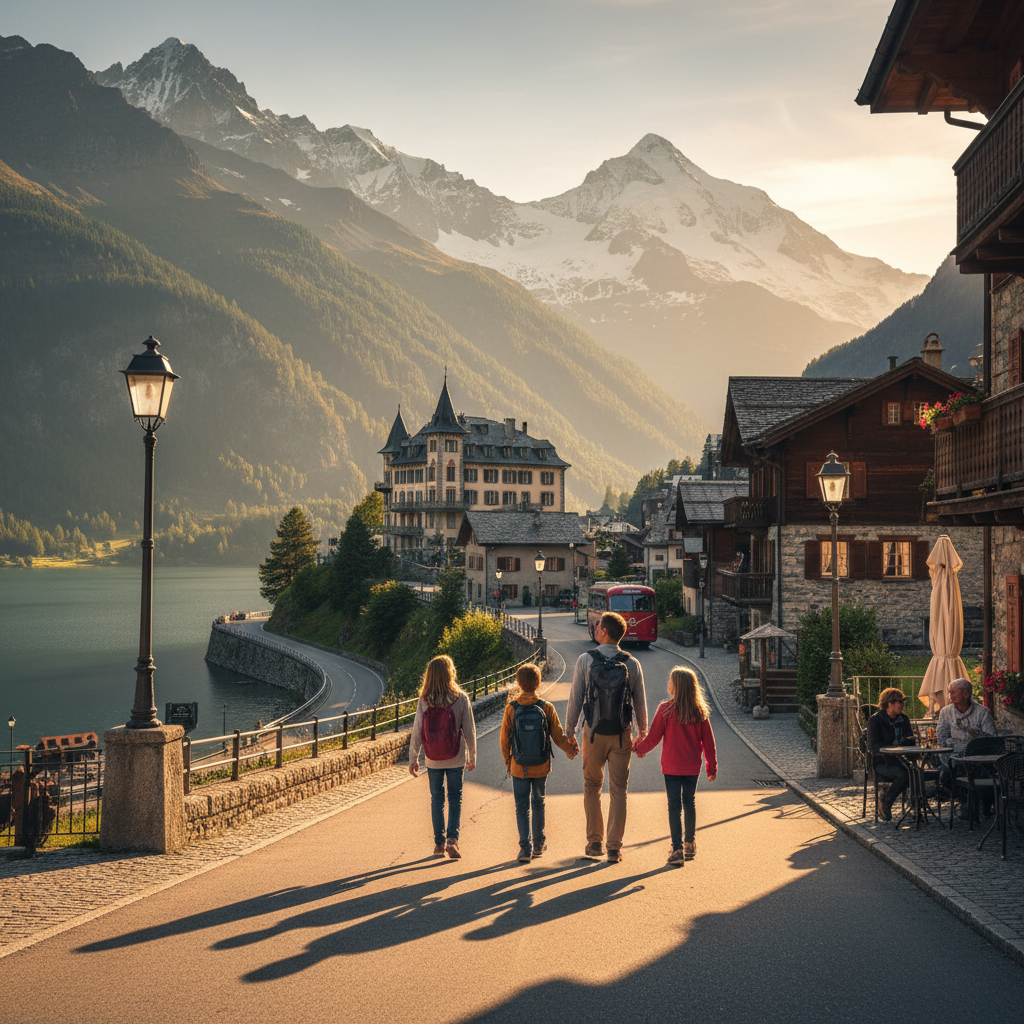
In the heart of the Alps, between lake and majestic peaks
Wondering what to do in Maloja, this jewel of Graubünden nestled in the heart of the Swiss Alps? Far from the crowds, Maloja is an invitation to escape and discovery, perfect for an unusual activity. Begin your exploration with a stroll around the majestic Lake Sils, where crystal-clear waters reflect the surrounding peaks, offering breathtaking panoramas. Don't miss the Maloja Tower (Belvedere Tower), a historical remnant that provides an unobstructed view of the valley and lakes. For an immersive and fun experience, embark on an outdoor escape game. This life-sized treasure hunt will lead you through the charming streets and sublime landscapes of the village, transforming your visit into a real treasure hunt. It's an original and engaging way to discover Maloja, its secrets, and its heritage, all while enjoying the pure mountain air.

Unusual things to do in Maloja
For an unusual activity in Maloja, beyond the beaten path, why not embark on an adventure that combines exploration and puzzles? Our outdoor escape game is an original outing that transforms the town into a huge playground. Imagine solving mysteries in the open air, with the Maloja Pass as a backdrop and the whispers of the wind as clues. It's a unique way to immerse yourself in local history and legends, while challenging your mind and observational skills. A memorable experience is guaranteed, far from traditional guided tours.
Things to do in Maloja with kids
What to do in Maloja with family to entertain young and old? Our outdoor escape game is a fantastic option! Designed to be accessible from the age of 8, it offers a fun adventure where every family member, from children to teenagers, can contribute to solving the puzzles. It's an interactive treasure hunt that encourages cooperation and communication, while allowing you to discover the village in an entertaining way. After the game, enjoy the shores of Lake Sils for a picnic or a short walk, extending those precious family moments.
Maloja for couples
Maloja for couples promises a romantic and intimate getaway. Stroll hand in hand along the shores of Lake Sils, where the calm and beauty of the landscapes invite contemplation. Explore the charming streets of the village, discovering typical architecture and hidden viewpoints. For a touch of adventure, our outdoor escape game will allow you to share a bonding moment, solving puzzles together while exploring local heritage. End your day with dinner in one of the cozy restaurants, admiring the Alpine peaks under a starry sky. Maloja offers an idyllic setting to strengthen your bond.
What to do in Maloja when it rains
Even in rainy weather, Maloja has its charm, although outdoor activities are limited. Fortunately, our outdoor escape game is designed to be playable! Approximately 80% of the route takes place under arcades, covered passages, or near shelters, allowing you to continue the adventure without getting soaked. It's an excellent alternative to enjoy a fun and immersive activity, even when the sky is grey. However, bring an umbrella for short outdoor transitions and explore Maloja's hidden treasures while staying dry.
Where is Maloja, and where do the routes start?
Starting points of our routes and the places they pass through.
Route starting points
Places in Maloja
- Maloja Pass Sign (Passhöhe Maloja)
- Maloja Kulm Hotel (exterior)
- Belvedere Tower
- Church of San Maurizio
- Section of the Old Mule Track (near the pass)
- Maloja Pass Commemorative Plaque (near starting point)
- Bridge over the Orlegna (near Hotel Longhin)
- Panoramic viewpoint over Val Bregaglia (from the pass road)
The history of Maloja
From Roman Road to Alpine Resort
Maloja, first documented as "Malongum" in 1244, has a history stretching back to 2000 BC, when hunters were present in the area. The name, meaning "alder grove," comes from shepherds in the nearby Valtellina region. Its location at the Maloja Pass made it a transit point since Roman times, connecting the Engadine valley with the Val Bregaglia and serving as a feeder to the Julier Pass. Evidence of this Roman past can still be seen in cart tracks on the Malögin, a hiking trail from Maloja to Cavril. The pass continued to be a trade route for centuries; by the 14th century, it was a transit route for merchants like the Stromer family from Nuremberg, who transported wine.
The Grand Vision and its Legacy
The late 19th century brought a shift to Maloja with the advent of spa tourism. In 1880, Belgian Count Camille de Renesse planned to transform Maloja into a luxurious destination for European aristocracy. He acquired 140 hectares of land and, starting in 1882, began a building program. This included the Hotel Maloja Palace, the Hotel Schweizerhaus, two churches, and his private residence, the Belvedere Tower. The Maloja Palace, designed in a Neo-Renaissance style by architect Jules Rau, opened in July 1884. The Count's plans faced setbacks; his wife died, and a cholera outbreak in Italy led to border closures, causing financial difficulties by December 1884. Despite these challenges, Maloja became a holiday resort, and the structures from this era, like the Maloja Palace and the Belvedere Tower, define the village's character.
What to see in Maloja
- Maloja Pass Sign (Passhöhe Maloja) — This marker at 1,815 meters above sea level indicates the watershed between the Danube and Po basins. It shows the landscape shift between the Engadine valley and the descent into Val Bregaglia.
- Maloja Kulm Hotel — The oldest hotel in Maloja, the Maloja Kulm has roots as a hostel and stable dating back to 1500. Its current main building, designed by Grisons architect Nicolaus Hartmann Jr., was built in 1910 and has a regionalist style with a mansard roof.
- Belvedere Tower — Built in 1882 as the private residence of Count Camille de Renesse, this stone tower offers views over the Val Bregaglia and the Upper Engadine. It houses a Pro Natura nature center with exhibitions on the local landscape, geology, flora, and fauna. Glacial mills are in the surrounding nature reserve.
- Church of San Maurizio — One of two churches built as part of Count de Renesse's plan for Maloja, it shows the late 19th-century attempts to establish Maloja as an elite resort.
- Old Mule Track (near the pass) — Sections of this path are remnants of the historic Maloja Pass route, a trade and transit route since Roman times. Walking it shows centuries of travelers and merchants who traversed these mountains.
- Viewpoint over Val Bregaglia (from the pass road) — As you descend from the Maloja Pass towards Italy, the road offers views of the Italian Alps and the Val Bregaglia, showing a change in vegetation from alpine meadows to forests.
When to visit Maloja
The best time to visit Maloja is during the summer months, from June to September, when the pass is accessible and the landscapes are green with wildflowers. Daytime temperatures in July average around 17°C (63°F), with nights at 7°C (45°F). June sees the most rainfall, with approximately 164 mm over 20 rainy days. Autumn, particularly mid-October, offers golden larch forests and clear air, with fewer crowds. Winter (December to March) brings cold temperatures, with January highs around -4°C (25°F) and lows of -13°C (9°F), and snow and ice on the pass, sometimes requiring snow chains. Avoid late spring (April-May) and late autumn (October-November) if you prefer milder weather and full accessibility, as conditions can be unpredictable with snowmelt or early snowfall.
Getting around Maloja
Maloja is accessible by public bus, with the 'Maloja Posta' bus stop centrally located. The closest major international airport is Zurich Airport (ZRH). From there, you can rent a car or take public transport. If driving, Maloja Pass is a route between Switzerland and Italy. While generally open year-round, snow and ice can affect conditions in winter, potentially requiring snow chains. Parking is available in various locations around Maloja, including near the Maloja Kulm Hotel and the Maloja Palace, with options for on-street parking, parking garages, and blue zones. Walking is a way to explore the village and its immediate surroundings, with many trails accessible. For longer distances within the Upper Engadine, consider an Engadine Guest Card, which offers free use of public transport during summer and autumn for stays of two nights or more. There are no specific market days for Maloja itself.
Things you probably do not know about Maloja
Verified details most visitors walk straight past.
- Maloja Pass
- What makes the Maloja Pass unique among Alpine crossings? The Maloja Pass is often called an 'alpine pass that isn't one' because of its geography: a gentle ascent from the Engadine side and a steep descent with 22 hairpin turns towards the Val Bregaglia.
- Belvedere Tower
- Who else had plans for the Belvedere Tower after Count de Renesse's initial vision failed? After Count Camille de Renesse's financial difficulties, the Italian painter Giovanni Segantini intended to complete the complex and transform it into a medieval-style palace, but his plans were cut short by his death in 1899.
- Maloja Palace Hotel
- What amenities did the Maloja Palace offer guests when it first opened in 1884? When it opened as 'Kursaal Maloja' in 1884, the hotel featured modern conveniences like lifts and an air conditioning system that channeled purified air to every room.
- Old Mule Track
- Beyond trade, what other activity contributed to Maloja's development due to its pass location? The influence of smugglers, who frequently traversed the Maloja Pass to and from Italy, contributed to the economic and cultural development of the village.
- Maloja Village
- What natural phenomenon originates near Maloja and flows into two different major European seas? Near Maloja is the 'Watershed of Europe.' The River Inn, which flows into Lake Sils, eventually reaches the Black Sea, while the River Maira flows into the River Po and ultimately the Mediterranean Sea.
Questions about visiting Maloja
How long should I plan to stay in Maloja?
A stay of one to two days is sufficient to explore Maloja's main attractions like the Belvedere Tower. For a more extensive experience, including nearby excursions to Lake Como or St. Moritz, consider a three-to-four-day itinerary.
What is the best way to get around Maloja?
Maloja is best explored on foot, especially for walking around the village and its immediate natural surroundings. Public buses are available for connecting to other villages in the Upper Engadine.
Is Maloja suitable for families with children?
Yes, Maloja is family-friendly. There are nature trails, such as the one leading to the glacial mills near the Belvedere Tower, which offer engaging insights for children.
What kind of budget should I expect for a trip to Maloja?
While St. Moritz, a nearby town, is known for luxury, a road trip through the Maloja Pass region can cater to various budgets. You can find options for local cuisine and accommodation in less touristy areas.
What are the typical weather conditions in Maloja throughout the year?
Maloja experiences mild summers with average daytime highs of 17°C (63°F) in July, and cold winters with January highs around -4°C (25°F). Rainfall is considerable, with June being the wettest month.
Are there any local customs or particularities I should be aware of in Maloja?
Maloja is located in the trilingual canton of Grisons, where Swiss German, Italian, and Romansh are official languages. This linguistic diversity is a local characteristic.
Frequently asked questions
How much does an outdoor escape game cost in Maloja?
The price for our outdoor escape games in Maloja is €12 per team. This fee is fixed, regardless of the number of players in your group (we recommend 2 to 6 people for an optimal experience). It's excellent value for an activity that combines discovery, fun, and challenge, allowing you to explore the city in a completely new way. No hidden fees, just one payment for your entire team, which makes organizing very simple and economical for all participants. Get ready for an unforgettable adventure without breaking the bank!
Is it suitable for children / families?
Absolutely! Our outdoor escape games are perfectly suited for families and children. We recommend a minimum age of 8 years so that the youngest can fully participate in solving the puzzles and understand the scenario. It's an activity designed to encourage intergenerational collaboration, where everyone, from parents to teenagers and children, will find their role and contribute to the adventure. It's a fun and educational way to spend quality time together, strengthen bonds, and create memorable memories while exploring Maloja.
How long does an escape game in Maloja last?
An outdoor escape game in Maloja typically lasts between 1 hour 30 minutes and 2 hours 30 minutes. The exact duration depends on your pace of play and how quickly your team solves the puzzles. Some very fast groups might finish in less time, while others prefer to take their time to enjoy the scenery and atmosphere. The important thing is to have fun and enjoy the experience. You are free to take breaks if you wish, to take photos or get a drink, making the adventure flexible and enjoyable.
Do I need to book in advance?
Yes, it is highly recommended to book your outdoor escape game in Maloja in advance. Although our games are available online and playable at any time, prior booking ensures availability and allows you to plan your adventure stress-free. It also helps us better anticipate demand and provide you with the best possible experience. Once your booking is confirmed, you will receive all the necessary instructions to start the game whenever you wish. It's simple, quick, and guarantees a smooth experience.
What to visit in Maloja besides escape games?
Beyond our exciting escape games, Maloja is full of treasures to explore. Be sure to stroll along the magnificent Lake Sils, ideal for swimming in summer or peaceful walks. The Maloja Tower, or Belvedere Tower, offers spectacular panoramic views of the valley and the famous Maloja Pass. Art lovers will appreciate the Palazzo Salis, a historic building. The region is also a paradise for hikers, with numerous trails offering breathtaking Alpine landscapes. Maloja is a destination where nature, culture, and history harmoniously meet.
What is the best season to visit Maloja?
Maloja is beautiful in every season, each offering a unique experience. Summer (June to September) is ideal for hiking, water sports on Lake Sils, and enjoying mild temperatures. Autumn (October-November) transforms the landscapes into a palette of vibrant colors, perfect for contemplative walks. Winter (December to March) attracts snow sports enthusiasts, with cross-country ski trails and snowshoeing paths. Spring (April-May) sees nature reborn, with alpine flowers and waterfalls. Every season has its charm for an outdoor escape game!
More cities in Switzerland
Bellinzona
City of three castles, guardian of the Alps.
Lugano
Where alpine lake meets Mediterranean palms
Altdorf
In the footsteps of William Tell, a legendary hero
Rutli
Switzerland's legendary birthplace
St. Gallen
UNESCO heritage and textile treasures
Lucerne
Between lake and mountains, a Swiss medieval jewel
Zurich
Where a sparkling lake meets charming old town and vibrant modernity.