WicklowOutdoor Escape Game & Treasure Hunt
Ireland's garden, between sea and mountains.
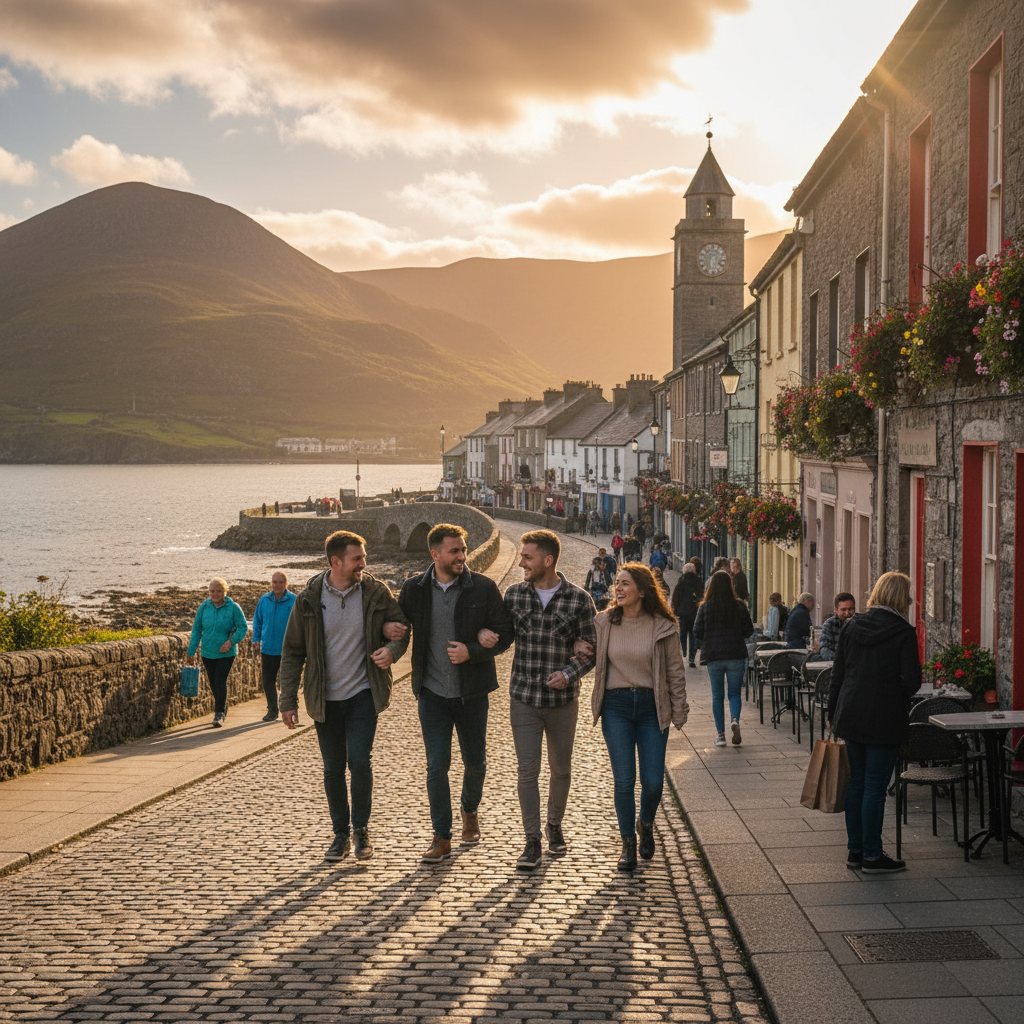
Wicklow, often called "The Garden of Ireland," is a charming coastal town offering a perfect blend of history, nature, and adventure. If you're wondering what to do in Wicklow, prepare to be enchanted by its lush landscapes and rich heritage. Start by exploring the remains of Black Castle, providing breathtaking views of the Irish Sea, or delve into the dark history of Wicklow Gaol, a fascinating former prison. For a fun and unusual activity, an outdoor escape game is a fantastic way to discover the city. Imagine solving puzzles while strolling through picturesque streets, transforming your visit into a real treasure hunt or a city-wide scavenger hunt. It's a unique way to uncover Wicklow's secrets, from its bustling quays to its most peaceful nooks, all while enjoying the fresh sea air and the warm ambiance of this Irish gem. A memorable adventure awaits you around every corner.
Unusual things to do in Wicklow
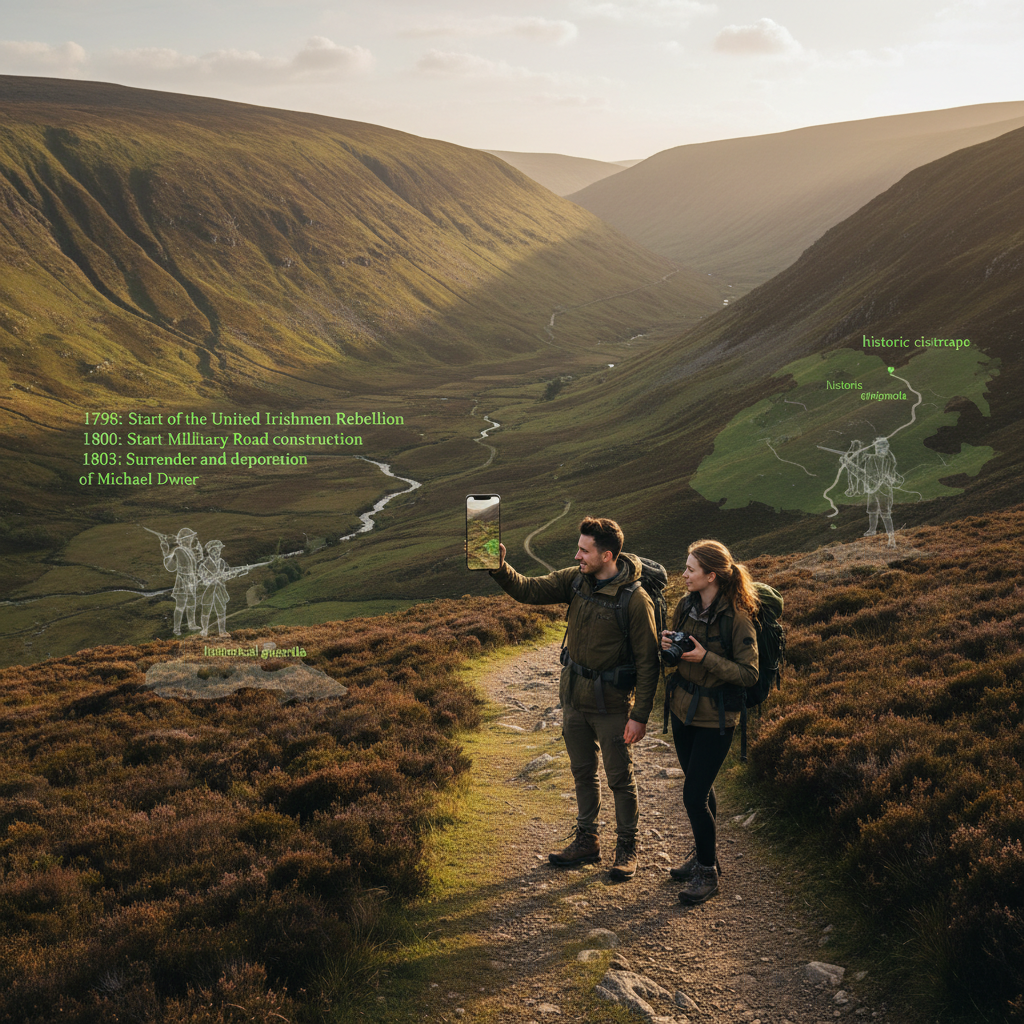
For an unusual activity in Wicklow, beyond the beaten path, why not combine urban exploration with an intellectual challenge? An OddballTrip scavenger hunt invites you to unravel the city's mysteries in a truly original way. Imagine deciphering hidden codes on ancient buildings or following clues along the harbour, turning every corner into a stage of your quest. It's an original outing that allows you to discover local legends and historical anecdotes while having fun, far from traditional guided tours. A unique experience to see Wicklow in a new light.
Things to do in Wicklow with kids
Wicklow is a dream destination for families seeking adventure and discovery. What to do in Wicklow with family? An outdoor escape game is the perfect option to entertain young and old. Suitable for children aged 8 and up, and teenagers, this scavenger hunt transforms the city into a giant playground. Puzzles are designed to be accessible and stimulating, encouraging collaboration and team spirit. It's a fun way to learn about local history and culture while enjoying the great outdoors. Your children and teens will love this interactive treasure hunt that will make their visit unforgettable.
Wicklow for couples
For a romantic getaway, Wicklow for couples offers an idyllic setting. Stroll hand-in-hand along the quays, admire the boats, and let yourself be soothed by the gentle sound of the waves. The narrow streets of the city center invite intimate discoveries, where each facade tells a story. Climb up to the ruins of Black Castle for spectacular panoramic views of the sea and mountains, a perfect backdrop for special moments. A couple's scavenger hunt can add a touch of adventure and complicity to your stay, allowing you to share laughs and challenges while exploring Wicklow's rich heritage.
What to do in Wicklow when it rains
Even if the Irish weather is sometimes unpredictable, don't worry about what to do in Wicklow on a rainy day. Our scavenger hunts are designed to adapt! Although it's an outdoor activity, approximately 80% of the route in Wicklow takes place under arcades, covered passages, or near shelters, allowing you to continue the adventure protected from showers. Bring an umbrella and a raincoat for short transitions, and exploring Wicklow will remain a pleasure, even in the rain.
Where is Wicklow, and where do the routes start?
Starting points of our routes and the places they pass through.
Route starting points
Places in Wicklow
- Glenmalure Valley
- Near Derrynamuck Cottage
- Historic section of the Military Road
- On the Military Road
- Discreet site in Glenmalure (to be found near a cross)
- Viewpoint overlooking Glenmalure
- From an accessible trail overlooking the valley
The history of Wicklow
From Viking Harbour to Norman Stronghold
Wicklow's story begins with the Vikings, who established a base here around 795 AD, drawn by the natural harbour at the mouth of the River Vartry. The town's name, "Wicklow," is believed to derive from the Old Norse "Víkingaló," meaning 'meadow of the Vikings'. These early Norse settlers used the strategic location to plunder inland monasteries, including Glendalough in 834.
Following the Norman invasion of Ireland in 1169, the lands around Wicklow were granted to Richard de Clare, also known as Strongbow, who in turn granted them to Maurice FitzGerald. FitzGerald was tasked with building fortifications to protect Norman interests from local Gaelic clans like the O'Byrnes and O'Tooles. This led to the construction of the Black Castle, a land-facing fortification on a rocky promontory overlooking the sea, south of the harbour. The earliest historical reference to the Black Castle dates back to 1174. The castle faced constant attacks from the O'Byrnes and O'Tooles, being burned down multiple times between 1295 and 1315. By the 15th century, Norman power had waned, and the castle fell into disrepair, with the town likely coming under the control of the local clans after the 1315 burning.
Rebellion and Military Roads
The 18th century brought unrest to Wicklow. Wicklow Gaol, a prison, opened in 1702. It held inmates sentenced under the Penal Laws and later, during the Irish Rebellion of 1798, became a site for imprisoning captured rebels. The county was a major area of conflict during this rebellion. To counter the guerrilla warfare tactics of rebels like Michael Dwyer, who used the Wicklow Mountains as cover, the British army constructed the 56-kilometre Military Road between 1801 and 1809. This road, one of Ireland's first purpose-built military routes, aimed to open up the mountains and allow for rapid troop movement. Barracks were built along its length, including in Glencree, Laragh, Glenmalure, and Aghavannagh. While its original purpose was military control, the Military Road now offers views of the Wicklow Mountains.
What to see in Wicklow
- Black Castle — Explore the ruins of this 12th-century Norman fortification on a rocky promontory overlooking the Irish Sea. You can see the remnants of the triangular keep and a corner tower, with steps cut into the rock for access.
- Wicklow Gaol — Visit this former prison, originally opened in 1702, which now operates as a museum. It offers a look into prison life during the 18th and 19th centuries, including its role during the 1798 Rebellion and the Great Famine.
- Wicklow's Historic Town Centre — Walk through the streets of Wicklow Town, where you can find buildings like the Wicklow Town Hall, dating back to around 1690. Structures from the 19th century include the Courthouse (1824), St. Patrick's Catholic Church (1844), and the Halpin Memorial in Fitzwilliam Square (1897).
- The Military Road — Drive or cycle this 56-kilometre route through the Wicklow Mountains, built between 1801 and 1809. It offers views of blanket bog, heather, and peat-dark lakes. Viewpoints include Sally Gap and Lough Tay, also known as the Guinness Lake.
- Glenmalure Valley — This valley is historically significant as a hiding place for Irish rebels after the 1798 rebellion. It is one of the locations where barracks were built along the Military Road to counter insurgent activity.
- Franciscan Friary (The Abbey) — Discover the ruins of this friary, founded in 1252 and dissolved in 1551. It is at the west end of Main Street, within the grounds of the local Catholic parish.
When to visit Wicklow
The period from late June to early September is suitable for outdoor activities and sightseeing. During these summer months, temperatures average around 18°C (65°F). July is typically the warmest month, with an average high of 19°C. Skies are clearest in July, and rainfall is at its lowest.
Alternatively, spring (March to May) and autumn (September to November) offer milder temperatures and fewer crowds. Spring brings blooming landscapes, while autumn, particularly October to December, shows red, gold, and brown foliage. Avoid January, February, and December if you dislike cold, wet, and cloudy conditions.
Getting around Wicklow
Dublin International Airport (DUB) is the closest major airport to Wicklow. From there, you can drive to Wicklow in about 54 minutes, take a taxi for approximately €110, or take the Aircoach Route 700 bus, which costs around €17. Irish Rail operates direct trains daily from Dublin Connolly to Wicklow, with a journey time of about an hour.
Within Wicklow, renting a car offers the most freedom for exploring the wider county, especially the Wicklow Mountains. Pull-ins are available for parking along routes like the Military Road. Wicklow Town itself has a LocalLink bus service that runs on a schedule, with an adult one-way ticket costing €3. This bus stops at the train station and Wicklow Gaol, and extends to surrounding areas like Rathnew, Ashford, and Glendalough. Bus Éireann also operates services from Dublin's central bus station to various regions in Wicklow. For local journeys, the 183 Local Link bus connects Wicklow Town to Glendalough, passing through villages like Avoca, Rathdrum, and Laragh.
Things you probably do not know about Wicklow
Verified details most visitors walk straight past.
- Black Castle
- Why did the local Irish clans give the Norman fortification the ominous name "Black Castle"? The castle earned its name from the violent atrocities that were said to have taken place within its walls during the centuries of conflict between the Norman invaders and the local O'Byrne and O'Toole clans.
- Wicklow Gaol
- What unusual claim does Wicklow Gaol make about its current state? Since reopening as a museum in 1998 after extensive renovations, Wicklow Gaol has gained a reputation as one of the world's most haunted buildings, a claim attributed to the long history of suffering endured by its inmates.
- Military Road
- What unexpected benefit arose from the British army's construction of the Military Road in the early 19th century? While built to flush out Irish rebels after the 1798 rebellion, the Military Road inadvertently created one of Ireland's most scenic driving routes, opening up the previously inaccessible Wicklow Mountains to the public.
- Glencree
- What surprising historical site can be found in the Glencree Valley, along the Military Road? Glencree is home to a German war cemetery, which contains the remains of German servicemen who died in Ireland during both World Wars, mostly from aircraft crashes or those washed ashore.
- Lough Tay
- Why is Lough Tay often referred to as the "Guinness Lake"? The lake earned its nickname because the Guinness family owns the surrounding estate, and the dark peaty water contrasted with the white sand beach creates a visual resemblance to a pint of Guinness.
- Wicklow Town's Irish Name
- What unusual incident is said to be behind Wicklow's Irish name, Cill Mhantáin? Legend has it that when Saint Patrick attempted to land his ships in the area around 432 AD, his party was attacked, and one of his monks lost a tooth. This monk, named Manntach (meaning 'toothless one'), later established a church there, giving rise to 'Cill Mhantáin' or 'church of the toothless one'.
Questions about visiting Wicklow
How long should I plan to stay in Wicklow?
To experience Wicklow's main sights, it is recommended to allocate at least two full days. If you plan to explore the wider county and its natural attractions, a longer stay of three to four days would be beneficial.
What are the best ways to get around Wicklow?
Renting a car is recommended for exploring County Wicklow, as it provides the most flexibility for reaching mountain trails and scenic spots. Public buses, including LocalLink and Bus Éireann, serve Wicklow Town and connect to some surrounding villages and attractions like Glendalough.
Is Wicklow a good destination for families with children?
Yes, Wicklow offers many family-friendly activities. Options include Glendalough, Brittas Bay for beaches, Glenroe Farm with its animals and playground, and Clara Lara Fun Park. Powerscourt Waterfall and Powerscourt House and Gardens are also suitable for all ages.
What is the typical budget for a trip to Wicklow?
Wicklow is a reasonably priced destination compared to larger Irish cities. A budget of around €86 per day could cover budget accommodation and affordable meals. A mid-range budget of €143 per day would allow for stays in Wicklow Town Centre and dining at better pubs and restaurants.
What are the main events and festivals in Wicklow?
Wicklow hosts various events throughout the year. Highlights include the Wicklow Arts Festival in May, featuring workshops, art installations, and a medieval village. Other events include the Bray Jazz Festival, Wicklow Pride Festival, and the Wicklow Naturally Food Festival in September.
Which areas are best for staying in Wicklow?
For those who want to be in the town's activity, Wicklow Town Centre offers proximity to pubs, sights, and the River Vartry. For a quieter experience, especially for families, the town of Ashford, just 8 minutes from the town centre, is a choice.
Frequently asked questions
How much does an outdoor escape game cost in Wicklow?
An OddballTrip outdoor escape game in Wicklow is priced at €12 per team. This single price, regardless of the number of participants (typically 2 to 6 players), makes the activity very affordable and social. It's an excellent option for an outing with friends, family, or as a couple, offering an immersive and fun experience without breaking the bank. Once the game is purchased, you can start whenever you wish, without time constraints, and explore the city at your own pace while solving the puzzles. It's a minimal investment for hours of entertainment and discovery.
Is it suitable for children / families?
Absolutely! Our outdoor escape games are perfectly suited for families and children aged 8 and up. The puzzles are designed to be engaging and accessible, encouraging collaboration between different generations. It's a fantastic way to transform a simple city walk into a real interactive adventure. Younger participants will love searching for clues and solving challenges, while parents can appreciate the cultural aspect and the discovery of Wicklow's iconic landmarks. A fun and educational activity that promises to create wonderful family memories.
How long does an escape game in Wicklow last?
The duration of an outdoor escape game in Wicklow is flexible and depends entirely on your pace of exploration and how quickly you solve the puzzles. On average, our players take between 1 hour 30 minutes and 2 hours 30 minutes to complete the route. However, there is no imposed time limit. You are free to take breaks, stop for a coffee, visit a monument, or simply enjoy the scenery. It's your adventure, at your pace, which makes it a relaxing and stress-free activity, ideal for discovering Wicklow at your leisure.
Do I need to book in advance?
No, one of the great advantages of our outdoor escape games is that no prior booking is necessary. Once you've purchased the game online, you receive an immediate access code. You can start your adventure in Wicklow whenever you wish, whether it's the same day, the next day, or even several weeks later. This flexibility is ideal for spontaneous travelers or those who prefer to adapt to the weather and their current desires. All you need is a charged smartphone and the OddballTrip app to embark on your adventure.
What to visit in Wicklow beyond the escape games?
Beyond our exciting escape games, Wicklow is full of treasures to explore. Don't miss Wicklow Gaol, a historical former prison offering a fascinating dive into the past. The ruins of Black Castle, perched on a rocky promontory, offer spectacular views of the coast. For nature lovers, a stroll along the harbour or an excursion into the nearby Wicklow Mountains is a must. The Garden of Ireland is also renowned for its magnificent gardens, like Powerscourt Gardens a bit further afield, but even in town, parks and green spaces invite relaxation. Wicklow is a town to discover around every corner.
What is the best season to visit Wicklow?
Wicklow is charming in all seasons, but the best time to visit is generally from spring to autumn (May to September). During these months, the weather is milder and the days are longer, which is ideal for fully enjoying outdoor activities, such as our escape games and hikes in the Wicklow Mountains. Gardens are in bloom in spring and summer, and landscapes take on beautiful golden hues in autumn. Winter can be cooler and rainier, but the town retains a cozy charm, and indoor sites remain accessible. Be prepared for all weathers, as Ireland is known for its rapid changes!
Other destinations in Leinster
Boyne
Where Irish history forged its destiny
Dublin
Where Celtic legends meet vibrant pubs and ancient history
Glendalough
Where monks found peace amidst wild nature.
Kilkenny
Ireland's medieval city of castles and abbeys
Newgrange
Where the winter sun illuminates Neolithic mysteries
Tara
On the trail of Ireland's High Kings