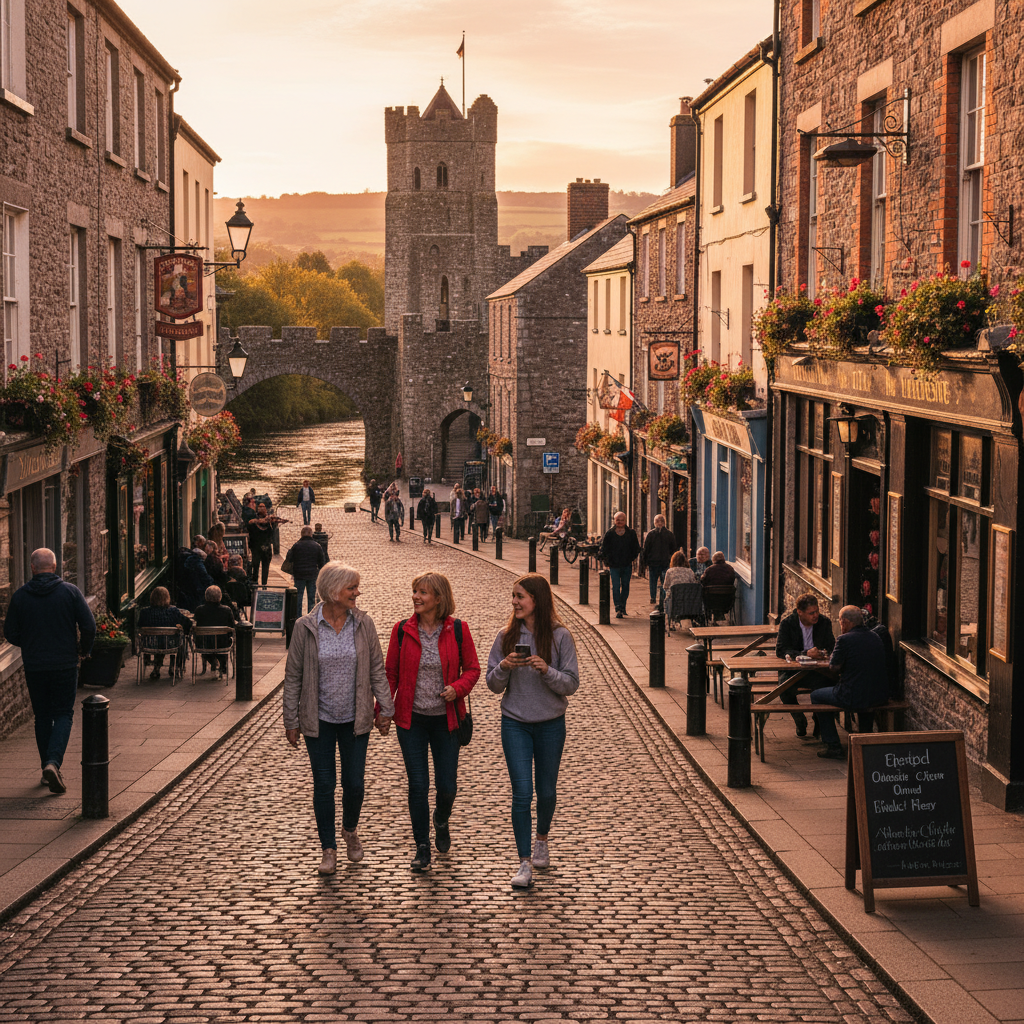
BoyneOutdoor Escape Game & Treasure Hunt
Where Irish history forged its destiny
What to do in Boyne? Immerse yourself in the heart of Irish history in this mythical region, where every stone whispers ancient tales. The Boyne is not just a river; it's the cradle of civilizations and the stage for events that shaped Ireland. For a truly immersive discovery, why not embark on an outdoor escape game? Imagine a life-sized treasure hunt that will lead you from the mysterious UNESCO-listed tumuli of Brú na Bóinne to the imposing ramparts of Trim Castle, one of Ireland's largest Anglo-Norman castles. It's an unusual activity and a captivating scavenger hunt that transforms your visit into a thrilling adventure. You'll solve puzzles while exploring historically rich landscapes, offering a unique perspective on the valley's heritage. Get ready for a day full of discoveries and emotions, off the beaten path, for a memorable experience.
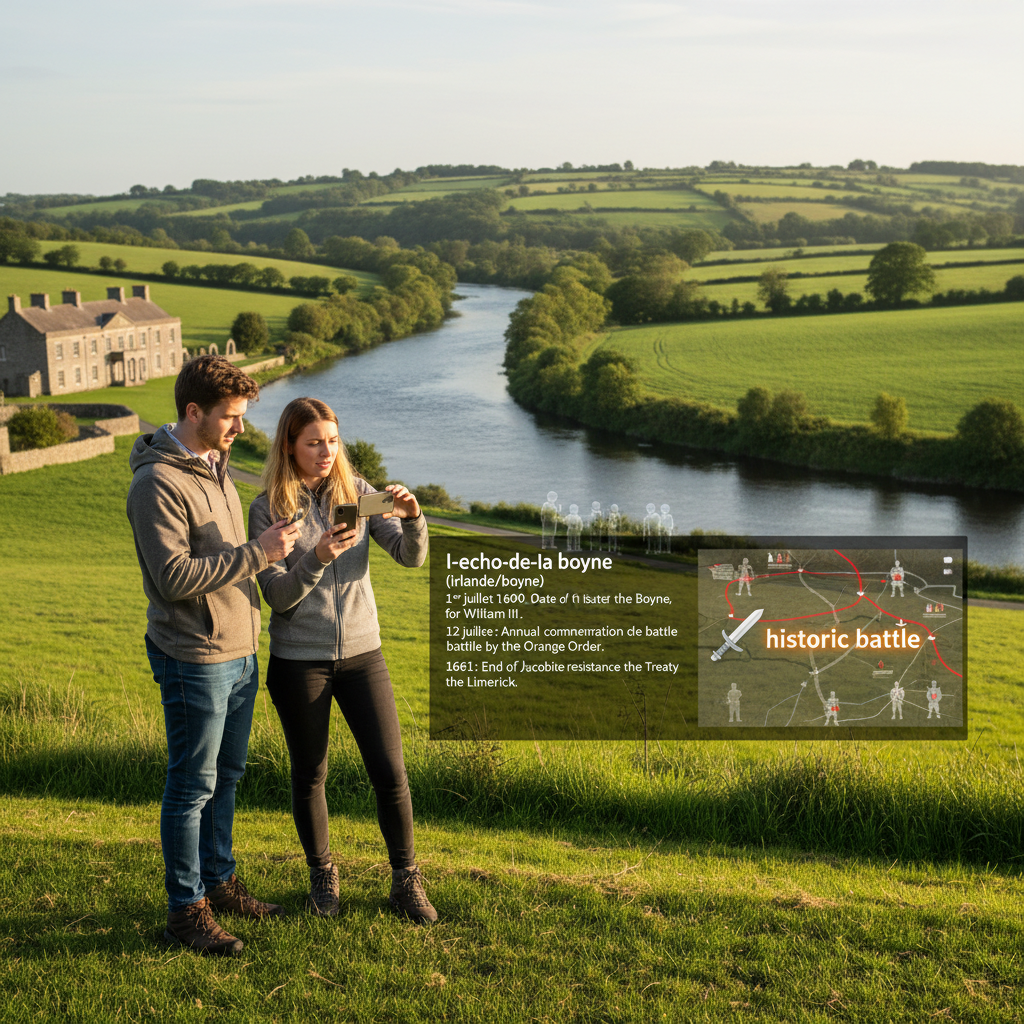
Unusual things to do in Boyne
For an unusual activity in Boyne, adventure awaits beyond traditional tours. Imagine yourself as a detective of the past, solving puzzles that connect you directly to Celtic legends and the secrets of Ireland's kings. Our scavenger hunt invites you to an original outing where history becomes your playground. Whether deciphering ancient symbols near megalithic sites or searching for hidden clues around the Battle of the Boyne battlefield, each step is a fun and surprising immersion. It's a unique way to appropriate the heritage, stimulate your curiosity, and create unforgettable memories by exploring the hidden facets of this iconic region.
Things to do in Boyne with kids
In Boyne, organizing a family outing that will please both children and teens is child's play with our outdoor escape game. From age 8, everyone will find their role in this historical treasure hunt. The playful aspect is central: younger ones will love searching for clues and solving simple puzzles, while older children and parents will appreciate the depth of the challenges and the richness of the scenario. It's a fantastic opportunity to discover Irish history and culture interactively, far from classic museums that can sometimes be boring. Imagine your children marveling at the landscapes while deciphering codes, transforming a simple walk into an educational and exciting adventure for the whole family.
Boyne for couples
Want to experience Boyne as a couple in a different way? Let yourself be tempted by an adventure for two that combines romance and discovery. Our scavenger hunt invites you to stroll hand in hand through the picturesque landscapes of the valley, searching for clues that reveal the secrets of this mythical place. It's the perfect opportunity to share intimate moments, help each other solve puzzles, and create precious memories. Imagine yourselves in front of the breathtaking views of the River Boyne, or exploring the historic streets of the surrounding villages, your quest leading you to hidden heritage treasures. A unique experience to strengthen your bond, away from the hustle and bustle, and soak up the magical atmosphere of Ireland.
What to do in Boyne when it rains
Even if the Irish weather can be capricious, don't panic about your outdoor escape game in Boyne! Our route is designed to minimize the inconvenience of rain. Indeed, approximately 80% of the game takes place under arcades, covered passages, or natural shelters and historical structures that you will explore. You can thus immerse yourself in the adventure, solve puzzles, and enjoy the history of the valley without worrying about showers. It's an ideal solution for a fun and captivating activity, even when the sky is gray, allowing you to stay dry while fully enjoying your historical treasure hunt. Prepare your umbrella, but know that the essential part of the experience is sheltered.
Where is Boyne, and where do the routes start?
Starting points of our routes and the places they pass through.
Route starting points
Places in Boyne
- Oldbridge House Park and Gardens
- Banks of the River Boyne
- Heights overlooking the river
- Presumed site of William III's wound
- King James II's retreat path
- Near the Commemorative Monument
- Plaque or panel on Jacobite resistance
- Site information center (exterior)
The history of Boyne
Early Settlements and Megalithic Builders
The Boyne Valley, in Ireland's Ancient East, has a history extending over 5,000 years. This region was home to the Boyne Culture, which, around 3200 BCE, constructed passage tombs at Brú na Bóinne, including Newgrange, Knowth, and Dowth. These structures predate Stonehenge and the Great Pyramids of Giza. Newgrange is aligned with the winter solstice; the rising sun illuminates its inner chamber for 17 minutes.
The Boyne River and Historical Events
The Boyne River has been present throughout millennia, flowing past ancient monuments and later, medieval towns and monastic ruins. In the 2nd century, the Greek geographer Ptolemy mapped Ireland and referred to the Boyne as Bououinda, meaning "white cow" in Celtic. The valley's most famous historical event, the Battle of the Boyne, occurred on July 1, 1690. This battle was fought between the deposed Catholic King James II and the Protestant King William III (William of Orange), who had taken the crowns of England, Scotland, and Ireland in 1689. The Williamite victory at Oldbridge was a turning point in James's attempt to regain the throne and contributed to the Protestant ascendancy in Ireland. The Oldbridge House, a Palladian-style residence built around 1750, stands on the battle site, overlooking the historic grounds.
What to see in Boyne
- Brú na Bóinne Visitor Centre — This is the starting point for exploring the UNESCO World Heritage Site of Brú na Bóinne. The center provides interpretive displays and a reconstructed chamber experience, offering insight into the Neolithic culture and the construction of the passage tombs of Newgrange and Knowth.
- Newgrange — A passage tomb built around 3200 BCE. Its feature is the alignment with the winter solstice, where sunlight enters the inner chamber.
- Knowth — Another passage tomb within Brú na Bóinne, similar in size to Newgrange and surrounded by 18 smaller mounds. It contains a concentration of megalithic art in Western Europe.
- Oldbridge House Park and Gardens — On the site of the Battle of the Boyne, this 18th-century Palladian-style house now hosts the Battle of the Boyne Visitor Centre. The grounds where the battle took place can be explored, and 17th-century weaponry is on display.
- Hill of Tara — This site is known as the ancient seat of the High Kings of Ireland. It offers views of the Boyne Valley and features various ancient monuments, including the Lia Fáil, or Stone of Destiny.
- Trim Castle — Ireland's largest Anglo-Norman castle, built in the 12th century, stands on the banks of the River Boyne. Its keep, curtain walls, and defensive towers show medieval construction.
When to visit Boyne
The Boyne Valley is best visited from late spring to early autumn (May to September). Temperatures are mild, and longer daylight hours allow for exploration of outdoor historical sites. The region has fewer crowds in May and September. Summer months (June-August) have more visitors. Avoid visiting in winter (November-February) if possible, as some sites, like the Knowth monument, may be closed, and the weather can be cold and damp with shorter daylight hours.
Getting around Boyne
The Boyne Valley is in County Meath, approximately 30 miles (48 km) north of Dublin. Dublin Airport (DUB) is the nearest major airport. From Dublin, access the area by car via the M1 motorway, exiting at Junction 9 for sites like the Brú na Bóinne Visitor Centre. Public transport includes the TFI Local Link Route 188, connecting towns like Navan and Drogheda with Brú na Bóinne and the Battle of the Boyne Site.
A car offers the most flexibility for exploring the historical sites. Parking is available at major attractions. For those without a car, shuttle buses operate from the Brú na Bóinne Visitor Centre to access Newgrange and Knowth, as direct car access is not permitted. Boyne Valley Country Markets are held on the last Sunday of each month.
Things you probably do not know about Boyne
Verified details most visitors walk straight past.
- Newgrange
- What ancient astronomical phenomenon does Newgrange capture with remarkable precision? Every year, during the winter solstice, the rising sun penetrates a 'roof box' above the entrance to Newgrange, illuminating the inner chamber with a beam of light for about 17 minutes. This alignment demonstrates the sophisticated astronomical knowledge of its Neolithic builders.
- Oldbridge House
- What unexpected use did the Oldbridge estate have during World War II? During the 'Emergency' (as World War II was known in neutral Ireland) in the 1940s, a number of fortifications, including blockhouses and machine gun pits, were built along the Boyne, with the highest concentration within the Oldbridge estate.
- River Boyne
- What mythical figure is said to have created the River Boyne? In Irish mythology, the River Boyne is associated with the goddess Boann, who is believed to have created the river. The name 'Boyne' is an anglicized form of her name.
- Hill of Slane
- What significant act by Saint Patrick is traditionally linked to the Hill of Slane? Tradition holds that in 433 AD, Saint Patrick lit the Paschal Fire on the Hill of Slane, defying the High King Laoire at Tara and symbolizing the arrival of Christianity in Ireland.
- King William III's Wound Site
- How close did King William III come to not fighting the Battle of the Boyne? The day before the Battle of the Boyne, while surveying the fords, King William III was wounded in the shoulder by a Jacobite cannonball. He quickly showed himself to his troops to quash rumors of his death.
- Knowth
- What unique distinction does Knowth hold regarding ancient art? Knowth contains the largest concentration of megalithic art in Western Europe, with intricate carvings adorning its stones, offering insights into the artistic and symbolic expressions of the Neolithic people.
Questions about visiting Boyne
How do I get to the Boyne Valley?
The Boyne Valley is in County Meath, about 30 miles (48 km) north of Dublin. You can drive via the M1 motorway from Dublin, or take public transport like the TFI Local Link Route 188, which connects towns in the valley with key heritage sites. Dublin Airport (DUB) is the closest major airport.
How long should I plan to stay in the Boyne Valley?
To experience the main historical and archaeological sites thoroughly, such as Brú na Bóinne, the Battle of the Boyne site, and Trim Castle, a minimum of two to three days is recommended. This allows for in-depth exploration without rushing, especially if you plan on guided tours.
What are the best areas to stay in the Boyne Valley?
For convenient access to many attractions, consider staying in or near towns like Drogheda, which offers a good base with various amenities and is a historic gateway to the valley. Navan and Trim also provide good options, with Trim being ideal for exploring its famous castle.
What is the best time of year to visit the Boyne Valley?
The ideal time to visit is from May to September. During these months, the weather is generally mild, and daylight hours are longer, which is perfect for outdoor exploration. May and September offer fewer crowds, while summer brings a lively atmosphere.
What is the typical budget for a trip to the Boyne Valley?
Budgeting for the Boyne Valley depends on your style of travel. Accommodation can range from guesthouses to hotels. Entrance fees for major sites like Brú na Bóinne are around €5-€13 per adult. Food costs vary, but local markets and pubs offer affordable options. Transportation costs will depend on whether you rent a car or use public transport.
Is the Boyne Valley suitable for families with children?
Yes, the Boyne Valley is well-suited for families. Sites like the Battle of the Boyne Visitor Centre offer interactive exhibits and outdoor spaces. The ancient tombs of Brú na Bóinne are fascinating for all ages, and many castles, such as Trim Castle, spark imagination. The open landscapes also provide opportunities for walks and picnics.
Frequently asked questions
How much does an outdoor escape game in Boyne cost?
An OddballTrip outdoor escape game in Boyne is a very affordable activity, perfect for groups of friends, families, or couples. The price is only €12 per team, regardless of the number of participants (within the recommended limit of 6 people for optimal comfort). This means the cost per person significantly decreases if you come with several people, making this historical treasure hunt an economical option for a day of entertainment. This single rate includes access to the app, puzzles, maps, and the complete scenario, guaranteeing total immersion with no hidden fees. It's excellent value for money for a memorable experience in the beautiful Boyne Valley.
Is it suitable for children / families?
Absolutely! Our outdoor escape games are designed to be an excellent family activity. The Boyne route is accessible to children from about 8 years old, with adult assistance. The puzzles are varied, some more visual or observational, others requiring a bit of logic, allowing everyone to contribute according to their age and abilities. It's a fantastic way to involve children and teens in discovering the history and heritage of the region in a fun and interactive way. Moreover, it's an opportunity to spend quality time together, collaborate, and create unforgettable memories while exploring the hidden treasures of the Boyne Valley.
How long does an escape game in Boyne last?
The duration of an outdoor escape game in Boyne typically ranges between 1 hour 30 minutes and 2 hours 30 minutes. This estimate depends on several factors, including your team's pace, your ability to solve puzzles quickly, and the time you wish to take to admire the historical sites and magnificent landscapes along the route. The advantage of our format is that you are completely free to manage your time: you can take breaks, take photos, or even stop for a snack. The goal is to have fun and enjoy the experience at your leisure, without any time pressure, for a relaxed and enriching exploration of the Boyne Valley.
Do I need to book in advance?
No, one of the great advantages of our outdoor escape games is flexibility! There's no need to book in advance. You can purchase your game directly on our website or via the app, and start your adventure whenever you want. Whether you decide to play on a whim on a Saturday afternoon, or you plan your day in advance, our system allows you total freedom. It's perfect for spontaneous travelers or those who prefer to adapt to the day's weather conditions. All you need is a charged smartphone and the OddballTrip app installed to launch your historical treasure hunt in the magnificent Boyne region.
What to visit in Boyne beyond the escape games?
The Boyne region is a true historical and cultural treasure trove filled with fascinating sites to explore. Beyond our escape game, don't miss Brú na Bóinne, a UNESCO World Heritage site home to the impressive Newgrange, Knowth, and Dowth passage tombs, dating back over 5000 years. The Battle of the Boyne battlefield, where a crucial battle took place in 1690, offers a very interesting interpretive center. The majestic Trim Castle, Ireland's largest Anglo-Norman castle, is also a must-see. Finally, explore charming towns and villages like Drogheda or Kells, rich in history and architecture. Every corner of the Boyne Valley has a story to tell, guaranteeing exciting discoveries.
What is the best season to visit Boyne?
The Boyne Valley is beautiful in all seasons, but certain periods offer distinct advantages. Spring (April-May) and autumn (September-October) are often considered the best seasons. Spring sees nature awaken with lush green landscapes and mild temperatures, ideal for outdoor activities. Autumn, on the other hand, offers vibrant colors and a quieter atmosphere. Summer (June-August) is also very pleasant with longer, generally sunnier days, although tourist sites may be more crowded. Winter can be cool and damp, but the beauty of the landscapes remains intact and crowds are smaller. Whatever the time, Boyne's rich history awaits you.
Other destinations in Leinster
Dublin
Where Celtic legends meet vibrant pubs and ancient history
Glendalough
Where monks found peace amidst wild nature.
Kilkenny
Ireland's medieval city of castles and abbeys
Newgrange
Where the winter sun illuminates Neolithic mysteries
Tara
On the trail of Ireland's High Kings
Wicklow
Ireland's garden, between sea and mountains.