SligoOutdoor Escape Game & Treasure Hunt
Between mountains of legends and wild coasts
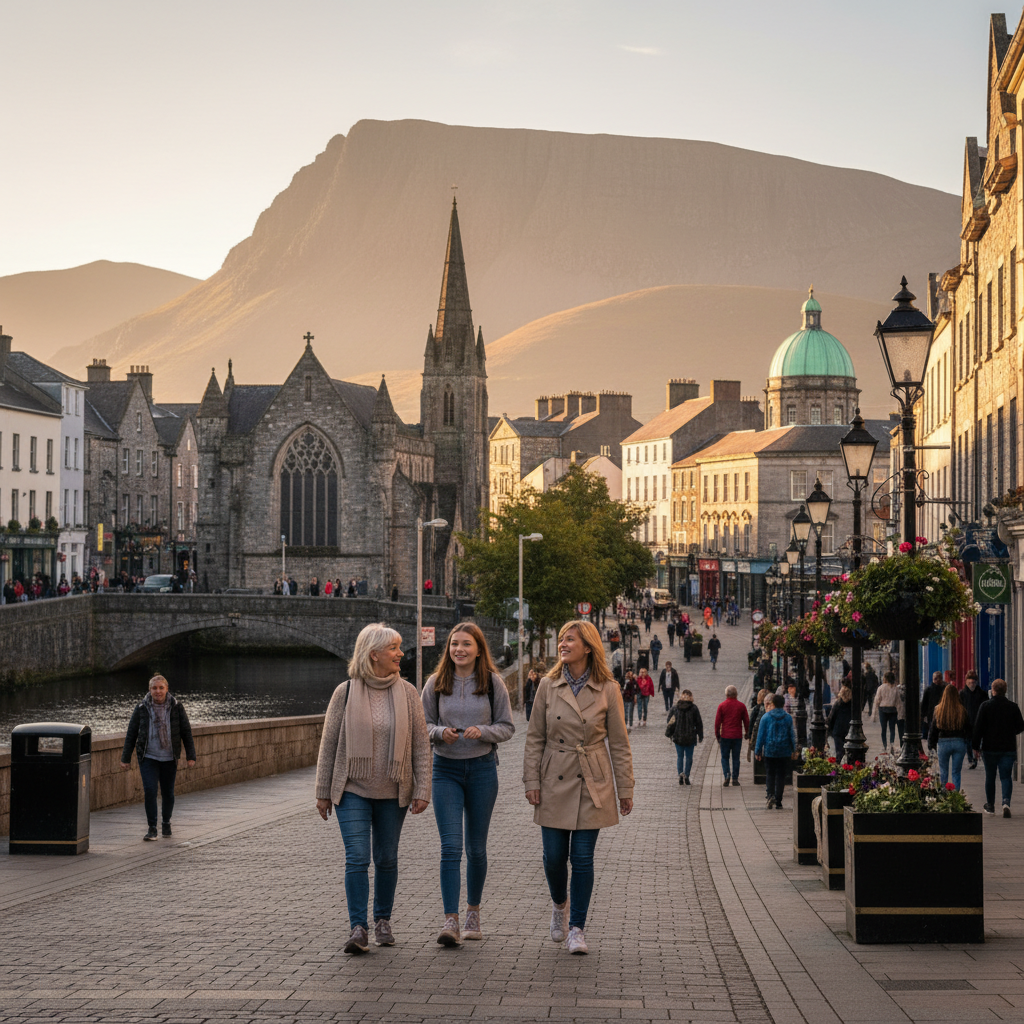
What to do in Sligo? Beyond its breathtaking landscapes, Sligo is a vibrant city where history meets wild nature. Imagine strolling through its streets, between the medieval charm of Sligo Abbey and the stunning views of the majestic Benbulben, all while having fun. For an unusual activity, our outdoor escape game immerses you in the heart of the city. It's a real-life treasure hunt, a scavenger hunt that will make you discover Sligo in a different way, by solving puzzles while exploring its hidden gems. Whether you're seeking adventure or simply curious to unravel the secrets of this Irish city, Sligo promises memorable moments, combining cultural discovery with playful thrills.
Unusual things to do in Sligo
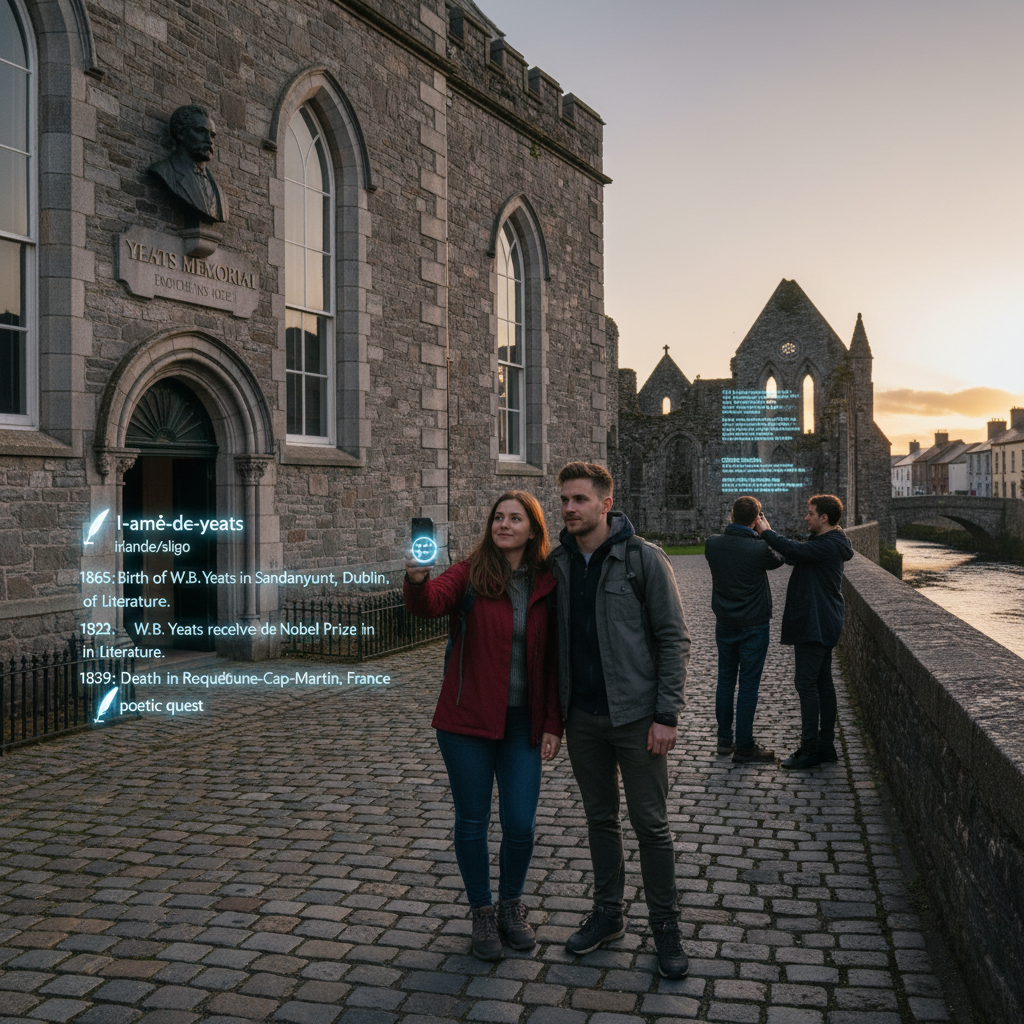
For an unusual activity in Sligo that's out of the ordinary, choose our exploration game. Far from the beaten path, this original outing invites you to uncover the city's mysteries by becoming a detective. Imagine solving puzzles inspired by local legends, all while strolling along the Garavogue River or discovering hidden murals. It's a unique way to immerse yourself in the soul of Sligo, combining the excitement of a treasure hunt with the discovery of places only locals know, for a truly memorable experience.
Things to do in Sligo with kids
Sligo is a fantastic destination for families, and our treasure hunt is an excellent option for what to do with family in Sligo. Suitable for children from 8 years old and ideal for teens, it transforms the city into a huge playground. It's a fun activity that encourages collaboration, critical thinking, and observation, perfect for strengthening family bonds. The puzzles are designed to be accessible and entertaining, allowing everyone, from the youngest to the oldest, to actively participate in this urban scavenger hunt. An educational and entertaining way to discover Sligo together.
Sligo for couples
For a romantic getaway, Sligo as a couple offers an idyllic setting. Imagine yourselves hand in hand, exploring history-filled streets, discovering picturesque views of the bay or the surrounding mountains. Our exploration game adds a touch of adventure to your escape, inviting you to solve mysteries together, strengthening your bond. It's an original and intimate way to share unique moments, to wander through discoveries and marvel at Sligo's rich heritage, creating precious memories for two.
What to do in Sligo when it rains
The weather in Sligo can be unpredictable, but don't worry! Our outdoor escape game is designed to minimize the inconvenience of rain. Approximately 80% of the route takes place under arcades, covered passages, or near shelters, allowing you to enjoy the adventure without being completely exposed. Bring a waterproof jacket just in case, but rest assured that the experience remains enjoyable, even during a typical Irish shower. An opportunity to discover Sligo in a different light, with its own special charm.
Where is Sligo, and where do the routes start?
Starting points of our routes and the places they pass through.
Route starting points
Places in Sligo
- Yeats Memorial Building
- Sligo Abbey (exterior)
- Hyde Bridge
- Garavogue Riverbanks (Public Walkway)
- Lough Gill Viewpoint (from Hazelwood Forest)
- St John the Baptist Cathedral (exterior)
- Knocknarea Viewpoint (from R292)
- Drumcliff Churchyard (ext. and Yeats's grave)
The history of Sligo
From Shells to Settlements: Sligo's Ancient Roots
The name Sligo comes from the Irish word 'Sligeach', meaning "abounding in shells" or "shelly place." This refers to the plentiful shellfish in the estuary of the River Garavogue and the shell middens found along Sligo Bay. Archaeological evidence indicates human presence in the Sligo Bay area dates back to roughly 8000 BC, with shell middens from the Mesolithic era. The location was strategically important, positioned in the narrow gap between Lough Gill and the sea, and a natural crossing point over the Garavogue River. Ancient Greek and Roman traders knew of this area; Ptolemy's map from the 2nd century AD marks it as the town of Nagnata, the only town shown on Ireland's west coast at the time.
Norman Foundations and Gaelic Resurgence
Sligo town was formally founded in 1243 AD by the Norman knight Maurice Fitzgerald and Fedlim O'Conchobar, the Provincial King of Connacht. Fitzgerald also founded Sligo Abbey, a Dominican friary, in 1253. Norman influence in Sligo lasted for about 60 years. By around 1310, following a Gaelic cultural resurgence, Sligo became the only Norman medieval town in Ireland to remain under Gaelic Irish control throughout the Medieval period, from approximately 1300 to 1600 AD. During the 14th and 15th centuries, Sligo functioned as a center of the Gaelic confederation of Íochtar Connacht (Lower Connacht), engaging in trade with Galway and merchants from France, Spain, and England. Herring was a particularly important commodity, mentioned in a 15th-century Bristol sailors' song.
The town received a charter in 1613 under James I, becoming the principal town of the newly created County of Sligo. However, the 17th century saw Sligo change hands five times during the Williamite wars (1688-1691). The remains of Sligo Abbey and the layout of the town center reflect these historical layers, from its monastic foundations to its role as a trading hub and a contested site during later conflicts.
What to see in Sligo
- Sligo Abbey — Explore the ruins of this Dominican friary, founded in 1253. You can see parts of the church, sacristy, and chapterhouse, along with a 15th-century cloister and one of the few sculptured 15th-century high altars surviving in an Irish monastic church.
- Yeats Memorial Building — This building houses the Yeats Society Sligo and an exhibition dedicated to the poet W.B. Yeats, who spent summers in Sligo and drew inspiration from its landscapes.
- Hyde Bridge — This bridge crosses the Garavogue River in central Sligo, connecting different parts of the town. The river was originally known as the Sligeach, giving Sligo its name.
- Garavogue Riverbanks (Public Walkway) — Walk along the banks of the Garavogue River, which flows from Lough Gill through Sligo town and into Sligo Bay. This river has been central to Sligo's development.
- Lough Gill Viewpoint (from Hazelwood Forest) — View Lough Gill, the source of the Garavogue River, from within Hazelwood Forest. This lake is associated with Yeats's poetry, particularly "The Lake Isle of Innisfree."
- St John the Baptist Cathedral — This Church of Ireland cathedral, with its spires, is a landmark in Sligo town. The current building dates from the 18th and 19th centuries; a hospital dedicated to the Trinity, possibly on or near this site, is mentioned as early as 1242.
- Knocknarea — This mountain is topped by a large cairn, known as Queen Maeve's Tomb (Miosgán Médhbh). It is a prehistoric site and offers views of the Sligo landscape.
- Drumcliff Churchyard (and Yeats's grave) — Visit the burial site of W.B. Yeats, under Benbulben mountain. The churchyard has ancient origins and includes a round tower ruin.
When to visit Sligo
For outdoor activities, visit Sligo from early July to late August. Temperatures average 14-17°C (57-63°F). Rain is possible year-round, but May and April are generally the driest months. Summers are warm and fresh, suitable for walking. For surfing, autumn and winter offer optimal wave conditions.
Avoid December and January for clearer skies, as these are the cloudiest months. August and October are typically the wettest, with up to 22 rainy days.
Getting around Sligo
Sligo is accessible by train, bus, or car. A direct train line connects Sligo Mac Diarmada Station to Dublin. Bus Éireann operates local routes (S1, S2, S3) serving locations in and around Sligo, including Rosses Point and Strandhill, with services every 30 minutes Monday-Saturday and hourly on Sundays. Fares are cheaper with a TFI Leap Card.
Sligo town is compact for walking. For sights outside the town, a car is recommended. Bolt e-bikes are available for hire at stations across town. Parking is available, including free street parking on Kennedy Parade and paid parking at the Bank of Ireland car park on Stephen Street. Market days vary; check locally upon arrival.
Things you probably do not know about Sligo
Verified details most visitors walk straight past.
- Sligo Abbey
- Sligo Abbey, a Dominican friary, was founded in 1253. But do you know the unusual, and perhaps scandalous, reason behind its establishment? Maurice Fitzgerald, the founder, was rumored to have been responsible for the death of Richard Marshal, 3rd Earl of Pembroke. The abbey was allegedly built to house a community of monks to pray for Marshal's soul, despite the Dominicans' primary focus being preaching rather than prayer.
- Garavogue River
- The Garavogue River, which gives Sligo its name, holds a legendary connection to Ireland's patron saint. What special blessing is it said to have received? According to tradition, Saint Patrick blessed the Garavogue River to ensure it would yield salmon throughout the year, a claim anglers still acknowledge today.
- Sligo Castle (site of)
- Sligo once had a significant Norman castle, built in 1245. What became of this strategically important fortress? The castle was a constant point of contention and was destroyed by the O'Donnells in 1516 and never rebuilt. Its exact location and layout remain unknown, though it is thought to have stood in the vicinity of the present City Hall on Quay Street.
- Sligo Town Hall
- Sligo's Town Hall, a French Renaissance-style building, stands on a site with a much older, less elegant history. What was there before it? The Town Hall, built in 1865, occupies the former site of a fort erected by the Cromwellians during the 17th century.
- The Cathedral of the Immaculate Conception
- Sligo's Roman Catholic Cathedral, opened in 1874, has a unique architectural distinction among Irish cathedrals. What is it? The Cathedral of the Immaculate Conception is the only Norman-styled cathedral in Ireland, designed by George Goldie, a prominent Catholic architect of the 19th century.
- Knocknarea
- The large cairn atop Knocknarea is famously known as Queen Maeve's Tomb. But what unusual theory surrounds its construction? One interpretation of the name Garavogue (the river) suggests it's named after a local 'landscape goddess' or witch who supposedly built megaliths in the region, like the one on Knocknarea, by dropping stones.
Questions about visiting Sligo
How many days should I spend in Sligo?
To experience Sligo and its surroundings, including the town's historical sites, natural features, and a day trip to the coast or mountains, a stay of 2 to 3 days is generally recommended. This allows time for exploration without feeling rushed.
What are the best ways to get around Sligo?
Within Sligo town, walking is the easiest way to get around. For longer distances or exploring the county's natural attractions, local buses operate routes to key areas like Rosses Point and Strandhill, and Bolt e-bikes are available for hire. Renting a car offers the most flexibility for exploring further afield.
Which neighborhood is best to stay in Sligo?
The town centre is suitable for first-time visitors, offering access to shops, restaurants, pubs, and major historical sites like Sligo Abbey and the Garavogue River. Areas slightly outside the immediate centre, but still walkable, can offer a quieter experience while remaining convenient.
What is the typical budget for a trip to Sligo?
A mid-range budget for Sligo might be around €100-€150 per person per day, covering accommodation, meals, some attractions, and local transport. This can vary based on your choice of lodging, dining, and activities. Self-catering and using public transport can help reduce costs.
Is Sligo a good destination for families with children?
Yes, Sligo offers family-friendly activities. Its natural landscapes provide outdoor adventures, historical sites like Sligo Abbey can engage children, and many local events and festivals cater to all ages. The beaches at Rosses Point and Strandhill are also popular for families.
What are the public transport options from Sligo Airport?
Sligo does not have its own commercial airport. The nearest major airport is Ireland West Airport Knock (KNO), approximately 45 minutes drive from Sligo town. From there, you would typically need to arrange a bus connection or taxi to Sligo.
Frequently asked questions
How much does an outdoor escape game in Sligo cost?
The price for our outdoor escape game in Sligo is €12 per team. This price is fixed, whether you are 2, 3, or 4 players, making it a very affordable and friendly activity. It offers excellent value for a multi-hour experience that combines city discovery, puzzle-solving, and fun. You pay once for access to the game, and then you're off on your adventure!
Is it suitable for children / families?
Absolutely! Our escape game is perfectly suited for families and children from 8 years old. The puzzles are designed to be challenging yet accessible, encouraging teamwork and observation. It's a great way to introduce Sligo to younger ones in a fun and interactive manner. Teens also love the treasure hunt aspect and the freedom to explore the city at their own pace. An ideal outing to create family memories!
How long does an escape game in Sligo last?
An outdoor escape game in Sligo typically lasts between 1 hour 30 minutes and 2 hours. However, the duration is flexible and entirely depends on your pace. You are free to take your time to admire the scenery, take breaks, or explore a place that interests you further. The goal is to have fun and enjoy the experience, not to break a speed record. It's your adventure, set your own pace!
Do I need to book in advance?
It is not strictly necessary to book in advance for our outdoor escape games in Sligo, as you can start the game whenever you like. However, we recommend purchasing your ticket online beforehand, especially if you plan to play during weekends or peak times. This ensures immediate availability of the game and allows you to start the adventure without delay, as soon as the mood strikes you.
What to visit in Sligo beyond escape games?
Sligo is full of treasures to explore! After your escape game, don't miss the magnificent Sligo Abbey, a fascinating historical site. Nature lovers will enjoy an excursion to the majestic Benbulben or a peaceful stroll around Lough Gill. For an artistic touch, visit the Yeats Society Building. And if you love the coast, Strandhill offers beautiful beaches and surfing opportunities. Sligo is a city that has much to offer, well beyond our games!
What is the best season to visit Sligo?
Sligo is charming all year round, but the best season to visit is generally spring (April-May) and summer (June-August). During these months, the weather is milder and the days are longer, ideal for outdoor activities and exploration. However, autumn offers magnificent colors and a quieter atmosphere, while winter, though cooler, has its own charm, especially for those seeking a more authentic and less crowded experience.
Other destinations in Connacht
Achill
The wild island of dramatic cliffs and golden beaches.
Aughrim
On the trail of a decisive battle in Irish history
Carrowmore
At the heart of Ireland's megalithic mysteries
Céide Fields
Step back in time in a buried prehistoric landscape.
Croagh Patrick
The holy mountain where St. Patrick fasted, between sky and sea.
Galway
Where Irish tradition, vibrant culture, and Atlantic breeze meet
Rathcroghan
Ireland's mythical heart, where ancient kings and legends intertwine.
Activities to discover nearby
Guided tours, skip-the-line tickets and local experiences to book in advance.
💡 Optional booking — you can also buy on-site. All links open in a new window, your OddballTrip visit stays preserved.